


Likes
Comments
Share


Likes
26
Share


@420DeepGrow
Follow
Gracias al equipo de Seedsman y XpertNutrients sin ellos esto no sería posible.
💐🍁 Bubba Cheescake:
Bubba Cheesecake es un cruce de Bubba Kush anterior al 98 con Cheese Cake (Wedding Cake x Exodus Cheese). Se trata de un híbrido 70% índica con muy buenos rendimientos, alto en THC y bajo en CBD. Bubba Cheesecake prospera en interiores y exteriores. En interior se aconseja un corto periodo de crecimiento vegetativo debido a la cantidad de estiramiento que presentan las plantas. Las plantas pueden crecer hasta una altura de 250 a 350 cm. cuando se deja crecer naturalmente al aire libre. En interior, la floración dura entre 60 y 65 días, con rendimientos entre buenos y altos, de 400 a 550 gr/m2. Las plantas de exterior son capaces de producir entre 700 - 800 gr. peso seco. En las latitudes norteñas, en exterior, los productores pueden esperar cosechar a principios de octubre. Los cogollos son grandes y duros como piedras. Las plantas maduras muestran atractivos colores púrpuras y azules y brillan con una resina pegajosa que cubrirá las manos del cultivador si no tiene cuidado. El componente Wedding Cake agrega dulzura al sabor del regaliz y el aroma es terroso y musgoso. La producción de THC es muy alta con un nivel bajo de CBD. El efecto es intensamente narcótico, fuerte y duradero.
🌻🚀 Consigue aqui tus semillas:
🍣🍦🌴 Xpert Nutrients es una empresa especializada en la producción y comercialización de fertilizantes líquidos y tierras, que garantizan excelentes cosechas y un crecimiento activo para sus plantas durante todas las fases de cultivo.
Consigue aqui tus Nutrientes:
https://xpertnutrients.com/es/shop/
📆 Semana 9:
No ha sido una gran semana respecto al tiempo pero el incremento de nutrientes le ha venido muy bien
Continuo con la dosis recomendada por el fabricante.

Likes
34
Share


@Diariesweed
Follow
great strain hard buttons heavy total life of 88 days. 84 after being born, besides having broken it will give me a good yield I will wait 90g to dry, for an automatic with 5.5 liter pot I think this is great. easy to grow very, very cold, sweet, sour, aroma, I'm happy .. final summary the lady still gave me 110g dried without branches and leaves very clean .. I am very very satisfied with the result both in the quality of the herb and the yield
@Fast_buds @spiderfarmer @advancednutrients @growdiaries

Likes
20
Share


@Vegetoo420
Follow
New week they are good , I put second pheno into the big room with her sister!
Add green sensation to the soup!

Likes
3
Share

@BudsPerMinute
Follow
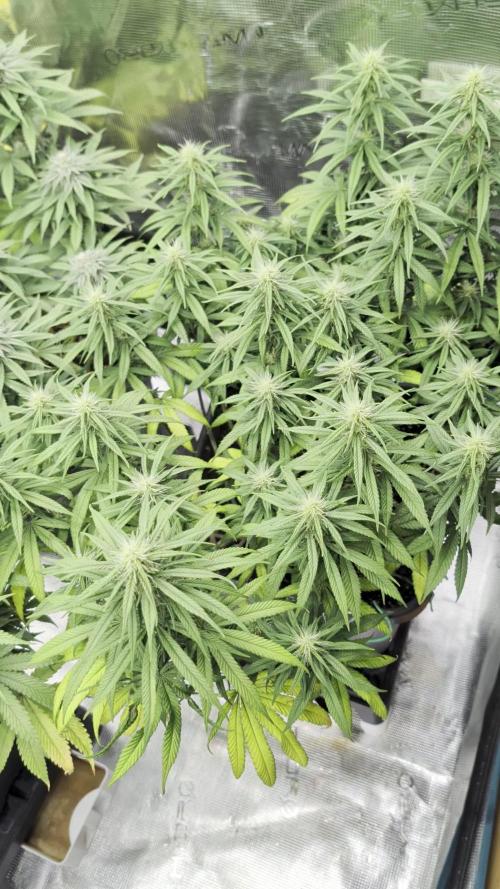
Woche 9
Die Mazar vorne im Zelt lässt sich ordentlich Zeit im Gegensatz zu den Zelt Schwestern!
Langsam fahren wir mit dem Novamax hoch um die Blüten an ihr Maximum zu pushen!

Likes
1
Share

@PapaTerps
Follow
Zhampagne - Compound Genetics
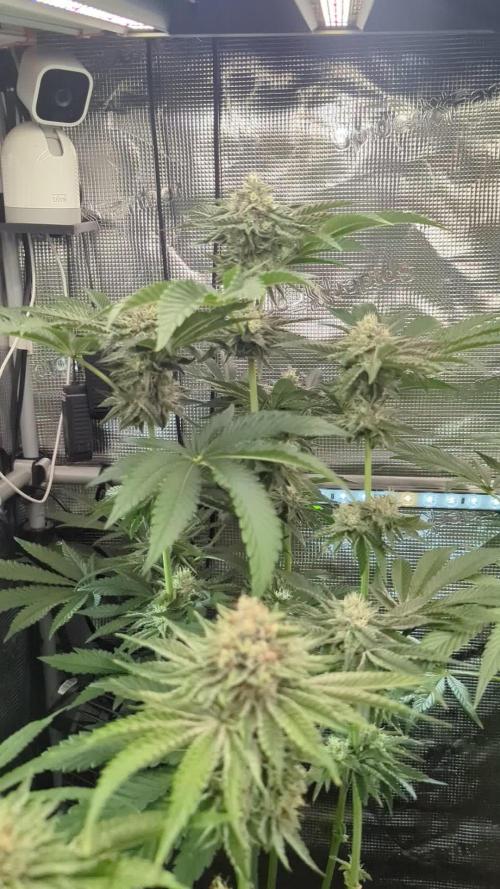
Day 77 - watered with 3L of RO tap water, with defined nutrients, mixed in order and then pHd to 6.3. 🚿 She has been working hard on bulking her flower this week and has dried back much faster, so I've increased her water volume from 2 to 3 liters 💪🏻 The breeder suggested that this one finishes pretty quick and by looking at her flower, she looks a lot further along than week 5 of bloom! 🌸 Not much work on her this week, I just removed a couple of fan leaves to improve light penetration, so for now, I'm just going to let her work on developing her bud 💪🏻

Likes
100
Share


@AsNoriu
Follow
Day 86 . I will chop first two today. Plant A and B, C stays for a week still, a bit airy and not mature , but she was in shade mostly ...
Spent almost 5 hours defoliating other plants and got too high and drunk a bit, so dry trim chosen for first two ;))))
Day 93. Last girl down ! Dry trim again !
@PurpleWorship just to prove my kilo idea I made a video for you ;))) this one was starved, she needed watering yesterday, so I could bump her to 1.5 easy .... Her sisters were heavier ;))) will do one more with monster Green Crack, can make a bet she will be above 2 kg easy ! ;)))
Made some bubble hash, got light brown and pinky colour at the end when dried. Lovely !
Happy Growing !!!
Likes
38
Share


@MadeInGermany
Follow
Flowering day 52
since time change
to 12 / 12 h
Hey guys :-)
All ladies look very healthy and delicious :-)
We're slowly getting closer to the end.
This week it was poured 3 times with 1.2 l each (sewing materials see table above)
At the next watering there is a very light rinse with Clean Fruits so that the last nutrients can be slowly used up.
The trichomes are now checked every day.
I'm looking for my microscope with an app so I can take pictures of it 👍.
I wish you a lot of fun with the update and stay healthy 💚🙏🏻
👇🏼👇🏼👇🏼👇🏼👇🏼👇🏼👇🏼👇🏼👇🏼👇🏼👇🏼👇🏼
You can buy this Nutrients at :
https://greenbuzzliquids.com/en/shop/
With the discount code: Made_in_Germany you get a discount of 15% on all products from an order value of 100 euros.
👇🏼👇🏼👇🏼👇🏼👇🏼👇🏼👇🏼👇🏼👇🏼👇🏼👇🏼👇🏼
You can buy this strain at :
https://www.exoticseed.eu/de/hanfsamen/hippie-therapy-cbd
Water 💧 💧💧
Osmosis water mixed with normal water (24 hours stale that the chlorine evaporates) to 0.2 EC. Add Cal / Mag to 0.4 Ec Ph with Organic Ph - to 5.8 - 6.5
MadeInGermany

Likes
3
Share


@mquintero7
Follow
Buds are forming very well. Smell is nice and increasing. Been removing big fan old leaves so sunlight can penetrate all the plant, and concentrate energy on flowers. Organic fertilization very carefully to prevent nutrient burn.

Likes
62
Share


@masterofsmeagol
Follow
6/28 I had to water deeply despite watering thoroughly yesterday. This heat wave is supposed to pass today. We have had temps in the 90's. Ihate it but the girls seem to love it. RH is super high and controlling pm is a pain in the balls. When my connection is better I'll add my vid and photos. Still need a follow up preventative spray. BT is really awesome but super narrow and I've found random stink bugs, earwigs, crickets and grasshoppers as well as easily identifiable leaf damage. I'm thinking Spinosid. Save my PM stuff for PM. Tried checking my PH with a soil meter. The bags are basically just roots. The only two plants it read came to 6.5 which is strange because I usually run around 7.3. I'll certainly take it. If it's correct that is. RH 64 TEMP 84
6/29 Didn't water this morning due to a torrential downpour last night. Nothing broken after first glance. The thunder and wind woke me last night. This storm was horrific yet my plants still seem unaffected. Need to rearrange the cage. It will be a pain to have to move that ice cream cake. Maybe I could find a way to modify the cage outwards. I also need to move the plant in the tote in the back. Luckily I got back and watered before plants dried out. Noticed a FEW dead or yellow leaves on the middle interior of some plants. I upped dosage of growbig last feed and fed a little earlier. I'll go back to my normal feeding schedule and see what happens. Thing is the plants are getting huge so I would think increased nutes would help. Couldn't he lockout. Too much water. Maybe nutes in the soil are leaving? I'll figure it out. I temporarily pulled the stalk on the ice cream cake back and tied it to the posts to get it off the fence.
6/30. 90s again today. I deeply watered and noticed a couple more yellow leaves (bottom middlish). Only thing that was changed was feeding. I may go back to original schedule. Funeral today so I'll have to check things out later. UPDATE: Went back maybe sux hours after watering to find the grow bags dry. I reached my hand in the side and it's pretty much all roots. These high temperatures and wind are drying my plants out. No droop but the soil WAS dry. I watered again and plan to check again tonight. When temps go down I'll probably do a preventative Spinosid spray.
7/1 Watered and fed two gallons. Grow big at 1 1/2 tbsp. Still some yellow leaves on the interior. I'm talking like maybe five. Accidentally destroyed lace wing eggs. I knew it was something to keep an eye out for but I mistakenly thought it was BAD. Oh well it was just two eggs. I'm sure there are more. Tried measuring PH with soil meter but the only two plants that registered were 6.5 and 6.6. I believe the PH to be a bit higher. The bags are so full of roots it's hard to get a measurement. I know my soil and water WAS on point before my gauge broke. However I leave the 7.3 as that was about what the big ones tested at last time measured.
7/2 These are some resilient strains. Currently 54 degrees at 9am. It had been 80 or 90 in the last few days. Perfect rain today. A light shower all day. Obviously didn't water. Found a few yellow leaves but the plants look so good. The also seem to be stretching but it's far to early for the preflower stretch. I'll keep an eye out. Things are looking pretty good. Still need to move that plant in the back.
7/3 Watered today. Looks like it might rain but top soil was a little dry. Also noticed this site measures teaspoons not tablespoons which is how I measure. I'll need to adjust that. There's tell tale damage from a variety of pests (leaf hoppers, pillars, grasshoppers ECT.) So I think I'm going to do a spray within the next couple days. Im leaning towards Spinosid but Dr. Zymes supposably helps the PM as well. I'll do more research and update.
7/4 54 degrees and raining. Haven't checked the girls out yet today.


Processing
Likes
59
Share


@Silverback_Guerilla
Follow
TUESDAY 1/15:
MuthaPHucking PH fluctuations again!!!!! 😖
I calibrate my 2 cheapo- ph pens everymotherPHucking day and STILL it happens....PHuck the dumb shit....I just ordered a $100+ Apera tester.👈
I watered everybody with about a half-gallon of water, plus heavy boomerang and calimagic, some bud candy, some terpinator, some kelp me kelp you, some armor silica, and the bloomers got their first dose of open sesame..no big bloom or grow big for anyone.
WEDNESDAY:
I foliar fed them a few times and calibrated my new ph tester.
The big C4 is branching like crazy...the little one is flowering now..hopefully she stretches really well too.
All 3 WW's have started flowering. I FIM'd the last 2 WW's today, so everybody's done.
Debbie Diesel is looking strong..big thick main stalk. The Northern Lights is also showing me some vertical growth now. All 3 Candy Canes are budding up nicely.👍
FRIDAY:
I fed everybody about a half-gallon and foliar fed them a couple of times.
SATURDAY:
Foliar fed a few times
The Candy Canes have stretched so much that I may need to raise my lights a little..they are about 16 inches from the tops now....monitoring...
SUNDAY:
Foliar fed a few times
Still no sign of light burn on the CC's, so I'm leaving the lights where they are.
MONDAY:
Still moist..will water tomorrow with my new pump-driven system👍


Likes
3
Share


@JeyGanesha
Follow
Iniziamo bene con mister Barney farm...poi con la runtz non si sbaglia mai... forza 💪belle piantine mie datemi tanti fiori 😂😂😂.la runtz è sempre una buona scelta

Likes
125
Share


@Regenwurm
Follow
Die 12 Blütewoche ist erfolgreich abgeschlossen!
Tage der Wachstumsphase = 32 Tage.
Tage der Blütephase = 84 Tage
Wachstum h in Blütewoche 9= 0 cm
Blütenbildung: sehr Hoch
Die Blütenkelche sind Mitten in der Produktion und verfärben sich.
Die Trichome sind bei beiden ladies im gesamten trüb. Heißt, der Harvest Day nähert sich. Ich denke 14-18 Tage 👌
In dieser Woche den Ladies einige Blätter abgenommen das in der Endphase das Licht die buds erreicht.
Der Wasserbedarf der Pflanze ist gleichbleibend moderat.
Diese Woche 4 Tage von 7 gegossen
Mutation 1= strähnige Blüten (wie bei der Dr. Greenspoon öfter mal vorkommt)
Mutation 2 = Gigantismus (doppelt so viele DNA Ketten wie regulär)
Mutation 3 = Sekundäre Blüten an Blättern
2 mal in dieser Woche mit Purolyt Mischung 1:25 besprüht
Lichtstärke: 87 %
Lichtabstand: 36 cm
Std Tag/Nacht: 12/12
Temperatur Tag: ca. 24-25 Grad
RLF Tag: 50-55%
Temperatur Nacht: 20-21 grad
RLF Nacht: ca. 50 %
VPD Wert: ca. 1.2
PH Wert Wasser/Düngelösung: 6,4
EC Wert: 1,0
Ventilator Oszillation: Stufe 2
Befeuchter: aus
Entfeuchter: mit Steuerung an
Zusätzlicher Entfeuchter: 1 Stk außerhalb vom Zelt im Raum
Bewässerung: 1* Wasser PH 6,6 EC 0,1/ 3 * bewässert mit Dünger mit den o.g. Mengen
Purolyt Besprühung: 2 mal
Controlling: Grow Control
Dünger: Greenbuzz Nutrients
Licht: Pro Emit Vollspektrum
Abluft: EC Carbon Active 750 m3 gesteuert/PrimaKlima 480m3
https://greenbuzznutrients.com/de/
Danke an Greenbuzz
Ihr bekommt 25 % Rabatt bei der Nutzung des Codes auf der GB Homepage
https://greenbuzzliquids.com/de/shop/
Code: GD42025
(Mindestbestellwert 75€)

Likes
49
Share

@masterofsmeagol
Follow
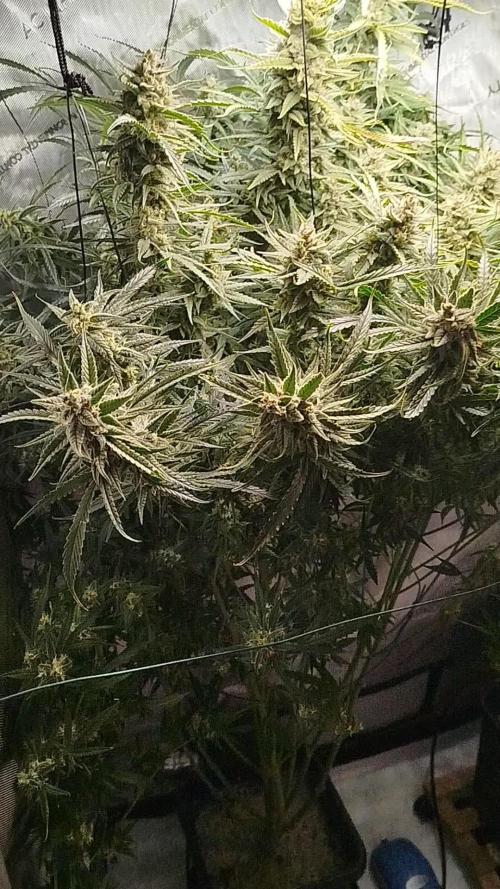
6/9 I can't believe it but I had faith. The transplant yesterday LOOKED like it was fucked. I cleaned it up though and left it outside. This morning it was standing straight up. Both transplants were! I put tarps up to block the wind tunnel between buildings. It's still overcast and rainy. Sun isn't supposed to come out for a couple poke days. Chance of thubder storms tomorrow but I'm going to try to get everyone in their forever homes today. Or at least most of them. I plan to light dep a few right in the 3 gallon. I'm sure I'll be updating this after I get some work done.
UPDATE: I WENT OVER AND GOT THREE MORE TRANSPLANTED. THAT MEANS FIVE ARE OUTSIDE IN THE CAGE. TWO 10TH PLANET, 2 BLUEBERRY CHEESE AND A LITTLE PURPLE PUNCH. THE 3 GALLON POTS WERE RELATIVELY HEAVY SO I PICKED THE LIGHTER ONES TO TRANSPLANT. I LEFT THE ORHER TWO 10TH'S IN THE GARAGE WITH THE DOOR OPEN WITH THE REMAINING PLANTS. I ALSO ADDED WIND BREAKS AND SUPPORTS TO EVERYTHING. I WANTED TO GET EVERUTHING DONE TODAY BUT THERE MAY BE A THUNDER STORM SO IF I DONT GET IT DONE ITS NOT A BIG DEAL AND ILL FINISH TOMORROW. TRANSPLANTS WENT SMOOTH. I THINK THEY'LL GO EVEN SMOOTHER IF THEY DRY OUT A BIT. STILL HAVE THE 50 AND 40'S TO FILL. Took a bunch of videos but the don't want to load. I'll have to try tomorrow or later tonight.
UPDATE: I TOOK TONS OF PICTURES AND VIDEOS BUT THEY DONT WANT TO SEEM TO UPLOAD. IVE GOT SIX IN THERE FINAL HOMES OUTDOORS 20s and 30 gallon smart pots. Still have massive plants but I'm going to out those in the 50 and the 40. I'll finish this shit up tomorrow and get all the girls in their forever homes and if I don't have room for some I was planning on doing a light dep anyway so that will work out good. I learned a lot and transplanting went a lot smoother todsy than before. I feel really proud of myself. The last Transplant I did break a few leaves off that I didn't notice but whatever. I used tomato cages for suppirt on two and bamboo poles and string on the others. I'll add the vertical trellis as they grow. I'm proud of myself.
6/10 I got a lot done yesterday. Six are outside already. Two are in 20s in the garage. I'm planning on transplanting the rest today or tomorrow. I'll update later. Accidently uploaded lots of stuff on the wrong week. UPDATE: I TRANSPLANTED THAT SUPER TALL PURPLE PUNCH THAT I DIDNT TOP OR HST AT ALL INTO A 40 GALLON TUB. ROOTS WERE DRY AND THIS TIME IT ACTUALLY LOOKED LIKE THEY FELL AWAY. THE PLANT HOWEVER STAYED STANDINGVUP FINE. I THINK THIS PHENO IS GOING TO BE A TOUGH ONE. LOOKS GOOD LIKE AN HOUR LATER. I HAD THE 50 READY TO TRANSPLANT THIS MONSTER BLUEBERRY CHEESE I FIMed BUT THE POTS WERE SUPER HEAVY AND I FIGURED I NEEDED TO SLOW DOWN AND THINK. WE HAVE THUNDER STORMS COMING TONIGHT. TOMORROW IS GOOD. I MAY TRY TO FINISH UP TONIGHT BUT WE SHALL SEE. THE GOOD THING WITH DOING IT A FEW AT A TIME IS THAT IF SOMETHING HAPPENS OUTSIDE IVE STILL GOT A CROP INSIDE LOL. WHAT IM PLANNING TO DO IS EITHER LIGHT DEP THAT BIG BLUEBERRY CHEESE OR PUT IT IN THE FIFTY BUT IM PLANNING TO LIGHT 3 RIGHT IN THEIR 3 GALLON CONTAINERS. HAVENT DECUDED FOR SURE BUT IM THINKING THATS WHATS GOING TO HAPPEN.......of course videos won't upload and the ones that do are old videos. Damn. I need to sharpen my computer skills....and my growing skills. Especially transplanting. I suck at transplanting. I decided not to out all my eggs in one basket and left the 10th planet amd Blue berry cheese in the 20s in the garage. I pulled them out for light further but I'm ousting them back a little tonight. That way I'll have a back up if something catastrophic happens. I doubt it but better safe than sorry. I'm proud of what I've accomplished thus far. I've successfully uploaded my 1 minute plus video several times but it won't appear. Oh well. I'll try to load the videos tomorrow I guess. Just started raining. Just a light rain. Probably what fresh transplants like.
6/11 BEAUTIFUL outside. Today is the day. Most is done and I'll add the supports as trellis as they grow. This new grow space gets about twice as much sun as my old spot. The tar stops the burrowing insects. I'm getting everything out today. I just need to decide if I'm going to light dep that MASSIVE blueberry cheese or bite the bullet and put it in the fifty. Maybe I'll try to get some help from my cousin. Plants withstood the thunderstorm like Champs. I'll update as the day goes on. I planned better this year so I SHOULDN'T have an unmanageable jungle. UPDATE: WATERED THE 3 PLANTS LEFT IN THE 3 GALLONS (1 10th PLANET WITH GREAT BRANCH STRUCTURE AND TWO PURPLE PUNCH THAT WERE THE SMALLER ONES. IM GOING TO LIGHT DEP THEM. EVERYTHING IS OUTSIDE NOW IN A MIX OF 1/3 FOX FARM OCEAN FOREST, HAPPY FROG AND ROOTS ORGANIC 707 IN EQUAL PARTS. TRANSPLANTED WITH MYKOS. EVERYTHING IS OUTSIDE NOW. FINALLY DECIDED TO GET The MONSTER BLUE CHEESE I FIMed INTO ITS FOREVER HOME A 50 FALLON POT. IT WAS TGE EASIEST BEST TRANSPLANT OF THEM ALL. JUST LIKE AETTING A POT IN THE WHOLE. I DONT EVEN THINK THE PLANT NOTICED. ONE OF THE PURPLE PUNCHES HAD ROOTS OB ONE OF ITS LEAVES WHEN I LOOKED BUTVIT WAS STILL STANDING UO STEAIGHT. I KNOW SOME OF THE PLANTS LOOK DROOPY BUT WEVE HAD SEVERAL DAYS OF RAIN AND A MASDIVE THUNDER STORM. I BROUGHT OUT THE EARLIER TRANSPLANTS AS WELL. THEY ARE OUT OF THE SHOCK. WIND IS PRETTY HIGH BUT I DONT WANT TO ADD MORE TARPS. I THINK THINGS ARE SECURED GOOD ENOUGH FOR NOW. IM SUPER STOKED THAT TRANSPLANT WENT SO GOOD! Went back at 7:30pm. Some plants have a little bit of transplant shock and a little bit of burn but it's negligible considering they've been through a thunderstorm with pouring rain and extremely high winds. That blueberry cheese in the 50 transplanted so easy and still looks like it didn't even know the difference. I'll start light dep once I get a plan. Plants are recovering nicely but should something happen to one I could replace it. I'm interested in the light dep though and I've got a pretty good idea how to start.
6/12 The plants that had a little transplant shock are coming out of it. We had a thunderstorm and pouring rain the day of some of the transplants. Wasn't forecasted. High winds moved the plants around a bunch bit they are tough as hell. Everything is out now. Suppisedcto have showers the next few days. I'm putting together a feeding schedule abd setting up a spit to start light dep on the three plants I decided to flower early. The cage now gets twice as much sun as before. This is going to be a good year.
Went back over and plants are perking up and doing even better everytime I see them. I took a video but it might not upload until tomorrow. I may start a new diary for the light dep. I have a few places I'm thinking to use for light dep. I need to make a solid plan before I start so maybe a day or two. Trying to upload again but I doubt it.
6/13 Had a rushed morning but I watered the plants in the 3 gallons as they were dry. I had added more soil to a couple of the bags. The top soil is startingvtj dry out but the plants look good and we are supposed to get rain so I don't really want to water if it's going to be raining. I think I've found my light dep spot and schedule. I'll update after I do something.
WENT BACK OVER AND SPRAYED A LITTLE BIT OF WATER ON THE EXTREMELY DRY TOPSOIL THAT I HAD TOPPED SOME OF THE PLANTS OFF WITH. SHITTY THING IS THAT WAS ADDED AFTER THE THUNDER STORM SO IT MAKES IT HARDER TO JUSTE THE PLANTS WATERING NEEDS. I CAN TELL THAT ONE OFCTHE FIRST TEANSPLANTS IS STILL HOLDING WATER. I MEAN WE GOT A DOWNPOUR AND I DONT WABT TO WATER IF WE'RE GOING TO BE GETTING RAIN ANYWAY. IM GOING TO LOOK BACK OVER THE DIARY. THATS ONE GREAT THING ABOUT THESE. YOU CAN GO BACK AND CHECK YOUR WORK.
6/14 Glad I held off watering. It's raining today. Just showers. We haven't gotten any of that extreme wind we usually do. I have the plants supported but I still worry. Definitely more than I should. Plants are still doing good and acclimating to there homes. I have not started the light dep with the 3 gallons but I think I've found my spot. Once I start it will just be staying consistent putt8ng them in and out. I need to train them anyway. I have some research to do and a joint to smoke so I'll update later.



Likes
20
Share


@TPBzh
Follow
They are going fast ! I think they are healthy and in good shape. They started to flower this week. I have started to put 4h of night. Everything is going very well.
Likes
87
Share


@ClubRiot
Follow
Zkittlez Feminized by Club Riot Seeds ( www.clubriotseeds.com )
Week 1
0.5L Pot
LED: MIGRO 200 (210W) for Veg. Stage
Canna COCO
Seeds are put at germinated in wet paper towels for 72 hours
Name: Zkittlez Feminized
Genetic: Grape Ape x Grapefruit
Type: Feminized ( Indica Strain )
Indoor Yield: 80 ~ 140 grams/plant ( 15L Pot ) with LST growth technique.
Indoor Height: 70 ~ 110 cm
THC: Very High
CBD: Low
Flavour: Grape , Sweet , Berry .
Effect: Relaxed , Happy and Euphoric.

Likes
92
Share


@DogDoctorOfficial
Follow
Week 7 Flower Report – The Masterpiece Garden Unfolds
🌱 Introduction
Welcome back to the most thrilling chapter of our journey yet! Week 7 of flower is here, and the garden has transformed into a paradise of unique beauty and diversity. Every plant has its own personality, showcasing the results of all the hard work, dedication, and love poured into this run. Let’s dive into the details and celebrate these girls like never before—because they deserve it!
🌸 Plant-by-Plant Breakdown
Papaya Zoap
The rebel queen of the garden, aiming for the stars with her towering structure. Her dense, frosty white nugs sparkle like diamonds, and her leaves are fading to a stunning yellow hue—a clear sign she’s ready to shine. Her aroma is captivating, leaving no doubt she’s going to be a showstopper.
Gorilla Melon
Standing tall as the second in command, this beauty is all strength and vigor. Her vibrant green foliage cradles thick, frosty buds that exude a fragrance worthy of her name. A true contender for the title of MVP.
RS11
This one’s a frost factory! Long, elegant buds dripping in trichomes, with leaves gracefully fading to yellow as she transitions toward the finish line. Her balanced stature and impeccable structure make her a dream to cultivate.
Green Papaya
The frostiest of them all, her sugar leaves are curling under the weight of so much resin. Every glance reveals a shimmering coat of trichomes that’s hard to believe. If frost were a competition, she’d already have the gold medal!
Mandarin Squeeze
Dark and mysterious, this beauty stands out with her rich, deep green tones and impressively dense buds. Her flowers feel like rocks, and her aroma hints at a citrusy explosion waiting to happen.
Punch Pie
What can we say about this heavyweight? Her large, dense buds are jaw-dropping, and her presence in the tent is commanding. She’s proving to be a genetic masterpiece, delivering beyond expectations.
🌞 Environmental Mastery
This week, we’ve begun the slow decline of PPFD to 750, keeping reds and UVs strong while easing back on whites—a calculated move to guide these girls into the final stages. The room’s stats speak volumes:
• Temps: 27.8°C with RH at 64.8%.
• CO2: 800 ppm for consistent growth energy.
• Reservoir: PH 6.16, TDS 791, temp 21°C.
• Soil Stats: TDS 669, temp 22°C.
Even the fun facts are worth noting: leaf temps are ranging between 26.6°C and 24.2°C, while the LED bars are holding steady at 38°C, and the ICL-300 at 35.6°C. Aero Fan at 23°C and the filter output at 24.7°C highlight the precision and control in this room, all thanks to the incredible TrolMaster ecosystem.
💧 Feeding and Nutrient Update
Our transition from organic minerals to a solo mineral approach has been a game-changer. These girls are thriving! Here’s the recipe this week:
• System Clean: 0.25 ml/L.
• RO Water Conditioner: 0.8 ml/L.
• All-in-One Liquid: 1.75 ml/L.
• K-Boost: 0.5 ml/L.
• Regulator: 0.15 ml/L.
This blend is bringing out the best in each plant, delivering unparalleled frost, density, and aroma. The stability of the pH, thanks to minerals, has made life simpler while pushing the plants toward peak performance.
🌟 Reflecting on Progress
It’s a joy to walk into this room and witness the results of months of effort. Each plant is delivering on its promise, and the smells, colors, and trichome production are truly next-level. The journey has been demanding, but the rewards are sweeter than ever. The curiosity to see how they finish is at an all-time high!
💬 Shoutouts and Community Love
As always, massive gratitude to the sponsors that make this possible:
• TrolMaster for precise environmental control.
• Aptus Holland for top-tier nutrients.
• Cannakan for their unwavering support.
• Pro-Mix Soil for a robust foundation.
• Seed Banks for the incredible genetics.
To the Grow Diaries community, our followers, lovers, haters, and everyone in between—thank you for being part of this journey. Your engagement fuels the passion to keep growing, learning, and sharing.
📣 Call to Action
If you haven’t already, check out our YouTube and Instagram for exclusive content and updates. Don’t forget to hit that like button, subscribe, and ring the bell so you never miss a beat. Join us for the next episode, where we’ll dive into super-cropping and give the room another round of defoliation as these girls keep reaching for the finish line.
Let’s keep growing, learning, and celebrating this beautiful process. 🌱✨
Growers Love,
Your Grateful Gardener
Discount Codes so you can save big on your next check out 💚💚💚
Kannabia - DOGDOCTOR 30% off
SeedsmanSeeds - DOGDOCTOR 10% off
CannaKan- DOGDOCTOR 15% off
terpyz.eu - DOCTOR 15% off
The Neutralizer - PORKIT5-DOG 15% off
Fast Buds - DOGDOCT 15% off
As always thank you all for stopping by, for the love and for it all , this journey of mine wold just not be the same without you guys, the love and support is very much appreciated and i fell honored and so joyful with you all in my life 🙏
With true love comes happiness 💚🙏 Always believe in your self and always do things expecting nothing and with an open heart , be a giver and the universe will give back to you in ways you could not even imagine so 💚
Friendly reminder all you see here is pure research and for educational purposes only
Growers Love to you all 💚💚💚


