


Likes
Comments
Share


@eurorack
Follow
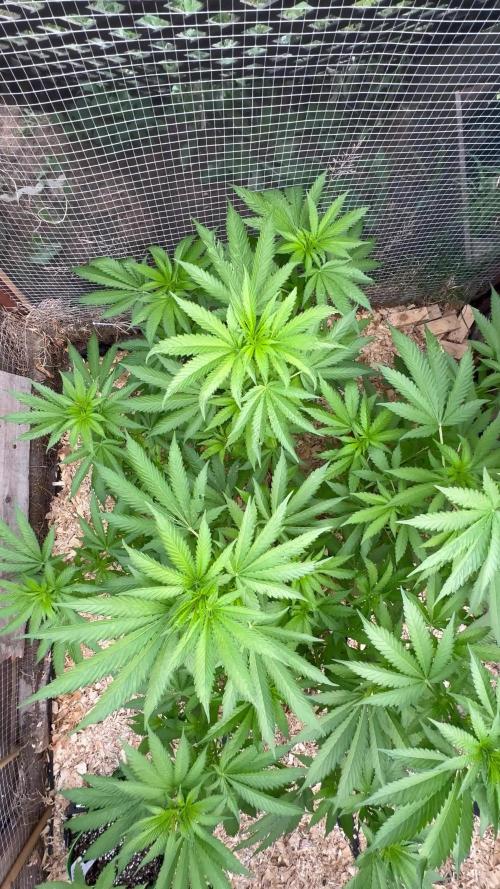
Thanks to the folks on here for the tips on HST to deal with the vigorous growth and the plant tops getting too close to the light! Watched a couple of YT vidz that explained it well and the HST I did to bend the stems away from the light so i could use the SCROG net worked well and the bendy stems firmed back up in no time.
Very subtle smell so far, the leaves I'm pruning from the base of the plant smell great when ripped apart between the fingers.
I might stick to Autos for subsequent grows as I just don't have the tent space to deal with tall Photo-period plants.
Watering/Feeding about twice a week, growing really well and really strong plants.

Processing
Likes
20
Share


@BudXs
Follow
We have seen the sprouts breach the soil this week!!! Not all of them made it unfortunately. 3 of 4 will grow to see the sun, hoping for all females, obviously.
Drip system is working well. Nutes to be introduced in a few days once we see some fan leaves develop
Animals are leaving the cups alone on account of the chicken wire, so all is good
Thanks for looking

Likes
2
Share


@LoganatorDude
Follow
I absolutely love to watch them grow! Especially that moment they hit their first growth spurt.
I started with RO water that is remineralized for drinking purposes. The ppm is only 18! My tap is 156! So considering they don’t need much water, I’ve been stealing some of our drinking water. The RO water starts at pH of 7. After I add the nutrients, ppm of 249 @ pH of 5.8 while soil is still sweet @ pH of 7
I think my days are off as a new week begins on the last day of the previous week. I am going to leave that for consistency.
04/21 - Noticing some possible nutrient issues with the Fruity Pebbles for several days now. Going to see what she needs. Up front I’m thinking maybe just a super small amount of Amino Acids with a little Epsom Salt. Maybe she is struggling to access the nitrates from the neem cake. IF it’s a issues with nitrogen. We will see. Maybe she would benefit from some extra calcium?… Any ideas are greatly appreciated.
Day 22 and I am noticing how these girls have been burning up a lot of potassium lately, dealing with the wind and sun 💨 ☀️, getting pushed around all day.
I plant to top dress with some Kelp Meal pretty soon.
Day 24 -> 4/22/22- a quote from the weather on today’s red flag warning and dust storm warning.
“ HAZARD...Less than a quarter mile visibility with damaging wind in excess of 60 mph. SOURCE...Satellite imagery. IMPACT...Dangerous life-threatening travel.”
I’m keeping the girls inside today.
Day 26, I was planning to check the runoff on some of these girls, especially the fruity pebbles, however I messed that up as I also top dressed WAY too much of the seaweed bliss. So I flushed with plain RO water at pH of 7 until there was only slight coloration in the runoff. I didn’t check the runoff as a lot has changed with all that flushing. So next watering/feeding I will make sure I check the runoff on multiple plants.
So the seaweed bliss with its 17 on potassium, seems to be the most likely culprit for why there is a bronze-ish color on the inside of the new growth. Hopefully a foliar feed of Epsom salts can correct the problem. Inside tent, lights on LOW. Noticing similar pattern in all of them to a degree, most noticeable in the fruity pebbles.




Likes
12
Share


@Naturalist
Follow
Flower week 2, keeping the RH & temp down as much as possible, so far so good.


Likes
6
Share


@Sensiseeker
Follow
Filling in nicely has a great smell starting to frost up.
My haze beast smells very sweet like fruit loops cereal.
Light took a crap almost 10 days ago only 9 months old. Its a medic grow smart 8. After dealing with getting it replaced in the middle of a grow I am done with them. They make a great light, but the service is terrible. You are forced to work with someone in China who will respond to you at 2am. I had to call, text, email, FB msg and msg through IG to get a response and someone to replace my light. It should be here Tuesday. I bought a Mammoth mint today and am going to run that from now on.
11/20 Grape God has a smell of grape and rubber is the best way I can describe it. The haze beast smells Identical to fruit loops almost caught up to the GG in height.
Likes
35
Share


@eldruida_lamota
Follow
Actualizo las red hot cookies familia, una variedad recién sacada al mercado, este año 2020 a traído bastantes novedades entre ellas, está joya 💎.
Una variedad que bien cultivada, tenemos un 60% de probabilidades de conseguir flores rojas, y eso mola.
Además tiene un alto porcentaje en thc.
Que más podemos pedir 🤷♂️.
.
El ph 5,8 , la temperatura es óptima, en 22/24 grados de media, y la humedad la reduci un poco actualmente está entre el 60/70%.
.
AgroBeta:
0,8 ml x L Piramid , vía radicular.
0,6 ml x L Growth black line , vía radicular.
0,1 gr x L Cancerbero , vía radicular.
0,1 ml x L Tucán , vía radicular.
0,1 ml x L Flash Root , vía radicular.
0,4 ml x L Great Green , vía foliar.
0,05 ml x L Gold Joker, vía radicular.
.
Poco más está segunda semana gente , todo está correcto ya la semana que viene veremos cómo avanza todo, un saludo fumetillas y buenos humos 💨💨💨.
Likes
5
Share


@CalGonJim
Follow
3/3 MONDAY 12 am. They are doing great, the supplemental lights are helping. they cost about 60 for the AC Infinity germination kit. I think the 2 lights are enough so it’s cheaper to get another Germination setup with the lights for my 2.8x2.8 tents. 3pm they all took quite a bit of water. feeding into the bottom of the container is very beneficial to the plants. Wish I would’ve known about that sooner I made a video of how I do it.
3/4 4am looking good. 130pm
3/7 4am looking great, new way of watering works better, dont need to water every day now.
1pm give them all water did the heavy watering. They shouldn’t need water tomorrow not until Sunday. They are looking good. I raised the secondary light up a couple of inches. She was causing too much growth lower down in the canopy. The AC Infiniti lights are incredibly powerful at 15 W two of those are more than enough. I’m gonna get two more sets of them for each tent.
4pm Witches Wedding needed work she had twice the nodes I originally thought, so I topped her down to 4 colas, they are very tight internal spacing. She is in with the Trailer Park grow now with a Mix Pack Auto that didn't flower or I made a mistake. If I accidentally got Fas Bud photos instead of Autos it is still like winning the lottery!!!!
3/8 230am I topped her twice and did WAY more cutting back but NO problems, she's looking great. 130pm no water today. 👍👍
3/9 Withces Wedding is in Tent 4 veging. They are doing great. Raised the Aux lighting up a few inches it was causing huge bud formation in the wrong place. Absolutely amazed at how well the little AC Infnity nursery light works, it comes on gentle not all at once. I will have to buy the whole Germination Kit for the light to do this setup in the other 2 grow tents now!!! EVERYTHING HAS TO MATCH!!!!! its not just for cool looks so my Tents look like Star Wars robots if I have to move the plants even a little bit of a difference in lighting can flip them to males and also to be consistent to prevent spills and stupid accidents .
Likes
5
Share


@GoodTimesOrganics
Follow
Nach einer zusätzlichen Blütewoche war es endlich soweit und Dutchberry hat seine volle Pracht entwickelt. Dem Ende hingegen zeigte Sie eine wunderschöne Herbstfarben und betörte mit ihrem tief berigen Aroma.
Viele dicke kompakte Buds, was die Ernte zwar langwierig aber jedoch einfach gestaltete.
Likes
7
Share



Processing
Likes
10
Share


@KREE8IVESTOCKLLC
Follow
going into week 4 i have no complaints, I will end up going 2-4 more weeks of VEG continue with me on my journey of the corona grow! we shall get these ladies to be completely healthy and when there done j want them to be about 6 to 7 feet tall at least 2-4 ounces per plant is my goal


Likes
3
Share

@AestheticGenetix
Follow
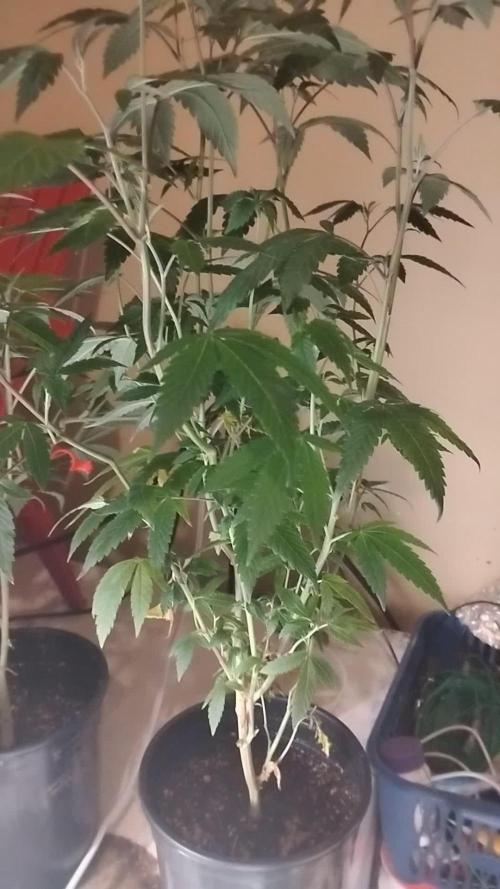
Oh man I'm excited about this one now. I think I may try and fill this tent out with this just this one plant.
Earth box and manual scrog on this Gelato. After getting her in there and realizing how easy she is to bend over and how easy it will be to get a monster plant with this set up, I'm super stoked. This will probably end up being a super long veg time but that's okay.
This is exciting for me. Something different.
Likes
17
Share

@TrickzGrowz
Follow
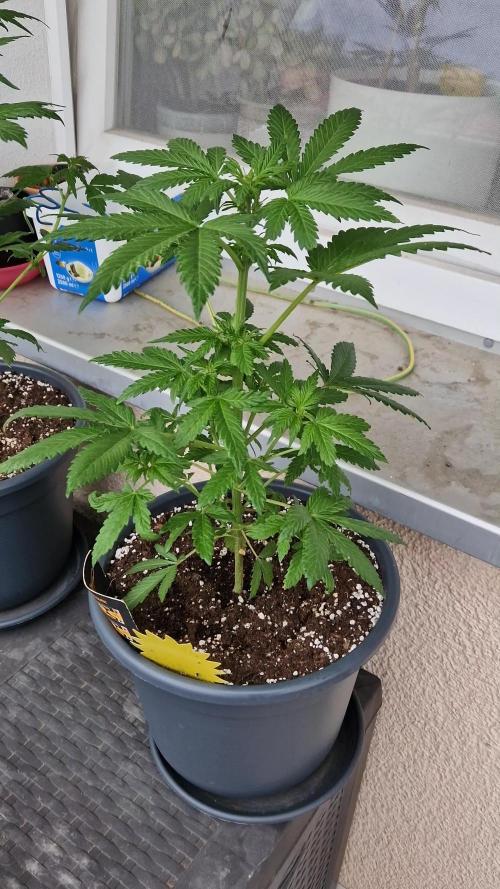
Servus Moin!
Die Chemical Candy stretcht schon wunderbar. Sie ist ungefähr gleich auf mit der Super Lemon Haze. Mal schauen wie groß die Chemical Candy noch wird.
Likes
10
Share


@MG2009
Follow
09/26/2021
Starting week #7 of flower still picking caterpillar, and eggs of leaves, not to serious as we are on top of it.
Starting the week with banana peel tea drench 2 gallons per girl, which is all she will get besides water till harvest.
Still small flushes of pistils coming out I believe she (Hulk) is in final stage of flower (4) lots of orange hairs (pistils) but fresh one coming out daily albeit slower. Hopefully she fatting up in coming weeks.
09/28/2021
Week7
Day #3
Definitely seeing more calyx swelling.
#1 is chunking up nicely
#2 looks good little bud rot were caused from cattipillar poop!
#3 coming from behind Will be last to harvest for sure.
Likes
14
Share


@NewtDawg
Follow
Have been practically fizzing this week knowing the end is nigh for lady No1.
Ended up giving her an extra day, mainly to prove to myself I could but was up early the next morning resolved to chop.
Dismantled her branch by branch but only took the big fan leaves off hoping it will help her dry slowly and ended up with a nice collection of flowers. I’m pretty chuffed to how she has turned out although I know it’s not a massive yeald. Have learned loads though and already planning on what I’m going to change for next time. Thanks to all who’ve shared the benefit of wisdom, the forum has helped immeasurably. Will be back after she’s lost some moisture with a weight check and maybe a cheeky premature smoke report. Thanks gang xx
Update:
I managed to leave it drying for 13 days in total before taking the scissors to it for the jar. All told weighed in at 33g and as I’m not going to start lying to you now have to admit to being a little disappointed with that. Not sure if my expectations were too high or if it’s because of my novice status ( or more likely both) but still grateful for what I did mange to produce which I have to admit seems decent quality which I believe will only get better with a decent cure. Now just need to stop carrying the jar around like a cradled infant and find somewhere dark and cool for it to rest. X
Likes
15
Share


@Percy
Follow
so its currently day 42 end of week 5 (start of week 6) but we are still currently in veg with no pistils or signs of flower little concerned i know she isnt male because the little pointy bits where the pistils for first sex signs come from are shaped with a point so i believe these are females?
also the delay in flower maybe genetics or just down to the stress from lst and topping and constant defol im having to do as she is a fast grower cant keep the shoots of her mainlines, so this maybe the key factor here however due to my tent size etc im considering switching lighting to 12/12 to force flower but no this will impact yield for auto.
so my dilemma is wait another week to 10 days taking her into 7.5 weeks veg hoping she flowers in between or before then or flip her into flower myself with bloom nuits and light change with as little stress as poss by adding extra shade hours to the start of her night cycle
🙏

Processing
Likes
72
Share


@Stinkfox
Follow
I defoliated this week, in the 3rd week of flower. The stretch should be about over. Pistils and bud sites abound. I increased Tiger Bloom. Now we wait.
