


Likes
Comments
Share


@Terpyboyz
Follow
Hi growers 👌🏻🍁
This week I’ve had a few slight more issues this run hasn’t been the best so far. But I’m hoping if I can just up my feed as each watering I’m feeding the ppm are only at 450ppm
1ml grow
3ml bloom
2ml top max
4ml heaven
4ml actavira
In a 5litre bottle - every 3 days
I’ve had a few herm on me - which has been a bit of a disappointing, it just tells me my rooms not dialled in at all. Few more issues to fix next run.
All the pink runts autos that finished flowering dried for 1 half weeks then went into canna butter.
If anyone can give me a message or comment of anything I can do to try fix these girls I would appreciate it ✌️🏻🍁


Likes
13
Share


@Da-weed
Follow
Čau Growers 💚 Pátý týden osamocených holek, BonBoni i Almond Milk x Fizzy Bubblegum se mají k světu, palice houstnou a tvrdnou, jsou už parádně cítit. Dominantnější vůni má BonBoni mi přijde. Po té co jsem byl nucen odstranit 3 holky, tak přišlo pár specifických problémů ve formě vlhkosti a teploty. Nic ale, co bych s AC INFINITY nezvládnul 🤣 Teď už jen čekat na sladký FINISH. Ať se daří, ať to roste, konec hlášení 💚


Likes
65
Share


@Deranged420
Follow
Day 64 - See below.
#1 - Just Flushing at this point & watching tricomes. i think her top half is almost done. I suck at tricomes pics. She is a lot bigger than photos can portray.
#2 - Lol. Whatever.
Day 65 - See Below. (Sorry No Pics For Today)....
#1 - Left alone but rotated.
#2 - Staked up some low hanging fruit, some white hairs forming. Gave 17oz of water...
Day 66 - See Below.
#1 - Cut some leaves off and she is in her final resting sleep. Harvest is tomorrow AM if she looks good.
#2 - Getting a 1500W dropped on her tomorrow.
Day 67 - See Below.
#1 - Looks done enough so she got cut down (60 grams wet). She is hanging in her final resting place.
Day 68 - See Below.
Only updates on #1 from here on out. She is day 2 of drying.
#2 - Updates are done cause she’s is a bust unless 1500w can turn her around (doubtful).

Likes
16
Share

@Crop_Top
Follow
Nothing but pure H20 💦
Buds have bulked up a little, frosty, and about 10% amber trichomes. Harvest week for sure! Stay tuned.


Likes
9
Share


@Krissci
Follow
Day 2 - LST and topping if possible before transition to flower.
Slow for separate branches to grow
Likes
27
Share


@MindFlowers68
Follow
Stopped feeding this week other than one watering with molasses. Needing to be watered every 3 days. Other waterings using ph'ed filtered water to 6.5 set on my air bubbler for a few hours before watering.
She's very close to being ready. Another week and i think she will be perfect. Notice leaves fading end of last week and they have been getting more color throughout the week. Bud growth only happening closes to the light and much of orange hairs are white. Not a ton of amber trichomes yet which is good. Really liking how this plant is turning out. Nice loud terpene profile and fat dense frosty buds. Trimming should be pretty easy on this one which is a relief knowing how much work I have ahead of me. I think this very could be the fast version.

Likes
12
Share


Likes
5
Share


@AlienCannaKing
Follow
They look very healthy and the trichomes are looking to become great! Hope some good big buds time will tell. Its my first grow, any tip or advice is welcome!


Likes
Comments
Share


@UGrowGuy
Follow
01/20- Girls are growin. Some are a lil upset about the fan hitting them, better than mold. I have gone through 48 gallons of water over the last week!
Likes
19
Share


@sirstickyfingers
Follow
Day 35 from sprout, wk 4 Veg for these girls. This being my first grow I obviously need work on my LST techniques lol. I Am am trying to let them grow naturally for the most part and just trying to pull them higher branches aside to allow the lower growths meet the canopy. Im not sure what to do with the sour diesel as it has become like a damn hedge and so dense that im just gonna let it go until after the stretch to defoliate since i like the natural canopy it has going. They been doing really well and they are drinking alot more water now almost double what they were drinking last week. But mostly just water every other day now. I am considering on a 6 week veg depending how this next week goes.


Likes
41
Share


@Cannaguy
Follow
Started to have problems with insects munching on the leaves, I applied trifecta and insecticidal soap simultaneously so they do not get used to one or the other and it has seemed to stop their destruction for now. Will continue to apply one a week as a preventative measure. Have not given the plants any nutrients up to this point since they have not shown any problems during growth
Likes
3
Share


@BlueTrees
Follow
The leaves on my plants are starting to fold up like a taco, some yellowing.. Not too sure what is going on. My friend suggested that it was a calcium or magnesium deficiency and it matches the description online but I usually give 3 or 4 ml per gallon damn near every time i water, is that enough or too much even? They are 5 weeks from seed today and all 3 are flowing very different and at a different pace..

Processing
Likes
74
Share


@Mr_Maes
Follow
We are officially in full bloom. The have been enjoying 6-7 hours of sun light per day for about 4 days now, then brought back in under the cobs. The girls are all exploding with growth and stacking what I expect to be huge buds.


Likes
Comments
Share

@DogDoctorOfficial
Follow
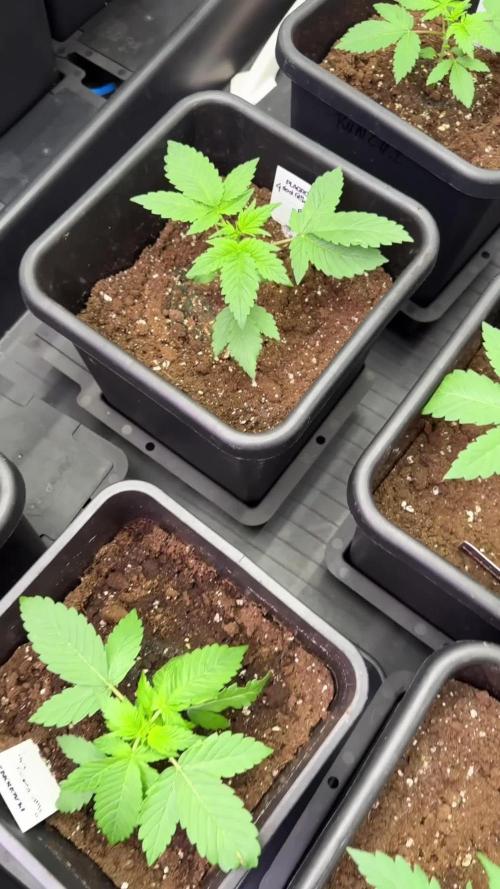
🌱 Week 2 — Purple CousKush Auto | Pheno A | The Little Rebel Finds Her Way
Every grow has that one plant that keeps you guessing.
When Purple CousKush Auto Pheno A first emerged, she immediately stood out from her sisters. Instead of developing the classic central growing tip, her apical meristem seemed confused, almost as if nature had decided to improvise. At first glance I honestly wondered if she had naturally topped herself, if the main shoot had stalled, or if she was simply going to remain a tiny mutant.
Rather than intervene, I decided to do what every grower should occasionally do…
Nothing.
Sometimes the best decision is to step back and allow the plant to tell her own story.
A week later, she has done exactly that.
The strange beginning has transformed into one of the most interesting phenotypes in the room. Instead of forcing a single dominant leader, she has begun producing multiple vigorous growing tips from the center, creating a naturally compact structure that already looks fuller than expected for her age.
She may be smaller than her sisters, but she certainly isn’t weaker.
In fact, she seems to have invested her energy into building a sturdy frame with very tight internodal spacing. The stem is becoming thicker every day, side branches are developing evenly, and the new growth is vibrant, healthy, and full of life.
Her architecture is completely different from the other Purple CousKush phenotypes, reminding us why growing from seed is always such an adventure. Every individual expresses the genetics in its own unique way.
This is exactly why I love documenting these grows.
If I had judged her during Week 1, I might have assumed she would never become anything special. Instead, patience has rewarded me with one of the most fascinating little plants in the entire 8×8 Adventure.
Sometimes the odd ones simply need a little extra time before revealing their true personality.
Environment remains stable inside the tent, with temperature, humidity and VPD staying right where I want them. The Plagron substrate continues to provide an excellent home for healthy root development, while the Zamnesia ecosystem keeps everything running smoothly under consistent lighting and airflow.
For now, there is nothing to correct.
No stress.
No intervention.
Just observation.
I’ll continue letting her write her own story while I simply provide the conditions she needs to thrive.
If Week 2 has taught me anything, it’s this:
Not every champion starts with a perfect beginning.
Some simply take the scenic route.
💚 Growers Love and thank you to Plagron, Zamnesia, Grow Diaries, and everyone following this 8×8 Adventure. Every week reminds me that every seed carries its own personality, and this little Purple CousKush has already become one of the most memorable characters in the garden.
Likes
23
Share


@KarlysCannabis
Follow
I love growing with GrowDiaries! It's great to be able too look back at previous grows and compare. Being able to share with the community is a bonus!!
This strain was so easy to grow I found her and her brothers picky on ph, but most are. I'm excited to growing again. @honeycombhydrollc @thefreakoff2021
Likes
9
Share

@Chef_LA
Follow
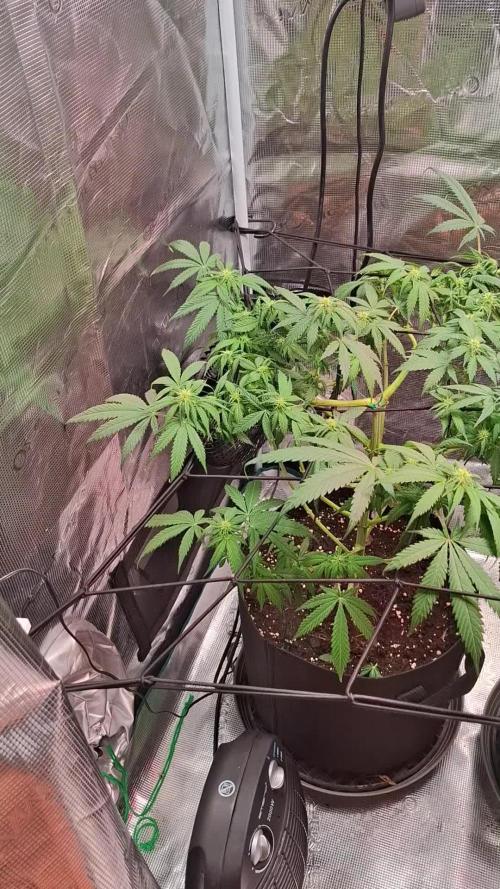
Langsam entwickeln sich schöne Blüten. Zwei bis drei mal in der Woche muss ich leicht entlauben. Die Blätter sprießen nur so. Ich hoffe das überträgt sich auch auf die Blüten. Habe jetzt zusätzlich zwei LED Rotlichtlampen (60cm) von Spiderfarmer ins Zelt gehängt. Mal schauen ob sich das auf die Blüten auswirkt. Zusätzlich zum normalen Düngeschema wurde ein mal mit Brennnesseljauche gedüngt, 100ml pro Liter für die vier Ladys. Erziele damit immer gute Ergebnisse im normalen Gemüsegarten.
Ja und das wichtigste, mit schöner Musik, guter Laune und genügend Zeit "gärtnern!!!

Likes
9
Share
@Trinidad
Follow
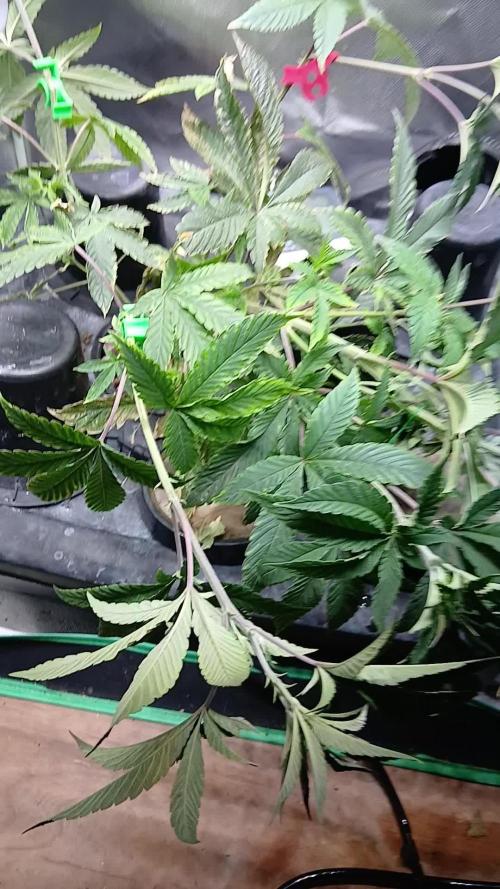
She had made it recovery but everyday I see her and I feel so tired after work and seeing about other plant..I need to give her some tlc
Likes
Comments
Share

@Franco123
Follow
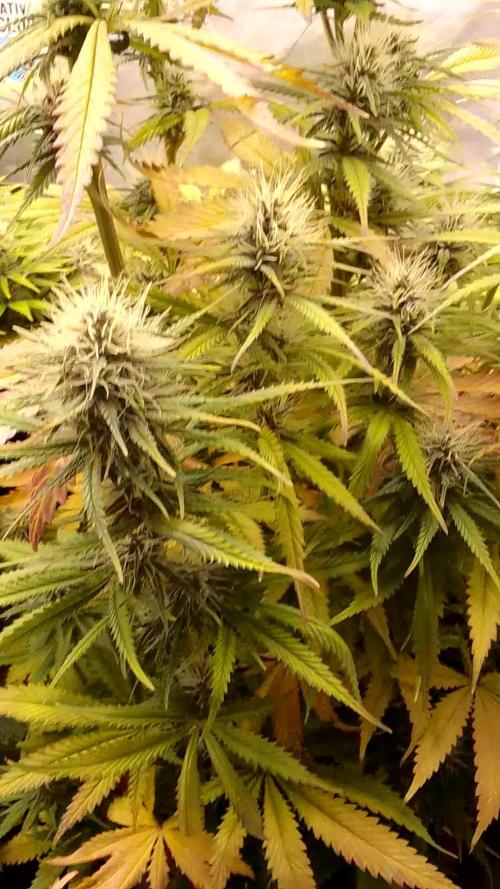
the plants grow and flower peacefully, the only thing that is leaving me a little strange is that the flowers do not turn purple unlike the others that have the same cutting reversed as the father but the two of them are s1 therefore self-hypolinating but the purple gene seems to have been passed down only to the mixed progeny and not to her