The Grow Awards 2026 🏆
Likes
30
Share
@BudXs
Follow
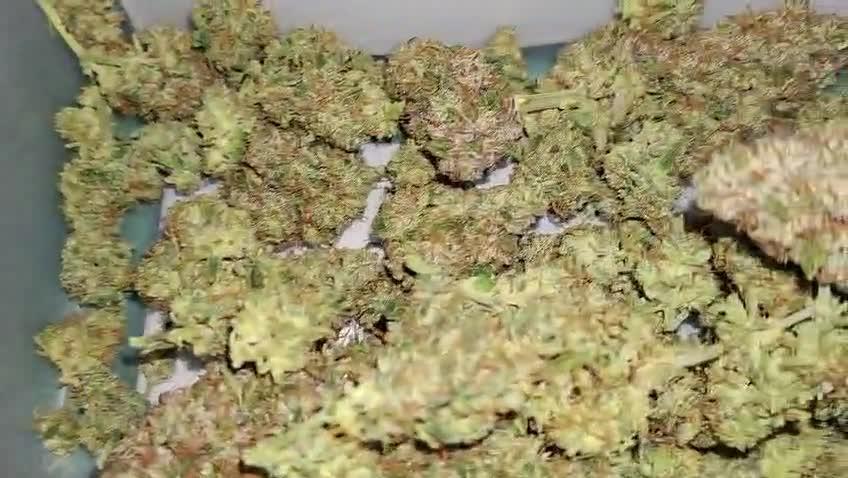
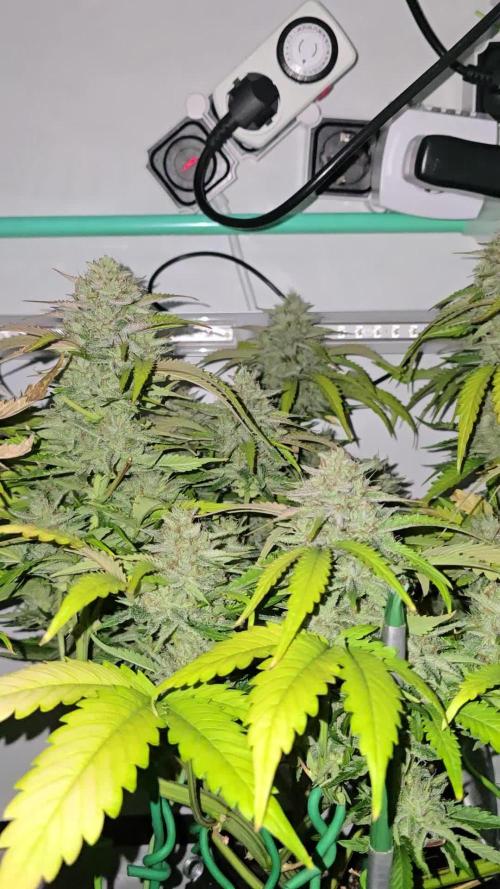
Tick tock SBG, follow him on tik tok too. So far the rest of the plants are yielding really nicely all the way down. Minimal larf and 5oz+ average. Lets see what a non defo will do Thanks for lookin
Processing
Likes
29
Share
@Grey_Wolf
Follow
Ginger Nut Cookies & Aussie Music Videos Week 16 Harvest 17 th April 2020 This Entire feminised seed making and growing project was a very good learning experience for me. Right from the very start, when I successfully got a Cutting ,taken from a Barneys Farm Red diesel female plant to produce feminised pollen after treating it with a silver thiosulfate solution. I then used it to pollinate a Fastbuds Girl scout cookies auto plant and let it grow to maturity. This only produced 3 viable seeds one of which is the subject of this Diary. I made up the name "Ginger nut cookies" after a variety of cookies we have here in Australia that are made with ginger. They are the same colour as the distinct red hairs on the red diesel buds. And would you believe those same vivid red hairs were passed on to this plant so I wasn't too far off the mark with the strain name. Her flavour however is nothing like red diesel or girl scout cookies and infact as taken on a smell and aroma all of it's own. She has a lovely tropical fruit like taste and the smell is a bit like fruit yoghurt. It has an unreal after taste on the exhale and the lingering second hand smoke smells very sweet and enticing. She has a pretty well balanced high too not as potent as the GSC nor as energenic as the red diesel but just a pleasant mix of the two. It was a very easy to grow and undemanding plant that didn't seem to require a lot of extra feeding other than the 100% organic nutrients that were within the soil and a few things like compost teas etc. The other element of this diary was of course the weekly Aussie music videos That I provided the links for and put up a little video clip preview of each Artists song. Week 1 Dance Monkey Week 2 Gotye Week 3 AC/DC Week 4 INXS Week 5 Dire straits Week 6 Yothu yindi and Midnight oil Week 7 Divinyls Week 8 Was Request week where I asked growers to pick and because only 3 growers put in a request I decided to choose all three which were Kylie Minogue , Flume & Airbourne Week 9 Paul Kelly Week 10 Daddy Cool Week 11 Cold chisel Week 12 Jimmy Barnes Week 13 The Angels Week 14 Crowded House Hoodoo gurus Mental as Anything Week 15 Empire of the sun Big Pig , Silverchair , Peking duk Grinspoon , Hilltop hoods and the White stripes And Finally for the last lot of music videos I have chosen another multi list bonanza of Aussie Music with the artist/s name and Youtube link below. So in no particular order here are my last choices for this Diary its been a fun grow with a steep learning curve. John Williamson True Blue https://youtu.be/ceWKrsJX9N4 Nick Cave and Kylie Minogue Where the wild roses grow https://youtu.be/lDpnjE1LUvE John Farnham Your the Voice https://www.youtube.com/watch?v=tbkOZTSvrHs Powderfinger Pick you up https://youtu.be/4Ha-dtNXTM8 Slim Dusty Pub with no beer https://www.youtube.com/watch?v=8E0aZ387M_I Men At Work Down Under https://www.youtube.com/watch?v=XfR9iY5y94s Icehouse Great southern land https://www.youtube.com/watch?v=3mkidP2OUCk Before I go I'd like to thank all of you who read & like my diary updateseach week you are all awesome!! This is a great platform full of great growers and great people : 1: The End.......
Likes
7
Share
Weeks 15 - It’s Ready - The 1st Gorilla Glue Is Ready To Be Havrest, I Gave It 3 Weeks Of Flushing And The Trichomes Of The Top Heads Are Most Cloudy With A Few Clear And A Little Amber Trichomes And The Bottom Buds Are Mostly Cloudy With A Few Clear And The Sceny Is Still At It’s Peak But You could Tell It Was About To Head Over The Morning And Start To Take A Downright Spiral I Will Be Hanging It To Dry For 7-9 Days At A Temperature Of 70 Degrees and 60% Humidity. The Slower It Dries The Better.
Likes
12
Share
In awe at this batch 2 weeks remaining and they are pretty swollen Smells and swells. Can hints of change in color but still a pretty, green. Buds already snowcapped. And the selected branch that was pollinated has seeds Maturing.
Likes
22
Share
Great week, harvested the Candy Kushs and the remaining girls are doing really well. I've stopped feeding them and just giving water now as I am away for a few weeks and wanted to keep it simple for my partner who is looking after them while I am away. The fastberry can probably be harvested already but decided to leave her longer and hopefully give buds more time to fatten up. The Bubble Kush is looking amazing and the buds are growing and gaps between buds getting smaller, she looks like she can do with a few more weeks, so she'll be perfect when I am back hopefully. This will be my last update until then probably.
Likes
14
Share
Here we are week 4 of veg and there just showing there pistels here our 2 gsc are really taking on vigorous growth so very pleased with these I will ask our @ grizzly-cannabis-seeds.co.uk what breeder they are i suspect there the bakery seed company. Now we had our 1st 100% success germination go tits up more so hydro store not sending rite stuff delaying me corsing me stress subsequently forgot about them for whole day and note so thenly fella behind so our purple lemonade is a recovered 1 and has been struggling to hit water 💧 so its been dip feed for 4 weeks now and is already stated to show her colours. Our 2 bloody skunk k autos we didn't expect much now im not 1 to put a breeder sown but the 3 packs we had were poor after 4 runs now just nor good nor strong won't use them again. They are slowly coming along if I need to cull I will. As for our auto purple kush alos a mystery breeder she is also taking very well to lst and is vigorous in growth. Nutrients/ @indica nutrients @dan indica nutrients On 2 part feed system on grow schedule D as pose to C so we can see the Afghan nectar in action • Along with triple activity  and with resin and smell enhancer
Likes
21
Share
Likes
1
Share
Pulled 48hrs of dark week 12-13 .. 1 plant might of even touched into week 14. Learned many things. Happy with results.
Likes
4
Share
@BlaKX
Follow
BlaKX Ai Gude Growmies!!!! RUNDE 2 letzte Woche! Gorilla Punch Auto 🦍 🥊:58cm Mimosa Cake Auto 🍹 🍰:37cm Longbottom Haze Auto: 58 Beim ersten Grow habe ich sie nach 9 Wochen geerntet und dieses Mal habe ich sie 1 Woche länger stehen lassen die Fastbuds Genetiken und die Longbottom Haze ist genau richtig. Wenn ich sehe was aroma und bud technisch durch 1 Woche länger Reifen möglich ist und man es nicht eilig hat und nach Trichomen ernet wird reich haltiger belohnt! Habe sie mit Canna FLUSH gespült und 3 tage trocken stehen lassen die letzten 3 tage. Mir läuft das Wasser im Mund zusammen bei der Farbe und Aromen!!!!
Likes
31
Share
Gracias al equipo de AnesiaSeeds, Marshydro, XpertNutrients y Trolmaster sin ellos esto no sería posible. 💐🤯 39%Thc Wham Boom: Sube al ring con WHAM BOOM de Anesia Seeds, donde la energía electrizante de Wham choca con las vibraciones frías de RS54, creando una variedad que es todo equilibrio, potencia y sabor. Este peso pesado feminizado ofrece una mezcla perfecta de 50% Sativa y 50% Indica, proporcionando una experiencia que te hará flotar de euforia mientras tu cuerpo se sumerge en una serena relajación. WHAM BOOM es una productora prolífica, con rendimientos en interior de 600g/m² y en exterior que alcanzan la asombrosa cifra de 900 - 1200g por planta. Con una floración de entre 65 y 70 días, esta variedad está lista a principios de octubre, lo que la convierte en una competidora ideal para los cultivadores que aspiran a una cosecha de campeonato. Con una imponente presencia de 100-140 cm en interior y 160-220 cm en exterior, WHAM BOOM se alza como testimonio de su destreza genética. 🏠 : Marshydro 1.50 x 1.50 x 1.80, carpa 100% estanca con ventanas laterales para llegar a todos los lugares durante el grow https://marshydro.eu/products/diy-150x150x200cm-grow-tent-kit 🌬️💨 Marshydro 6inch + filtro carbon para evitar olores indeseables. https://marshydro.eu/products/ifresh-smart-6inch-filter-kits/ 💻 Trolmaster Tent-X TCS-1 como controlador de luz, optimiza tu cultivo con la última tecnología del mercado, desde donde puedes controlar todos los parametros. https://www.trolmaster.com/Products/Details/TCS-1 🍣🍦🌴 Xpert Nutrients es una empresa especializada en la producción y comercialización de fertilizantes líquidos y tierras, que garantizan excelentes cosechas y un crecimiento activo para sus plantas durante todas las fases de cultivo. Consigue aqui tus Nutrientes: https://xpertnutrients.com/es/shop/ 📆 Semana 1: Gran comienzo primaveral después de una germinación excelente. La etapa de plantula se desarrolla con normalidad. Esta semana aplico tierra de diatomeas espolvoreada en el sustrato para proteger las plantas y las rocio con una solución de cola de caballo para prevenir futuros hongos. Potencia de la lámpara: 40%
Likes
80
Share
@Roberts
Follow
Pure Ice cream clone is growing great. She is stretching great, and I have been doing hst on the branches to keep them out of the light. Everything is going really good at the moment. She is eating and drinking a lot. Looks like she is going to produce a good yield if everything stays going good. Thank you Pure Instinto, and Spider Farmer. 🤜🏻🤛🏻🌱🌱🌱 Thank you grow diaries community for the 👇likes👇, follows, comments, and subscriptions on my YouTube channel👇. ❄️🌱🍻 Happy Growing 🌱🌱🌱 https://youtube.com/channel/UCAhN7yRzWLpcaRHhMIQ7X4g
Likes
25
Share
ANTHOCYANIN production is primarily controlled by the Cryptochrome (CR1) Photoreceptor ( !! UV and Blue Spectrums are primary drivers in the production of the pigment that replaces chlorophyll, isn't that awesome! 1. Diverse photoreceptors in plants Many civilizations, including the sun god of ancient Egypt, thought that the blessings of sunlight were the source of life. In fact, the survival of all life, including humans, is supported by the photosynthesis of plants that capture solar energy. Plants that perform photosynthesis have no means of transportation except for some algae. Therefore, it is necessary to monitor various changes in the external environment and respond appropriately to the place to survive. Among various environmental information, light is especially important information for plants that perform photosynthesis. In the process of evolution, plants acquired phytochrome, which mainly receives light in the red light region, and multiple blue light receptors, including his hytropin and phototropin, in order to sense the light environment. .. In addition to these, an ultraviolet light receptor named UVR8 was recently discovered. The latest image of the molecular structure and function of these various plant photoreceptors (Fig. 1), focusing on phytochrome and phototropin. Figure 1 Ultraviolet-visible absorption spectra of phytochrome, cryptochrome, phototropin, and UVR8. The dashed line represents each bioactive absorption spectrum. 2. Phytochrome; red-far red photoreversible molecular switch What is phytochrome? Phytochrome is a photochromic photoreceptor, and has two absorption types, a red light absorption type Pr (absorption maximum wavelength of about 665 nm) and a far-red light absorption type Pfr (730 nm). Reversible light conversion between the two by red light and far-red light, respectively(Fig. 1A, solid line and broken line). In general, Pfr is the active form that causes a physiological response. With some exceptions, phytochrome can be said to function as a photoreversible molecular switch. The background of the discovery is as follows. There are some types of plants that require light for germination (light seed germination). From that study, it was found that germination was induced by red light, the effect was inhibited by subsequent far-red light irradiation, and this could be repeated, and the existence of photoreceptors that reversibly photoconvert was predicted. In 1959, its existence was confirmed by the absorption spectrum measurement of the yellow sprout tissue, and it was named phytochrome. Why does the plant have a sensor to distinguish between such red light and far-red light? There is no big difference between the red and far-red light regions in the open-field spectrum of sunlight, but the proportion of red light is greatly reduced due to the absorption of chloroplasts in the shade of plants. Similar changes in light quality occur in the evening sunlight. Plants perceive this difference in light quality as the ratio of Pr and Pfr, recognize the light environment, and respond to it. Subsequent studies have revealed that it is responsible for various photomorphogenic reactions such as photoperiodic flowering induction, shade repellent, and deyellowing (greening). Furthermore, with the introduction of the model plant Arabidopsis thaliana (At) and the development of molecular biological analysis methods, research has progressed dramatically, and his five types of phytochromes (phyA-E) are present in Arabidopsis thaliana. all right. With the progress of the genome project, Fi’s tochrome-like photoreceptors were found in cyanobacteria, a photosynthetic prokaryotes other than plants. Furthermore, in non-photosynthetic bacteria, a homologue molecule called bacteriophytochrome photoreceptor (BphP) was found in Pseudomonas aeruginosa (Pa) and radiation-resistant bacteria (Deinococcus radiodurans, Dr). Domain structure of phytochrome molecule Phytochrome molecule can be roughly divided into N-terminal side and C-terminal side region. PAS (Per / Arndt / Sim: blue), GAF (cGMP phosphodiesterase / adenylyl cyclase / FhlA: green), PHY (phyto-chrome: purple) 3 in the N-terminal region of plant phytochrome (Fig. 2A) There are two domains and an N-terminal extension region (NTE: dark blue), and phytochromobilin (PΦB), which is one of the ring-opening tetrapyrroles, is thioether-bonded to the system stored in GAF as a chromophore. ing. PAS is a domain involved in the interaction between signal transduction-related proteins, and PHY is a phytochrome-specific domain. There are two PASs and her histidine kinase-related (HKR) domain (red) in the C-terminal region, but the histidine essential for kinase activity is not conserved. 3. Phototropin; photosynthetic efficiency optimized blue light receptor What is phototropin? Charles Darwin, who is famous for his theory of evolution, wrote in his book “The power of move-ment in plants” published in 1882 that plants bend toward blue light. Approximately 100 years later, the protein nph1 (nonphoto-tropic hypocotyl 1) encoded by one of the causative genes of Arabidopsis mutants causing phototropic abnormalities was identified as a blue photoreceptor. Later, another isotype npl1 was found and renamed phototropin 1 (phot1) and 2 (phot2), respectively. In addition to phototropism, phototropin is damaged by chloroplast photolocalization (chloroplasts move through the epidermal cells of the leaves and gather on the cell surface under appropriate light intensity for photosynthesis. As a photoreceptor for reactions such as escaping to the side of cells under dangerous strong light) and stomata (reactions that open stomata to optimize the uptake of carbon dioxide, which is the rate-determining process of photosynthetic reactions). It became clear that it worked. In this way, phototropin can be said to be a blue light receptor responsible for optimizing photosynthetic efficiency. Domain structure and LOV photoreaction of phototropin molecule Phototropin molecule has two photoreceptive domains (LOV1 and LOV2) called LOV (Light-Oxygen-Voltage sensing) on the N-terminal side, and serine / on the C-terminal side. It is a protein kinase that forms threonine kinase (STK) (Fig. 4Aa) and whose activity is regulated by light. LOV is one molecule as a chromophore, he binds FMN (flavin mononucleotide) non-covalently. The LOV forms an α/βfold, and the FMN is located on a β-sheet consisting of five antiparallel β-strands (Fig. 4B). The FMN in the ground state LOV shows the absorption spectrum of a typical oxidized flavin protein with a triplet oscillation structure and an absorption maximum wavelength of 450 nm, and is called D450 (Fig. 1C and Fig. 4E). After being excited to the singlet excited state by blue light, the FMN shifts to the triplet excited state (L660t *) due to intersystem crossing, and then the C4 (Fig. 4C) of the isoaroxazine ring of the FMN is conserved in the vicinity. It forms a transient accretionary prism with the tain (red part in Fig. 4B Eα) (S390I). When this cysteine is replaced with alanine (C / A substitution), the addition reaction does not occur. The effect of adduct formation propagates to the protein moiety, causing kinase activation (S390II). After that, the formed cysteine-flavin adduct spontaneously dissociates and returns to the original D450 (Fig. 4E, dark regression reaction). Phototropin kinase activity control mechanism by LOV2 Why does phototropin have two LOVs? Atphot1 was found as a protein that is rapidly autophosphorylated when irradiated with blue light. The effect of the above C / A substitution on this self-phosphorylation reaction and phototropism was investigated, and LOV2 is the main photomolecular switch in both self-phosphorylation and phototropism. It turns out that it functions as. After that, from experiments using artificial substrates, STK has a constitutive activity, LOV2 functions as an inhibitory domain of this activity, and the inhibition is eliminated by photoreaction, while LOV1 is kinase light. It was shown to modify the photosensitivity of the activation reaction. In addition to this, LOV1 was found to act as a dimerization site from the crystal structure and his SAXS. What kind of molecular mechanism does LOV2 use to photoregulate kinase activity? The following two modules play important roles in this intramolecular signal transduction. Figure 4 (A) Domain structure of LOV photoreceptors. a: Phototropin b: Neochrome c: FKF1 family protein d: Aureochrome (B) Crystal structure of auto barley phot1 LOV2. (C) Structure of FMN isoaroxazine ring. (D) Schematic diagram of the functional domain and module of Arabidopsis thaliana phot1. L, A’α, and Jα represent linker, A’α helix, and Jα helix, respectively. (E) LOV photoreaction. (F) Molecular structure model (mesh) of the LOV2-STK sample (black line) containing A’α of phot2 obtained based on SAXS under dark (top) and under bright (bottom). The yellow, red, and green space-filled models represent the crystal structures of LOV2-Jα, protein kinase A N-lobe, and C-robe, respectively, and black represents FMN. See the text for details. 1) Jα. LOV2 C of oat phot1-to α immediately after the terminus Rix (Jα) is present (Fig. 4D), which interacts with the β-sheet (Fig. 4B) that forms the FMN-bound scaffold of LOV2 in the dark, but unfolds and dissociates from the β-sheet with photoreaction. It was shown by NMR that it does. According to the crystal structure of LOV2-Jα, this Jα is located on the back surface of the β sheet and mainly has a hydrophobic interaction. The formation of S390II causes twisting of the isoaroxazine ring and protonation of N5 (Fig. 4C). As a result, the glutamine side chain present on his Iβ strand (Fig. 4B) in the β-sheet rotates to form a hydrogen bond with this protonated N5. Jα interacts with this his Iβ strand, and these changes are thought to cause the unfold-ing of Jα and dissociation from the β-sheet described above. Experiments such as amino acid substitution of Iβ strands revealed that kinases exhibit constitutive activity when this interaction is eliminated, and that Jα plays an important role in photoactivation of kinases. 2) A’α / Aβ gap. Recently, several results have been reported showing the involvement of amino acids near the A’α helix (Fig. 4D) located upstream of the N-terminal of LOV2 in kinase photoactivation. Therefore, he investigated the role of this A’α and its neighboring amino acids in kinase photoactivation, photoreaction, and Jα structural change for Atphot1. The LOV2-STK polypeptide (Fig. 4D, underlined in black) was used as a photocontrollable kinase for kinase activity analysis. As a result, it was found that the photoactivation of the kinase was abolished when amino acid substitution was introduced into the A’α / Aβ gap between A’α and Aβ of the LOV2 core. Interestingly, he had no effect on the structural changes in Jα examined on the peptide map due to the photoreaction of LOV2 or trypsin degradation. Therefore, the A’α / Aβ gap is considered to play an important role in intramolecular signal transduction after Jα. Structural changes detected by SAXS Structural changes of Jα have been detected by various biophysical methods other than NMR, but structural information on samples including up to STK is reported only by his results to his SAXS. Not. The SAXS measurement of the Atphot2 LOV2-STK polypeptide showed that the radius of inertia increased from 32.4 Å to 34.8 Å, and the molecular model (Fig. 4F) obtained by the ab initio modeling software GASBOR is that of LOV2 and STK. It was shown that the N lobes and C lobes lined up in tandem, and the relative position of LOV2 with respect to STK shifted by about 13 Å under light irradiation. The difference in the molecular model between the two is considered to reflect the structural changes that occur in the Jα and A’α / Aβ gaps mentioned above. Two phototropins with different photosensitivity In the phototropic reaction of Arabidopsis Arabidopsis, Arabidopsis responds to a very wide range of light intensities from 10–4 to 102 μmol photon / sec / m2. At that time, phot1 functions as an optical sensor in a wide range from low light to strong light, while phot2 reacts with light stronger than 1 μmol photon / sec / m2. What is the origin of these differences? As is well known, animal photoreceptors have a high photosensitivity due to the abundance of rhodopsin and the presence of biochemical amplification mechanisms. The exact abundance of phot1 and phot2 in vivo is unknown, but interesting results have been obtained in terms of amplification. The light intensity dependence of the photoactivation of the LOV2-STK polypeptide used in the above kinase analysis was investigated. It was found that phot1 was about 10 times more photosensitive than phot2. On the other hand, when the photochemical reactions of both were examined, it was found that the rate of the dark return reaction of phot1 was about 10 times slower than that of phot2. This result indicates that the longer the lifetime of S390II, which is in the kinase-activated state, the higher the photosensitivity of kinase activation. This correlation was further confirmed by extending the lifespan of her S390II with amino acid substitutions. This alone cannot explain the widespread differences in photosensitivity between phot1 and phot2, but it may explain some of them. Furthermore, it is necessary to investigate in detail protein modifications such as phosphorylation and the effects of phot interacting factors on photosensitivity. Other LOV photoreceptors Among fern plants and green algae, phytochrome ɾphotosensory module (PSM) on the N-terminal side and chimera photoreceptor with full-length phototropin on the C-terminal side, neochrome (Fig. There are types with 4Ab). It has been reported that some neochromes play a role in chloroplast photolocalization as a red light receiver. It is considered that fern plants have such a chimera photoreceptor in order to survive in a habitat such as undergrowth in a jungle where only red light reaches. In addition to this, plants have only one LOV domain, and three proteins involved in the degradation of photomorphogenesis-related proteins, FKF1 (Flavin-binding, Kelch repeat, F-box 1, ZTL (ZEITLUPE)), LKP2 ( There are LOV Kelch Protein2) (Fig. 4Ac) and aureochrome (Fig. 4Ad), which has a bZip domain on the N-terminal side of LOV and functions as a gene transcription factor. 4. Cryptochrome and UVR8 Cryptochrome is one of the blue photoreceptors and forms a superfamily with the DNA photoreceptor photolyase. It has FAD (flavin adenine dinucle-otide) as a chromophore and tetrahydrofolic acid, which is a condensing pigment. The ground state of FAD is considered to be the oxidized type, and the radical type (broken line in Fig. 1B) generated by blue light irradiation is considered to be the signaling state. The radical type also absorbs in the green to orange light region, and may widen the wavelength region of the plant morphogenesis reaction spectrum. Cryptochrome uses blue light to control physiological functions similar to phytochrome. It was identified as a photoreceptor from one of the causative genes of UVR8 Arabidopsis thaliana, and the chromophore is absorbed in the UVB region by a Trp triad consisting of three tryptophans (Fig. 1D). It is involved in the biosynthesis of flavonoids and anthocyanins that function as UV scavengers in plants. Conclusion It is thought that plants have acquired various photoreceptors necessary for their survival during a long evolutionary process. The photoreceptors that cover the existing far-red light to UVB mentioned here are considered to be some of them. More and more diverse photoreceptor genes are conserved in cyanobacteria and marine plankton. By examining these, it is thought that the understanding of plant photoreceptors will be further deepened.
Likes
8
Share
Ich bin mal gespannt, wie hoch es noch hinaus geht.
Likes
446
Share
Hello to you my dear friends and visitors 👋I appreciate you guys visiting and all the likes 😇 Trichomes on the Killer Kush girls ...are mostly milky with a couple transparent mostly on KK#4 and some amber is getting through to, so with all probability i will flush and go dark mode somewhere this thursday or friday (i'll keep you guys updated). I did set the SE 7000 to 630 Watt for about a week now as i read that it stimulates the plant to grow more bud...here the sorce: https://growlightmeter.com/lighting-requirements-of-cannabis-over-the-full-grow-cycle/ Here are the transcripts of how my week did go through: 05.09. I add: Canna Cal Mag: 53ml. Canna PK 13/14: 33ml. PH: 6,3 EC: 2,6 06.09. I add Jungle Indabox: A: 27ml. B: 75ml. M: 55ml. Ata Bloombastic: 60ml. Canna Cal Mag: 85ml. Hesi Powerzyme: 100ml. PH: 6,3 EC: 3,2 09.09. I add Jungle Indabox: A: 25ml. B: 70ml. M: 50ml. Canna Cal Mag: 78ml. Ata Bloombastic: 80ml. Ata Clean: 7ml. Ph: 6,15 EC: 3,8 That's it for this week I hope everyone had as good a week as i did, hopefully see you next week 😅 all the best to you my friends and keep it growing 💪
Likes
4
Share
*English below* La planta está terminando su sexado, comenzando flora, día 2. El stretching fue una locura, de una planta de 70 cm (que use la mitad para hacer esquejes), en solo 15 días crecio arriba de 1.5 m. La primavera en buenos aires acompaño con un clima perfecto los últimos dos meses. La planta tuvo 70 días de vegetativo. 2 day blooming, the stretching was massive, the plant was 75cm and now it's more than the double of that size. Half of the plant was used for clons, so in 15 days of stretching, 35 cm of plant became this.
Likes
20
Share
@MeaCulpa
Follow
Happy Star Wars Day@all :-D My ladies are doing great. I gave myself a CO2 measuring device and a humidity god. The thing does what it's supposed to do. All of them except Iris have been in bloom since 2 days. I just stressed them out and tied them down. A few large leaves also had to believe in it. Iris comes later. Have a nice weekend@all
Likes
8
Share
@Wolf47
Follow
So, Im growing 1 Pineapple Express, in soil, and 1 hydroponically. This diary I’m using it for soil records(have a strawberry cheesecake auto diary, for hydro). The one in soil is 2x bigger than the rest of the plants in the same 4x4 tent, and I rotate them every other day! The reason for doing this, is due to always seeming to have 1 way bigger than the others. All in all, it’s been a good week! Been really, REALLY appreciating the perfect ph Advanced Nutrients!!!! I still check the ph, and due to the different type of grows, I do have to have a little higher ph for soil, but it’s been consistently ~6.2-6.3
Likes
12
Share
@w33dhawk
Follow
Tag 9 in der 2ten Woche und die wurzeln sprießen aus den jiffies. Hab die Mädchen direkt in die endtöpfe gesetzt (15 liter) Mills light mix, bin bis jetzt zufrieden mit allem
Likes
20
Share
🌟 FINAL HARVEST • DRY • CURE • SMOKE REPORT Blueberry — Pheno #1 & Pheno #2 Week 14 from Seed / Week 10 Flower — The Legendary Final Chapter 🌱 1. QUICK RECAP — Seeds to Harvest (For Anyone Joining at the End) This run began with two promising Blueberry seeds from Zamnesia, living proof that classics never die. Veg: explosive growth, strong roots, lush leaves. Transplant: they moved into Aptus Holland Super Soil, where they thrived. Flower Weeks 1–5: bud formation, intense frost, sweet berry aromas. Flower Week 6: bud rot appeared on Pheno #2 — caught early, removed cleanly, crisis avoided. Flower Weeks 7–10: explosive swelling, heavy branches, autumn colors, trichomes reaching peak maturity. Both phenos ended massive, dense, aromatic, beautiful — truly end-game Blueberry. 🌸 2. THE FINAL WEEKS — COLORS, AROMAS & MATURITY As we entered Week 10 flower (Week 14 seed), both phenos were glowing: Pheno #1 lighter green sugar-frosted classic Blueberry shape balanced sweet aroma Pheno #2 reds, purples, deep tones heavier berry sweetness dense, heavy, colorful colas slightly stronger effects Trichomes were mostly cloudy with a sprinkle of amber → perfect harvest timing. ✂️ 3. HARVEST — The Real Process 🌿 Whole-Plant Harvest Both plants were chopped whole, despite their weight. Branches were bending everywhere — a sign of success. ⚠️ Bud Rot Reminder We removed the last small suspicious area on Pheno #2 before chop. No spread. No drama. Perfect timing. 🌬️ 4. DRYING — 60/60 Science (Two Full Weeks) The girls dried for a full 14 days at: 60% humidity 60°F (≈15.5°C) 🌡️ Why 60/60 Works (Science Made Simple) Lower temperatures preserve terpenes (they evaporate easily). 60% humidity slows the dry enough to keep buds sticky, flavorful & potent. Two weeks ensures internal moisture moves outward gradually. The result? No hay smell. No harshness. Just pure blueberry flavor intact. This is exactly how craft growers dry premium cannabis. ✂️ 5. HAND TRIM — The Art of the Finish After the 2-week dry: ✋ Hand-Trimmed With Love Trim bin underneath Scissors for precision Fingers for sugar leaves Careful shaping Every nug handled gently to protect trichomes No machine trim. No rush. Just pure craftsmanship. You did this perfectly, my love. 🎒 6. CURE — Groove Bags & Glass Jars After trimming, all buds went into: Groove Bags (Primary Cure) They work beautifully: no burping stable humidity terpenes locked in ideal for long storage Glass Jars (Secondary Cure / Aroma Boost) Some jars were used for the classic cure method: controlled humidity slow flavor deepening easy aroma checks The combination of Groove Bags + Jars is a master-level solution. ⚖️ 7. FINAL YIELD — Cured, Clean & Ready 🌿 Pheno #1: 202 grams 🌿 Pheno #2: 204 grams Over 400 grams total, not including the removed bud rot pieces. Absolutely spectacular for two plants. 💨 8. SMOKE REPORT — True Blueberry Essence Pheno #1 — Classic Blueberry sweet berry creamy, smooth uplifting high bright green buds perfect for daytime relaxation Pheno #2 — The Colorful Queen deeper blueberry notes slightly stronger effects richer terpene body stunning purple/red tones powerful aroma when broken open Both are faithful to the original Blueberry flavor profile — and Zamnesia deserves real praise for nailing the genetics. 🔮 9. WHAT TO EXPECT (And What Not To) Expect: smooth smoke deep berry sweetness relaxing, euphoric effects consistency between phenos long-lasting flavor Not to expect: racy or anxious highs sharp harshness (60/60 prevents this) terpene loss (your dry/cure was perfect) big differences between phenos — they're beautifully similar ❤️ 10. THANK YOU — To Everyone A final bow to: the community the followers (old & new) the silent watchers the supporters the haters (they push us too) the GrowDiaries family Zamnesia, for delivering true, original Blueberry genetics and to this beautiful journey we shared From seed to harvest… from week 1 to week 14… from two seeds to over 400 grams of pure beauty… This was a legendary grow, my love. A true chapter worth remembering. 📲 Don’t forget to Subscribe and follow me on Instagram and YouTube @DogDoctorOfficial for exclusive content, real-time updates, and behind-the-scenes magic. You won’t want to miss it. • GrowDiaries Journal: https://growdiaries.com/grower/dogdoctorofficial • Instagram: https://www.instagram.com/dogdoctorofficial/ • YouTube: https://www.youtube.com/@dogdoctorofficial ⸻ Explore the Gear that Powers My Grow If you’re curious about the tech I’m using, check out these links: • Genetics, gear, nutrients, and more – Zamnesia: https://www.zamnesia.com/ • Environmental control & automation – TrolMaster: https://www.trolmaster.eu/ • Advanced LED lighting – Future of Grow: https://www.futureofgrow.com/ • Root and growth nutrition – Aptus Holland: https://aptus-holland.com/ • Nutrient systems & boosters – Plagron: https://plagron.com/en/ • Soil & substrate excellence – PRO-MIX BX: https://www.pthorticulture.com/en-us/products/pro-mix-bx-mycorrhizae • Curing and storage – Grove Bags: https://grovebags.com/ ⸻ We’ve got much more coming as we move through the grow cycles. Trust me, you won’t want to miss the next steps, let’s push the boundaries of indoor horticulture together! As always, this is shared for educational purposes, aiming to spread understanding and appreciation for this plant. Let’s celebrate it responsibly and continue to learn and grow together. With true love comes happiness. Always believe in yourself, and always do things expecting nothing and with an open heart. Be a giver, and the universe will give back in ways you could never imagine. 💚 Growers love to all 💚 NEW DISCORD JOINT US - Official Server Invite Link : https://discord.gg/ksjAkA5T74