


Likes
Comments
Share


@TommyBVRSA75
Follow
Entrada dia 30 (sin marcación de desarrollo de plántula) : Señores y Señoras, un mes desde el comienzo de vegetativo y creo que cuando miréis el vídeo que he colgado no vais a creerlo, por que yo tampoco me lo creería, ni por un millón de florines filipinos.
Os explico, todas las cuentas de crecimiento, nutrición y desarrollo expectables se han ido sencillamente a la basura y os explicó por qué.
Primero, estamos en un ritmo que en cerca de seis dias, los cuatro cultivars están tomando la friolera de 24 litros, o sea que estamos con un ritmo de 4 litros de absorción diarios y eso sencillamente y por aritmética nos va con un litro por grow. El calor ha sido impiedoso la pasada semana y incluso ahora que la temperatura ya ha caído en torno a cinco grados (en temperatura máxima), la increíble tasa de absorción de agua se debe ahora esencialmente al increíble tirón que la cepa afgana fast de Sweet Seeds, ha tenido en los últimos días.
Hubo cambio en el ciclo lumínico pasando ya a 12/12, y en este limbo entre final de vegetativo y empiezo de floración, en los últimos cinco dias los cultivars han ganado como 25 centímetros en altura y la multiplicación de ramas laterales ha sido exponencial. Sencillamente os invito a que echéis un vistazo a la entrada del pasado viernes y que registréis, la diferencia de crecimiento en tan solo 5/6 días. Con ello, cuestión número 1 : hasta que talla seguirán las chiquillas afganas "tirando"...todo lo que tenía pensado de cultivars sobre los 65/70 centímetros se han ido al garete y tendremos cultivars de talla de metro muy próximamente y con ello un armario abarrotado y sin un palmo más de espacio.
Cuestión número 2: que vamos a hacer con el olor de esta cepa?!? En entrada de pré-floración, ese olor dulzón (casi al puro skunk) ya se hace sentir tremendamente en la habitación donde está el kit del armario de grow. Ya he instalado el ventilador de ozono y algo de olor se dispersa pero si la realidad en pré-floración es esta, cuando empezemos a ganar cogollos, hojas de azúcar y tirón de terpenos, no se a lo cierto, lo que será necesario para evitar la dispersión del olor y eso en un apartamento en un condominio, no es algo que pueda ser despreciable y habrá que intentar crear algún cultivo de plantas de compañía en mi terraza de modo a que se pueda ocultar el fuerte aroma que esta cepa tiene.
Cuestión número tres - nutrientes necesarios y consumo de solución nutritiva. Como os he dicho, ahí vamos con nuestro Quadgrow, "chupando" por via de los "smart mat" que caben a cada una de las macetas, más de 20 litros en 5 días...empezé la entrada del diario haciendo aritmética simple, o sea que cada uno de los cuatro grows se toma un litro al día. No hay misterios, grows con crecimiento tremendo, sujetos a calor elevadísimo y humedad relativa que en los días más próximos, llegó a los casi 75% (os había dicho en otras entradas que estuvimos con humedad muy baja, sobre 40%, pero en la última semana y con el tiempo de "levante" (vientos de norte de África y con humedad llegada del Mediterráneo) hemos tenido días de casi 80% de humedad. Si en invierno, 80% ya es una humedad respectable y que no puede prolongarse mucho tiempo, por las condiciones de aparecimento de hongos, en verano, si sumamos a temperaturas sobre los 35ºC, humedades a los 80%, tenemos el "cóctel" perfecto para cualquier ser viviente (sea animal, vegetal o de otro reino biológico) tenga necesidad casi permanente de água (el calor y humedad, tienen la función reversa de causar deshidratacion rapidísima y con ello, hay necesidad biológica de reponer el agua perdida.
Estos factores son también determinantes para que nuestra hidroponia y su reserva de 25 litros, sea suplida a los grows en cada 6 días, cuando mi idea sería que habría que rectificar solución nutritiva tan solo a cada diez/doce días, pero la verdad es simple y salta a la vista, a menos de cada semana es necesario hacer nueva cuba de solución y dejar que el sistema radicular de los grows se encargue de marcar el ritmo de riego.
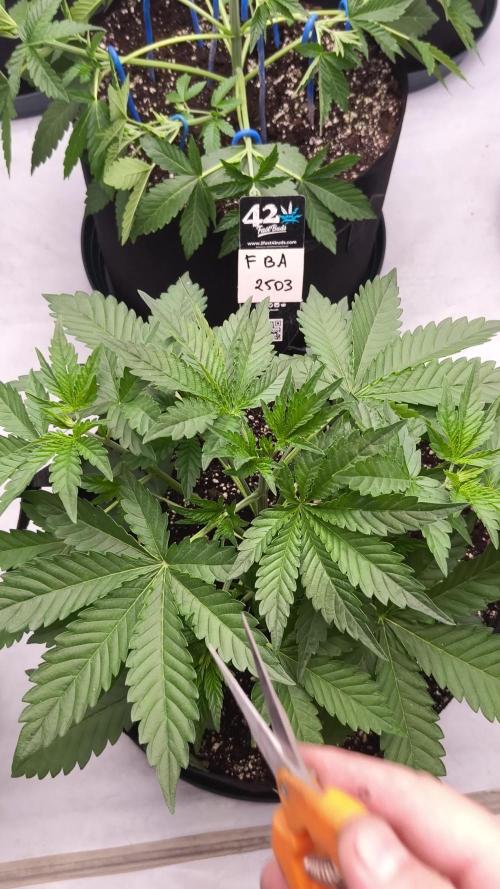
Como podéis también ver, esta semana ya hemos empezado a aplicarle la "forma" deseable para sacar renta a los grows. Ya ha sido colocado el entranzado SCROG para que podamos direccionar el sentido de crecimiento de las ramas laterales y también ha sido puesto en práctica, una primera defoliación, para limpiar exceso de hojas y sobretodo por la necesidad de la no existencia de áreas de sombra junto al sustrato de coco y evitar que puedan crearse hongos patógenos, pese a que mis grows siempre son "brindados" con micorrizas y trichodermas, justo para evitar cualquier disgusto a causa de un "menos pensado o deseado" Botritys, Fusarium o "amiguete" del estilo.
Para final, que Dios Jah siempre nos proteja a todos, en los grows, en los que mal nos desean y a los que nos pueden hacer daño sin que algo tengamos echo para tal.
Green greets y la semana que viene, espero volver y para enseñaros algun esbozo de floración inicial.



Likes
34
Share


@LockDownGrow
Follow
This will be the last week for this girl , she has stopped feeding now and is in her second week of flush ,
She is looking too be finnished this week and looking and smelling amazing ,
Update , 80% pistels are lovely and golden , the tricombs are not quite ready so I would say just a few more days too go then chop chop




Likes
11
Share


@Elixx
Follow
The flower are very dense and I'm very happy to this. This is the last week that I feed my plants with nutrient, so the next week will start a flush period of two to three week.

Likes
45
Share


@masterofsmeagol
Follow
I Messed Up A DAY Here. So one of the days is dated wrong. I tried to correct it the best that I could.
7/24 I decided to label this week as flower. It's more like preflower though. GMOs are stretching like crazy. Due to the rain we weren't supposed to get some of my plants are a little over watered. That's why I love the fabric pots. With the winds we get the bags dry out fast. The GMO's would've needed water anyway if we didn't get this storm. Event Horizon seems to be the furthest in flower amd the most over watered. WE'LL get a LITTLE more rain today and tomorrow but then hopfully my bags will dry out. They are heavy as hell right now. Had we not got rain for what seems like forever. Several plants would've needed to be watered if we didn't get this rain. Still the plants are currently overwatered. All the pics and video so far are from this morning after the horrible pounding rain of yesterday. Like I said before, I need to; defoliate for better air flow, add secondary supports or a vertical trellis, considering using a preventative pest application (e.g. BT), LST and spread branches apart and start using nutes.
7/25 Wasn't supposed to rain today. Like .001. It poured this morning and is still raining VERY LIGHTLY at 2:30. We got an inch yesterday. The total for these 3 days was suppised to be under half an inch. Anyway I went over around two and everything looks great! Things are clearly overwatered and heavy but the plants look happy! Most have their leaves out and everything! I love growing in bags because they dry out so quickly! I don't mind watering more. I defoliated one event horizon and the few yellow leaves I coukd see on other plants after shaking them off. The seedling in the 50 is far behind the others in flower and just showed its sex. I'm fairly certain that one is red runtz. Whatever it is is going to flower much later than the rest. It's going to be good if I have couple early finishers. I did a video but I'll have to upload tomorrow. I have a lot of work to do And not just in the garden so I'm hoping I can balance things out and get this stuff done. Caught three TINY inch worms. I'm wondering if me manually hunting has cut the adult population down and I'm just getting fresh born ones? If that's the case I wouldn't need to spray.
7/26 Plants looked pretty great today. I think me manually removing pillars has made a big difference. It's windy out too so it won't take long for those bags to dry out. Which is good because what wad supposed to be a half inch of rain turned into 3 straight days of rain. I'll be back over to work on the garden today and I'll update then.
7/27 Plants are looking pretty good. Good weather ahead and the bags are starting to lose weight. Found a pillar wrapped in a dead interior leaf all wrapped up. Found a couple more early this morning amd killed them. I did some slight leafing on some plants. I don't like doing that outdoors but since these are monster cropped they have far to many leaves. Airflow is improved. I'm not seeing any nutrient deficiencies yet. Plants are a vibrant healthy dark green. Soon I'll add a base nute like big bloom or ancient amber (I think that's the one, it's applicable to big bloom). I cam see some plants trying to start flowering and I've got one (in the 50) that has just shown sex. Hopfully this will give me some time between harvests. I'll update as I go along.
DAD CALLED IN THE AFTERNOON AND SAID HE THOUGHT A PLANT MIGHT BE STARTING TO DROOP. IT WAS MY GMO CANARY THAT GETS HIT ON ALMOST THREE FULL SIDES BY WIND (ONLY ONE PLANT). I CHECKED THE WEIGHT AND IT WAS LIGHT. IT WAS DROOPING TOO. I WATERED THAT ONE PLANT WITH A GALLON AND WATCHED IT PERK BACK UP. I CHECKED THE WEIGHT ON THE OTHER PLANTS AND LIKE I THOUGHT THEY WERE STILL HEAVY. I PUT MY FINGER IN THE SOIL AND IT CAME AWWY COVERED IN DIRT. MY SEEDLING IN THE 10 WAS KINDA LIGHT SO I GAVE THAT HALF A GALLON. I USED THE OTHER HALF AS "A CUP OF KINDNESS" ON THE PLANTS THAT SEEMED LIGHTEST TO CARRY THEM OVER. I PROBABLY SHOULDVE WAITED BUT I DOUBT IT MATTERS. ILL CHECK IN THE MORNING. I ASSUME ILL HAVE TO WATER THEN OR AT NIGHT. ILL GO BY THE WEIGHT. THE CANARY WILL NEED TO BE ON A SEPERATE SCHEDULE. THATS FOR SURE. Went back over at 6:30 and plants looked better than they have in a long time bags still have some weight. With the sunny weather we are going to have these plants will keep exploding in growth. Found one pillar but I wasn't there long. Seriously considering a spray of BT in the near future.
EDIT: UNFORTUNATELY MY SPIDEY SENSE STARTING TINGLING AROUND NOON. MY ANXIETY WONT LET ME IGNORE IT (IM NOW EMBRACING IT) AND I HAD TO CUT OFF A CONVERSATION WITH MY WIFE TO GO TO THE GARDEN. I IMMEDIATELY SAW THAT ONE OF MY GMOS WAS STARTING TO DROOP. NOT LIKE BEFORE BUT IF I HAD BRUSHED IT OFF AND LEFT IT FOR FOUR MORE HOURS IN THE 90° SUN IT WOULD'VE BEEN. I GAVE THE GMO'S (BESIDES THE ONE I GOT YESTERDAY EACH A GALLON. I DIDNT WANT TO WATER DURING THE DAY BUT THIS WAS MY BEST OPTION. I GAVE THE TOASTED TOFFY A GALLON AND THE 2 EVENT HORIZONS EACH GOT HALF A GALLON, AS WELL AS THE SHERB PIE WHICH GOT HALF A GALLON. I DECIDED TO DO THIS BECAUSE SOME PLANTS USE MORE WATER THAN OTHERS. BEFORE ACTUALLY GOING OVER I CONSULTED MY PREVIOS DIARIES. I HAD THIS SANE PROBLEM LAST YEAR ON THE SAME WEEK OF THE MONTH! THATS WHAT MADE ME TRUST MY INTUITION FULLY. I LEARNED FROM THE MISTAKE OF LAST YEAR. THINGS ARE GOING GOOD. IM STARTING NUTES SOON AND I NEED TO SPEAY FOR BT BUT DONT KNOW IF IT WILL BE TONIGHT.
7/29 Apparently my intuition worked out well. Plants looked great this morning. I may feed today. I defoliated a bit and watered the 10g with a half gallon and gave another half gallon to the gmo on the end that dries out fastest and that I didn't water yesterday. I think I've got the watering down. Now I need to start nutes and spray bt. Need to wait for the rain first though. Suppised to get minor showers the next couple days. I'm gonna try to get the trellis up too.
WENT BACK A LITTPE AFTER FOUR. HUMiDITY WAS 100% AND IT WAS RAINING VERY LIGHTLY. I MEAN AS LITTLE AS IT CAN POSSIBLY RAIN. ALMOST LIKE WHAT IT FEELS LIKE WITH THOSE MISTING FANS IF YOU STAND BACK A WAYS. I DIDN'T WATER. PLANTS WERE LOOKING GREAT! I DID SOME DEFOLIATION AND CAN TELL I NEED TO START NUTES. I CAN SEE SOME SLIGHT DEFICIENCIES IN BIG OLDER LEAVES. SOME SMALL INTERIOR LEAVES YELLOWED. NOT MANY. GRANTED THEY ARE STARTING TO FLOWER. I'LL PLAN ON FEEDING TOMORROW. THE NEXT FEW DAYS IS SUPPISED TO BE SHOWERS. I DOUBT IT WILL GIVE MY BIG GIRLS ALL THEY NEED BUT IT WILL BE A GOOD START. I DID A VIDEO BUT ITS RATHER LONG SO I CANT UPLOAD IT HERE. ITS COOL WATCHING HOW DIFFERENT THE DIFFERENT STRAINS GROW. STILL HAVE A BUNCH OF SHIT TO DO. IT WILL GET DONE THIS WEEK.
7/30 I held off watering today due to a supposed storm and rain we were supposed to be getting. I had early doctors appointments. I got back around 11 and the bags seemed light. After consulting last years diary I saw that I am underwatering. The root system weighs a lot! We haven't got the hundredths of an inch of rain but we got some sun. It's over cast now. I was there working for a few hours. I watered most a gallon. All the gmo's got a gallon. I gave the two event horizons about two thirds a gallon. About the same with the toasted toffy and the sherb pie. About 3/4 of a gallon as they seemed to have a little weight left. Looking at last years diary there were plants I was giving two gallons at a time in a 20 gal bag so I've been u Der watering a bit. I've caught it now and adjusted. I'm not losing leaves at the pace I have in the past. Even though some are in flower. I think I'm getting better. I fed for the first time today. Each plant got 1.75 pints. Except the 10gallon which got half the powerade bottle and the 5gal which got a qtr. By the time I left the plants were standing up nice and tall and looking amazing. Now I just need to apply bt and secondary supports.
7/31 Another eight day week. I'll have to do six days next week. Everything looked amazing this morning. I'm seeing less pest damage. Watering and feeding was the right move. Now I just have a little rearranging to do, add supports and spray if I decide to.

Likes
9
Share


Likes
29
Share


@sndwich
Follow
13 Weeks total including 1 week flush. Super easy to grow, LST her from the get go and she responded well.
First time growing autos and all very easy
Smells incredible! Very fruity,
The yield looks pretty good, no scales tho but will try to weight when dry.
Big heat issue during flower which fucked a lot of the girls, her included, so I think the yield would have been bigger but we got a nice amount in the end
Have trimmed her and put in a box to stop light getting in with strings holding her up, hopefully will dry ok as others are still going so can't hang in grow room as per usual
Will dry for a day or 2 until stems snap, then into jars for curing there after
UPDATE: Dried for 4 days - small nugs fully dried, larger still a little moisture inside, have jared with a Boveda in each jar to help maintain moisture levels in the jars and are popping jars twice a day if not more for 10 mins or so a time.
Dry Weight in jars @ 49 grams total, I expect it to go down a little but not much, really happy with the yield amount
Smoke wise tastes nice but know a few weeks in the jars will really open her up :)


Likes
7
Share


@Ryno1990
Follow
The Purple Goat Cheese from Goat Genetics has started shooting up to the light looking happy an healthy as shes starting to produce her nice buds under the medic grow fold 6 an thriving feeding on cultured biologix nutrients an instant teas

Likes
9
Share


@OrioloOG420fallagrossa
Follow
Started the good and hot season with an adjustment refilling of soil the pot of the little one and giving more to the other two.
Incredible grow in two weeks going from being near dead to being big as the other two.

Processing
Likes
34
Share


@wheedtobeus420
Follow
Jeez this girl is just going off. I gave her a haircut so the light can penetrate further. The buds are stacking up nicely. The dark devil did not like being topped. This girl was my topping mainline/fluxx experiment. Proves it's possible but the dark devil I left alone as the control plant looks much denser with bigger fatter buds growing. I'm excited to see her continue on.
Processing
Likes
25
Share


@parachute
Follow
Every 5± days from week 5 I suppose I get rid of below leaves and big fan leaves,which don't let the light get to the bottom buds,as was recommended in comments. They react good on that kind of stress and the bottom buds started developing too.
Despite the high temperature( 28-30 degrees) they keep on growing and forming buds,happily.

Likes
5
Share

@DoenerToGo
Follow
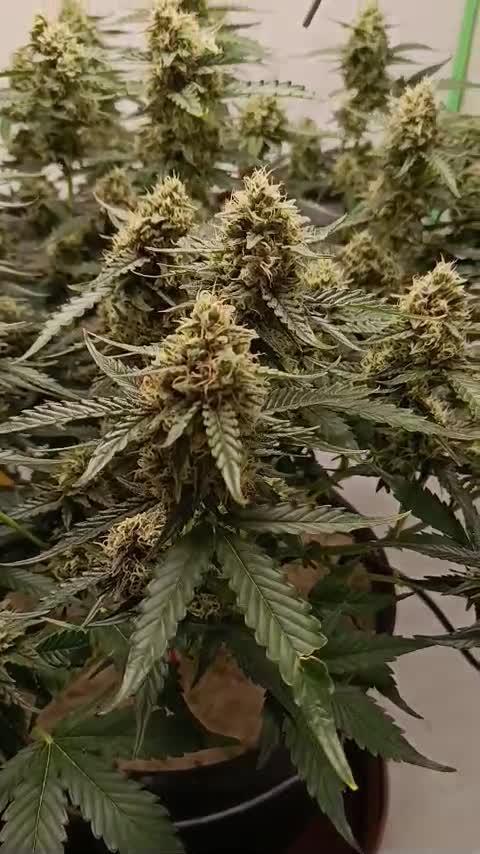
Hello and welcome to another week of bulking of my Gorilla Cookies Auto by FastBuds.
Her buds are exploding with a fresh fruity and earthy aromas, and her buds ain't getting smaller. Every budsite has a bud that is almost as big as a ping pong ball, they are very compact and reek of resin.
This week i also added another layer of sand, because the fungus knats didn't seem to stop, but now with 1cm of sand it seems realtively peaceful now.
As she is nearing the end i want to give her a good 2-week-finish, by supporting it with finalpart. I prepared her by flushing her with FlashClean beforehand so the soil gets reset so finalpart can take full effect.
Also i lowered the light to give the lady more power. Tomorrow as of day 73 the Controller to my AW400 by Vivosun is arriving, and i will be using that for the last weeks of the Gorilla Cookies, and will be starting the next grow with the AW400 as the main light
There is nothing much to do, just watering her with her nutes, and waiting until she is done. Very good,
Thats it for this week, i hope you enjoyed it, this is going to be one of the last updates of her.
Likes
2
Share

@GrowdadGage
Follow
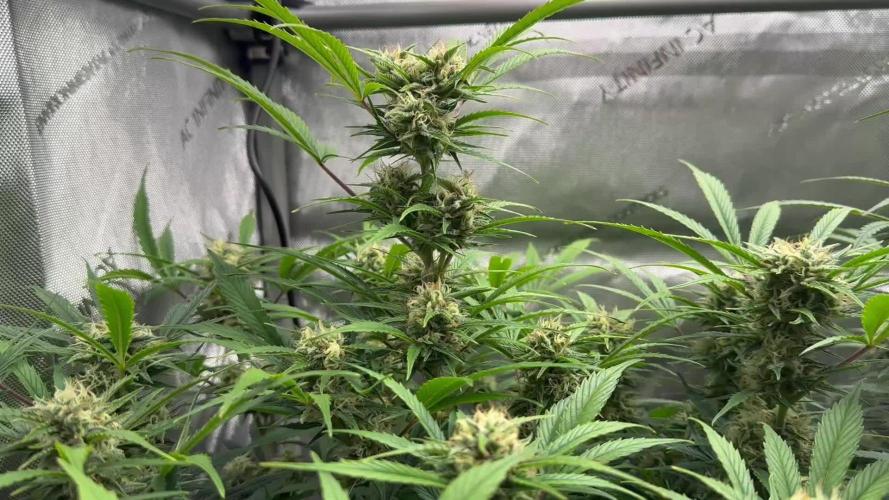
These girls are coming in nicely. I was impressed with how well the one plant I chose to top responded at first but now seeing the buds growing and coming in it’s lacking in comparison to the two plants that were just given low stress training.
Maybe it’ll catch up by the end but either way still very impressed with the Bruce Banner #3 Auto especially with the frost it’s starting to develop now 😁👌

Likes
16
Share


@Limez
Follow
Seit dem umtopfen in 11L hat sich nochmal einiges getan. Der Orange Bud hat das konstante Licht im Zelt auch gut gefallen und sie ist schön gewachsen. Das Wetter war ja leider sehr bescheiden. Richtig im Regen standen sie aber nicht und ich habe immer drauf geachtet, dass die Wurzeln nicht über einen längeren Zeitraum im nassen stehen.



Likes
19
Share


@Dunk_Junk
Follow
Another 19cm vertical growth this week and she got a lot bushier.
She has started flowering at last.
For nutrients I'm using 15g of 20-20-20 powder mixed with 10L of water. Also added 4ml/L of both Cannazym and Terpinator. This brings it to around 1600ppm including ~300ppm for my clean water.
Timelapse Sequence:
Blue Dream
*** Auto Jack *** (too short - out of shot)
Pineapple Express
CBD Compassion
BLue Dream
*** Auto Jack *** (too short - out of shot)
Pineapple Express
CBD Compassion

Likes
10
Share


@CannaArchive
Follow
Things are getting serious now!🔥
#2 has developed an insanely large main bud, absolutely packed with trichomes and giving off a super pungent aroma. 🌿
Meanwhile, #1 keeps stretching and is still the biggest plant in the tent. It continues to give off that stunning sweet, tropical scent, which is just unreal!
Both plants seem to be moving fast—I have a feeling they might be ready in about two weeks. Let’s see how they finish up! 🤩
Likes
8
Share

@Centollo
Follow
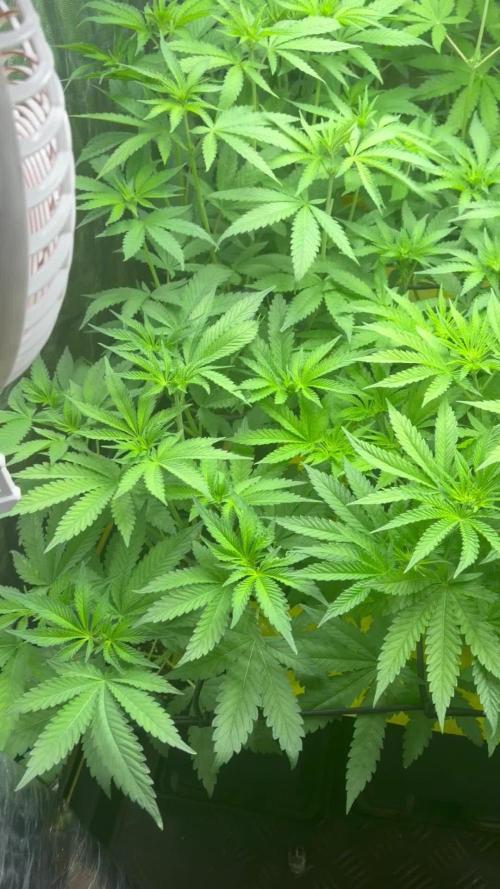
Termina la segunda semana de floración. Estirarán un poco más pero tienen un tamaño controlable. Las Thin Mint Frosting han sido las primeras en empezar a florecer. Feliz semana!

Likes
22
Share


@ShowsWorld
Follow
Overall I was very satisfied with this grow. Pyramid seeds did a excellent job with this strain I highly recommend it to all growers new and experienced. It’s a easy to grow plant does really well in veg. I give this grow a 9 out of 10.
Likes
64
Share


@Roberts
Follow
Baked bomb auto is doing good this week. She has not shown any pistils yet. I imagine they are not far off. She looks like she is starting a stretching stage. She loves extra cal mag as well. She got a decent defoliation to open her up. She is ready for another week. Thank you Bomb seeds. 🤜🏻🤛🏻🌱🌱🌱
Thank you grow diaries community for the 👇likes👇, follows, comments, and subscriptions on my YouTube channel👇. ❄️🌱🍻
Happy Growing 🌱🌱🌱
https://youtube.com/channel/UCAhN7yRzWLpcaRHhMIQ7X4g
