


Likes
Comments
Share


@AustinRon
Follow
Week 15 - Flower Week 11
Lemon Jeffrey by IRIE Genetics (14 Starts for 8 Finishers)
63-70 Days Flower (9 - 10 Weeks)
Weeks Observations:
- Our light leak on July 6th through July 31 ‘cost’ us ~ 21 Days. Extending Harvest to account for 21 day light leak. New Harvest Date 12 Sep 2023, Plant Day 121, Flower Day 86
Seeds Wet: Monday 14 May 2023
Harvest Date Range: [ 2023-08-11, 2024-08-21]
Start of week:
- Dates: [2023-08-27: LJ2Q 106:F:11:1,
2023-09-03: LJ2Q 112:F:11:7 ]
End of Week:
- Plant Height Range: [46, in]
- Water/Day/Plant: [935, ml]
EnvironmentalCurrent:
- Scotoperiod: [ 11, hrs] # 1900 - 0600 + 24
- LightIntensityPeak: [ 1000, µMol/m2/s ]
- DailyLightIntegral: [ 42.1, Mol/m2] # Target: < [ 40, Mol/m2/day]
- LightDistance: [ 6, in] # 3.5” LESS than Optimal for SP3000
- TempAvg: [79.1 , °F]
- RH: [ 68, %]
- VPD: [ 1.10, kPa]
- 230*4*11/8
- FeedwaterPerPlantPerDay: [ 1265, ml]
- Feedwater: [ 10.12, l]
- EC: [ 2.0, mS]
Environment NOTES:
- RULE
- CLOSE Room Airflow during LOW TEMP periods(2030 - 0700)
- OPEN during HIGH TEMP Period (0700 - 2030)
SOP:
- WEAR CLEAN GLOVES FOR ALL SEED OPERATIONS
- CLEAN All Instruments before use
- Light Strengthvegetation := 100 + (#nodes * 100)
- Light Strengthflower := [ 1000, 600, µMol/m2/s]
- Scotoperiodvegetation := [ 1300, 1900, 6, hr]
- Scotoperiodflower := [ 0600-1900, 13, hr]
Environment
- Late Flower (Week 10-14) (F5-F10)
- Temp: 78-80°F
- VPD: 1.2 ± 0.2
- Photoperiod: 11/13
- Light Strength: [930, 850, µMol/m2/s]
- EC: 2.3 # Week F5-F8
- EC: 1.8 # Week F9
- EC: 1.1 # Week F10
- Finish (Week 14) ( F10)
- Temp: 78°F
- VPD: 1.3 ± 0.2
PPFD: 750 peak
- Resin Bloom ONLY
- EC: 0.8
_______________________
Base Application for 10 Gal:
- [x] Primer A: [ 100, ml]
- [x] Primer B: [ 100, ml]
- [x] Silica Skin: [ 35, mll] # Reduce to reduce/eliminate Sediment
- [x] SLF-100 (Enzymatic Root Cleaner): [ 50, ml]
- [x] King Crab (Biology): [ 5, ml]
__________________________________________
- @ EC: 1.7 Supplement: [ Application Rate], [ Total Delivery for 2 Gal Solution]
- [ ] Primer A: [ 10, ml, gal], [ 12.5, ml]
- [ ] Primer B: [ 10, ml, gal], [ 12.5, ml]
- [ ] Silica Skin: [ 4, ml, gal], [ 5, ml]
- [ ] CalMag Fuel: [ 4, ml, gal], [ 5, ml]
- [ ] Peak Bloom: [ 4, ml, gal], [ 5, ml]
- [ ] Resin Bloom: [ 4, ml, gal], [ 5, ml]
- [ ] SLF-100: [ 5, ml, gal], [ 10, ml]
- [ ] King Crab: [ 0.5, ml, gal], [ 1, ml]
- [ ] EC: [ 1.7, mS]
85 ml/plant X 11, : 935 ml/plant/day, 2.4x of field capacity
Meaning ALL Fertigation through pot is Refreshed 2.4 times per day with this schedule.
____________________________________
Mon 28 Aug 2023 # End of Harvest ORIGINAL Window , before discovering light leak
LJ2Q 106:F:11:1
- [x] Will scope trichomes by hand, and set a chop date today.
- Some are ready today, Some look to need 10 - 14 days.
This has been an interesting grow - the extra stretch munged the SOG Strategy - with severe Chiropractics I still have >±12” of height per plant. We should be harvesting today . . .
- We could conceivably take the grow as far as Day 139, if we calculate a 4 week light leak forward. That would make LATEST DATE 24 SEPTEMBER -
- IF We go more than this week
- Week 15 Nutes (Mixed Daily)
- Mon - Wed: ONE SHOT, EC: 1.7
- Thus - Sun: ONE SHOT, EC: 1.4
- NEXT WEEK
- Mon: Resin Bloom: EC: 1.1
- Tuesday - Harvest: Resin Bloom: EC: 0.8
- ELSE if we take them down next Sunday:
- [ ] Been feeding The Rooted Leaf Hydro schedule, Base Nutes plus Silicon. Need to move to harvest nutes, potassium (+Resin Bloom/+Peak Bloom) at
- [ ] Monday:+Resin Bloom/+Peak Bloom: EC: 1.7
- [ ] Tuesday: EC: 1.4, (+Resin Bloom)
- [ ] Wednesday: EC: 1.1, (+Resin Bloom)
- [ ] Thursday EC: 0.8 (Resin Bloom Only)
- [ ] Friday EC: 0.8 (Resin Bloom Only)
- [ ] Saturday EC: 0.8 (Resin Bloom Only)
- [ ] Sunday - Harvest
Growtek Mod
- 170 ml/event per emitter -> 2 Gallons Input
-
___
EC: [ 2.0, mS]
Tue 29 Aug 2023
LJ2Q 107:F:11:2
EC 1.6+
- Defoliated (final) blocking and unviable fans. Looks better - clearer airflow
Wed 30 Aug 2023
LJ2Q 108:F:11:3
EC: 1.6
For 2 Gal (ml’s) RLA Minerals
14.0 Primer A
14.0 Primer B
7.0 Silica Skin
10.5 Peak Bloom
South Cascade Organics
- [x] SLF-100: [ 5, ml, gal], [ 10, ml]
___
Plant Success (Beneficial Bacteria, Crab ‘Frass’)
- [ ] Sunday - Harvest?
- [x] King Crab: [ 0.5, ml, gal], [ 1, ml]
Thu 31 Aug 2023
LJ2Q 109:F:11:4
EC 1.4
For 2 Gal (ml’s) RLA Minerals
12.3 Primer A
12.3 Primer B
9.2 Peak Bloom
Required 1 qt to bring down from 1.6 to 1.4
Friday 01 Sep Jul 2023
LJ2Q 110:F:11:5
EC 1.1
For 2 Gal (ml’s) RLA Minerals
7.6 Primer A
7.6 Primer B
5.7 Peak Bloom
Sat 02 Sep 2023
LJ2Q 111:F:11:6
EC: 1.4
Peak Bloom as Needed for Dilution
- [ ] Scope Trichomes Last Time
With a 21 day light leak, we’ll extend harvest to Day 118, Flower Day 90 - or 69 Unleaked Light Days . . .
Through End of Harvest, Daily
Daily Feed through Harvest Day -2
Per TWO Gallons: EC 1.4
- [x] Primer A: [ 12, ml, gal]
- [x] Primer B: [ 12, ml, gal]
- [x] CalMag Fuel: [ 4, ml, gal]
- [x] Silica Skin: [ 4, ml, gal]
- [x] Peak Bloom: [ 4, ml, gal]
- [x] Resin Bloom: [ 8, ml, gal]
- [x] King Crab: [ 0.5, ml, gal]
- [ ] SLF-100: [ 5, ml, gal]
- [ ] Reduce to EC 1.1 on Harvest Day -2
- [ ] Reduce to Resin Bloom Only, EC: 0.8 Pre Harvest Day
DECISION - We’ll take the girls down Flower Day 83, Nominal Day 62 assuming 21 Day push for light leak. It’s not in practice3 that long - we should be good, if not - latest day 90 (Nominal 69)
____
Sun 03 Sep 2023 # Flower Day 77
LJ2Q 112:F:11:7
EC 1.4
- [x] Dismantle And Clean Res, Pump, Chiller, Lines
- [x] Clean Res
- [x] Clean Pump
- [x] Load Res with a a gallon of HOT tap water, a cup of 30% Vinegar
- [x] Run Pump for :30
- [x] After 30: Reverse Lines
- [x] Run Pump for :30
- [x] Stop pump
- [x] remove tubing from pump and chiller
- [x] Remove pump, reclean
- [x] Clean Chiller Tubes
- [x] Rinse with 30% Vinegar
- [x] When Dry: Reassemble & Replace

Likes
7
Share


@Dairon
Follow
Hola, como podéis ver en las fotos han dado un buen estirón tres de los ejemplares pero el resto aún sigue con un ritmo de crecimiento muy lento, para solucionar esto voy a subir la dosis de Fish Mix de Biobizz hasta 1.2 de EC y agregaré micorrizas, también le haré a algunas una poda apical para aumentar la producción, así como a las más pequeñas les quitaré lo que pueda de la parte inferior a fin de estimular el desarrollo vertical, como mínimo deben estar un par de semanas más en crecimiento.
También estoy considerando hacer otro trasplante a 11l, pues son pocas plantas y necesito sacar producción para cubrir mis necesidades.
Como siempre voy pulverizando con productos preventivos para evitar la aparición de hongos o insectos, yo siempre utilizo Leaf Coat de Biobizz y va a las mil maravillas.

Likes
3
Share

@RatmanJR
Follow
December 7th. 68 days post flip
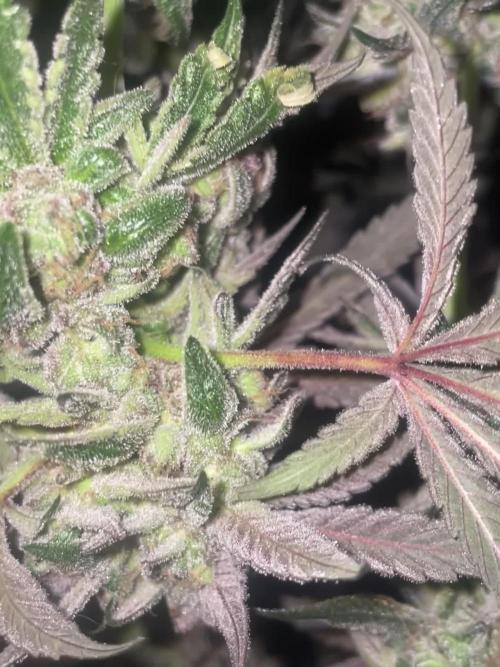
Chopped the two remaining purple marmalades today. They still had some white pistals but the Trichomes do not lie.
I am really happy with them and they smell amazing. They will dry at 65 degrees and 58% humidity for 10 days and than go into grove bags.
Will drop an update on their differences before they go into cure. Will give them an early smoke test. Number 2 smells the most but number 3 is the frostier of the two.
The two clones also continue on healthy. I’ll know when I test these girls if I’ll be making use of these clones.
Harvest week coming soon
As always guys thank you so much for following along and god bless !

Likes
7
Share


@LittleBigTrees
Follow
Only giving them water so far.
The mimosa cuttings are taking being cloned really well.

Likes
22
Share


@herbalistssword
Follow
Good week overall, started with a defoliation and lst for Sugar Mama, she was too unruly and here we are by the end of the week she is full of leaves again. I am going to let her grow as is and save her from more defolation she is not getting taller, yet.
All the other girls are doing well, nothing much to report apart from that I found out what is going on with those nutrients and the general unhealth of plants (spots on some, really bright on others, clawed tip, ...) but none seemed too serious. I discovered that because I am towards the end of my nutrients that they were too think and were not actually mixing well into the water explaining why the EC wasn't getting as high as I expected when adding biogrow.
Made sure the nutrients are properly mixed (put them in then blast with water to mix well) and water them today with a good mixed meal, expecting them to have better colours soon.
The fastberry is looking prettier every day, the deformity that was at the beginning is barely visible now.
Good week overall, although I've been focusing on my outdoor plants (one harvested another moved indoor permanently).
Started on day 43 with a defoliation and lst for Sugar Mama, she was too unruly and here we are by the end of the week she is full of leaves again. I am going to let her grow as is and save her from more defolation she is not getting taller, yet.
All the other girls are doing well, nothing much to report apart from that I found out what is going on with those nutrients and the general unhealth of plants (spots on some, really bright on others, clawed tip, ...) but none seemed too serious. I discovered that because I am towards the end of my nutrients that they were too think and were not actually mixing well into the water explaining why the EC wasn't getting as high as I expected when adding biogrow.
Made sure the nutrients are properly mixed (put them in then blast with water to mix well) and water them today with a good mixed meal, expecting them to have better colours soon.
Thanks for visiting, please leave any feedback, comments or suggestions.


Likes
24
Share


@el_cultivito
Follow
Plants started getting real bushy a couple of days after topping.
Low Stress Trained all the plants at the end of the week by tying them down using rubber coated garden wire to spread out the newly grown tops.
Also spaced out each plant evenly on the tray and turned on the other 2 PB2000 LED lights I had ready to go.


Likes
8
Share


@macijuana
Follow
Day 33 (technically not week 6 but im doing this diary to track between visits) Weather has been shocking the last week, forecast is looking sunny the coming week so hopefully next visit theyve exploded with growth.


Likes
11
Share


@GoodTimesOrganics
Follow
Hi liebe Community und Willkommen zurück im Sensi Seeds Wettbewerb! 💚
Chocolate Rainbow 🍫🌈
Nach der achten Wachstumswoche insgesamt ist nun die erste Blütewoche auch schon vorbei.
🌱(Wachstumstag 61 | 🌷Blüte Tag 7)
Da das Höhenwachstum bei diesem Strain generell moderat war, gehe ich auch von einem eher geringeren Stretch aus.
In der ersten Blütewoche hat die Pflzzear 10cm zugelegt, dafür vermute ich dass der Stretch auch schnell wieder abklingen wird.
Sie ist sehr schön Breit gefächert und dass auch mit super ausgeglichenen Höhenabständen.
Die Höhe liegt nun insgesamt bei knapp 69cm.
Ihr Höhenwachstum gefällt mir sehr, da sie nicht in die Höhe schießt.
Ich habe nun mit dem Lollipoping begonnen und auch nochmal ein paar Sonnensegel entfernt, damit die inneren Triebe besser beleuchtet werden.
Alles ist nun auf Blüte getrimmt, daher kam diese Woche einmalig bis Blütewoche 4 10ml PK-Boister von Biotabs auf ein Liter Gießwasser.
Die Lichtintensität habe ich nun auf 630mqm hochgefahren.
Die Bedingungen im Growschrank sind für die angehende Blütephase top!
Die Videos findet ihr nun auch bei Insta und YouTube!
________________________
🌡️ Temp: 26
🌚 Temp: 18°C bis 19°C
💧 RH: 64%
🌬️ VPD: 1,17 kPa
☀️ ppfd: 630 mpm
________________________
Grüne Grüße 💚🌱

Likes
6
Share


@Kush_T_Big_Nugz
Follow
This week I transplanted all of them and started lst training. Of all 3 strains I’ve got going, gummy buns defo has the best vigour and structure on nearly all of them.


Likes
11
Share


@Paradox_1ste1
Follow
The plants look very healthy and they have big and dense buds , ill havr to wait anothe week or cuple days until harvest even tho it may be a bit soon for it. One of the plants has started to root its top head of the buds , but i soupose its because of the temp . The air is getting dry cuz of the hot weather even tho im using 250w-400w lights on them . Trichromes look preety good and the bud is frosty . Some of the plants are not ready yet for some reason so i think i have to give them a bit more time
Likes
1
Share


@Dailydabs420
Follow
Growing well so far. This week I added some LST to encourage outward growth. Things started to get a little wonky towards the end of the week bit once she starts to stretch out i think she will look a little neater.

Processing
Likes
4
Share


@DoItBigGrows
Follow
We are going to send these two into flower the second I get my hands on a 3x3. The plan is to move them into the 3x3 until they finish up. Leave the 5 Autoflowers in the 4x4 until they finish then start a perpetual cycle between the two tents. A 3x3 for Veg and 4x4 for Flower! I’m extremely excited about the future!

Likes
8
Share

@LoccoMotive
Follow
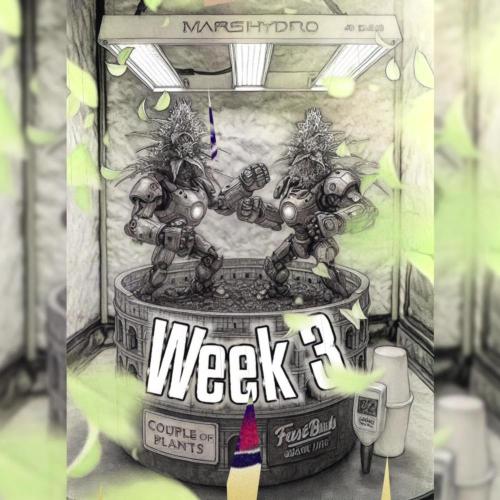
🌿 Woche 5
🌱 Wachstum & Training 🌱
Das Training läuft fantastisch – ein täglicher, stetiger Prozess. 😬✂️
Beide Damen sehen rundum gesund aus, mit kräftig grünen Blättern. 💪🍀
Sogar ein halb abgebrochener Trieb hat sich richtig gut erholt. 👌🌱
Man merkt inzwischen, dass eine der Damen dominanter ist. 👑🔥
Der mittlere Bereich ist hart umkämpft – vielleicht doch ein Ticken zu eng für zwei Pflanzen. 🤼♀️😨🌱
Ich habe daher ordentlich entlaubt und ein paar kleinere Triebe entfernt. ✂️🍃🗑️
Langsam füllt sich der gesamte Raum mit einem gleichmäßigen Blätterdach. 🌳💚
Der Stretch hat begonnen – und alle Triebe haben richtig Bock, steil zu gehen! 🚀🌿🎯
💧 Living Soil – Only Water 💧🌍
Wie man sieht: Kein einziger Trieb oder ein Blatt mit Mängeln. ✅🌱👌
Die Vegetationsphase lief absolut problemlos – ganz ohne Temperatur- oder Luftfeuchtigkeitsunterstützung. 🌡️💨❌
Nur mit einer Mischung aus destilliertem Wasser und Leitungswasser. 💧🚰
🔄 Drehbarer Topf 🎥
Ich bin nach wie vor ein großer Fan dieser Lösung! 😄👍
Nicht nur entstehen witzige kleine Videos, sondern es hilft enorm beim Training. 📸✂️
Ich achte beim Formen stets darauf, die Drehfunktion nicht einzuschränken – klappt bisher richtig gut. 🔄✔️
💡 Licht & Schatten 🔆🌘
Im Laufe der Woche habe ich das Licht auf bis zu 400 PPF hochgedreht. 💡📈
So streben die Triebe weiter aktiv nach Licht – bekommen aber auch nicht zu wenig. 🌞🌱➡️💥
💧 Blumat & Gießen 💧🚿
🕒 Alle paar Tage bei 110 mbar
🚿 Jeweils 2 l Wasser 💦
☀️ Wetter 🌡️🔥
Die Temperaturen waren (und sind) brutal: 26°–33 °C. ☀️
Scheint aber bisher alles gut zu verkraften. 😌🌿💪
🎶 The Grow must go on! 🌱🎵💚✨
Processing
Likes
26
Share


@GrowGuy97
Follow
Starting to see a lot of white hairs think they are getting ready for flower, extremely excited to see how these ladies do! Thanks for checking in & happy growing friends!✌️🏼🌱
Day 23 - Everything seems to be going ok can’t see any issues other than the one plant with spots on the leaves but that is from spilling nutrient water on them!
Day 24 - started LST on 1 Orange Sherbet & 1 White Widow to compare the differences at harvest!
Day 25 - they are looking great! Can’t wait to see how the buds look😍✌️🏼
Day 26 - stretching out a lot!
Day 27 - Last day of week 4 everything is going great!✌️🏼🌱


Likes
8
Share


@Cali_Rayy
Follow
Ready to see what this strain can do I like the fact FB420 hast released any pictures of flowers yet kinda leaves it in suspense. Will be updating soon
Likes
14
Share


@MadeInGermany
Follow
Flowering day 3
since time change
to 12/12
Hey guys :-)
The ladies are developing really well 😊.
Was poured 2 times with 1 l each (groundwater see description at the bottom)
They were placed in the flowering tent and, as always, a few cuttings were taken.
Everything was made clean.
Fresh osmosis water is applied and the plants are sprayed and checked.
Stay healthy 💚🙏🏻
👇🏼👇🏼👇🏼👇🏼👇🏼👇🏼👇🏼👇🏼👇🏼👇🏼👇🏼👇🏼
You can buy this Nutrients at :
https://greenbuzzliquids.com/en/shop/
With the discount code: Made_in_Germany you get a discount of 15% on all products from an order value of 100 euros.
👇🏼👇🏼👇🏼👇🏼👇🏼👇🏼👇🏼👇🏼👇🏼👇🏼👇🏼👇🏼
You can buy this strain at :
Clearwater Seeds
Water 💧 💧💧
Osmosis water mixed with normal water (24 hours stale that the chlorine evaporates) to 0.2 EC. Add Cal / Mag to 0.4 Ec Ph with Organic Ph - to 5.8 - 6.5
MadeInGermany


Likes
22
Share


@GR0WER
Follow
New week starts.
__________
🌞10.05
I've watered my plants with 'Pre-Flowering' GHE nutrient mix and spraiyed them with 'Foliar nutrients'.
🌞11.05
Nothing for today.
🌞12.05
Nothing today. No feeding, no spraying. I'm patiently waiting for the end of a week to make huge defoliation. My babies are big. Too big.
🌞13.05
The same.
🌞14.05
Found few bent up leaf tips. Thinking what it is.
Upd: I asked a grow kwestion and got an answer. As a result, I moved my lamps higher.
🌞15.05
The reddish 'rusty' marks shows up between upper leaves veins on 'RG'#2
I suspect sunburn. Asked a new grow question.
🌞16.05
It's definitely Phosphorus deficit combined with high temperature. I've measured income and outcome water and it was normal, so it's not an overfeeding.
Watering with 80% 'GHE Tripart' bloom formula with adding 80% of recommended dose of 'Advanced PK' nutrient.
Watering:
- Ph 6.2,
- CE 1.17
Drainage:
- Ph 6.25
- CE 1.09
I can't change lamp-to-plant distance, but I can put other lamp in my grow box. I have 50 watt red light grow lamp and I'll change one of my 100W lamps to it tomorrow when the light will shut down. It will be 250W instead of 300W and that should be more comfortable to the flowers, I guess. I grew the mighty 'Critical' with this setup.
Sprayed my garden with clean water and that's all for today.
___________
Week ends.
Likes
15
Share


@Chubbs
Follow
Happy Growing
These ladies are progressing nice, both the purple and green phenos smell amazing. They've stopped growing upwards so now the next few weeks will be cool to see the flowers forming and swell.