


Likes
4
Share


@4F1M6
Follow
Buds are really putting on weight! Frost is in abundance. Colas have really gained defined shape and structure. The aroma is getting intense. Full blown bloom is a wonderful thing.
Just watching as the sexyness gets more defined. We have hit the major bulking phase.
Do to the new phase of growth the feeding has once again changed. I added bud golem to the mix. To get every drip drop of flowering vigor this lady has to push. Really gives that extra umph for the bulking phase. Will eliminate that last bit of grow outta the mix next feed. Than ride that mix to the flush. Until next update . Happy growing and stay lit fam.

Likes
3
Share

@Ninjabuds
Follow
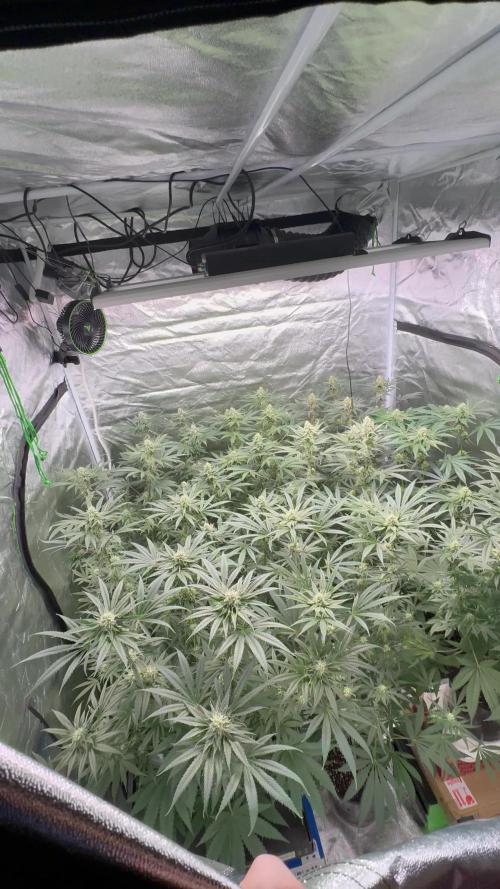
Everything is looking great for now. Busy week. Check back next week for individual photos of he plants will be starting to be pretty fat by then
Likes
4
Share


@mojo1985
Follow
Indoor bubatz gemütlich am blühen... die woche war im wachstum eher nix los... bisschen entlaubt und weiter wachsen lassen...schöne blüten verteilung... alles im rahmen ohne was zu meckern..schöne pflanze

Likes
18
Share


@eldruida_lamota
Follow
Buena germinación 3/3
Grtminadas en grilletes humedad dentro de un tipper y en 2 dias puesta sobre en tierra.

Likes
5
Share


@Deli_Weed
Follow
En general me encanto cultivar esta genética, siempre fue la primer genética que quise cultivar desde que empecé en esto y no me decepciono en lo absoluto, de una sola semilla obtuve 106 gramos de flores de gran calidad 😃 increíble para ser mi primer cosecha con semillas de bancos, ya quiero ver que resulta en la próxima cosecha ya con más experiencia y mejor equipo 🤩

Likes
1
Share


@ElCapitol
Follow
After four weeks alone with only light and water due to local forest fires I think she has done very well.
Frost banger is the name and she earns it. Solid nugs all over this plant and huge frosting. Very much a favourite for me. Despite the neglect it has done amazing. Even though I could not defoliate mid flower all the buds are very solid.
Smell is very familiar and reminds me a little of the dessert strains like cake and gelato. Soon ready for harvest I will update you with weights. It looks good 👍

Likes
2
Share
@eldruida_lamota
Follow
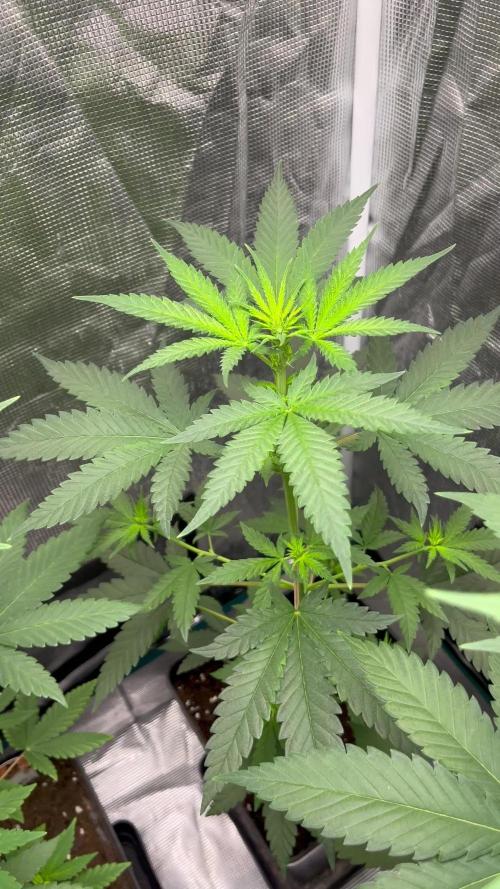
Vamos familia, actualizamos la primera semana de floración de estas Runtz de MSNL.
La temperatura que estuvo entre los 24-26 grados y humedad dentro de los rangos correctos.
Cambiamos esta semana el ciclo 12 horas luz, 12 oscuridad, estiraron bien y ensancharon bastante también, el color es verde sano.
Se nota que los nutrientes de la marca Agrobeta hacen sus funciones.
También realicé una poda de bajos que yo si las veo necesarias para explotar después la flor.
- os dejo por aquí un CÓDIGO: Eldruida
Descuento para la tienda de MARS HYDRO.
https://www.mars-hydro.com
Hasta aquí todo, Buenos humos 💨💨💨

Likes
22
Share


@Slobasian
Follow
You walk into the back yard and it’s a straight face punch of smells. Looking like some indoor rn moved all plants to safer place in case storm hits so now I atleast have a wind break

Likes
31
Share


@Maryjane23
Follow
Hi guys!!!
we're doing pretty well now the buds swell day by day ...
i am giving fertilizer once a week
specifically this week in 1 L of water I put:
co2 ¼ of tablet
enzymes 1.5 ml
candy 3 ml
top bud 1 ml
i am keeping a ph of 6.3 / 6.5
are you curious to try the LEDs but you don't have enough information?
I found the ideal solution with this VIPARSPECTRA XS2000 lamp.
this well-known brand offers different solutions look at the official website https://viparspectra.eu/
or Search for it on Amazon:
Amazon US: https://amzn.to/30xSTVq
Amazon Canada: https://amzn.to/38udUVe
Viparspectra UE: bit.ly/ViparspectraUE
Viparspectra USA: bit.ly/ViparspectraUS
keep following me 😝
if you like my work leave a like and/or comment 👍
maryjane23 👻
Likes
2
Share


Likes
5
Share

@MindFlowers68
Follow
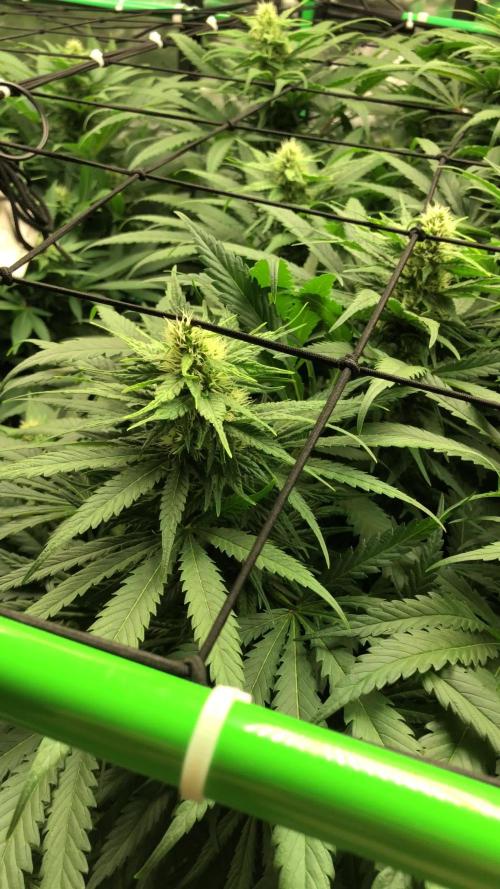
Mainly just monitoring things this week and watering and on humidity control. Got a deal on a large 20 inch fan and added it to the gorilla tent. and a deal on a Honeywell oscillating fan i added to the other flowering tent. Nighttime humidity has been hard to control even with my dehumidifier running while lights are off in the lung room. I want to run it during lights on but running into wattage issues on certain circuits i don't want to overload i only have 15 amp breakers. At was at least able to convince the "roomates" to let me set the nighttime house ac down to 73, so that was able to help me get tent temps down from high 80's to the low 80's during their "daytime" while having the light 100 percent. Vivosun tent is doing a little better with the humidity. I have a little more wattage in the lights and the canopy is a little more manageable so not transpiring as much. Towards the end of the week they hit a wall at their drinking and noticed a little more run-off than usual which is little to about a quart. out of 6-8 gallons in each time. One of the waterings this week included some microbe and fungal inoculant to give the rootzone an extra boost now that the plants are going to focus more on feeding themselves. adding a little bit of azomite to the water in the hopes theirs trace amounts of soluble silica in it. I want to start using a water soluble silica specific feed but I haven't found anything that's completely organic and soluble so that's why i opted to add some silica fixing microbes to fill any gaps the boogie brew may not be filling.

Likes
8
Share


@BBZETTA
Follow
First real Touch with the system. Im using a quarter of what they recommend since im trying to Focus on their recommended EC.
Everything dialed in lamp IS ramping up everyday by 3-4%.

Likes
2
Share


@Madman2020
Follow
Vegetative steering
Aiming for:
leaf Temp -70f
CO2 300
VPD +.93
Planning for:
MJ and bras foilar
60%+1.5/-71f set to 68f+1.5
Leaf Temp is about 3f higher than ambient temp
At 68f outside, grow room still wont hit 68 with lights off
Day 24
No Co2
50-55klux
15inch from light
Leaf Temp 71-73f
60%/72F
Veg steering
Coconut water
Uneven canopy(11 at 29inch, 3ag 31 inch
————————
Day 26
56%68f(humidity dropped because i havnt watered in two days 🤡)
23inch-34inch tal. Arranged in order.
52-59klux
Sprayed
5Bras,(23inch)70 leaf temp
4Jas,(29inch) 70 leaf temp
4Bras&Jas(34inch)72f leaf temp
———————
Day 27
Watered once
————-
Day 28
Im pretty sure the sprays worked.
Noticed leaf burn with 3 plants sprayed with MJat 147ppm(.5ml)
No leaf burn with the .1Bras sprays
I wonder how long both are good for. Also, can i pour the unused spray in the medium? I just dont want to waste it.
Plants are noticeably more vigorous.
I am wondering if now is a good time for my defoliation. i was planning for Week 5. I feel like the buds are to developed for me to be pruning off lower buds and makes me feel like i should have pruned beginning of week4
__________

Likes
13
Share


@Purrple_Haze
Follow
Buds Incoming & Balcony Patrol Engaged 🐾🌸
We’ve officially hit Week 2 of flowering, and the signs are now impossible to miss—pistils and early flower sites are popping up all over! After running 11/13 light cycle in the tent, I’m seeing the payoff: compact structure, steady stretch, and the first sparkling hints of what’s to come. 💡🌿
This week was all about keeping her supported during this crucial transition. Here’s what she got on her plate:
Foliar Silica spray for strength and resilience 🌬️
A full round of Alg·A·Mic, Bio-Grow, Bio-Bloom, Top·Max & Cal-Mag 💧
pH adjusted to 6.6 using Bio pH- 🌡️
A fresh brew of compost tea followed by Effective Microorganisms two days later for that living soil magic 🔁
And honestly? She’s thriving. Strong posture, vibrant color, no signs of stress—and just enough stretch to let those future colas shine. I really feel like she’s found her rhythm now.
Bonus moment of the week:
My cat discovered the balcony and decided to join me for a little garden patrol. First sniff, first paw on the tiles—it’s officially a shared project now. 😺🌿
We’re stepping into bloom with style, strength, and a bit of feline approval. Can’t wait to see those buds start stacking! Stay tuned—this Red Hot Cookies is just getting warmed up. 🍓🔥


Likes
12
Share


@PedroAndHisPlants
Follow
My first grow has been a great learning experience, and I couldn’t be happier with the results. From the reliable BioBizz soil and nutrients to the impressive performance of the Spider Farmer SF 1000, everything worked well together. Each component contributed to a successful harvest, and I’m excited to continue experimenting and improving my setup with new gear and techniques.💚

Likes
30
Share


@valiotoro
Follow
Week 4 has passed✔️
They double in size every week😳
We are now in the preflowering stage they seems to be happy with the LST & Topping✂️
Next week i will cut the nitrogen & start with the bloom nutrient🔥
Take care 💚
Likes
58
Share


@Legendaryseedthumb
Follow
Day 9: they are all looking super healthy and ready to explode! I’ll just veg these fast. Let them grow a node or two more then top them all and wait some days then switch to 12/12.
I’m having 9 plants in the same tent.

Likes
40
Share


@Taima
Follow
10/13/17
Day 72
Been flushing for past 5 days. Gonna flush for 5 more days then harvest time!!!! Heavy watering everyday to keep up with this heat..... if I don't water she's gonna wilt..... mahalo for checking her out. Aloha.

Likes
18
Share


@Jackweed77
Follow
5 week of flowers ...))
I defoliated the girls....work in progress....💚
I see so many buds I hope everything will proceed for the best because the girls have just stretched too much .... also made some emergency folding to those who had come very close to the lamp ....
