


Likes
Comments
Share


@Northern_Ent
Follow
Oct 19: warm October continues and this plant will be harvested in a few days. Three days with snow starting 3 days from now so that’s it for the season.
Drilled a couple of holes in the trunk. Idea is to stress the plant to spur trichome production. Did this before and not entirely sure it helps, but why not?
Oct 20: these buds are getting stinkier and frostier just in time for the season here to end. Smell was quite noticeable this morning so I’ve bumped it up to Strong. All the buds are looking fairly frosty too so this Gelato is finishing strong. 👍👍
Oct 21: harvest day because in two days, Monday, it will be below zero all day and likely snow. Oh well, a longer than expected season allowed this gelato to finish fairly well. Trichomes are still white, and actually I rarely see amber trikes on my plants and I think that’s due the weak sunlight here in the fall. My best option here is to aim to harvest by the end of September. This plant was not billed as being fast flowering so I expected it to be a bit slow, plus it is a sativa pheno, so I feel lucky that it has finished as well as it did. The weather here was definitely good for cannabis this year with the only real hassle being wildfire smoke.

Likes
91
Share


@DogDoctorOfficial
Follow
And the time to stop feedings and extra boosters as arrived since the fall colors start to pop and at this time that means the end is closer, so cut everything but the fluvics and the enzymes, this because i like to keep my soil alive for reusing purposes
This girls have came along way and they are huge, not only size i mean look at them fruits the size of an harm, i am definitely stressing her clones again for next run since this looks like will be the best ever so far she is performing,
The smells , OMG the smells are just getting stronger and stronger, i said this before but i will say it again, this one live a wine vine is evolving with time and i am loving that she is maturing and becoming a way more complex medicine and faster flowering also, i believe this one will be ready for harvest in couple weeks maximum but lets see how it all goes <3 <3 <3
Fall is moving fast in this tent and i have the felling they will finish faster than the previous runs were i tested them genetics, non so ever this is just retarded, i mean they are both BEAUTIFUL truly, they are going way , but way beyond any expectation i had on almost death plant , OMG thats write they almost dyed on me and now they are like this , thank you Universe and Aptus Holland <3 <3 <3
As always thank you guys for your love , your time, your support and it all, i fell blessed and i am truly thankful <3 <3 <3
All info and full product details can be find in can find @
https://www.zamnesia.com
https://aptus-holland.com
#aptus #aptusplanttech #aptusgang #aptusfamily #aptustrueplantscience #inbalancewithnature #trueplantscience #zamnesiaseeds #growerslove
With true love comes happiness <3 <3
Always believe in your self and always do things expecting nothing and with an open heart , be a giver and the universe will give back to you in ways you could not even imagine so <3 <3 <3
More info and updates @
https://growdiaries.com/grower/dogdoctor
https://instagram.com/dogdoctorofficial
https://youtube.com/channel/UCR7ta4DKLFMg2xxTMr2cpIg
<3 <3 <3 Growers love to you all <3 <3 <3

Likes
4
Share

@Pechu420
Follow
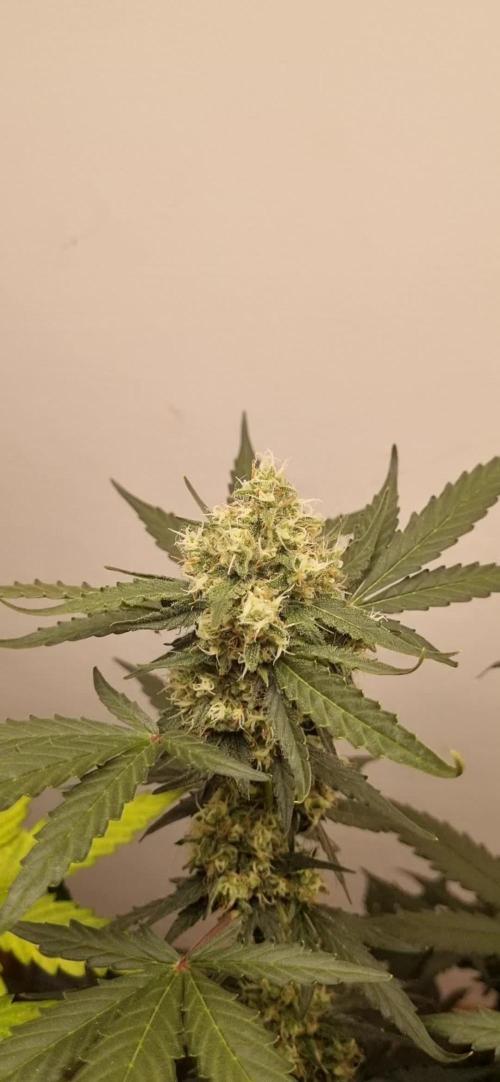
The growth is very good. Plant 3 has the fewest buds, is the smallest, and seems slightly more indica than the others. Plant 4 has very striking colors.
12/12 from seed
Watering with filtered tap water every 2/3 days, when the pot is lighter, 500-1000ml
Soil:
peat, coconut powder, perlite, carbonized rice husk, sheep manure and worm humus. essential mineral mix, vegetable flours, vegetable cakes, biochar, bokashi EM1 and other organic inputs, Algae ascophyllum nodosum
small pots 3,7liters // 1gallon
light: lm301h-evo
120watts with other plants

Likes
9
Share


@Rock_n_Roll_Randy
Follow
DID SOME MAJOR DEFOLIATION TO SLOW THE GROWTH ABIT. IM GOING TO PUT THE 15 PHOTOPERIODS IN THE 8X8 TENT TO FLOWER BUT I NEED TO HARVEST THE AUTOFLOWERS FIRST.
FOR EVERYTHING MARS HYDRO VISIT:
www.mars-hydro.com
www.marshydroled.ca
PROMO CODE: rocknroll
VISIT THE ALIEXPRESS STORE:
@marshydro_aliexpress
Instagram: @marshydropenny
Thanks for taking the time to read and check out my diary🤜🤛
TS3000 FEATURES:
WIDEBAND SUNLIGHT FULL SPECTRUM LED GROW, Infinite close to natural sun light, suit for all plants whole stages indoor growing, rapid plant response from seed to flower, achieve maximum quality and quantity, much better than traditional HPS grow systems.
HIGH REFLECTIVE & NOISE FREE-Fanless LIGHT BOARDS design will make your growing life easy and quiet, quickly heat dispersing material aluminum reducing light lost to aisles and walls, increase the light intensity up to 20%, allowing your plants receive more energy and without burning your plants for maximum headroom.
HIGH EFFICIENCY ENERGY SAVING PLANT LIGHT, high-power NEW LED grow, Compares to traditional 3000 watt HPS lamp and other brand led grow light while only 450 watts true output with 1016 LEDs, more scientifically and energy-efficient! Perfect for 5' x 5' veg stage, 4' x 4' bloom stage, higher intensity in a MARS HYDRO grow tent, reflective area, or by crossing over using multiple TS3000.
BOOM YIELD LARGE GROW LIGHT, NEWEST SMD LED technology provide highest PAR/LUMEN output(1095.6umol/), makes you get 30% higher yield compare OLD led lights, can get max yield at 2.5g/watt, less pay but get more yield, bring a amazing grow trip to any home grower as it beams huge amounts of light energy to plants below.
COMMERCIAL LED GROW LIGHT, Updated easy dimming & daisy chain function, main light controlled, especially come with two waterproof and dimmable Mean Well Drivers, auto sensing power supply works on both 120VAC and 240VAC and 277VAC, suit for Large Rooms and Commercial Setups.
Low Energy-Consuming LED Grow Light: Consuming 300w and also mounted with 1016 chips, TS3000 has the ability to replace a 450w HPS light while reducing 40% power intake.
High Efficiency LED Grow Light: With overall light output PPF 343umol/S as well as amazing PPE 2.3 umol/j, it's 50% even more photon efficient and can assure a 30% more return than the old HPS/MH lights.
Patent Highly-Reflective Hood Shape: The reflector design on TS3000 is patented, which can effectively gather the light dispersed in all directions to enhance its light intensity as well as assist plants in absorbing more light.
Full Spectrum Plants Favorite Spectra: By the unique mix of spectra that makes most light in the 400-700nm waveband, incredibly conducive to plant photosynthesis. Adequate IR(730-740nm) is additionally consisted of in the range to generate larger buds.
Dimming And Daisy Chain Feature Available: Upon an independent dimming button on the external driver, backing 0-100% settings adaptation and up to 30 LEDs daisy-chained in a group, it supplies different light levels for various plant stages meanwhile saving energy.
Safety Certifications And Service Warranty: CE, ETL, RoHS, UKCA security certifications accepted, 50,000 hours durability, 5-year service warranty, and local after-sales repair
5x5 GROW TENT:
LOCK ALL LIGHT INSIDE MARS HYDRO Indoor Grow Tent interior is made of diamond mylar which is highly reflective. (Other brand's mylar and reflective rate is as low as 50%, won't provide efficient light. )MARS HYDRO 1680D canvas, being double stitched, it is tear proof and has perfect light locking. Mars Hydro's grow tent keeps 100% lighting beams inside and helps your plant absorb more lights. EXTRA-THICK --No light leaks or rips at all
DURABILITY GROW TENT Stable metal corner adapters and poles are the trustful supporters of the tent, standing sturdy, neither rusting nor paint-falling, quick easy tool-free installation. Mars Hydro's heavy-duty metal zippers, with double layer black lining, are the best on the market which create a light-proof seal
EASY OBSERVATION FOR YOUR PLANTS. Special observation windows are made by double layers of cloth. Observe the growing conditions of your plants without opening the tent and avoid disturbing plants. The observation window also serves to dissipate heat and ventilate air
AUTOMATIC 6 INCH EXHAUST FAN KIT W/ CONTROLLER:
Mars Hydro 6'' Inline Fan uses a mixed-flow design to maintain peak performance in a high static pressure environment.
GROW TENT FAN: MARS HYDRO inline fans are designed to ventilate hydroponic grow rooms, transfer heating/cooling, cool AV closets, and exhaust odors.
EFFECTIVE VENTILATION: Variable speed controller for easy fan speed adjustment. Optimal ventilation for your planting.
LOW NOISE LEVEL: Durable plastic fan housing and blades for extremely low noise(32dB-A); create a truly quiet growth environment.
EASY INSTALLATION: Removable duct ends with locking tabs for quick removal and easy maintenance and a cord length of 4.9 feet for hassle-free setup. This grows tent fan with a controller for easy fan speed adjustment.
BASIC PARAMETERS: Ventilation exhaust fan size: 6” | Dimensions: 315mm*225mm*210mm. | Weight: 2.7. | Airflow: 402CFM | Noise: 32dB-A | Bearings: Dual Ball.
Likes
119
Share


@Tropicannibis_Todd
Follow
Well growmies ive been looking forward to the Strawberry Pie, the more she went into flower the more the frost would build up , and that's when the terps came out and they came out strong , there no stealth for this girl 👉 Stinky 👈 Buds are tight and full of frost 👈 Couldn't of asked for better Genetics 😉
The smell coming from this girl during the entire grow was just dreamy 👈.... Definitely got the strawberry terps backed by this gassy flav 😍
Amazing
👉 Big thanks to all my Growmies out there in GD land 👈 Much appreciated 🙏
Thanks To MarsHydro for the TS1000 x3
👉I used NutriNPK for nutrients for my grows and welcome anyone to give them a try .👈
👉 www.nutrinpk.com 👈
NutriNPK Cal MAG 14-0-14👉 All Weeks
NutriNPK Grow 28-14-14👉 Weeks 2 & 3
NutriNPK Bloom 8-20-30👉 Weeks 4 to 8
NutriNPK Bloom Booster 0-52-34👉 Weeks 4 & 9👌👌
Likes
Comments
Share

@DogDoctorOfficial
Follow
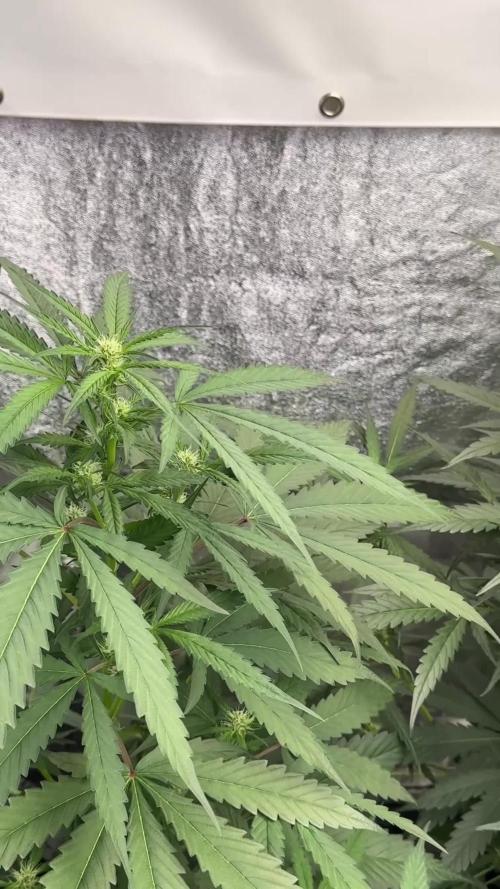
🌸 Pink Rosay Auto by Zamnesia | Pheno B | Week 6 (Early Flower)
🌱 Small in Size, Huge in Character
Not every plant dreams of touching the ceiling.
Some choose a different path.
While her sister reached upward with remarkable speed, this little Pink Rosay has quietly remained true to herself, growing into one of the most compact plants inside the entire Project Blue Tent.
At first glance, some growers might overlook her.
I certainly won't.
Sometimes the smallest plant ends up telling the biggest story.
Running under my ongoing 12/12 From Seed experiment, she has spent her entire life making every decision beneath flowering hours. Instead of investing energy into vertical growth, she has poured everything into building a sturdy framework filled with healthy branches, tight internodes, and an abundance of developing flower sites.
She's proof that size has never been the only measure of success.
🌸 Week 6 – Every Flower Has Its Place
This week her flowering really began to shine.
Those brilliant white pistils are everywhere.
Every branch is crowned with fresh clusters that seem to grow larger each day, creating dozens of little stars scattered throughout the canopy. These delicate white hairs are the plant's first invitation to reproduction, reaching outward in search of pollen in nature. Indoors, without pollination, they become the foundation upon which each flower will continue to build.
Watching them emerge is always one of my favourite stages.
It's the moment when potential becomes visible.
The buds are still young, but they already carry that wonderful promise of everything that's still to come.
🌿 Structure & Growth
Standing at approximately 55 cm, Pink Rosay remains the smallest plant in the tent.
Yet nothing about her feels underdeveloped.
Quite the opposite.
Her compact architecture has produced incredibly tight node spacing, allowing flower sites to form almost one above another. Instead of long stretches between branches, nearly every centimetre of stem contributes to future flower production.
Gentle Low Stress Training has opened the canopy just enough for light to reach deep into the plant while maintaining her naturally balanced form.
She isn't trying to become the tallest.
She's simply becoming herself.
🍃 Plant Health
Health continues to be absolutely exceptional.
The foliage displays a rich emerald-green colour from top to bottom, with beautiful leaf posture and excellent turgor throughout the plant.
There are no signs of nutrient stress, deficiencies or excesses.
Everything looks relaxed.
Comfortable.
Balanced.
Even with rapid flower formation underway, she continues producing vigorous new growth while maintaining the kind of healthy appearance every grower hopes to see when opening the tent each morning.
Sometimes perfect health is quiet.
This plant is a wonderful example of that.
💧 Hand Watering & Nutrition
Like her sister, Pink Rosay continues to be hand-watered rather than connected to the AutoPot system, allowing close daily observation and precise control over her feeding.
Current feeding:
• Terra Bloom — 1.9 ml/L
• Pure Zym — 1 ml/L
• Sugar Royal — 1 ml/L
• Power Buds — 1 ml/L
• Green Sensation — 1 ml/L
Maintaining:
• EC: 1.78 mS/cm
• pH: 6.0
She's responding beautifully, maintaining outstanding colour and steady flower development without asking for anything more than consistency.
🌡️ Environment
The environment remains stable, allowing every phenotype to express its own personality without unnecessary stress.
Current conditions:
• Day temperature: 29°C
• Night temperature: 25°C
• Relative humidity: 60%
• Solution temperature: 21°C
• Root zone temperature: 21°C
• CO₂: approximately 639 ppm
Even during the warmer summer days, the room continues providing the consistency that allows healthy genetics to perform at their best.
🌼 A Lesson in Phenotypes
One of my favourite parts of growing multiple plants from the same strain is watching nature write different stories from the same genetic book.
If I had only grown this Pink Rosay, I might describe the variety as naturally compact.
If I had only grown her sister, I might say she stretches enthusiastically.
Both observations would be true.
Neither would tell the whole story.
That's the beauty of phenotypes.
Every seed carries the same family name, but each one develops its own personality, its own rhythm, and its own way of expressing those shared genetics.
This little lady reminds me that sometimes the quietest plants have the most interesting stories to tell.
👀 Looking Ahead
With the stretch now largely behind her, the next few weeks should be all about building flowers.
Her incredibly tight node spacing could become one of her greatest strengths, allowing individual flower sites to merge into dense, beautifully stacked colas.
She may never be the largest harvest in the room.
But I have a feeling she'll produce something very special.
Sometimes the plants that ask for the least attention end up becoming the jars you reach for most often.
🙏 Final Thoughts
This little Pink Rosay has become one of my favourite reminders that gardening isn't about chasing uniformity.
It's about giving every plant the opportunity to become exactly what it was meant to be.
She may be the smallest plant inside the tent, but every day she stands there with remarkable health, vibrant colour, flawless structure and flowers that continue to multiply beneath a crown of brilliant white pistils.
Some growers measure success in height.
Others measure it in yield.
I'm learning, once again, that true success is watching a plant express its own personality while thriving from beginning to end.
A huge thank you to Zamnesia for these wonderful genetics, Plagron for providing the nutrition that keeps these plants thriving, Future of Grow for the outstanding lighting, TrolMaster for maintaining such a stable environment, and to everyone following this journey here on GrowDiaries.
Your support, encouragement, questions, and shared passion for growing continue to make this adventure even more rewarding.
Small in stature.
Beautiful in every detail.
And quietly preparing to surprise us all.
Growers Love and happy growing! 🌱💚
Likes
4
Share

@Grasshopper96
Follow
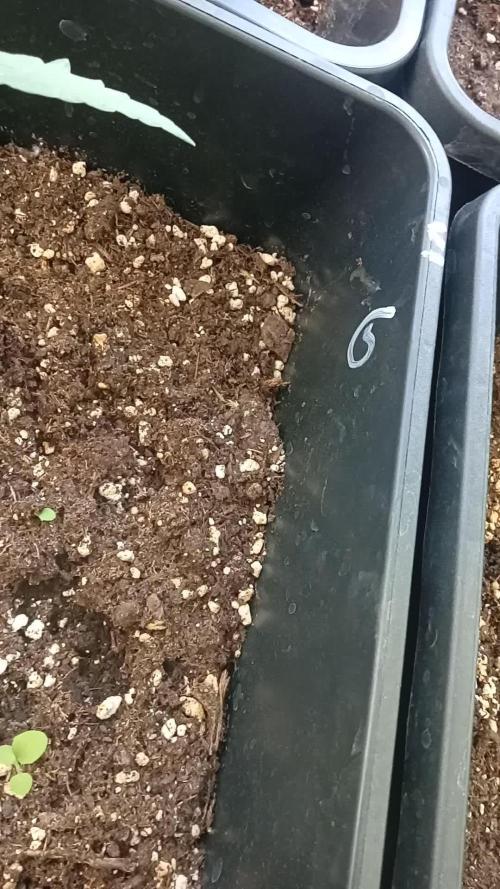
The roots colonizing all the pot😘
I'm so Happy foto It and for the grow of the plant, flowering Is coming?!
Tonigth my friend from Liverpool traslato in english from italian the realy update 😅 Sorry for my horrible english
PS i'm so busy i risk for thiss contest 10 years of jail because i'm in Italy , good food good monumenti but the people are stupid and i see people partecipate at thiss contest grow indoor, i think this Is dishonest and thiss Is my crusader
Finally italians do it Better Whit the sun,the good water and the south italians "cazzimma"
Likes
11
Share


@Trinidad
Follow
The rating I give this one due to the 💩 I did. Due to the recent heatwaves in Europe and me not being on top of my game I miss out on not changing out the reservoir quick enough. She got some major damage and never really fully recovered. I apologize to Fastbuds for doing a 💩 job with their genetics. I'm going to regrow in coco next time now that winter is approaching.
Likes
3
Share


@Ganja_Victoria_Aus
Follow
Planing to move in dwc under fluence light food by Front Row Ag. Let's see how she does.

Likes
11
Share


@Hempface86
Follow
Ladies and gentlemen, today is day 27, and this girl is doing great.. i just gave her a feeding around the rim of the pot .. she's leaning a little bit because my eternity grow plant is taking up all the tent, and this poor little girl is struggling to get light.. She's looking good though she will prevail and I believe end up being a great plant.. Kannabia seeds much appreciated. You guys are great genetics, so far doing great as well.. God bless everybody and happy growing ✌️.
P.s i'm unable to upload the maxibloom nutrients in the general hydroponic silica that she's getting as well..

Likes
2
Share

@PhinolaGreen
Follow
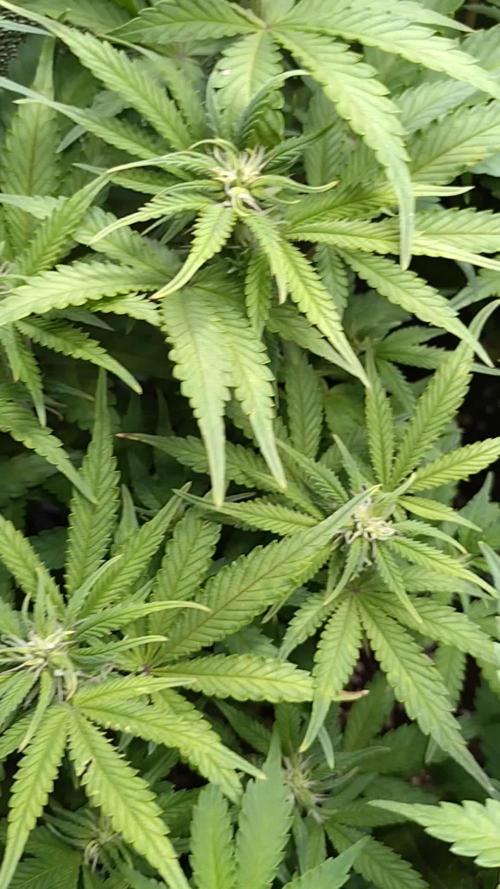
8. Woche
Ich habe zu früh Lollipopping gemacht, dass hat die Ladys bisschen gestresst. Aber jetzt dürfen sie erstmal normal wachsen, ich werde sie die Tage nochmal bisschen Defolieren 😊


Likes
4
Share


@AustinRon
Follow
OG 4Q24 Flower Week 9
Orangegasm (Fem) [ IRIE Genetics ]
12/12 @ Bolt (Day 21)
Germination: 20 November 2024
#3A Earliest Harvest Date: 9 February 2025
#3B Latest Harvest Date: 19 February 2025
_________________________________________
Start of Week: [Wed Feb 5, 2024 CR2 4Q24 57:F:8:1]
End of Week: [Tue Feb 11, 2024 CR2 4Q24 63:F:8:7]
OrangeGasm Fertigation:
- MAX: EC: [ 2.4, mS] #Ramping Down
- LightIntensity MAX: [ 850, µMol/m2/s]
______________________________________
OBJECTIVES
- Ramp EC from 2.4 - 1.0
- Start rolling off Primer A&B/Silica Skin to Resin Bloom . . .
__
Wed Feb 5, 2025
OG 4Q24 57:F:8:1
EC: 2.3
Notes:
#5 looks like a 60 day plant, if so - consider Saturday Harvest …
Runoff
- [x] Amount: [ 0.125 , gal]
- [x] EC: [ 4.4 , mS/cm]
- [x] EC∆: [ 2.5 , mS/cm] # Fried Yet? ;-}
Harvest Dehu
- [x] Amount: [ 1.5 , g]
__
Thu Feb 6, 2025
OG 4Q24 58:F:8:2
EC: 2.3
Refresh Reservoir
- [x] Amount: [ 2 , g]
- [x] EC: [ 2.3, mS/cm]
- [x] Primer A&B: [ 31, ml]
- [x] Silica Skin: [ 15 , ml]
__
Fri Feb 7, 2025
OG 4Q24 59:F:8:3
EC: 2.3
__
Sat Feb 8, 2025
OG 4Q24 60:F:8:4
- [x] Disassemble, Clean Reservoir and Pumps, Reassemble
Refresh Reservoir
- [ ] Silica Skin: [ 15 , ml]
- Dropping Silica Skin due to (sparse to medium) granular precipitate
- [x] Amount: [ 6 , g]
- [x] EC: [ 2.1, mS/cm]
- [x] Primer A&B: [ 100, ml]
EC: 2.1
@1900 - Clear Manifold Filter. (Mainline should be cleared on 1845 feed
__
Sun Feb 9, 2025
OG 4Q24 61:F:8:5
- [x] Dilute to EC 2.0
- Flooded Tent, 2 Gallons PLUS of Runoff. Happy Plants.
- Shout Out Shop-vac. ;-}
EC: 2.0
__
Mon Feb 10, 2025
OG 4Q24 62:F:8:6
EC: 1.8
HAND APPLICATION
Prepped One Gallon of 12-8-7-5 @ 1.8 mS/cm w/ PhotoSynthesis Plus, SLF-100
Reclaimed Dehu Water, ~2 Gallons
Refreshed Reservoir, 2 Gallons Rooted Leaf Hydro no Silica Skin, EC: 1.8 mS/cm
Reduced watering to 5 min, then 1 - 1 -1 -1 -1 -1 -1 -1
(It’s not like they’ve been under-fertigated)
__
Tue Feb 11, 2025
OG 4Q24 63:F:8:7
EC: 1.7
- [x] EC: [ 1.7, mS/cm2]
- [x] Refresh Reservoir
- [x] amount: [ 2.5, gal]
Runoff
- [x] Amount: [ 0.5, gal]
- [x] EC: [ 3.6, mS/cm2]
- [x] EC∆: [ 0.9, mS/cm2] # Better than 2.5!
PLANT POSITIONS
3 5 1 7
4 2 6 8

Likes
2
Share

@pareto
Follow
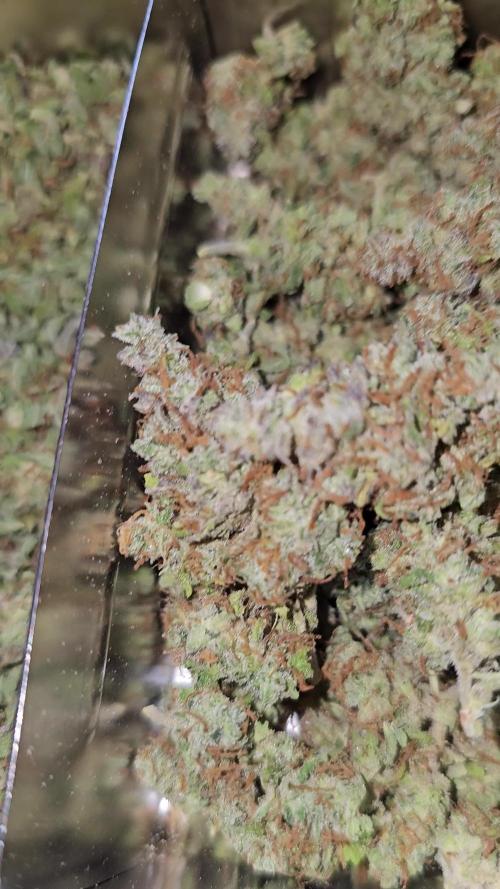
The summer was super wet and humid so she lost 2 of the big buds to mold.
Other than that she did great! really big, vigorous and heavy, dense buds. All arround winner. Really looking forward to the seeds.
These plants are not mine. I am just documenting them.
Total Runtime: 81 days
--------------------------------------------------------------------------------------------------------------------------------------------------------------------------------
Set up cost (fixed costs)
-Lamp: 40€
-Timer: 3,5€
-Pot: 4€
-Total fixed costs: 47,5€
Given 5 years (or 15 grows) usage time translates to around 3,17€ per grow in materials.
Variable costs:
-Seeds: 13,17€
-Soil: 6,00€
-Fertilizer: 3,50€
-Power: 21,00€
-Total variable costs: 43,67€
-Total costs per grow: 46,84€

Likes
11
Share


@RizlaZA
Follow
Fresh rez swap and she flaring all over again. Nee pistols shooting, hopefully get another 15% over the last 2 weeks

Likes
11
Share


@Willy_Balls
Follow
15.08
Second week going great. The mimosa pheno I hunted is a true monster. Thick stem already nearly as big as the 1.5 inch rockwool cube. Easily over 1 m high. Stacking beautifully.
I have a new setup for the 5x5 tent.
Vevor EC fan 150mm. With temp and humidity controller paired with prima clima 900m3h carbocone filter which is huge.
Also new Mars hydro fc e 8000 light with Bluetooth controller. So far very cool. We will see how it performs.
Since I have co2 boosted we will have it cranking at max when the girls hit the bulk phase.

Likes
3
Share


@Unculti_responsable
Follow
La verdad que viene creciendo muy bien , todos los días veo que mejora , ya estan asomándose las primeras raíces por abajo de la maceta , la voy a dejar colonizar todo el pan de sustrato , para trasplantar , vamos a fertilizar con nitrógeno, micorrizas y un poco de guano en riegos !!

Likes
11
Share


@Rob691
Follow
Plants are in dry pode since 8 days Now.
I decide to stop flowering besause a few yellow bananas start showing up. That was time.
By the way, I taste the fresh weed before making my decision and… damned, it’s a great one !!!!!
😁😁😁😳😳😳😎😎😎
Likes
8
Share


@Farmer1
Follow
first day of week 7, pheno #1 stretched very little with short internode looking compact while pheno #2 stretched amazingly with lots of young buds. I slightly increase the dose of bloom and quantity of water.being bushy plants a good defoliation did them good.See you next week, bless and protect ✋🌳
Likes
39
Share


@eldruidamx
Follow
Day 106. Watering with fertilizers.
Day 107. Watering with clean water.
Day 108. Watering with fertilizers.
Day 109. Watering with clean water.
Day 110. Watering with fertilizers.
Day 111. Watering with clean water.
Day 112. Watering with fertilizers.

Likes
6
Share


@Organic473
Follow
Another first timer…I am satisfied with her progress thus far. I'd probably turn her Inna project by crossing with the Skunk #1 pollen. Time will tell..
