Likes
Comments
Share
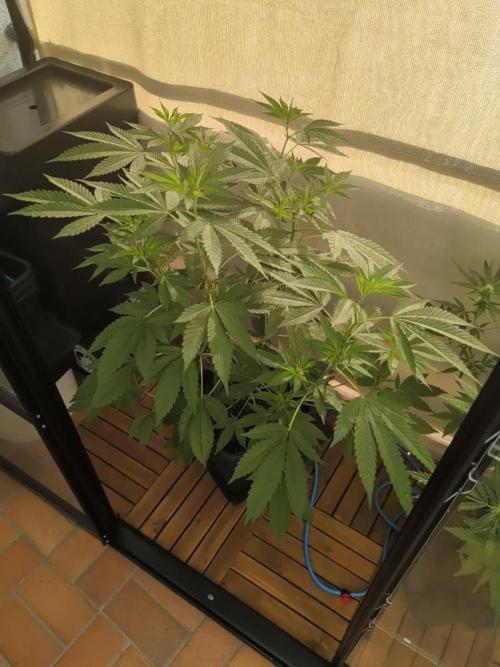
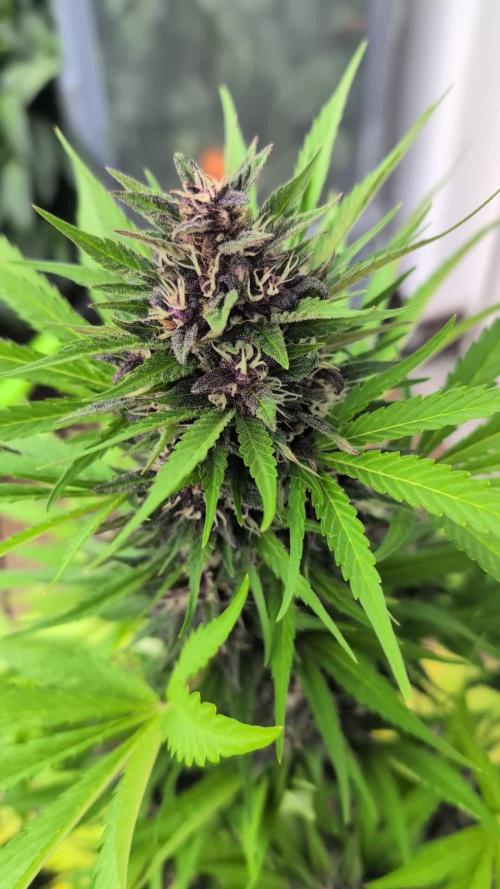
MATARO BLUE by KANNABIA Week #16 Overall Week #2 Flower This week she's doing good👍 she's dealing the heat and elements fairly well hopefully that will continue as she flowers!! Stay Growing!! Kannabia.com. MATARO BLUE

Likes
6
Share
@Krissci
Follow
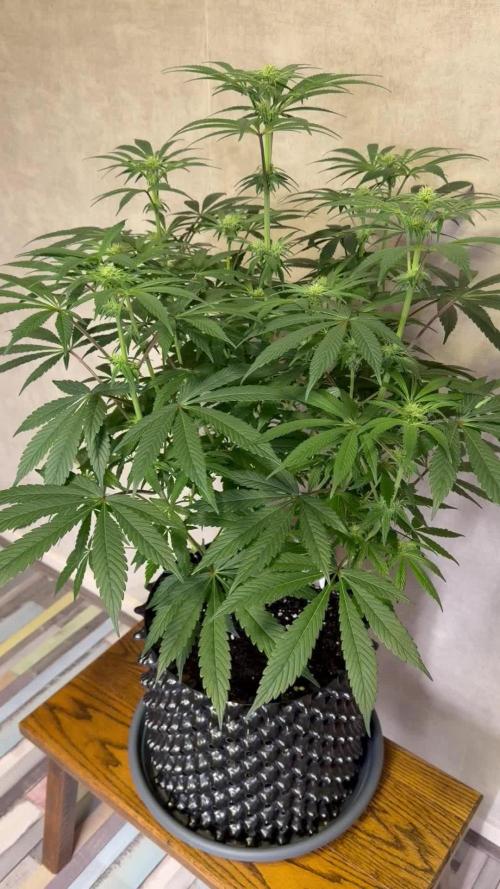
Day 1 ....add additional soil, water and 1st topping Day 3 - checked for 2nd topping Day 5- watering....strong stems already
Likes
52
Share
Its time to prepare for war. *Blows bagpipe* FISH SH!T THE ORGANIC SOIL CONDITIONER (used twice before and always noticed instantly) Fish Shit is a living product! It provides a complex Microbial profile that includes thousands of different species of bacteria, fungi, and protozoa. This profile is closer to a natural ecosystem than anything you will find on the market. Fish Shit helps release essential oils and terpenes which contribute to the building of a myriad of flavonoids. Flavanoids play a key role in the development of the most potent aromas and tasteful flavors of a plant and its fruit. Fish Shit contains beneficial microorganisms that help plants maximize nutrient uptake. It does this by transforming nutrients into more usable forms and keeping these nutrients in the soil longer. During photosynthesis plants naturally produce exudates (chemicals that are secreted through their roots). Through these exudates, plants can attract the types of good bacteria that are beneficial to them at different points in their growing cycle. These good bacteria cover the roots and act as a barrier to the invasion of disease-causing organisms that may harm the plant. What Are Enzymes? Before we dive headfirst into how, exactly, enzymes can benefit cannabis plants, it helps to understand a little about what these microscopic proteins do. Essentially, enzymes facilitate chemical reactions. They do so by binding with a substrate and forming or breaking molecular bonds. In this context, the substrate is the molecule upon which an enzyme acts to boost the efficiency of a reaction. •substrate /sŭb′strāt″/ •noun •The material or substance on which an enzyme acts. A surface on which an organism grows or is attached. An underlying layer; a substratum. Enzymes are proteins with complex 3D shapes that feature regions called active sites. When the substrate binds to these active sites, it forms an enzyme-substrate complex that causes a chemical reaction to take place, temporarily changing the structure of the enzyme and ultimately causing molecules to either come together or break apart. As a result, molecular products are released, and the enzyme returns to its original shape. Specific enzymes are capable of binding with certain substrates, as the substrate fits into the active site more or less via a lock-and-key principle. Although, new research suggests a more accurate theory of "induced fit", in which enzymes and substrates undergo structural changes to facilitate the reaction. If you take the human body as an example, we have an abundance of enzymes in our saliva and digestive system. These molecules bind with substrates in these regions (food particles), working to break down the food we eat into usable parts before converting them to energy. Enzymes in cannabis work in a similar way to the example highlighted above. Typically, enzymes occur in soil naturally, but if your soil mix is lacking organic material, or you're growing hydroponically, then adding enzymes directly to the substrate is crucial. By using them in cannabis growing, enzymes not only help break down essential nutrients into smaller, more readily available pieces, but they also support the digestion of dead root cells, clearing a direct path for nutrients. Overall, enzymes make it easier for your cannabis plants to absorb all the elements they need to reach their full potential. For growers, a plant that reaches its full potential means a bucketload of juicy buds come harvest. This is essential if you want to reuse a pot with old systems left over like mine. Common plant enzymes include: •Cellulase •Xylanase •Beta-glucosidase •Hemicellulase •Amidase Amino acids are a crucial, yet basic unit of protein, and they contain an amino group and a carboxylic group. They play an extensive role in the gene expression process, which includes an adjustment of protein functions that facilitate messenger RNA Nitrogen, phosphorus, and potassium are the three main pillars of nutrient solutions and fertilizers, but there are countless other nutrients that your cannabis plants need to produce the best possible harvest. Amino acids are one of them. You may have noticed that amino acids get a lot of attention from bodybuilders and other athletes. That’s because they play a key role in the synthesis of protein, which, as you probably know, is super important for sports recovery and muscle growth. Amino acids are the building blocks of protein and the foundation of both plant and animal life. But what do amino acids do for cannabis? WHY IS PROTEIN IMPORTANT FOR CANNABIS? Just like proteins are important for the human body, they are equally important for the growth and development of plants. For example, proteins help plants: •Facilitate the growth of intracellular plant structures •Promote energy generation •Stimulate metabolic processes •Facilitate the absorption and transportation of nutrients So, where do plants get these vital proteins from? Well, unlike humans, plants can’t source proteins or amino acids from other organisms. Instead, they need to create their own amino acids, and then use these to build protein. That's why gardeners, much like athletes, go wild for amino acid supplements. Amino acids help plants by… • Increasing their production of chlorophyll, which ultimately improves their ability to photosynthesize • Serving as an easily absorbable form of nitrogen • Stimulating the synthesis of key vitamins • Improving their resistance to pests and diseases • Boosting the strength of their cells Amino acids also serve as the precursors to auxins, a group of plant hormones produced in the meristems—the apex of the stems where new leaves and stems are born. Auxins play a key role in the plant, activating genes for plant growth and development by triggering a multitude of vital plant functions. In other words, they determine what its size and architecture will look like. Auxins influence the development of branches, flowers, and roots, and even help to regulate the photoperiod response of the plant. Some amino acids, like cysteine, also work together with antioxidants like glutathione to help cannabis plants deal with oxidative stress, which can be caused by high-intensity lighting, some nutrient solutions, and high levels of CO₂. Unlike humans, plants can synthesize all the amino acids they need to survive and develop properly. Unfortunately, however, amino acid synthesis is a really high-energy process, and plants may struggle to produce enough amino acids when exposed to stress. WHAT FACTORS AFFECT A PLANT’S ABILITY TO SYNTHESISE AMINO ACIDS? Any kind of stress can affect a plant’s ability to produce enough amino acids. This includes: • Drought • Temperature extremes • Poor soil health • Pests • Diseases • Poor lighting • Lack of space • Poor root health WHAT DOES ALL OF THIS MEAN FOR WEED PLANTS? If you want to push your plants to their extreme in terms of floral growth and resin production, you should look into amino acid fertilizers. By making amino acids readily available to your plants, they’ll be able to use crucial energy to grow and bloom, rather than focusing on synthesizing amino acids themselves. Game of Inches, this is another Plants can absorb amino acids via their roots and leaves. They can also benefit from amino acids during both their vegetative and flowering phases. The fastest way for plants to absorb amino acids is via their leaves. The foliar application of amino acids is believed to improve the transportation of nutrients, increase transpiration, and boost photosynthesis. Hence, I recommend feeding your plants with foliar amino acid fertilizers. When doing so, however, carefully measure the amount of fertilizer you use, as—like with any nutrient—overfeeding can damage your plants. FOLIAR FEED AND SOIL SOAK • 1 crushed queen anne carrot • Add 2 tbsp of NPK Raw powdered water-soluble cane molasses • 20ml h2o2 • 1 crushed radish • 0.25 tsp NPK Enzymes • 0.25 tsp NPK Amino Acids • 50ml coconut water ( nature's own amniotic fluid packed with amino, enzymes ) + The sound of songbirds. Onto the predators 1250 -Green Lacewings Lacewings are extremely voracious predatory insects that feed on several pests. In adulthood, it feeds on pollen and nectar. In the larval stage, it feeds on aphids, thrips, and mealybugs at all stages of growth. It can also attack spider mites in moderate quantities. It is initially an aphid predator, but very effectively controls thrips and mealybugs infestations. It is so voracious that in the absence of prey, it will feed on its congeners. Lacewings are cannibalistic if there is no food available for them. It is therefore important to introduce them into an infestation situation, and not just preventively. •congener /kŏn′jə-nər/ •noun •A member of the same kind, class, or group. •An organism belonging to the same taxonomic genus as another organism. •A thing of the same kind as. or nearly allied to, another; specifically, in botany and zoology, a plant or an animal belonging to the same genus as another or to one nearly allied. Ideal temperature 20°C – 26°C Ideal humidity 60% – 70% Predatory stage life cycle 21 days Introduction rate 4 weeks Storage Refrigerator Use Immediately Are there any specific instructions on how to use this predator? Lacewings are available on small paper cards that you can hang to plant stems. On the cards are dozens of eggs ready to hatch. There are also sterile eggs they can feed on once they have hatched before they are ready to disperse in the foliage. It is important to use them quickly upon receipt to avoid cannibalism. If you don't use them right away, you can store the cards in the refrigerator for 24 to 48 hours to prevent the eggs from hatching too quickly. Avoid storing them for longer than this or you risk losing eggs. 1250 eggs are divided into 7.5 cards, 2500 eggs on 15 cards, and 5000 on 30 cards. The application rate is one card per square meter of growing surface. Is this predator best used for preventive or curative treatments? Lacewings are used as a curative solution. Anything else I should know? Lacewing eggs hatch approximately 24-72 hours after the cards are exposed to room temperature. When they emerge, the lacewings are just 1.5-2 mm long. They are very small so they are difficult to see. Once hatched, they will stay on the cards for a few hours and then disperse in the foliage. You quickly lose sight of them if you have not witnessed the hatching. They then live in the foliage for about 3 weeks. Often, you will see them towards the end of their larval cycle. After feeding for 3 weeks, they will triple and even quadruple in size. At that point, they are easier to see. But they remain very discreet insects, it is not abnormal not to see them. Egg carcasses left behind on the cards do not disappear after the hatching has happened. It's normal to see eggs still on the cards. Visually it is very similar before and after hatching. Also, on the boxes, there are sterile ephestia eggs which are used to feed the lacewings once hatched. Not all lacewing eggs are viable either. Only a certain percentage of lacewing eggs will hatch. Once hatched, the eggs are white. You can observe this using a magnifying glass. With, 5000 Stratiolaelaps Scimitus It is used to prevent or control thrips pupae, fungus gnats larvae, and root mealybugs in the soil. It can also be used for red mites in bird farms or hen houses. The adult is about 1 mm long and is medium brown with a beige triangle on its back. Another fun fact about them is they can survive without prey. They can eat algae and plant debris. This is why they can reproduce and stay in plants for long periods. Ideal temperature 15°C – 23°C Predatory stage life cycle 18 days Introduction rate 2 weeks Storage Room temperature Use Within one week Are there any specific instructions on how to use this predator? Sprinkle directly on the growing media. They can live in all types of substrates like potting soil, coconut fiber, rock wool, cedar mulch, etc. Stratiolaelaps establish easily so they are permanently fighting pests. One introduction is generally enough unless you have an infestation. In this case, introduce them at least twice at a 2-week interval for best results. If you grow your plants in a 100% mineral substrate, it will have to be released more often since there is less organic matter than in traditional soil. Do I need to take any specific precautions? Stratiolaelaps breed in the top layer of the soil. So it is important not to disturb them in the first days following their introduction. They don't like temperatures below 8 ° C. So be sure not to introduce them in a water-saturated or cold environment. Release them 24-48 hours after your last watering. They are very sensitive to chemical acaricides and diatomaceous earth. These methods are incompatible with their use.
Likes
36
Share
@nonick123
Follow
Día 122 (30/09) Riego con 750 / 1.000 ml H2O de osmosis Día 123 (01/10) Riego con 750 / 1.000 ml H2O de osmosis OnionOG #1 huele cada vez más a tierra húmeda, y sus cogollos son duros como pelotas de golf! ⚾ Día 124 (02/10) Riego con 500 / 1.000 ml H2O de osmosis Hace 35 ºC de temperatura ambiente! Que barbaridad! Día 125 (03/10) Riego con 750 / 1.000 ml H2O de osmosis Hoy bajan las temperaturas 25-26 ºC, más normal para estas fechas Día 126 (04/10) Riego con 750 / 1.000 ml H2O de osmosis Día 127 (05/10) Riego con 750 / 1.000 ml H2O de osmosis Las plantas empiezan a doblar sus ramas por el peso de los cogollos! 💪 🚀 Les aporto sujeción con cañas de bambú y cables de sujeción Día 128 (06/10) Riego con 1 / 1,25 litro H2O pH 6,5 + Kelp Hidrolizado 0,3 g/L Locura de día con 37 ºC y un aire caliente asfixiante! 💦Nutrients by Lurpe Solutions - www.lurpenaturalsolutions.com 🌱Substrate PRO-MIX HP BACILLUS + MYCORRHIZAE - www.pthorticulture.com/en/products/pro-mix-hp-biostimulant-plus-mycorrhizae
Likes
117
Share
wou wou wou .... do you see all that beautiful meat over those rigid stems ??? I would give him a nice bite over mmmm there is a great smell in a pot! being together with you is always a joy, Brothers and sisters farmers
Likes
59
Share
Week 6 of flower - At the end of this week I defoliated down to mostly bud and sugar leaves for the final stretch. I fed them normal with no HP2. Feed this week was 1.25 gallons two times with about 4 days between. 750ppm total before add-ins. I used 750ppm Bloom concentrate mix (recipe week 5). However, I also added 1ml/gal of CaliMagic (General Hydroponics 1-0-0) to all feeds. PH balance this week was 6.3. Next week I will add the HP2 back again while reducing the nutes for flush.
Likes
35
Share
@farahweed
Follow
I used overdrive fertilizer again this week. My God, girls get more beautiful like this. The last weeks make me very happy.😍🌷💐💥⚘️👽👽🎍 From now on, I will be very careful because the more I improve the conditions, the better results I get Especially the temperature difference between night and day. humidity Box ambient temperature 👊👊💧♠️
Likes
74
Share
Hello everyone, 🎎... April 22, 2021... Day N°82...🎌 🌻 ... Flowering Day 7... 🌻 7th flowering day for my two Feminized Shogun from Royal Queen Seeds.. 👑 RQS Seeds +Marshydro Tsw 2000 + RQS Nutrients = beautiful and vigorous plants with strong branches that will be able to carry heavy Buds. After 7 days, the first pistils discreetly make their appearance and the stretch begins smoothly. I am very happy for now.. 😊 💉 Nutrients 💉 I stopped the Easy Grow Booster Tablets to replace it with the Easy Bloom Booster Tablets from RQS Nutrients..👍 🔦 Light 🔦 #MarsHydro Tsw 2000 at 75% power and 50 cm from the canopy. It's amazing product.. I Love it..😘 That's all for now my friends, thank you for going through there, feel free to Sub and I will follow you back.. 👍 Take care of yourself and your loved ones while staying safe. 😷 I wish you only happiness with your plants.. 😘 🌶️ See you soon.. 💨 💨
Likes
1
Share
@Naujas
Follow
so without waiting for anything, I harvested on day 63 :) although the girl suffered for a long time from overfertilized soil, which did not allow her to grow properly, she died from excess food, but we learn from mistakes :) but despite all this, the flowers ripened just perfectly, they are quite firm and full of trichomes :) and the smell is such that it is impossible to describe in words, amazing!!!!!! good luck to everyone :)
Likes
13
Share
Heute gingen die kleinen zum keimen. Ich bin gespannt wie die neue Anzuchtstation ist. Diesmal werde ich 6 Pflanzen mit Plagron Bio und 3 Pflanzen mit BioTabs, alles ganz nach schema düngen. Als Blütekammer kommt wieder die Homebox R120. Man darf gespannt sein. 😊 Leider ist eine Gorilla Zkittlez nicht gekeimt. Die hab ich durch eine Alienz von Greenhouse ersetzt
Likes
31
Share
Hello Growers and Tokers! 👋 👩‍🌾 🧑‍🌾.🔥💨 We'll got progress going! Pictures taken on day 42 of flower. The smell is something that i'm loving. Although one smells stonger and sweeter than the other, they both are smelling great. I had my doubts about the nugs not being big or hard but it seems like the green sensation is doing it's job. There's been a good progress since i've started using Green Sensation. Glad to see that. In flower I feed with only water and 2ml/L of enzymes. Once about 10 days. Resin prodcution has gone up, buds are denser and a bit bigger. Which is good given that most of the pistils are still white and they fatten up more when they rippen. As long as things keep a stable progress, i think i'm good.
Likes
4
Share
By the end of week 6, went on and took the plant of the Autoflower tent and placed it in the 3 x 3 by itself tp begin the flowering process. Gave it water and mycorrhizae.
Likes
9
Share
Vamos familia vamos actualizar la segunda semana de floración de estas Kritical. Es una variedad sencilla amarillean un poco por una carencia de magnesio que solventare con los productos de Agrobeta ya veréis cómo recuperan. En las fotos podréis comprobar que 3 de 6 sufren bastante la carencia de magnesio. Agrobeta: https://www.agrobeta.com/agrobetatiendaonline/36-abonos-canamo Mars hydro: Code discount: EL420 https://www.mars-hydro.com/ Las maximas de temperatura no superan los 26 grados y las mínimas no bajan 20, así que no me puedo quejar. Los niveles de humedad también son los correctos van entre 50%/65% de humedad relativa. Por supuesto el Ph lo estamos dejando alrededor de 6. Hasta aquí es todo, buenos humos 💨💨💨
Likes
49
Share
@Roberts
Follow
The Mandarin Squeeze sisters are doing okay. The neem oil treatments have them a little stressed. I am not sure if the issue is solved if not. I will have to go buy a insecticide soap or something for whatever the neem is not eliminating. Just not sure what. I just know it has to stop prior to flowering. 🤞🏻it is solved. Thank you Terpyz Mutant Genetics, and Spider Farmer. 🤜🏻🤛🏻🌱🌱🌱 Thank you grow diaries community for the 👇likes👇, follows, comments, and subscriptions on my YouTube channel👇. ❄️🌱🍻 Happy Growing 🌱🌱🌱 https://youtube.com/channel/UCAhN7yRzWLpcaRHhMIQ7X4g
Likes
10
Share
Bewässerung: 700ml pH-Wert: 6,1 EC-Wert: 1,2 Temperatur: 25ºC Luftfeuchtigkeit 62% Schädlingsbekämpfung: PPFD: 500 µmol/m²/s DLI: 33 Düngemittel: Mineralischer Dünger 3.5-6-6 Besonderheiten: Wurden direkt in die erde gepflanzt in einer Kokos-Quelltabletten. -Tag 37 Heute haben wir sie wieder gegossen und mit dem Blüten Dünger begonnen. Wir haben ihr nur noch 2 oder 3 Blätter entfernt und werden ab jetzt nur noch diese entfernen die Stören -Tag 39 Sie hat heute etwas Dünger bekommen 😍 -Tag 41 Sie hat mit dem Stretch angefangen. Heute hat sie Wasser mit Effektive Mikroorganismen und Plagron Power Buds bekommen und sie war beim Friseur 😝
Processing
Likes
13
Share
@ladyjane
Follow
8/17 - Fed the ladies with liquid nutrients today. Also did some selective defoliation. The soil looks really healthy. You can see how happy my worms are. The two are coming along nicely and just starting to bud. 8/19 - Top fed all the ladies today with Uprising Grow, Uprising Bloom, and Elemental. 8/21 - They are in bloom! They are beginning to flower and looking lovely. In between feedings I water with RO water and molasses. They seem to love it. 8/24 - Blooming along nicely! Watering just about every day now. Added some mulch to the tops that I made from the dried leaves I take during defoliation. Hoping to keep the tops a little more moist.
Likes
1
Share
Terceira semana na flora , começando a apresentar bastante tricomas e lindas coroas, SUPER MOBY DICK .
Processing
Likes
7
Share
@gablmo
Follow
It was a busy week full of events. I got them a 600 watts HPS light and microbes to help them grow faster. I finally started the trellis netting to even the canopy and get more from the lights and I also spray the plants again for bugs. I found out that I've been using powder nutrients on my reservoir and that's probably why I've been getting floods two or tree times a week and now the valve is open only when I'm there, because I'm sick of cleaning and I took that little sick plant out. My cats have her now.