


Likes
Comments
Share


@GMSgrows
Follow
Another week in and the flowers are stacking up nice. Cyclo nutrients are feeding them well. No deficiencies so far. All levels in the correct parameters. The cheese are both huge plants. Need more light power in veg to keep them shorter next run.

Likes
7
Share


@Cogollo_eu
Follow
**Encontrarás la traducción a español al final de la descripción**
From/Desde: 05/04/19 || To/Hasta: 11/04/19
From day/Desde día: 43 || To day/Hasta día: 49
You can find the Gorillas Diary here:
** Podéis encontrar el diario de las Gorilla aquí:**
https://growdiaries.com/diaries/25675-makingmoney-with-gorilla-mm-vs-gorilla
-----IMAGES & VIDEOS-----
Video 1:
Complete week 7 in 2 minutes (Original frame rate modified), i used something composed by me playing with Logic Audio, please don't blame me 👉😳👊
Video 2:
Complete growing stage plus some flowering days in 2 minutes, same audio
Photo 3:
Additives used at day 5, all but Iguana
Video 13:
Overview video of the Moneys and the Gorillas
Photo 14:
Nutrients & additives used on day 9, again all but Iguana
-----WEEK SUMMARY-----
Finally I decided to Switch to 12/12 the first day of this week, and at the end of the week i will leave the SCROG mall fixed. As you can see it's not a tru SCROG as the man-lining Gorilla is taller than the Moneys. In the other hand i'm very happy on how the plants are distributing themselves after i removed the training structures. I removed those structures to prevent more stress to the plants, as they have recieved a hard training and i want to give them a breath and also grow as they like.
You can see how many vegetation they have, it almost cover the 85-90% of the tent, in the middle of flowering week 3 i will perform a massive defoliation.
This week i can see how the Gorilla with the main-lining is developing more defined and taller colas than the other plants, let's see how they evolve in some weeks.
Also this week i will apply the last foliar irrigation, just to help them a bit.
-----WATERING CALENDAR-----
05/04/19 - 1.250 ml with all week nutrients -(Foliars, Bloom Stimulator & Bloom Nutrition) @ 1.1 E.C. PH6.4
- Foliar application of 250 ml of water with (Foliar Nutrition & Plant Vitality+) among the 4 plants
09/04/19 - 1.250 ml with (Sensizym, Bloom Stimulator, Bloom Nutrition & bud Ignitor) @ 1.4 E.C PH6.4
*****ESPAÑOL*****
-----IMÁGENES Y VÍDEOS-----
Vídeo 1:
Semana 7 completa en 2 minutos (Frame rate original modificado), he usado algo que he compuesto jugando con el logic audio, disculpadme por esto 👉😳👊
Vídeo 2:
Fase de crecimiento completa y algunos días de floración en 2 minutos
Foto 3:
Aditivos usados el día 5 excepto Iguana
Vídeo 13:
Vídeo general de las Moneys y las Gorilas
Foto 14:
Nutrientes y Aditivos usados el día 9, de nuevo todos menos Iguana
-----SUMARIO SEMANAL-----
Finalmente he decidido cambiar a 12/12 el primer día de esta semana y al final de la semana dejaré fina la red de SCROG, como veréis no es realmente un SCROG pues la Gorilla con Man-Lining tiene colas más largas que las Moneys. Por otro lado estoy muy contento en como se están distribuyendo las plantas después de haberles quitado las estructuras de entrenamiento, las he quitado para quitarlas stress ya que han tenido un entrenamiento duro y quiero dejarlas respirar e ir por si solas a partir de aquí.
También podéis observar como tienen mucha vegetación que casi cubre el 85-90% de la superficie del armario, a mitad de semana 3 de floración les haré una defoliación masiva dejándolas peladas.
Esta semana ya puedo observar cómo la Gorilla con man-lining está creando colas más definidas y largas que el resto de las plantas, veremos a ver en unas semanas como evolucionan las Moneys.
Por último esta semana también aplicaré el último riego foliar para ayudarlas un poco con el cambio de estado y el stress recibido.
-----CALENDARIO DE RIEGO-----
05/04/19 - 1.250 ml con todos los nutrientes semanales excepto -(Foliars, Bloom Stimulator & Bloom Nutrition) @ 1.1 E.C. PH6.4
- Aplicación foliar de 250 ml de agua con (Foliar Nutrition & Plant Vitality+) para las 4 plantas
09/04/19 - 1.250 ml con (Sensizym, Bloom Stimulator, Bloom Nutrition & bud Ignitor) @ 1.4 E.C PH6.4

Processing
Likes
73
Share


@Andres
Follow
she is growing fast and great ... it's just a matter of time to start taking her potential... 56 cm....

Likes
10
Share


@Servietsky
Follow
Certainly last week of growth, NL is short and made of large and beautiful intense green leaves well formed. This week I stop the Start Booster. Light fragrance of greenery.

Likes
3
Share


@Renatissima
Follow
HulkBerry placed 2 days in dark
* Check the trichomes for amber
* After first amber trichomes switch off the lights, leave it in the dark for 2 days
* Watering 2l every 3 days
* Always tuck in the leaves to expose lower tops
Likes
46
Share


@Ju_Bps
Follow
Hello growers,
All was good this week,
I've topped again,
Lst in progress,
I don't know if I need to cut some leaves,
And I don't know, if I start blooming today or in 1 week,
It will be a surprise for next week :)
Have a good grow and good week.
Processing
Likes
61
Share


@Dunk_Junk
Follow
This week She grew 13cm. Flowering stretch slowing down.
Her flower sites look absolutely lovely!!!
No sign of any purple as of yet though 😭

Likes
5
Share

@AlpenZilla
Follow
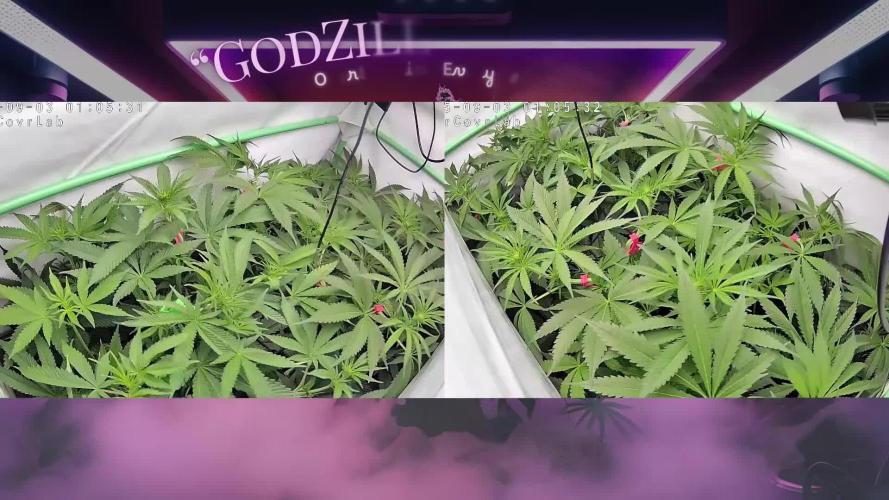
🗓️ Week 7 – Flower Week 3 (MAC n Cheese only)
This week called for a slight adjustment in the feeding plan:
I had ramped up to ~75 % of the Advanced Nutrients schedule, but the very tips of the leaves started showing mild signs of burn.
To stay on the safe side, I’ve dialed it back a bit. 🌱
🌿 MAC n Cheese has been lollipopped along with the others – now all the plant’s energy can focus on developing the top sites.
📏 Post-stretch height: 102 cm
Stretch seems to be complete, and this girl definitely reached for the sky.
The tent is officially maxed out – lights are at their highest position now, with very little room to spare. 😅




Likes
61
Share


@Prilyfe13
Follow
December 27, 2023 Day 113
This week will focus on burping and trichomes. There may also be a harvest? We shall see. I don't think so though. Most likely next week will be a harvest.
Strawberry Gorilla:
Day 3 Curing
I have grove bags coming in today, so the burping won't be a thing after today.
Gorilla Cookies:
Number 1 is coming to the end of her life. She hasn't started fading yet, which bugs me. She has been flushing for a week now and I'm not seeing much change. No fade, pistils still kinda sticking out. Not in all places, but some. Maybe I just can't tell. Either way, she looks great and smells even better.
She got a full gallon top flush with Flawless Finish. I don't expect to do this much more. Maybe one more watering. I have to check trichomes today. I'll update when I do so. She should be ready for harvest within this week. Maybe a couple days.
Number 2 is looking amazing. Her colas are stupid dense and her aroma is starting to really pack a punch. Not much else to do or say today. She's a beast and is beautiful.
She got a gallon top feed today. The reservoir seems to be fine. I may check that later today as well. Just in case. She is quite a thirsty plant after all.
The funny thing about this plant is the tallest cola. It is absolutely stunning with the exception of the top bleaching, but the rest of it is massive and shaped perfectly. It's the only one that did this. Granted its the tallest, but there are a couple others very close and they didn't do this. I mean, I really can't complain. I did the best I could with what I have.
I'd say she will need another week or two of flowering. I'll leave the nutrient regimen alone until I see 50% cloudy trichomes. That will take some time I think. Pistils are still all very much white and clearly shows no signs of readiness. It's wonderful. I can't wait to see what she gives me for yield.
Update: So I checked the trichomes on Gorilla Cookies 1 and posted a video. I believe she will be done in the next couple days. I may not be doing another flush after all. I'm going to hold off though. I want a bit more amber trichomes. But days away instead of the week I was originally thinking.
Grow System Environment:
Temp: 73.2°
RH: 52.6%
VPD: 1.30 kPa
December 28, 2023
Strawberry Gorilla:
Day 4 Curing
Got the grove bags yesterday and sealed a quarter pound one with all but a few buds. Those are in a one ounce grove bags that I'll be picking out of while the main yield cures. This stuff is fire!
Gorilla Cookies:
Number 1 is now in the second week of flush. She still doesn't look ready, but that will change very soon. She needed no watering today.
I'll be getting my supplemental lighting in today and will be installing it. However, I'm not sure how much it will help the lower part of the canopy. It will definitely speed up the maturing process, but that's about it. I can't complain though, the whole plant is pretty good. Lower buds are pretty small. Some are a bit airy and larfy, but still can be viable with the last but of lighting for the rest of the week.
Number 2 may need a top feeding today. I'm not sure. Her reservoir is about half empty now and the soil moisture is hovering around 20%. It may drink down to 16% but the this afternoon. I'll water if she's low enough by 2 pm. After that, I'll just wait for tomorrow. That's the most likely scenario.
Her buds are starting to get really heavy. Most of the outside ones are leaning over and starting to touch the other sides of the tent. The outside is still kinda safe, but that is mostly due to the two other plants stopping it from leaning even more. such a sight to behold. And they are super heavy and dense. Although, I may be seeing the first signs of foxtailing. I expected some because of the light distance, but it's ok. The colas are already super dense. The foxtailing will be just extra bud. I'll separate that in its own bag when it's time to cure. That's if I'm right and will be getting foxtails. Maybe not though, or not enough to warrant a separate bag.
My supplemental lighting after being installed should help the lower part of the plant perk up a bit. I found several dead and dying leaves today. Actually, lots. That tells me a couple things I think. First, there's too much foliage in the upper canopy and the leaves are dying from overcrowding. Second, the light just isn't penetrating enough to really get the lower parts of the canopy. That's where the new lighting comes in. Hopefully that fixes the lower canopy and helps it bring more bud. Maybe not huge colas, but at least some tight smalls. We shall see.
Update: I ended up top watering Gorilla Cookies 2 with recharge. I'm pretty sure I forgot it the other day.
Grow System Environment:
Temp: 74.1°
RH: 55.5%
VPD: 1.25 kPa
It's still super humid and rainy here, and it's showing in the tent. I'm not all that worried about it. It will drop down later this afternoon like it did yesterday. However, I am of course trying to correct it, but it's not working all that well. Lol.
December 29, 2023
Strawberry Gorilla:
Day 5 Curing
Gorilla Cookies:
Number 1 may be harvested later today or tomorrow morning. She is just about done. But I want to see how much more she will finish up in the next day or so with the supplemental lighting.
Obviously she won't be getting anymore watering. But I'd like to have her dried up a bit more, which should be later today or tomorrow. I may put her in the dry tent later today and let her have a dark period. Maybe I should wait 2 days. Give her 36 hours of dark before harvest.
Number 2 should enjoy the supplemental lighting. However, now that it's on and lighting up the whole lower canopy, there are bud sites with branches that have no budlets on them. I really want to remove them. But I'll just let everything go as it is. The goal is to allow the under canopy to mature at the same rate as the upper canopy. I don't think it will do anything with the lower part of the plant.
I also noticed that the majority of the leaves are drooping pretty hard. I wonder if that's due to lack of light. We shall see. She doesn't need water today, but tomorrow she will need a top feed and a reservoir refill.
She's definitely drinking over a gallon a day now.
Cola formation is perfect. They are come shaped and DENSE. The aroma is getting fairly strong now. At least, it's catching up to Gorilla Cookies 1. Sweet, spicy and minty coming off of her.
They colas are also leaning a bit more today. So much weight coming on. I honestly can't wait for her to be alone in the tent. The lower lighting will cover the all of the lower lights without anything blocking the light.
Update: I decided instead of harvesting today or tomorrow, Gorilla Cookies 1 will spend 2 days in the dry tent for a dark period. Then I will harvest.
Also, I spent about an hour combing through the many many branches of Gorilla Cookies 2. I found a bunch of dead fallen leaves. Some that were dying and even a few that were so over lapped they were crushing each other against the SCroG net. So all of that (not much really) came off. I wonder how long the supplemental lighting will take to show a difference in the lower canopy. And what difference will it show?
Grow System Environment:
Temp: 74.1°
RH: 52.7%
VPD: 1.32 kPa
December 30, 2023
Strawberry Gorilla:
Day 6 Curing
Gorilla Cookies:
Number 1 is in her second day of dark. Tomorrow I'll be harvesting her. Nothing else to report.
Number 2 is smashing. Her lower section is still droopy like it doesn't have enough of something. I thought it was light. Maybe it's something else? Or maybe I'm being impatient. Either way, she still has some time left to go. 3 to 4 weeks I'd say.
She got her full gallon top feed as well as a reservoir refill. Unfortunately, I wasn't paying attention and accidentally dumped 10 ml of Overdrive in one of the gallons. That one went in the reservoir. I probably should have top fed it. Oh well, too late now.
Although, I didn't have any dead leaves today. At least nothing I could see. Maybe the light is doing something. Making the leaves stronger, which if I'm correct, also strengthens the bud production. There won't be much down there, but it's definitely better than leaving it as it was. Maybe I'll get an extra half oz out of these little buds. Who knows.
Update: I ended up finding some dead leaves in Gorilla Cookies 2 after all. Not too many. So now another day of cleaned up Beasty beast.
Grow System Environment:
Temp: 73.2°
RH: 50.7%
VPD: 1.34 kPa
December 31, 2023
Strawberry Gorilla:
Day 7 Curing
Gorilla Cookies:
Number 1:
Harvest Day! And the last day of 2023!
We have a 22 oz wet weight whole plant. Not too sure of the total outcome, but I'm thinking 10% weight retention. So 2.2 oz. Dried and trimmed bud. Who knows, maybe I'll get 15% and have a half decent yield of 3.3 oz. Honestly, I should have waited for midnight, but she needed to be harvested for time purposes. I have another plant coming in the dry tent in a few days to a week. I'm hoping I can stretch it out for the week, but I won't be able to wait for Number 1 to dry. Just too much time. I'm thinking a nice 10 day dry. I set the ambient room temperature to 70°. So that should drop the dry tent down about 6°. I'm hoping for a dry temp of 64° or less and the RH to be around 55%.
She has some pretty dense top colas, and I cut them off after the weight check. That should help the whole plant dry at the same time. I left most of it intact. Just the 3 tallest colas. Now there's more room in the plant for air, but also plenty of space for those large colas to dry. And they should dry quite nicely.
Number 2 looks pretty good. I didn't find any dead leaves. One dying leaf I pulled off, but nothing else. So maybe the supplemental lighting is actually doing something. I don't expect the leaves to really recover from the damage, but at least maybe perk up a bit. Again, I'm not expecting a ton of difference. Just enough to keep the lower canopy as dense as the upper canopy. The lower part of the plant, is more like a lost cause. I should have cleaned up the small budlets as they popped up. Oh well. Nothing to do now but wait and see what she turns out like. I'm not all that worried. The small amount of lower plant growth is minimal compared to the actual canopy which is magnificent. She'll be needing a watering later on today. Definitely a very thirsty plant. She's around 18% soil saturation content. I normally water at no less than 15%. So later today it is.
Her colas are getting so dense it's insane. She still hasn't started really swelling yet either. I expect that to start in the next week or so. Also, the worry about foxtails seems to be unnecessary. IF there is any foxtailing, it won't be much or if there's a lot, it won't matter. The buds are already so dense, anything else is just bonus weed. Still, foxtails are a pain in the ass to trim, so let's hope for none. The only cola I'm really concerned about is the tallest one. It's definitely too close to the light. Also, I'm not seeing any stress from the supplemental lighting. I guess there's just enough. I honestly had a feeling that the top light just isn't bright enough to penetrate through the whole canopy. So the tops are getting plenty, but the actual plant may not have been getting enough. Now, that's should be fixed. Again, I see no stress whatsoever. If I notice any, I can just turn the lights down. They are at full blast now, but they aren't nearly as powerful as the main grow light. Still very nice though.
Grow System Environment:
Temp: 72.6°
RH: 47.8%
VPD: 1.40 kPa
January 1, 2024 Day 118 Happy New Year!
Strawberry Gorilla:
Day 8 Curing
Gorilla Cookies:
Number 1:
Day 1 Drying
I have a tray of water on the bottom of the tent with an oscillating clip fan blowing gently over it. It's keeping the RH between 50% and 53%. Temperature is hovering around 65°. Everything looks good.
Number 2 is now really starting to swell those colas up. It was visibly noticable this morning. Not to mention the outer colas are all leaning further and further over. They are over the end of the ScrOG net up front, touching the. Far side wall and nearly touching the front of the tent. The supplemental light seems to be doing something. the lower bud sites are starting to look healthy and getting a deeper green color on what's left of the healthy leaves. I think I caught the very end of when the supplemental lights are useful for growth. Now it's just maturing and a final week of nutrients... I think. I'm cutting off the nutrients when I see 50% cloudy trichomes. There should be plenty of orange pistils by then. In which case, won't be for another week or two. Man, these colas are going to be massive!
No watering today. Most definitely tomorrow morning.
Update: I decided to lower the light intensity to 30%. The PPFD is around 750 now. So that should help prevent the potential foxtailing. I'm not really sure if that will stress her out at all. I don't think it will though. I'll be checking on her daily to see her reaction.
I've read light stress can cause 3 finger fan leaves. In my case, there was a point where the light became too bright during the early flowering stage and caused some of these 3 fingered leaves. It seems to have fixed in some spots where the light was raised high enough to fix it in time other places it stopped when the leaves stopped growing.
Some of the leaves are facing away from the light. With this current intensity, the leaves should level out and even start to reach a bit. Not sure how long it will take. I read it can take up to 2 weeks to recover. I'm not sure how stressed the majority of the plant was though.
Grow System Environment:
Temp: 72.9°
RH: 46.3%
VPD: 1.45 kPa
January 2, 2024
Strawberry Gorilla:
Day 9 Curing
Gorilla Cookies:
Number 1:
Day 2 Drying
Number 2 is her beastly self. She got a top feed today. No need for the reservoir to be topped off yet.
So, I'm not seeing any difference in the lower light intensity yet. Maybe some of the leaves straightened out, but no reaching or anything like that.
The supplemental lighting is doing something. Although the buds down below are tiny, they are weighing down the branches they are on. Still nothing great, but it will definitely be good in the trim bin.
I'm sure they will have plenty of trichomes on them. Perfect for gathering kief.
Her top colas are also doing quite well. They are super dense and heavy. Swelling continues. Not much difference from last night, but still plenty of time to get massive.
I'm also starting to see signs of orange pistils here and there. Which means we are on point. Three or so weeks left until harvest.
Grow System Environment:
Temp: 72.9°
RH: 45.2%
VPD: 1.47 kPa

Likes
7
Share


@BushDoctor740
Follow
Did some more defoliation this week and gave some nutrients.They are looking happy and healthy still in vegetation stage but soon I’ll switch the light cycle.I added a scrog net and will clean up the bottoms tonight as I’m ready to switch to flower soon.I want to keep them smaller if possible in the short 3x3 60 inch high tent they are in atm with a spider farmer sf1000 light 100 percent power.Also have a Co2 bag hanging and hopefully adds a little more growth during the early flowering weeks.
Likes
7
Share


@Zuppler
Follow
**Vegetation Phase - Week 1**
The Donutz ladies have officially stepped into their first week of vegetative growth. After a strong start, we’ve gently introduced a small dose of Greenhouse Feeding Bio nutrients to begin supporting early growth. Watering remains minimal, as these young plants aren’t thirsty yet — they’re steadily finding their stride, with roots spreading through the Floragard Growmix soil.
**Environment & Care**:
- **Water**: Lightly administered reverse osmosis (RO) water keeps things clean and precise.
- **Nutrients**: A hint of Greenhouse Feeding Bio fertilizer to nudge growth along without overwhelming.
- **Conditions**: Temperature and humidity kept stable for optimal root and shoot development.
**Plant Progress**:
- All 10 Donutz are healthy and showing strong vigor, with consistent growth.
- Leaves are vibrant and lush, indicating proper photosynthesis and nutrient uptake.
- We can almost imagine their roots spreading through the rich Floragard soil, exploring and establishing themselves, while above ground, they’re standing strong and ready to keep pushing upward.
The sea is calm but promising; each young Donutz is primed to expand and flourish. The tent remains a harmonious environment, setting the stage for an epic SOG canopy. Patience and gentle care continue to be key as they find their rhythm in this new life.

Likes
2
Share

@Bear_Grows_Green
Follow
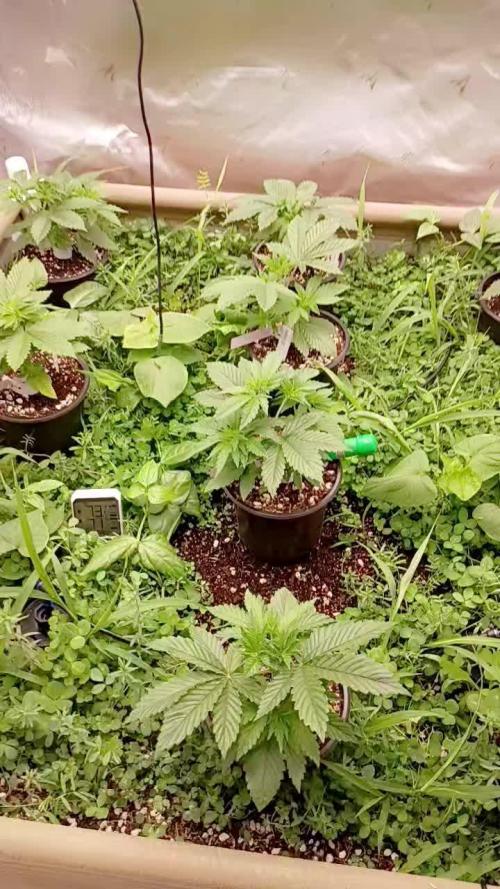
12/05Gave the cover crop a light watering this morning to keep the bed happy. The girls are looking a little hungry gonna give light feed next watering probably tomorrow. Temps have dropped some due to winter weather
12/06 gave light feed with this watering and a little more water per plant now that roots are established.. IPM sprayed at lights out with lost coast plant Therapy gave a light spray with some wdg3000 to pots and about a gallon of it into the cover crop.
Likes
79
Share


@Nebula420
Follow
ShiskaBerry grow well, everything is good, no have any problem.
ShiskaBerry is very high-yielding strain, very dens frosty buds.
Smell very strong, amazing smell like berries, and pine.
Thanks to everyone who follows my grow reports, and Barney's Farm for nice genetics.


Likes
62
Share


@masterofsmeagol
Follow
10/5 Im still alive. Just incredibly busy with no help. Still have a few outside. Pulled the dreamcatchers and they are drying. A week or so for the others. I'm letting the last ones go as long as possible. I'll try to complete the harvest and smoke reports as i had taken tester branches before the harvest. So much work though. For some reason trichs pics aren't showing up.
10/6 Watered today. Calyxes are swollen and I've got SOME Amber trichs but we have good weather for the upcoming week. Lots of sun so I'm leaving the remainder for a little bit. I'm checking daily.


Likes
Comments
Share


@Leonweed10
Follow
Esta semana se hiso poda de ramas bajas y una pequeña desfoleacion a los 16 clones,y se comenzo a alimentar con alga bloom mas power roots aun.

Likes
31
Share


@Cultivate
Follow
Stressful to say the least, Browning pistils from
Very very early however no hermaphrodites. Just can’t get my finger on where they’re at week 5 just added PK 13/14 and now considering whether I should’ve done or not they are showing signs of been ready for harvest yet don’t look done
Likes
8
Share


@Eyesweedshot
Follow
growth is continuing well. I should have packed the substrate a little more. a slight deficiency in mag appeared on 2 subjects that I corrected by spraying neem oil with calmag as well as spraying 0.5ml with liter calmag.
I received the new uv and infrared auxiliary lighting from marshydro that I installed on the rake. I think it's still cheap in terms of wiring and driver.
Finally, I plan to implement an lst this weekend.
thank you all I take all your eminent and less eminent advice;)
Likes
27
Share


@adam_pawloski87
Follow
First off I just want to say for some reason it’s not letting me change the right temperatures on my diaries ! Each time when I put it in they stay at 50. My day air stays 75 degrees an , night degrees is 70 !
Today is day 58 for all these ladies! This week has been really great ! Girls really progressed a lot , especially for one the Forbiddin Runtz, looks like is gonna finish up in a week or 2 ! Other then that they are coming along well! Keep those eyes peeled for next week! Cheers😶🌫️💨💨💨💨
Likes
4
Share


@Hommero75
Follow
This week was good. The bud density increase. The ladies are looking great and they have an amazing aroma. They just received their last feeding. Now is PH water and cal-mag into they are ready to harvest. It might take a couple of weeks to for them to be ready. Due to the fact the I had some issues in the beginning with the developing of the plants. The growth was slow and it took longer than expected. Tropicana Cookie is the tallest with 17" , Forbidden Runtz with 16" and Banana Purple Punch with 15". I expected them to be taller.