


Likes
Comments
Share


@Just_Weed
Follow
Trasplanted second Strawberry Cough in bigger 10 gal pot which I regret later on cause watering is hard to dial in but she is recovering slowly. I will keep her in veg longer.

Likes
13
Share


@RSAFirstOrganicGrow
Follow
Apart from the spot on the leaf she’s growing fine I guess.
Weather has been getting better during the day but still cold at night 7-10 d.celcius.
I considered topping her but since this is technically part of my first grow I’m going to let her grow all natural.
Any advice always welcome!

Likes
4
Share


@CraigGrowsOK
Follow
Trimmed up both plants, they didnt yield too much but every single nug they did produce was coated in trichomes. Top notch bud for sure. I have several more going that Vegged alot longer and have ALOT more budsites that will be going into flower this week. They will yield much more for sure.
Processing
Likes
6
Share


@Mr_nugs_lover_David
Follow
She's responding super good to lst method she looks absolutely gorgeous I would have loved to be able to grow her since march however It was not posible but I keep this wonderful indica in my list. This wonderful pheno of Alien gorilla has started flower the 3rd of August.

Likes
16
Share


@Colorado_cookies
Follow
Video tells all, I have some beautiful big thick buds and some pretty light stringy buds in the back left corner. I scoped the tricomes today and their looking very milky and not clear. Hope for a good transition to harvest very soon. chop here the next week and a half to two weeks. Flush will begin in a few days I hope.! Over all very healthy plants.


Likes
2
Share


@valiotoro
Follow
A wonderful genetic thank you Dutch Passion❤️🔥🤩
The trim was super easy the buds are FAT & FROSTY full of resin & the smell ABSOLUTELY out of this world!

Likes
16
Share


@Max1973
Follow
7 days exactly... 3 of the seeds made it.... all 3 look good....
just seed raising soil mixed with perlite, inside jiffy pots that break down in 2-6 weeks...
just normal tap water atm, and i'll water them less now, let them dry out abit...
Day 8 - pics/vid.... Had a look under the jiffy's, all 3 had 1-3 cm roots poking out, they went straight thru the jiffy like it was not even there..... (pic - Day 8 - Root straight thru all 3 pots.).... so, went into emergency repotting day... lol.......
i don't want the roots restricted or damaged in any way,
so, got what pots and soil i had, and put em in, (2 x 13.5 lt pot, and 1 x 7.7 lt).
Day 9 - some pics, bought a new tent (wait delivery), just got em under afew 6400k led's atm .... they seem happy..... 👍
😎


Likes
6
Share


@lookingforTerps
Follow
Dear gardening enthusiasts,
As we enter the final month of this delightful journey with your Rainbow Mints, the garden is adorned with the culmination of colors and fragrances. The classic minty greens and invigorating citrus notes continue to weave their enchantment. In this closing chapter, appreciate the resilience and beauty of these plants, known for their easy care and healthful qualities.
Celebrate the last leg of this journey as your Rainbow Mints grace your garden with a final flourish!
Likes
226
Share


@Kitties_and_Colas
Follow
~_~_~_~_~_~_~_~_~_~_~_~_~_~_~_~_~_~_~_~_~_~_~_~_~_~_~_~_~_~_~_~_~_~_~_~_~_~_~_~_~_~_~_~_~_~_~_~_~_~_~_~_~_~_~_~_~_~_~_~_~_~_~_~_~_~_~_~_~_~_~_~_~_~_~_~_~_~_~_~_~_~_~_
10/22/21
😻Harvest week!! Trichs are finally there friends!..We'll update with photos,vid and weights after our camping trip..thanks for dropping by and happy harvests everyone!! https://youtu.be/JC6zVPeKFPk
~_~_~_~_~_~_~_~_~_~_~_~_~_~_~_~_~_~_~_~_~_~_~_~_~_~_~_~_~_~_~_~_~_~_~_~_~_~_~_~_~_~_~_~_~_~_~_~_~_~_~_~_~_~_~_~_~_~_~_~_~_~_~_~_~_~_~_~_~_~_~_~_~_~_~_~_~_~_~_~_~_~_~_




Likes
36
Share

@Cauli
Follow
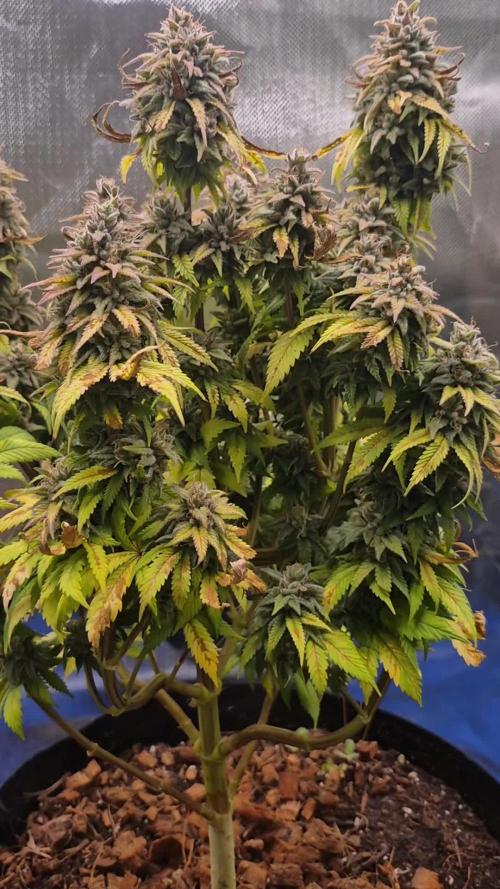
Week thirteen for Francos Fullgas!
Day 39 of 12/12.
She's just doing her thing and despite some watching and watering there wasn't much to do this week :)
Unfortunately she is a bit overfed, but can't manage to get every plant different nutrients so she has to take what she gets.
Really love this phase of a plants life, when all the work is showing in a steady progress and the most needed thing is patience.


Likes
21
Share


@Staffedition
Follow
Привет друзья. Моей растихе сегодня 164 дня
20.10 перевёл свет в режим 12/12
Начал применять LST технику на 19 дне, а 18 августа добавил ДЕФОЛИЗАЦИЮ
С 20.08 ДЕФОЛИЗАЦИЮ
С 20.08 LST технику
На сегодняшний день влажность 54%
5.09.2023 заметил высокий Ph 7.9
С 48 дня Ph не ниже 5.8
На сегодняшний день Ph 6.0
Начал кормить с 60 дня Canna Terra Vega
PPM 870
Всем мира и добра!
Не забудь поставить лайк❤️, если понравилась как прошла неделя
И читайте наш TELEGRAM: https://t.me/smail_seeds
#Smail_Seeds 😀

Likes
21
Share


@North_sea_tea
Follow
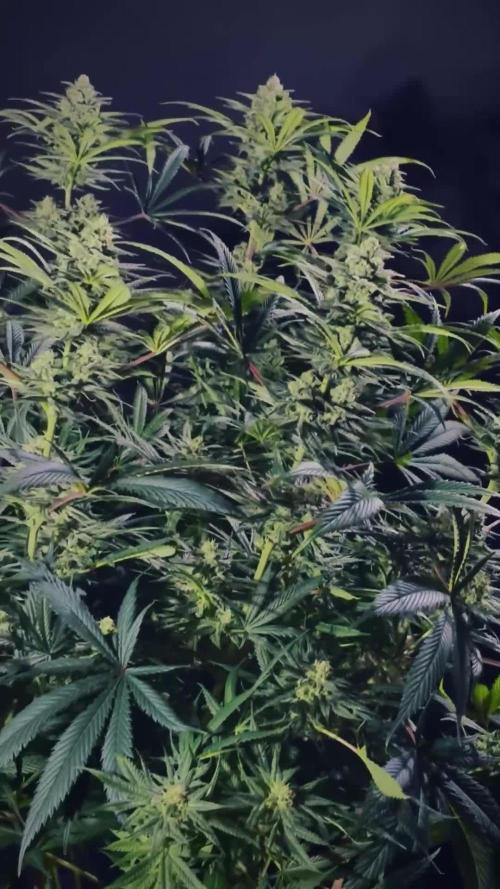
Plants are lovely and healthy still going through abit of stretch but can't complain nice and spaced out. Smell is quite fruity, absolutely no stress on them whatsoever. Even have all the lower leaves still green and lush.
Started to add the seaweed tonic now at 3.5ml it's an amazing food for the plants and keeps them on top of critical needs whilst flowering.
Buds have started to grow fast, the seaweed tonic is doing its job! An old but great food for cannabis.

Likes
10
Share

@DegenMJ
Follow
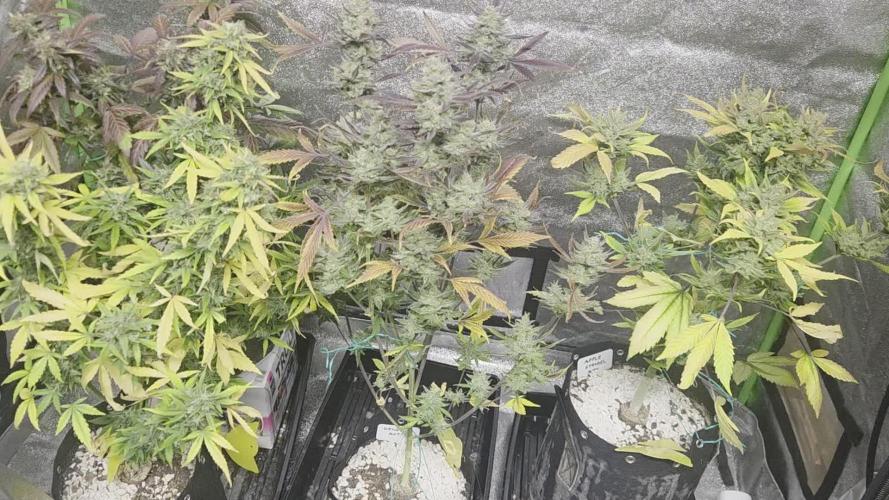
Last day of week 13. Continuing to remove fan leaves that have had all the life sucked out of them via senescence. Gelato and Apple Strudel probably have 90-95% milky/cloudy trichomes, and little or no amber on the actual buds (plenty on the sugar leaves) so they're probably ready to chop. I've just been too damn busy with other life stuff the past couple days. Hopefully will get a chance to chop them tomorrow! Uploaded another video for your viewing pleasure.


Likes
6
Share


@organicman
Follow
hb3 has been trashed, is a hermie
heat alarm:
outside temp is 40˚C, in tent 32°C / 67 rh
decrease of lamp dist to 30cm, decrease of lamp power from 200 w to 175 w results in:
in tent 30°C / 64 rh
____________________________________________
light- and watering schedule: see photos
now:
15 plants
3 x Auto Orange Bud > Dutch Passion (early80's)
1 x Haze Berry Automatic > Royal Queen Seeds (2018)
2 x Auto Euforia > Dutch Passion (late 90's)
2 x Auto Bubblegum > TH Seeds (late 80's)
2 x Original Auto BubbleGum > Fast Buds Company (late 80's)
1 x Strawberry Pie Auto > Fast Buds Company
1 x Gorilla Cookies Auto Seed Stockers (2015)
2 x Auto White Widow x Big Bud > Female Seeds
setup + strategy:
18 seeds
3 x Auto Orange Bud > Dutch Passion (early80's)
3 x Haze Berry Automatic > Royal Queen Seeds (2018)
3 x Auto Euforia > Dutch Passion (late 90's)
2 x Auto Bubblegum > TH Seeds (late 80's)
2 x Original Auto BubbleGum > Fast Buds Company (late 80's)
2 x Strawberry Pie Auto > Fast Buds Company
1 x Gorilla Cookies Auto Seed Stockers (2015)
2 x Auto White Widow x Big Bud > Female Seeds
setup:
18 x gronest 2 liter
60 cm x 120 cm x 180 cm (2 x 4) growtent
4 l humidifier
25 watt axial fan
15 watt clip fan
ro-filter
bath room with a 50 watts room fan (-> carbon filter not necessary)
...and a lot of odds and ends.
grow strategy:
max yield by stressing with:
1. tiny shoes (2 l fabric pots standing on 3 plastic rings (4 cm) for max oxygen)
2. tiny growspace (18plants on 0.72 sqm)
3. many strains (8 strains)
4. annoying neighbourhood (mixing old - i.e. bubblegum (late 80's) - with young- i.e. hazeberry (2018) - genetics)
5. no stress by light or food or water
6. unintentionally too much food
plus:
- no lst - no hst - just leaf tucking
- positioning bigger strains (euphoria, orange bud, haze berry) or just bigger phenos on less intense light spots (end of tent + edges)
- music-rotation: 24 hrs reggae (for sativas) - 24 hrs classicals (because it's scientifically proofed) - 24 hrs traditionals from the hindukush region (for the indicas)
max efficiency (min electricity - max yield):
- light: 23 h on - 1 h off
- keeping the distance of 18" (45 cm) and dimming to the right par (lux) - value depending on growing stages (see sheet: beginning 185 par ( 10000 lux/100 watt )/end 340 par ( 18000 lux/175 watt )) => ends up in approx. 170 watts in average over max 15 weeks
temperatur management:
- using approx. max. half of what the lamp can do keeps temperature low:
my tsl 2000 is pulling max. 360 watts of the wall - i need only 175 watts, results in less temperature than using a 175 watts lamp
- adjusting the temperature by using a humidifier outside of tent:
blown in humidity is soaking degrees and is transported out by fan, works much better than doing the same with pure air
summer extreme: no humidifier: 36°C / 35 rh - with humidifier: 29°C / 65 rh
works for 1-2 weeks of real hot summer days, no mould, no signs of stress in two summers
germination:
seeding in waterglass
spraying "basic"-water: ro-water (22 ppm) + calmag to 180 ppm every 4 - 8 hours until sprouted
man versus fungus gnat:
5 days before seeding i'm running the tent with "basic"-watered pots as if there were plants inside - led on, fans on, humidifier on. Fungus gnats coming with the soil might take the chance to come out now for breeding. i'm waiting with a 9 mm rifle. in the past i found 6 gnats in 2 of 8 x 50 l biobizz lightmix bags coming out of the soil. i could eliminate every single gnat successfully ;)
rotating harvest:
the little ones will be harvested completely when ready. at this point only the top branches of the big ones will be cut...and the new (basic-watered) pots of the new grow will move into the tent. 2-3 weeks later the secod half of the big ones will be cut and the second half of the new grow will move in...
nutes:
biobizz / soil: biobizz lightmix
bloom,grow,topmax,activera,algamic
+ aminopower instead of bio heaven (too expensive)
individual feeding schedule/once a week:
veg: 200 - 600 ppm
bloom: 600 - 900 ppm
water:
ro-water with:
veg: 100-150 ppm calmag
bloom: 150 ppm calmag




Likes
14
Share


@MG2009
Follow
03/13/2022
Love the colors on Grape Skunk #1 others are not as purple, again i forgot Biscotti Skunk and lemon og.
03/14/2022
Uploading Biscotti Skunk pic's
I'm really loving 3 particular girls this run,all plants are exposed to PW intentionally I need girls that can take PW with no issues and three plants are spotless. The first is the only Biscotti Skunk that was female of 5 cloning for outside run but will do great in basement without PW issues. The second is lemon og spotless, and the third is the grape skunk thats got most color the second tallest of the grape skunks, cloning for testing in New England zone 7 should get at least one if not all 3 to finish before cold sets in.

Likes
21
Share


@Ultraviolet
Follow
Heyókȟa
I desire naught but the study of nature, to find my way back home.
12x12=144, A dodecahedron is a polyhedron with 12 faces, and in coordination chemistry, it refers to a geometry where ligands surround a central metal atom (in this case, Magnesium) in a specific, 8-coordinate arrangement. Dodecahedrane is a hydrocarbon, meaning it's composed solely of carbon and hydrogen atoms. The carbon atoms are arranged at the corners of a dodecahedron, a 3D shape with 12 pentagonal faces. The water molecules in the dodecahedron form hydrogen bonds that are individually slightly weaker than in either the dimer or the tetramer. However, because three-quarters of the O -H groups in the dodecahedron form hydrogen bonds, it has a more negative energy per molecule than has either the dimer or the tetramer. Magnesium (Mg2+) is the essential, central metal ion in the chlorophyll molecule, crucial for photosynthesis by enabling light absorption and energy transfer. It is chelated by four nitrogen atoms within the porphyrin (or chlorin) ring structure. Chlorophyll appears green because it reflects light in the green region of the visible spectrum, specifically between 490 and 570 nm. The main resonance electronic frequency of a neutral Magnesium (Mg) atom corresponds to the transition from the ground state to the first excited state. Resonance Line Wavelength of Mg2+: 285.1nm (UVB light). The central atom of the chlorophyll molecule is Magnesium (Mg2+), which is coordinated within a porphyrin ring. The electronic "resonance frequency" of this central atom—meaning the frequency at which its electrons absorb energy—is primarily driven by the electronic transitions (ETR) of the surrounding conjugated chlorin ring structure, rather than a discrete atomic transition of the Magnesium atom itself. The resonant electronic frequencies of the chlorophyll porphyrin (technically, a chlorin) ring are determined by the energy required to promote π-electrons within its conjugated system, primarily appearing in the blue and red regions of the visible spectrum.
In standard physics, Chloryphyll b has peak absorption at 460nm (Blue). If we take the peak wavelength 460nm and a UV-B, UVR8 peak absorption wavelength 285nm Tryptophan-285 (W285) Sensing protein. 460/285=1.618 Φ, "natural harmony" and the "structure of light". The cryptochrome photoreceptor (CRY) is a UV-A/blue light receptor that shares this dual sensitivity with several other biological structures and functions, including significant sequence similarity and a common evolutionary ancestor with DNA photolyase enzymes. These are light-activated enzymes that use blue/UV-A light to repair DNA damage caused by UV-B radiation in plants.
Dodecahedrane (C20H20) is a hydrocarbon with a cage-like structure where carbon atoms form 12 pentagonal faces (a regular dodecahedron). It is highly symmetric (icosahedral), contains no delocalized electrons (no aromaticity), and has minimal angle strain, but significant torsional strain. Water Dodecahedron (H2O) forms hydrogen-bonded cages. While individual hydrogen bonds in this structure are weaker than in the linear dimer or tetramer, it has a more negative total energy per molecule. This is because three-quarters (75%) of the groups are involved in hydrogen bonding, creating a very stable, closed-shell configuration. a 3D carbon hydrocarbon (C20H20) to stable water clusters in hydrate, while the Magnesium ion acts as the central activator within a conjugated ring in biological systems, with its electronic absorption dominated by the ring, not the atom itself.
Effective quantum efficiency of photosystem II, often denoted as ΦPSII
In horticultural lighting, adding 730 nm (far-red) LEDs alongside standard red/blue lights has been shown to increase canopy photosynthesis by 20–30% in several crops by acting synergistically with shorter wavelengths. However, the limitation is that excessive, pure IR/Far-red light (without accompanying red light) can trigger the "shade avoidance response," causing plants to grow tall, weak, and spindly rather than robust. Knowing is half the battle however, engineering or utilizing infrared light (specifically the 700-750 nm far-red range) is a viable method to boost photosynthetic efficiency. It acts as a bridge to allow PSII to utilize a broader spectrum of light, breaking the traditional 700 nm barrier.
Extend, then multiply.
UVR8-mediated signaling (often in conjunction with CRY proteins) triggers protective mechanisms that maintain the stability of the photosynthetic apparatus (including LHCII and reaction center proteins), thus ensuring that the efficiency of Photosystem II remains higher in UV-B-exposed plants compared to plants lacking this receptor. ΦPSII indictates the rate of electron transfer from water to plastoquinone, which drives the production of ATP and NADPH. There is a close link between ΦPSII and the true rate of CO2 fixation (Φ*co2), particularly in C4 plants.
Effective quantum efficiency of photosystem II, often denoted as ΦPSII, represents the proportion of light absorbed by Photosystem II (ΦPSII) that is actually used in photosynthetic electron transport. It is a key indicator of how efficiently a plant is using light for photosynthesis, as opposed to losing it as heat or fluorescence. ΦPSII (effective quantum yield of photosystem II) functions primarily as a "multiplier" (a coefficient of efficiency) rather than an additive factor when estimating the overall photosynthetic electron transport rate (ETR). Multipliers are considered far more beneficial than additions because they generate exponential growth, leverage existing resources to their full potential, and create sustainable, self-multiplying capacity, rather than just incremental, linear increases.
Humans, and most other mammals, rely on other mechanisms, such as nucleotide excision repair, to manage and repair UV-induced DNA damage. As such, humans do not have the direct, light-driven repair mechanism that photolyase offers in plants.

Likes
72
Share


@Green_Mountains
Follow
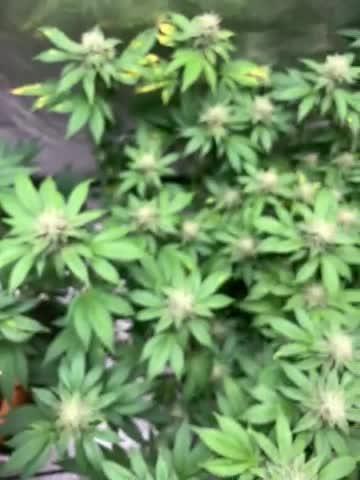
Another good week!! I need to LST and defoliate... probably going to do that tomorrow.
I fed them this week as well as watered. I will add the flowering nutrients going forward!!
Otherwise, I hope this grow continues to go well!!
Cheers!!
