The Grow Awards 2026 🏆
Likes
Comments
Share
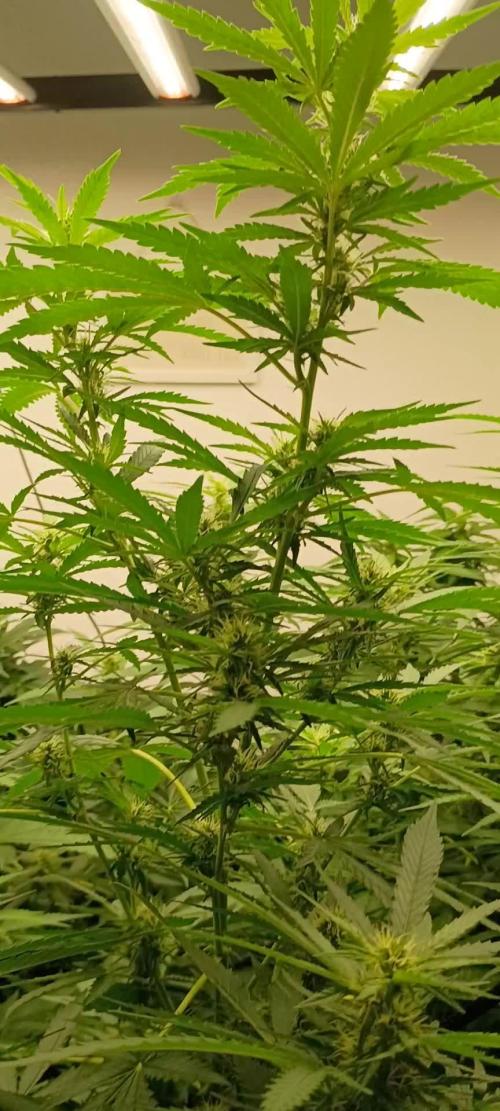
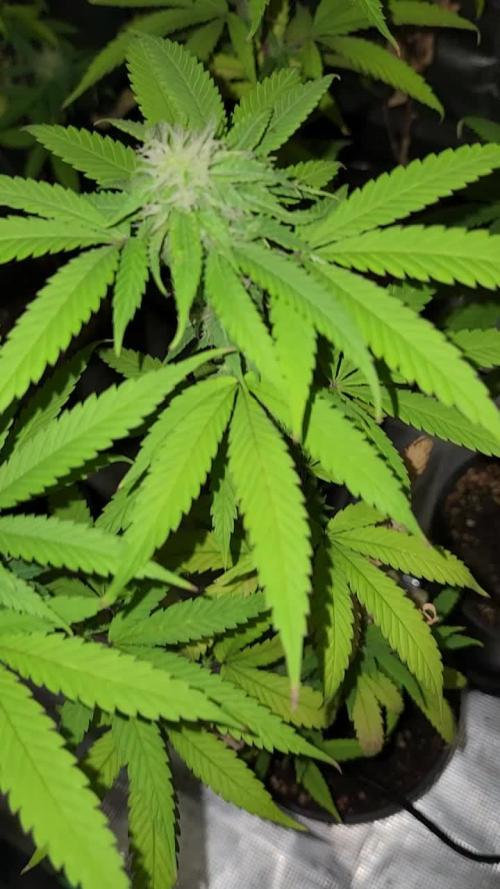
Hello! All plants have entered the active flowering phase (the left one is slightly behind), and have practically stopped in height. I like how the purple phenotype turned out, I will continue to monitor😎 Thank you for stopping by, and be healthy! 🙏 To be continued... 😶
Likes
2
Share
Likes
2
Share
@HLGonly
Follow
Great harvest as usual with this recipe
Likes
9
Share
@Rizik86
Follow
Day 22 - Plant is 6 inches tall. Tons of roots sticking down into the water. Checked PPM 215. PAR/PPFD ranges from 200 to 270 at the height of the plant. Day 25 - Plant is 9 inches tall and 12 inches wide. Water dropped a lot. PPM was 100. Added 2 gallons of RO. Added 10 mL of CalMag. Added 10 mL of the 3 base nutes Micro Grow and Bloom. Added 5 mL of each of the additives. PPM was 515. Day 26 - Plant is 11 inches tall. Fast growth! Short and bushy. Roots are thick as spaghetti noodles and formed a thick rootball. Nearly a dozen budsites. Stem is thicker then a pencil. Day 27 - PPM is 415 in am. Afternoon PPM is 370. Plant is 12 inches tall. PAR/PPFD is 400 to 450 near the top of the plant. DLI is 27 based on 20 hours on and 4 hours off. Late night checked PPM 375. Added 10 mL of Micro Grow and Bloom nutes. PPM is 810. Day 28 - PPM is 775. The plant is getting huge. The stock is about as thick as a Bic lighter. Plant is 13 inches tall.
Likes
62
Share
@Chucky324
Follow
Hello. I've harvested the Mega Mouth. WOW!!! I'm very impressed with this strain. Over 1.5 k for 5 plants. and it was finished by Aug 20 with the tents help. I'm trying some new (for me) categories to add to my report. Plant Stretch (PS) 1 to 5- 1 is hardly any stretch. Bud Mutation (BM) 1 to 5- 1 is a beautiful normal bud- 5 is big weird growths like foxtails. Trim- How easy or hard it was to trim up 1- you blow on the branch and hang it up. 5- Is very hard to trim takes a long time. About- Best guess on the THC % (I've been smoking a long time) Resin- 1 is super slippery 5- is very sticky like Gorilla Glue. Size of Buds (SOB) 1- is very small 5- is the biggest buds Dense- 1- is the lightest or fluffiest 5- is the rock hard buds your bud buster has trouble busting up. Plant #1 Wet Trim 1647 g PS. 3.5 BM 3.5 Trim 4 About 21% Resin 4 SoB 4 Dense 4 Finished Dry Weight 289.5 g or 10.33 oz. Plant #2 Wet trim 1606 g PS 3,5 BM 3.9 Trim 4 About 22% Resin 3 SoB 4.7 Dense 4.3 Finished Dry Weight- 302 g or 10.78 oz. Plant #3 Wet Trim 1635 g PS 3.7 BM 3 Trim 2.8 About 20% Resin 2.8 SoB 3.7 Dense 4.5 Finished Dry Weight- 314 g or 11.21 oz. Plant #4 Wet Trim 1753 g PS 2.5 BM 2.5 Trim 3 About 22% Resin 4 Falls off easily- Clumpy Dense 2.5 Final Dry Weight- 343.5 g or 12.26 oz. Plant #5- Wet Trim 1787 g PS 3.5 BM 3.7 Trim 3 About 24% Resin 2.5 Dense 2.5 Finished Dry Weight- 355.5 g or 12.69 oz. The taste is sweet and smooth to go down with a nice balanced buzz. There was some pests around. I found thrips damage in veg and got some Spinosad to take care of that. Saw some fungus gnats around but they didn't do much damage. Easy to grow and trim. This is a recommended strain. Chuck.
Likes
4
Share
@dubby_m
Follow
Harvested to plant + wet trimmed… Now drying for the next Week, then curing… :) Will come back with the results!
Likes
9
Share
So far she has been going well! Planted her into make shift Dwc set up & put her into my cloning area under a 100watt VIPER SPECTRA led grow light.
Likes
5
Share
This plant is the most robust vigorous marijuana plant I have ever grown! It is absolutely insane. I thought she was done stretching and bushing out but boy was I wrong shes going to be over 6ft tall and almost 10ft around and it smells like I dropped the plant in a bucket of 1 year old skunk piss lol very much looking foward to this one
Likes
43
Share
The purple punch cookies is looking happy. Will be switching them to flower in a week or less. I gave them a flush and fresh nutrients. The humic acid really makes a huge difference in the uptake of nutrients. I am at about half dose on nutrients compared to what I would have to feed without it. Winter is approaching and bringing the low humidity with it. All of the humidifiers I have tried either dont work or I have to constantly refill the tank. So I decided to use my redneck engineering skills to throw this humidifier together. It holds 4 gallons of water and she pumps like a freight train. I have dubbed her the Steam Queen. I got 2 cool mist foggers that put out about 400ml per hour each and used some things I had around to make them a little float. Added an old computer fan to force the mist out through a 2 inch pipe. She won't win any beauty contests but she pumps out plenty of cool moist air. I also upgraded my exhaust to a variable speed for more added environmental control. Just going to do a little more training over the next week then try to make some buds.
Processing
Likes
4
Share
Into day 30 and I have some flowers starting. The girls look healthy and I am only using some LST and defoliation. Backed off the Foxfarm Big Bloom and I am now just using Ph balanced water between 6.3 and 6.5 Very pleased with their progress so far🌱🤙
Likes
55
Share
What's in the soil? What's not in the soil would be an easier question to answer. 16-18 DLI @ the minute. +++ as she grows. Probably not recommended, but to get to where it needs to be, I need to start now. Vegetative @1400ppm 0.8–1.2 kPa 80–86°F (26.7–30°C) 65–75%, LST Day 10, Fim'd Day 11 CEC (Cation Exchange Capacity): This is a measure of a soil's ability to hold and exchange positively charged nutrients, like calcium, magnesium, and potassium. Soils with high CEC (more clay and organic matter) have more negative charges that attract and hold these essential nutrients, preventing them from leaching away. Biochar is highly efficient at increasing cation exchange capacity (CEC) compared to many other amendments. Biochar's high CEC potential stems from its negatively charged functional groups, and studies show it can increase CEC by over 90%. Amendments like compost also increase CEC but are often more prone to rapid biodegradation, which can make biochar's effect more long-lasting. biochar acts as a long-lasting Cation Exchange Capacity (CEC) enhancer because its porous, carbon-rich structure provides sites for nutrients to bind to, effectively improving nutrient retention in soil without relying on the short-term benefits of fresh organic matter like compost or manure. Biochar's stability means these benefits last much longer than those from traditional organic amendments, making it a sustainable way to improve soil fertility, water retention, and structure over time. Needs to be charged first, similar to Coco, or it will immobilize cations, but at a much higher ratio. a high cation exchange capacity (CEC) results in a high buffer protection, meaning the soil can better resist changes in pH and nutrient availability. This is because a high CEC soil has more negatively charged sites to hold onto essential positively charged nutrients, like calcium and magnesium, and to buffer against acid ions, such as hydrogen. EC (Electrical Conductivity): This measures the amount of soluble salts in the soil. High EC levels indicate a high concentration of dissolved salts and can be a sign of potential salinity issues that can harm plants. The stored cations associated with a medium's cation exchange capacity (CEC) do not directly contribute to a real-time electrical conductivity (EC) reading. A real-time EC measurement reflects only the concentration of free, dissolved salt ions in the water solution within the medium. 98% of a plants nutrients comes directly from the water solution. 2% come directly from soil particles. CEC is a mediums storage capacity for cations. These stored cations do not contribute to a mediums EC directly. Electrical Conductivity (EC) does not measure salt ions adsorbed (stored) onto a Cation Exchange Capacity (CEC) site, as EC measures the conductivity of ions in solution within a soil or water sample, not those held on soil particles. A medium releases stored cations to water by ion exchange, where a new, more desirable ion from the water solution temporarily displaces the stored cation from the medium's surface, a process also seen in plants absorbing nutrients via mass flow. For example, in water softeners, sodium ions are released from resin beads to bond with the medium's surface, displacing calcium and magnesium ions which then enter the water. This same principle applies when plants take up nutrients from the soil solution: the cations are released from the soil particles into the water in response to a concentration equilibrium, and then moved to the root surface via mass flow. An example of ion exchange within the context of Cation Exchange Capacity (CEC) is a soil particle with a negative charge attracting and holding positively charged nutrient ions, like potassium (K+) or calcium (Ca2+), and then exchanging them for other positive ions present in the soil solution. For instance, a negatively charged clay particle in soil can hold a K+ ion and later release it to a plant's roots when a different cation, such as calcium (Ca2+), is abundant and replaces the potassium. This process of holding and swapping positively charged ions is fundamental to soil fertility, as it provides plants with essential nutrients. Negative charges on soil particles: Soil particles, particularly clay and organic matter, have negatively charged surfaces due to their chemical structure. Attraction of cations: These negative charges attract and hold positively charged ions, or cations, such as: Potassium (K+) Calcium (Ca2+) Magnesium (Mg2+) Sodium (Na+) Ammonium (NH4+) Plant roots excrete hydrogen ions (H+) through the action of proton pumps embedded in the root cell membranes, which use ATP (energy) to actively transport H+ ions from inside the root cell into the surrounding soil. This process lowers the pH of the soil, which helps to make certain mineral nutrients, such as iron, more available for uptake by the plant. Mechanism of H+ Excretion Proton Pumps: Root cells contain specialized proteins called proton pumps (H+-ATPases) in their cell membranes. Active Transport: These proton pumps use energy from ATP to actively move H+ ions from the cytoplasm of the root cell into the soil, against their concentration gradient. Role in pH Regulation: This active excretion of H+ is a major way plants regulate their internal cytoplasmic pH. Nutrient Availability: The resulting decrease in soil pH makes certain essential mineral nutrients, like iron, more soluble and available for the root cells to absorb. Ion Exchange: The H+ ions also displace positively charged mineral cations from the soil particles, making them available for uptake. Iron Uptake: In response to iron deficiency stress, plants enhance H+ excretion and reductant release to lower the pH and convert Fe3+ to the more available form Fe2+. The altered pH can influence the activity and composition of beneficial microbes in the soil. The H+ gradient created by the proton pumps can also be used for other vital cell functions, such as ATP synthesis and the transport of other solutes. The hydrogen ions (H+) excreted during photosynthesis come from the splitting of water molecules. This splitting, called photolysis, occurs in Photosystem II to replace the electrons used in the light-dependent reactions. The released hydrogen ions are then pumped into the thylakoid lumen, creating a proton gradient that drives ATP synthesis. Plants release hydrogen ions (H+) from their roots into the soil, a process that occurs in conjunction with nutrient uptake and photosynthesis. These H+ ions compete with mineral cations for the negatively charged sites on soil particles, a phenomenon known as cation exchange. By displacing beneficial mineral cations, the excreted H+ ions make these nutrients available for the plant to absorb, which can also lower the soil pH and indirectly affect its Cation Exchange Capacity (CEC) by altering the pool of exchangeable cations in the soil solution. Plants use proton (H+) exudation, driven by the H+-ATPase enzyme, to release H+ ions into the soil, creating a more acidic rhizosphere, which enhances nutrient availability and influences nutrient cycling processes. This acidification mobilizes insoluble nutrients like iron (Fe) by breaking them down, while also facilitating the activity of beneficial microbes involved in the nutrient cycle. Therefore, H+ exudation is a critical plant strategy for nutrient acquisition and management, allowing plants to improve their access to essential elements from the soil. A lack of water splitting during photosynthesis can affect iron uptake because the resulting energy imbalance disrupts the plant's ability to produce ATP and NADPH, which are crucial for overall photosynthetic energy conversion and can trigger a deficiency in iron homeostasis pathways. While photosynthesis uses hydrogen ions produced from water splitting for the Calvin cycle, not to create a hydrogen gas deficiency, the overall process is sensitive to nutrient availability, and iron is essential for chloroplast function. In photosynthesis, water is split to provide electrons to replace those lost in Photosystem II, which is triggered by light absorption. These electrons then travel along a transport chain to generate ATP (energy currency) and NADPH (reducing power). Carbon Fixation: The generated ATP and NADPH are then used to convert carbon dioxide into carbohydrates in the Calvin cycle. Impaired water splitting (via water in or out) breaks the chain reaction of photosynthesis. This leads to an imbalance in ATP and NADPH levels, which disrupts the Calvin cycle and overall energy production in the plant. Plants require a sufficient supply of essential mineral elements like iron for photosynthesis. Iron is vital for chlorophyll formation and plays a crucial role in electron transport within the chloroplasts. The complex relationship between nutrient status and photosynthesis is evident when iron deficiency can be reverted by depleting other micronutrients like manganese. This highlights how nutrient homeostasis influences photosynthetic function. A lack of adequate energy and reducing power from photosynthesis, which is directly linked to water splitting, can trigger complex adaptive responses in the plant's iron uptake and distribution systems. Plants possess receptors called transceptors that can directly detect specific nutrient concentrations in the soil or within the plant's tissues. These receptors trigger signaling pathways, sometimes involving calcium influx or changes in protein complex activity, that then influence nutrient uptake by the roots. Plants use this information to make long-term adjustments, such as Increasing root biomass to explore more soil for nutrients. Modifying metabolic pathways to make better use of available resources. Adjusting the rate of nutrient transport into the roots. That's why I keep a high EC. Abundance resonates Abundance.
Likes
6
Share
Legend Timestamp: 📅 EC - pH: ⚗️ Temp - Hum: 🌡️ Water: 🌊 Food: 🍗 pH Correction: 💧 Actions: 💼 Thoughts: 🧠 Events: 🚀 Media: 🎬 D: DAY, G: GERMINATION, V: VEGETATIVE, B: BLOOMING, R: RIPENING, D: DRYING, C: CURING ______________ 📅 D15/V11 - 30/04/24 ⚗️ EC: 0.7 pH: 6.0 🌡️ T: 21 °C H: 50% 🌊 🍗 💧 💼 🧠 🚀 🎬 1 TL video ______________ 📅 D16/V12 - 01/05/24 ⚗️ EC: 0.7 pH: 6.0 🌡️ T: 21 °C H: 50% 🌊 🍗 💧 💼 🧠 🚀 🎬 1 TL video ______________ 📅 D17/V13 - 02/05/24 ⚗️ EC: 0.6 pH: 5.8 🌡️ T: 20 °C H: 50% 🌊 🍗 💧 💼 🧠 🚀 🎬 1 TL video ______________ 📅 D18/V14 - 03/05/24 ⚗️ EC: 0.8 pH: 5.6 🌡️ T: 22 °C H: 60% 🌊 🍗 💧 💼 🧠 🚀 🎬 1 TL video ______________ 📅 D19/V15 - 04/05/24 ⚗️ EC: 0.8 pH: 5.5 🌡️ T: 22 °C H: 60% 🌊 🍗 💧 💼 🧠 🚀 🎬 1 TL video ______________ 📅 D20/V16 - 05/05/24 ⚗️ EC: 0.7 pH: 5.5 🌡️ T: 22 °C H: 60% 🌊 🍗 💧 💼 🧠 🚀 🎬 1 TL video ______________ 📅 D21/V17 - 06/05/24 ⚗️ EC: 0.7 pH: 5.3 🌡️ T: 22 °C H: 50% 🌊 🍗 Calmag, Grow A-B 💧5L 💼 🧠 🚀 🎬 1 TL video
Likes
4
Share
So the grow cycle was pretty easy. I work away from home and I sometimes have to leave for 4 days in a row. Before I'd leave for the four days I'd just add 4-6 cups of RO water with some Cal-Mag. When I can back she was always bigger and didn't have any problems. I was lazy this time and never checked the PH of the water. This strain is pretty resilient so props to sweet seeds. I decided not to LST this plant, it was a little taller than I wanted but grew in a nice shape. I still cant believe how purple this strain is. I started to get foxtailing on the top bud not sure what would cause that. Once again sorry for the lack of pictures. I'll let you know the smoke report later.
Likes
8
Share
@Oeson
Follow
Tag 84: 6l Wasser 5ml/l Terra Flores Tag 89: 6,5l Wasser Day 84: 6l water 5ml/l Terra Flores Day 89: 6,5l water
Likes
8
Share
Really don’t have much to say been a real easy grow even tho temps been getting in mid to high 80’s lately I got a jewelers jewel think it’s cheap cause it’s 10X can’t really see the trichomes to well I seen some amber but I’m sure if it’s not cut down this week may23rd it will definitely be cut next around May 27thish
Likes
15
Share
Likes
1
Share
@Ninjabuds
Follow
It’s day 27 from seed for all the plants in the photo sea of green. Let’s call it the battle of the strains summer 2025. All of the plants are starting to have visible differences. I’m already starting to tell witch plants are more sensitive than others.
Likes
8
Share
@Baba_VJ
Follow
Update: All plants are progressing well. I've been updating my diary for the two additional strains I started with. Despite some early mix-ups, two are now flourishing and ready for transplanting. I’ve buried the seedlings up to their first true leaves and will soon introduce root juice to assist with the transplant process. Cinderella Jack is heading for a 25-gallon pot, given its robust early growth and a longer growth cycle of up to 14-15 weeks. On the other hand, Auto Euforia and Critical Orange are showing slower development. Euforia is stubbornly pushing through with new growth despite a challenging start. To sum up, I'm managing six plants from four different strains: one Cinderella, one Skywalker, and a mix of Critical and Euforia. I’m confident I've identified at least one of each. Four plants are on target for a decent yield in their 3-7 gallon pots, while the other two will serve as trial plants. I expect the arrival of new nutrients by next week, but for Cinderella and Skywalker, I will continue their current feeding schedule for an extra week since they're slightly ahead of the rest in growth and still will be in 2nd week by week 3 mid. IDK how helpful is 127 LED E27 bulb but something is better than nothing. Will be shifting to indoor after fall so saving for a pretty decent setup now. More updates to come. Any tips or suggestions for a first-time grow in a greenhouse setup would be appreciated!
Likes
4
Share
This week I've been pulling the top fan leaves to stop the plant growing taller and to allow the side branches to catch up. I also started feeding them. I will probably repot and switch to flower next week now they've all outgrown their mutations.