


Likes
Comments
Share


@Chris42081
Follow
So frosty and starting to swell, amazing smells hard to describe. Pleasure to grow and very resilient so far compared to other strains I've grown.. holiday harvest 2023!

Likes
44
Share


@Hempface86
Follow
All right so today is day 13 starting the week 2 a day early because of my other diaries as I explained last week... As you can tell this girl is thriving and growing faster than I expected to be honest.. I ordered some pro mix yesterday should be here tomorrow where I will be transplanting her into a 1 gallon pot where she will remain for a couple weeks and then I will transfer her into the 4 gallon and put her in the tent where the strawberry cough is and get her flipping to flower .. training is going to be minimal I might just let her go naturally like I did the cream and cheese because that was a 3-month grow and the very successful one.. I'm thinking I might top once or twice I just don't know yet we'll see when the time comes.. right now I'm waiting on my autos to finish up to clear up some room so up giving her enough room won't be such an issue.. everything is looking good though big shout out Zamnesia Seeds these are really good people and as you can see their genetics are awesome as well.. definitely check them out right now they have a Black Friday sale you guys do not want to miss it is really good.. hope everyone is doing well God bless and happy growing ✌️😎 day 14 : today she was transplanted into a 1 gallon pot using pro mix and she got her first feeding of synthetics being the Maxi boom... I said around the edges of the pot to get the roots to find their way into the new soil and she should be taking off shortly.. so far so good 🙂
https://www.zamnesia.com/us/

Likes
20
Share


@Basementganja
Follow
Fed/watered with 1 gallon of the above listed nutrients, every 3 days. (when the growing medium becomes 95% dry)
Gave her a light selective de-leafing, to open up the inner bud-sites to more light.
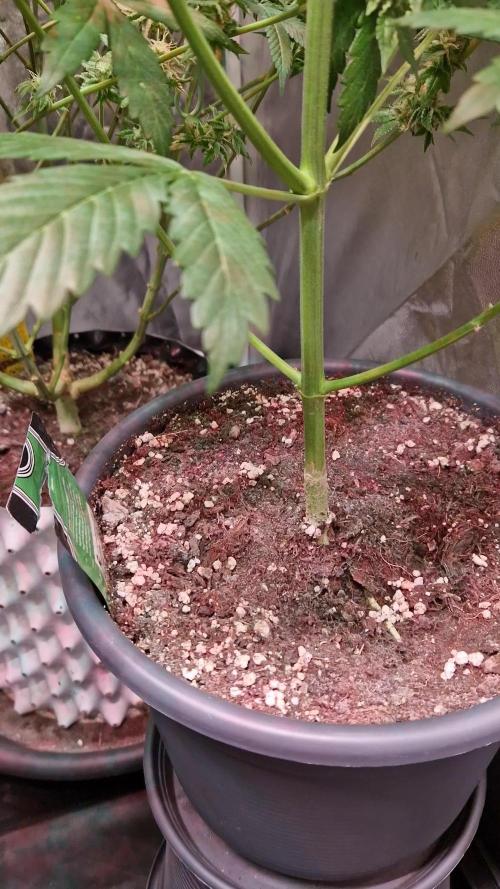
The timelapse shows me why I won't be transplanting like this again. (Slow growth/lost time from constricted root mass)

Likes
14
Share

@TrickzGrowz
Follow
Bin sehr begeistert was an der GorillaZ noch alles dran gewachsen ist. Der Headbud ist super schwer und wenn man an ihr riecht, riecht es wie eine Skittlespackung die man frisch auf macht!

Processing
Likes
4
Share


@Cogollo_eu
Follow
**Encontrarás la traducción a español al final de la descripción**
From/Desde: 02/01/19 || To/Hasta: 08/02/19
From day/Desde día: 64 || To day/Hasta día: 70
----WEEK SUMMARY----
03/02/19: Video 1 & Photos 2 & 3
06/02/19: Video 4
- Seems pink, but i will turn off the lights in seconds. It's recorded with the iPhone flash continuous light.
08/02/19: Photos 5 to 7
This week i will only say mmmmmmmmm.
The BBMazars stopped growing this week, they're from 70 to 95 cm. 3 of them above 85 cm.
----IRRIGATION CALENDAR----
02/02/19 (Night)
I prepared a solution with 3l water and (Silica Power, Final Solution, Fast Food, Auto Stimulator, Bud Candy, Big Bud, B52 & Bloombastic) @ 2.0 E.C. PH6.4
~750ml for each BlueBerry Mazar
05/02/19 (Night)
I prepared a solution with 3l water and (Bloom Stimulator, Rhino Skin, Sensizym, Bud Factor X, Big Bud, Bud Candy, Bud Factor X, Nirvana, Overdrive & Bloombastic) @ 2.0 E.C. PH6.4
~750ml for each BlueBerry Mazar
08/02/19 (Day)
I prepared a solution with 3l water and (Silica Power, Fast Food, Auto Stimulator, Bud Candy, B52 & Bloombastic) @ 2.0 E.C. PH6.4
~750ml for each BlueBerry Mazar
*****ESPAÑOL*****
----SUMARIO SEMANAL----
03/02/19: Vídeo 1 y Fotos 2 y 3
06/02/19: Vídeo 4
- A primera vista parece rosa pero apago las luces en unos segundos. El vídeo está grabado con la luz flash contínua del iPhone.
08/02/19: Fotos 5 a 7
Esta semana sólo diré mmmmmmmmm.
Las BBMazar han parado de crecer esta semana, se han quedado de los 70 a los 95 centímetros de altura. 3 de ellas por encima de los 85 cm.
----CALENDARIO DE RIEGO----
02/02/19 (Noche)
Preparo un solución con 3l de agua y (Silica Power, Final Solution, Fast Food, Auto Stimulator, Bud Candy, Big Bud, B52 y Bloombastic) @ 2.0 E.C. PH6.4
~750ml para cada BlueBerry Mazar
05/02/19 (Noche)
Preparo un solución con 3l de agua y (Bloom Stimulator, Rhino Skin, Sensizym, Bud Factor X, Big Bud, Bud Candy, Bud Factor X, Nirvana, Overdrive y Bloombastic) @ 2.0 E.C. PH6.4
~750ml para cada BlueBerry Mazar
08/02/19 (Día)
Preparo un solución con 3l de agua y (Silica Power, Fast Food, Auto Stimulator, Bud Candy, B52 y Bloombastic) @ 2.0 E.C. PH6.4
~750ml para cada BlueBerry Mazar
Likes
35
Share


@MadeInGermany
Follow
Info:
Unfortunately, I had to find out that my account is used for fake pages in social media.
I am only active here on growdiaries.
I am not on facebook instagram twitter etc All accounts except this one are fake.
Have fun with the update.
Hey everyone :-)
quick update today.
She was further trimmed with topping.
It was poured twice with 1 l each time.
Everything was cleaned and checked.
Stay healthy 🙏🏻
You can buy this Strain at :
https://www.exoticseed.eu/
Type:
Herz Og
☝️🏼
Genetics:
Larry OG X Kosher Kush
Indica 60 % / Sativa 40 %
👍
Vega lamp:
2 x Todogrow Led
Quantum Board 100 W
💡
Bloom Lamp :
2 x Todogrow Led
Cxb 3590 COB 3500 K 205W
💡💡☝️🏼
Soil :
Canna Coco Professional +
☝️🏼
Fertilizer:
Green House Powder Feeding
☝️🏼🌱
Water:
Osmosis water mixed with normal water (24 hours stale that the chlorine evaporates) to 0.2 EC. Add Cal / Mag to 0.4 Ec Ph with Organic Ph - to 5.5 - 5.8 .

Likes
9
Share


@Cortez_The_Konqueror
Follow
This cultivar impressed me right out of the gate.. this one is going to be a beast.. I’ll have to replace the garden staples for bamboo steaks soon!
Likes
42
Share


@Roberts
Follow
Has been a great plant to grow. Has amazing flavor and appeal. I love strawberry flavored bud. Was a first grow for advanced seeds strain. Curious to try others. Thanks again for likes, follows, and subscriptions on my YouTube. Support is great appreciated. Be safe and happy growing

Likes
5
Share


@BasiGoToGrow
Follow
🌱🌞🌱Week4🌱🌞🌱
Bruce is much smaller, LST is almost completely tied to the ground, but looks super healthy. All the side shoots have now been directed and I hope that she will now grow nicely upwards 😅
Sherbet is my queen in this grow so far 🌞
It's just fun to watch the beauty grow. To start the fourth week, I removed some leaves today and directed the shoots in the right direction, otherwise Brucie will soon be completely overgrown 😂 but hopefully it will also have the effect that the good energy of growth will now go in the right direction.... I'll be surprised. Now she looks like a beautiful chandelier 😎
Likes
2
Share


@CuriosityWebster
Follow
All of the girls are growing nicely, except for one of the fast buds mystery autos
Apple strudel #1 Training up to be very easy. Most of the branches are long enough for me to stretch out and take up more surface area of its pot.
Apple strudel#2 About a week and a half ago he got the bottom part ate up By ants or some other bug. So I topped this plant as to make more tops And hopefully bring back the nodes that I lost
Sweet skunk a little bit smaller than the rest, but it is also younger though I am kind of going for a bonsai style with this plant. I don’t believe it’s gonna be super large but hopefully I can make it look cool. It does have some decent branch areas where they are stretching
Mystery auto #1 plant is growing up with a beautiful structure for the most part I have grown naturally without much interference. Occasionally I hold down the top with a garden staple to let the lower branches get some light and to give the plant some healthy LST, once the branches get longer will hopefully be able to stretch it out even more!!

Likes
46
Share


@Biggy2k20
Follow
This week I have summoned for a ripen additive to the schedule as well as flushing with pure water, filtered through 7 stages. Slowly growing and maturing, hopefully not much longer to go!

Likes
39
Share


@J_diaz420
Follow
Todo marcha bien!!
Creo que lo fundamental en esta semana es arta humedad y riego foliar por encima, pero en las raíces tratar de no llenar de agua ya que a esta temprana edad la plántula no tiene tanta raíces formadas, lo que provoca que se estanquen, quedando enanas y mostrando carencias por no poder beber.
Trataré de seguir como voy, saludos 🍀
Likes
8
Share

@Growbody
Follow
Seid herzlich Willkommen zu meinem Bericht der Milky Way F1 Automatik von Royal Queen Seeds, einer Kreuzung von Blue Mammoth, Blue Dream, Sin Tra Bajo Auto und Ruderalis. Ich hatte die Milky Way als Hybriden in meiner Samenbank eingetragen und wegen des Schokoladengeschmacks in diesen Run aufgenommen. Das stimmt so allerdings nicht. Sie ist sogar eine 80% Indica, das erfährt man aber erst, wenn man das Video über diesen Strain ansieht. Dann wird die halt erst zum Abend gedampft.
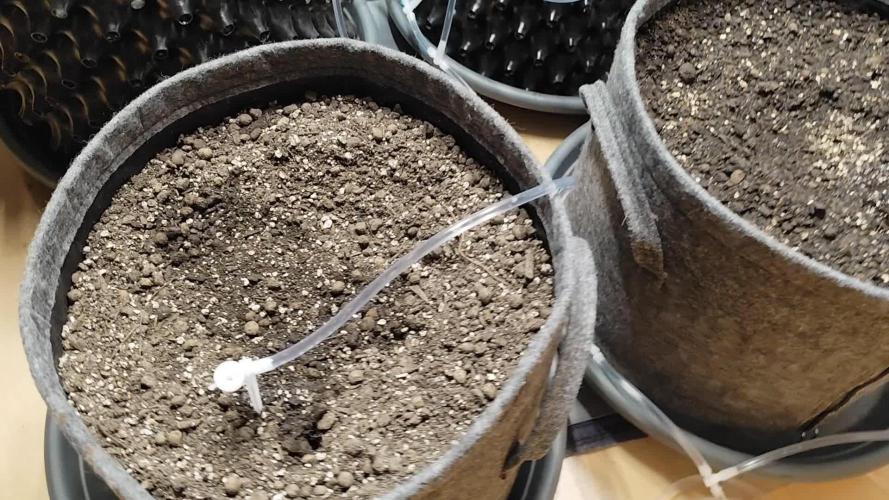
Tag -6: Zeit, den Growroom vorzubereiten. Im "Erdlager" reift die Sonnenerde vom letzten Indoorgrow schon einige Monate. Ich hatte sie mit Monster Bud Mix Living Soil und Hornspänen gefüttert, jetzt kommt noch aktivierte Pflanzenkohle von Jungle Vibes aus Freiburg dazu, Dann kommt die Erde in die Pötte. Nächstes Mal werde ich das wieder draussen machen und die Töpfe reintragen, gab 'ne ganz schöne Sauerei und ich konnte den Growroom nochmal putzen...
Tag -3: Zeit, das automatische Bewässerungssystem zu testen. Ich erhoffe mir dadurch eine gleichmässigere Bewässerung, sowohl von der Menge als auch von der Temperatur des Giesswassers. Die restlichen Tropfer sind schon bestellt.
Tag 0: Endlich ist es soweit, die Samen kommen in SmartStart Plugs von Zamnesia, die sich in Seedbooster Plus editiertem Wasser vollgesaugt hatten.
Tag 5: 3 cm am ersten Tag, die Schale klebt noch dran.🌱
Tag 6: 6 cm am zweiten Tag, die ersten echten Blätter sind gut zu sehen. Sie geht ab. Da kann sie gleich angehäufelt werden.
Schön, dass du dir mein Diarie ansiehst. Schau wieder rein, ich freu mich drüber 👋😎
Likes
20
Share


@Alpha_Green
Follow
1st week generative phase:
Pre-flowering and the next problem with the two topped specimens:
Yellow leaf tips - too much nitrogen.
I just thought:
Close your eyes and go for it.... Organic cultivation regulates itself - well, at least in theory.... 🤣
Cannazym works wonders! I love to highly recommend. I work with it from pre-flowering to harvest and gently increase the dose.
A word about water quality... 💦
I now use oxygen-enriched reverse osmosis. Since here in Berlin the pH value is basically very hard (very calcareous water) and not all plants can cope with it, I decided to invest there.
Not cheap, but incredibly effective.


Likes
4
Share


Processing
Likes
17
Share


@Silverback_Guerilla
Follow
2/10:
I watered today with about 3/4 gallon each, plus cal-mag, signal, bembe, armor si, a little open sesame, and their final dose of endoboost.
These bitches won't stop stretching, and my choices are few...either I supercrop about 30 colas to keep them to at least 12" from the lights(already too close really), or I do the construction project that I've been dreading. It's really not that difficult a job to add some 1 x 2's and move the supporting "rafters" with eye hooks up another foot, and lose the space necessary to keep my evap cooler and/or dehumidifier...it's taking out all those freshly watered plants to be able to do it....maybe they wont have stretched anymore come morning and I can just watch for signs of light damage. I'm leaning towards the construction project, as it will be a challenge to find space for that many horizontally-oriented tops, and they'd be so much less photogenic if I did.😀
2/11:
Wife home sick today....postponing construction project to raise the lights....kinda scary....about 10" from the tops now..
2/12:
I woke up to find these bitches stretched another few inches and they were within 7 inches of the lights!!!
I quickly drug everybody out of the closet and undertook the project. In addition to that project, I installed and hooked up my new AC Infinity 6" intake fan. It's pulling in fresh air from the soffit vent on the eave of the attic, and currently feeding the garden with 46f fresh air. I'm able to easily maintain daytime temps in the lower 70f's now. I am able to drive the nighttime temps as low as I want. The only issue is that the outdoor RH varies quite a bit, so I ordered a 30-pint dehumidifier to put in the top of the closet.
I sprayed everybody with boomboom spray to try and mitigate the light burn damage that is likely to ensue.
2/13:
They are still stretching!!! Damnit...they are now 12" from the lights again. I will wait to raise the lights until tomorrow when I feed them.
2/14:
I fed them today with about 3/4 gallon each including grow big, big bloom, tiger bloom, cal-mag, signal, bembe, humic acid, and I switched over from Open Sesame to Beastie Bloomz. Raised the lights another couple of inches. I did some training on them, defo'd a little bit, and had to lasso the biggest one.. she was trying to take up too much space.
2/15:
Installed the new dehumidifier and rigged the continuous drain on it...works great.
2/16:
I rotated the edge plants and removed some old leaves. I added another 22w 3000k 4' bar light under the canopy.
2/17:
I rearranged the garden and defoliated a little bit. That's it for week 8-
Likes
4
Share


@kevb84
Follow
i feed my plants npk or micro grow bloom and cal magic on mondays and organics and fungia microorgainsims on thursdays splits up feeding sch.



Likes
8
Share

@Yahti
Follow
This plant seems to be chugging along. Pistils are finally starting to tip in.
I ended up getting in there and redoing all the supports with poles.
Looking at it now, these stems are hella wimpy. I think I overcorrected and had a bit of the yips this run.
Trying to go minimal stress after the pink portal herm run a priori.
Too much wasted growth potential, should've directed growth earlier in flower.
Not sure if it is all stress related or she is starting to get sick.
I had to chop off a few auxiliary stems since they were drooped over and couldn't sustain turgor.
Those removed stems, were healthy looking and frosting up. But were sagging more than than 90°.
Not sure what is going on.
I was thinking they were just getting heavy, but starting to think it might be something else...
Ambient temps have cooled, so I'll be able to determine if the issue was environmental.
**Update | Sorry the aspect ratio is boogered. Took over an hour to upload and don't wanna mess with it again.
