


Likes
Comments
Share


@Tropicannibis_Todd
Follow
👉Alrighty Then👈
( 👉Bonus Video Showcases Everything I Have Going on in TropiCannibis HQ 👈)
So we are at DAY 54 of Flowering with the Sugar Larry 👈 And she's doing fantastic 👍
😀 decided to showcase pheno #2 , definitely has different traits then #1 very interesting 😀 thoe both are killing it 👈
So just waiting on alittle more amber to show before we do the chop 👌
👉I had to Top her during the middle of 4th week 👍 Happy Growing
👉Soil Provided by ProMix.ca
👉Nutrients Provided by Agrogardens
👉Lighting Provided by MarsHydro.ca
Thanks my friends for the great support over the years 🙏 Happy Growing

Likes
111
Share


@DogDoctorOfficial
Follow
Harvesting An ELEPHANT !!!
And after 118 day from seed and 101 from wen she started her mix veg/flowering process, i cant say for sure but i am starting to believe that this auto world do veg, then veg and flower in conjunction for a wile and only after they a wile they move to a flowering stage completely but thats another post another day lol today was harvest day for this Auto Elephant from SSSC , and let me tel you she is a delight with huge fruits, so big that i normally cut and hang the all plant and for this i did not take the risk of doing that and getting bud rot , better safe than sorry, so what i broke her in smaller peaces and put it all in the rack.
Now not much to do than waiting for it to get around 10/15% humidity and jar with it all.
This one as you guys can see from the video , this is a full covered in trichomes BIG MAMA and touching her is like touching super glue or something lol i was trying to put all the colas in one picture , but is simply just not possible , they all look great so i selected 4 of them for a true back back ground <3
Thank you Super Sativa Seed Club for this opportunity, i fell like a champion no matter what with this 2 Mamas, much respect on the work you guys did on this Elephant
As always thank you all for stoping by for your love and for it all, i fell humble and honored

Processing
Likes
24
Share


@MadeInGermany
Follow
Day 13 since time change to 12/12 hrs
Hey all together 😋.
in the last few days since the changeover, it has already made a nice push 👌.
She looks beautiful and it is fun to watch her grow 😉.
I am very excited about Green Buzz Liquid 👍.
I am looking forward to its growth in the coming week 😋.
I wish you a lot of fun with the update 👍
You can buy this Strain at
https://www.amsterdamgenetics.com/product/kosher-tangie-kush/
You can buy this Nutrients at
https://greenbuzzliquids.com/
Type:
Kosher Tangie Kush
☝️🏼
Genetics:
Kosher Kush
X
Tangie
👍
Vega lamp:
2 x Todogrow Led
Quantum Board 100 W
💡
Bloom Lamp :
2 x Todogrow Led
Cxb 3590 COB 3500 K 205W
💡💡☝️🏼
Soil :
Canna Coco Professional +
☝️🏼
Fertilizer:
Green Buzz Liquids :
Organic Grow Liquid
Organic Bloom Liquid
Organic more PK
More Roots
Fast Buds
Humic Acid Plus
Growzyme Big Fruits
Clean Fruits
Cal / Mag
Organic Ph - Pulver
☝️🏼🌱
Water:
Osmosis water mixed with normal water (24 hours stale that the chlorine evaporates) to 0.2 - 0.4 EC. Add Cal / Mag 2 ml per l water every 2 waterings . Ph with Organic Ph - Pulver to 5.8 .

Likes
39
Share


@Randyb4
Follow
Day 85 First day of Week 12, day 11 of flower
Day 86 Day 12 of flower
Watered Plants with 4 gallons of distilled mixed with spring water with 5.3ml/gal of micro, 4.6ml/gal of grow, and 6.0ml/gal of bloom. PH- 6.4@72°F. Plants look good, buds/hairs forming. Really tight node spacing.
Day 89 Day 15 of flower, first day of Week 3 of flower
Watered with 4 gallons of distilled water with ½tsp/gal of recharge pH-6.6@63°F.
Day 91 day 17 of flower
Watered with 4 gallons of distilled water with 3ml/gal of "Fish Shit" pH-6.3@70°F.
Plant A- 34¼" from the floor, 25¾" from the soil.
Plant B- 31¾" from the floor, 22½" from the soil.
Plant C- 30¼" from the floor, 21¼" from the soil.
Plant D- 34½" from the floor, 25⅜" from the soil.

Likes
6
Share


@mk420
Follow
Potted the plants up in final pots mid week and removed the smallest plant from the grow.
Had trouble with temps dropping to below 15c this week and had PH levels going up to 7, both all sorted now and look to be growing well since making adjustments.


Likes
110
Share


@420DeepGrow
Follow
ACTUALIZACIONES A DIARIO!!
Miles de gracias al equipo de Royal Queen Seeds y a @James por proponerme esta aventura tan trepidante y poder conocer de cerca las nuevas F1 y sobre todo a la gran Titan F1. Espero que lo disfruteis y os sirva como referencia.
¿Qué piensas cuando lees la palabra “Titán”? Hay quienes la asocian con los hijos de Urano de la mitología griega. Otros saben que Titán es la luna más grande de Saturno. ¿Y entre los cultivadores de hierba? Estas personas reconocen a la Titan F1 como una variedad de marihuana con una genética de vanguardia. Se trata de uno de los primeros híbridos F1 autoflorecientes, y es una variedad pionera que ofrece productividad, resistencia y algo completamente nuevo.
La Titan F1 deleitará tu olfato durante la fase de floración y más allá. Esta variedad autofloreciente ofrece un potente perfil de terpenos compuesto principalmente por mirceno, farneseno, ocimeno, pineno, bisabolol y limoneno.
Gracias a MarsHydro 😊🙏 por darme la mejor luz que hay en el mercado.
La marca numero uno en focos 💡, carpas de cultivo ⛺️, extractores 🌬️ y demás aparatos que necesitas para tu cultivo.
Para esta aventura arrancaremos con 💡Mars Hydro TS 1000 Full Spectrum LED Grow Light 150W Regulable y 1 semilla autofloreciente a un ciclo de 20/4.
Verdaderos 150w con este TS1000, la mejor luz de cultivo LED para principiantes.
Ofrece una luz adecuada para 2-4 plantas 🌱. Su precio razonable, la marcada mejora del rendimiento y el control variable de la producción la hacen amigable para los nuevos cultivadores. Todo un tesoro para cualquier cultivador que este comenzando.
Usaremos para esta aventura una carpa de 60x60x90, MarsHydro una carpa para los más exigentes.Con una solapa de cremallera mejorada, dobles cremalleras de metal con forro,reflectante diamante tipo Mylar, postes de metal para una estructura mas solida, no se puede pedir nada mas.
Garantizando una respuesta en solo 24 horas tanto si has usado antes la marca como si no.
🌻🚀 Consigue tus semillas aqui:
https://www.royalqueenseeds.es/semillas-de-marihuana-hibridas-f1/624-titan-f1.html
💡 MarsHydro TS1000:
https://www.amazon.com/gp/product/B07PLY1WKK
⛺️ 60 x 60 x 90 MarsHydro:
https://www.amazon.com/dp/B081PN2QDN/
Segunda semana de floracion, las ramas laterales siguen estirando junto con la cola central y se muestran las primeras preflores, es una planta muy compacta y he tenido que quitar alguna hoja baja para evitar la aparicion de algun hongo.
Es la genetica que mejor ha respondido, por no decir la mejor. Felicidades Royal Queen Seeds y MarsHydro 😁
📅 Dia 28: Riego con nutrientes EC 550
📅 Dia 29: Descanso, en tan solo 48horas se nota una gran diferencia entre la que esta en un ciclo 20/4 con MarsHydro 😍 a la otra que esta 12/12 con un led chino, creo que por este motivo me estaban saliendo cosechas pobres, con cogollos no muy densos y las plantas se alimentan mucho menos, con MarsHydro se permiten mas comina y por lo tanto una mayor produccion y calidad del producto final.
📅 Dia 30: Riego con nutrientes EC 450, estas últimas 48 horas ha dado otro estiron, mide 60cm y esta en una maceta de 6litros.
📅 Dia 31: Descanso
📅 Dia 32: Riego con nutrientes EC 450
📅 Dia 33: Riego con nutrientes EC 450, ya mide 70cm
📅 Dia 34:

Likes
34
Share


@Salokin
Follow
Hello Growmies,
As we navigate through week 9, the crescendo of the Watermelon Candy F1 Hybrids’ flowering odyssey is near. Nestled within the verdant grove alongside the Epic Buzz and Red Banana Pudding strains, our Watermelon Candy troupe is displaying the telltale signs of impending harvest.
The plants exude a melody of sweetness, with trichomes glistening like morning dew under the subdued glow of the IR lights, revealing a spectacular array of colors not typically seen in the standard lighting spectrum. Despite the compact nature of the buds, which is a result of the 12/12 light cycle they've been flourishing under, the density of these floral clusters cannot be overstated—like tiny, aromatic asteroids.
Plant #1 continues its reign with a prolific bud structure that's nothing short of mesmeric. Plants #2 and #3 exhibit a bounty of floral nodes, each one a testament to the bounteous yields that are just a fortnight away. Their canopies spread wide, a testament to the cultivar's vigorous growth habit and the attentive care they’ve received.
Though the buds might not break records in size, their solidity is remarkable—a testament to the precise environmental controls maintained by our trusty TrolMaster. The buds are rock-solid, heavy with resin, and brimming with the promise of potent effects and delectable flavors.
Our nutritional regimen remains unchanged, delivering the essential elements for these final, crucial stages of bloom. The meticulous oversight of our automated systems ensures that our Watermelon Candy Hybrids are relishing in their peak conditions, as we nudge them gently toward full maturation.
With a harvest on the horizon, the anticipation is palpable. These final days are a mixture of excitement and the bittersweet acknowledgment that this chapter is closing. Soon, we’ll be able to savor the fruits of our labor, a sweet reward for the weeks of dedication and camaraderie in our grow community.
Until then, we'll continue to marvel at the transformation, watching as each plant fulfills its genetic destiny, soon to provide joy and relief in its final form.
Stay lifted,
Salokin

Likes
6
Share

@carlitoshaze44
Follow
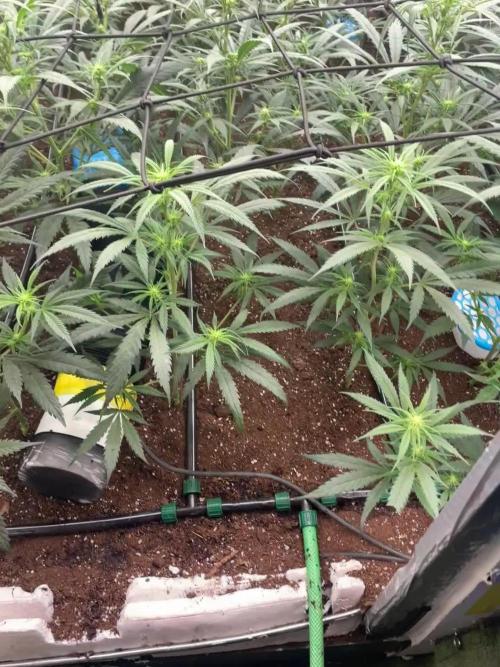
Así es como empezamos la tercera semana,seguimos con humedad alta pero la vamos controlando..
Estos días da buen tiempo la humedad en la calle será mucho más baja así podré meter aire sin tanta humedad..
De momento todo bien en el cultivo ningún problema hasta la fecha.
Ya podéis ver,y comentar sobre algo que veáis que yo no!
Como dicen! Ven veinte ojos mejor que dos!
🖖
Día 12
Último fungicida prevención mutritis,hongos
humedad.
Primer riego foliar hormonas producción de flores.
🌹
Día 13
Nada en especial solo observar si veo algún cambio tras las hormonas,aún no veo grandes observaciones fuera de lo natural del paso de los días.
En el día de mañana por lo que me recomendó el fabricante se verán los resultados a la vista!
Comentar que seguimos con la iluminación al 100x100 de capacidad
Marshydro sp3000 x2
Hero led Ignator t720
Yxo led 60w ir+un espectro completo
En la siguiente semana me llega el nuevo driver de philips para poder conectar la lámpara de IR que pude adquirir a Yxo nuevamente! Lampara led espectro completo + IR 70w .
Me vendrá muy bien para el pequeño espacio de la puerta que necesita más iluminación para poder desarrollar bien esas dos plantas,de la entrada.
La humedad fue cosa del pasado.
Evite el uso de desumificador eléctrico añadiendo varios de sales,deciros que funcionan muy bien no dan un control exacto pero mantienen una humedad interior estable para todo el periodo de floración!
50% de humedad lo demuestra!
Hoy añadi un poco más de sustrato. 110 litros exactamente sobre la cama de cultivo que tenía de topcrop con humus de lombriz,tierra diatomeas y alimentada con npk.
Después de eso tengo en mi cama de cultivo 810 litros de sustrato para mis 44haze. 💐
Saludos
Día 14
Anulado el intractor,ya que el propio extractor mete aire fresco por las rendijas de ventilación..
En lo largo de la noche iré viendo el resultado en datos..
Ya coloque los soportes para la nueva iluminación que en estos días llega su driver de sustitución
E visto que algunas plantas en estos dos días están en 67-70cm..
Ya colocado el sistema de riego para evitar más pisadas en el cultivo ya que algunas se realentizaron por pisar encima de sus raíces..
Le e metido una pequeña poda de bajos para airear más la zonas bajas del cultivo.
Pequeño riego de folacion con remedio de agua azúcar para dos que estaban más estresadas.
Día 15
Hoy era día de regar pero el sustrato aún parece húmedo en gran proporción aplazare el riego.
Día 16
Hoy me acerqué a ver las niñas en caso de que necesitaran algo..
Se ve todo correcto parece que no tienen mucha sed.. llevamos todo el día de alta humedad y lluvia en el exterior..
Las dejaré hoy sin riego también.
El sustrato está bien alimentado.
Mañana seguramente se presente el armario con una plantación pidiendo agua a gritos!! Jejeje.. así comerán con más ganas!,veremos qué tal..
Dia 17
Perfecto,las plantas se han mantenido muy bien para estar el sustrato ,prácticamente casi seco..
Se le aplicaron 32litros a la cama de sustrato con el riego de goteo
Y la humedad se ha mantenido bastante bien .
Una vez termine el riego la temperatura en el armario cayó considerablemente,llegando este a 16 grados.
Una vez se cierra todo vuelve a sus parámetros controlados de 23/24 grados.


Likes
119
Share


@Roberts
Follow
I just dropped Divine Indica. I scuffed the seed, and dropped it in water. I will place in the rockwool in 24 to 48 hours. Thank you Divine Seeds, and Spider Farmer. 🤜🏻🤛🏻🌱🌱🌱
Update: the first seed failed. Starting a second.
Thank you grow diaries community for the 👇likes👇, follows, comments, and subscriptions on my YouTube channel👇. ❄️🌱🍻
Happy Growing 🌱🌱🌱
https://youtube.com/channel/UCAhN7yRzWLpcaRHhMIQ7X4g

Likes
14
Share


@KannaKullektiv
Follow
Aloha Freunde der Sonne 😊
Obwohl die Mädels immer noch kein Dünger bekommen haben, geht es Ihnen so gut wie noch nie. Sie fühlen sich mehr als wohl bei mir.
Viel Spaß🙏

Likes
28
Share

@PhinolaGreen
Follow
Harvest
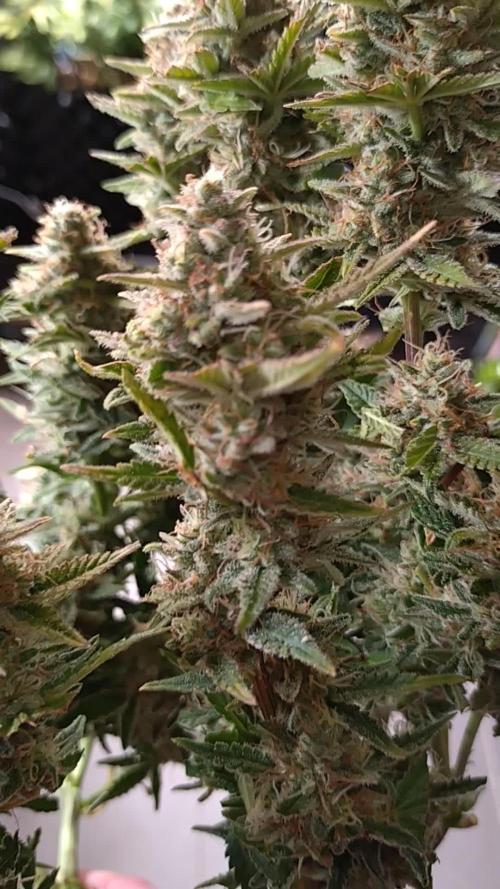
Es ist soweit, heute habe ich die Cherry Cola RF3 Auto von Fastbuds an Tag 67 geerntet. Für meinen Geschmack ist die rdy und deswegen hängt die jetzt zum Trocknen 😌
Update:
Sie hat 20,3g abgeworfen, nicht besonders viel aber es gab dafür ordentlich Schnitt für Butter, bin also soweit zufrieden. Vllt wär's mehr geworden, wenn ich sie noch bisschen hätte stehen lassen aber für mein Geschmack war die fertig.
Für mein erstes Mal Mainlining im Airpot lief es auch gar nicht schlecht, habe viel gelernt und werde Cherry Cola RF3 Auto von Fastbuds sicherlich in den nächsten Wochen nomma machen, zum Beispiel Outdoor vor meinem Fenster 🤭
Sie riecht angenehm nach roten Früchten, gar nicht mal gassy, eher minty und süß. Ich lass sie jetzt noch bisschen nach trocknen und dann kommt sie in ein Apotheken Jar und wird für 4-6 Wochen gecured 😌 Ich mache nomma ein Smokebericht die nächsten Wochen, also gerne dran bleiben 😀
Update 24 Tage nach dem Cut:
Das Bouquet von roten Früchten hat deutlich zugenommen, es lässt sich anhand der Säure auf reife, frische rote Johannisbeeren und ein zisch von der vorherig beschriebenen Mint smell mit drin und mit etwas Fantasie entwickelt sich das wirklich in die Richtung Coke mit roten Früchten 😍
Geschmack im Vapo ist frisch, saftig und hat was von Ice Bonbons im Abgang. Die Wirkung ist Klar, Strong, Entspannend, Beruhigend und langanhaltend, also denke 28-29% so von der Wirkung.
Ist fjedenfall spannend, den Cure Prozess zu beobachten 😊

Likes
4
Share

@BlaKX
Follow
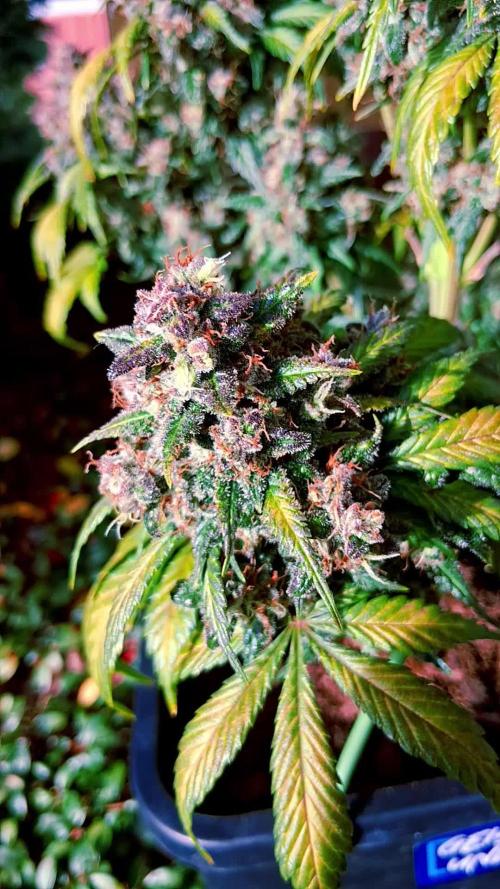
Was soll ich sagen Growmies es war eigentlich nicht geplant ein Report dieser Sorte das als Experiment gedacht war zu veröffentlichen aber das Endresultat ist es wert veröffentlicht zu werden finde ich!!! Und wieder ein Strain von V-Buds der abliefert!
Likes
26
Share


@Brujha77
Follow
Start in to week 7
As usual, she lost again some Fanleaf's 😏
She's getting really sticky and she's developing a stronger fruity smell in the last 2 days👍
Trying out a CO2 Bag....
And she gets another watering with 2l with 1g/l BioEnhancer Day 78.
Day83
Trichome's are most milky and some few Ember at the Top's. Still few clear
I think she get another Week and she will be finish👍
Likes
20
Share


@eldruida_lamota
Follow
Esa familia vamos actualizar ya la segunda semana de floración de estas Lava Cake de Zamnesia.
Y es que me sorprende están increíbles tienen un color verde alien se ven bien sanas y ya la preflores salió.
O el pompón según escuché algunos cultivadores de la zona 😂.
Temperaturas máximas en 26.5 y mínimas en 24 y una humedad estable en torno al 50/55%.
Os comento que tengo un descuento y para que compréis en la web de Zamnesia de un 20%, el código es ZAMMIGD2023
The discount 20% and the code is ZAMMIGD2023
https://www.zamnesia.com/
Agrobeta:
https://www.agrobeta.com/agrobetatiendaonline/36-abonos-canamo
Mars hydro:
Code discount: EL420
https://www.mars-hydro.com/
Espero que lo disfrutéis, buenos humos 💨💨.
Likes
6
Share

@Hou_Stone
Follow
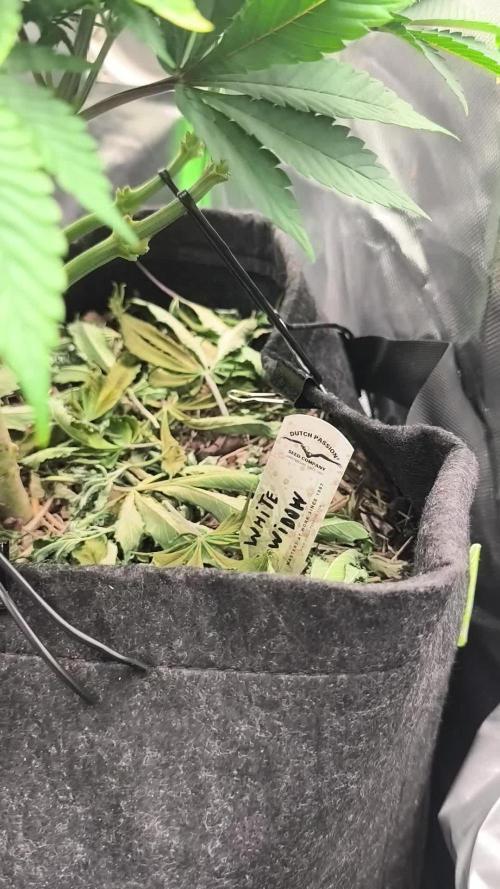
Mai 17 Last week before go in 12/12 🌓
Have done some lollipoping on mai 14

Likes
11
Share


@MilkyMisty
Follow
They're coming along really quickly they're on week 2, the custom strain I have in here I crossed the sherb tree from the plug with EL chapo and this plant looks amazing and smells like cherry refreshers platinum Z is also looking very nice with a lovely sweet watermelon with a hint of diesel and they really do stink even though they are weak 2 getting excited already haha, they all look very good so far,, I did have 25 but a few of them looked quite sick and a few abnormalities and they really didn't like the feed I was given them so the one's got eliminated and I am now left with 15 of the ones I like, this small room is just for my testers before putting them in main room, the LED that is running is lumatek zeus 600 pro, this is my first try with LEDs I've always been HPS but I'm definitely turning my head towards them as these ones are shooting up and look very healthy, once this run is done if I feel that it comes out better with LED I will swap out all 6 lights in the main room and replace them with 4 LEDs, I have some sherb tree x meringue from Dutch passion, running concurrent I will try and get another diary going with them they are awesome. Thanks 😊


Likes
11
Share


@IndoorOrganix
Follow
Attached the net this week as they can now fit under it. Going to train them under the scrog Now using the bio canna range a full dose. Due to the temperature rising, I have now invested in another fan and changed the light schedule from 24/0 to 18/6.