


Likes
Comments
Share


@Hattiwatti
Follow
Res change at day 29. Have to lower nitrogen a bit cause its clawing and pretty dark. Otherways everything is just fine and it grows nice. Ad calmag 5ml to 20L.

Likes
84
Share


@PEAKYPLANTERS
Follow
What's up people?
PART OF MY SECOND CULTIVE IS ALREADY READY .... Gel AUTO WAS FASTER BUT WITH POOR COLLECTIONS
TWO WAYS TO BEND YOU DIFFERENT
GEL AND OG 1 BENDS IN THE THIRD WEEK
OG 2 FOLDED TO THE FOURTH WEEK ... THIS FACT Yes THAT THE BRANCHING WAS ALREADY MORE COMPACT FOR OG2, ADAPTED TO THE LIGHT AND WITH GREATER RESULTS ...
GOOD !!
MY PURPOSE HAS BEEN THAT OF COMING IN CONFIDENCE WITH THEIR STRUCTURE AND UNDERSTANDING WHAT IS RIGHT OR WRONG FOR THEM WITH THE HOPE OF PULLING A FUCKING KILO OUT OF MY BOX
I HOMAGE THIS BEAUTIFUL PLANT BRINGING IT THERE WHERE IT WAS BORN AND GROW FOR CENTURIES ..
EXCELLENT FUN IN HIS COMPANY
HIGHT GOOD BUT LAST LASTING
A STRONG KISS TO ALL MY SUPPORTERS
HAPPY AND ABUNDANT HARVEST

Processing
Likes
7
Share


@gablmo
Follow
Another never ending vege week. I took clones and did more trellis work. The PH was up more than usual, they are still alive. I'm glad.

Likes
5
Share


@Bamz84
Follow
No Complaints No Issues Or Problems In The Garden...just being watered PH 6.0 and cal mag for now☺️

Likes
55
Share


@Hempface86
Follow
Ladies and gentlemen we are on day 82 and this girl is no more, through the loophole I can't find one clear trichome I understand the white hairs but I also understand the trichomes is what we go by.. also wanted to get her down because I was worried of possible root issues and did not want to ruin such a beautiful little plant.. Divine seeds has some great genetics this thing was topped and in such a small cup handled the training well and rewarded me with what I'm assuming is going to be between 28 and 35 grams so I'm thinking over a gram per ounce of dirt that's not too shabby.. I hope everyone in the contest is doing well and I hope everyone else is doing just as good.. we are all in this together, to be able to grow our own medicine at our own discretion and know what we're smoking is worth its weight in gold.. again big shout out to Divine Seeds for putting together this competition I thought I would do something a little different to stand out by doing a mini pot grow I don't know if it'll get me a trophy or not but it was sure fun growing it and was very beneficial to me in my personal development as a grower.. until next time folks and a month or so I will have the smoke report.. I tried to upload today for another strain and it wasn't working so hopefully grow diaries fixes the bug of not being able to update a smoke report.. happy growing everyone ✌️😎
ladies and gentlemen after 8 days of drying I trimmed her up today and as you can see from the video 46 g or 1.625 Oz which is extremely good considering the small amount of medium... Now I know during the cure I will probably lose around 1/8 of my total weight but still I will be definitely over 40 grams my guess will be at least 42 to 43 .. now for 28 Oz of soil I could not be happier.. between the genetics being great and the plants loving my feeding remedy all has been well.. I want to thank Divine seeds for throwing such an awesome contest and giving us enough time to do it right and also for providing the seeds but not just that they really hooked it up.. Big ups to them and I have more genetics that I will be running from them in the future.. hope everyone is doing well good luck to everyone in the contest and to everyone happy growing ✌️😎

Likes
20
Share


@French__flair
Follow
First Week of flowering
Week without too much hassle. A small excess of fertilizer but nothing serious. Uniform color. High water consumption (10L every 2 days), you can feel that they are in good shape.
Semaine sans trop d'encombre. Un petit excès de fertilisant mais rien de grave. Couleur uniforme. Grosse consommation en eau (10L tous les 2 jours), on sent qu'elles sont en forme.
Una semana sin demasiados problemas. Un poco de exceso de fertilizante pero nada serio. Color uniforme. El alto consumo de agua (10L cada 2 días), se puede sentir que están en buena forma.

Likes
32
Share


@Dunk_Junk
Follow
I think she's done!!
Lots of leaves went yellow during the week and dried up.
Harvesting her in the next few days.


Likes
7
Share


@Salgeezi
Follow
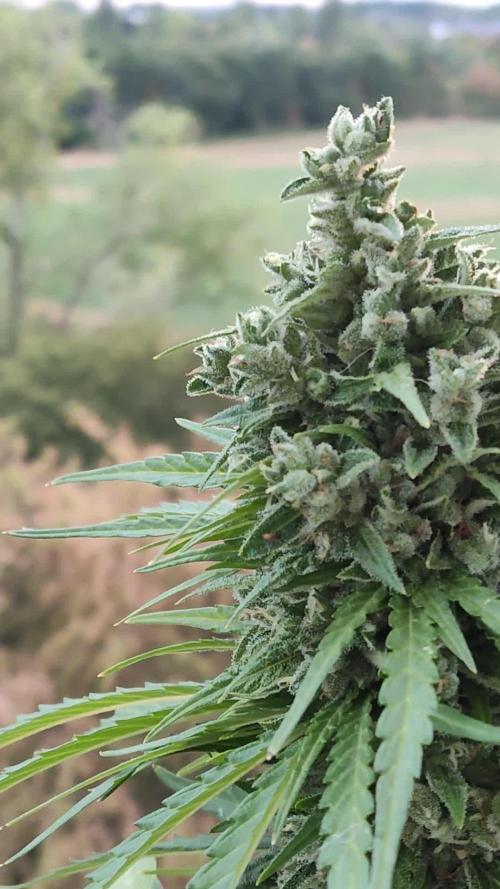
And then there was 3. Placed one bomb in my tent with my Rez in darkness for a few days. Then I will harvest. Other 2 (Charlotte and Bomb) are still going with sensi A and B, bud candy, overdrive. Orange bud is just water now. Will be cutting in a few days
Day 102. Cut bomb
Finished drying both Charlotte's that were harvested last week. Haven't weighed them yet. But they are both in jars curing.



Likes
18
Share


@Foggedaboudit
Follow
This has been a week of consequential stretch to stress the least! Some girls are about done stacking inches and some still got about a week more worth of elongating. Took a calculated risk heavily defoliating and lollipopping them mid-stretch which they seem to have withstood with no issues whatsoever. I’m starting to smell fruit also. Reminds me of my old neighbourhood’s Jamba Juice aroma that lingered around the block in the morning when you knew they were busy squeezing those tropical fruits by the carload!


Likes
1
Share

@Growfather1
Follow
Hello everyone.
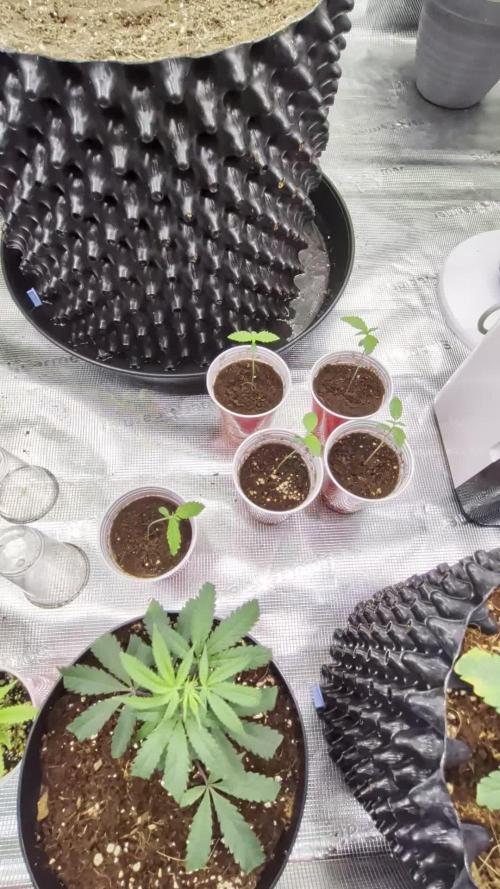
Things are looking pretty uniform with the Amnesia Haze, as all five are identical at this stage.
They are currently hiding out under the canopy of a flowering plant, avoiding the spotlight like they're auditioning for an invisibility cloak.
This lack of light is causing them to stretch quite a bit.
Humidity is holding steady between fifty-five and sixty-eight percent, and temperatures are perfectly in check between twenty-two and twenty-five degrees.
There isn't much more to report for now, so we'll see how they look next week.
Best regards,
Growfather

Likes
4
Share


@m0use
Follow
***Sponsored Grow*** = Medic || https://medicgrow.com || Grow = ***Sponsored Grow***
Plants still looking good from last week, Run off was a bit high for my liking but only seeing minimal signs of nutrient burn. Still watering once with feed and runoff and then later in the week with water and no/little runoff for my watering cycle.The number in the nutrient section are wrong but the EC and ratio are correct. sucks this thing is an auto and not a fast version, I dilute the feed down to 1/2 as the other photoperiods, its in its end of life now and kinda of a waist of space. Not impressed with this plant. might steer away from fast flowers because of this.
Lights doing well. The V1 spectrum is good on the medic grow mini sun-2's 240w. No issues so far, dimmed at 80%
.
Till next week.
***Sponsored Grow***
Official Website: https://medicgrow.com/
Facebook:
https://www.facebook.com/medicgrowled
Twitter:
https://twitter.com/medicgrow
Instagram:
https://www.instagram.com/medicgrow420/
YouTube:
https://www.youtube.com/channel/UCNmiY4F9z94u-8eGj7R1CSQ
Growdiaries:
https://growdiaries.com/grower/medicgrowled
https://growdiaries.com/grow-lights/medic-grow

Processing
Likes
5
Share


@Bombtofu
Follow
Week two went well. Just maintaining humidity still and a good temp. Watered plant two on day 10. 200ml with 2.5ml added fox farm grow big. Also re wetting the sponges I have in them daily for humidity.

Likes
21
Share


It all started out even under the scrog when something came up I tucked it under but for some reason I have a little uneven canopy I'm not complaining it's the first time I've ever tried it I just wish I could figure out why I have that uneven now on the side that's growing a lot I have reflective material on that side and I'm thinking maybe that's the only thing it could be I see a little nuke burn at the tips of the leaves but he's okay I went with pure RO water this time she should be flushed pretty good now

Likes
10
Share


@Papastroumf
Follow
Day 43 : Watering with co2 tab / 5L. Also added food again because i think they need it. Increased ppm to 850. Maybe the next one will be pure water. Ventilation works all the time when lights are on. Temp and humi are stable and this is good for the girls. she still grows. Patience is the key always. Also removed some burned leaves from all ladies.
Edit (Day 47) : Watering with co2 tab every 5L. I watered with juices again at 850ppm because i felt that they need it. Only DsD drank pure water because of burns. All ladies enjoy this bright sun for sure. I have a very good combination of sprectrums. Cree cobs are in 3000k and HPS at 2000k.


Likes
49
Share


@masterofsmeagol
Follow
6/23 Due To The Two 8 Day weeks this week will only consist of five days to get me back on track. SEE LAST WEEK FOR DETAILS. I DID ANOTHER EIGHT DAY WEEK. I'LL DO THIS WEEK AS SIX DAYS. THAT WAY IM BACK ON SCHEDULE. WATERED 6/22. WENT BACK AT NIGHTCAND WATERED ANOTHER GALLON WITH 1/3 TSP Armor Si. I mixed the solution with kelp you kelp me but I dumped it out. I've mixed silica with other nutes before but I had read something earlier about bioavailability issues and I didn't want to risk it. My plants are the healthiest I've ever grown. I'm considering transplanting the large 10th planet that I'm light depping. I also need to develop my ipm and my nute schedule. Still gonna have to keep an eye onvthe water situation. Luckily I have a buddy in my corner that's co tinualkt Bern a great help.
WENT BACK OVER AROUND NOON. BEAUTIFUL OUTSIDE AND THE PLANTS WERE LOVING THIS SUN. I DEFOLIATED SOME BURNED LEAVES AND MIXED A SOLUTION IF KELP ME KELP YOU THAT I PLAN TO FEED TO THE GARDEN TODAY. IM HAPPY WITH HOW THINGS ARE GOING. WE HAVE SOME RAIN AND THINDERSTORMS COMING. I NEED TO GET MY IPM UP AND RUNNING AND THE NUTES ONLINE. I ALSO NEED TO DECIDE IF IM GOING TO TRANSPLANT THE LIGHT DEP 10th PLANET. Went back over to put the girls to bed at six and if was still 90 degrees. The water from yesterday had dissipated. The tops were dust dry. I mixed two gallons of kelp you kelp me and fed it to the garden. Afterwards I pointed qbd found a couple plants that were more open to the wind were a little lighter. I know tomorrow will be very hot. Maybe quarter inch of rain. However after that it will rain (showers) off and on for days. I wanted to make sure the girls had what the needed to make it through tjis heat wave until they get that rain. I had another gallon mixed up and I'm thinking I should've given it to them. Oh well. I'd rather underwater than overwater any day. I did notice a burnt top on the plant furthest from the tarp that the sun JUST BARELY TOUCHES when the rest are in shade. I'll just raise the tarp a little. These are tiny problems. Can't upload video until tomorrow.
6/24 Good thing u gave the plants that water. I know it wasn't much but we didn't get any rain. Suppised to get a qtr in today and another qtr in tomorrow. Then rain a couple more days. It's working our really good for my watering schedule lol. Yesterday the girls got there first dose of a bottled nute. They got two gallons of kelp me kelp you (1/3 tsp per gallon) and another gallon of just phed water. I was going to do another gallon but held off due to the threat of syring rain. Didn't get it bur it looks like the plants loved the kelp. It had reached 90 yesterday. They look better today. It's 70 at 9 today. I LST the 10th planet in the 3 gallon. It's getting huge. I should start a separate diary for those three light dep plants. Its cool as hell watching this. One of the purple punches is flowering pretty good. I probably should start another diary for them. I'll be starting to feed my plants soon. Wondering if I should pinch plants again. TUCKED THE LITTLE GIRLS IN AT SIX AND SHOT A VIDEO AND TOOK SOME PUCTURES. PLANTS LOOKED PHENOMINAL! GOT HOME AND AROUND SEVEN IT JUST STARTED RORREBTIAL DOWNPOURS! THE TYPE OF RAIN THAT BREAKS STEMS. I SHOULDVE PUT MY OTHET TARP UP BUT I DIDNT. I WISH I HAD. IM A LITTLE NERVOUS. I KNOW THESE GIRLS ARE STRONG THOUGH! TOMORROW. ILL ROLL THE RARP UP AND SECURE THE BOTTOM FOR FAST ACCESS. IM ALSO GOING TO KOOK INTO FINDING A TOP FOR MY CAGE I CAN USE IN INCLIMENT WEATHER.
6/25 That little qtr in of rain we were supposed to get turned into torrential downpours and high winds. Luckily no REAL damage. If you watch the video you'll see what I mean. I'm going to havecto be cognizant moving forward. Noticed a few chunks from leaves butvplants are still healthy. I'm surprised how well these girls withstood this storm. They are certainly resilient. The 2 purple punch 1 10th planet that I'm light depping are flowering nicely now. They missed all the commotion from the storm as they were inside. It's smelling good. I'm happy.
6/26 It's what a friend would say is "maineing") out. That mistcthe plants love. I'm surprised the plants are doing as good as they have been considering the wind. Will be adding nutes soon. Need to add extra supports too. Light dep
6/27 Brief periods or torrential downpours. Light depped 3 gallon 0lants are under an overhanfcwhete the hatsxrain can't hurt them but they still get sun. They are really starting to flower now! I'm going to begin feeding with a base nute and a flower nute I think. I'm thinking about giving the light dep some open sesame or something similar. I need to set up a nute program soon but the plants ALL look so healthy! And it's been raining! I've only watered like once or twice since they've been in the big pots. I've seen zero pests aside from a chunk missing from a grasshopper. Usually by now I'd have battled half a dozen things and be battling another half dozen. However I was posing from clones. These are seeds and boy don't I see the difference!

Likes
9
Share


@AlienScrOG
Follow
Fail .... Nitrogen fail ... And Red spider in final stage ... I think the roddy spiders were present in the soil used .. and they infested more plants ... .. despite all this, it is an excellent cannabis i grow again


