


Likes
Comments
Share


@TechDCo
Follow
24/01/2024
Spread her out! Time for the show.
Welcome to my "Barrel Of Laughs" look what shes grown in lol
25/01/2024
Lights on and moved the pot to the left side of the tent, then sorted out the canopy with the scrog! Fed her with extra seaweed to the mix. Unfortunately, she got burnt. I made the mistake of moving the light too close, overfeeding, and overusing 12% food-grade hydrogen peroxide.
Conclusion: Well, onwards and upwards! I need to sort this out. Since I used hydrogen peroxide, flushing is a bad idea. I don't want to reactivate what's settled in the leaves and soil until it's no longer active. I removed all the badly damaged leaves, likening it to a necessary amputation, but luckily I'm at the early stages of flower. I'll keep a close eye on her.
25/01/2024 Mid-day
Not looking good; the new growth is the same after the flush.
25/01/2024
Lights out! Can't believe I spoiled the grow, but she'll hopefully recover. The lights, particularly the sk600 and Cropmaster, are too intense and powerful. I'm wiring up a dimmer switch to reduce it to 420 watts. The Cropmaster will be removed until maturity as having over 1000 watts of LED in a small tent is too much.
26/01/2024
Mid-day Check Time! She's looking a lot better. Taking photos is a good calf workout and lower back exercise when shooting at 0.6x at 12m. There are positives to all the negative occurrences during the growing, raising, and breeding of these plants. Weed can inspire creativity, debate, contemplation, and intelligence. It's important to focus on the positive aspects these plants can bring.
26/01/2024
Temps are more normal now since removing the Cropmaster, which was very powerful.
Sleepy time: 24-25°C; Daytime: 27-28°C.
27/01/2024
In recovery and doing well. Bright moon tonight.
Mid-Day: She's now ready for the full tilt. I've slowly guided the colas out and all the branches looked similar in size, which is why she's ready to grow straight up. There will be a beautiful green screen underneath! I'll coin this technique 'The SpaceProvider' as it maximizes the canopy and undergrowth space. It took me two hours to sort this tonight, and she will straighten up properly in three days.
The dimmer didn't work due to incorrect volts, but I managed to reduce the light to 10% today by tapping its relay wires.
Mid-day: Looking a bit better. I sorted a few branches out to rearrange and ensure they will grow straight. There are definitely no free radicals left in this plant, and the fresh new growth is a positive sign.
24/01/2024
Preparing for upcoming growth spurt during flowering phase.
25/01/2024
Adjusted the scrog to accommodate the impending growth spurt. Allowing the plant to stretch freely. Will need to reposition a few colas as needed but expecting smooth sailing from here onward.
Late-day temperature check: 27-28°C.
26/01/2024
Daytime temperature inside the tent remains in the 27-28°C range, similar to pre-Cropmaster lighting. Planning to implement the Cropmaster light closer to the bloom phase as we have a way to go. Committed to only guiding the upward growth and not interfering with the flowers. Each bud requires a leaf for optimal growth. Embracing a playful wordplay: "I will need to leave the flowers alone, just a little friendly play of words."
I'm looking through the window, the window to your heart!
https://www.youtube.com/watch?v=1nw_ob4IeOo
27/01/2024
That was a lot of supercropping today, my goodness! Even my thumb and index fingers are aching now, but hey, thumbs up for a job well done; I'll store that in my mental index book to reminisce about later when it's all over to click through! Peaceful mind 🧠, at least the canopy will be flat, unlike my occasionally bouncy head - Slowly walks quietly away to Mediate.
It looks like it'll add an extra week to the harvest date. Instead of the 8th of February, we're looking at the 15th to 17th of February for when she'll be ready, but you just can't predict with Hazes; they seem to need like 13 weeks at times. I mean, March for harvest 😆. I'm no comedian, but everyone seems to be laughing at me now. Sometimes, we have to poke fun at ourselves; it's good for the spirit 👏 🙌 ✨"
"I've got two extractor fans set up, one bringing in clean air and the other pushing it out. Yesterday I noticed that the extractor out fan was off before bed, due to the weight of the cables pulling it loose. The kettle lead must have come loose, but it's all sorted now."
"I know what you might be thinking; he's going to get popcorn nugs by fussing and stressing the plant in the early stages of flowering. I did mention in the article that there might be a little risk, with a pun about nuggets. Honestly, I believe I'll still yield 1lb just because of the light and growing technique used, and the extended time in long veg."
I accomplished what i stated using this DIY Budmaster GoD 9 250w for the vegetative stage and 450w for flowering, drawing only 320w wall power, achieving a yield of 11 ounces. Conversely, the SK600 draws 610 watts from the wall. If I can avoid further mistakes and ensure proper feeding during maturity, I anticipate a minimum of 18 ounces. With over 80 colas, the close proximity to the light, and abundant breathing space, I've developed a unique growing technique which I've dubbed "The Space Provider," due to its ability to ensure every corner of the tent is utilized for cola growth. As a shorter version, I've considered naming it "SpaceyPro." 🤔
Bring in the reflective mylar mat for under her!
*_______________*_____________*_______________*
#A Brief Article Summary of This Week's Discussions & Disasters!
______________________________________________
Title: From Defoliation Disaster to Cannabis Cultivation Wisdom: A Cannabis Grower's Saga
So, there I was, thinking of performing a routine defoliation on my prized Forgotten Haze Cakes, a 100% sativa strain with a long flowering period from Terpzy Mutant genetics and feminized seeds. Little did I know that this seemingly simple task would unleash a comedy of errors, leading me to discover the vital importance of precision in organic cannabis cultivation.
As I lovingly tended to my plants, I reached for some hydrogen peroxide - 12% food-grade, of course - to keep everything clean and healthy. After all, research has taught me that using hydrogen peroxide can be beneficial in preventing root diseases and promoting healthy root growth. However, in a classic case of good intentions gone haywire, my well-meaning application ended up in a rather unexpected chemical reaction. Who knew that bacteria from my hands and a bit too much light would turn my peaceful grow operation into a psychedelic mishap?
As I gazed in bewilderment at the unexpected brown shading on the leaves, I couldn't help but laugh at the absurdity of the situation. It was as if my plants had suddenly developed a rebellious streak and decided to rebel against my well-intentioned care. I mean, really, who needs a science experiment when you have cannabis plants with their own flair for drama?
Unraveling the aftermath of this defoliation debacle, I realized that beneath the chaos lay a valuable lesson in the art of cannabis cultivation. Precision, my friends, is the secret ingredient. It's all about applying the proper measurements and foreseeing the potential consequences before diving headfirst into the world of organic plant growing.
Now, about using hydrogen peroxide on cannabis plants, it's crucial to dilute it properly. A popular recommendation is to prepare a solution of 3% hydrogen peroxide mixed with water in a 1:5 ratio for watering your plants. This provides the benefits of oxygenation at the root zone without harming the plants. Timing is also essential; it's typically recommended to administer the hydrogen peroxide solution during the watering schedule, ensuring that the roots receive adequate oxygenation for healthy growth.
Following this incident, I delved deeper into my research, seeking advice from seasoned growers and multiple reputable sources. The experience instilled in me the importance of thorough investigation and informed decision-making when it comes to plant care. I learned that even the most well-intentioned actions can have surprising outcomes, but with extensive research and knowledge, one can minimize the chances of such mishaps.
To complement the hydrogen peroxide, I also learned the benefits of diatomaceous earth, natural and effective pest control and soil amendment. After researching extensively, I discovered that applying a thin layer of diatomaceous earth to the soil surface helps deter pests like aphids, mites, and other unwanted visitors while promoting healthy root development. To apply diatomaceous earth, lightly dust it around the base of the plants and on the soil surface, taking care to avoid excessive buildup.
As I embraced the twists and turns of this growing process, I couldn't help but ponder the amusing parallels between cannabis cultivation and life itself. We all aim and miss at times, but it's all part of the growth process - mind the pun. Just as in cultivating cannabis, it's essential to adapt, learn from our experiences, and continually strive for improvement.
In the midst of all the chaos, amidst the pre-flowering stage of my beloved Forgotten Haze Cakes, I found myself inadvertently learning the intricate needs of my plants. And what a wild journey it has been! I can't help but see the humor in it all. After all, every mishap has its own little nugget of wisdom, right?
Now, armed with this newfound insight, I plan to pass on this treasure trove of knowledge to fellow growers and those venturing into the enchanting world of cannabis cultivation. Precision, chemical reaction unpredictability, and the foresight to foresee potential consequences - these are the valuable gems I've gathered from this unpredictable turn of events.
So, to all the aspiring cannabis cultivators out there, remember - every mishap holds a lesson. Embrace the unexpected, learn from your plants, and be ready for a surprise twist in your grow. Who knows, it might just turn your next gaffe into a hilarious story to share with your fellow cannabis enthusiasts!
In the end, what started as a defoliation disaster has blossomed into a valuable experience, reminding me that even in the wildest of mishaps, there's a silver lining or, should I say, a luscious green lining?
In the aftermath of the hydrogen peroxide mishap, a deeper understanding of the science behind its effects on the plants unfolded. Hydrogen peroxide, often used as a root boost and cleaner during or after feeds, should be approached cautiously in organic cultivation. When used inappropriately, it can have unintended and adverse effects on the delicate ecosystem of the cannabis garden.
The chemical composition of hydrogen peroxide causes it to act as an oxidizer, releasing oxygen upon degradation. This reaction can be beneficial in certain contexts, such as in soil aeriation, but if incorrectly applied, it can result in detrimental outcomes. During the mishap, the hydrogen peroxide inadvertently reacted with micro metals in the diatomaceous earth, which was being used as animal food grade. This led to an unexpected chain reaction, causing the release of free radicals and a bleaching effect on the plants' leaves.
Additionally, the application of hydrogen peroxide resulted in the burning of bacteria present on and within the leaf veins. This process, similar to the effect of light burn, contributed to the browning and twisting of the leaves. When leaves are exposed to excessive light or heat, they can become brown and subsequently twist up, exhibiting signs of distress. These combined effects not only altered the aesthetic appearance of the plants but also had a profound impact on their nutrient uptake, as I had elaborated upon earlier in the article.
The intricate interplay of chemical reactions and biological processes within the cannabis garden underscores the necessity for precision and comprehensive knowledge in organic cultivation practices. It is a compelling reminder that every action, every component introduced to the garden, must be carefully considered for its potential consequences. The delicate balance of life within the ecosystem demands an astute understanding of the science behind each element employed in cultivation practices.
This incident, though initially wrought with challenges, has ultimately deepened my comprehension of the nuanced relationship between the cannabis plants and their environment. It underscores the profound interconnectedness of the elements at play within the garden and serves as a testament to the resilience and adaptability of the cannabis plants.
Thanks for reading 📚
______________________________________________
"A picture is worth a thousand words, so here is a thousand pictures! For the Future readers looking back on this grow 👀" - more Mental Pictures for my Dubconscious Mind 📸
______________________________________________
28/01/2024
"Anyway, this is it! I might need to remove some colas because there's just way too many in this 2x4 space. She'll need air circulation to grow big colas. I'll assess the colas as I start eliminating them in early flower. For now, she gets to recover and heal from the stress, snapping, and poisoning! Low light levels for a few days. Staying within 10.0DLI to prevent stretching. She'll be sprouting new pistils 🔫 next week.
29/01/2024
Mid-day: just a peek!
Temps up to 29c.
Should be 👍 👌
''In The Centre Of The Maze, is the One Mother Connected too it all!
That one mother that's connected to everything, in the centre of everything; like an old mob boss!"
Or look at it like
"The Queen Cola' City with her soldier's beside her leading them into battle"
29/01/2024
I had funny sparks for a very interesting idea for product lines.
"The Adams Family Tree!
Crazy Genetics from TerpyZ! " - coined it 😉 😜
Mid-day: She's looking swell this evening, took a window photo like I promised myself. She's springing back to life.
Onwards and upwards from this vertigo abruptness 🙌
'
- The Stalker's Of SteMetil Prochlorperazine's
The stalkers of SteMetil Prochlorperazine are here,
to take the die off Elijah.
Peck till I'm full, till the red dye stained blood orange is beneath her..
Having practiced for quite a while pouring my thoughts round here,
whinnin' is my main feature.
Loosing the hatched, despite scoring life backwards.
Conquering our spectacule life fears.
Under the hues of the Technical Sky Mirrors.
As we gaze at the Mirrors, complementing the Maze which it infigures:
The image behind this Window becomes clearer when you smear the vintage velvet.
While the Brown Orange slowly fades and vanishes its hell-pit!
New found knowledge is helpin',
To Ground that hair-spin, that's looking all alone on this barreled mountain!
A mountain formed in that of mistakes
They just kept on mountin'
Time to send them of on a horse and mounted,
Over To a distant land,
leaving behind her banishments'.
Down to a 4inch scissors for cuttin' these
Mother Fu#kers,
taste of my own inner medicine.
I debated waiting a little longer
to flower her Forgotten cake
then be over yarnda',
I wipe the slate clean, this is over steering
But she turned Queer
like the average human being
A beautiful layer of green resembling spears,
Soon we'll be seeing,
Will replace with flowers displaying such splendor and grace.
Not brittle and dark and full of hate.
A couple dropped off' and died
What a fate!
She seems spineless, her name is Mindless,
'The Queen Sophie' with such Sativa Elegance.
She's round like the 'Galaxy of Spheres', and the Atom Elements.
She's the round Table of Relevance that we can't comprehend;
It's like we stumbled and dove headfirst into a well of mints.
She possesses stable genetics for intelligent plant development;
She's the last sound you hear before passing out until next year.
Release all your fears,
She'll help you journey back through the years.
What's her name??
- 'The Queen Sophie'
"Is that God?
Or just me looking back on myself or not?
I herd these sheep like ''Houghton heard a WHOOoo?''
.
30/01/2024
Sorted out the colas and arranged them freely as they grow naturally.
One or two haven't fully healed from supercroping the other day, tied them up for support.
Took off the main ties holding the stems back. Will keep a close eye on her pull on the Scrog during week 11.
She's in her finally state now, ready to grow and bloom.
Few of the flowers are showing signs of fresh new pistils.
''Crash & Sonic:
Did a Dashing, Smashing Job Cleaning up''
Applied a fresh layer of top soil and 4 Litres of Distilled Water with Hydrogen Peroxide 1:5.
Did a Spray Feed with Aloe Pro Natural Nutes 1;5.
30/01/2024
Mid-day: Spread her out more and re arranged again. I need to leave this plant alone.
I will prefect this growing technique, I see a few mistakes I made on guiding her, rushed it a little.
Can't wait to see the back-end of this plant though, lol. All the mistakes are my fault, not the plant's obviously, but you know how it goes in the garden. Little voice: "I'm taking stock of all the errors and looking to learn from them. I know I've made some missteps with my organic soil and feeding schedule, and it's time to address these issues before my next attempt"
I think the timing of my feeding schedule and letting the soil dry out has been off, which may have led to the proliferation of bad bacteria in the soil. Additionally, I suspect that the wire I've been using may be causing the plant to react negatively, resulting in what looks like a poison-induced response on her stalks and stems. I've also noticed some open wounds from overdone supercropping on my part.
Researching on Cannabis Organic Soil Making:
After some research, I've found that making quality organic soil for cannabis cultivation requires a deep understanding of soil composition, nutrient cycles, and microbial activity. Using organic compost is essential to provide the right blend of nutrients and beneficial microorganisms to support the plant's growth. By making my own organic compost, I can ensure that it's free from any harmful contaminants and tailored to the specific needs of cannabis plants.
Furthermore, I've learned that the soil needs to be well-aerated to ensure proper drainage and air circulation for the roots. This is important for maintaining a healthy microbial population in the soil, which facilitates nutrient uptake and overall plant health. It seems that my soil may have become compacted and lacking proper aeration, which could be contributing to the issues I've been experiencing.
According to my research, the feeding schedule for cannabis plants is crucial, especially when working with organic soil. I've realized that I need to be more attentive to the timing and frequency of feeding to prevent the soil from drying out excessively, as this can disrupt the balance of beneficial microorganisms. From what I've read, trying to maintain a consistent moisture level in the soil is key to ensuring the well-being of these microorganisms, which in turn supports the health of the plants.
Concerning the use of wire, I've come to understand that certain materials can have negative effects on plants. In my case, it seems that the wire I've been using may be leaching harmful substances into the soil, resulting in the plant's adverse reaction. I'll need to look for alternative methods for supporting the plants to avoid any further issues.
Dealing with a Sensitive Haze Strain:
I've also discovered that the Haze strain I've chosen to grow can be quite sensitive to its environment and feeding regimen. This can make it more prone to reacting negatively to any irregularities or contaminants in the soil. I've definitely underestimated the level of care and attention this strain requires, especially when it comes to feeding. This is a valuable lesson to keep in mind for my future growing endeavors.
Moving Forward:
Taking this step back and doing the research has shed a lot of light on the mistakes I may have made. Going forward, I plan to make necessary adjustments to my approach. Firstly, I'm going to focus on creating a high-quality organic compost to ensure that the soil is rich in beneficial microbes and free from any harmful substances. I'll pay close attention to the moisture levels and aeration of the soil, as well as refining my feeding schedule to better suit the needs of the sensitive Haze strain. In addition, I'll seek out alternatives to the wire support I've been using, to eliminate any potential sources of contamination for the plant.
In conclusion, I'm encouraged by the opportunity to learn from these challenges and improve my growing techniques. As frustrating as it can be to face setbacks, I believe that overcoming them will ultimately make me a better grower. I'm looking forward to applying these insights and making the necessary changes in my approach to achieve better results in the futurE.
31/01/2024
Midnight for the plant time:
I've lowered temps: 21c at night,
24C Daytime: should help will healing and recovery.
I'll be checking in again next week – hopefully!
See you all then!
Let's go!"
___________________________________
1. Why did the Forgotten Haze Cake weed stalk get arrested?
Because it was caught "joint-handed" trying to high-tail it out of the garden!
2. What did the Forgotten Haze Cake weed stalk say to its friends at the party?
"I may be a little stemmy, but I'm still the life of the bud!"
3. How do you describe a Forgotten Haze Cake weed stalk in a suit?
"Distinguished, with a hint of earthy undertones and a subtle note of sophistication!"
4. What does forgotten Haze Cake say' when santa stop delivering her presents due to bad weather?
"I guess when Santa stopped delivering presents, Forgotten Haze Cake thought,
- 'Well, if Rudolph isn't real, he should have at least hired a fog light specialist that foggy hazey Christmas Eve!'
"Distinguished, with a hint of earthy undertones and a subtle note of sophistication!"
I hope these jokes bring a smile to your face as you read through this diary of 😠madness!
https://youtu.be/ZttOQlqgiGA

Likes
7
Share


@Danger90946
Follow
Day 37 11/30/2021- Welcome to week four of flower. I see lots of trichomes everywhere and the smell is starting to pick up as well.
Day 39 12/02/2021- Water day for them. Also camera needed update but made it work. IOS/ANDRIOD PAR METER APP. It is very accurate highly recommended this for everyone.
https://apps.apple.com/us/app/photone-grow-light-meter/id1450079523
Will update daily will time lapse video.
Day 40 12/03/2021- Lots of trichomes everywhere. Buds are also forming up nicely.
Day 42 12/05/2021- Just water this girl today. Today also is the last day of the week, we should be have ways done hopefully harvest by the end of the month. Will do last top feed on Wednesday.

Likes
8
Share


@BruWeed
Follow
☘️ 03/11 - Hidrate la semilla 24hs con agua y 3 gotas de agua oxigenada. (Uso el mismo metodo siempre antes de germinar)
☘️ 04/11 - Coloque la semilla en papel humedo para que comience a germinar.
☘️En menos de 24 hs germino.
☘️05-11 - Ya tiene 1.5cm de crecimiento y la coloque en una maceta de 3L, utilice el producto que uso siempre "AEGIS MICORRIZAS" ya que ayuda mucho en esta etapa de germinacion.
☘️Por el momento se ve bien, su proceso fue muy rápido y hasta el momento todo perfecto.
☘️Voy a dejarla dos semanas en etapa de enraizamiento y estare utilizando cuando la plantula salga "DEEPER UNDERGROUND" de Top Crop.
☘️07/11 - Broto
☘️09/11 - Ya le agregue el estimulador de raiz, Deeper Underground. 1ml por litro de agua, obviamente no le agregue todo, solo lo suficiente.
☘️09/11 - Tiene 5 días de vida.
☘️14/11 - Cumple 10 dias de vida desde su germinacion.
☘️21/11 - Cumple 17 dias de vida.
☘️23/11 - Entra en etapa de crecimiento.
☘️En estos dias subire imagenes de como viene.
🇦🇷😶🌫️☘️Podes seguieme en Instagram como @bruweed_arg🍀🇦🇷😶🌫️

Likes
20
Share


@Green_Dream
Follow
Such a beautiful week with the girls. I moved them in a larger tent(120x120x200), they deserve it :) The buds are taking nice shape, it felt like it took for ages since I flipped them. The Criticals were more vigorous, but now the GZs seem to be catching up :D
They turned a bit dark green, so I will go back to 750ppm.
Next week I will focus the time-lapse on the GZs, as I feel they are more trendy.


Likes
170
Share


@Hologram
Follow
its a dark and rainy morning but dont worry, it gets sunnier today!🙌
lemonade Runtz is in safehouse, almost being eaten alive, and torn apart by all the spiders(and other mofos), as u can c, but she does not give a F**k! 👊
(i have sprayed her with neemoil mix (neemoil and detergent with luke warm water) this week so i hope all the invaders will stay away a bit..)
she grew well this week, those lil holes in leaves will not kill her or her spirit !
😇👍
happy growing for all✊

Processing
Likes
51
Share


@Silverback_Guerilla
Follow
1/4:
Crazy stink suddenly erupting from the closet over the past few days..ordered a new carbon filter and replaced all other carbon filters in the house...and 3 jars of skunk scrubber...worth a shot...
1/5:
Now just have 13 plants in the closet, so maybe I can increase mass and density on the lowers a little better now.
Moved the Platonium, Velvet Sugar Breath (Sugah Bref), and the GG4 into the tiny tent under a pair of Mars Hydro TS1000W's. They spent the first month of their lives in this tent, and they'll spend the last month in there as well.
There's barely enough headroom for them, but they have a little more elbow room than they did in the closet. I think I'll put one of my 70w 3000k waterproof boards on the floor of the tiny tent facing upwards tomorrow and see if the temps are still manageable on mild days.
1/10:
Very happy with all these girls! Even the Berry Bomb is showing potential, but the Wicked Stix plants are absolute stellar whoopass
The trichs on the green Sucrose Overdose pheno look like river sand, or maybe brown sugar. Sexy. The red-leaved pheno has frost half way out its fan leaves and smells amazing. The Muscadine Wines are my favorite plants in the crop, though. Every bit as frosty as the SOs, but the sexy burgundy colorations make them special. Platonuium and Sugah Bref are also coming along very nicely. You can tell they've got something special brewing...wonderful aromas. The GG4 is the slowest flowering of the bunch, but she's gonna produce very well. Her branches are all over the place.

Likes
3
Share


@AdirondackGreen
Follow
2-3 full node sets on the remaining 3. Ol' helmet did not make it. Still hand watering but getting the #autopot cleaned and ready for use. Mixed the buffered coco into some perlite. This big ol' hand-me0-down cooler is a must have!

Likes
22
Share


@NanoLeaf
Follow
Week 2 was simple.
Transplanted the rooted clones in to 500ml plastic cups (Clear - helps to see how the roots are developing)
Used unattended coco perlite 70/30 mix and Inoculated with GHF BioEnhancer as well as foliar feeding.
Just tried to be gentle and turned the wattage down on my ballast to 250W.
Getting the ladies cozy and comfortable in their new environment.

Likes
29
Share


@GermanGrow182
Follow
Wetter war wechselhaft, relativ viel Regen. Sie hatten kein Problem damit und wachsen. Orion geht ab wie eine Rakete 🚀. 2 Banana ziehen mit, eine schleicht hinterher .Orion f1 Nr.2 und eine cream sind tot.kein Wachstum.also geht das Tagebuch mit 4 Pflanzen weiter. Bis nächste Woche ✌️
Likes
46
Share


@pifflestikkz
Follow
She continues to swell this week. The stretch was alot to deal with, with I am overall very impressed with Royal Queen Seeds this pheno is incredible.
The smell of banana is really coming through now, vibrant pink and purple and green plant.
Smells like a sweet sherbert still too.
Feeding every other water still she loves it.
Ill try take her to 10/11 weeks with feed before I try flush for 10 days.
All depends on her development and trichomes at end of week 9🤤🏆
Mid week 4 flower
Day 26F
Continues to swell and throw out such a banging aroma, pungent banana, then closer sweet banana sherbert, crazy.
Bud stacking nice, I love its structure. This plant impresses me daily.
Day28F- Stacking weight on, buds getting denser.
Thanks for following I'll update more pictures in the week ✌️💚


Likes
15
Share

@paetel
Follow
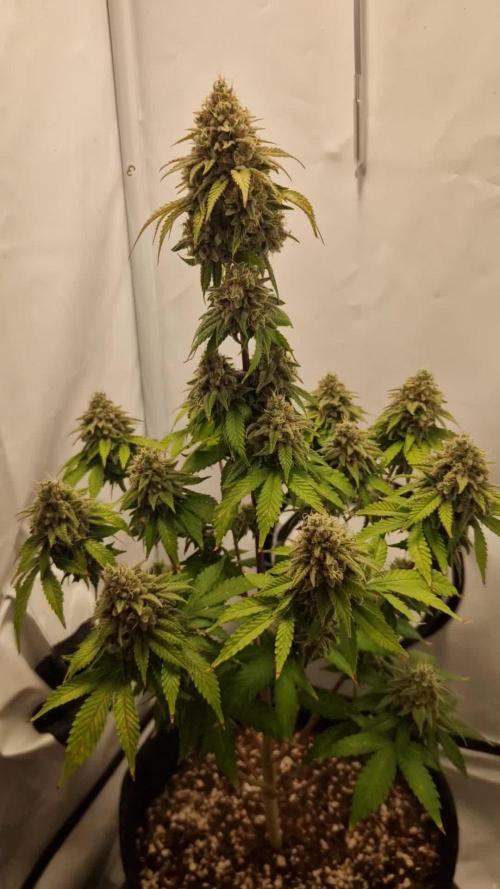
Life has taken some very unexpected turns, so I’m just posting a few pictures for now. I’ll probably only post another update once the harvest is done. In July, I’ll be moving to a new apartment with some extra space, and I’m planning to extend the growing area.

Likes
8
Share


@MaxGrowCanada
Follow
These plants are loving life.
Upped the food a bit this week, the dinamed was looking a little hungry.
I will snip clones clones tomorrow.
Hopefully I will have the flowering setup finished soon so I can move these girls over.

Likes
18
Share

@TrickzGrowz
Follow
Servus Moin
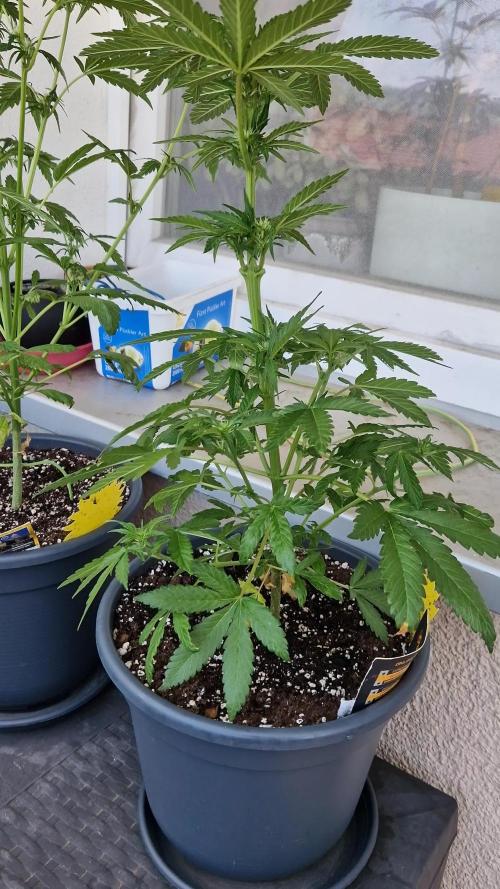
Die Chemical Candy macht sich auch super auf dem Balkon. Ein paar Blätter wurden entfernt damit die anderen Triebe auch genug Licht bekommen.
Likes
5
Share


@BigGGrows
Follow
Took her down at day 94 in her 14th week. I did notice budswelling and density increasing in this final week. She was exposed to heat wave temperatures above 95f degrees in the greenhouse, yet took it well. I just had to water heavier than normal and at a daily rate....a rate of about 1/2 a gallon a day. She was flushed for 2 weeks using only TPS signal, ph water, and unsulfered molasses. She smells earthy, bold, and sweet....like a bold caramel latte.
As soon as the leaves started fading i figured it was time for the chop. Next week (15) will be the actual harvest info, as she is in drying now and weights cannot be supplied at the moment.

Likes
3
Share

@GREENPHOENIX6262
Follow
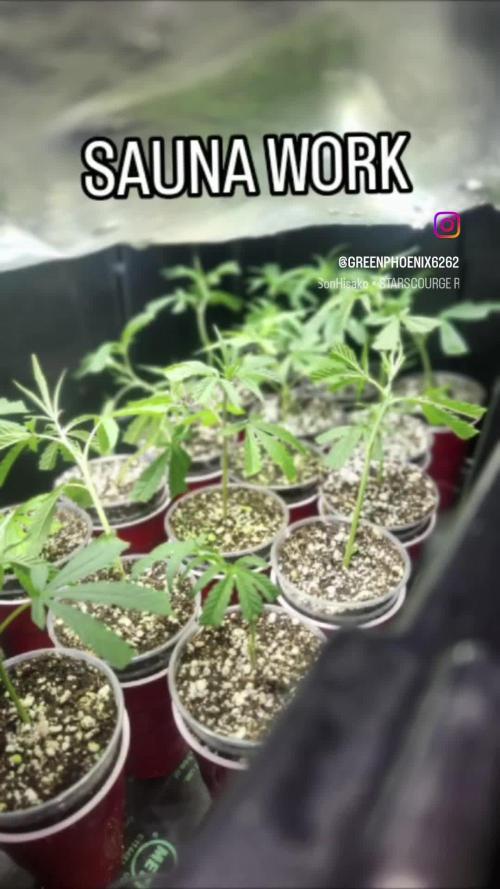
09/03 - Clone cuttings running strong - Chopped the mother - Pulled approximately 17 viable clones - currently in solo cups rooting - Heavy on the humidity prop 80% - Temps 79 (F)
Likes
17
Share

@MyWetPussy
Follow
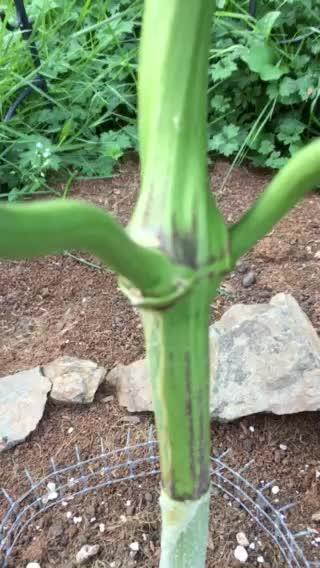
I have been busy and been off gd for a while. Time to finish up on this diary. Plant has done good all summer long. She is getting some good frost to her and is smelling amazing! She had 1 good watering this past week.😍
Likes
86
Share


@Tropicannibis_Todd
Follow
ALRIGHTY THEN
REMINDER I DO 2 UPDATES PER WEEK 👉WEEKLYROUNDUP👈👉MIDWEEKLY UPDATE👈
At this very moment , hint of Grape Crush Soda smells 😛 Which is awsome
We just hit week 9 and all is well , for the most part , I'm sure I'd be further ahead if it wasn't for the cal/Mag issues early in its development 😃 .......
👉 Baby Sister Plant #2 Is 7 weeks 49 days from seed and coming along great 👈
rain water to be used entire growth👍
Lights being readjusted and chart updated .........👍
I GOT MULTIPLE DIARIES ON THE GO 😱 please check them out 😎
👉IF ANYONE IS LOOKING FOR A PLACE TO HANGOUT VIA GROWDIARIES AND TALK GROWING AND JUST CHILL AND WHATEVER .....👈
👉I CREATED GROWDIARIES DISCORD SERVER !!!!!!!!!!!👈
LINK IS 👉
https://discord.gg/zQmTHkbejs
AND SEE HOW IT PLAYS OUT !!!!!!!
Likes
87
Share


@Mrs_Larimar
Follow
2021-11-26
The Pudding is a real Growmonster!
Shes supersturdy and has big thick Branches, and leaves like Sandpaper.
She reminds me in a Superskunk Plant
She is barely to tame, and weare shortening the planned 12 Weeks of Vegetation to 10 Weeks Vegetation
So only looking to get 16 Colas .
I managed it to break 2 Tops, 😰, but she looks as if she dont Care
2021-11-28
I made some more Training on the Puddin- to reach the 16 Colas
I managed it , without hurting her Iam proud to myself
Her stems are so strong and sturdy
@Silky_smooth told me to let her dry out a little, then shes easier to tame
But i prefer it that way, as always Iam learning by doing
so we are coming closer, 3 more Weeks for her in vegetation
Big Shout- Out to @urban_chili
For sending this wonderful complete Growbox named „urban Chili 3.0“ for our CHARITY GROWOFF
@mrs.larimar and me, are using the same Equipment for this entire Grow.
We are having space 45x60 cm and 130 cm in Hight.
The lights are supereffective 85 Watt Quantum LED, made in Austria.
We are using the same Strain, the same Growbox.
So it will really just come down to Skill and Mastery of the Grower....
With this Event, we want to be there for Woman in Need of Help.
And Support those ,who are less Fortunate than us.
We feel like, we are so Blessed for what we have, that we feel Obliged to give a bit back to the Community that we so dearly Love...
During the „GROW OFF FOR CHARITY“, @Weedseedsexpress will Donate 100 Euro per Month to our Charity Goal and an additional 500 euro's by the End of he Contest, if we reach at least 2000 Likes on our weekly Posts
on Instagram.
The other Companies who are Sponsoring our „ GROWOFF FOR CHARITY“
are giving us Products and Merchandise from their Companies. And they help Promote our „ Growoff“
There are coming some AUCTIONS and GIVEAWAYS fort Horticultists
The „GROW OFF FOR CHARITY“ is Sponsored by:
( Named in Order of Appearance)
@weedseedsexpress
@urban_chili
@greenbuzzliquids
@Herbiesheadshop_com
@genoneeleven_nutrients
@zamnesiaxseeds
@spilffseeds
@Inseediousseeds
@sgreenlab
@viparspectraled
@cannabonsai_¬manny
·
PLS FOLLOW OUR SPONSORS!
·
LIKE AND SHARE This Posting!
·
To Reach the 2000 Likes per Week!
Processing
Likes
11
Share


@CocoLogic
Follow
Sept 20th: (F34)
Fertigation once a day with NEW recipe (1300 EC 6.1 PH) watered until 10-20% run-off
Sept 21th: (F35)
Fertigation once a day with same recipe (1300 EC 6.1 PH) watered until 10-20% run-off
Sept 22th: (F36)
Fertigation once a day with same recipe (1300 EC 6.1 PH) watered until 10-20% run-off
Sept 23th: (F37)
Fertigation once a day with same recipe (1300 EC 6.1 PH) watered until 10-20% run-off
Sept 24th: (F38)
Fertigation once a day with same recipe (1300 EC 6.1 PH) watered until 10-20% run-off
Sept 25th: (F39)
Fertigation once a day with same recipe (1300 EC 6.1 PH) watered until 10-20% run-off
Sept 26th: (F40)
Fertigation once a day with same recipe (1300 EC 6.1 PH) watered until 10-20% run-off


Likes
2
Share

@Emerald_Gardens
Follow
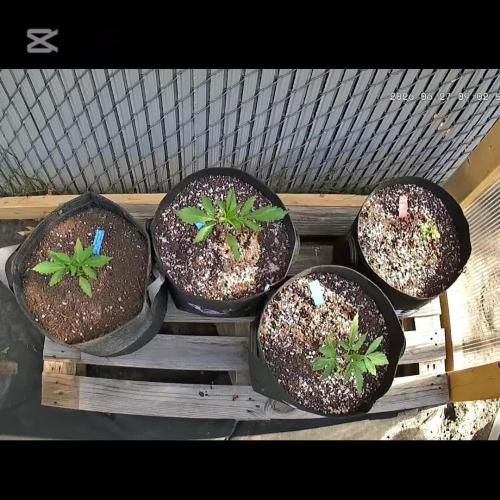
Week 3 shows good growth and showing signs of needing food. The OG is the tallest with the purple lemonade not far behind. This is the week that the Fast Berry is getting tossed and replaced with a mystery strain that fell out of its container. Next week feeding will begin. Starting with a compost tea. You can see the mystery strain is much more compact than the other 2 due to good indoor LED lighting.