


Likes
Comments
Share


@CanarianGrow92
Follow
Amazing plant, very high in thc and some very nice sweet and fruity terps, something like a banana punch strain.
The buds are nice and hard and i got 2 outstanding phenotypes with extreme thc production, in general the terps are quite the same on all plants. These girls are very easy to grow and not much of expertise is needed, we just gave some greenhouse biogrow and biobloom together with some sugars and other addictives.
In 7 liter pots we got around 35-40g per plant which is quite good.
These plants showed good resistance to lollypop and other HST

Likes
12
Share


@Kingseeds
Follow
This strain has a yield of extra large, compact colas that are heavy in weight and covered in extra adhesive trichomes that stick to your fingers. Cherry Punch's exterior is dark green and exhibits small amounts of midnight purple leaves
Cherry Punch's exterior is dark green and exhibits small amounts of midnight purple leaves. Its aroma is fruity but skunk-like, and has a soft, sweet berry taste that resembles its parent Purple Punch

Likes
9
Share


@M3_Growing
Follow
High hopes for next week, just bought Biobizz Trypack Indoor and BioBizz ActiVera.


Likes
17
Share


@Dineh
Follow
hello fellas
have ya seen my clone that refuses to grow
it is still alive making only three finger leaves
i should kill it
but i cant lol
gonna see where that brings us
looks like i am gone be in flower for about nine weeks
THREE WEEKS TO GO
i see the cola formation growing
in am thinking if i would feed them this week
they now have got three waterings
plain water
i guess i am gonna do that
600ml every other day
biobizz + water

Likes
9
Share


@Cannabot
Follow
Awesome plant,smell is super sweet yeah.Seems to be a bit nute sensitive so I've slacked down a bit.Buds are very dense hard nugs.Not too many leaves etc so trimming shouldn't be an issue.
Likes
19
Share


@eldruida_lamota
Follow
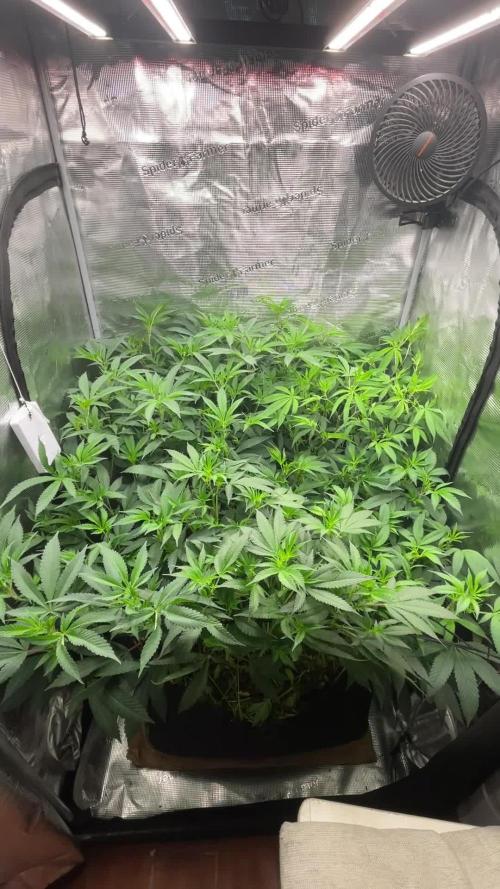
Vamooos familia, y es que nuestras gorillas girl de sweet seeds son increíbles, tienen un grosor de 7mm en el tallo a mitades, brutal, y eso que las tenemos en 5,5litros.
Ph controlado en 6,5 tenemos humedad y temperatura dentro de los parámetros, pronto empezaremos aportar overdrive ya que es una cepa la cual sacaremos el máximo partido a las flores.
Me a flipado mucho el crecimiento en si de esta sativa, tienen pocas hojas y son bastante grandes en comparación al resto.






Likes
4
Share


@SamDo
Follow
🇺🇸 Grow Journal – Week 12 | Pineapple Upside Down (Veg)
Week 12 of veg — the Pineapple Upside Down is cruising steady and looking stronger than ever.
I’ve been letting her just do her thing, focusing on recovery and structure before deciding if I’ll top her later.
At this stage, it’s all about patience and letting her build up natural vigor.
Nutrient-wise, still running the Athena Blended line, holding the mix at EC 1.4.
I’ve been experimenting with Athena Balance, and I have to say — it’s impressive.
My base water pH usually fluctuates between 6.3 and 6.8, depending on the day.
I add 1 ml of Balance, which actually brings it up close to pH 9.3.
Once the nutrients are mixed in, the solution drops back down to around pH 7–7.2,
and from there I fine-tune it with a touch of pH Down to land right around 6.0–6.1.
I allow a gentle drift down to 5.8, but whenever it hits that mark, I bump it back up slightly to keep things steady around 6.1–6.2.
Honestly, Athena keeps the reservoir incredibly clean — crystal clear every time.
It’s one of those small details that really makes a difference when you’re running hydro long-term.
Temperatures are holding around 22–23°C, with humidity between 70 and 75%,
which keeps the environment perfect for steady vegetative growth.
She’s lush, healthy, and just waiting for her turn in the flower tent —
if I had more space, she’d probably be flipping already.
That’s about it for this week — nothing flashy, just solid progress and patience.
Can’t wait to see how she performs once she hits flower.
Thanks for following along, growers — see you next week! ✌️🌿

Likes
33
Share


@Rollex420
Follow
Impressive how this plant managed to grow despite the few hours of light .. I guess what it could do with a better season than this year (there has been a lot of rains) and in a place where it grows with constant light.. anyway I am very happy with her, I would also say proud of how the growth went.
In the last few weeks, as you can see, the plant has suffered an attack by caterpillars that have eaten some of its leaves in a short time, the plant has remained very strong anyway. I tried to remove them manually until they disappeared completely
Before proceeding with the cut, I put the plant in the dark for 48 hours, further stressing it by shocking the roots with ice cubes. I've never used these two methods, but I've heard a lot about them. some say it is useless while others say that these methods work to increase the production of trichomes and terpenes. We'll see, I'll share my experience with you as always.
Also follow me on Instagram for daily updates!
Keep growing fam!
Much love 💚

Likes
12
Share


@Livewire99
Follow
This week I assembled the new 48x48x80 Mars Hydro tent and installed the new FOHSE Aries 600W LED light. I set the dim to 75%, but after two days, it was clearly too much, especially for 20 hours per day. I will dim it way down and shorten the hours until the plants appear to be doing better.


Likes
9
Share


@RSAFirstOrganicGrow
Follow
I took a sample off the bud to see how it’ll look dried, so the plan is to cut the plant off Sunday! All I wanted is something to smoke and at this point I’m happy that seems to be the reality after the drying&curing process! Amazing feel! Some powdery mildew starting but shouldn’t be a problem if I cut soon!

Likes
3
Share


@GeminiCQC
Follow
They finally started stretching a bit. Had me worried that they would be forever stunted.


Likes
23
Share


@Fatnastyz
Follow
11-15
She is inching to the finish line!
11-17
Shell be thirsty tomorrow, fun with pics
11-18
So when ai wike up, figured ill cut her tomorrow.
Normally I dont do this, but I turned off the lights. They will be off till cut her. 😁
Figured what the hell, never done this. So I covered the top of soil with ice and crushed ice.
Eventually Ill try it all. 🤣
Choppy time 💪🤘
.



Likes
6
Share


@masterofsmeagol
Follow
5/11 I DID NOT WATER. A COUPLE LOOKED DRY BUT STILL HAD HEFT AND I COULD FEEL MOUSTURE IN THE SOIL. I should've taken more pictures. I forgot it's a new week. Oh well. I'll be back over and I'm planning to bring the girls outside for the first time if it warms up a little more. It's windy as fuck but I can put them in the garage with the doors open. As long as that's not the direction of the wind. I raised the L.E.D light and lowered the hps. I also TRIED to FIM a 10th planet and an mk ultra. I may have just topped them. We'll see how it turns out before I do anything to the others. Pink kush grows slow and compact. Very similar to my experience with purple punch. I have two plants that have slightly twisted leaves. Nothing else is wrong with anything. Looking at the stippling on the leaf I think it might just be either low humidity or slight wind burn or a combination of the two. Now that I've looked again I think it might just be the first 5 finger leaf on those pink kush that I mat have mistaken. I'll keep an eye out. I feel better having done some research. I'll put some more pictures up and I'll update what it is that I get done.
EDIT: WENT BACK OVER AROUND THREE. EVERUTHING LOOKED GREAT AND THE LEAVES WETE PRAYING ON SOME. I MAY NEED TO WATER SELECT PLANTS TOMORROW. I'LL PLAY IT BY EAR. LOWER THE HPS AND RAISING THE LED WAS A WISE CHOICE I THINK. OH AND THE "TWISTED" LEAF I WAS WORRIED ABOUT IS NOTHING. JUST THE FAN TO CLOSE AND A FOMBINATION OF LOW HUMIDITY AND MINOR HEAT STRESS. ITS BEEN TAKEN CARE OF. I WANTED TO BRING THE GIRLS OUT TODAY. ITS SUNNY AND 60° BUT THE WIND IS WHIPPING! WE'VE GOT GOOD WEATHER COMING UP THOUGH WITH TEMPS IN THE 70'S. I THINK TOMORROW ILL CLEAN/SANITIZE THE CAGE AND WASH/SANITIZE THE GROW BAGS.
5/12 Looking and lifting some of the pots I found some that were pretty much totally dry. I watered the majority of all the plants. If soil was moist I left it alone. If it looked a little dry I gave it a little water. I didn't measure the water but it wasnt even ALL of what I had left from LAST WATERING (which was like a qtr gallon If that). I just don't want to over water. The ones that I went light on last time were the ones that were dry. Plants seem to explode after watering but this wasn't nearly as much. Everything is looking great. It's easy to tell these are all indicas due to the structure and leaf shape. Much different than even the Chem Dog #4 which doesn't LOOK as "indicay" as some of the others. I wanted to bring them outside today but it's only 50 out. I'm not going to make the same mistake as years past and stress the plants. When we get a nice warm day I'll bring them out. Other plants are ready to be topped or fimmed but I haven't done it yet. Also need to clean the cage and wash the bags.
5/13 It's 60° at 9am so I think the girls will be going outside for a little bit. Didn't fully water but I used what was left of the gallon and gave them that. Some are much drier than others. I'll probably give them a full watering tomm. I only gave them a little today because I didn't want them drying out. I FIMMed a Special Kush today. WE'LL see how the hst turns out.
EDIT: WENT AND BROUGHT THE GIRLS OUT FOR FOUR HOURS IN INDIRECT SUNLIGHT. THE TENTH PLANETS WERE THE ONLY ONES THAT LOOKED LIKE THEY HAD AN ISSUE. JUST MINOR HEAT OR LIGHT ISSUES WITH A COUPLE FAN LEAVES. EVERYTHING ELSE SEEMED LIKE THEY SHOT UP IN SIZE. THE LARGER CONTAINERS STILL SEEM KINDA MOIST BUT SOME ARE DRY. I NEED TO GET ON A STABLE WATER SCHEDULE. ITS HARD WITH DUFFERENT PLANTS OF VARYING SIZES. STILL HAVE A LOT OF WORK TO DO.
5/14 One plant was super light today and was a little droopy. I WATERED EVERYTHING TODAY USING APPROX A HALF GALLON. I brought them outside for the second day. I left them out for about 3hrs. It's hot today. I'm still floored that chatgtp gave me exact directions for hardening my plants off at my exact location taking the weather into consideration! That is awesome. They're all doing good. Pink kush is the slow starter this year. Kind of like purple punch was. The only plants that had ANY damage on them was the two 10th planet's and its not really damage. It's just a LITTLE mottling on the leaf and the serrations pointing down. It's weird because this strain did great here last time. The Special Kush #1 and the Pink Kush would probably be fine to leave out soon. Hindu Kush parents make those strains extremely resilient. The one chem dog #4 looks out of place with all tjis big fat indica leaves. I'm hoping the topping and fim-ing will take. It looks like it will.
5/15 Everything is looking great! I have some work to do bit then I'll be over to bring the girls out for a few hours. I'll edit this when I do.
EDIT: BROUGHT THE GIRLS OUT FOR THREE HOURS TODAY. I THOUGHT THE TENP WENT DOWN TO 73 BUT TUAT WAS INDOORS. OH WELL. THEY STILL DID GREAT! THEY WERE ALL LOOKING OUT OF THE LEAN-TO LIKE SUNFLOWERS! THE STRAIGHTEN OUT AFTER BEING UNDER THE GROW LIGHTS. I'M PLANNING TO CONTINUE TO HARDEN THROUGHOUT THE WEEK. STILL NEED TO CLEAN BAGS AND GROW AREA. I HAVE 'A' CAMERA DOWN. TRIED TO FIX IT TODAY BUT I WOULD GET RO THE LAST PART BUT THE CAMERA WOULDNT READ THE QR CODE ON MY PHONE. I EMAILED THE COMPANY BUT IF I DONT HEAR BACK BY TOMORROW AND I CANT FIX IT ILL JUST BUY ANOTHER CAMERA TO ADD TO THE SYSTEM. ITS THE OLDEST CAMERA I HAVE AND ITS DONE ME 5 GOOD YEARS. MAYBE ITS TIME TO RETIRE IT.
5/16 I watered a few of the girls this morning with a small ring around the pot. I brought them outside and am leaving them for 3.5 hours today in the lean-to. They get indirect light without all the wind this way. I'll slowly increase the hours outside until there is enough daylight for them to go outside without revegging. When I put them out I noticed that a few were light and since it was close to 80° I watered most everything. I used under a half gallon. I'll see how they do from here and then move forward. I fixed my down security camera and secured my cage. Now I just need to finish hardening off, clean/sanitize bags/environment and put them in tjeir final homes. I'm not rushing it though. I've learned my lesson with that.
5/17 Plants did great yesterday and were perky and praying this morning. It was HOT yesterday too. Got into the low 80's. It's 57° degrees at 9am and it's overcast and sprinkling. I haven't decided if I'm going to bring the girls out today. It might be a good day to try some direct sunlight. I'll update whatever I decide to do.


Likes
9
Share


@cannanova
Follow
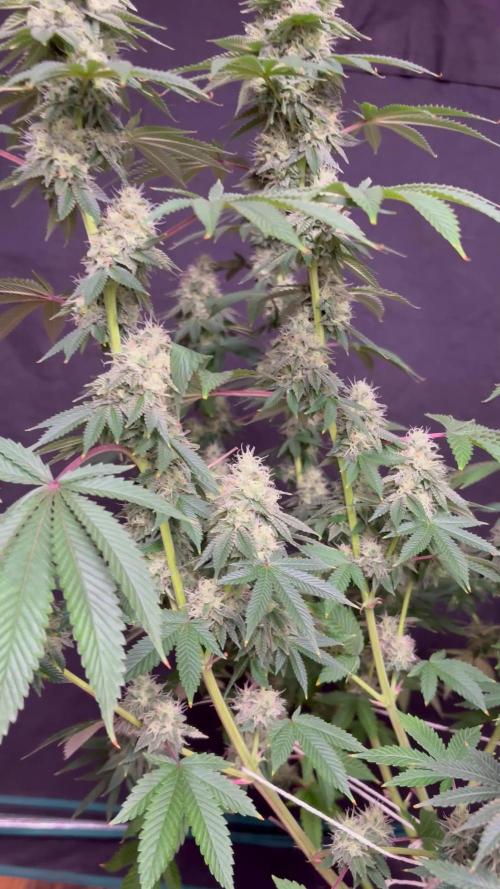
Day 14: This week I'm increasing the humidity inside the tent with a wet towel and containers with water. I also removed the half bottles that were over the plants to generate extra humidity, because they got burned because of that, as you can see in the leaves, there are some brown snipes.
Day 15: I added a towel and containers with water inside the tent to increase humidity, I managed to bring it up to 67% in some parts of the day.
Day 16: I'm convinced Mario has thrips. I will add Potasium Soap in a couple days to kill any thrips possibility, and also add a moistmeter in the soil to know exactly if I'm overwatering or not.
Day 18: Started with the feeding. Rizothonic + Vega at 25% of the recommended dosage. Added just 12ml of water on each plant. I don't want to overwater. Also added a new fan to the setup.
Day 19: Added Potasium soap to the leaves during the dark hours. They look better already.
Day 20: Added water + Solution of water with 25% nutrients I already created on day 18. I'm going reeeally slow with nutrients.
D21: Forgot to make photos. Sprayed potasium soap solution at 2% over the plants, to avoid any pests.



Likes
9
Share


@JuicyFruit
Follow
Day 41 - 07/12/19
This one has grown a hell of a lot of fan leaves. had to pluck a lot of them. now the light can penetrate lower growth.
theres a lovely NYCD smell coming from this one! smells amazing!
Height is 36cm at the tallest cola and thats with a big LST. trying to keep height down as i have not added rope rachets to my lights yet.
Im gonna be giving a fair bit of Nitrogen this week (Canna A), potassium and phosphorus (Canna B) as flowering stage is here :)
Changed Ph from around 6.6/6.7 - 6.3
Added a few pictures and a video to show progress from last week.
not much else this week just happy little plants!
Day 43 - 09/12/19
Just rotating the diesel now twice a day so it all gets light coverage as im keeping my Quick One plant mostly under the flowering lights until its harvest next week. apparently the quick one has a polyploid mutation causing it to have a much bigger yield. so i think it deserves the light for a few more days.
The diesel is still giving off that lovely smell and getting bigger every day. its definitely wider than my quick one and soon to be taller. Had to defoliate some of the bigger fan leaves to allow more light through to lower growth as the odd fan leaf was turning yellow.
Ive been feeding 2 times with nutes and water phed and giving only phed water on the third occassion to prevent salt buildup and nutrient toxicities.
Check out my other diaries if you get a chance and keep on growing!
Likes
8
Share

@TheGreenfulOne
Follow
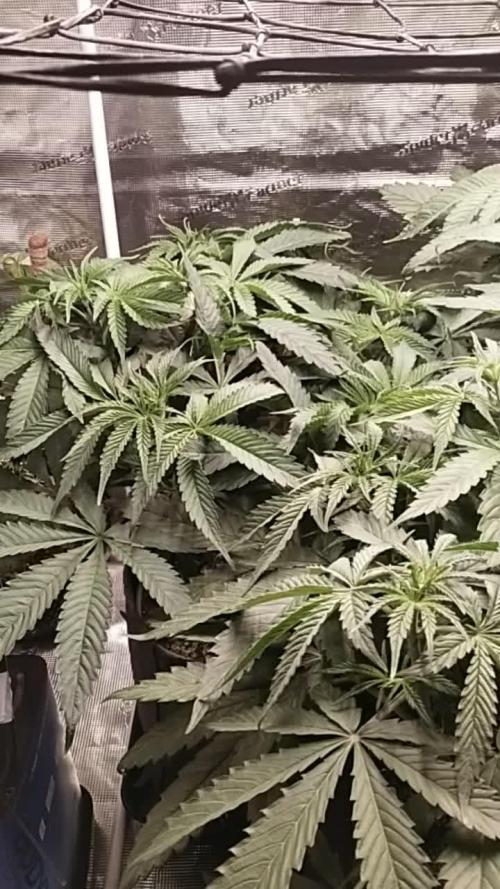
All three plants are forming an even canopy (the youngest one is on a 10 cm stand). The bottom leaves have been lightly removed, and the bloom phase is planned in about a week.


