




Likes
92
Share


@CachimboDaPaz
Follow
I'm still waiting for the buds to dry so i cant put the numbers :D great experience.
Next time i will pay way more attention to the last part of the grow....unfortunately i've been so busy and i coudn't take care of them as i wish.
I am absolutely Happy with the results...I'm conscious I've made some mistake and neglect them for a while...but I'm still happy with my first grow...I've got a lot to learn and it's just the beginning.
Happy grow to everyone. Thanks to everyone who helped me with many suggestions...and thank you to those who tried to help me but I still did it my way (sometimes doing it good and sometimes doing it wrong).
Se you soon Growmies


Likes
2
Share

@GoodTimesOrganics
Follow
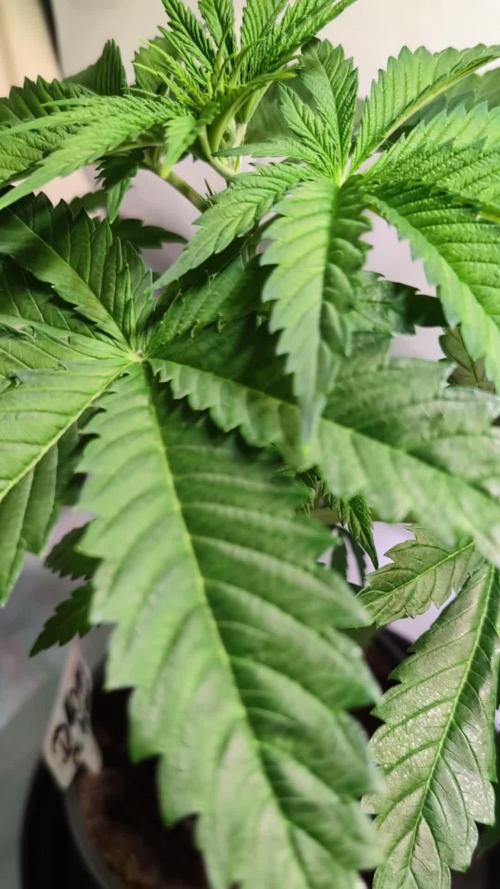
Hi liebe Community and Welcome Back! 💚🌱 We proud to present the second Strain from Good Times Genetics!
Die Wuchsform der Pflanzen wirkt bis jetzt sehr homogen, es ist zu beachten, dass natürlich die einen etwas schneller wachsen, wie die anderen.
Auch die Stielbreite unterscheidet sich etwas.
Insgesamt wirken die Jungpflanzen allerdings sehr kompakt, was eine gewisse Indica Dominanz vermuten lässt.
Das ist auch so gewollt.
Ich werde immer wieder verschiedene Pflanzen der gleichen Zucht dokumentieren und nach der Geschlechtsbestimmung dann Herausfiltern, welche zwei Pflanzen für die Fertigstellung des Diaries in Frage kommen.
Die Wachstumsbedingungen im Growzelt sind weiterhin am Optimum und Stabil:
———————
🌞 Temp: 23°C
🌚 Temp: 20 °C
💨 RH: 58%
VPD: 0,86 kPa
😎PPFD: 330 mqm
———————
Stay Tuned! 💚


Likes
16
Share


@JUNGLE_B4RNS
Follow
Skunk Special, a.k.a. Red Skunk, stems from the infamous Red Skunk clones that conquered the Netherlands in the late eighties/ early nineties. Ferry started working on the Skunk Special in the nineties. The Skunk Special is the result of several S1 lines inbred with a 25% of Automatic. The current line was selected over several generations in order to retain the right and essential Skunk features, yet creating a fast flowering strain.
Showing almost no variety between the individuals, this is among the most stable and homogenous strains since it was selected from a few thousand plants. This Skunk Special is a powerful and strong plant with thick, solid stems, creating massively tight buds during the flowering stage. The Skunk Special has gorgeous looking red pistils that give this plant an amazing bag appeal.
Skunk Special is suitable for indoor, greenhouses and outdoors if grown in temperate and/or the warm Mediterranean climate. It is a massive yielding outdoor behemoth with amazing trichome production.
The smell can be described as extremely pungent and citral with the classic cat-piss smell of the old-school Skunk. It is a very clean smoke. A Skunky and slightly sweet taste that is pleasantly acidic towards at the end. A mildly relaxing body high that causes a tingling sensation combined with a very pleasant head high.


Likes
3
Share


@samuraifroggig
Follow
She got to big for the 2x2x4 so I had to move it to a bigger 2x4x5 that has a new never before used 320w kingbright so this whole grow is evolving as it goes I had no clue that hydro and 200w in veg would make the plant this big. Temps are much easier to control now in the bigger setup. the 7 gallon res. is loseing about 1 gal a day I top it off and check PH/EC once a day it almost never needs adjusting so that is really nice.

Likes
18
Share


@Strainguy
Follow
Plants look good, getting super bushy. Still quite hot, cant go full power, also not able to use under canopy because if it. Waiting for colder weather :)
Lights running: 55%
Added a timelaps, hope you like it. If yes, I will try to make even better ones :)

Likes
58
Share


@Gisbert
Follow
Die letzte Wachstumswoche ist für Dame angebrochen und die Sonne ist seit 2 Tagen wieder verschwunden. Nächste Woche Mittwoch kommt Sie für 2 Tage ins dunkle um dann geerntet zu werden. Danach lasse ich Sie für 2 Wochen kopfüber trocknen. Schon jetzt bekommt Sie nur noch Wasser. Ich habe auch noch einmal ein paar der verbliebenen Fächerblätter entfernt. Es ist Tag 80 und die Zeit der Ernte rückt immer näher. Ich habe versucht alle Blätter entfernt die keine Trichome tragen. In dieser Woche gab es nur Wasser.

Likes
27
Share


@TheCannaProphet
Follow
-----------------------------------------
~BARNEYS FARM DOS SI DOS 33™️~
-----------------------------------------
This strain from 'Barneys Farm’s Cali Collection gets another jolt of super power with this explosive collection of terpenes fused together from some of the world’s most astounding US cannabis phenotypes.
Dos Si Dos was developed from OG Kush Breath, a knockout Girl Scout Cookies pheno crossed with Face Off OG, then crossed again with their legendary Cookies Kush (OG Kush pheno x GSC) AND THAT’S ONLY HALF OF THE STORY.
Add in a subtle blend of Gelato #33 to the pot with its star struck Sunset Sherbet x Thin Mint GSC heritage and boom! A new champion was born: a sativa burst of euphoric energy is followed by tranquility with sedative properties capable of happily tranquilizing an elephant, if you’re overzealous or uninitiated!
DOS SI DOS 33™️ Cannabis Seeds Strain Specifications
~Type: Feminized
~Photoperiod: Normal
~Genetics: Dos Si Dos x Gelato #33
~Effect: Relaxed, Sedative, Happy
~Outdoor Yield (g): up to 2000
~Indoor Yield (g):up to 700 gr/m²
~Flowering Time (days): 60 - 65
~Feminized Outdoor Harvest Month: October
~Feminized Outdoor Harvest Month Week: 1st-2nd week
~Height Indoor (cm): 90cm
~Height: Short
~Indica %: 60%
~Sativa %: 40%
~Indica/Sativa: Mostly Indica
~Taste: Mint, Lime, Spice
~Aroma: Cookies, Sherbet, Lime
*Above information credit to Barneys Farm
__________________________________________________________________________________________________________________________________________________________________________________________________________________________________________________________________________________________________________________________________________________________________________________________________________________________________________________
THE SETUP:
~Planted into Jiffy Peat Pellets that were hydrated with de-chlorinated water with SuperThrive added then ph'd to 6.0 @ 80℉
~Grown 100% organic in 10g fabric pots with Mother Earth 70/30 Coco/Perlite medium amended with 2tbs/g of Down To Earth 4-4-4 / 2 cups/g of Earthworm Castings / 1tbs/g of Dr. Earth Flower Girl 3-9-4, 1tbs/g of Dr. Earth Bat Guano, 3/4 cup of Down To Earth Azomite and 1 tsp/g Down To Earth Fish Bone Meal.
~24hr light cycle during Germination / 19/5 light cycle for Vegetation and 12/12 for Flower
~Straight water ph'd @ 6.2-6.8 when needed and weekly Compost Tea's.
__________________________________________________________________________________________________________________________________________________________________________________________________________________________________________________________________________________________________________________________________________________________________________________________________________________________________________________
Weekly Updates:
10/11- Week Nine! Here we go on our way to sticking a fork in this run!
She hasn't really showed any signs of a fade and she's putting out trichomes like crazy and I'll let them indicate when it's time to put her in the dark before she's harvested! I'm hopeful that possibly by the end of this week she'll be hanging after she spends a couple of nights in the dark.
I watered today using straight water that's ph'd to 6.5-6.7 @ 72℉. I gave her a little over 1.5g to keep her flush going and then turned her pot.
Trichome status: 80% milky / 20% clear
10/13- I watered today with 1.5g of straight water that was ph'd to 6.5-6.7 @ 72℉ and gave her pot a turn.
Her trichomes are almost where I like them and more than likely she'll be going in the dark by the weekend! What a beautiful cultivar she is! 🤩💚
10/15- My routine of watering every other day continues. Yesterday I watered her with her usual 1.5g of straight de-chlorinated water that was ph'd to 6.5-6.7 @ 72℉ and gave her pot a turn. Today was just spent checking her over, turning her pot and doing a quick check of her trichomes which are close, but not quite ripe enough yet!
10/17- Wow!... Nine weeks of flower DONE! 😎👍
Now my sights are set on getting this girl finished up and on her way to 48 hours in the dark before she's hung to begin drying.
I went ahead and watered her with her usual 1.5g of straight de-chlorinated water that was ph'd to 6.7 @ 72℉ and checked her trichomes, which are looking just about right!
This journey is coming to a close in the next couple of weeks with her harvest, drying and trimming up. I so appreciate you following along with me , it's been a blast sharing with you all! 😎🙏
~Thanks so much for checking out my diary! This epic run is in the home stretch with harvest fast approaching...Stay lifted and be Blessed! 😎🙏~

Likes
28
Share


@GodZilla_Owner
Follow
The plants have already been topped. Today, on 25-05-2024, two large leaves were removed, covering the sprouts.
The LST was done at the same time.

Likes
2
Share

@00110001001001111O
Follow
Total days above ground: 63
Total flower nights: 24
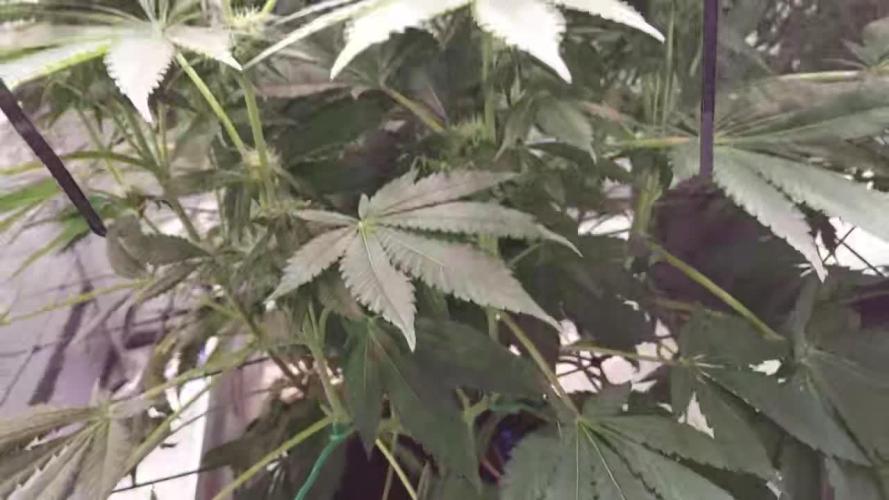
Just beyond 3 weeks into flower and the plants are showing their potential. Even the 2 smaller Kush Mints have really come on strong in flower. Can barely tell they were under-sized at this point. Still have a little more compact structure, but spreading it out with some garden wire really allowed it to power its growth. Yield should be in line with the others. The KM3 had a strong minty smell last week, but that's mellowed out a bit since.
All of the MSNL plants are robust and strong. Second grow with excellent results from this breeder. I did not pay for these seeds, but I am not a shill, either. If one of them grew all whacky like the mountaintop mint, I'd voice the same complaints. The clearly care about such traits in their selection process.
Overall the canopy has filled in nicely. I have a couple spots where light is wasted and I'll make some adjustments to the process to fix that for future grows. Now that I've settled on plant size and number of plants, improvements can be made each cycle until it's clockwork. I like the 12-cola vs 8 cola experiement. I've got a fairly long list of edits to make to various sections of my "bible," which means I liked the outcomes of most of my incremental adjustments. Continual, systematic improvement in action...
One other incremental change on the docket but not yet realized will be dropping nutrient concnetration once vegetative growth ends. Exact timing will be based on what I see in the foliage. I see some minor tip curl and its a bit darker than I want. So, it may come sooner than later. This'll be something I tweak over the next few grow cycles until I'm happy with the late-flower health.
I'll drop fertilizer concentration 10-15% on next refill and see how that plays out. It'll take a couple refills of reservoir to near 100% transition without draining it. If necessary, I'll drain and do a full refill for more pressing needs. A rez scrub before final stretch is coming, regardless.
Side note:
The impacts of VPD can be enormous. Last year (2025-2 diary) I had a humidifier wick get fouled and RH dropped while VPD spiked for more than a few days, thinking I could power through or that the canopy would soon provide more moisture. Nope, growth stalled in a significant way. By comparing day 34-42-49 of 2025-2 and day 38-42-49 of this diary, I can see a huge difference in growth at same point above ground. The consitency with which i do things makes it fairly certain it's the extende period with extremely high VPDs that caused the difference.
Also, interesting that it mostly catches back up by completion of third week of flower. The size difference is nearly undone by this point, though 2025-2 took 4 days longer vege phase to get there. Even so, I still think this grow is more than 4 days ahead of 2025-2 (the difference in vegetative phae duration). Time will tell if the development is ahead of the pace in 2025-2 or whether it's simply mostly an offset due to a less efficient vege phase for 2025-2.

Likes
22
Share


@PhotonMan
Follow
05/14 500ml of water, PH 6.4, flawless finish 2ml/l.
Aaaaand this is the last week of life for these 3 sisters! Starting flush. I think to harvest in next 7/10 days.
The #3 become yellowish, the #1 has buds with some purple shade, the most beautiful flowers among the 3 plants.
05/15 600ml of water, PH 6.4, flawless finish 2ml/l.
05/16 --
05/17 1lt of water, PH 6.3, flawless finish 2ml/l.
05/18 #2 and #3 are down, this is the end. #1 still under lights, I think to cut it in next 2 days.
05/19--
05/20 #1 is down, GAME OVER!

Likes
16
Share

@TheCannaProphet
Follow
Week 6 of flower! Coming into the final stretch and thankfully this catches me up to the present with this journal. All the girl's are really getting thirsty faster and I've upped their daily to 1gl each with half doses of CalMag+ and PH'd to 6.3. I'll be changing PH to 6.5 for the last 3 weeks of flower to help with their autuming off. The WW is getting so resinous it's ridiculous. Keeping nighttime temps @ 60F and mid 70's during the day with 4 hours of enhanced UV via the HLG UV bar. Supposed to help with tricome and terpene production....we'll see!


Likes
3
Share


@JuanPablo5280
Follow
Final week before chop. She is looking and smelling incredible at this point.
Likes
42
Share


@PapaBlob
Follow
29/12 encore 4 à 5 jour.🤤
01/01 Elle évolue trop bien pour que je la sorte maintenant.🤩 Donc les filles vont ce serrer pour quelques jours. 😀
04/01 Dernier jour. Et mon microscope est en rade..😂 Tout est normal quoi..😋

Likes
22
Share


@MasterKush714
Follow
😎09/26/2023----____👹YOOOO WHATS UP GANG!!!! BIG THINGS POPPIN FOR WEEK 3 LFG👹!!!!!!!!!!!!!________________
_____________________________________________________________________------------------------------________________________________--------------------____________________________
SOOOO TINGS LOL GOING ON THIS WEEK, FIRST AND FOREMOST DOING STANDARD WATERING EVERY 2.5 DAYS, USING THE FOOP NUTES VEG1 AND VEG 2 WITH SWEETNER. SECONDLY, I HAD HER FIRST TOPPING DONE AS YOU CAN SEE IN PHOTOS, SHE IS RECOVERING PRETTY QUICKLY FROM THAT AS WELL. AND LAST BUT
DEFINETELY NOT LEAST, I HAVE UPGRADED SOME HARDWARE INSIDE THE GROW TENT, I HAVE STARTED USING THE MIGRO ARAY 2 +RED 120 W AND I MUST SAY THIS LIGHT
LOOKS LIKE SOMETHING OUT OF A SCIFI MOVIE SUPER SLEEK DESIGN, VERY VERY VERY WELL CONSTRUCTED LIGHT, THE WHOLE THING IS AMAZING TO BE HONEST AND I GOTTA SHOUT OUT TO SHANE TORPEY OWNER OF MIGRO, YOU KILLED IT MY GUY THIS SYSTEM IS A KNOCKOUT. WONDERFUL WORK SIR!!! THAT BEING SAID THANKS FOR STOPPING BY IF ANYONE WOULD LIKE TO COMMENT OR GIVE ANY ADVICE AS ALWAYS IM SUPER THANKFUL FOR THAT THANKS!!!!!!!!!!!!!!!! LETS FUGGIN GOOO!!!!!!!!!!!

Likes
5
Share


@Deli_Weed
Follow
Esta fue una de mi primer cosecha con éxito, esperaba una mayor producción, y mejores efectos y sabor, pero para ser la primera ves esta muy bien 👏🏻 aún me quedan un par de semillas, la próxima ves espero crecerla mejor.