


Likes
Comments
Share


@GuyPablo
Follow
Day 21 since germination, added a little bit of fish mix to watering schedule, a little bit of yellowing on foliage, ph testing RO filtered water and bringing it down very slightly to 6.5, I think possibly the soil as all mix quite nutrient rich to start with so going really easy on the nutes at mo and not too concerned, if it continues or notice more will water till run off check ec of the soil just to be on safe side. Pleased with the amount of growth after 21 days :)

Likes
3
Share


@bigsmoke42069
Follow
Week 8 of flower 9/27/24
Stopped giving T.A. FinalPart after a week because plant showed sings of nutrient burn.
Started watering with only water to leech out nutrients from the media to get the plant to cannibalize itself.
Hand watering ones a day at the beginning of the light schedule.
You can see in the video, one of the colas and the area near it got heavily burned from excessive nutrient salts in the media,
I attribute it to the 3 days I watered the plant without runoff in mid flower.
A couple more days and it is time to chop :)


Likes
5
Share


@hassehujasse
Follow
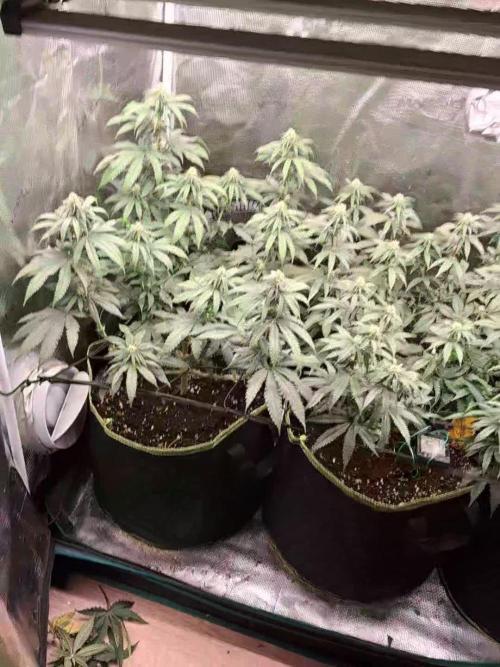
Tomorrow on Youtube. Enjoy ItYoutube staff first for growing community
Soon my girls wake up for hard working day



Likes
4
Share


@Chuckwaggon420
Follow
This clone smells killer omg hash plant/christmas/sweet/heavy skunk. It smells killer and is a decent resin coverage it looks like coming in early like this in week 3 in flower. It filled in the 18"x 24" space i had open just perfect.
She gets a heavy feed of canna nutrients @ ph of 5.6-5.7. I think staying on higher side of nutrients and back off if I see burn has been doing good on chimera run and don't tend to b hurting this clone either so full steam ahead!
Much changes coming for me new flower tent is going to help alot!
Stay up everyone
Happy boxing day all u Canadians!


Likes
6
Share


@TGriner420
Follow
This week went by fast! They're growing really fast and always hungry! They're getting ready for the flower stage and entering Bloom. They're getting 2L of H20 per day that's pH at 6.8. I water 2x a day! I turn them on at 6am and give them 1L of H20 at 9am that way they're awake and 1L of H2O at 9pm that way they're split. I feed my nutrients at the 9am watering. I pH my nutrient mix somewhere between 5.8 and 6.2. I also have amended the soil with Soil Recharge and that's once a week as well as the Fish Shit and The Stash Blend. Then, I always flush with only pH H20 the day after any nutrient mix. Overall, the plants are healthy and I'm waiting to see how they turn out!



Likes
45
Share


@Ultraviolet
Follow
2nd net is up. Early bud formations are promising. holding up to the extremes pretty well, some leaves taking minor damage, but overall, she is holding up, gave her 1 night at 50F see how she would react, stressful. Not advised as it messes with her metabolism, but I want to see if it triggers any anthocyanin response. Love to see her purp up but no signs yet.
My homework.
Rubisco regeneration is intrinsically linked to nitrogen supply because Rubisco is a major sink for nitrogen in plants, typically accounting for 15% to over 25% of total leaf nitrogen. The regeneration phase itself consumes nitrogen through the synthesis of the Rubisco enzyme and associated proteins (like Rubisco activase), and overall nitrogen status heavily influences the efficiency of RuBP regeneration.Structural Component: Nitrogen is an essential building block for all proteins, and the sheer abundance of the Rubisco protein makes it the single largest storage of nitrogen in the leaf.
Synthesis and Activity: Adequate nitrogen supply is crucial for the synthesis and maintenance of sufficient Rubisco enzyme and Rubisco activase (Rca), the regulatory protein responsible for maintaining Rubisco's active state. Nitrogen deficiency leads to a decrease in the content and activity of both Rubisco and Rca, which in turn limits the maximum carboxylation rate, Vmax, and the rate of RuBP regeneration Jmax, thus reducing overall photosynthetic capacity.
Nitrogen Storage and Remobilization: Rubisco can act as a temporary nitrogen storage protein, which is degraded to remobilize nitrogen to other growing parts of the plant, especially under conditions of nitrogen deficiency or senescence.
Nitrogen Use Efficiency (NUE): The allocation of nitrogen to Rubisco is a key determinant of a plant's photosynthetic nitrogen use efficiency (PNUE). In high-nitrogen conditions, plants may accumulate a surplus of Rubisco, which may not be fully activated, leading to a lower PNUE. Optimizing the amount and activity of Rubisco relative to nitrogen availability is a target for improving crop NUE.
Photorespiration and Nitrogen Metabolism: Nitrogen metabolism is also linked to the photorespiration pathway (which competes with carboxylation at the Rubisco active site), particularly in the reassimilation of ammonia released during the process.
To increase RuBisCO regeneration, which refers to the process of forming the CO2 acceptor molecule Ribulose-1,5-bisphosphate (RuBP) during photosynthesis, the primary methods involve optimizing the levels and activity of Rubisco activase (Rca) and enhancing the performance of other Calvin-Benson-Bassham (CBB) cycle enzymes.
Biochemical and Environmental Approaches:
Optimize Rubisco Activase (Rca) activity: Rca is a crucial chaperone protein that removes inhibitory sugar phosphates, such as CA1P (2-carboxy-D-arabinitol 1-phosphate), from the Rubisco active site, thus maintaining its catalytic competence.
•Ensure optimal light conditions: Rca is light-activated via the chloroplast's redox status. Adequate light intensity ensures Rca can effectively maintain Rubisco in its active, carbamylated state.
•Maintain optimal temperature: Rca is highly temperature-sensitive and can become unstable at moderately high temperatures (e.g., above 35°C/95F° in many C3 plants), which decreases its ability to activate Rubisco. Maintaining temperatures within the optimal range for a specific plant species is important.
•Optimize Mg2+ concentration: Mg2+ is a key cofactor for both Rubisco carbamylation and Rca activity. In the light, Mg2+ concentration in the chloroplast stroma increases, promoting activation.
•Manage ATP/ADP ratio: Rca activity depends on ATP hydrolysis and is inhibited by ADP. Conditions that maintain a high ATP/ADP ratio in the chloroplast stroma favor Rca activity.
Enhance Calvin-Benson-Bassham (CBB) cycle enzyme activity: The overall rate of RuBP regeneration can be limited by other enzymes in the cycle.
•Increase SBPase activity: Sedoheptulose-1,7-bisphosphatase (SBPase) is a key regulatory enzyme in the regeneration pathway, and increasing its activity can enhance RuBP regeneration and overall photosynthesis.
•Optimize other enzymes: Overexpression of other CBB cycle enzymes such as fructose-1,6-bisphosphate aldolase (FBA) and triose phosphate isomerase (TPI) can also help to balance the metabolic flux and improve RuBP regeneration capacity.
Magnesium ions, Mg2+, are specifically required for Rubisco activation because the cation plays a critical structural and chemical role in forming the active site: A specific lysine residue in the active site must be carbamylated by a CO2 molecule to activate the enzyme. The resulting negatively charged carbamyl group then facilitates the binding of the positively charged Mg2+ion. While other divalent metal ions like Mn2+ can bind to Rubisco, they alter the enzyme's substrate specificity and lead to dramatically lower activity or a higher rate of the non-productive oxygenation reaction compared to Mg2+, making them biologically unfavorable in the context of efficient carbon fixation. The concentration of Mg2+ in the chloroplast stroma naturally increases in the light due to ion potential balancing during ATP synthesis, providing a physiological mechanism to ensure the enzyme is activated when photosynthesis is possible. At the center of the porphyrin ring, nestled within its nitrogen atoms, is a Magnesium ion (Mg2+). This magnesium ion is crucial for the function of chlorophyll, and without it, the pigment cannot effectively capture and transfer light energy.
Mg acts as a cofactor: Mg2+ binds to Rubisco after an activator CO2 molecule, forming a catalytically competent complex (Enzyme-CO2-Mg2+). High light + CO2) increases demand: Under high light (60 DLI is a very high intensity, potentially saturating) and high CO2, the plant's capacity for photosynthesis is high, and thus the demand for activated Rubisco and the necessary Mg2+ cofactor increases. Mg deficiency becomes limiting: If Mg2+ is deficient under these conditions, the higher levels of Rubisco and Rubisco activase produced cannot be fully activated, leading to lower photosynthetic rates and potential photo-oxidative damage.
Optimal range: Studies show that adequate Mg2+ application can enhance Rubisco activation and stabilize net photosynthetic rates under stress conditions, but the required concentration is specific to the experimental setup.
Monitoring is key: The most effective approach in a controlled environment is to monitor the plant's physiological responses e.g., leaf Mg2+ concentration, photosynthetic rate, Rubisco activation state, and adjust the nutrient solution/fertilizer to maintain adequate levels, rather than supplementing a fixed "extra" amount.
In practice, this means ensuring that Mg2+ is not a limiting factor in the plant's standard nutrient solution when pushing the limits with high light and CO2.
Applying Mg2+ through foliar spray is beneficial to Rubisco regeneration, particularly in alleviating the negative effects of magnesium (Mg) deficiency and high-temperature stress (HTS). While Mg can be leached from soil, within the plant it is considered a mobile nutrient, particularly in the phloem. Foliar-applied Mg is quickly absorbed by the leaves and can be translocate to other plant parts, including new growth and sink organs.
Foliar application of: NATURES VERY OWN MgSO4 @ 15.0g L-1 in a spray bottle.
Foliar sprays are often recommended as a rapid rescue measure for existing deficiencies or as a supplement during critical growth stages, when demand for Mg is high. Application in the early morning or late evening can improve absorption and prevent leaf burn.
The starting point [of creativity] is curiosity: pondering why the default exists in the first place. We’re driven to question defaults when we experience vuja de, the opposite of déjà vu. Déjà vu occurs when we encounter something new, but it feels as if we’ve seen it before. Vuja de is the reverse—we face something familiar, but we see it with a fresh perspective that enables us to gain new insights into old problems. Come walk in the enchanted forest.
Likes
Comments
Share

@fridge
Follow
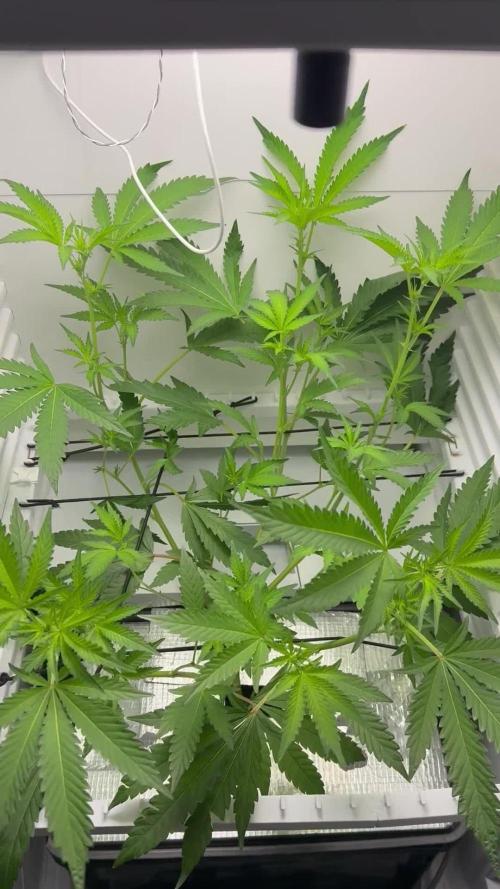
end of week 1 flower | everything looking good so far | managed to create quite some budsights | hope i will be able to control the stretch
pics are from 13.04.
Likes
58
Share


@GermanGrow182
Follow
Wetter war gut, nur einmal Regen, 3 fat banana sind im trockenraum, die anderen beiden kommen in den nächsten Tagen dazu.sind fast fertig. Die zz legen an buds zu, wie sie sollen, Nr.5 schon im fading... special queen macht sich langsam. Toppen war die richtige Entscheidung. Critical verzweigt sehr gut 👍. Lst funktioniert. Nächste Woche kommt der erste erntebericht... ich freu mich. Bis nächsten Freitag ✌️
Likes
2
Share


@Oyziphar
Follow
We had very sunny day this week 🌞🌞🌞, with very hot temperatures 🌶️🌶️🌶️
Fourth week of Light Deprivation
👉👉👉👉Every morning at 8:30 am I move the plants to the greenhouse.
👉👉👉👉Every evening at 8:30 pm I move the plants (together with some other strains) inside the growroom (which I don't use in the summer)
➡️ I defoliated the plants
➡️ The plants are making new flowers everyday 🌻🌻🌻, trichomes are appearing, and every day they start to smell stronger 👃👃👃
👉Two times a week I boost the plants with gift of water enriched with OPF 7:2:3 ; Fulvic 25 ; Yuccah ; Biovin liquid ; Earthworm compost extract
⭐Big Thanks to Luc from Plant Health Solutions / Bioplantenvoeding dot nl ⭐



Likes
5
Share


@pzwags420
Follow
Cantaloupe haze needed a good flush brought runoff from 2000 ppm to 1100ppm will continue to monitor.


Likes
14
Share


@MrWigglyJiggly
Follow
What a journey this has been. This girl weighs(dry) 263grams plus 23 grams(untrimmed lower nugs) could have pulled out 350g if let her veg a bit longer. The taste is like sweet candy and soda a hint of citrus. The effects are as follows, creative, giggles and energetic but once its nearly gone out. You will feel really sleepy and when you wake up you will feel really hungry. Anyways, thank you guys who have been following my journey. Next grow will be seeds from Sunkentreasure seeds


Likes
19
Share


@HisHope
Follow
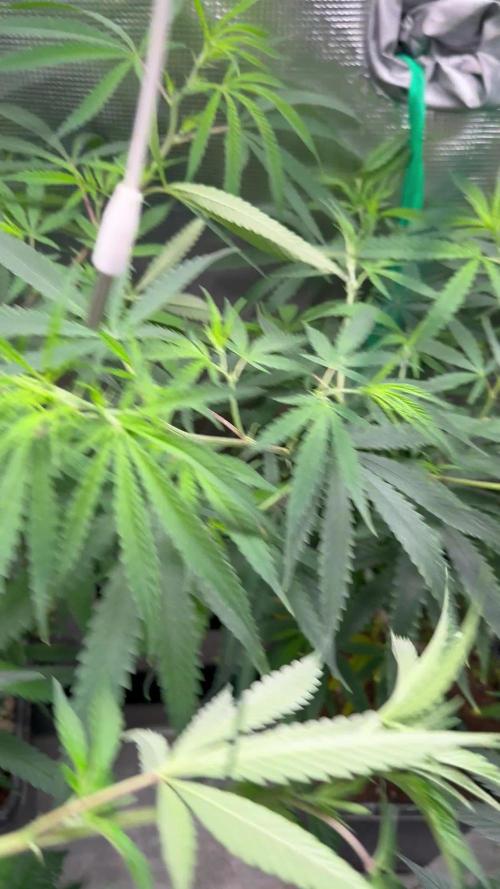
4/30 Week 2
Some discoloration, moved light up.
Most likely be ready to transplant in a couple of days, color good
Slowly increasing nuets Leave them here a while.
5/1 Pic
5/3 TRANSPLANT DAY!
Time to move her, her roots are three inches beyond the garden bag and her veg growth has kicked in.
Roots are very white, very strong and very long.
Transplanted into 5 gallons of prepared/buffered/triple washed coco and 40% perlite.
Pot soaked well with goodies to get things going quickly, she has some catching up to do 😏
5/4
Pics
She is thriving! 😎
5/5 Pics
Almost doubling in mass every day
5/6
Pics
Added Silicon and increased Grow nuets slightly
She has tripled in size this week color is good and stems are strong.
Likes
14
Share


@portcityplug
Follow
Day 50 last day of the dense nut the pm is at 5.8 and the ppm is at 270 all looking good put a ac in there today will run with light on for next week or so
Day 51 first day of flush!!! Ppm at 50 ph at 6.0 I found other top flower with bud rot on the big plant this time humidity is to high in there 60% now don't have a dehumidifier and it's lot of wet days this week any tips to lower it with out one just more air moving?
Day 55 I think it is done I'm going to gave it lots of cold from the ac and tern light out Earley tonight and cut tomorrow im thinking 🤔
Note the smell of the small plant in the back is bark purple and smells tropical so good where the other 2 smell like dank skunk and gas ⛽ so strange