


Likes
Comments
Share


@Black_Widow
Follow
Привет садоводы
7 неделя вегетации , но я поменял световой режим
теперь только ожидать и наблюдать как она зацветет
растет она не очень быстро и впитывает воду медленно
я поливал ее последний раз неделю назат , а может и больше , но горшок по прежнему еще тяжелый

Likes
8
Share


@TorvicKofran
Follow
ESPAÑOL:
Hola chicos, espero se encuentren muy bien!
Esta semana las chicas han mejorado un poco, se detuvo el amarillamiento, descubri que Cal-Max de Grotek interfiere en la composicion de la linea hesi por lo que las chicas sufren un bloqueo de nutrientes, dejé de utilizarlo y las chicas han continuado con su desarrollo relativamente normal.
ya estan en su 5ta semana de floracion, Tutankhamon ha producido una cantidad gigantesca de resina, Lennon esta engordando a toda velocidad y aun le quedan 6 semanas aprox.
Anubis a pesar de su color intenso amarillo palido esta engordando bastante bien y su produccion de resina es inimaginable y ya solo que quedan 2 semanas y media aprox.
espero que a partir de ahora ya no surjan mas problemas y que las chicas terminen su floracion de la mejor manera.
esto es todo por esta semana chicos, espero que se encuentren muy bien !
INGLES:
Hello guys, I hope you are very well!
This week the girls have improved a little, the yellowing stopped, I discovered that Cal-Max from Grotek interferes with the composition of the hesi line so the girls suffer a nutrient lock, I stopped using it and the girls have continued with their relatively normal development.
They are already in their 5th week of flowering, Tutankhamun has produced a gigantic amount of resin, Lennon is gaining weight at full speed and he still has about 6 weeks left.
Anubis, despite its intense pale yellow color, is gaining weight quite well and its resin production is unimaginable and there are only about 2 and a half weeks left.
I hope that from now on no more problems arise and that the girls finish their flowering in the best way.
This is it for this week guys, I hope you are doing well!

Likes
22
Share


@DogDoctorOfficial
Follow
🌱 White OG - Week 11 VEG
Strain: White OG by Seedsman Seeds
Stage: Week 11 Vegetative
Grower: DogDoctor
Medium: PRO-MIX HP Mycorrhizae + Bacillus
Pot: 30L Fabric Pot
Lighting: Future of Grow LEDs
Climate Control: TrolMaster
Nutrients: Aptus Holland Clean Program
Environment:
🌡️ Temp: 18.3°C
💧 pH: 6.0
⚡ EC: 1.0
⸻
🔄 The Last Week Before the Flip
Week 11… a moment of calm before the bloom storm. A critical phase in our girl’s journey. This is the week we prepare her for greatness. 💪
✅ Defoliation Madness:
This week, we defoliate the hell out of her. That’s right—removing those large fan leaves that block light, those unnecessary suckers that won’t make it to the top floor, and freeing up her inner structure to breathe and expand.
Why now? Because right before flipping to flower is the perfect time to help her redirect energy to the strong tops and main branches. It reduces the risk of mold, improves air circulation, and ensures even light distribution. Plus, it gives us a blank canvas for the flower stage to explode onto. 🌸💥
✅ Clamp Release & Scrog Setup:
We gently remove the training clamps, and in she goes into the SCROG net. But not in a rigid way—we’re inviting her to stretch, encouraging her to reach out and take up space. She’s a big mama now, and it’s time she gets the full stage. Each branch is dancing through the net like a diva ready for her solo performance.
✅ Roots on a Mission:
She’s hungry for life. Roots are peeking out from the fabric pot, diving toward the light, the floor—everywhere. This PRO-MIX soil is magic, and with the help of the Aptus Clean Mix, she’s thriving. Her root zone is bright white and packed with potential. Healthy roots, healthy shoots, happy fruit.
⸻
Feeding This Week
We’re still rolling with the Aptus Clean Line for this stage. Simple, effective, elegant.
🔹 Regulator – Helping her stay strong and stress-free.
🔹 RO Water Conditioner – Stabilizing and prepping our base.
🔹 All-In-One Liquid – Feeding her exactly what she needs without overcomplication.
⸻
🌐 Shout Outs & Love
Forever grateful to our amazing partners and supporters:
💚 Seedsman Seeds
💚 Aptus Holland
💚 Future of Grow LED
💚 TrolMaster
💚 PRO-MIX Soil
💚 Cannakan
💚 GrowDiaries
💚 The entire community—lovers, haters, followers, and the in-betweeners—you’re all part of this journey. 🌍
Come say hi on Instagram [@DogDoctorOfficial] and check out the Dognabis Cup – First Edition—open now! 🎉 Let’s celebrate passion, plants, and positive vibes.
⸻
🌸 Let’s Bloom
White OG is ready to bloom. She’s strong, structured, and full of fire. Next week begins a new chapter—the flowering stage. Let’s see what she has in store.
🌱 Stay kind. Stay curious. Stay growing.
Much love,
DogDoctor 💚🐾
#GrowDiaries #WhiteOG #ToppingMadness #AptusHolland #Mainlining #PlantTraining #GrowersLove #SeedsmanSeeds
As always, this is shared for educational purposes, aiming to spread understanding and appreciation for this plant.Let’s celebrate it responsibly and continue to learn and grow together!
💚Growers Love 💚 🌿
DISCOUNT CODE - SeedsmanSeeds - DOGDOCTOR 10% off
As always thank you all for stopping by, for the love and for it all , this journey of mine wold just not be the same without you guys, the love and support is very much appreciated and i fell honored and so joyful with you all in my life 🙏
With true love comes happiness 💚🙏 Always believe in your self and always do things expecting nothing and with an open heart , be a giver and the universe will give back to you in ways you could not even imagine so 💚
Friendly reminder all you see here is pure research and for educational purposes only
💚Growers Love To you All and remember to keep that smile big and alive 💚

Processing
Likes
5
Share


@CanadianFillmore
Follow
Start of week 2. Week 1 went well, though she is showing signs of deficiencies. Hopefully with the addition of Big Bud, she'll perk up shortly.

Likes
6
Share


@GanjaDjarin
Follow
Things are now advancing smoothly, having effectively weathered the majority of the challenges encountered. It's a truly uplifting experience to watch the process unfold, seeing how the plants are developing and thriving. Each day brings new progress, and I am continually enthusiastic about maximizing the sunlight that each plant receives as they continue on their growth journey.
In addition to the hands-on cultivation aspect, I'm also diligently working on expanding my clones collection. The plan for the next week or so is to cultivate and ready these clones for transplantation. It's an exciting aspect of the process that helps me stay committed to my ultimate goal.
That goal, of course, is to maximize my supply chain and provide high-quality cannabis. This involves more than just horticultural efforts. I am also persistently studying and researching the relevant laws to familiarize myself with the legal process. Navigating the licensing phase is a vital part of this journey, and I am committed to understanding and adhering to all legal requirements to ensure success in this venture.
Diary Entry for Growth Project: Day 24 - Today, a slower-growing plant was effectively moved from its soil environment into an idle hydroponic system. With this transition, the count of prospering plants stands at eight, with a couple more still being monitored due to uncertain growth. Significant discoveries include the paramount importance of light distance to the plants, which was underestimated initially. Further, it has been found that genetically modified seeds hold no superiority over the prevalent autoflower seed market. Additionally, the positioning of the plant and the volume of medium placed between the plants and the water source have been recognized as key determinants in accelerating early stage growth.
Welcome to the Day 25 update of our grow journal. I must apologize for the slight confusion - although the video says it’s day 23, today indeed marks the 25th day of our journey. I’m thrilled to announce that we’ve had a successful transplant. The plants are now settling nicely into their new environments. The question now at hand is, should we introduce stress training?
As we move into days 26 and 27, I have been pondering on this. High-stress training can sometimes stimulate growth, but in our current situation, it might not be the most prudent course of action. This time around, we are expecting all our plants in the grow tent to blossom concurrently.
In light of this, I’m leaning towards letting nature take its course rather than intervening with stress training. By doing so, we will allow our plants to focus their energy solely on flowering. The goal here is to encourage the production of dense and frosty buds, the hallmark of a successful growth cycle.
Rest assured, we’ll continue to provide the plants with the care and nutrients they need. Remember, every cycle is a learning experience, and we’re on this botanical journey together. Keep checking back for more updates on our garden’s progress.


Likes
29
Share


@GrownwithLED
Follow
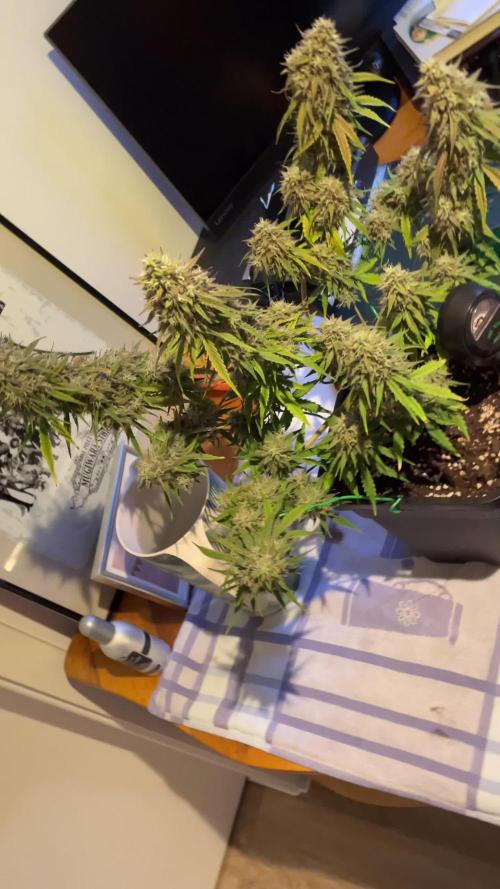
The final phase has begun now, we are getting close to harvest time. Therefore I have stopped giving nutrients and only give Ph-neutralized water (ph=6,0) to my 'Fruity Terp' ladies. This is the so called FLUSH and is very important. Only well flushed plants don't have any nutrients left in them, and will burn properly and smoke smoothly. A plant that gets nutrients up to the moment she is harvested, will be harsh to smoke and hurt in the throat on the inhale. Since this is my medicine I ALWAYS do flush of 7 to 10 day before I harvest my ladies. All my 12 plants have grown nice buds glistening with trichomes and smell WONDERFUL right now. A STRONG FRUITY AROMA is coming out of the tent every time I open it, its MOUTHWATERING! I can't wait for them to be ready to harvest soon...



Likes
10
Share


@eldruida_lamota
Follow
Segunda semana de crecimiento de las red cookies gelato, hasta ahora va todo bien, humedad en 60/65 y temperatura de 22 a 27 de máximas.
9/9 una de ellas anda pocha de forma las hojas son algo raras , la voy a mantener pero podría hacer un reemplazo ya que germine 3 más por si hubiese problemas con alguna.
Por lo demás todo perfecto , espero hacer un trasplante la próxima semana , e ir creciendo algo más en la maceta definitiva, seguramente caigan todas en 7l de maceta pero todavía no lo tengo del todo decidido.
Buenos humos gente.
Likes
16
Share


@Roberts
Follow
Blue Dream Auto is doing well. She is developing her colas. Everything is looking good. I just did a solution change today. Thank you Spliff Seeds, Medic Grow, and Athena nutrition. 🤜🏻🤛🏻🌱🌱🌱
Thank you grow diaries community for the 👇likes👇, follows, comments, and subscriptions on my YouTube channel👇.
❄️🌱🍻 Happy Growing 🌱🌱🌱
https://youtube.com/channel/UCAhN7yRzWLpcaRHhMIQ7X4g.
Likes
9
Share


@Mo_Powers
Follow
the last week was really sunny again and the temperatures are also constant. the flowers are becoming more and more pronounced. it continues to grow healthy and strong. heat, storms and heavy rain cannot harm it.

Likes
2
Share

@GrowdadGage
Follow
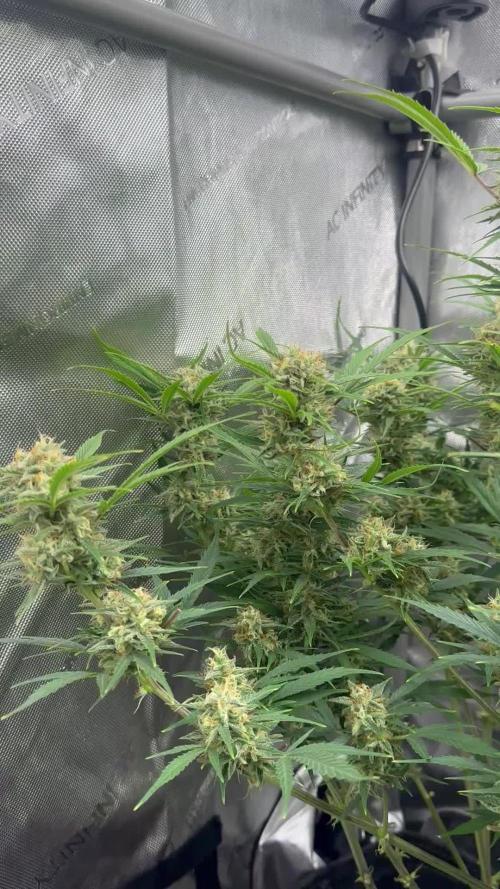
Trichomes still look to clear still debating if I start flushing this coming week or the next.
Either way buds look great starting to put on the frost on the density now.
What a fun grow 😁

Likes
24
Share


@SooSan
Follow
90x60x140 (Mars Hydro)
FC-E4800 (Mars Hydro)
Easy2go Aquavalve5 (Autopot)
Living Soil (Demetearth)
Bruce Banner (PEV Seed)
Gorilla GG4 (Ganja Farmer)
Cream Caramel (Sweet Seed)
Gorilla Gelato (Ganja Farmer)
Blueberry (00 Seed)
Kalini Asia (Zamnezia)
Biscotti Mintz (Barney's Farm)
Blackberry Cake (Sensi Seed)
Amsterdam Amnesia (Dutch Passion)
Gelato Cookie (Ganja Farmer)
Purple OG Punch (Ganja Farmer)
Sweet ZZ (RQS)
Rainbow Road (Paradise Seed)
Substrat ~50L:
30L Super Light Mix Biotechnologie
18L coco
2L perlite
1,7kg lombricompost
350g guano de chauve-souris
350g Zéolithe
350g Basalte
170g guano vers de farine
170g biochar
0,7g Endomychorise glomus intraradices
0,7g Bacillus Amyloliquefaciens
Paillage de luzerne alfalfa
Arrosage avec 2ml/L de mélasse de canne 1x par semaine
Pulvérisation avec 1% d’huile de neem jusqu'à la 2eme semaine de floraison


Likes
21
Share


@Whitebelt
Follow
Beginning week 9
Plans this week:
Make a long time lapse while away this weekend - post more photos too
Lollipop
Tuck and tie a bit
Possibly build a second scrog level?? Thoughts anyone??
Research and purchase or build a “grow room controller” - tent: temp, rh, light(?), co2(?) — rez: ph, ec, temp, water level - maybe more stuff like tie in the cameras, also basement temp and rh, fan and lights and pump contro. Nutrient dosing and ph control would be awesome but likely too pricey— but I’m a geek and this will be fun! I’d prefer a prebuilt system but I’m not totally opposed to building an Arduino/pi style solution (reliability and time to get it right are concerns tho - plus I have an arcade cabinet project I’d like to get to soon) — **ANY THOUGHTS OR ADVICE ANYONE???
To do list:
I picked up some angle aluminum and I plan to finally make a single frame for the numerous LED lights
Mount things to the wall (temp and humidity sensors, timers, utility light, etc)
General cleanup and house keeping - wire management etc
Install new portable air conditioner in the basement - this will be a bit of a project - casement windows and other issues
Hopefully this week: install a utility sink in the basement and tie into the water lines and waste lines of the house (no more carrying water and waste upstairs!!)
Likes
15
Share


@Geili_Seili_fireinfireout
Follow
Alles in allem ein guter strain. Sehr sehr oldschool kushy. Ertrag top.
Den cut gibts wie immer bei ROOTS_FARMS. best genetik in europe👌
Likes
56
Share


@Wicked_Stix
Follow
Has been a rough week dealing with the heat and rain. Having to run the dehumidifier 24 hours a day and I am seeing some foxtailing in most of the strains from the hot air it puts out. Twisted helix was chopped last week. She's not even worth taking pictures of. Tiny buds about the size of my thumb. Not much smell and they are not impressive. I will be making bubble hash and edibles from it. I pulled the blackcherry punch off the feed tube and a few days ago and she is flushing. I filled the reservoir with nutrients for the last time today. After they drink it down in a few day I will start flushing all the plants. Going to be a big job trimming this round since it looks like most of them will be ready for harvest around the same time. There are buds falling over everywhere due to the weight, but it's impossible to get in and tie them up without rubbing all over the buds and damaging a lot of trichomes. So not much can be done about it at this point. Just going to try to keep the temp and humidity down until they are ready for the chop.

Likes
2
Share


@zarx8787
Follow
Just showing y’all how beautiful this strain is. Even tho the buds didn’t turn out purple I’m hoping the pheno on my other girl is a purple type

Likes
5
Share

@Bunterbiber
Follow
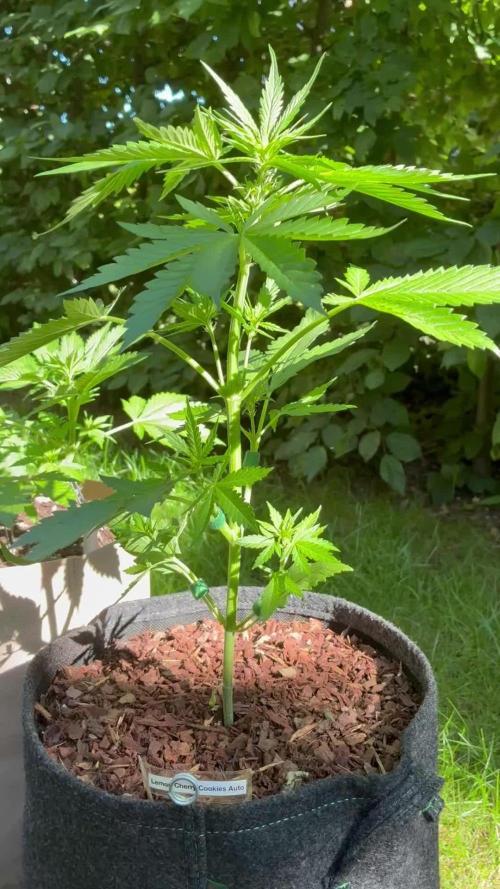
What a difference a week of good weather makes! The sun has been blazing almost constantly, and the girls have absolutely loved every single ray of it. The growth has been explosive compared to those slow first couple of weeks!
Training & Mulching: 🌿
I’ve been staying on top of the LST for the ones I'm training, adjusting the ties to keep the canopy nice and even, which you can see in the updated photos.
Some are already showing first signs of pre-flowering.
I also added a layer of pine bark as a mulch on top of the soil for all four plants. It’s a game-changer for keeping the upper root zone happy and preventing that top layer of soil from drying out too quickly under the intense sun. Because of this, my watering schedule is super dialed in—I’m currently only needing to water twice a week.
Feeding Check-In:
Team Mineral: Lemon Cherry Cookies and Bruce Banner are cruising along smoothly, receiving their regular scheduled ration of Hesi mineral nutrients + a bit CalMag.
Team Organic: Banana Purple Punch and Amnesia Haze are still thriving on just tap water + a bit CalMag, but I did add a tiny touch of CalMag to the mix this week just to make sure they have all the secondary nutrients they need to sustain this rapid growth.
Current Standings: 📏
Lemon Cherry Cookies: This girl is an absolute beast! Growing naturally without LST, she has shot up to a whopping 38cm and is easily the giant of the family right now.
The Rest: Amnesia Haze, Banana Purple Punch, and Bruce Banner are all averaging around 25cm along the main stem. It’s honestly getting a bit tricky to measure them accurately because of the LST angles, but they are looking bushy and robust!
With the weather holding up, they are in prime position to keep crushing it. Can’t wait to see what next week brings!


Likes
30
Share


@DunDerma
Follow
* Setup *
Veg: 125W CFL
Bloom: Outdoor 12/12
Soil: Canna Coco
Pot: 3gal, 12L, Fabric pot.
Methods used: LST, Topping, Fimming, Defoliation, Neem oil misting
Wet weight: Not weighed/harvested entire plant yet, but harvested part, trimmed was 270g, and around 30g of sugar leaves, thats is in the freezer.
Wet bud on stick Weight: ca 480g
Fine trimmed Dry bud weight: 119g
The sugar leaves/popcorn nugs not weighed.
I also have 1/3 of the plant left to harvest, probably tomorrow.
After that I can give you the full wet weight, and hopefully in 2 weeks the full dry weight! (If I dont smoke to much if it before 😆)
Thank you all for following this diary.
And thank you @Sweet_Seeds for your fantastic seeds!
"Sweet seeds are made of this
Who am I to disagree?
I smoked in the world
And in the seven seas
Everybody's looking for something
Some of them want to smoke you
Some of them want to get smoked by you"
I got this plant as a present from my local club, supposdely its Cream Caramel from Sweet Seeds. It was around 2 weeks old when I got it.
I have no former experience of any type of growing cultivation, I recently Moved to a country where cannabis cultivation for personal use is legal.
I started this Journey by having the plant under 25W of homemade lamp solution and 6hrs of sun, until I could buy proper setup for vegetation.
Growdiaries really helped me learn alot fast and achieve results way above me and my girlfriends expectations.
I topped the plant Once, I accidently stepped on it, Vegged it under 125W Of CFL from week 3 onwards and then transitioned to Outdoor.
The weather around here has been the hottest in 60 years, averaging around 32 lately. Humidity has been stable around 50-70% with a average of around 60%
I really learned alot and this strain(which ever it now is, ill ask the club again!) is fantastic and most definently not Indica like.
"Its kinda like smoking candy" - Dunderma Grow


Processing
Likes
42
Share


@Dunk_Junk
Follow
7cm of vertical growth this week. Things slowing down a little.
This kush is very bushy. It's a huge plant, and if I'm honest the 10 litre pot is way too small 😲
On she goes through flowering! 😍
