


Likes
Comments
Share


@CryptAnon
Follow
Start of week 6. Smell is getting strong, lots of trichomes forming now and buds starting to swell.

Likes
12
Share


@GrowerApex
Follow
Estoy muy feliz la banana ya esta casi lista primera vez que me sale un feno asi tan resinoso me dejo loco😍🦍🍌la mejor sin dudas, luego la que me impresiono fue la gorilla rainbow por su produccion la verdad andubo bastante bien...las otras 2 no se quedan atrás pero destaco esas 2 variedades estoy muy feliz ahora solo queda hacer el lavado y cosechar en aprox 2 semanas la gorilla banana es la mas rapida y todo creo que me tocara cortarla antes😍🦍


Likes
8
Share


@emeraldlabs
Follow
Enjoying her progress over the last week. Lowered humidity today a tad to slightly increase vpd. Also lowered light a few inches and may do so again. Will keep it here until we progress in flowering. Expect to start LST this week.
Will include plant and light height and distance details once I begin LST.
Her sister, punch berry cookies, moved to flower tent. PoG will finish in veg tent, alone, as I’m shutting down for vacation in April.
Video/photos taken 14 days after breaking soil.


Likes
7
Share


@KannaKullektiv
Follow
Hiiigh friends 🙌
Welcome to week 4. 😍
They have grown well in size and the one on the far left has overtaken her two sisters although she shows signs of a deficiency. 😊
I have noticed a calcium magnesium deficiency because I only water with osmosis water. What to you think?
See you next week. 👋
Arturo for KannaKullektiv
🙏
Likes
25
Share


@TheeLemon
Follow
Plants taking to the technique very well imo. Particularly the back right one, which has created a almost perfect dome shape.
I did miss a watering and they didn't like that atall. As I usually wait for the soil to be dry before I water again, so if I miss a watering, they get extremely dry. All the leaves dropped down completely vertical, I thought it was all over, but they bounced straight back with the next watering. 🙌
The plant has now been topped twice, once to creat the initial + shape, and again to split each stem of the + into 2. So each plant now has 8 main stems.

Likes
12
Share

@SugarandTerps
Follow
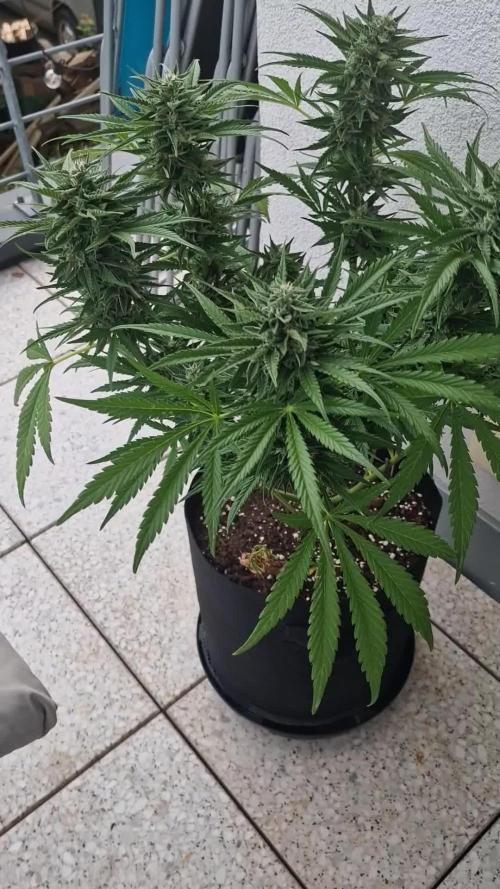
Bloom W5 Mendo Frost ❄️❄️
2.7
Heute gab 3L Nährlösung Ph-Wert auf 6,6, Plagron Silic Rock, Power Roots, Royal Sugar, Power Buds, Green Sensation und Alfa Boost All-in-One.
Temperaturen haben heute 27°C
4.7
Der Himmel ist heute öfters bewölkt und könnte abends noch mal regnen. Die Blätter sehen gut aus und die Düngerverbrennung ist nicht weiter fortgeschritten.
5.7
3L Nährlösung Ph-Wert auf 6,6, Plagron Silic Rock, Power Roots, Royal Sugar, Power Buds, Green Sensation und Alfa Boost All-in-One
Likes
11
Share


@PurpleFingers
Follow
Ready for a week of water only.
Really frosty buds and extremely fruity terps.
I did hit he with a little dose of PK before the flush which looks like it has helped.


Likes
4
Share


@GrowingGiant
Follow
Day 30. Worried about running out of space. I have been tying the plant down perform LST which is helping. Only change in feeding schedule is I have reduced call mag from 5.0 Ml to 3.0 ML and have added big swell by aurora nutrient lines 2.0 ml

Likes
72
Share


@BodyByVio
Follow
After 14 days drying, 7 days hanging and another 7 days on cardboard boxes 📦 at a temp between 61 and 65 degrees F and a humidity between 52-55 % I trimmed all the buds and jar them with Boveda 62. After 2 days in jars ( 16 days from cutting the plant down) I weighed in everything. I got 434g of grade A buds and 685g of Grade B ( perfectly smokable ) buds plus a lot of trim that I didn’t weight.
I’m very pleased with everything and I enjoyed every single step along the way. Probably next time I will lollipop/defoliate more aggressively so I can get more top bud and less grade b bud.

Likes
55
Share


@Ultraviolet
Follow
2nd net is up. Early bud formations are promising. holding up to the extremes pretty well, some leaves taking minor damage, but overall, she is holding up, gave her 1 night at 50F see how she would react, stressful. Not advised as it messes with her metabolism, but I want to see if it triggers any anthocyanin response. Love to see her purp up but no signs yet. Remember, For every molecule of glucose produced during photosynthesis, a plant needs to split six molecules of water. This process provides the hydrogen needed for synthesizing glucose and other organic compounds, while oxygen is released as a byproduct.
Homework.
If Rubisco activity is impaired and it cannot properly function or regenerate its substrate, the plant's leaves are likely to turn a pale green or lime green, a condition known as chlorosis. Essentially, Rubisco activity is highly regulated and susceptible to various environmental and metabolic factors that can cause it to become inhibited, leading to an apparent failure in RuBP regeneration due to a lack of consumption.
Rubisco regeneration is intrinsically linked to nitrogen supply because Rubisco is a major sink for nitrogen in plants, typically accounting for 15% to over 25% of total leaf nitrogen. The regeneration phase itself consumes nitrogen through the synthesis of the Rubisco enzyme and associated proteins (like Rubisco activase), and overall nitrogen status heavily influences the efficiency of RuBP regeneration. RuBisCO is a very large enzyme that constitutes a significant proportion (up to 50%) of leaf soluble protein and requires large investments in nitrogen. Insufficient nitrogen supply limits the plant's ability to produce adequate amounts of RuBisCO, thereby limiting the overall capacity for photosynthesis and carbon fixation. Maintaining the optimal, slightly alkaline pH is crucial for the proper function and regeneration of Rubisco. Deviations in either direction (too high or too low) disrupt the enzyme's structure, activation state, and interaction with its substrates, leading to decreased activity and impaired RuBP regeneration. (Lime/yellowing)
Structural Component: Nitrogen is an essential building block for all proteins, and the sheer abundance of the Rubisco protein makes it the single largest storage of nitrogen in the leaf.
Synthesis and Activity: Adequate nitrogen supply is crucial for the synthesis and maintenance of sufficient Rubisco enzyme and Rubisco activase (Rca), the regulatory protein responsible for maintaining Rubisco's active state. Nitrogen deficiency leads to a decrease in the content and activity of both Rubisco and Rca, which in turn limits the maximum carboxylation rate, Vmax, and the rate of RuBP regeneration Jmax, thus reducing overall photosynthetic capacity.
Nitrogen Storage and Remobilization: Rubisco can act as a temporary nitrogen storage protein, which is degraded to remobilize nitrogen to other growing parts of the plant, especially under conditions of nitrogen deficiency or senescence.
Nitrogen Use Efficiency (NUE): The allocation of nitrogen to Rubisco is a key determinant of a plant's photosynthetic nitrogen use efficiency (PNUE). In high-nitrogen conditions, plants may accumulate a surplus of Rubisco, which may not be fully activated, leading to a lower PNUE. Optimizing the amount and activity of Rubisco relative to nitrogen availability is a target for improving crop NUE.
Photorespiration and Nitrogen Metabolism: Nitrogen metabolism is also linked to the photorespiration pathway (which competes with carboxylation at the Rubisco active site), particularly in the reassimilation of ammonia released during the process.
To increase RuBisCO regeneration, which refers to the process of forming the CO2 acceptor molecule Ribulose-1,5-bisphosphate (RuBP) during photosynthesis, the primary methods involve optimizing the levels and activity of Rubisco activase (Rca) and enhancing the performance of other Calvin-Benson-Bassham (CBB) cycle enzymes.
Biochemical and Environmental Approaches:
Optimize Rubisco Activase (Rca) activity: Rca is a crucial chaperone protein that removes inhibitory sugar phosphates, such as CA1P (2-carboxy-D-arabinitol 1-phosphate), from the Rubisco active site, thus maintaining its catalytic competence.
•Ensure optimal light conditions: Rca is light-activated via the chloroplast's redox status. Adequate light intensity ensures Rca can effectively maintain Rubisco in its active, carbamylated state.
•Maintain optimal temperature: Rca is highly temperature-sensitive and can become unstable at moderately high temperatures (e.g., above 35°C/95F° in many C3 plants), which decreases its ability to activate Rubisco. Maintaining temperatures within the optimal range for a specific plant species is important.
•Optimize Mg2+ concentration: Mg2+ is a key cofactor for both Rubisco carbamylation and Rca activity. In the light, Mg2+ concentration in the chloroplast stroma increases, promoting activation.
•Manage ATP/ADP ratio: Rca activity depends on ATP hydrolysis and is inhibited by ADP. Conditions that maintain a high ATP/ADP ratio in the chloroplast stroma favor Rca activity.
Enhance Calvin-Benson-Bassham (CBB) cycle enzyme activity: The overall rate of RuBP regeneration can be limited by other enzymes in the cycle.
•Increase SBPase activity: Sedoheptulose-1,7-bisphosphatase (SBPase) is a key regulatory enzyme in the regeneration pathway, and increasing its activity can enhance RuBP regeneration and overall photosynthesis.
•Optimize other enzymes: Overexpression of other CBB cycle enzymes such as fructose-1,6-bisphosphate aldolase (FBA) and triose phosphate isomerase (TPI) can also help to balance the metabolic flux and improve RuBP regeneration capacity.
Magnesium ions, Mg2+, are specifically required for Rubisco activation because the cation plays a critical structural and chemical role in forming the active site: A specific lysine residue in the active site must be carbamylated by a CO2 molecule to activate the enzyme. The resulting negatively charged carbamyl group then facilitates the binding of the positively charged Mg2+ion. While other divalent metal ions like Mn2+ can bind to Rubisco, they alter the enzyme's substrate specificity and lead to dramatically lower activity or a higher rate of the non-productive oxygenation reaction compared to Mg2+, making them biologically unfavorable in the context of efficient carbon fixation. The concentration of Mg2+ in the chloroplast stroma naturally increases in the light due to ion potential balancing during ATP synthesis, providing a physiological mechanism to ensure the enzyme is activated when photosynthesis is possible. At the center of the porphyrin ring, nestled within its nitrogen atoms, is a Magnesium ion (Mg2+). This magnesium ion is crucial for the function of chlorophyll, and without it, the pigment cannot effectively capture and transfer light energy.
Mg acts as a cofactor: Mg2+ binds to Rubisco after an activator CO2 molecule, forming a catalytically competent complex (Enzyme-CO2-Mg2+). High light + CO2) increases demand: Under high light (60 DLI is a very high intensity, potentially saturating) and high CO2, the plant's capacity for photosynthesis is high, and thus the demand for activated Rubisco and the necessary Mg2+ cofactor increases. Mg deficiency becomes limiting: If Mg2+ is deficient under these conditions, the higher levels of Rubisco and Rubisco activase produced cannot be fully activated, leading to lower photosynthetic rates and potential photo-oxidative damage.
Optimal range: Studies show that adequate Mg2+ application can enhance Rubisco activation and stabilize net photosynthetic rates under stress conditions, but the required concentration is specific to the experimental setup.
Monitoring is key: The most effective approach in a controlled environment is to monitor the plant's physiological responses e.g., leaf Mg2+ concentration, photosynthetic rate, Rubisco activation state, and adjust the nutrient solution/fertilizer to maintain adequate levels, rather than supplementing a fixed "extra" amount.
In practice, this means ensuring that Mg2+ is not a limiting factor in the plant's standard nutrient solution when pushing the limits with high light and CO2.
Applying Mg2+ through foliar spray is beneficial to Rubisco regeneration, particularly in alleviating the negative effects of magnesium (Mg) deficiency and high-temperature stress (HTS). While Mg can be leached from soil, within the plant it is considered a mobile nutrient, particularly in the phloem. Foliar-applied Mg is quickly absorbed by the leaves and can be translocate to other plant parts, including new growth and sink organs.
Foliar application of: NATURES VERY OWN MgSO4 @ 15.0g L-1 in a spray bottle. For those high-intensity workouts when 1 meal a day is just not enough!
Foliar sprays are often recommended as a rapid rescue measure for existing deficiencies or as a supplement during critical growth stages, when demand for Mg is high. Application in the early morning or late evening can improve absorption and prevent leaf burn. The plant was getting a little limey yellow in the centre. Shortly thereafter, she was back in business, green mostly regenerated. The starting point [of creativity] is curiosity: pondering why the default exists in the first place. We’re driven to question defaults when we experience vuja de, the opposite of déjà vu. Déjà vu occurs when we encounter something new, but it feels as if we’ve seen it before. Vuja de is the reverse—we face something familiar, but we see it with a fresh perspective that enables us to gain new insights into old problems.
Confidence is evidence... nothing more. You are confident because you have driven 10,000 times, you are confident because you have spoken 10,000 times. People think confidence is a feeling, but it's not. If you want more confidence, then you need to create evidence, take more shots, collect more data, build more experiences, take more risks; fail, confidence doesn't come first; it is the reward you get for doing the work. no one else wants to do.
Likes
14
Share


@SBCannabisCo
Follow
Enjoyed this run. Ready to harvest in about 1 and a half weeks, I actually have seeds in a couple of the plants. It happens, this is my first indoor grow so, need to get my hand on some new genetics

Likes
25
Share


@Mrs_Larimar
Follow
Thursday, July16th.
Solocup Challenge 2020.
@Silky_smooth asked me to Participate. and well why not
Iam always open to new Challenges,
And I think It will be challengeing.
Never grown in a Solocup Before
So Iwas thinking a While wich Strains i should take,
And i decided to take good growers and resiliant ones.
I´ve chosen 3 Strains , 1 Photoperiod and 2 Automatics
"AK 47 Autoflower" from Weedseedexpress
I started like always in soaking the Seed
I took a
Bavarian Beerjug called "a hoibe Maß" its a 0.5l Beerjug
I am thinking about tthe Drainage Material i should take
Claypebbles?
Claygranules?
Mesh?
Perlite=?
So Pls tell me what you prefer,,,, thy
Friday
Seed went under a wet Kitchensponge
Saturday
Seed cracked
Sunday Girls were Planted.
I took Claypebbles and let them soak and wash them alittle
then into the Jug and some additional Perlite
Filled uo with my Soilmix and " Living Organics"
Some drips of water.... done

Likes
35
Share


@ThatoneAKguy
Follow
The two big dawgs started to really pack it on this week. Number one is holding strong a week ahead of two. Has a bit of a learning curve with the new hydro setup and HLG leds. I learned that the intensity causes the flowers to use more cal-mag than standard hps/halide according to some reading. It also could be they are just using more than the recommended dosage and a had a bit of a phosphorus deficiency. Either way I upped my Cali magic and the young leaves look great as do the flowers. #1 is starting to get some pinks and purples and #2 is still cranking out white pistils.


Likes
59
Share


@burnerac
Follow
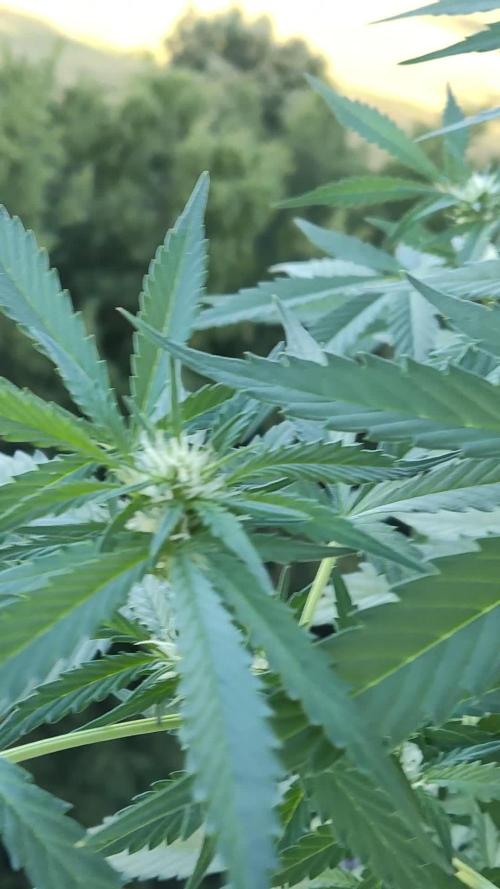
I think I was pHing wrong. My cheap digital meter isn't helping. Switching to drops shows that my run off is pH 4. I am currently doing a flush with 2 tablespoons per gallon of Hurculean Harvest pH'd to 8.
Questions:
1) For the flush, do I just keep running water through all at once until the run off changes?
2) How do I save this plant?
3) When do I begin trimming?
4) How and what do I trim?
5) When do I begin Sog or Scrog training?
6) How do I flush and avoid root rot?
7) When do I switch to flowering?
Grown from seed. Gold Leaf.
Grow medium: Strawberry Fields. Initially germinated in Happy Frog.
Light: MarsHydro 300W LED Grow Light Full Spectrum for Hydroponic Indoor Plants Growing Veg and Flower
Pot: 5 gallon Smart Pot
watering schedule: about every 4-7 days
pH: runoff is 4. Food is pH 6. Currently doing a flush at pH 7-8
Plant in a Hongruilite Hydroponic Indoor Grow Tent Room w/Plastic Corner (32''x32''x63'').


Likes
6
Share


@eldruida_lamota
Follow
Vamos familia cosecha de Original de GrowBarato.
La verdad que el secado muy bien 7 días en Malla y a los botes, 40% humedad y 24 grados es la temperatura ambiental que han tenido en el secado.
Por lo demás de miedo os la recomiendo.
Gracias Agrobeta y Mars hydro , sin ellos este proyecto no sería igual 🙏.
Agrobeta:
https://www.agrobeta.com/agrobetatiendaonline/36-abonos-canamo
Mars hydro:
Code discount: EL420
https://www.mars-hydro.com/
Buenos humos.

Processing
Likes
38
Share


@Hellhazard
Follow
I noticed yellowing of the lower leaves a few days back and was kind of confused because in the past my PPM was fine for "small plants/seedlings". At this size there should have been no problems. What I did not account for was the underground root zone I was growing this time because of the "RAW" beneficial spores and bacteria powder I added.
Pleasantly surprised when I transplanted to 3gal pots from the red solo starter cups to see such a packed root zone!!!!
I powdered the roots with Advanced Nutrients Tarantula and stuck them into the final home base of ProMix HP mixed with around 25%Perlite for added lightness in 3gallon pots. I prefer a dryer mix and can water more often when needed. Its easy to take care of such a small grow room when it comes to watering/feeding so the light soil works well for me and is a bonus at flushing time.
Other than the little yellowing of lower baby leaf, the plants are very stout and study. The main stalks are quite thick for such small plants. I had 6inch fans blowing on them since the 2nd weeks so Im sure that helped.
Video added and 2 pics

Likes
16
Share


@Aircoholic
Follow
When I got into the room one day before I scheduled the harvest, her branch collapsed under the weight of the buds. Not surprising, the buds were massive and dense! This is one of the best problems to appear during a grow, could never be mad at a plant for lack of strength to support the massive buds. I decided to view it as a sign from the plant, that it's done, it had enough, so the harvest happened a day early.
Her buds were too tall for my DIY Cooler and since the buds were so dense, it wasn't easy to get to the stem to cut it and since the buds were covered in trichomes, the gloves were super sticky.
The genetics were pretty amazing to grow, super happy plant with amazing growth - thank you, @Exotic_Seed for the seeds! 🙏
