Likes
Comments
Share
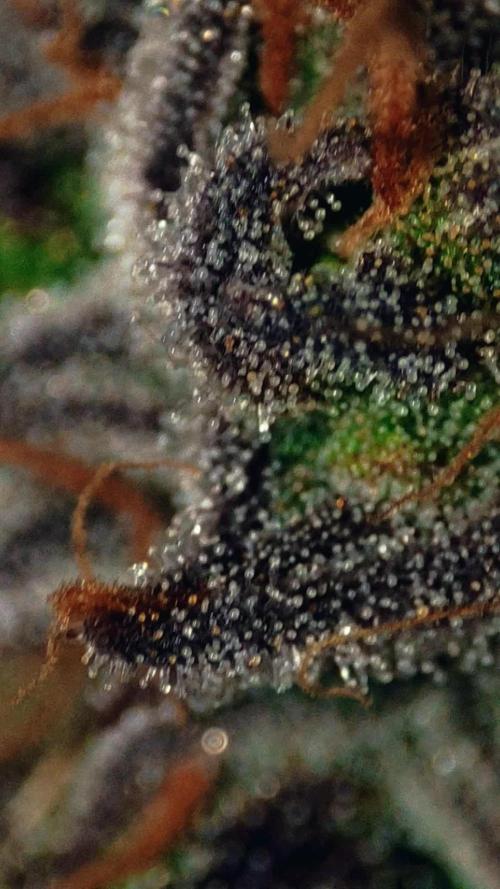
An incredible sweet cheesy smell and taste with amazing depth no mould very strong smoke covered in thc so yummy
Processing
Likes
1
Share
@Mgn20xx
Follow
Start the week with nutrients and beastie blooms. End the week with semi flush. Repeat for a few more weeks
Likes
52
Share
@Stick
Follow
Last days on earth for this beautiful monster, hopefully she should be ready by the end of the week. Trichomes are more and more milky, I gave the coco a good flush, and she's fading out nicely. Thanks for stopping-by and stay tuned for the harvest update 👌
Likes
10
Share
so we feed one feed and then we flushed on sept 9 and 10 cal mag to gallon will do one more flush before sept13 dont want salt build up
Likes
21
Share
@3lementa1
Follow
I've been taking off all the lower shoots coming off the main stems. I don't want to lose sight of the main colas I'm focusing on. Once we're in flower I'll start leaving more of the side branches, at this stage none will reach the light by the end of flower. I'd rather do the hard pruning now before the switch. I'm going to keep them in veg for another week. The mainline structure is working really well.
Likes
Comments
Share
@gadjoo
Follow
07/13/2022 watering 1.67l for each plants (root 1-grow 1.2-bloom 0.4 [ml/l]) 07/16/2022 watering 1.5l for each plants without nutrient 07/18/2022 defoliation watering 1.67l for each plants (root 0.5-grow 1.2-bloom 0.7 [ml/l])
Processing
Likes
7
Share
@Kushizlez
Follow
(Days 21-28) (Day 23) I like the amount of stretch I’m seeing on practically all the plants. I'm going to lower the light at the end of the week to stop the stretch. The more stretch they get in veg the less I have to lollipop or prune down the road. Makes lst easier too. I’m going to try topping this week. Last time I topped at the 7-10th nodes and didn’t get the best horizontal growth. This round I’m ready to give everything 3 or more toppings, stay on top of training and defoliate much less. This soil looks insane. I should have added a thicker layer of oats because it’s starting to look proper. (Day 24) Got my stuff from the hydro store today and amended my soil again. Next visit I will be grabbing a P booster like bat guano before I enter flower. Today, I got the 2gal pots, some primo worm castings, 5-2-4 insect frass, 0-0-22 langbenite, 1-0-3 alfalfa meal and an exhale co2 bag. Guy at the store said it gets his 4x4 tent 1000ppm+. It takes a few weeks at least for it to start putting out any amount of co2. I got the room sealed and two fans bowing. I fed a compost tea with a little bit of each dry amendment, BSO dry compost, boogie brew base and worm castings aerated for 24h. I diluted it to about 850ppm which still might be a little high. (Day 25) Opened a bottle of EM1 that was improperly stored and it exploded all over me and part of the tent. I wiped off the plants but there is still specks here and there. Cleaned it off and sprayed with method1 pps. (Day 26) Topped 9/15 plants. Will do the rest next week once I see a little more growth. 5 of the bbb’s I started 6 days after everything else so they are still quite behind. I’m going to push the transplant another few days until they recover. Going to start lst after transplant. (Day 28) Transplanting into 1.6gal pots that I thought were 2gals tonight... Depending on how many females I get, they will be going into either 3, 7 or 10 gallon fabric pots. Growth is looking solid so far, zkittlez and the 3 WW’s are leading the pack in terms of growth speed and cotes are yellowing out. I’m pretty sure what I have is a zkittlez bagseed but there is also a strong chance it could have been from some shitty Canadian biker weed. I accidentally misplaced the seed so it’s possible it got mixed up and I germinated the wrong one. Judging by the rapid growth I’d say that’s a fair bet. Biker weed is notoriously fast growing. Either way it won’t be hard to tell once they’re in flower. The white widow is probably going to be a breeze. I’ve heard that’s why it’s so popular too. It’s just a hardy rookie strain with good resistance, decent quality and above average yield. A sure investment. The blackberries are lagging behind but I’m sure they will blow the others away in terms of quality. One of the tunas looks great and the other is a stubby runt. The stubby runt I currently have in flower is killing it right now so I’m not writing it off yet. Can’t wait to see if the tuna god produces some nostalgic smells. Tuna strains are still super popular on the Canadian black market. I plucked the first set of leaves that were starting to appear on each plant. These branches almost always turn to larf and they're so small I can't that stressing the plants out at all this early. If anything, the zkittlez and white widows need to slow down a bit anyway. I’ve been doing a shit ton of research over the past year into what causes weed and cigarettes to have black ashes/poor fire holding capacity. Smoking black weed drives me crazy because it’s all the legal and black market have nowadays. The cigar industry has numerous studies on the cause of ash color and burn rate and apparently it has to do with the ratio of mineral content in the soil/water. Soil/water that is high in phosphorus, magnesium, chlorine and other heavy metals will burn poorly and reduce to flaky black ashes. Whereas soil that has higher levels of potassium and calcium carbonate have thick uniform white ashes with no streaks. Calcium carbonate (wood ash, biochar) can also prevent heavy metals in the soil making them unavailable to the plant. I’m discontinuing my “Organic cal mag” as it is full of chlorine which I did not realize when buying it. I’m going to be pretty cheesed if that stuff ruined the burn of my current flowering crop. My dog also found and destroyed my Alaskan fish fertilizer so that’s being discontinued for now too.
Likes
11
Share
I did harvest this for bubble hash as fresh frozen but after my first two runs, I'm not so sure about that lol. There's definitely a bit of a learning curve, especially handwashing and not the coldest temperature yet to work with although I did get the studio down to 45°. I think I'm probably just gonna do some edibles with this or something. I'm going to convert the wet weight to the dry weight would be just to get an idea.
Likes
1
Share
@SomeC_nt
Follow
Probably flip in a week or 2
Likes
10
Share
@Kinghaze
Follow
In week 3 of flowering, the ladies suffered from nutrient deficiency. Due to vacations, they had SPA water only for a week. I immediately added nutrients to the water tank, with an EC of 1.8 I will also add green sensation starting this week. I also defoliated them, all the affected leaves are almost all gone.
Likes
9
Share
TRIPLE G by ROYAL QUEEN SEEDS Week #7 overall June 12th-18th Week#6 Veg This week she was topped she doing well after being supercroppedstem starting to get thicker and she's looking good. No issues this week. Stay Growing!! Royal Queen Seeds TRIPPLE G
Likes
37
Share
Starting week 3 like this ! Bud sites are legions and it seems like stems gonna be full of buds ! Can’t wait to put this lady alone into the 4x4 tent !!! D Day homies! This baby is finally into her new home ! Now I can play with her legz!!!
Likes
43
Share
🍼Greenhouse Feeding BioGrow & Bio Enhancer ⛺️MARSHYDRO The ⛺️ has a small door 🚪 on the sides which is useful for mid section groom room work. 🤩 ☀️ MARSHYDRO FC 3000 LED 300W ☀️Also special thanks to VIPERSPECTRA P2000 (200W) & XS2000(240w) LED growlights 🌱 FastBuds 420
Likes
2
Share
@Dsant
Follow
Explosive growth this week, specially R. Cheese #1 and N. Lights #1. But both #2’s are also growing strongly and looking great. Mixed a 15L solution at full strength, will be looking for any deficiencies in the next few days.
Likes
100
Share
@AsNoriu
Follow
Day 86 . I will chop first two today. Plant A and B, C stays for a week still, a bit airy and not mature , but she was in shade mostly ... Spent almost 5 hours defoliating other plants and got too high and drunk a bit, so dry trim chosen for first two ;)))) Day 93. Last girl down ! Dry trim again ! @PurpleWorship just to prove my kilo idea I made a video for you ;))) this one was starved, she needed watering yesterday, so I could bump her to 1.5 easy .... Her sisters were heavier ;))) will do one more with monster Green Crack, can make a bet she will be above 2 kg easy ! ;))) Made some bubble hash, got light brown and pinky colour at the end when dried. Lovely ! Happy Growing !!!
Likes
16
Share
@PoshGrow
Follow
Welcome to Ultimate Auto Grow PoshGrow! 🍀 Week #3 2020 September 14th. - 21st. General Info: When planted: 2020 September 1st. Week: 3 Days: 14 - 21 Last Update Day: 2020 September 19th. Plants: 4 x OG Kush Auto 3 x Amnesia Auto 5 xAlaskan Purple Auto 2 x Blueberry Auto 1 x Northern Lights Auto Total: 15 girls. NOTICE: Check week 1 for full equipment list! Comment: Welcome boys and girls to Season #2 by PoshGrow! So alongside my 1sq. meter tent I got my new 2nd tent and setup. So at this time i will be running 2 tents. Solved problem whit gnats, gravel and sticky traps helped more then expected. Also girls enjoyed first feeding and responded more than expected. I am really happy about it. Next week I will introduce some LST on biggest plants. Stay tuned and happy growing!
Likes
47
Share
All content on this diary is for inspirational and educational purposes only. The ideas shared are not a substitute for professional advice. This diary/account is not officially affiliated with Alan Watts or his estate. All materials are used under the principles of fair use. I honor the legacy of Alan Watts by sharing his wisdom respectfully and with the intention of inspiring awareness and self-understanding. 2nd net is up. Early bud formations are promising. holding up to the extremes pretty well, some leaves taking minor damage, but overall, she is holding up, gave her 1 night at 50F see how she would react, stressful. Not advised as it messes with her metabolism, but I want to see if it triggers any anthocyanin response. Love to see her purp up but no signs yet. Remember, For every molecule of glucose produced during photosynthesis, a plant needs to split six molecules of water. This process provides the hydrogen needed for synthesizing glucose and other organic compounds, while oxygen is released as a byproduct. Homework. If Rubisco activity is impaired and it cannot properly function or regenerate its substrate, the plant's leaves are likely to turn a pale green or lime green, a condition known as chlorosis. Essentially, Rubisco activity is highly regulated and susceptible to various environmental and metabolic factors that can cause it to become inhibited, leading to an apparent failure in RuBP regeneration due to a lack of consumption. Rubisco regeneration is intrinsically linked to nitrogen supply because Rubisco is a major sink for nitrogen in plants, typically accounting for 15% to over 25% of total leaf nitrogen. The regeneration phase itself consumes nitrogen through the synthesis of the Rubisco enzyme and associated proteins (like Rubisco activase), and overall nitrogen status heavily influences the efficiency of RuBP regeneration. RuBisCO is a very large enzyme that constitutes a significant proportion (up to 50%) of leaf soluble protein and requires large investments in nitrogen. Insufficient nitrogen supply limits the plant's ability to produce adequate amounts of RuBisCO, thereby limiting the overall capacity for photosynthesis and carbon fixation. Maintaining the optimal, slightly alkaline pH is crucial for the proper function and regeneration of Rubisco. Deviations in either direction (too high or too low) disrupt the enzyme's structure, activation state, and interaction with its substrates, leading to decreased activity and impaired RuBP regeneration. (Lime/yellowing) Structural Component: Nitrogen is an essential building block for all proteins, and the sheer abundance of the Rubisco protein makes it the single largest storage of nitrogen in the leaf. Synthesis and Activity: Adequate nitrogen supply is crucial for the synthesis and maintenance of sufficient Rubisco enzyme and Rubisco activase (Rca), the regulatory protein responsible for maintaining Rubisco's active state. Nitrogen deficiency leads to a decrease in the content and activity of both Rubisco and Rca, which in turn limits the maximum carboxylation rate, Vmax, and the rate of RuBP regeneration Jmax, thus reducing overall photosynthetic capacity. Nitrogen Storage and Remobilization: Rubisco can act as a temporary nitrogen storage protein, which is degraded to remobilize nitrogen to other growing parts of the plant, especially under conditions of nitrogen deficiency or senescence. Nitrogen Use Efficiency (NUE): The allocation of nitrogen to Rubisco is a key determinant of a plant's photosynthetic nitrogen use efficiency (PNUE). In high-nitrogen conditions, plants may accumulate a surplus of Rubisco, which may not be fully activated, leading to a lower PNUE. Optimizing the amount and activity of Rubisco relative to nitrogen availability is a target for improving crop NUE. Photorespiration and Nitrogen Metabolism: Nitrogen metabolism is also linked to the photorespiration pathway (which competes with carboxylation at the Rubisco active site), particularly in the reassimilation of ammonia released during the process. To increase RuBisCO regeneration, which refers to the process of forming the CO2 acceptor molecule Ribulose-1,5-bisphosphate (RuBP) during photosynthesis, the primary methods involve optimizing the levels and activity of Rubisco activase (Rca) and enhancing the performance of other Calvin-Benson-Bassham (CBB) cycle enzymes. Biochemical and Environmental Approaches: Optimize Rubisco Activase (Rca) activity: Rca is a crucial chaperone protein that removes inhibitory sugar phosphates, such as CA1P (2-carboxy-D-arabinitol 1-phosphate), from the Rubisco active site, thus maintaining its catalytic competence. •Ensure optimal light conditions: Rca is light-activated via the chloroplast's redox status. Adequate light intensity ensures Rca can effectively maintain Rubisco in its active, carbamylated state. •Maintain optimal temperature: Rca is highly temperature-sensitive and can become unstable at moderately high temperatures (e.g., above 35°C/95F° in many C3 plants), which decreases its ability to activate Rubisco. Maintaining temperatures within the optimal range for a specific plant species is important. •Optimize Mg2+ concentration: Mg2+ is a key cofactor for both Rubisco carbamylation and Rca activity. In the light, Mg2+ concentration in the chloroplast stroma increases, promoting activation. •Manage ATP/ADP ratio: Rca activity depends on ATP hydrolysis and is inhibited by ADP. Conditions that maintain a high ATP/ADP ratio in the chloroplast stroma favor Rca activity. Enhance Calvin-Benson-Bassham (CBB) cycle enzyme activity: The overall rate of RuBP regeneration can be limited by other enzymes in the cycle. •Increase SBPase activity: Sedoheptulose-1,7-bisphosphatase (SBPase) is a key regulatory enzyme in the regeneration pathway, and increasing its activity can enhance RuBP regeneration and overall photosynthesis. •Optimize other enzymes: Overexpression of other CBB cycle enzymes such as fructose-1,6-bisphosphate aldolase (FBA) and triose phosphate isomerase (TPI) can also help to balance the metabolic flux and improve RuBP regeneration capacity. Magnesium ions, Mg2+, are specifically required for Rubisco activation because the cation plays a critical structural and chemical role in forming the active site: A specific lysine residue in the active site must be carbamylated by a CO2 molecule to activate the enzyme. The resulting negatively charged carbamyl group then facilitates the binding of the positively charged Mg2+ion. While other divalent metal ions like Mn2+ can bind to Rubisco, they alter the enzyme's substrate specificity and lead to dramatically lower activity or a higher rate of the non-productive oxygenation reaction compared to Mg2+, making them biologically unfavorable in the context of efficient carbon fixation. The concentration of Mg2+ in the chloroplast stroma naturally increases in the light due to ion potential balancing during ATP synthesis, providing a physiological mechanism to ensure the enzyme is activated when photosynthesis is possible. At the center of the porphyrin ring, nestled within its nitrogen atoms, is a Magnesium ion (Mg2+). This magnesium ion is crucial for the function of chlorophyll, and without it, the pigment cannot effectively capture and transfer light energy. Mg acts as a cofactor: Mg2+ binds to Rubisco after an activator CO2 molecule, forming a catalytically competent complex (Enzyme-CO2-Mg2+). High light + CO2) increases demand: Under high light (60 DLI is a very high intensity, potentially saturating) and high CO2, the plant's capacity for photosynthesis is high, and thus the demand for activated Rubisco and the necessary Mg2+ cofactor increases. Mg deficiency becomes limiting: If Mg2+ is deficient under these conditions, the higher levels of Rubisco and Rubisco activase produced cannot be fully activated, leading to lower photosynthetic rates and potential photo-oxidative damage. Optimal range: Studies show that adequate Mg2+ application can enhance Rubisco activation and stabilize net photosynthetic rates under stress conditions, but the required concentration is specific to the experimental setup. Monitoring is key: The most effective approach in a controlled environment is to monitor the plant's physiological responses e.g., leaf Mg2+ concentration, photosynthetic rate, Rubisco activation state, and adjust the nutrient solution/fertilizer to maintain adequate levels, rather than supplementing a fixed "extra" amount. In practice, this means ensuring that Mg2+ is not a limiting factor in the plant's standard nutrient solution when pushing the limits with high light and CO2. Applying Mg2+ through foliar spray is beneficial to Rubisco regeneration, particularly in alleviating the negative effects of magnesium (Mg) deficiency and high-temperature stress (HTS). While Mg can be leached from soil, within the plant it is considered a mobile nutrient, particularly in the phloem. Foliar-applied Mg is quickly absorbed by the leaves and can be translocate to other plant parts, including new growth and sink organs. Foliar application of: NATURES VERY OWN MgSO4 @ 15.0g L-1 in a spray bottle. For those high-intensity workouts when 1 meal a day is just not enough! Foliar sprays are often recommended as a rapid rescue measure for existing deficiencies or as a supplement during critical growth stages, when demand for Mg is high. Application in the early morning or late evening can improve absorption and prevent leaf burn. The plant was getting a little limey yellow in the centre. Shortly thereafter, she was back in business, green mostly regenerated. The starting point [of creativity] is curiosity: pondering why the default exists in the first place. We’re driven to question defaults when we experience vuja de, the opposite of déjà vu. Déjà vu occurs when we encounter something new, but it feels as if we’ve seen it before. Vuja de is the reverse—we face something familiar, but we see it with a fresh perspective that enables us to gain new insights into old problems. Confidence is evidence... nothing more. You are confident because you have driven 10,000 times, you are confident because you have spoken 10,000 times. People think confidence is a feeling, but it's not. If you want more confidence, then you need to create evidence, take more shots, collect more data, build more experiences, take more risks; fail, confidence doesn't come first; it is the reward you get for doing the work. no one else wants to do.
Likes
4
Share
Processing
Likes
11
Share
Had another nice week. The fastbuds have started to flower already!! One is real squatty and the other one is look real nice. The deep Purple is taking off. Been pinning it down to train the big one and is looking awesome. This strain really loves the super soil. Having a blast so far 👍
Likes
19
Share
@NoVC01
Follow
Week 10 - 07/18/2025 Plants topped for between 10 and 12 leads. AzaMax treatment positive. Give BrediniGreeny credit for reviewing last video and calling broad mites. Really helped. Placing cedar mulch around perimeter for critter control. Home remedy foliar spraying entire garden. Otherwise foliar with AzaMax. Moth repellent spray Water 4 ounces Essential oil of cedar – 20 to 30 drops Essential oil of lavender - 10 to 20 drops Essential oil of peppermint - 5 to 10 drops Essential oil of eucalyptus - 10 to 20 drops Optional: Citronella essential oil - 5 drops
Likes
11
Share
@Borberad
Follow
🌅🍨​Bereitet euch auf eine weitere tiefgreifende und farbenfrohe Untersuchung des pflanzlichen Wachstums vor. Dieses mal Sunset Sherbet Go Fast, gesponsort von den geschätzten Züchtern von Kannabia Seeds. Unsere bewährte Methodik der fast täglichen Bilddokumentation und sporadischen Videoanalysen wird auch bei diesem Exemplar, fest verwurzelt in unserer einheitlichen Haussubstratmischung zum Einsatz kommen. Wir werden Zeuge der Entwicklung einer Pflanze, deren Name bereits eine optische wie geschmackliche Abenddämmerung und damit ihre – sagen wir mal – 'exotische Anziehungskraft' verspricht. Verfolgt mit uns, wie sich dieses 'tropische Sorbet' entfaltet und welche farbenprächtigen Herausforderungen uns Borberads bei seiner Kultivierung erwarten. ​Sortenbeschreibung: Kannabia Seeds Sunset Sherbet Go Fast ​Genetik: Sunset Sherbet Go Fast entstammt einer hochkarätigen Erblinie, die die Genetik von Sunset Sherbet (Girl Scout Cookies x Pink Panties) mit einer ausgewählten OG Kush Auto vereint. Diese genetische Meisterleistung resultiert in einem 70%igen Indica-Hybriden, der extrem beschleunigt blüht und dennoch das komplexe Terpenprofil seiner prominenten US-amerikanischen Wurzeln bewahrt. ​Größe: Hier erwarten wir ein handliches Wachstum. Indoor bleibt die Sunset Sherbet Go Fast in der Regel bei äußerst kompakten 80 Zentimetern, was sie zu einer idealen und platzsparenden Kandidatin für unser Set-up macht. ​Farbe: Die Farbpalette ist ein hypnotisierender Mix. Während der Blüte entwickelt sie eine dichte Struktur in intensivem Perlmutgrün, das im späten Stadium von wunderschönen violetten Tönen und tief orangefarbenen Stempeln durchzogen wird – ein Anblick, der voll und ganz an den namensgebenden Sonnenuntergang erinnert. ​Geschmack: Das Profil ist eine tropisch-fruchtige Explosion aus Mandarine und Waldbeeren, gebettet auf eine cremige Sorbet-Basis. Beim Ausatmen offenbaren sich oft noch feine, minzige und dezent würzige Nuancen. ​Eigenarten: Mit einer rekordverdächtigen Blütephase von nur 49 bis 52 Tagen macht sie ihrem "Go Fast"-Titel alle Ehre. Trotz ihrer Schnelligkeit liefert sie einen THC-Gehalt von bis zu 22 %. Die Wirkung gilt als perfekt ausbalanciert: Ein mentaler, euphorischer Auftrieb, der sanft von einer tiefen körperlichen Entspannung geerdet wird, ohne zu beschweren. ​Rechtlicher Hinweis: "Abschließend sei wie immer angemerkt, dass dieses Growtagebuch die dokumentarische Begleitung eines privaten und legalen Anbauvorhabens im Rahmen der jeweils gültigen Gesetze darstellt. Tag 1 Entgegen unserer gewohnten Vorgehensweise nutzen wir kein Tauchbad mit 1% H202 zum Quellen der Samen sondern lassen den Samen vollständig im von Kannabia freundlicherweise zur Verfügung gestellten Sproutly Keimen. Tag 2 Nach 36h wurden der Sproutly das erste Mal geöffnet und zeigte gekeimte Samen mit ca 5mm langer, weißer und gesunder Wurzel. Also rein in die Vorbereiteten und zuvor temperierten Anzuchttöpfe, anstelle der in letzter Zeit üblichen Easyplugs. Tag3 Warten Tag 4 91 Stunden nach dem Start des Quellen waren die kleinen Keimlinge dann schon ohne Helmchen ins Licht gewachsen. Tag 5 Die Keimblätter sind entfaltet und die ersten echten Blattpaare öffnen sich. Ein gelungener Start...🌱 Tag 6 Zack, da steht sie! Evt. sogar schon etwas zu lang. Sie wird daher etwas näher ans Licht gesetzt. Tag 7 Sie lässt nicht auf sich warten.