Likes
Comments
Share
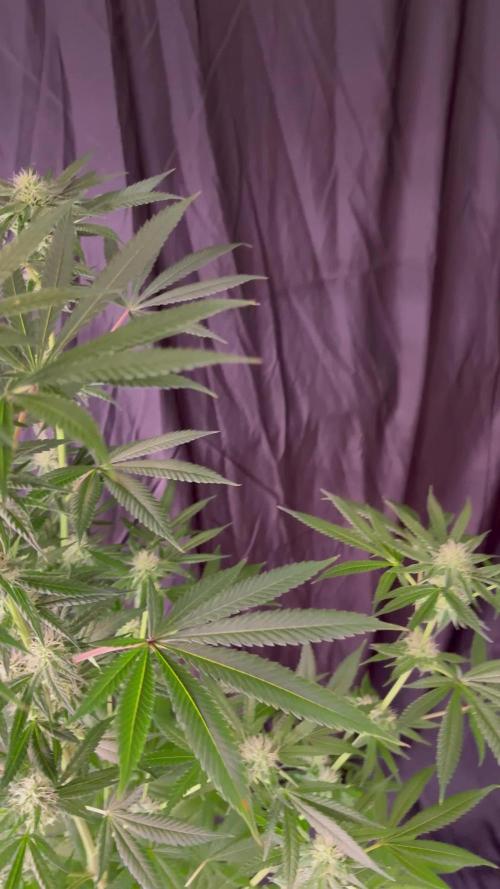
Legend Timestamp: 📅 EC - pH: ⚗️ Temp - Hum: 🌡️ Water: 🌊 Food: 🍗 pH Correction: 💧 Actions: 💼 Thoughts: 🧠 Events: 🚀 Media: 🎬 D: DAY, G: GERMINATION, V: VEGETATIVE, B: BLOOMING, R: RIPENING, D: DRYING, C: CURING ________________________________ 📅 D105/R01 - 28/02/24 ⚗️ EC: 0.9 pH: 5.2 🌡️ T: 21-25 °C H: 50-65 % 🌊 🍗 💧 💼 🧠 Ripening starts 🚀 🎬 Added timelapse and screenshots and monthly rate of T-H and VPD 📈📈📈 from TrolMaster App Translate ________________________________ 📅 D106/R02 - 29/02/24 ⚗️ EC: 1.2 pH: 6.7 🌡️ T:21-24 °C H: 50-65 % 🌊 🍗 💧 Added pH+ 💼 🧠 If someone who followed the diary from the beginning is asking himself what about mother plant "Mamma Aglio", here I posted some picture of her which demonstrate the difference between a bad and a good grow 🚀 🎬 Added pics of Nicole and pics of "Mamma Aglio" to show the difference between a bad and a good grow with sounds and TrolMaster logo. Added usual timelapse and screenshots. ________________________________ 📅 D107/R03 - 01/03/24 ⚗️ EC: 0.8 pH: 6.4 🌡️ T: 20-24 °C H: 45-65 % 🌊 2L 🍗 💧 💼 🧠 🚀 🎬 Added Timelapse and screenshots. 4 pics added ________________________________ 📅 D108/R04 - 02/03/24 ⚗️ EC: 0.8 pH: 6.7 🌡️ T: 20-25 °C H: 45-70 % 🌊 1L 🍗 💧 💼 🧠 🚀 🎬 Added Timelapse ________________________________ 📅 D109/R05 - 03/03/24 ⚗️ EC: 0.8 pH: 6.7 🌡️ T: 21-25 °C H: 45-65% 🌊 RES Changed 💦💦💦 🍗 💧 💼 🧠 I'm starting the flush, as trichomes look milky and quite ready. In this last week the ripening will be complete and th girl would be ready for harvesting. 🚀 Flush started 🎬Added 8 pics of trichomes, Timelapse and sceenshots. Two pics and two videos of my "garden's pre-harvest magic" 😋😋😋 ________________________________ 📅 D110/R06 - 04/03/24 ⚗️ EC: 0.2 pH: 7.5 🌡️ T: 19-25 °C H: 55-65% 🌊 🍗 Flawless finish 💧 💼 🧠 1 day with pure water and now I added Flawless finish 🚀 Flushing 🎬Added Timelapse and sceenshots ________________________________ 📅 D111/R07 - 05/03/24 ⚗️ EC: 0.2 pH: 7.5 🌡️ T: 20-25 °C H: 55-65% 🌊 🍗 💧 💼 🧠 🚀 Flushing 🎬Added 8 pics. Added timelapse and screenshots. I also prepared a timelapse of the entire week with some music 🎵🎵🎵 and weekly rate of T-H and VPD 📈📈📈
Processing
Likes
12
Share
Off to a good start , remove humidity dome once she pushed through
Likes
5
Share
8/17 is the beginning of week 5, week 2 of flower. she's looking happier than she's ever been! if she makes it through flower looking like this than I might be a forever convert to Gaia green. 8/21 Day 40 did some major LST today i know i said i would let it grow freely but I'm trying to keep it from growing vertically until I harvest the other girl.
Likes
2
Share
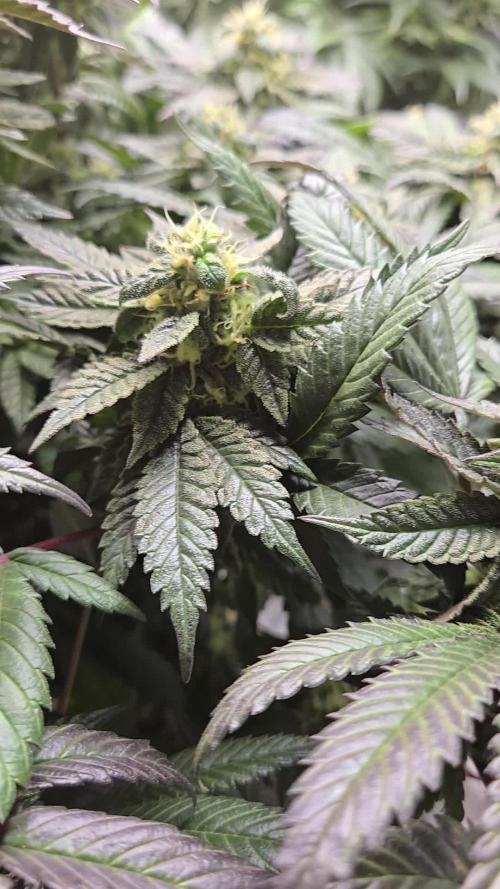
Struggled to maintain stretch but just gotta work with her.. didn't start showing signs of flower until 2 weeks into flipping lights to 12/12.
Likes
6
Share
@BLAZED
Follow
Week 6 (3-3 to 9-3) 3-3 Temps: 17.9 to 22 degrees Humidity: 58% to 74% I have a lot of faith in these girls, at the first sight they see a bit unhappy and it looks like it has some nutrient problem going on. But the leaves showing signs are the ones where the plant snapped in half, and they are recovering, im sure they will be allright in some time! 4-3 Temps: 17.8 to 21.9 degrees Humidity: 61% to 72% 5-3 Temps: 17.8 to 21.5 degrees Humidity: 55% to 79% Watering: Both 1000 ml. (Only calcium) 6-3 Temps: 17.8 to 21.7 degrees Humidity: 66% to 82% 7-3 Temps: 17.6 to 21.7 degrees Humidity: 68% to 82% 8-3 Temps: 17.7 to 21.7 degrees Humidity: 70% to 88% Watering #1: 1000 ml. The girls are doing very well! They grew quite a bit 😀 9-3 Temps: 17.3 to 21.5 degrees Humidity: 63% to 87% Installed the dehumidifier, as the humidity is getting high at lights off.
Likes
13
Share
already harvested the big headbud, because its very wet outside in the moment and i dont want my headbuds to rot. The deeper flowers of the plant look like they need a little bid longer. they are smaller, so the chance of bud rot is lower. to dry them the box is standing in the cellar with around 20 degrees, but definitely to wet there as well :D sorry for the bad pics, got a problem with my cam. Update: after 5 more days I harvested the rest. I am curious to see how much it will be after drying Summary: ztrawberriez and zkittelz were a blast for our 1st time outdoor grow, about 25g each dried and trimmed. Gorilla Punch had a problem with bud rot because she only produced one big cola. So there were only about 10g from that purple gorilla punch
Likes
50
Share
@AsNoriu
Follow
Day 50 since seed touched soil. From now on all is in stable position. Joe always will be in left corner, under fan, he was lowest, so it was smart to put him under. Plants dont grow well next to fan. 5 liters went in, want good run off and saturation. Later today will install second level of scrog. Reposition all shoots, some are lost, i almost regret instaling scrog, lost control of even height a bit, but canopy is very dense, branches went fatter during that week, i am happy . Mars TSL2000 is on 80% will increase to 90% at the end of this week. Day 53. Second level of scrog almost eaten, will have to make third, plus heavy clearing awaits next week ... Day 54. Think tomorrow is watering day. Girls need good clearing, bottom canopy been canibalised heavily, lack off air shows a lot. Will do third level of scrog together with watering. Day 55. Watered Joe, he is lowest, but looks nice. Think all deficiencies behind. Made light clearing, only bottom shoots which has 0 chance to make it, took part of LST down. Watering exposed roots - plant is occupying new lair , good sign ;) Happy Growing !!!
Likes
24
Share
Week 8: Nothing but water and wait for the rest of her time. She's beginning her flush so I figure a couple weeks and she'll be good to harvest 😎 This girl smells like Chem, Cherries and cream and she has really been putting on some weight here at the end. Her buds are deceptively dense and spear shaped. As the calyxes swell so do the trichs. Really interested to see what she smokes like.
Likes
37
Share
8/19 Rained again last night. No damage but medium is drenched. The 9lb kush I've been struggling with seems to be improving. I spent a lot of time on her yesterday and at least an hour this morning defoliating and pruning her. New growth and flowers look promising. I'm cautiously optimistic. I defoliated what needed it. I needcto qpplyvorganocide again. I can see random signs of septoria leaf spot. I really have been off my fame lately. I'm back on it now. This week the garden will be rearranged and I'll pull that big GDP back and better support the blueberry for flower. That NYCSA is a beast. It's resilient as all hell and just continues getting bigger and fuller. Despite pr9blems in the garden this girl seems absolutely fine. At least I don't have that defeated feeling anymore. I've got flowers on a few different plants. I'll try to get a couple pictures. I may take rapacaps advice and add a cheap plastic roof for later flower. I'm not sure if the explosive flower growth is due to the liquid kool bloom but I think I'm going to switch back to tiger bloom as it works better with the other nutes. I'll jeep this updated but I've got work to do. 8/20 Well it Rained again last night. This is getting discouraging. Now my other 9lb kush has the bottom branch all droopy like there's a borer or something. Realistically with the temp swings and the weather I think it's a firm of root rot or pythiym damage which isn't good. I posted pictures of the stalks and would be grateful if anyone has any advice. I'm go8ng back down to look again for a borer hole but i didn't see one. What it looks like to me is that the petroleum jelly I put on the stalks (to battle ear wigs) seems to keep them moist or something inviting mold or fungus. I'm kind of at a loss. I don't really know where to go from here. I don't know if I should just replant the severely damaged plant away from the rest of the grow, bag it and get rid of it or leave it be and hope for the best. I certainly don't want anything spreading. I'm getting tigerbloom today as my plants still need to eat and I'm nervous about the liquid kool bloom. It's probably fine but still. I'll update after I put in more work and research more today. Any advice helps. UPDATE: No borer holes. The stalk looks fucking horrible. It's supposed to rain today. I'm going to give it one more day then I'll amputate that branch and get rid of the other plant if I don't see an improvement. Perhaps I'll plant it in the ground. Don't really know what to do. Family bar b que today so my options are limited. 8/21 FED TWO GALLONS TO THE GARDEN. ONLY USED .5TSP/GAL OF LIQUID KOOL BLOOM. Did not feed dieing plant. Back to super hot weather 80° at 9am. Did a lot of research last night. I also went to several commercial growers and asked advice. What I came up with was a fusarium infection of pythiym infection (Crown rot). I looked at all my stalks and they all have bark and are darker where I applied the petroleum jelly. I'm also NEVER using DE again. It fucking ridiculous amounts of water. Everyone swears by it bit it's not going in my garden again. Since use I can just watch water sit right on the GD soil. I tried to get some examples of what I'm talking about with the stems. I amputated that lowest bottom branch I trained (which was huge). I didn't have time to dispose of the other plant before my wife's doctor's appointment. I'll update when I go back over. I'm sure this won't help and may hurt but I used Bee Safe 3 in 1 on the wound and around the stalks of the plants I saw discoloration on. I didn't touch the NYCSA even though I see some discoloration. I may just be seeing things. That plant I'd super healthy and I don't want to risk losing it. It doesn't seem to have the stem rot like the others. At least I'm not the only one having problems. I hears some pretty bad stories. Still. I'm heart broken. I'll keep this updated after I go back over. FUCK. I MAY just go back to indoor. UPDATE: Got back from the appointment and the rest of the plant was all droopy just like the other 9lb kush (and the branch amputated). I wondered about that because other branches looked worse. I got the totally dead 9lb kush out and found some root rot. AFTER wheeling the bag out I found earwigs and other insects where the bag had been. Awesome. I used h202 to try to wipe down anything that looked Fingal in the stem. It sucks because it seems like that liquid kool bloom pushed them over the edge into flower. Cotton balls where there was nothing. So that's both my 9lb kush plants and the largest plant of the year the GDP that have all bit the dust. If you grow cannabis you know how I'm feeling. I KEEP TRY8NGVTO UPLOAD THE MINUTE VIDEO I TOOK BUT I CLICK ON SOMETHING ELSE AND IT DISAPPEARS. WIFI SLOW. HAVE TO WAIT FOR 5G 8/22 What do I say? Fusarium? Pythium? Stem rot? I'm going to have to get a tent to do some indoor to get the medicine I need for me and my wife. I took the last 9lb kush out and disposed of it. Well it's still in the bag. I'm hoping maybe it might come out of it (beyond hope and far away from the others (but I'm going to toss it today). This blows so hard. Flowers are just starting to develop. I like the liquid kool bloom. It seems to make flowers explode when there was none before. At least on the plants I have left. Actually even the dieing ones started flowering. I'm really concerned considering that one plant (at least) has septoria and every plant has that petroleum jelly on it. Cautio to people that use that. It seems thats where the rot started or is. In spots I spread the petroleum jelly. Anyway my NYCSA has the smallest amount of "funky looking stuff on the stem" so I'm hoping it will make it. Cotton balls starting to appear. If I lose the whole fucking crop I'm gonna go ape shit. UPDATE: Spoke with a few others and did more research. I removed my braces on the bottom of all the plants. It looks like the pjelly and the brace allowed for some type of contaminate. Other growers think I'm being too bleak. They think things will turn out okay. They are more knowledgeable about cannabis than me but I'm with these particular plants everyday. They're probably right and my anxiety is just getting g to me. It's scary seeing a healthy plant completely die in such a short time. After removing the other 9lb kush I could easily see extreme rootbound roots still too the size of the 1 gallon they came in. The bag was PACKED FULL of tight roots so they definitely made it down. The plant however just fell over when I pushed it. I had roughed it up a big before. Anyway I'm praying to the cannabis gods to not take what I have left. 8/23 Fucking pouring again. This sucks. I've gotten loads of advice and made another friend on here. I forgot my phone so I couldn't take pictures this morning. My spirits are up a little seeing that others are at least attempting to help. I'm headed to the grow shop after a night of research to grab supplies to battle this. I'll update later. EDIT: I picked up plant doctor at the grow shop. It was 50% off and I couldn't find anything with trichodermia. However, I've heard good things about this plant doctor. It's systemic and can be used as a root drench and a foliar spray. BIGGEST selling point for me is that it SPECIFICALLY lists fusarium, grey mold. Pythiym crown rot, black mold and all kinds of other shit. The thing that sucks is it's raining and it's not supposed to stop for a few days. That's going to make application more difficult. Oh well. I think I may do a root drench on the one plant that has a wilted bottom branch. I'll keep this updated. Thank you everyone who reached out. Especially growing grannies and my commercial buddy who is always here for me. However he has no experience with this so I'm kinda on my own here. EDIT: I couldn't find trichodermia and I don't have time to wait around and order. I found plant doctor which literally lists it treats all the possibly pathogens my issue could be. Even has a section for medical Marijuana. I did a root drench on the plant up front in the middle AND I did a foliar spray. Might as well get the septoria too. It's systemic but it gets in faster through the leaves I guess. It started sprinkling and I want to test this stuff out before I go ham with it. I did give some to the to other plants bit left my best AND THE TWO SMALLER ONES alone for now. I'm not seeing those issues on the NYCSA and I don't want to risk damaging it. I chose tge root drench as it's raining and the instructions for fusarium WAS a root drench. Thank you all for your help. I will close out tge question once I know it's figured out. Wish me luck. DID A SHORT VIDEO BUT WIFI IS SUPER SLOW SO I NEED TO WAIT TO UPLOAD IT. Went back over. Finished foliar spraying the other two and left the NYCSA and two Littles alone. Hopefully this works. I did I short video. Who knows if it uploads. UPDATE: Went back over and finished foliar spraying. Took a bunch of pictures and did a video but it didn't upload. I'm hoping this will do it. Plants actually look good. And they're flowering nicely! It's too bad I had to do a foliar bug this us supposed to combat PM and septoria as well. 8/24 It Rained last night but hasn't Rained today yet. It's supposed to and uts overcast. I'm really considering putting a roof on my grow (like rapacap suggested) for flower to decrease mold chances. Plants looked happy. I saw no negative effects from the Plant Doctor. I even sprayed a branch of the NYCSA and the stem and a little around tge roots. I finally feel like I can take a breath. I've been working so hard and worrying about losing g everything. I may have been able to save that 9lbkush but I don't think bit was worth taking the chance. The sun is peaking out now. My buddy at the grow shop called and set a side general hydroponics armor si 0-0-4 silica supplement cause it was 90% off. I pad like a buck sixty lol. I'll incorporate that next feed or water. Whatever comes first but it will be good to get it in the regimen. I was worried plant doctor might hurt but the girls seemed to kike it and I went ham on the worst plant. I mixed according to medical Marijuana guidelines on the label (Theres another label on the internet, it's not on this one, it's at the very bottom and just recommdations from commercial growers. I hope this stuff works. Things look better already though. That liquid kool bloom is the bees knees. That's making flowers pop up like crazy! I think I'll stick with it. I was going to use beastie bloom and cha ching later on (and still might) but I hate the lockout bullshit. I've done a bunch of videos but most don't get uploaded as i forget to upload when I leave and wifi is slow here. Anyway at least I've got a few good ones left and pleating the words of my commercial poll buddy, "barring anything catastrophic you should be fine. I know your anxiety gets the better of you sometimes." Couldn't be a truer statement. I'm still getting a tent and doing indoor though. I'm going to need to. 8/25 Did some slight defoliation. I think today I'm going to reorganize my grow space. Things are looking better though. Plants look healthier. Flower is on and they are going to beat hell. I'm glad I took a cutting from NY 9lb kush. I also took one from the NYCSA. THose are tge little ones. The 9lb kush is flowering pretty good. Too bad it's just on a 3 gal. The NYCSA us in a 10 gal grow bag though and is doing amazing. I still see septoria on the leaves. I'm sure I'll need to reapply plant doctor but thus far I'm impressed. Things LOOK better. I don't even remember the last time I watered. It Rained last night. Looks sunny today. I'm going to feed tomorrow. I want the soil to dry out though. We usually don't get consistent rain like this. It's a first for me. I'll update later if I get stuff done.still wondering if I should amputate that wilted branch or give it a bit. It's still attached right now. I'll get some sealant and do some more research.
Likes
7
Share
11/21/2022: plants are all still extremely healthy, and the buds keep putting on more weight. Only problem has been a small fungas gnat outbreak. So far it has been manageable with sticky traps, but I have some neem cake on the way. Also, top dressed all three plants late last week and watered again today 1 liter each. The fresh worm casting hold the moister more, so I lowered the amount of water today. Watered at 6.8 ph, using the normal ThermX-70 and coconut powder. Also added a 1/2 teaspoon of BuildABloom and 2 tsp of Yah-Whey Thrive, which is a probiotic whey made from fermented Kefir grains. Saw a lot of good reviews, so figured I'd give it a try. 11/22/2022: the fungas gnat issue is getting worse, so I made some neem cake tea and watered each plant about 1/3rd of a liter. We'll see how this works and how the plants respond. 11/23/2022: did a full watering today about 1 liter per plant. Made an alfalfa sprouted seed tea, and added about 1/4 cup of the Yah-Whey Thrive, and some ThermX-70. Fungas gnats are still an issue, so the jury is still out on the neem cake tea. Ordered some Dr. Zymes to change it up, but it's back ordered until Dec. Hopefully the neem cake tea is killing the eggs and larva. The sticky traps are keeping them under control as well. It looks like the Strawberry Gushers and Newberry are beginning to show the first signs of a fade. It's only on a few leaves, so it makes me think it's not a nutrient issue. 11/24/2022: made another round of neem cake tea. Added powdered coconut, BuildABloom, and ThermX-70. Added about 1.3 liters to each plant. 11/25/2022: I'm in an all out war with the fungas gnats and I seem to be gaining ground (for now). Wanted to switch it up, so I made mosquito bit tea and gave about .5 liters to each plant. Mainly trying to get the first couple inches of the soil. The sticky traps are catching the adults, so hopefully the neem and B.t.i will kill the eggs and larva. Buds are continuing to swell, and the aroma is amazing. The Strawberry Gushers is like a sweet funk. The Orange Bubblegum definitely has an orange scent, and the Newberry smells like fruity pebbles. All plants are still looking healthy and I continue to see some mild fading. The Newberry has one branch that is fading more than the others which is strange. Not sure if it has something to do with the super cropping, or something else, but there is a noticable difference compared to the rest of the plant. The leaves and buds still look healthy, so I'm not too worried for now, but will continue to monitor. 11/26/2022: DAY 60!! Decided to get a little crazy today. This will probably be one of the last times I add microbes to the plants, other than one more late flower compost tea, so I wanted to get as diverse as possible. Added 1/4 teaspoon of the BuildASoil Big 6 micro nutrients, Bio-Phos, TeaCo Super Tea blend, and Recharge, plus 4 ml of FishShit. There is definitely some overlap between these, but they each contained several microbes the others didn't, so I liked the extra diversity. I also added the coconut powder and ThermX-70, which I use for every watering at this point. Gave each plant about 1 liter of this microbe tea. I'm sure the extra watering lately is not helping my fungas gnat issue, but the plants are drinking it up. Avg. VPD:1.5 PPFD: 700 DLI: 45
Likes
6
Share
@RzDreams
Follow
Floración Dia 40 al 46, Sexta semana 05/12/2022 Riego😰 Indoor sin novedad, continúa engorde 09/12/2022 #04 Exterior Se nota gran cantidad de tricomas blancos. 11/12/2022 #04 de exterior con 4 días más de floración está casi a punto de corte, se nota un 90% de tricomas blancos, se continua con observación diaria.
Likes
12
Share
End of the third week of transition and the hot mess is rounding out nicely👌. We’ve got an extra pots worth of space freed up so we spread em out a little and tied the super tops back down again. Probably for the last time as we wait for em to bulk up through mid flower. Per the video - we kept as much foliage as we could and we’ll move to straight maintenance and pruning from here on out. What’s interesting is that every single one of these clones is perfectly healthy. This is in stark contrast to the mothers growing out seed in the tent next door. Half of those are showing deficiencies of some kind. A telling comparative between to different hydro methods. Coco is an imperfect method imo and every plant always seems to react a little differently. Dutchies, well…. They speak for themselves😉👌. I expect yield will be much heavier on this run than originally anticipated. This is the way👍. Background This cycle of clones represents all the potential of this F1 line of WalkerBerry OG. Bred by myself over the last couple of years. This genetic shows excellent hybrid vigour, incredibly stable nutrition requirements to date and an eclectic mix of long and short internodal spacing bu specimen. We know we have indica and sativa dominant traits spread evenly across the 6 available clones. Now it’s just a matter of seeing them run out under controlled and pollen free conditions. We’ve labelled each plant and it’s resulting seed accordingly. Once we get to the F2 run, we’ll hopefully be able to isolate down to 2-3 phenos if the bud is any good. From there, who knows. It’d be great to get to a finished, stable generation that would be fem worthy but that could be a very long way off. For now - we’ll focus on this line and see where it goes🤞🤞.
Likes
19
Share
Yellow butterfly came to see me the other day; that was nice. Starting to show signs of stress on the odd leaf, localized isolated blips, blemishes, who said growing up was going to be easy! Smaller leaves have less surface area for stomata to occupy, so the stomata are packed more densely to maintain adequate gas exchange. Smaller leaves might have higher stomatal density to compensate for their smaller size, potentially maximizing carbon uptake and minimizing water loss. Environmental conditions like light intensity and water availability can influence stomatal density, and these factors can affect leaf size as well. Leaf development involves cell division and expansion, and stomatal differentiation is sensitive to these processes. In essence, the smaller leaf size can lead to a higher stomatal density due to the constraints of available space and the need to optimize gas exchange for photosynthesis and transpiration. In the long term, UV-B radiation can lead to more complex changes in stomatal morphology, including effects on both stomatal density and size, potentially impacting carbon sequestration and water use. In essence, UV-B can be a double-edged sword for stomata: It can induce stomatal closure and potentially reduce stomatal size, but it may also trigger an increase in stomatal density as a compensatory mechanism. It is generally more efficient for gas exchange to have smaller leaves with a higher stomatal density, rather than large leaves with lower stomatal density. This is because smaller stomata can facilitate faster gas exchange due to shorter diffusion pathways, even though they may have the same total pore area as fewer, larger stomata. Leaf size tends to decrease in colder climates to reduce heat loss, while larger leaves are more common in warmer, humid environments. Plants in arid regions often develop smaller leaves with a thicker cuticle and/or hairs to minimize water loss through transpiration. Conversely, plants in wet environments may have larger leaves and drip tips to facilitate water runoff. Leaf size and shape can vary based on light availability. For example, leaves in shaded areas may be larger and thinner to maximize light absorption. Leaf mass per area (LMA) can be higher in stressful environments with limited nutrients, indicating a greater investment in structural components for protection and critical resource conservation. Wind speed, humidity, and soil conditions can also influence leaf morphology, leading to variations in leaf shape, size, and surface characteristics. Small leaves: Reduce water loss in arid or cold climates. Environmental conditions significantly affect gene expression in plants. Plants are sessile organisms, meaning they cannot move to escape unfavorable conditions, so they rely on gene expression to adapt to their surroundings. Environmental factors like light, temperature, water, and nutrient availability can trigger changes in gene expression, allowing plants to respond to and survive in diverse environments. Depending on the environment a young seedling encounters, the developmental program following seed germination could be skotomorphogenesis in the dark or photomorphogenesis in the light. Light signals are interpreted by a repertoire of photoreceptors followed by sophisticated gene expression networks, eventually resulting in developmental changes. The expression and functions of photoreceptors and key signaling molecules are highly coordinated and regulated at multiple levels of the central dogma in molecular biology. Light activates gene expression through the actions of positive transcriptional regulators and the relaxation of chromatin by histone acetylation. Small regulatory RNAs help attenuate the expression of light-responsive genes. Alternative splicing, protein phosphorylation/dephosphorylation, the formation of diverse transcriptional complexes, and selective protein degradation all contribute to proteome diversity and change the functions of individual proteins. Photomorphogenesis, the light-driven developmental changes in plants, significantly impacts gene expression. It involves a cascade of events where light signals, perceived by photoreceptors, trigger changes in gene expression patterns, ultimately leading to the development of a plant in response to its light environment. Genes are expressed, not dictated! While having the potential to encode proteins, genes are not automatically and constantly active. Instead, their expression (the process of turning them into proteins) is carefully regulated by the cell, responding to internal and external signals. This means that genes can be "turned on" or "turned off," and the level of expression can be adjusted, depending on the cell's needs and the surrounding environment. In plants, genes are not simply "on" or "off" but rather their expression is carefully regulated based on various factors, including the cell type, developmental stage, and environmental conditions. This means that while all cells in a plant contain the same genetic information (the same genes), different cells will express different subsets of those genes at different times. This regulation is crucial for the proper functioning and development of the plant. When a green plant is exposed to red light, much of the red light is absorbed, but some is also reflected back. The reflected red light, along with any blue light reflected from other parts of the plant, can be perceived by our eyes as purple. Carotenoids absorb light in blue-green region of the visible spectrum, complementing chlorophyll's absorption in the red region. They safeguard the photosynthetic machinery from excessive light by activating singlet oxygen, an oxidant formed during photosynthesis. Carotenoids also quench triplet chlorophyll, which can negatively affect photosynthesis, and scavenge reactive oxygen species (ROS) that can damage cellular proteins. Additionally, carotenoid derivatives signal plant development and responses to environmental cues. They serve as precursors for the biosynthesis of phytohormones such as abscisic acid () and strigolactones (SLs). These pigments are responsible for the orange, red, and yellow hues of fruits and vegetables, while acting as free scavengers to protect plants during photosynthesis. Singlet oxygen (¹O₂) is an electronically excited state of molecular oxygen (O₂). Singlet oxygen is produced as a byproduct during photosynthesis, primarily within the photosystem II (PSII) reaction center and light-harvesting antenna complex. This occurs when excess energy from excited chlorophyll molecules is transferred to molecular oxygen. While singlet oxygen can cause oxidative damage, plants have mechanisms to manage its production and mitigate its harmful effects. Singlet oxygen (¹O₂) is considered a reactive oxygen species (ROS). It's a form of oxygen with higher energy and reactivity compared to the more common triplet oxygen found in its ground state. Singlet oxygen is generated both in biological systems, such as during photosynthesis in plants, and in cellular processes, and through chemical and photochemical reactions. While singlet oxygen is a ROS, it's important to note that it differs from other ROS like superoxide (O₂⁻), hydrogen peroxide (H₂O₂), and hydroxyl radicals (OH) in its formation, reactivity, and specific biological roles. Non-photochemical quenching (NPQ) protects plants from damage caused by reactive oxygen species (ROS) by dissipating excess light energy as heat. This process reduces the overexcitation of photosynthetic pigments, which can lead to the production of ROS, thus mitigating the potential for photodamage. Zeaxanthin, a carotenoid pigment, plays a crucial role in photoprotection in plants by both enhancing non-photochemical quenching (NPQ) and scavenging reactive oxygen species (ROS). In high-light conditions, zeaxanthin is synthesized from violaxanthin through the xanthophyll cycle, and this zeaxanthin then facilitates heat dissipation of excess light energy (NPQ) and quenches harmful ROS. The Issue of Singlet Oxygen!! ROS Formation: Blue light, with its higher energy photons, can promote the formation of reactive oxygen species (ROS), including singlet oxygen, within the plant. Potential Damage: High levels of ROS can damage cellular components, including proteins, lipids, and DNA, potentially impacting plant health and productivity. Balancing Act: A balanced spectrum of light, including both blue and red light, is crucial for mitigating the harmful effects of excessive blue light and promoting optimal plant growth and stress tolerance. The Importance of Red Light: Red light (especially far-red) can help to mitigate the negative effects of excessive blue light by: Balancing the Photoreceptor Response: Red light can influence the activity of photoreceptors like phytochrome, which are involved in regulating plant responses to different light wavelengths. Enhancing Antioxidant Production: Red and blue light can stimulate the production of antioxidants, which help to neutralize ROS and protect the plant from oxidative damage. Optimizing Photosynthesis: Red light is efficiently used in photosynthesis, and its combination with blue light can lead to increased photosynthetic efficiency and biomass production. In controlled environments like greenhouses and vertical farms, optimizing the ratio of blue and red light is a key strategy for promoting healthy plant growth and yield. Understanding the interplay between blue light signaling, ROS production, and antioxidant defense mechanisms can inform breeding programs and biotechnological interventions aimed at improving plant stress resistance. In summary, while blue light is essential for plant development and photosynthesis, it's crucial to balance it with other light wavelengths, particularly red light, to prevent excessive ROS formation and promote overall plant health. Oxidative damage in plants occurs when there's an imbalance between the production of reactive oxygen species (ROS) and the plant's ability to neutralize them, leading to cellular damage. This imbalance, known as oxidative stress, can result from various environmental stressors, affecting plant growth, development, and overall productivity. Causes of Oxidative Damage: Abiotic stresses: These include extreme temperatures (heat and cold), drought, salinity, heavy metal toxicity, and excessive light. Biotic stresses: Pathogen attacks and insect infestations can also trigger oxidative stress. Metabolic processes: Normal cellular activities, particularly in chloroplasts, mitochondria, and peroxisomes, can generate ROS as byproducts. Certain chlorophyll biosynthesis intermediates can produce singlet oxygen (1O2), a potent ROS, leading to oxidative damage. ROS can damage lipids (lipid peroxidation), proteins, carbohydrates, and nucleic acids (DNA). Oxidative stress can compromise the integrity of cell membranes, affecting their function and permeability. Oxidative damage can interfere with essential cellular functions, including photosynthesis, respiration, and signal transduction. In severe cases, oxidative stress can trigger programmed cell death (apoptosis). Oxidative damage can lead to stunted growth, reduced biomass, and lower crop yields. Plants have evolved intricate antioxidant defense systems to counteract oxidative stress. These include: Enzymes like superoxide dismutase (SOD), catalase (CAT), and various peroxidases scavenge ROS and neutralize their damaging effects. Antioxidant molecules like glutathione, ascorbic acid (vitamin C), C60 fullerene, and carotenoids directly neutralize ROS. Developing plant varieties with gene expression focused on enhanced antioxidant capacity and stress tolerance is crucial. Optimizing irrigation, fertilization, and other management practices can help minimize stress and oxidative damage. Applying antioxidant compounds or elicitors can help plants cope with oxidative stress. Introducing genes for enhanced antioxidant enzymes or stress-related proteins over generations. Phytohormones, also known as plant hormones, are a group of naturally occurring organic compounds that regulate plant growth, development, and various physiological processes. The five major classes of phytohormones are: auxins, gibberellins, cytokinins, ethylene, and abscisic acid. In addition to these, other phytohormones like brassinosteroids, jasmonates, and salicylates also play significant roles. Here's a breakdown of the key phytohormones: Auxins: Primarily involved in cell elongation, root initiation, and apical dominance. Gibberellins: Promote stem elongation, seed germination, and flowering. Cytokinins: Stimulate cell division and differentiation, and delay leaf senescence. Ethylene: Regulates fruit ripening, leaf abscission, and senescence. Abscisic acid (ABA): Plays a role in seed dormancy, stomatal closure, and stress responses. Brassinosteroids: Involved in cell elongation, division, and stress responses. Jasmonates: Regulate plant defense against pathogens and herbivores, as well as other processes. Salicylic acid: Plays a role in plant defense against pathogens. 1. Red and Far-Red Light (Phytochromes): Red light: Primarily activates the phytochrome system, converting it to its active form (Pfr), which promotes processes like stem elongation and flowering. Far-red light: Inhibits the phytochrome system by converting the active Pfr form back to the inactive Pr form. This can trigger shade avoidance responses and inhibit germination. Phytohormones: Red and far-red light regulate phytohormones like auxin and gibberellins, which are involved in stem elongation and other growth processes. 2. Blue Light (Cryptochromes and Phototropins): Blue light: Activates cryptochromes and phototropins, which are involved in various processes like stomatal opening, seedling de-etiolation, and phototropism (growth towards light). Phytohormones: Blue light affects auxin levels, influencing stem growth, and also impacts other phytohormones involved in these processes. Example: Blue light can promote vegetative growth and can interact with red light to promote flowering. 3. UV-B Light (UV-B Receptors): UV-B light: Perceived by UVR8 receptors, it can affect plant growth and development and has roles in stress responses, like UV protection. Phytohormones: UV-B light can influence phytohormones involved in stress responses, potentially affecting growth and development. 4. Other Colors: Green light: Plants are generally less sensitive to green light, as chlorophyll reflects it. Other wavelengths: While less studied, other wavelengths can also influence plant growth and development through interactions with different photoreceptors and phytohormones. Key Points: Cross-Signaling: Plants often experience a mix of light wavelengths, leading to complex interactions between different photoreceptors and phytohormones. Species Variability: The precise effects of light color on phytohormones can vary between different plant species. Hormonal Interactions: Phytohormones don't act in isolation; their interactions and interplay with other phytohormones and environmental signals are critical for plant responses. The spectral ratio of light (the composition of different colors of light) significantly influences a plant's hormonal balance. Different wavelengths of light are perceived by specific photoreceptors in plants, which in turn regulate the production and activity of various plant hormones (phytohormones). These hormones then control a wide range of developmental processes.
Likes
92
Share
Week 12 D86 Flowering 35-40 days since stigma started showing. She is growing really well, for now what ever all the little rust spots were are gone. Still not solid explanations as to what it was or to as why it came up. Made a hard choice. And snipped the roots that were drinking from the plate, as this could of been the cause as to why this was happening on otherwise a healthy looking plant. Lowered the PPM from 1550 down to 1250 and will bring her down another 3-600 over the course of the next week and then another 2-300 the following week and keep her on regular 700ppm feeds of just bloom, but candy overdrive and B-52. All other nutes will be pulled over the next 2 weeks, gradually and not all at once neither, don't want to shock her into a def, just want to make sure all this crap is flushed from her. Big bud, she got her last feed of that today and that's her done on that now. She was started on her normal mix - 300ppm. RH is holding at a steady 65 temp is 26, 21c with lights off. 14/3/22 Added my 2nd intake fan was able to bring down the RH down as low as 53% with the 2 on full blast. Rooms RH is at 46% dehumidifier has been running 24/7 since I got it. Not good enough though. It works but looks like I'm going to get a 370watt 25l (meaning, it takes 25l out of the air every 24hrs, the 1 im using now is a 60watt that gets rid of 2l every 8hrs). It'll do in an hour what this machine takes 8hours to do. So it'll actually use less energy overall. 18/3/22 Plant is coming on nicely, putting on lots of bud mass, hopefully it'll keep packing on bud as there is not much in the way of sugar leafs it'll just be nice dense bud. For the last 24 hrs I've thrown her into a hard flush, 6l of water with 2 flushes one last night 1 tonight after each flush 50ml with sensi cal mag extra 1ml/50ml was given so the plant wouldn't go into full flush and the nutes left behind will break down helping nute uptake. Very important to introduce some cal as if you flush for too long and have a high build up of salts you'll cause a form of nute lock and throw plant into the flushing phase. So always use some cal mag on top to break down the nutes you are trying to flush. Thanks for reading gottagrowsometime
Likes
11
Share
@goeser
Follow
More details and photos are coming when all buds are dried in about 6-7 days00
Likes
18
Share
@Chubbs
Follow
Weekly update for these ladies. The flowers have definitely started swelling up and getting bigger every day. The sweet smell the give off is mouthwatering and the colors are absolutely gorgeous. From the looks they've got a few more weeks to go. All in all really pleased with the easiness to grow. Happy Growing