


Likes
Comments
Share


@Krisis
Follow
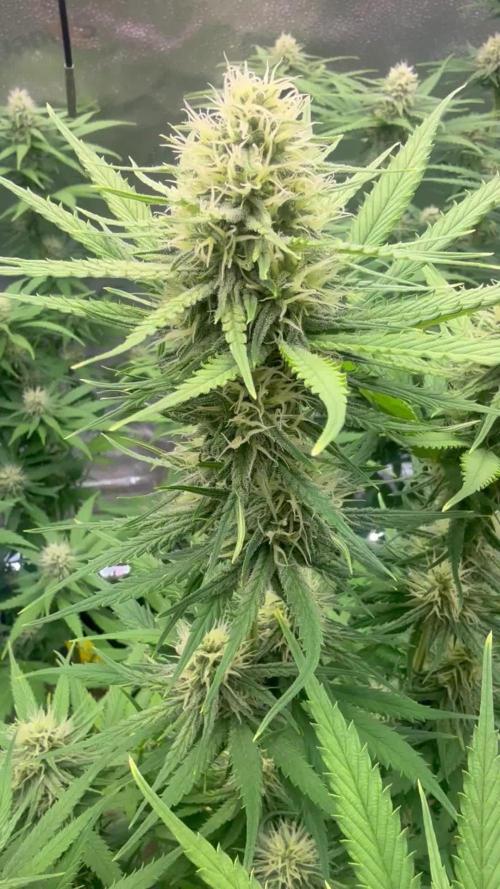
3/4/24-Here we are with the ladies goin to their second week. Yay baby flowers 💚
Have a few things going on. I apparently suck at the trellis thing lol. At flower they were all pretty even..I would tuck a few stragglers that got taller under. They’ve went crazy now and I don’t really have anywhere to tuck them other than away from the lights which I don’t wanna do.
There was some discoloration on the tips of leaves which I assumed was light or nutrient related, so I dimmed lights a bit and checked the runoff water. Omg. It was wayyyyy too acidic. Like high 4’s low 5.
Some leaves also appear to be showing magnesium deficiency.. which I assume is because of the crazy acidity. I’m giving dechlorinated tap water (no normal nutes) without phing it because it’s very alkaline. Hoping it will bring things back up. Oh, I sprinkled epsom salt on the soil before watering. (Magnesium)
Really crossing my fingers that I am doing the right things and don’t screw this up! These ladies still look really good to me considering.. but only time will tell.
Update: pretty sure I had nitrogen toxicity and too much salt buildup in the soil. In the meantime got what seemed to be magnesium deficiency. I’ve been giving only water with some epsom salt and the girls seems much happier. Hopefully Krisis averted 😂

Likes
12
Share


@Microsemilla
Follow
Plantas compactas y de verdes grisaseos. Cosechas abundantes pero especialmente resinosas. Cristales everywhere! Humo bien espeso

Likes
1
Share


@Ultraviolet_
Follow
Remember that, however you are played, or by whom, your soul is in your keeping alone. Even though those who presume to play you be kings or men of power, when you stand before God, you cannot say, 'But I was told by others to do thus,' or that virtue was not convenient at the time. This will not suffice. Remember that.
Day:18
84°F and 65% RH (VPD) for the vegetative stage. Approximately 1.15kPa(assuming leaf temperature is about 2°F cooler than the air), which falls right into the ideal vegetative sweet spot (0.8kPa to 1.2kPa). At 1.15kPa, plants can draw water and nutrients efficiently without risking stress or wilting. It keeps the leaf pores (stomata) open, allowing for ideal carbon dioxide intake and maximizing vegetative growth. VPD is determined by the leaf's temperature, not just the ambient air. Because leaves usually run 1° to 3°F cooler than room air under bright grow lights, my actual VPD will be slightly lower, closer to the 1.0kPa mark. As she transitions from vegetative growth to flowering, one can gradually lower the humidity (to around 45–60%) and drop temperatures slightly to prevent disease from settling inside dense buds when they appear.
Night:6
At 70°F and 60% relative humidity, Vapor Pressure Deficit (VPD) is 0.86 kPa. This is right on the cusp of whats optimal for the vegetative stage. During the nighttime, plants generally close their stomata and undergo cellular respiration rather than photosynthesis. Transpiration slows to a near stop, making VPD less critical at night than during the day. However, maintaining a nighttime VPD between 0.8 and 1.0 kPa is highly beneficial in that it ensures the air is dry enough to prevent powdery mildew or bud rot, but moist enough to keep the plant from undergoing unnecessary stress. This range keeps the environment comfortable for cellular processes and prevents large atmospheric swings. Keeping it all flowing.
(Not pushing them yet, these are photoperiods)
The optimal soil (root zone) temperature for cellular root respiration and nutrient uptake in cannabis is between 68F & 72F This narrow range balances biological energy production (cellular respiration) with the dissolved oxygen levels in the soil, maximizing plant growth and health. Warmer soils hold significantly less dissolved oxygen. When soil temperature exceeds 74F oxygen depletion occurs, inhibiting cellular respiration almost entirely, At 68-72F root cells generate optimal adenosine triphosphate (ATP) via respiration to power root-tip elongation and the active transport of water and nutrients.
Too Hot (Above 78F) Root respiration increases, demanding more oxygen, while the water's oxygen-carrying capacity drops. This creates a prime environment for anaerobic pathogens and Pythium (root rot).
Too Cold (Below 60F) Root metabolism and cellular respiration slow to a crawl. This severely impairs nutrient and water absorption, leading to yellowing, wilting, and phosphorus deficiencies.
A lot depends on whether it's automatic or photoperiod; with photoperiod, there is not as much of a need to push "hard" as the real countdown only begins once the flower is initiated. Automatics, on the other hand, the chronological "clock" begins ticking the moment the seed germinates. It is of critical importance that the seedling growth gets off to the races, understanding that early growth is like compound interest, which will pay off come harvest. This reality is why getting autoflowers "off to the races" early on yields such exponential benefits. The "compound interest" is directly related to the surface area of the leaves. Larger, faster-growing seedlings process more light and build bigger root networks early on, which translates into an explosion of vertical and lateral growth during their short vegetative window.
The margins for error are so thin with autoflowers; this early-stage momentum depends on several critical practices. Seedlings exposed to increased atmospheric CO2 levels early in life will develop at an increased rate. To effectively "extend" or optimize the capacity of Photosystem II (PSII) for increased photosynthetic efficiency. In standard oxygenic photosynthesis, Photosystem II (PSII) is naturally limited to the red-light spectrum, peaking at 680nm. Extending its light-harvesting capacity past 700nm into the far-red region requires bypassing the natural limits of standard chlorophyll a. Adding 730 nm (far-red) LEDs alongside standard red/blue lights has been shown to increase canopy photosynthesis by 20–30% in several crops by acting synergistically with shorter wavelengths. However, the limitation is that excessive, pure IR/Far-red light (without accompanying red light) can trigger the "shade avoidance response," causing plants to grow tall, weak, and spindly rather than robust. Utilizing infrared light (specifically the 700-750 nm far-red range) is a viable method to boost photosynthetic efficiency. It acts as a bridge to allow PSII to utilize a broader spectrum of light, breaking the traditional 700 nm barrier. UVR8-mediated signaling (often in conjunction with CRY proteins) triggers protective mechanisms that maintain the stability of the photosynthetic apparatus (including LHCII and reaction center proteins), thus ensuring that the efficiency of Photosystem II remains higher in UV-B-exposed plants compared to plants lacking this receptor. ΦPSII indictates the rate of electron transfer from water to plastoquinone, which drives the production of ATP and NADPH. There is a close link between ΦPSII and the true rate of CO2 fixation (Φ*co2).
ETR stands for Electron Transport Rate. It measures the speed at which electrons are moved through the thylakoid membranes in a plant's chloroplasts during the light-dependent reactions of photosynthesis. Infrared light (particularly Near-Infrared or NIR) improves cellular energy by interacting directly with the electron transport chain (ETC) in mitochondria. This process boosts adenosine triphosphate production, which acts as a metabolic coefficient multiplier by accelerating enzyme activity dramatically.
Extend then multiply.
Far-Red photons interact with plant photoreceptors to accelerate the plant’s biological "clock" or trigger a shade-avoidance response. Autoflowers don't use the plant's biological clock, although the IR will initiate a shade avoidance and make them stretchy. You can just add equal measures of 660nm-680nm to negate the shade avoidance effect. Replacing nights' "darkness" with a combination of IR+ and 660nm. Because autoflowers don't require a dark period to flower, many growers just blast them with light. 18/6 24/0. However, this ignores the plant's metabolic rhythms, where daytime photosynthesis (light reactions) must be perfectly balanced with nighttime carbon fixation and assimilation (Calvin cycle) to avoid bottlenecking plant development. Cellular respiration is a 24/7 process, but it can only function while the plant has the free oxidative capacity to do so. A 100% photosynthetically active leaf cannot perform cellular respiration. The viral trend of defoliation of every leaf that isn't "getting enough light" is of great detriment overall, putting 100% of the cellular respiratory "workload" and responsibility on the 0/4/6 hours of darkness in sub-optimal conditions for enzymatic activity. Photosynthesis captures nearly 100% of the initial energy as carbon, while cellular respiration is the process that unlocks 90% of that captured energy into usable ATP so the plant can use it. Respiration is considered roughly 30% to 40% efficient. It captures enough of the potential energy in glucose to synthesize around 30 to 38 ATP molecules per glucose molecule. The remaining 60% to 70% of the energy in the sugar is not captured in ATP; instead, it naturally escapes into the environment as heat, which helps regulate plant temperature. In plants, the primary enzymes of the Electron Transport Chain (ETC) and the ATP synthase complexes are typically adapted to function optimally in warmer temperatures (roughly 25°C to 35°C depending on the specific plant strain). As temperatures rise within this physiological range, molecular collisions increase, speeding up respiration and ATP production. The cannabis plant has a branched respiratory pathway. During heat or cold stress, plants activate Alternative Oxidase (AOX). AOX burns sugars to dissipate energy as heat rather than coupling it to ATP production. This pathway actually functions optimally at elevated temperatures to help protect the cell from the damaging build-up of Reactive Oxygen Species (ROS) during heat stress. Enzyme activity generally scales with heat; there is a strict biological limit. If canopy temperatures in a grow room exceed 40°C, the enzymes and their supporting lipid membranes lose stability. Not saying you need to go crazy, just optimize nights the same as we optimize days.
Phosphorus is the driving force behind early seedling development. It acts as the "energy hub" of the plant, directly driving cell division, robust root growth, and the creation of DNA. Without an adequate, easily accessible supply early on, the plant's overall growth potential and final yield can suffer permanently.
E=MC2 looks like a simple multiplication problem; it describes a fundamental physical truth: mass and energy are the same thing. The equation doesn't just calculate a value; it reveals that mass is effectively "congealed" energy. Energy is just numbers. Energy isn't a physical "substance" you can hold or touch. It is essentially an abstract, calculated number that we assign to a system to predict how it will change, interact, or move. A numerical label we attach to matter to track how it behaves. Because the universe runs on laws of symmetry (specifically, that the laws of physics don't change over time), a single global number must be conserved. We call that number "energy".
We don't grow; we facilitate energy conversion.
How well a seedling grows is essentially down to how much knowledge one can acquire to increase the level of conversion to occur. Applying knowledge effectively requires intuition, which comes from hands-on experience. A seasoned stoner learns to read subtle signs—like a slight change in leaf turgor (stiffness), subtle color shifts, or the specific texture of the soil—before a textbook diagnosis can be made. Ultimately, growing is the application of botanical science blended with active observation. Knowledge dictates your potential, but adaptability and attentiveness to the plant's immediate environment determine your results.
1.618 nature mathematically optimizes quantum energy transfer and light absorption efficiency within the photosynthetic machinery, as it naturally dictates energy scaling hierarchies and resonance dynamics. External vibration or electromagnetic wave that perfectly matches a plant's natural frequency directly influences plant growth. Low-frequency sound waves and targeted electromagnetic fields stimulate cellular processes and boost photosynthetic efficiency
Does it produce better yields?
How long is a piece of string? As long as you cut it. But isssss the juice worth the squeeze? The quantum framework of the IVM seems to think so. Good enough for the quantum firmware, good enough for the DNA software. Genetics are not dictated; they are expressed; the rate of that expression is dictated by the environment in which growth occurs.
Quantum Coherence in Photosynthesis occurs When a photon of sunlight strikes a leaf, the energy it carries must travel to a reaction center to be converted into chemical energy. This process operates at nearly 100% efficiency. If the energy moved in a traditional "bunching" or random hopping manner, a large portion of it would be lost as heat. Instead, plants utilize quantum superposition. The energy particle (exciton) doesn't just take one path; it exists in a wave state and explores multiple pathways simultaneously. It essentially "chooses" the most efficient route to the reaction center simultaneously. Research shows that molecular vibrations and the specific network arrangements of chlorophyll molecules (like the naturally evolved Chlorophyll A & B ratios) actively protect against energy overflow, optimizing light capture across different light intensities. Enzymes are the biological catalysts that speed up chemical reactions within a plant's cells, allowing them to grow, metabolize, and repair. Rather than relying solely on the classical kinetic energy of molecules colliding, plants use quantum tunneling. Subatomic particles like electrons and protons (hydrogen ions) can literally "teleport" through energy barriers that they normally wouldn’t have the energy to climb over. This makes vital metabolic reactions happen far faster than classical physics could ever explain.
Chloryphyll b has peak absorption at 460nm (Blue) and at 647nm(Red). If we take the blue peak wavelength 460nm and a UV-B, UVR8 peak absorption wavelength 285nm, Tryptophan-285 (W285) Sensing protein. 460/285=1.618 Φ If we take chlorypyhll b's Red absorption peak 647nm and a UV-A of 400nm, we get 647/400=1.618 Φ. "Structure of light". The cryptochrome photoreceptor (CRY) is a UV-A/blue light receptor that shares this dual sensitivity with several other biological structures and functions, including significant sequence similarity and a common evolutionary ancestor with DNA photolyase enzymes. These are light-activated enzymes that use blue/UV-A light to repair DNA damage caused by UV-B radiation in plants. Synergistic. But Shhh, it's a secret.
Effective quantum efficiency of photosystem II, often denoted as ΦPSII, represents the proportion of light absorbed by Photosystem II (ΦPSII) that is actually used in photosynthetic electron transport. It is a key indicator of how efficiently a plant is using light for photosynthesis, as opposed to losing it as heat or fluorescence. ΦPSII (effective quantum yield of photosystem II) functions primarily as a "multiplier" (a coefficient of efficiency) rather than an additive factor when estimating the overall photosynthetic electron transport rate (ETR). Multipliers are considered far more beneficial than additions because they generate exponential growth, leverage existing resources to their full potential, and create sustainable, self-multiplying capacity, rather than just incremental, linear increases. This fascinating observation is rooted in the intersection of subatomic geometry, fractal scaling, and quantum dynamics. In specific molecular arrangements—such as in conjugated polymer networks or biomolecular architectures—the Golden Ratio (PHI) naturally dictates energy scaling hierarchies and resonance dynamics. Mathematically tied to the fine-structure constant, which defines the strength of the electromagnetic interaction. The Golden Ratio can be mapped geometrically as the Golden Angle (137.5 degrees) in atomic structures, linking the charge of the electron to fundamental quantum constants like Planck's constant.
Electromagnetic.
The Golden Angle (137.5): This angle is derived from the Golden Ratio (1.618). It is the smaller of two angles created when a circle is divided such that the ratio of the arcs equals the Golden Ratio.


Likes
4
Share

@Bear_Grows_Green
Follow
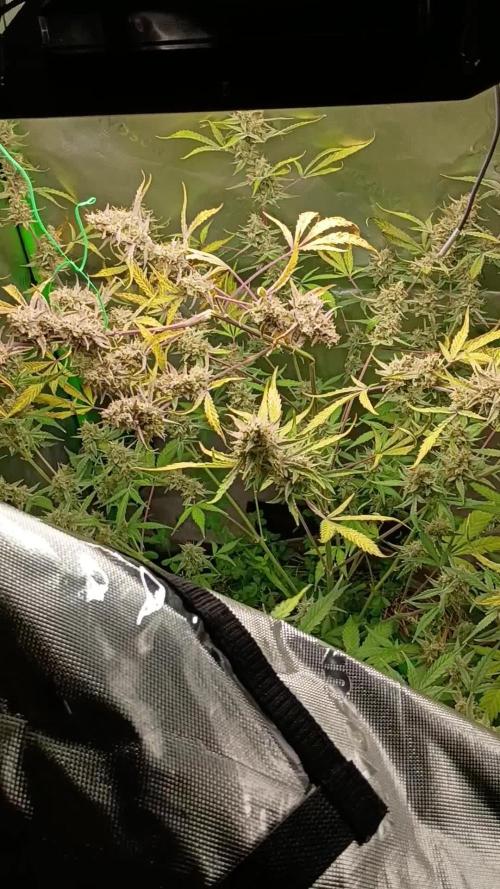
12/18 start of a new week. Smelling super strong now Trichs still a lot of clear no amber yet.
12/19 watered in gallon with coconut and q

Likes
103
Share


@PEAKYPLANTERS
Follow
Happy evening to all of you .... Brothers of the world's most coveted company!
Peaky gardens burst of thousand-color flowers in an immense enchanted and fragrant valley ...
This week we dedicate ourselves to the rinsing of the soil to start cleaning the roots and eliminate excess nutrients
I hope the contents like you .... if so it was ... leave your opinion
Kiss Kiss
Likes
10
Share


@SubliminalSociety
Follow
She's stretching now, reaching for the sky. Nine centimeters taller this week, a full 93 centimeters now. The leaves are thick and lush, a tangled mess of green. I spend my days pruning, trimming, and coaxing her into submission. She's a stubborn one, this girl, but strong. She'll be ready soon.

Likes
17
Share


@Sativa_Juice_Grows
Follow
Nov/21
She grew like crazy.
Big green fan leaves coming in.
Branches are growing strong.
Smell is starting to get intoxicating.
i finally got over my habit of nervous watering
and am feeding the girls way less and they're happy.
Cant wait to flip this girl to flower.
No problems this week at all.
11/29
Shes growing ok. Green and healthy branches and leaves.
She growing more like a sativa, sativa hybrid
tall and branchy, manageable fan leaves
but because of that she started to get some light burn.
Dont have my tent yet so i cant adjust my light any higher so i tried
to lower the plant down a little
So hoping she can do without super direct light for another day or so.
Other than that shes looking healthy.
(some of this is the same as White Widow diary)
11/30
It wouldn't let me do veg and flower in the same week
on the diary so i just split it up in here.
Two busy days.
Tent came i!! which im super excited about
because now i flip the girls to flower.
It wouldnt let me do veg and flower in the same week
on the diary so i just split it up in here.
I spent tuesday putting the tent together
and dropped a video of the new setup because
im REALLY excited about.
got the ladies nice and cozy. Started them on 12/12.
Its my first time on an indoor grow so i hope it works out well
Shes super healthy. Super green leaves are big
stems are thick
everything is a lovely dark green
i can smell it more because theyre tented now.
but it looks great.
12/1
topped dressed with some happy frog soil
I couldnt add the castings amount in the thing above
So ill say i mixed about a quarter of the amount of soil
into about 1 to 2 gallons of top soil
i had some down to earth
dry amendments i mixed in with that soil as well.
i couldnt tell how much soil exactly.
I only put in 5 tsp of great white instead of the recommended 7
because i switched the bloom nutes and i didnt wanna over do it
i couldnt tell how much soil exactly.
Fed them some flowering nutes, but cut back
on the amount of nutes by a lot.
Decided im going to just follow what biobizz instructions
say from now on so apparently less is better.
started the bloom and the top max kept everything else the same
and cut out the fish mix for flower, added great white at the end.
Defoliated the bottom few branches and cleaned any growth at wasnt going to produce.
Nothing to major.
12/2
Temp of tent is steady at 70, 71 degrees.
thats a little bit lower than id like but ill
figure out something in the next few days.
Took the bottom branches and leaves the night before and
Wanted to give it a night of rest before i defoliated the big leaves.
Took most of them off but left the few at the top of the plant.
Looking extremely green. Hoping i get to see some pistils soon.
Likes
12
Share

@Northern_Ent
Follow
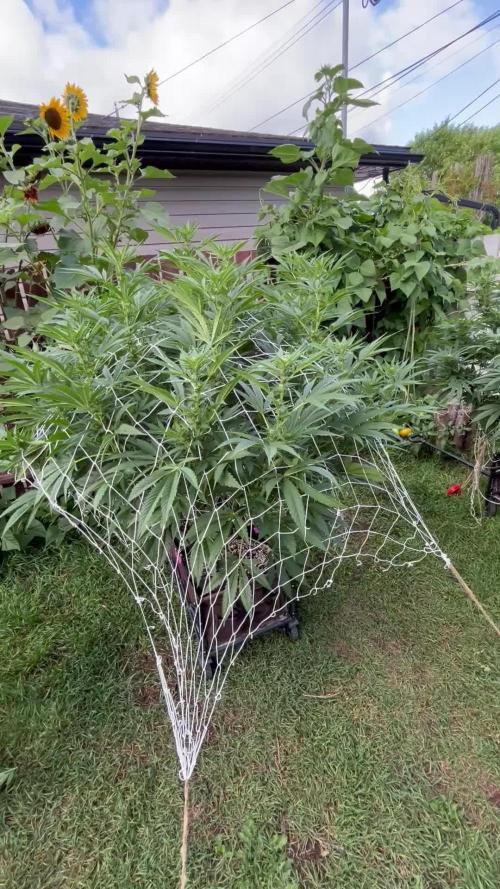
Aug 2: Tropicana Cookies FF is three weeks younger than my two biggest plants (Sunday Punch EV and Mimosa Shot) and two weeks younger than Lemon Cream Kush. This is a very strong plant and is progressing very well.
This wagon with LCK started force flowering a week later than the other wagon and will go another week longer.
TC is now the tallest of the four plants despite being the youngest.
Aug 5: now done force flowering after 2.5 weeks. Plants in this wagon are getting too big to easily get into garage. Continuing to use far red light as a bloom booster at dusk. Back to 15.5 h of daylight in the backyard now.
Aug 7: now 51 inches so she’s had a quick vertical growth spurt. Looking very happy with leaves ‘praying’ upwards nicely.
Likes
63
Share


@Wicked_Stix
Follow
The frozen diesel was really slow to transition to flower, but shes moving along now. Gave the girls a flush and a complete water change this week. That was only the second water change they have had this grow. I have just been letting them drink the reservoir almost empty and then filling it up with fresh nutes. The 5 plants are drinking about 4 gallons a day combined. Been running AC when the lights are on and the dehumidifier 24 hours a day. All of the plants are showing some decent trichome production. Running 1/2 tsp maxibloom and 1/8 tsp beastie bloomz per gallon every time I add water. Seems to be keeping everyone happy.
Likes
28
Share


@OGgrows
Follow
good fattening of buds during this week, strain stable and very strong. increase in Flavor, Biobloom and Top Max, 55 days of flowering. plants continue to put on weight well. I'm loving this genetics from Original Sensible Seeds. Happy Growings to all 🌴🌱🙏

Likes
29
Share


@nijuana
Follow
From the start to the finish it was an amazing experience with this Jamaican lambsbread , the harvest is awesome I does only 1 month (30 days) of vegetative state !!!!!!!!!

Likes
27
Share


@w33dhawk
Follow
Hallo liebe growmies, ich hoffe euch geht es allen gut! die Woche war wieder eine erfolgreiche Woche 😁 ich muss sagen ich bin erstaunt wie gut die runde bis jetzt läuft und wie schön sich meine Ladys entwickelt haben, bis jetzt habe ich noch keine Mängel vernehmen können und die Damen sind meines Erachtens nach auf dem besten Weg zur sicheren ernte aber nun zur Woche
Am 08.03.23 also einen Tag bevor diese Woche begann habe ich den compost Tee angesetzt dafür habe ich 2,5L Wasser was ich ja eh in der Tonne ab stehen lasse entnommen und habe es in einen leeren behälter von destilliertem Wasser getan, dem ganzen habe ich 2x luftstein hinzu gefügt mit Belüftung's Pumpe (Eheim 200) eine kleine mini heizung für 8 L Aquarien (regelbar) auf 20 Grad eingestellt. Dem ganzen habe ich dann 15g/L wasser compost Tee (37,5g bei 2,5L Wasser) hinzu gefügt bactrex drauf 1g/L wasser (2,5g bei 2,5L Wasser) und 5ml/L orgatrex ( 12,5ml bei 2,5/L wasser) gab es auch noch hinzu das ganze habe ich dann 24 h belüftet und bei ca 20 Grad Wassertemperatur gebraut (Bactrex gab es jetzt 1x bei dieser gabe hinzu,bei dem nächsten compost Tee fällt bactrex dann weg) hab jeder Pflanze von dieser Lösung jeweils 0,5L an die Pflanzen basis gegossen vorher habe ich die Ladys aber natürlich Gewässer mit 2,5L Wasser und Dann Die Lösung oben drauf. Danach saß ich Dann knapp 4 Std vor dem Zelt und hab ausgeschnitten unten rum (alle Blätter und Triebe unter dem netzt entfernt) danach hab ich noch ca 1 Std damit verbracht Triebe von oben heraus zu entfernen die zu dicht an anderen standen ( war echt nicht einfach da nicht zu viel weg zu schnippeln) aber ich glaube ich bin auf nem guten Weg. Den Rest der Woche habe ich nur noch gehofft das sich die Pflanzen gut erholen von dem was ich ihnen angetan habe, und hab die Fächer Blätter so gut wie es geht täglich runter gedrückt unters netzt damit genug Licht eindringen kann in den Baldachin, aber irgendwie hat die Damen das harte ausrasieren nicht wirklich gestört da wie auf den Bildern zu sehen ist, ist der stretch immer noch in gange ist, aber schon deutlich weniger geworden zum Ende dieser Woche.
Am Sonntag dem 12.03.23 gab es nur Wasser zum trinken hab jetzt 3,5L Wasser gegossen und somit den Topf komplett mit Wasser gefüllt es kamen dabei ungefähr 20 ml Wasser unten raus, was halb so wild ist, aber immer hin Weiss ich jetzt die gieß menge um den Topf gleichmäßig zu füllen.
Ich wünsche euch allen eine schöne erfolgreiche Woche! Cu ihr growmies!

Likes
8
Share

@HandsomeTerpz
Follow
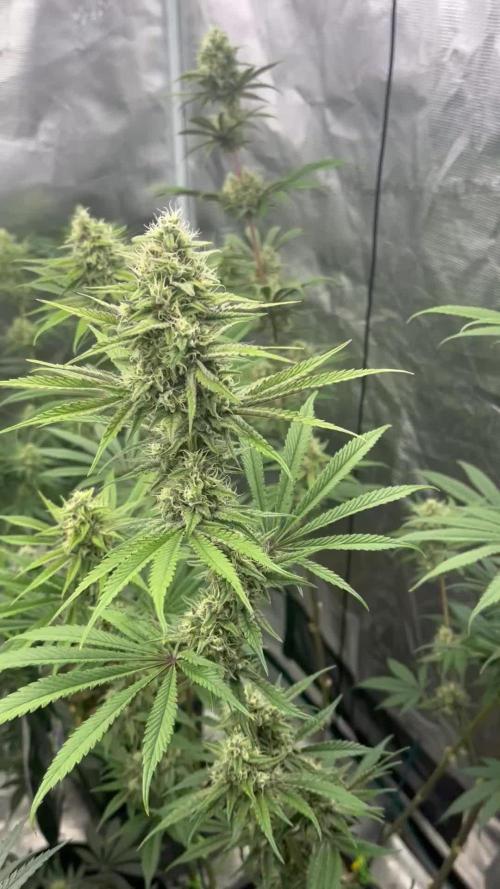
The buds are swelling nicely 🌱💨 and developing super well the terps are turning out amazing! 😍✨

Likes
2
Share


@Khalifa_Genetics
Follow
End of course for this Persian Prince project!
Unfortunately, he failed to cut short this flowering a few days in advance following the start of a pest attack. Our two beautiful ones would have certainly enjoyed crunching life with full roots for another week, but prudence forced us to cut a little prematurely.
Never mind, our flowers have dried for 10 days and are now ready to begin their maturing period in a jar.
Despite these conditions, which are very well known to them, our Persian Princes still present impressive characters: the buds are huge, covered with a thick layer of trichomes and very fragrant.
In terms of flavors, cheesy dominates 🧀 the two phenos smell strongly of semi-roller/Emmental style hard cheese, definitely the dominant aroma, for one of our two plants it is the only aroma that I am capable of to raise. The other phenotype is more complex, on the salty-cheesy smell a fresher and tangy/lemony smell is superimposed, very pleasant and different from its sister and at the same time linked to it by its common dominant cheesy aroma.
For those who would still take a break from sweet/fruity strains and would like to try something more unique, consider this Persian Prince! :)
🌱 @khalifa.genetics
🍱 @gaiagreenorganics @greenhousefeeding_worldwide
💡 @official_marshydro
🌬️ @acinfinityinc
🍄 @bigfootmycorrhizae @promix_cannabis
BY ZOUZOUCANNA ON YOUTUBE AND INSTAGRAM

Likes
2
Share

@DanisgrowD
Follow
Hi Growmies!
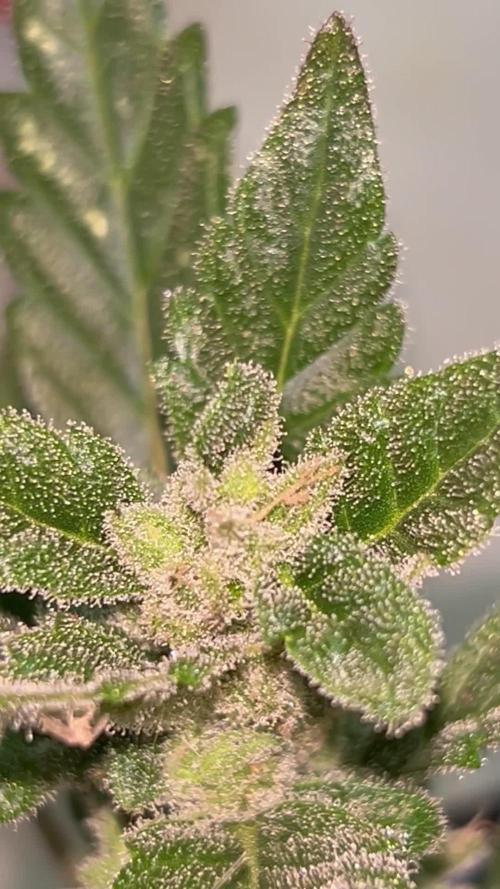
This two lil ones look like ready to me, im bout to harvest them and probably in a couple of weeks ill share my review with u, them and probably las papaya alive is thriving, but im still a lil concerned about those low branch buds, they look less ready than the center. What you guys think?
💨🏻
Likes
15
Share


@Dico29
Follow
There is still pistil growth, I think I am going to keep waiting to harvest.
Some lower buds had mold so I took them off, I think the tops will be ok.
No more nutrients also

Likes
4
Share


@TiRobotProds
Follow
Semaine 2 de floraison les plantes se développement bientôt le strech entrenoeud court idéal pour le SOG.


Likes
8
Share


@Growin_Ish
Follow
Day 63
What a turn around! Got my watering issues manageable.
Last watering for Candace I added Mykos and Azos to my water. Switched from SimPro to Terp Tea. #GIRTH # FROST #AROMA
Sheryl got that same recipe tonight. Candace didn't need water, but I splashed about 8oz in her dish for the bottom roots.
Take Away? It's a weed so it's resilient. Have patience, don't panic, let the plants tell you what they need.
Came back from out of town and the girls were looking famished. I put 1Tbl of Terp Tea Bloom in a gallon of rain water with Mykos, Azos, and Fish Sh!t. Fed both plants half gallon each.

Likes
3
Share

@JuiceboxTerps
Follow
Summer around the corner and the temps are rising. Tough to keep my small room temps down so we’re rocking a solid 78 and 55%.
Great week of stacking and bud development. All 3 plants are starting to take shape. Each feed was all on separate days and no top dressing this week.
Using the build a soil schedule I will be switching to 11/13 but keeping a solid DLI.
Ppfd- 850
Vpd- 1.3