


Likes
Comments
Share


@DrewbieDoobieNoobie
Follow
coming to the bitter end may be 2 more weeks until harvest.
Not seeing a lot of bulk or growth. the fade is on, and the watering has been drastically reduced.
lets see how it gose next week

Likes
7
Share


Likes
91
Share


@DogDoctorOfficial
Follow
These one was a big messy jorney, everything happened from almost kinling them, to almost no space for them to grow, LED broken middle flower and still perform like the queen champion she is!!!
I am felling her mature over cycles , i am thinking of her like a wine vine that gets better over time , these one in my humble opinion its a must in everyones garden <3 <3 <3
Wen harvesting these one i felt the need to break it all apart to prevent bud raw or anything we do not want on our medicine, i like to hang them all and let them dry but in these case there was no chance i was taking that big of a risk with these big fruits all over the place, what a blessed run, my rack is completely full, there was no more space , i mean no more space at all hahah amazing , thank you thank you thank you <3 <3 <3
As always thank you guys for your love , your time, your support and it all, i fell blessed and i am truly thankful <3 <3 <3
All info and full product details can be find in can find @
https://www.zamnesia.com
https://aptus-holland.com
#aptus #aptusplanttech #aptusgang #aptusfamily #aptustrueplantscience #inbalancewithnature #trueplantscience #zamnesiaseeds #growerslove
With true love comes happiness <3 <3
Always believe in your self and always do things expecting nothing and with an open heart , be a giver and the universe will give back to you in ways you could not even imagine so <3 <3 <3
More info and updates @
https://growdiaries.com/grower/dogdoctor
https://instagram.com/dogdoctorofficial
https://youtube.com/channel/UCR7ta4DKLFMg2xxTMr2cpIg
<3 <3 <3 Growers love to you all <3 <3 <3

Likes
14
Share


@NorthernChemist
Follow
June 11: First week exposed to the full elements. Plants took a beating from the wind but othwise look strong and healthy albeit a bit small. No rain this past week, but soil moisture at 10cm is decent. Preflowers are showing already.
Likes
Comments
Share



Likes
10
Share


@DeepRootsGrowTrees
Follow
MIMOSA ZKITTLEZ FF/
GANJA FARMER
WEEK #9 OVERALL
WEEK #8 FLOWER
This week she continues to grow and just get bigger she's really a big plant strong genetics she's handled topping without any issues as well LST and she really responded with new growth. Stay Growing!!
Thank you for stopping by and taking a look it's much appreciated!!
Thank you GANJA FARMER!!
MIMOSA ZKITTLEZ FF/ GANJA FARMER

Likes
68
Share

@Qutro
Follow
Happy New Year Growmies!
Wishing everyone good health and lots of stinky buds 😄💨🥂
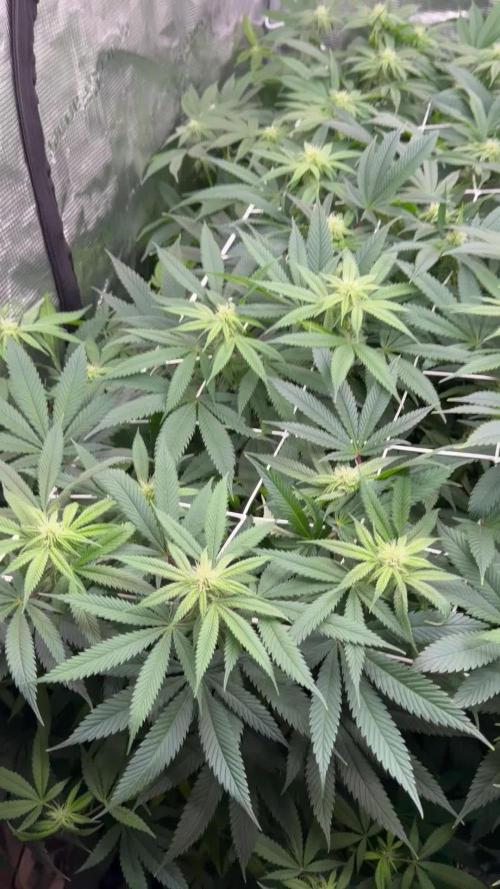
Flower week 3 and the girls are behaving nicely. After the heavy training they “only” stretched about 15 cm, so we’re sitting around 95 cm (37,5 inch)now.
They look amazing though, super healthy and everything seems nicely dialed in.
With the drier weather outside the VPD is perfect, and I’ve found the sweet spot for the extra additives on top of the base feed. EC is around 1.6.
On feed days I slightly reduce calcium to make room for Bud Candy and Bud Factor X, giving them a bit of extra magnesium and carbs during this important stage. The missing calcium is then made up on the second watering, which would normally be just plain water.💦🧑🌾
We’re also seeing pistils stacking into real budlets now, getting denser and chunkier, and there’s a noticeable increase in smell and stickiness as trichome production really starts to kick in.
The light is set to 80% intensity and positioned approximately 40 cm above the canopy.
Have a lovely weekend to everyone!
Peace✌️

Likes
142
Share


@PapaNugs
Follow
The girls survived. Always the biggest stress in the beginning. Getting sprayed with water twice a day. Gonna do the first watering soon. Hoping for growth!


Likes
11
Share

@Bunterbiber
Follow
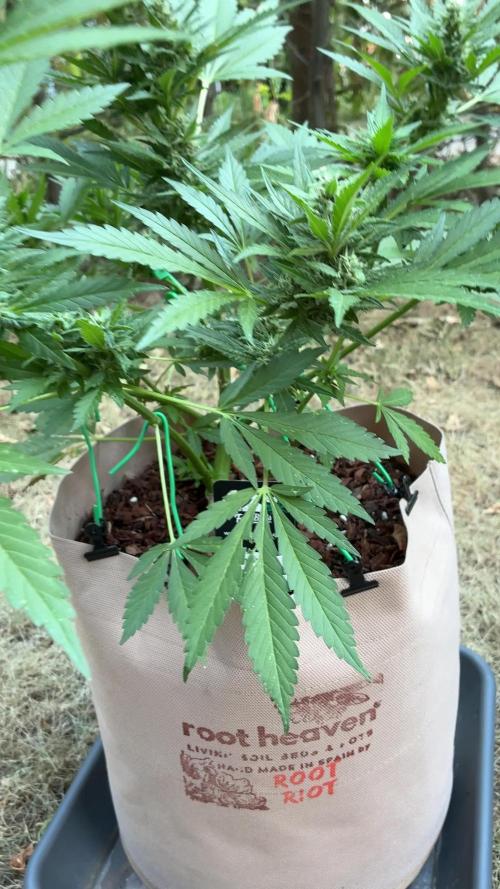
We just wrapped up an absolute scorcher of a week! The summer heat went into overdrive, with outdoor temperatures climbing up to a blazing 35–38°C. It’s been a massive test of endurance for the girls with quite a bit of heat stress, but I have to say, they are proving just how tough these genetics really are.
The Feeding & Watering Marathon: 💧
With the sun beating down like a furnace, the plants have turned into absolute water-guzzling monsters. They’ve been drinking between 3 to 4 liters of water per day just to stay cool!
Because they are cycling through water and processing energy so rapidly, I’ve been feeding them every 2 to 3 days to keep their nutrient levels stable—sticking to their respective organic and mineral menus.
Plant Health & Defoliation: 🍂
Under this kind of intense heat, the ladies did shed a few of their older, lower leaves, which have dried up and fallen off. Honestly, it’s not surprising at all given the extreme weather, and it’s just their natural way of focusing energy on the canopy and bud production. Despite the sweat-inducing conditions, all four plants are still looking great and holding their ground beautifully.
Growth & Structure: 📏
It looks like we have officially reached our final heights! There was no change in vertical growth this week, which confirms the stretch is completely done.
Lemon Cherry Cookies: Sitting pretty at her final 70cm.
The Rest (Amnesia Haze, Banana Purple Punch, Bruce Banner): Parked comfortably around the 50cm mark.
No training or interventions on my part this week—at this point, it’s just about keeping them well-hydrated, well-fed, and letting them battle through the peak of summer while they stack up those flowers. Let's hope the temperatures drop just a tiny bit so they can catch their breath!

Likes
37
Share


@DaddyPrime2
Follow
5/5/2024
Pistils pistils pistils
5/8 these plants are fucking exploding! Super exciting to see them like this. Pistils everywhere and they’re just STACKING! don’t even see budlets yet, just pistils. The structure of these plants is beautiful. They handle training fairly well. I topped one and super cropped it and did a bit of lst. I was feeling impatient so I decided to see what happened if I pushed the one a little harder and left the other to grow naturally.


Processing
Likes
2
Share


@Cogollo_eu
Follow
**Encontrarás la traducción a español al final de la descripción**
From/Desde: 09/09/19 || To/Hasta: 15/09/19
From day/Desde día: 08 || To day/Hasta día: 14
Blueberry Cookies Diary / Diario de las BlueBerry Cookies:
https://growdiaries.com/diaries/38769-dinafem-039-s-blueberry-cookies-at-the-ocean
-----IMAGES & VIDEOS-----
V1 - Transplanting day. I'm using 10 l Aeropots as final recipient. I've used:
- Small layer of ATAMI HydroRokz (perlite) at the bottom of the pot, just for cover bottom holes and to retain a bit of humidity
- Over the perlite i placed 1l of mixture with BioBizz "All Mix" and Volcanic Soil
- Again over, 1l of mixture with BioBizz "Light Mix" + Volcanic Soil & Guano
- And filled the rest with BioBizz "Light Mix" + Volcanic Soil
It's the second time that i broke half of the roots of a plant doing a transplant, It happened to me just for not being careful enough to hold the soil by the lower part. While this is no good, no further signs of that mistake other than the recorded video ;).
V2 - Quick show up on how to correct the color of photos taken under red/ping/purple light.
First I merge the HDR image from 3 bracketed shots, then I apply my custom color adjustment in the HDR resulting image.
As i show in the video, to correct the red light, you have to enhance the blue and green curves, just play with a point in the curves until you find the best adjustment for each of both curves. Then you should go to tones, and play a bit with reds, pinks & purples... and.... Voilá, you can see the results, easy and effective..... but no more easy than using the right white spectrum.
P1 - Cookies Showdown before transplant
P7 - Volcanic soil and Guano
-----WEEK SUMMARY-----
This week was very easy, i didn't do anything to these babies apart from the transplant. This is the first time im mixing something with the soil, I hope not to overfeed the Cookies with the nutes, as i'm going to use the same nutrients i was using.
The first 10 days they were growing in my 60x60x40 tent (DP60), with a terrible chinese light that i always use the first week wen I plant.
PandaGrow 100W (50W draw) - http://www.pdgrow.com/index.php?m=Show&a=index&cid=12&id=53
So after transplanting when i place the plans under the Quantum Board or the Platinum LED, i've notice it on them immediately, they really don't like this kind of chinese lights.
Thus after the transplant the plants has started to grow and wide much more and much quickly.
-----WATERING CALENDAR-----
12/09/19 DAY 11 - 1,5 l after transplant with all week nutrients @ 0.8 EC & PH5.8
*****ESPAÑOL*****
-----IMÁGENES & VÍDEOS-----
V1 - Día de transplante. Transplantaré a AeroPots de 10 l. Para el transplante he usado:
- Una capa pequeña de ATAMI HydroRokz (perlita) en el fondo de los tiestos, sólo para cubrir los agujeros y retener un pelín de humedad.
- Encima de la perlita he puesto 1 l de mezcla de BioBizz "All-Mix" con tierra volcánica
- De nuevo encima he puesto otro litro de mezcla de BioBizz "Light-Mix" con guano y tierra volcánica
- El resto está relleno con una mezcla de BioBizz "Light-Mix" con tierra volcánica
Es la segunda vez que se me parter unas raíces por la mitad en un transplante, eso me pasa por no ser lo suficientemente cuidadoso como para agarrar el sustrato por su parte baja. Esto no es algo bueno, pero he de admitir que aparte del mal rato de que se te partan las raíces, a la planta no le sucede nada de nada, sigue creciendo al mismo ritmo que su hermana.
V2 - Un ejemplo rápido de como corregir la iluminación de una foto tomada bajo un espectro rosado o rojizo
En el vídeo primero compilo el HDR compuesto de 3 fotografías horquilladas y una vez compilado le aplico mi ajuste de color.
Como muestro en el vídeo, para corregir este tipo de luces hay que realzar las curvas de color azul y verde, simplemente con un punto por encima de la mitad de la línea media hasta encontrar los puntos más adecuados para tu luz. una vez encontrados, sólo hay que ir a los tonos y ajustar un poquito el rojo, rosa y morado.
P1 - Muestra de las Cookies antes del transplante
P7 - Tierra volcánica y Guano
-----SUMARIO SEMANAL-----
Esta semana ha sido muy sencilla, no les he hecho absolutamente nada a las pequeñas a parte del transplante. Esta es la primera vez que mezclo algo con el sustrato y espero no sobrealimentar las cookies ya que voy a seguir usando los mismos nutrientes que he usado con anterioridad y de la misma manera.
Los primeros 10 días han crecido en mi tienda de 60x60x40 (DP60), con una luz china terrible:
PandaGrow 100W (50W draw) - http://www.pdgrow.com/index.php?m=Show&a=index&cid=12&id=53
Siempre uso esa luz los primeros días de cada cultivo, por lo que al cambiarlas a la Quantum o al Platinum LED lo noto al toque, realmente no les gusta nada la luz china esa, inmediatamente se ponen a crecer y ensanchar mucho mas.
-----CALENDARIO DE RIEGO-----
12/09/19 DÍA 11 - 1,5 l después del transplante con todos los nutrientes semanales @ 0.8 EC & PH5.8

Likes
3
Share

@Growfather1
Follow
Hello everyone.
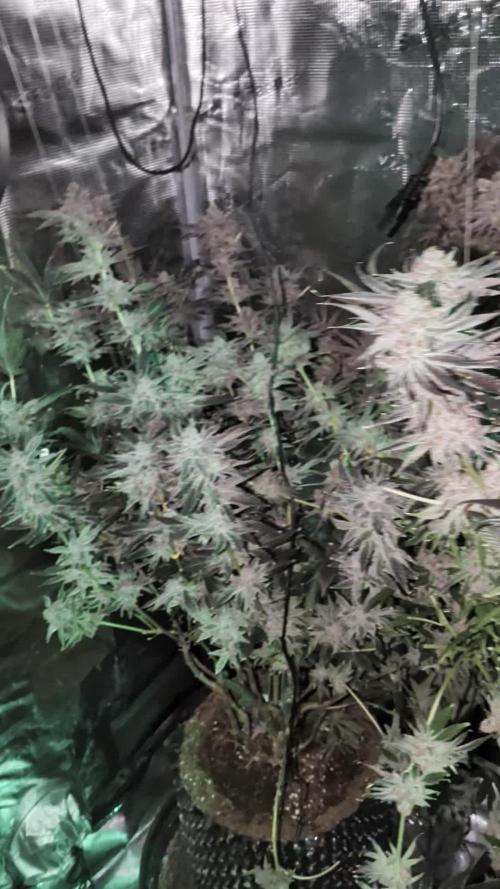
This is week 9 since starting flowering.
Today is day 4 of total darkness, and day 18 since the flush.
She has purpled out beautifully, and the branches are hanging mostly down. Thankfully, none of the flowers reached the coco soil.
I will be harvesting her in the coming hours.
Thank you for following me with this journal, and have a nice day.
Best regards,
Growfather.

Likes
3
Share


@Joaka
Follow
ya se comienza a sentir un olor intenso, como se tenia previsto las black jack estan evolucionando sumamente rapido, ya comienzan a explotar en resina.

Likes
5
Share


@BenChasinBigBudz
Follow
Pulled down side branches using Twisties. Will be putting her on to flower soon.

Likes
3
Share

@Exempl7fy
Follow
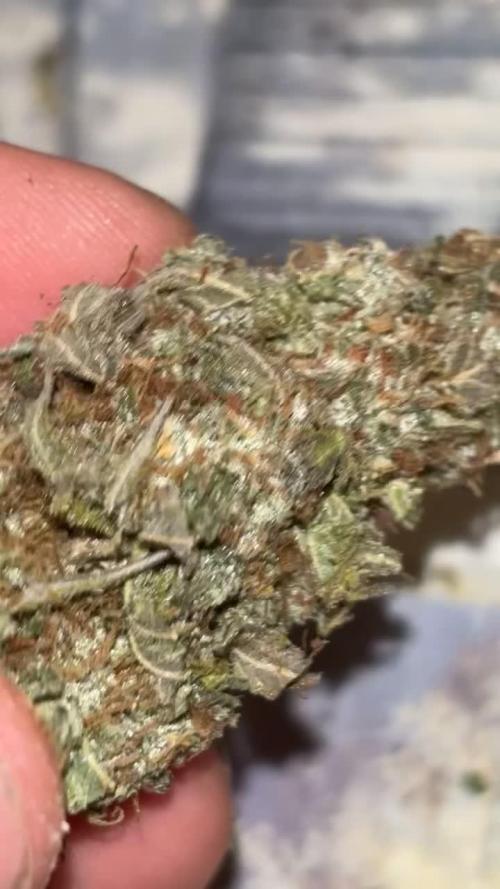
Smaller outcome then expected and the smoke test went well, clean smoke and tastes insanely well and turpy even before the cure, cannot wait to see it in a few weeks


Likes
51
Share


@nonick123
Follow
Día 22 (11/11) Las plantas muestran pequeños puntos / zonas marrones pero... Don't panic! It's Organic!
Dejaré que el proceso del Super Soil de BioTabs siga su camino tal y como indica el manual de BioTabs!
Ajusto LST a CBD Auto 20:1 #2 aplicando una nueva atadura a la punta, que ya se estiraba hacia arriba 24 horas después! 💥😍
La idea es NO aplicar más LST y dejarla que crezca de forma natural a partir de ahora
Tal vez solo ir recolocando las ramas laterales para que no crezcan demasiado juntas, porque no quiero estresarla y que ralentice su crecimiento...
Día 23 (12/11) Subo a DLI 40
Pequeños ajustes de LST en las ramas laterales a CBD Auto 20:1 #2 para crear una estructura homogenea
No voy a volver a aplicar LST a la punta, voy a dejar que crezca de forma "natural" a partir de ahora
El resto de plantas están creciendo muy bien!
Riego con 750 ml H2O RO a CBD Auto 20:1 #2. El resto no necesitan riego
Día 24 (13/11) Riego todas las plantas con 750 ml H2O RO
CBD Auto 20:1 #2 se muestra sedienta y vuelve a necesitar 750 ml de H20 RO tras solo 24 horas desde el último riego!
Día 25 (14/11) Pequeños ajustes de LST en CBD Auto 20:1 #2
Parece que los puntos / zonas marrones se aceleran en todas las plantas excepto en CBD Auto 20:1 #1...
Día 26 (15/11) LSD-25 Auto & OG Kush Auto empiezan a mostrar muchas zonas marrones y las hojas inferiores se empiezan a retorcer...
Día 27 (16/11) Riego con 1 litro de H2O RO
El area técnica de BioTabs me confirma que lo que muestra las plantas es una quema de nutrientes... 😢
Su recomendación es regar SÓLO con agua la siguiente semana (hasta el día 35 por lo menos)
Día 28 (17/11) LSD-25 Auto & OG Kush Auto se muestran muy afectadas por la quema de nutrientes... Una pena porque estaban creciendo muy bien hasta ahora...
Después de hablar con BioTabs, parece que el error ha sido aplicar el Boom Boom Spray demasiado temprano (en día 21) cuando las plantas tenían suficiente nutrientes y acababa de añadir la 2ª (y ultima) Tab al sustrato...
Tengo que seguir aprendiendo que con el SuperSoil: MENOS ES MÁS, MENOS ES MÁS!
A seguir regando SOLO con agua los próximos días...
CBD Auto 20:1 #2 todavia no muestra el sexo (pre-flores)... es algo extraño...
💦Nutrients by Bio Tabs - www.biotabs.nl/en/
🌱Substrate PRO-MIX HP BACILLUS + MYCORRHIZAE - www.pthorticulture.com/en-us/products/pro-mix-hp-biofungicide-plus-mycorrhizae
"GDBT420" 15% DISCOUNT code for the BIOTABS Webshop https://biotabs.nl/en/shop/
Processing
Likes
35
Share


@MS2845
Follow
week 9 she growing slowly now but shes getting there i think she got more 3 weeks to go easily.
day 65 done some defoliation need to get light on some buds.. hopefully she will be fine.. we will see in some days
Likes
2
Share


@BemaGwaai
Follow
No real change - plants growing.....I've been taking measurements and recording them in a database. I'm able to compare them against Amnesia Haze
