


Likes
Comments
Share


@RookGrow
Follow
They’re getting juicy, just feed some compost tea made from Dr Earth Tomatoes Veg and herb fertilizer and some Molasses. Just seen a Nat so I don’t think I’ll be doing the tea again, I want to prevent bugs as much as I can. I’ll be putting up a sticky trap to catch it I only seen 1 but 1 is enough for me





Likes
Comments
Share

@Wenz004
Follow
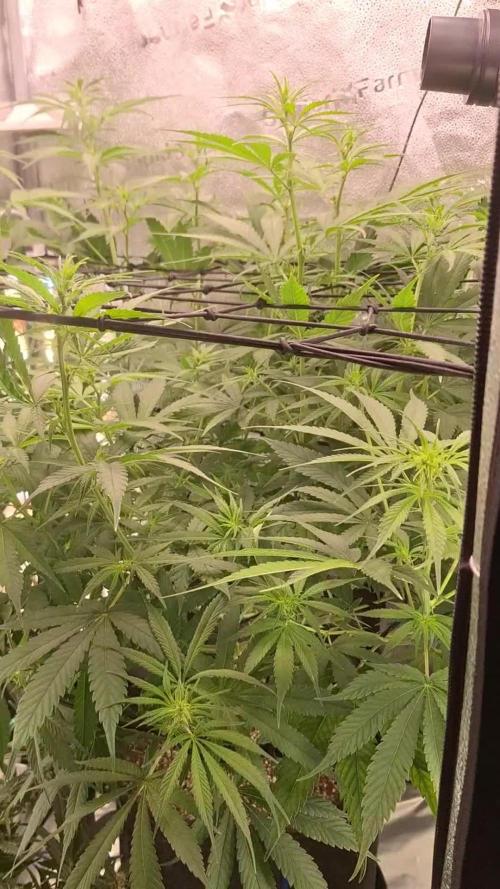
Jetzt ist mir klar warum Sativa so lange brauchen - nach 2 Wochen und 2 Tagen Stretch kaum noch richtige Blüten sichtbar - heute 4.1 Liter Getränk eher inhaliert als getrunken. Weiter gehts.

Likes
66
Share


@UnorthadoxDude
Follow
So you've all seen the problems with this grow. The buds are all foxtails every one of them. Despite that she somehow managed to bring a decent yield. The smell is still the same, sweet and lovely.
Likes
26
Share


@Growin_it
Follow
Top dressed Asman and Asal with a tablespoon of Dr. Earth Bloom and 3 tbs of worm castings.
Added terpinator, microbials and molasses to calmag'd water.
Benesh got fed last week with the same load/mix and is doing great.
No defoliation or much training early this week.
Did some heavier defoliation on Sunday to give more of the bigger and higher buds space.
Will make a TCHA tincture off of the defoliated buds, which I will add to later.
Lovely mint and chocolate aromas on my fingers after the defoliation.

Likes
14
Share


@CeGrow
Follow
woche 8
tag 50
sieht soweit ganz gut aus
blüte wächst
höhenwachstum verlangsamt sich deutlich
einige blätte haben braune spitzen, aber alles noch im Rahmen
tag 54
blüte wächst
kein höhenwachstum
erste fächerblätter vergilben
düngung tag 55:
700ml Wasser + 4ml Mairol Blütenwunder

Likes
13
Share


@BrigadeDesTerps
Follow
Recette du tco pour 20 litres. (Grammes : gr)
50gr biochar
250gr zéolite
3gr granulé Micro-Organisme IT45
10gr pollen d’abeilles
10gr levure de bière
3gr endomychorize
10gr consoude
20gr vers de farine
10gr cendre coque de ricin
12gr ortie microniser
15gr Kelp
10gr spiruline
10gr de cbd living soil
20ml de miel liquide
30ml de mélasse
20ml d’acide humiques et fluvic
Mettre tous les ingrédients (sauf la mélasse ,l’acide h/f et le miel) dans un filtre 400micron, le placer dans un seau avec de l’eau (10litres). Rajoutez le miel et 10ml de mélasse
Y mettre un micro bulleur alimenter sur une pompe à air et faire oxygéné le mélange pendant 24h. Rajout de 10ml de mélasse après 12h le début de la mise en route de la pompe.
A la fin des 24h rajoutez le restant de mélasse et d’acide h/f, mettez y en plus 10litres d’eau au mélange.
Reste plus qu’à arroser!
j’y ai incorporé 7litre de mélange
La veille j’ai préparé le pot à l’arrosage avec 500ml d’eau et 2gr de Bacillus IT35 Amyloliquefaciens X5
Bacillus Amyloliquefaciens : rhyzosphère, probiotiques. Aspersion et arrosage. Utilisable pour toutes cultures.
La bactérie Bacillus Amyloliquefaciens se fixe dans la rhizosphère en se nourrissant des exsudats racinaires. En contrepartie, elle stimule la croissance racinaire en sécrétant des métabolites de croissance et solubilise le phosphore en sécrétant des phytases (enzymes).
Effet probiotique consistant en l’utilisation de micro-organismes bénéfiques pour la nutrition et la santé des plantes.
La spiruline, le plus riche et le plus complet des amendements organiques
La Spiruline est une algue aquatique connue comme complément alimentaire, la Spiruline est aussi un amendement organique et écologique très complet.
D'une grande qualité nutritive, elle apporte à vos plantes une quantité de nutriments, dont l'azote, phosphore, potassium, minéraux, acides aminés, vitamines, chlorophylle et protéine.
Le charbon végétal actif est capable d’absorber jusqu’à cinq fois son poids propre en eau ainsi que les éléments nutritifs qui s’y trouvent. Il joue ainsi le rôle de catalyseur et d'amplificateur pour les fertilisants traditionnels, qu'ils soient d'origine organique ou minérale. Ce pourquoi il est idéal pour activer un sol et pour les thés de compost oxygénés.
Le charbon végétal améliore la diffusion et la disponibilité des éléments nutritifs dans le sol et offre des conditions propices au développement des micro-organismes.
Le Biochar peut être introduit dans une grande variété de sols. Il est particulièrement efficace dans les sols pauvres, difficiles et acides.
Pour faire agir rapidement et efficacement sa capacité d’amendement, le charbon végétal est enrichi et biologiquement activé avec des micro-organismes. Le Biochar se comporte ainsi comme un structurateur et un activateur dans le but de valoriser les sols.
Composition :
• Charbon végétal actif 31%
• Matière organique 33%
• Matière sèche 75%
• C/N : 17
• PH : 7,2
• Azote (N) : 2,1 % dont 1,2 % azote organique
• Phosphore (P205) : 0,74%
• Potassium (K20) : 1,18%
• Calcium (Ca) : 6,8%
• Magnésium (MgO) : 0,65%
Le pollen est l'ingrédient de base de la fabrication du miel par les abeilles. Riche en vitamines et minéraux, il est qualifié « d'aliment parfait », y compris pour les plantes !
Les zéolithes sont des roches cristallines, présentant des capacités d'adsorption particulièrement importantes vis à vis des polluants que l'on rencontre dans l'eau et dans certains liquides, ainsi que dans l'air et les gaz. Elles sont extrêmement poreuses comme les charbons activés et elles peuvent être chargées électriquement pour opérer comme des échangeurs d'ions.
La zéolithe est un produit naturel qui respecte notre environnement. Utilisé dans le milieu industriel depuis de longues années déjà, ce minerai aux propriétés filtrantes particulières commence à se vulgariser dans le domaine de la piscine privée, de l'aquariophilie, des bassins d'agrément, de la récupération des eaux de pluie, ou encore de la culture des bonsaïs et autres plantations diverses par exemple...
4 points techniques majeurs :
- Grâce à leur propriété hydrophile, les zéolithes peuvent adsorber l'eau jusqu'à 30% de leur poids total et sans aucune variation de volume : pas de gonflement en présence d'eau ni de craquement en cas de déshydratation comme certaines argiles. Les zéolithes sont d'ailleurs de puissants agents anti-mottant (anti-agglomérant). Cette propriété est très appréciée dans le cas des terrains de golf et autres aires de jeux.
- Les zéolithes ne captent pas l'eau de façon irréversible, elles se comportent comme une réserve au voisinage des racines. Celles-ci peuvent capter l'eau en fonction de leur besoin. Les zéolithes permettent ainsi de réduire les besoins d'arrosage jusqu'à 35 %.
- Une zéolithe se comporte comme une "Zone de Stockage" qui retient l'azote et les éléments minéraux nutritifs au voisinage des racines et les relâche lentement en fonction des besoins de la plante. Cela se traduit par une croissance harmonieuse mais rapide du végétal.
- La capacité d'adsorption et l'énorme rapport surface/volume des zéolithes, vont permettre à la fois la rétention de la solution du sol et une bonne oxygénation au voisinage du système racinaire. Les zéolithes favorisent donc l'organisation biologique des sols en contribuant au développement de la micropopulation. L'apport en nutriments (N, P, K) est réduit de 20 à 25 %. Ces derniers, adsorbés par la zéolithe, sont beaucoup moins sensibles au lessivage et à l'évaporation.
Composition minéralogique :
* Chabasite 70 %
* Phillipsite 2 %
* Feldspath 5 %
* Augite 3 %
* Illite - Mica 2%
Analyse atomique:
* Sio2 52 %
* AL2o3 17 %
* CaO 5,7 %
* K2O 6,1 %
* MgO 2 %,
* Na2O 0,6 %
* Fe2O3 3,6 %
Amendement calcaire, dolomie et gypse avec préparation microbienne à base de Bacillus Amyloliquefaciens IT45 et Saccharomyces cerevisiae LYCC6420
Formulation : micro granulés (1 – 1,6 mm) à base de rhizobactéries favorisant la croissance des plantes qui se multiplient et colonisent rapidement la zone des racines, et de levures Saccharomyces cerevisiae souche LYCC ayant un effet probiotique.
Les PGPR produisent des enzymes qui solubilisent le phosphore à partir de complexes inorganiques et organiques dans le sol et stimulent la croissance des racines efficaces augmentant ainsi la zone d'interception des éléments nutritifs. Les levures LYCC permettent une occupation de la rhizosphère par une flore bénéfique.
Composition :
• Matière sèche : 96,8%
• Matière organique : 91,5%
• N total : 6,6% dont N soluble dans l'eau 0,17%
• P total : 2%
• K total : 1,7%
Micro-granulés :
• Oxyde de calcium (CaO) total : 30%
• Oxyde de magnesium (MgO) total : 7%
• Anhydride sulfurique (SO3) : 13%
La levure de bière est une matière vivante qui permet un meilleur fermentation pour les thés de compost oxygénés notamment conseillé pour accompagner les croissances ou apporter un gros coup de pousse pendant la floraisons.
La levure stimule la vie des sols également à l'arrosage direct en apportant tout aussi bien que dans le TCO sa population l'espèce micro-bactérienne positive pour votre sols ainsi que des oligo-éléments et diverse vitamines.
Composition :
• 2,8% (N) total dont 1% (Norg),
• 2,3% (P205)
• 1,6% (K20)
• 35% de MO
• C/N : 8. PH : 8,4.
Sous forme de poudre mouillable. Il contient des spores du champignon mycorhizien Rhizophagus Irregularis MUCL57891 avec des levures inactivées spécifiques. 2000 spores/gramme d’endomycorhize Rhizophagus Irregularis MUCL57891 et Saccharomyces Cerevisiae LYC6420 inactivée. Se connecte efficacement au système racinaire et forme un vaste réseau souterrain de filaments, qui agissent comme des extensions pour atteindre les nutriments et l’eau au-delà de la rhizosphère
Composition :
• Poudre contenant 2000 spores/g. d’endomycorhizes Rhizophagus irregularis
La Consoude (Symphytum Officinale) est une plante présentant de nombreuses propriétés.
Particulièrement riche en Potassium (K) organique, la consoude est une alliée idéale pour les périodes de floraison. La consoude a tout pour plaire : riche en vitamine B12, elle agira également comme stimulateur racinaire, mais aussi comme biostimulant cellulaire, grâce aux alcaloïdes, aux allantoïnes et jusqu'à 30% de protéine !
100% déjection de vers de ténébrions.
Très riche en microorganismes, le guano de vers de farine est une matière directement composté par les vers. En effet, c'est bien la digestion de matières végétales par des larves, insectes ou autres arthropodes qui valident le processus de compostage, que ce soit en zone de production de cultures d'insectes, pour le compost maison ou la dégradation de litière forestière.
Les bactéries et autres champignons obtenus grâce au système digestif de nos vers, permettent la dégradation accélérée des éléments nutritifs dans vos supersoils, et les symbioses permettant l'assimilation des éléments nutritifs.
Cette bio-activation intense mettra dans vos sols, à la disposition de vos plantes, un panel tellement varié de nutriments frais qu'il nous est aujourd'hui technologiquement impossible de pouvoir tous les nommer et de les compter.
Le guano de vers de farine fournit une grande polyvalence. Très équilibré, il s'utilise en entretien ou en apport ciblé seul ou en complément de d'autres amendements ou fertilisants organiques.
Il agit comme un puissant activateur de sol et/ou de substrat.
Cendre coque de ricin NPK 0,1-18,6-16,5. 0,1% (N-Azote), 18,6% (P205-Phosphore), 16,5% (K2O-Potasse), 11,7%(Ca0), 9,1 (Mg0) - Origine : Inde
ACTION SOL • rend rapidement accessible au sol Phosphore, Potasse, Magnésium et Calcium.
ACTION PLANTE • Apport aux stades agronomiques propices. • Produit riche en éléments fertilisants : combinaison NPK 35%. • Régularité de l’apport, milieu et fin de floraison. . Favorise la sénescence.
Analyse chimique :
• NPK 0,1-18,6-16,5
• N-Azote 0.1%
• P205-Phosphore 18,6%
• K2O-Potasse 16,5%
• CaO-Calcium 11,7%
• MgO-Magnésium 9,1%
Ortie bio micronisée Stimule la vie du sol et la végétation.
Composition :
• 2,8% (N) total dont 1% (Norg),
• 2,3% (P205)
• 1,6% (K20)
• 35% de MO
• C/N : 8. PH : 8,4
KELP poudre
ascophyllum nodosum
- amendement sol
Croissance et floraison - Meilleure germination - Meilleur développement racinaire Meilleure assimilation - Résistance aux stress osmotiques - Augmente la production de chlorophylle = plantes plus vertes = lumière mieux captée - Lutte contre le stress osmotique - Développement des Micro-Organismes dans le sol – Riche en vitamines, fer, iode, oligo-éléments, hormones de croissance auxines et cytokinines - Idéal en épandage et pour les thés de compost oxygénés.
Important : notre Kelp est un goémon noir mais il n'est pas le varech bien moins fertile de la même famille qui est l'algue qui pullule et pollue la Bretagne, notre algue pousse uniquement à plus de 50 mètres de fond dans les grands courants froids au large de la Norvège.

Likes
28
Share


@TheHighentist
Follow
Welcome to week 5 of flower.
Trichome production and the density of the buds is really starting to accelerate.
My dehumidifier is not stable, so VPD ranges from 1.2-1.4.
I lightly defoliated 31/10 and last watering was 6/11
👽👉7/11 The day after watering and the day my timer messed up my 12/12 schedule. But hope it brings no problems.
I defoliated lightly and only removed most under the SCROG line.
Even a couple of underdevoloped branches that stretched below SCROG-net got cut.
👽👉8/11 Their smell is starting to get more extreme.
👽👉9/11 I removed a bit of the bottom foliage and cleaned up the dead leaves.
It has been really tight around the SCROG net, so it was highly needed for airflow and humidity
👽👉10/11 Waterday*
ml/L change from last watering - to this.
BioHeaven 4 > 4
BioGrow 4 > 2
BioBloom 3.5 > 4
TopMax 1.5 > 4
Calmag 0.5 > 0
Rootjuice 1 > 0.5
👽👉11/11
Amazing growth in thickness and they look alot more frosty today!
👽👉12/11 Same story as yesterday
👽👉13/11 Today should have been waterday, however i was missing some nutrients so postponed till tomorrow
👇_____________________________________________
Flowering feeding recommendations:
Early bloom: 5:7:10
Mid-bloom: 6:10:15
Mid–late bloom: 4:7:10
BioHeaven The NPK ratio is 0.91-0.18-0.24;
BioGrow The NPK ratio is 4-3-6.
BioBloom The NPK ratio is 2-7-4;
Topmax The NPK ratio is 0.1-0.001-0.1;
Rootjuice The NPK ratio is 0.1-0.1-0.1;
👆_____________________________________________
Processing
Likes
33
Share


@Weird_Jimmy
Follow
✋Wk10: Playing the guessing game and learning is doing.
👉I started the week knowing I needed to do more of a full low EC rinse. I have been noticing purple stems around both plants spreading. As the week started the stems also started spreading on to some of the veins. The upper leaves started looking lighter green colored and by mid-week some yellowing spots and some very small brown spots on some of the upper leaves of the 3 gallon. The one gallon was getting more burned leaf tips. Until the yellowing splotches and small brown specks I was suspecting low Magnesium. I was compensating by adding a little extra cali-magic to the low ec solution I use to adjust the ec of the solution I fertigate with. But as the yellowing spread I knew I was wrong about something, so a little more searching and I may have nitrogen toxicity AND Phosphorus deficiency. The upper leaves on the 3 gallon plant were also showing a bit of ‘clawing’ which was pointing at the Phosphorus shortfall. So I may be wrong, but Ill only know by doing. So I did a large low EC rinse that was pH’d with the regular dosage of liquid Koolbloom, on both plants at the end of the week. I’ll continue to fertigate with a lower EC solution that will have the Koolbloom mixed at full strength. I may discard the current solution batches and remix fresh with less of the Flora Micro, more of the Flora Bloom and Liquid Koolbloom. It may all stem from not doing low EC fertigations as a matter of routine. Perhaps the Nitrogen was building up because there wasn’t a regular higher volume rinse. The Low EC rinse dropped the EC of the run-off right away. I know the common practice is to have routine low EC rinses, but I wasn’t having high EC run-off and it was stable, so I was trying to keep the nutrient level in the media at optimum levels. Doing one plant at a time is a very slow way to learn. I do read lots of science related gardening articles as well as scientifically inclined cannabis articles. I don’t look at too many forums because most of these people must be high ;)
👉I finally got around to clearing out some of the lower leaves from the 3 gallon plant and removing some of the leaves and shaded buds sites under the dome. Its still a thick tangled jungle. But more manageable. Doing tucking to give cola sights light. The buds are bulking up. The first signs of frost have appeared as well. Hopefully I can level out the nutritional needs and the buds will be fine. The trunk of the 3 gallon has gotten very thick. Its a work of natural engineering to support the plant. The branches are also very stout and strong.
👉The 1 gallon is making some potentially nice colas. Each branch is a long cola covered with buds. Ive added a little support to some of the branches, even though the branches dont need the support yet. The aroma is creamy caramel. Its almost bizarre to me. The plant has the light skunkyness that is typical of cannabis in flower, but that aroma is the undertone of the dominant smell, which is creamy caramel. Such a strange and wonderful combination of smells is almost as intoxication as the gorilla glue I grew last spring. The trichomes are mostly clear with cloudy ones making a showing.
Likes
91
Share


@MrCOCO
Follow
The girls gain mass and mature ... 🍃🍃🍃Everything is going well, I think that day 60 will be over🍃🍃🍃 ... Now only the water...🍃🍃🍃Enjoying the view... 🍃🍃🍃

Likes
14
Share

@benmcintosh
Follow
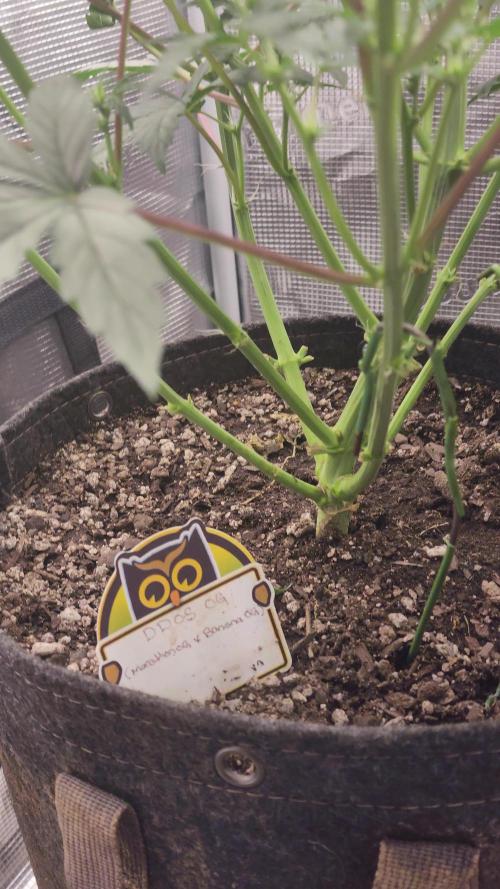
The girls are starting the stretch. Did alot of defoliation, and lst. Got net put up and canopy evened out. The trop pop is on day 35 and other 2 are on day 31. Got my light set at around 650ppfd withba DLI around 40
Processing
Likes
3
Share


@Flako1985
Follow
Notice oh level was low. Only around 5.6ph. So I adjusted the feeds oh to 7.0ph, hopefully it helps get the soils oh back up.
**Edit
Transplanted Today.


Processing
Likes
1
Share


Likes
8
Share


@Ambz_1990
Follow
I'm at the end of week 8! Just gave a feed of water and so on for the next week
Any advice on them but I know they're near. All trichomes are mostly milky, sugar leaves have amber on them but I'm not judging by

Likes
2
Share


@Mr_nugs_lover_David
Follow
She smell so so so strong that doesn't even look like an automatic strain,super strong mango smell coming off the flowers,I'm doing a perfect job here,she's happy and she's giving the best of her! 🌱💚#organics

Likes
201
Share


@MonyetDiablero
Follow
Hello everyone!
First of all I would like to thank everyone who voted for me, which made me come third in The Growdiaries 2026 in the category Best Autoflower Diary with the strain “Break-Up Cake Auto”. I would also like to sincerely thank Kannabia for their trust, which resulted in a second sponsorship.
I am proud to announce that I have been asked to grow a seed of choice from Kannabia.
My choice fell on the Do si Dos auto strain.
Strain info
https://www.kannabia.com/marijuana-seeds/autoflowering-seeds/dosidos-auto
I hope you will enjoy this new grow just like I will do.
Let's set another record for this strain, just like with the previous strain.👌
03-03-2025 -
ENVIROMENT:
Light schedule : 24/0
Humidity : 70%
Soilmoisture : 42%
Temp : 27 Celsius
Who am i ?
until last november i have always grown hydro for a little over 11 years. But growing started to look more and more like work because i was more busy with programming my controllers for the ph / humidity / lights / co2 / temperature. Also the realization that i have 2 children and my own house made me nervous for the authorities because where i live growing is not allowed. So i decided to grow smaller where i previously had 200x180x200 space i opted for 70x70x160 with the result that i can only grow 1 strain at a time. The intention is to remain self-sufficient in this way and still be able to exchange or give away something here and there at a party. Although I am sponsored I will not be able to grow every strain because not every strain can deliver the result I need to remain self-sufficient. If you know of an auto strain or photo strain that takes at least 11 to 15 weeks I would like to know so that I can grow it in the future and of course I will try to set a record for that grown strain. Because during the 4 grows that I can do per year I can only try to achieve a record since I cannot show you multiple strains at once. I am happy that after 11 years I have found growdiaries and that I have met you my friends.Greetings MonyetDiablero.

Likes
5
Share

@Mr_nugs_lover_David
Follow
She looks like a single main cola coming from the soil, very hard dense and sticky, I love this little cream mandarine, the aroma I can say is very sweet, but not definitely the most sweet of the garden. Peace ✌️ 💚

Likes
1
Share


@Sjake72
Follow
Changing and cleaning resevoirs this week will update with new nute ratios soon looks like the plant affeced by whatever it was is bouncing back nicely i think this is my first grow so comments and tips are very welcome i wont be doing any training this time as its the first grow and i had a few problems early on and didnt want to slow things down more then already were
Likes
3
Share


@SSKNFbyHAZE
Follow
⚡️⚡️ Instant Organic Feeding starts here!⚡️⚡️
Hey Growmies~!
Hope your week’s off to a great start!
So far, the Organic Instant Feeding method is working perfectly! I haven’t added any dry nutrients or Cal/Mag, and there are no signs of nutrient deficiencies.
It’s been about three weeks since I last top-dressed with dry nutrients, and as we head into the fourth, everything looks healthy. The only minor issue is a bit of phosphorus toxicity from using more bloom nutrients than veg nutrients, but it’s not a big problem. Her buds are filling out nicely, and we’ve got about two weeks left before harvest!
More trichome and bud pics coming soon~!
Hope you enjoy!
[9th Week Feeding for a 10-Week Strain]
- 60ml per liter of homemade liquified veg nutrients
1 Corinthians 10:26
