The Grow Awards 2026 🏆 











Likes
246
Share
@Qutro
Follow
Hi there fellow cultivators,
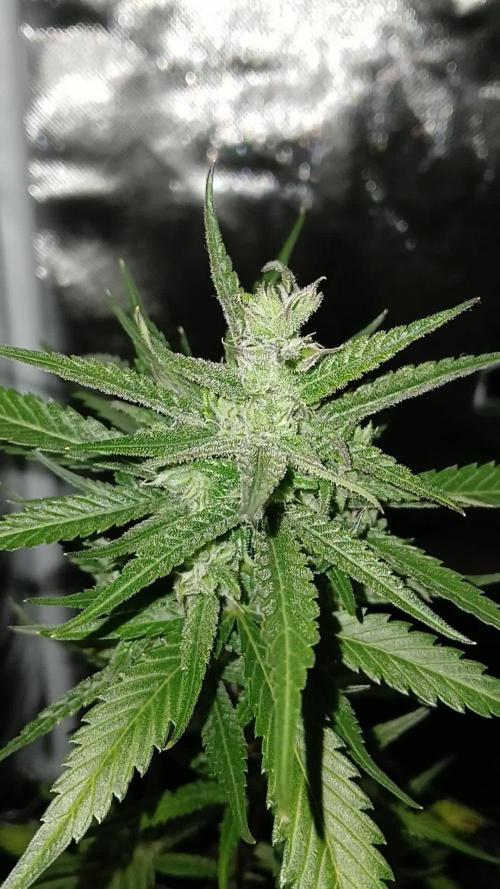
Here we go with flowering week 9 in our garden of chill. This week the focus was on let the girls shine and show off their lovely colours.
They were able to give the most beautiful experience in this mature phase in terms of appearance.🍁🌱
I feel lucky every day when I open the tent and marvel at one of nature's most beautiful creature.🙏💚 I will miss growing in the next few months very bad.
This week just watered with PH-d de chlorinated tap water.
Day 60:
One lady is going in to a darkness with the Shogun warrior.
Flowering Day 62:
This Girls are pretty much ready to harvest, i am letting them mature for a few days and in to 48 hours dark before harvest. On day 65 i am gonna make the chop chop.⚔️
The smell is very strong in the whole house if I open the tent even a little.😎
Is completely unreal and I am so very excited to sample each pheno.
See you in a while with the harvest report!
Peace 🏻

Likes
5
Share
@Mr_nugs_lover_David
Follow
Amo este fenotipo tanto como el otro esta genetica es magistral,cogollos compactos,pegajosos,super duros un aroma muy rico y agradable,no se puede pedir mas,este es el último riego que realizo con nutrientes a partir de ahora comienzo a lavar las raices por tanto solo regaré con agua con su ph bien ajustado a 6,5 para que ka planta se vaya alimentando de todo de lo que quede y eliminar cualquier resto que pueda quedar que empeora la calidad a la hora de fumar,exquisitez de 00 seed bank!

Likes
22
Share
@HighRangeFarmacy
Follow
Starting to get orange hairs, smell is fruity and delicious. Can't wait.
Processing
Likes
16
Share
@CityFarmer
Follow
Hello everyone,
Been busy this week working around the house so not much I can say. Heres a little video of there growing...
See you guys next week


Likes
6
Share
@Mr_nugs_lover_David
Follow
Brutal genetic! Just like that BRUTAL. Tons of resin, super strong woody pimey smell, very beautiful strain to grow, beautiful indica leafs, I know that this is one of those indicas that once you smoke that dense smoke you won't be able to get up from the couch, very strong genetic, I'm so fortunate to have this lady in my garden man! Definitely want to grow her again next season and make a big nice bush.peace!✌️🙏❤️🌱👨🌾

Likes
5
Share
@CannaIGrow
Follow
This plant seems to have grown much denser and better than my first plant. I just got the ac infinity ventilation setup with controller 69 for my 2x2, still trying to learn, hopefully grow #3 goes even better. Stay tuned
Likes
2
Share
@Chi_K24
Follow
Hey folks. No new updates really. still on cruise control. Plants are crazy thirsty. Using 10 gal every 2 days or so. So that ends up at 1.2 gal per plant per day! Insane. These air pots do thoer job as advertised. Next update we are going to amend these babies with the power bloom mix!
Likes
8
Share
@JohnnyBarrel
Follow
Week 16
Everybody is on Flower!
End of August: daylight 13h20: 7h20/20h40.
Day temperature max: 26°C - Night temperature : 17°C
Sunny weather - 2/3 rainy days in 2 weeks
Enriched the soil with seaweed powder and bat guano.
Continue to add flowering nutrients: Grower Master
I added some Calmag one time.
Watering 2L/plant every 3 days (2 days would be better)
With humidity growing and the relatives hot temperatures: the predators are attacking plants. Everything appears so fast: Aphids, caterpillars, leaf miner flies. Did a general defoliation before spray my mixture Garlic + laurel (12cl Garlic juice + 5cl laurel infusion + 1L distilled water: beware PH!!). I sprinkled diatomaceous earth on top of soil to protect and minimize the infestation.
Brake Pad Breath: still deep green and bushy. Flowering since 4 weeks. The most advanced, pretty good flowers with long pistils are growing. Spared until now: the plant is victim of Aphids, miner leaf flies and caterpillars in a « reasonable way »….try to eradicate the problem without shocking the plant at this stage.
Flash Back#2: around 2 weeks flowering, stretched a few centimeters more, well developed plants with lot of blooming sites. Relatively spared by pests, just some aphids.
GMO X Zombie Kush: some difficulties to recover….just engaged the flowering process, not to bad if she resist to the second pest’s wave.
Royal Moby: uncertain destiny….recovering good, sativa style: 155cm, just starting the flowering stage…super late!
Harvested a pretty auto flower: White Russian by Serious Seeds. Well developed plant, a little bit long to be ready but resinous and meaty buds.


Likes
1
Share
@OB-GYN-Kenobi
Follow
Broke one of the original 8 growth tips early on, but she's grown nicely into her heptagon shape. Living soil still seems to have too much nitrogen for her, hopefully vegging her a few more weeks before flipping will burn through some of it.
I've had to "mow the lawn" of clover a couple times now just to keep good airflow, and that fallen cover crop is starting to make a nice mulch...which in turn makes watering in coco a little less stressful.
We're in late veg now, so tent is holding steady at:
- PPFD = 600
- VPD = 1.0
- Temp = 82 F (28 C)
Likes
11
Share
@smoker420
Follow
She has really orange and sweet terps on pheno1 and pheno 2 smelled like cat piss or something growing really zesty and gassy at same time both show great colours towards the end got cuts going again for next run will be better would recommend this strain first time with exotic and wont be the last all i can say haha

Likes
Comments
Share
@Bobbo94
Follow
10th week, the smaller Strawberry G was already harvested. 5 grams dry weight. Twig snap two days ago I was out smoked it. Head buzz, Strawberry taste was light and delicious. High lasted about 4 hours. I have a habit of harvesting with hardly any amber so the potency is at its peak.

Likes
47
Share
@KingSalomonsWeed
Follow
07 März to be updated.
Ready for Chop?
09.03. Day 120 flower 57. Ich werde bald Ernten, denn ich bin beinahe komplett mit den Trichs zufrieden .
Hellbraun+ glasige+ milchige. Nur noch zu wenig milchige.
? Frische Phylaxien ab und an überall.
= Wachstum 🤗💚 NEHME ICH.
10. März Ab in die Dunkelheit für 3 Tage.
Damit es so richtig scheppert.
Als wenn sie nicht gut gelungen und damit auch stark genug wäre.
Flower day 57. Eigentlich noch 13 Tage, aber danke ich bin der Meinung, unterstützt durch die Community (😙 )
das es jetzt gut ist.
Also Ernte am Tag 60 eigentlich.
Bisher 10 Punkte aufgrund von betörender Erscheinung und Geruch.
Sehr feste Knospen.
Der Rauch steht noch aus.
37 % THC
AUWEIA ( Like you are an Snowboarder and looking to the snow avalanche that soon arrives you )
12.03. morgen wird geerntet. Die einzige Pflanze bisher überhaupt, die ich noch nicht angetestet habe. 😬🌊🤗📥. Ja, mit Bildern.
13.03. Day 61 of flower.
CHOP , ERNTE, AUS DIE MAUS, ZAHLTAG,
Hängt Kopfüber zum Trocknen am Stamm.
Die kleinste Knospe unten wird gerade getrocknet, und an getestet.
Sie fühlte sich sehr klebrig an.
Später gibt's den ersten Eindruck.
.......
Eine Popcornknospe später:
Ich bin so fertig.
Sofortiger Einschlag, noch vor dem Auspusten.
Geschmack geil.
Nochmal, das war ganz wenig.
Hat mich beinahe umgehauen.
37% ?
Keine Ahnung. Kann aber sein.
Definitiv das heftigste Weed was ich kenne.
Hunger habe ich auch bekommen.
Nochmal, kleinste Menge, heftigster Einschlag.
👍
Dankeschön.
14.03. Es ist vollbracht, heftigstes Weed Ever trocknet in meinem Zelt.
Bin ich Happy?
Ja.
Und doch.
🌊📥💜
😬😬 HEFTIG
1 komplette Stunde war ich heftig von nem Krümel.
Dann ging's besser.
Interessanterweise war das aber komplett angenehm.
Nun ja, wie bereits angekündigt wird es dann noch einen anderen Test geben.
Mit ner " normalen " Menge.
😬 ( Ok , vielleicht erstmal doch zahmer, denn es ist so stark wie beschrieben )
Ich hoffe ihr erkennt dieses Glitzern. Im Sonnenlicht ist das so schön...
15.03. FUTURE 1 : Noch nie hatte ich soviel Respekt vor ner Ganja Pflanze.
Die hängt im Zelt und trocknet.
Aber doch, das war, dafür das das so wenig war...., EXTREM !
Und das war nicht mein erster an diesem Tag. ( 😂😂 Echt nicht ).
Meine Empfehlung für : Anfänger nicht.
Normalos nicht.
Grower mit Toleranz: Vorsicht extrem Stark.
Grower mit heftigster Toleranz : Genau Richtig.
Wohl bemerkt , bei Knospen.
Gutes Haschisch hatte schon vor 50 Jahren über 55 % THC.
Aber dieses ANESIA Gebräu kommt dem echt nah.
Was ein Einschlag. Es berührt den Gaumen, dein Körper sagt: Her mit dem Qualm
Und genau ab da wirst du stoned. Sofort und ohne Umschweife.
HIER ENTLANG MEINE DAMEN UND HERREN, ICH ZEIGE IHNEN FUTURE 1.
Während des Ausatmens genieße ich wohlige Anklänge von Weihrauch, Haschisch, Floral und noch so ein paar Düfte die ich nicht kenne.
Der Qualm ist draussen, ich bin bedient.
Sehr angenehm, aber stark. Von dem Fitzel Weed rede ich. Ich konnte gestern danach nicht mehr schreiben.
1 Stunde lang volles Programm, dann ging Sitzen und gamen wieder.
Danach brauchte ich ne Erholung.
Ich.
Ich war so fertig.
Kein Weed knallte mehr richtig
Wie ich geschlafen habe?
Sehr gut.
Mit vollem Magen.
HEFTIGSTES
16.03. 😀😃😄😁
17.03. fühlt sich an wie Gelee.
19.03. die Knospen sind unglaublich harzig.
Und lecker.
Kratzt 0 Prellt 1000.
ZEHN PUNKTE!
Ist so.
ANESIA SEEDS
eure FUTURE 1
ist in meinen Augen ( nein kein Geschleime ) so schön.
Dann dieser Geschmack, bisher noch recht frische Knospen, ist wie ein würziges frisches zusammenspiel von sour Creme mit irgendwas scharfen, welcher mit Ananas und floralen Akzenten, Pfefferminze, abgerundet wird. Untermalt von Limetten zitronigen.
Die Mischung ist echt geil wenn sie Zusammenspielt.
Vor allem, das schmeckt nach Weed!
So , die Wirkung: Erstmal, egal was du den ganzen Tag so gemacht hast, danach geht nix mehr.
Du merkst sofort, wie dein Körper runterfährt.
Biing, wie ein sanfter, doch gut hörbrer, klingen einer Klangschale, wird dein Geist Stoned..
Das dauert ca 7 sec
Angenehm, ohne Fahrstuhl Effekt oder sonstige Unannehmlichkeiten.
So, du Rauchst, und bist sofort dicht.
Sofort!.
Die fragt nicht, die macht einfach.
( Immer noch ne Popcorn Knospe)
😳
Das sind die schwächeren.
Ich kann mir gar nicht ausmalen ( doch kann ich 😬😬 ) wie die Oberen knallen.
Heftig


Likes
1
Share
@FarmerFrank
Follow
Node 7 formed and started with node 8. Small issues with leaves as there appeared some spots on lower levels with a slight purple / dark green on the edges of the top leaves. Will monitor…might be genetics of excess N. Ran a clean water week. PH of water set to 6.0 - 6.5. need to start with flower nutes towards the end of week 5. Will start adding the nutes at 1/3 strength for a week (starting on 18.05/2019) and work my way up to full strength at end of week 7. Will also be adding sea grow every second week from here on. Removed some of the lower fan leaves (4). Noticed that the plant did stand still but growth started again after about day 2 or 3 after cutting leaves. Stated folding the 2 top leaves to allow more lights to lower shoots. Technique used is to roll stem so the leaf turn 90 degrees top to bottom. Recovers within 2 - 4 hours. Lifted the pots higher. Light distance 45cm. Watering less this week due to the amount given towards the end of the last week. Only sprayed water to keep the top level wet. Will start with 250ml every second day.

Likes
14
Share
@Snickelfritters
Follow
11/5 -- They now have 2 weeks of 12/12 under their belts and it's truly been a tale of 3 plants for the past week and a half.
GZ2- This one has the opportunity to meet its full potential. It has stretched to give me this beautiful canopy and very few signs of over feed or stress in it. Hopefully she stays this way.
Moby- look like it may have been developing some deficiencies. I fed it a few days ago and it seemed to respond well. Some leaves have gotten yellow but the plant is do thick and dense I'm not worried about a few falling off. All in all, it's been steady eddy for Moby Dick that I now believe is also a Barney's Farm Freebie(the seed is now listed where I buy mine from) I'm not going to change it but if you're keeping track, this is most likely a tent full of Barney's Farm.
Gz1- and now the music gets a little more serious. I really started recognizing problems with her right at flip. She has lost a lot of fan leaves due to yellowing,, dark stems and I can tell her branching has suffered because of it. Growth at the bottom looks weak and even wrinkled in some spots. She has burn spots and signs of deficiency galore. But also VERY dark fan leaves. I've just come to the conclusion that flushing was probably my best move.
She can still have a week of solid growing. If I can get it corrected now, this plant will still be respectable but the trend is disturbing and alarming to someone who knows how fast they can decline.
So in conclusion, things are getting a little hairy. Flowering always brings on a new set of challenges and I'm still learning every single time. Wish me luck this week, I'll need it.
11/6 Updated pic on old friend banana daddy that they shared the veg tent with.

Likes
48
Share
@Focus420
Follow
Dobrý den a áhoj vítejte v poslednim týdnu kvetení 🤟🌱
Poslušně hlásím proplachuji 4 den 🤗
7 dní schází k dokončení procesu🌱🤠
Květiny vypadají skvěle.👊😉 na první sklizeň teda. AŤ PŘÍŠTĚ VYPADAJÍ LÍP!!!!!!!!!
podle mikroscopu cca 15 - 20 procent jantar trichom☺️
106 den - po proplachu zdá se být vysoká vlhkost 😂 cca 40%
- přidán odvlhčovač👍po 2 hodinách 30%,
107.den 🌱 proplach ph 6.3 ec 0,42👏
108.den kontrola trichomu, průměrně kolem 40 % jantar 😉
mohl jsem o týden víc podávat živiny..
109.den nic nedělám jen se dívám✌️
110.den poslední 3 dny nechám vyschnout vodu a sekera🤫
111. Den video , kontrola trichomu 60% ,zítra sekera🌶️🌶️
112.den sklizeň proběhla dobře ☺️ ted 10 - 14 dní sušení a jedem bomby ,
Barneys farm těším se 🤗🤗🤗
jsem připraven na vaše kmeny !!!🥇


Likes
82
Share
@WhiteEdge
Follow
12.03.2024
Continue into week two. Target EC is the same for this week
Girls looking great. One Purple Lemonade fall into bucket! That lid is not cut with precision😏 Put some plastic to hold till now
Clean tanks and filters with h2o2+vinegar acid +bleach
Replace all filters
Mix new batch with 2ml AN connoisseur AB + Big Bud Powder + Silica - total 20l @
Donne one pass off long misting 2m
TrolMaster Tent-X arrived! Setup and registration done in seconds. Finding best placement ...
700 PPFD @ center, VPD 1.0, RH 53-56% day, RH 45-48% night, Temp Night-20c, Day-25/26c, Leaf temperature 23c, Light distance 60-65cm, CO2 750+ppm
540w@70cm distance
NT-Nutrient Tank - PH -5.9, EC -1.15, Temp-21c
14.03.2024
Top up tank with 10l off 1.2EC solution - 2ml AN Connoisseur A+B + 3g Big Bud @ 18l (1.16EC)
Replace all filters
Before top up, nutrient solution in tank is 0.86, after adding 1.2EC new mix is 1.03
PH is slightly rising, normal when EC is drooping
Girls grow nicely, no deficiencies, this week is start off stretchy faze.
Remove some big and bottom levees
PAR map 800max/600min PPFD, VPD 1.0-1.1, RH 50-54%, Temp Night-21-22c, Day-25/26c, Leaf temperature 23c, Light distance 60cm, CO2 750+ppm
580w@60cm distance
50s ON time 20min OFF time Day Time
50s Off time 30min OFF time Night Time
NT-Nutrient Tank - PH -5.92-5.99, EC -0.89-1.0, Temp-20-22c
15.03.2024
Position TrolMaster Tent-X Box on tent and connect to internet. Temperature ,Light and humidity sensor is great, I lake that all sensors and connector boxes are on RJ connectors
Great and fast install, registration and connections off all cables, censors and light! Like ability to expand system with Aqua-X and Hydro-X for irrigation ,PH/ EC/Temp monitoring off nutrient tank
Controlling solenoid valves and pump will be SUPERB!!! Recycling type off timer are great for Aero misting!
With Inkbird equipment i have issues that all connections are permanent and if you have longer cables....😡
HLG Scorpion Diablo LED light is connect via LMA-14 light adapter ! Wow i can control dimming and timing off my light via Wi-Fi😀😊😎👏🙏🙌
PAR map 800max/600min PPFD, VPD 1.0-1.1, RH 50-54%, Temp Night-21-22c, Day-25/26c, Leaf temperature 23c, Light distance 60cm, CO2 750+ppm
HLG Scorpion Diablo@83%
580w@60cm distance
50s ON time 20min OFF time Day Time
50s Off time 30min OFF time Night Time
NT-Nutrient Tank - PH -5.95-5.99, EC -0.89-1.1, Temp-20-22c
16.03.2024
Top up tank with 15l off 1.2EC solution - 2ml AN Connoisseur A+B + 3g Big Bud @ 18l (1.16EC)
Replace all filters, still everything in pristine condition after every changing, nutrient solution in tank looking and smell fresh and clean.
Reducing humidity in night time below 50% , humidifier rise temperature to 22-23c at night
Day RH is 53%, in first two hours keeping temps and humidity lower to reduce deferential form night time to 1-2c
Don't want to have more than 10-15cm off stretch in next week
Girls drink more water and nutrients every day, think around 10-12l per day
Managing EC strength with adding slightly higher nutrients solution when top up tank. Overall its around 0.9-1.0EC for most of the time
PH is stabile , slowly rise in small increments. Need to adjust @ 6.2 to 5.9 every two-three days. Probably i will leave it to swing even more.
Diablo is at 80% power @ 45-55cm from top canopy, 900+PPFD in center, lowest corners get 650+
PAR map 920max/650min PPFD, VPD -1.1, DRH 50-54%, NRH48-50%, Temp Night-21-22c, Temp Day-25/26c, Leaf temperature 23c, Light distance 45cm, CO2 750+ppm
HLG Scorpion Diablo@80%
580w@45cm distance
50s ON time 20min OFF time Day Time
50s Off time 30min OFF time Night Time
NT-Nutrient Tank - PH -5.95-5.99, EC -0.89-1.1, Temp-20-22c
17.03.2024
Top up tank with 10l - 1.2EC solution - 1.8ml AN Connoisseur A+B + 3g Big Bud @ 18l (1.16EC)
Replace all filters, install one new. Total 5 mash filters + 2 disc filters
Remove some large fan leaves from all girls. Nothing crazy. Next week is final BIG defoliation and pruning
Clean room benches a little bit after defoliation.
Whole week all girls are doing great , no sign off any kind off stress or deficiencies. Superb fast growth.
Stretching is more apparent in the end off this week. Next week is going to be madness!
18.03.2024
Raise light 10cm , adjusting to canopy level..
HLG Scorpion Diablo@83%, Set sunrise/sunset dimming @ 30min - TrolMaster Tent-X
PAR map 890max/650min PPFD, VPD -1.1, DRH 50-54%, NRH48-50%, NT-21-22c, DT-25/26c, Leaf temperature 23c, Light distance 45cm, CO2 750+ppm
Week 2 off Flowering in Summary
100l off RO water
190ml+190ml AN connoisseur A+B, 15g Big Bud Powder
70kW electricity in total for light, Pumps and AC Infinity Fans. 58kW for Light + 8kW Dehumidification + AC Infinity ventilation
Week start @ 1.14EC, nutrient strength. Strength dropping every day by 0.1-0.2. Topping up tank with 1.2EC solution bring back strength to 0.9-1.0EC
Start using AN Big Bud powder for day two off this week. For next slowly reducing Nitrogen and add more Big Bud. Next week start @ 1.2EC
Girls look superb all time, Wedding Cheesecake is going to be a biggest strain in this run. Two off them are gigantic plants, third one is little smaller.
Tropicana Cookies is short and bushy with lots off side branching. Need good defoliation next week . Purple Lemonade is also huge , all three girls
Flowering going nicely, obvious sign off formation off bud sites, pistils have shown an all girls.
PH was stabile and move from 5.85 min to 6.2 max. Swing all week without chasing perfect number.
Light distance start at 65cm from canopy finish week at 45-50cm , PPFD levels around 800-940 in center, trough whole week
Temperature vary slightly from 23c at start off day to 26c max at some points. AC Infinity T6 extracting fan program in AUTO to kick in @ 26c
Night temps around 21-23c, dehumidifier start to work at night time to bring down humidity, trying also to minimize Day/Night temperature differential for this week also
Continue in next week at same environment settings and light strength..
Processing
Likes
4
Share
@XoticGROW666
Follow
DAY 14 of flower🌸🌼
G41 TALL PHENO
Feed Compost tea n sst tea
No bottles no nutes

Likes
19
Share
@RDWCGrowing
Follow
Week 1 Day 1 - 8/12/2023
1st Water change Day! Such a special time it is when you remove the little bit of Nutes that you gave them as an appetizer and you give them their first real meal.
Added
39 Gallons of Water to my system
SILICA= .5mil/Gal = 19.5 = 20mil
Root Drip = 1mil/Gal = 39mil
Cal Mag= .25mil/Gal = 9.75 = 10mil
FLoraMicro= 3.0mil/Gal = 114mil
FloraGro = 2.0mil/Gal = 78mil
FloraBloom = 2.0mil/Gal =78mil
ORCA= .5mil/Gal = 19.5 = 20mil
Week 1 Day 2 - 8/13/2023
Everything is looking good the roots are making thier way to the water and the new grow is looking nice and green.
Week 1 Day 3- 8/14/2023
Everything is right on track, they are looking beautiful and in the praying postition all leaves happily lifting towards the light.
Week 1 Day 4- 8/15/2023
Looking beautiful today and looked like she could use her first haircut.. gave her a TOP off. Roots are laying in the water everything is looking right on track..
Week 1 Day 5- 8/16/2023
walked in and the humidity was under 60.... ohh noooooo.. So I added 2 humidifiers to the tent and attached them to my InkBird controller which is set to 62. She had roots nicely in the water.. this grow is on!!!
Week 1 Day 6- 8/17/2023
Humidity was a little low this morning, so I refilled the humidifiers. Other than that, the temp looks great, the PH looks great, the PPM looks good the plant is in the praying position and all damage from the little drowning seems to have been fixed. Happy Happy.
Week 1 Day 7- 8/18/2023
Yay.. week 1 in the books, roots in the water growth has started first hair cut given and both side nodes are growing. Everything is looking good and on track.. A lot better than week one of the last grow when I had them drowning week 1.
Really excited on how this grow is going to come out.