
The Grow Awards 2026 🏆
Processing
Likes
17
Share
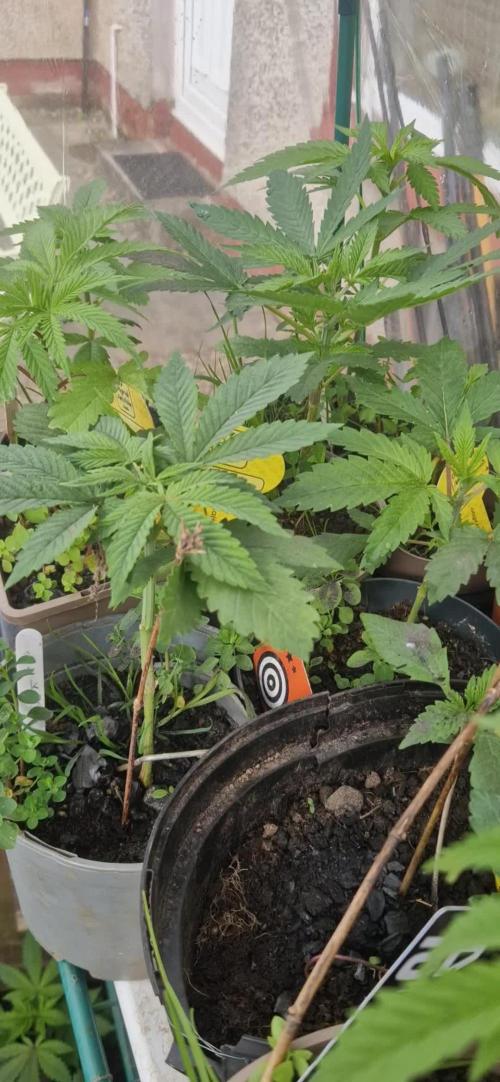
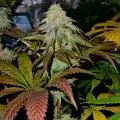
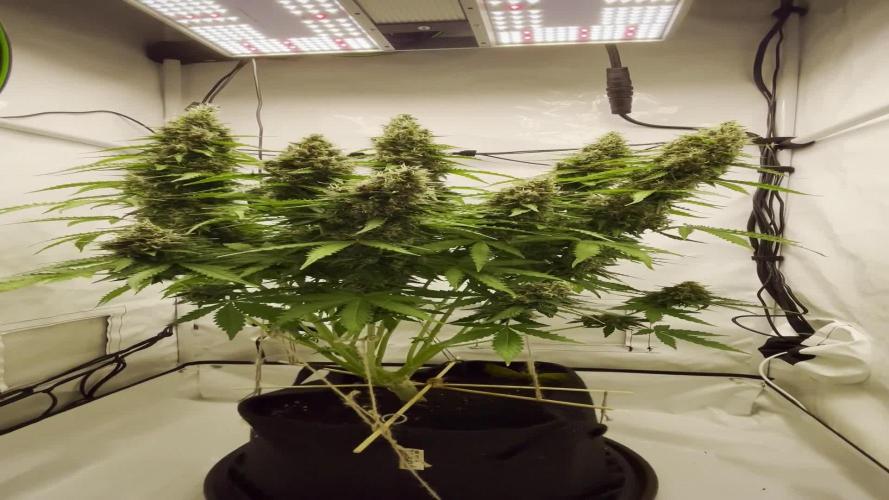
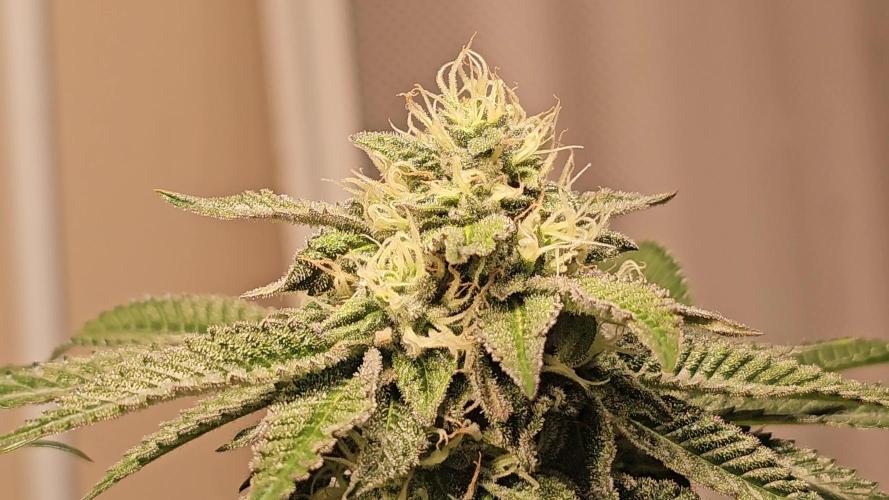
Hello growers day 42 in the garden with the crystal candy and red poison autos another easy week all girls are doing very well the red poison are starting to buff up now the red poison that’s not red is now the tallest girl in the tent all 4 crystal candy are budding up nicely like I said not been doing much to them just feeding 2L every couple of days to each girl and that are fine so until next week be safe and happy growing ✌️
Likes
57
Share
@HinduGod
Follow
WOW LOOK AT DAT!!! DAT FADE IS STARTING TO COME IN!!! PLANT IS STARTING TO DRAW NUTRIENTS FROM THE LARGER FAN LEAVES!!!! SUN GOD HAS BEEN VERY VERY GOOD!!! RAIN GOD SHOWED UP FOR A LITTLE BIT DIS WEEK!!!! PLEASE COME AGAIN!!!!
Likes
58
Share
- 2.5mL water this week. Decided to add 1/4 veg nutes. Thinking if going 1/2 dose next watering. - Scratch LST, will see how she naturally grows out. Will still defoliate - Gives off a slight smell at times - Growing and green 🌱
Likes
8
Share
@Kindbudz
Follow
Forgot to water these ladies for a couple of days but after a heavy watering and a good feeding they perked right back up. I have 2 flower tents running with sunset sherbet right now. Regardless of wether I think they are ready or not I will be switching them to flower in 3 more weeks. Can’t wait to see how these ladies flower!
Likes
1
Share
@Ninjabuds
Follow
It's been a great week for the seedlings! They've really taken off and are looking strong. I'm planning to transplant them into larger pots in the next few days, so next week's photos should show some impressive growth. I'm so excited to see how they thrive in their new homes! I've been giving them distilled water from the start, and I'm still doing that, but I just started adding 10 milliliters of Fox Farm Big Bloom and 1 milliliter of Fox Farm Grow Big. All of the seedlings are doing really well, and there's not really any visible difference between all the ten strains. I started all ten packs of each strain and kept all the best seedlings, so that's why they're all doing so well.
Likes
Comments
Share
@youdan
Follow
una coltivazione che mi ha dato molte soddisfazioni, chimera e una pianta formidabile ed ha dei terpeni difficili da descriverli, dovreste coltivarla per capire a pieno la sua potenzialita
Likes
11
Share
@w33dfoxPT
Follow
THIS IS NOT GELATO: IS MORE ONE HARVEST OF REST OF OTHER PLANT AND OTHER ONE. BECOUSE CONTESTS I CANT CHANGE IT SO, I WILL WRITE SOMETHING LIKE I HAD DO THERE, IN MARK AS BLUECHEESE THE GELATO ONCE I HARVEST SHE. NEXT TIME I WILL DO A DIARY FOR EACH SEED TO AVOID THIS CONFUSIONS. SORRY
Likes
4
Share
@YodaNameR
Follow
Topped the plants today, waited for the 4th set/8th leaf node to come in. Will probably be a day or two before I give it more nutes. Feeding schedule and products in week 1
Likes
2
Share
Took the cut as I said I would got 6 off the galato and 4 off the MCMOG....it amazing how 2 becomes more would have more tree of the same to cut nxt cut🔥🔥💨💨💨
Likes
97
Share
Hi all! This girl does not even think of maturing yet .. the buds are getting fluffier and denser! the leaves began to slowly turn yellow and turn purple hues. I really hope and want that she would show 100% of her goetinics expressed in colors! in other aspects, I believe that I was able to achieve the maximum and grow a plant that fully reflects her genetics! I am 100% satisfied with the result! I hope that @GreenHouseSeeds will appreciate my work.
Likes
5
Share
@CreoWeed
Follow
The total yield was 40.7 grams dried, and it took around 7 days before ending up in the jar. Plant is not very leafy so the trimming part doesn't take long time. The taste is pretty soft at the beginning but the high is impressively strong and pretty mental. That's all lads, thanks everyone that followed this journey and stay tuned stay high for the next diary!
Likes
9
Share
@Colo420
Follow
Triste día hoy, luego de regar y hacer el seguimiento de las feminizadas continúe con la flora.... Fancy ok, colombian ok.... Y al salir afuera me encuentro con la triste noticia de que me robaron la planta de exterior. Esto es algo que estaba dentro de las posibilidades pero no me lo imaginaba tan pronto (planta a mitad de floro sin tricomar). está plaga llamada humano solo demuestra su estupidez al cortar en el tallo una planta sin tricomas. Pero esto es así, ahora queda mejorar, meter más seguridad y darle para adelante, cómo siempre 💪
Likes
5
Share
@WhatIf420
Follow
9-6-2023 Week 8 has started. The smell is very weak, if I touch the buds it smells like pine. I noticed some of the leaves turning orange with orange spots, my pH is solid 6.9 so I'm not sure. So far so good!! 9-8-2023 I went to water her this afternoon and BAM like a slap in the face she had a very pungent smell coming off her. I'd say she went from no smell to strong smell in a few days
Likes
15
Share
Human Body 65% Oxygen (in all liquids and tissues, bones, and proteins) 18% Carbon (everywhere) 10% Hydrogen (in all liquids and tissues, bones, proteins 3% Nitrogen (in all liquids and tissues, proteins 1,5% Calcium (lungs, kidney, liver, thyroid, brain, muscles, heart, bones) 1% Phosphorus (urine, bones, DNA) 0,35% Potassium (enzymes) 0,25% Sulphur (proteins) 0,15% Sodium (in all liquids and tissues) (in terms of salt) 0,05% Magnesium (lungs, kidney, liver, thyroid, brain, muscles, heart) The average adult male contains about 140 g of K(Potassium); the level varies with body weight and muscle mass. We ingest about 2.5 g per day of K from our food and excrete about the same amount. 0.0118 % of that is K40 The answer is that they were present when our earth was formed. Any radioactive material originally present at the formation of the earth would have decayed and disappeared if its half-life was short compared to the age of the earth. However, if its half-life were long, close to or greater than the age of the earth, then such materials would not have disappeared but are still with us today. There are several radioelements in this category, such as the well-known elements uranium and thorium. Thorium (Th232) has a half-life of 14,000,000,000 years, uranium has two long-lived radioisotopes; U238 has a half-life of 4,500,000,000 years, and U235 has a half-life of 710,000,000 years. These give rise to the radium and thorium atoms found in all humans, acquired from the food we eat. That food, of course, obtained these materials from the soil in which it grew or on which it grazed. Potassium is also in this category. There are actually three potassium isotopes: K39, a stable isotope, is the most abundant, at 93.26 % of the total; K41 is next in abundance at 6.73 % and is also a stable isotope. The potassium isotope of interest is a radioactive isotope, K40. It is present in all potassium at a very low concentration, 0.0118 %. It has a very long half-life, 1,260,000,000 years. When it decays 89 % of the events give rise to the emission of a beta ray with maximum energy of 1.33 MeV. The other 11 % of the decays produce a gamma-ray with an energy of 1.46 MeV The forces required to forge thorium 232 can only be harnessed when traveling close to or at the speed of light, so essentially what I'm getting at is 0.0118% of every person alive is formed of the same element that was forged in the anvil of creation itself. We are all one & the same German chemist Johann Wolfgang Dobereiner attempted to classify elements with similar properties into groups of three elements each. These groups were called ‘triads’. Dobereiner suggested that in these triads, the atomic mass of the element in the middle would be more or less equal to the mean of the atomic masses of the other two elements in the triad. An example of such a triad would be one containing lithium, sodium, and potassium. The atomic mass of lithium 6.94 and that of potassium is 39.10. The element in the middle of this triad, sodium, has an atomic mass of 22.99 which is more or less equal to the mean of the atomic masses of lithium and potassium (which is 23.02). 9 controls the 6 and 3. The Limitations of Dobereiner’s Triads are : All the elements known at that time couldn’t be classified into triads. Only four triads were mentioned – (Li,Na,K ), (Ca,Sr,Ba) , (Cl,Br,I) , (S,Se,Te). 2. Newland’s Octaves English scientist John Newlands arranged the 56 known elements in increasing order of atomic mass in the year 1866. He observed a trend wherein every eighth element exhibited properties similar to the first. Azomite contains 180ppm of thorium. Your plant will thank you, you are welcome. Most farmers do have not a proper understanding of what is Azomite and how to use it in gardening, especially if they practice organic farming. Continuous propagation and leaching effects of water deplete the essential minerals and micro-nutrients from the soils. Such soils remain weak, not able to support the production of fruits and vegetables. Azomite mineral contains micronutrients that supplement the soil. It also balances the minerals for growth and overall productivity. Constant use of this mineral rejuvenates your soil renewing its potency again. Azomite is a naturally mined mineral product that is ready to use. It’s a unique rock that comes from a mine in central Utah. Azomite requires no mixing or special preparation before use. It is derived from volcano ash that spewed out millions of years ago. It contains the widest range of minerals of all the rock dust in the world. Azomite provides plants with 70% essential elements. These elements include magnesium, calcium, potassium, and silicon for plant growth. Facts About Azomite Fertilizer It’s a natural mineral – 100% natural with no fillers or additives Does not contain any harmful elements Requires no special preparation before use It’s odorless – very friendly to use Does not restrict water penetration or aeration Is easily broken down and absorbed into the soil Does not burn plants. READ ALL OF THIS, Magic is real:) Mag(net)ic has always been real. Nuclear charge radii are sensitive probes of different aspects of the nucleon-nucleon interaction and the bulk properties of nuclear matter, providing a stringent test and challenge for nuclear theory. Experimental evidence suggested a new magic neutron number at N= 32 (refs. 1–3) in the calcium region, whereas the unexpectedly large increases in the charge radii4,5 open new questions about the evolution of nuclear size in neutron-rich systems. By combining the collinear resonance ionization spectroscopy method with β-decay detection, we were able to extend charge radii measurements of potassium isotopes beyond N= 32. Here we provide a charge radius measurement of 52K. It does not show a signature of magic behavior at N= 32 in potassium. The results are interpreted with two state-of-the-art nuclear theories. The coupled cluster theory reproduces the odd-even variations in charge radii but not the notable increase beyond N= 28. This rise is well captured by Fayans nuclear density functional theory, which, however, overestimates the odd-even staggering effect in charge radii. These findings highlight our limited understanding of the nuclear size of neutron-rich systems and expose problems that are present in some of the best current models of nuclear theory. The charge radius is a fundamental property of the atomic nucleus. Although it globally scales with the nuclear mass as A1/3, the nuclear charge radius also exhibits appreciable isotopic variations that are the result of complex interactions between protons and neutrons. Indeed, charge radii reflect various nuclear structure phenomena such as halo structures6, shape staggering7, and shape coexistence8, pairing correlations9,10, neutron skins11, and the occurrence of nuclear magic numbers5,12,13. The term ‘magic number’ refers to the number of protons or neutrons corresponding to completely filled shells. In charge radii, a shell closure is observed as a sudden increase in the charge radius of the isotope just beyond magic shell closure, as seen, for example, at the well-known magic numbers N=28, 50, 82, and 126 (refs. 5,12–14).In the nuclear mass region near potassium, the isotopes with proton number Z≈20 and neutron number N=32 are proposed to be magic on the basis of an observed sudden decrease in their binding energy beyond N=32 (refs. 2,3) and the high excitation energy of the first excited state in 52Ca (ref. 1). Therefore, the experimentally observed a strong increase in the charge radii of calcium4 and potassium5 isotopes between N=28 and N=32, and in particular the large radius of 51K and 52Ca (both having 32 neutrons), have attracted substantial attention. One aim of the present study is therefore to shed light on several open questions in this region: how does the nuclear size of very neutron-rich nuclei evolve, and is there any evidence for the magicity of N=32 from nuclear size measurements? We furthermore provide new data to test several newly developed nuclear models, which aim to understand the evolution of nuclear charge radii of exotic isotopes with large neutron-to-proton imbalances. So far, abinitio nuclear methods, allowing for systematically improvable calculations based on realistic Hamiltonians with nucleon-nucleon and three-nucleon potentials, have failed to explain the enhanced nuclear sizes beyond N=28 in the calcium isotopes4,15. Meanwhile, nuclear density functional theory (DFT) using Fayans functionals has been successful in predicting the increase in the charge radii of isotopes in the proton-magic calcium chain10, as well as the kinks in proton-magic tin and lead12. All these theoretical approaches have, until now, been predominantly used to study the charge radii of even-Z isotopes. Here they will be applied to the odd-Z potassium isotopes (Z=19). https://www.nature.com/articles/s41567-020-01136-5