The Grow Awards 2026 🏆
Likes
Comments
Share
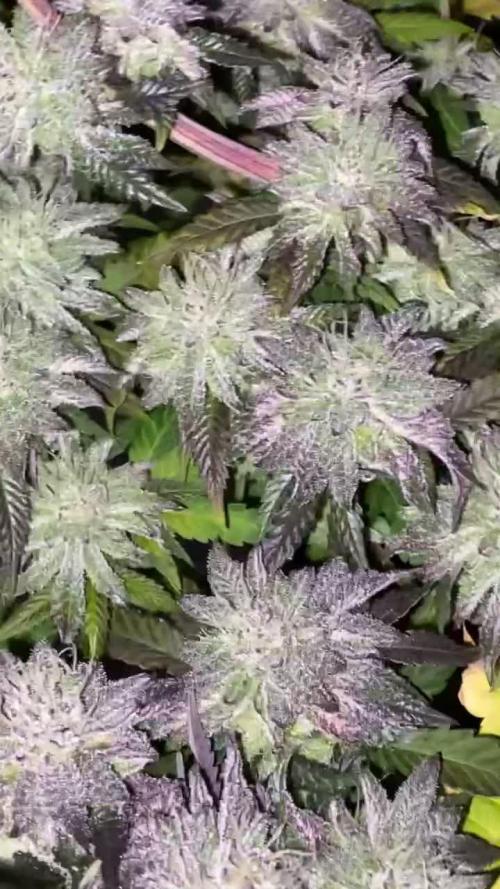
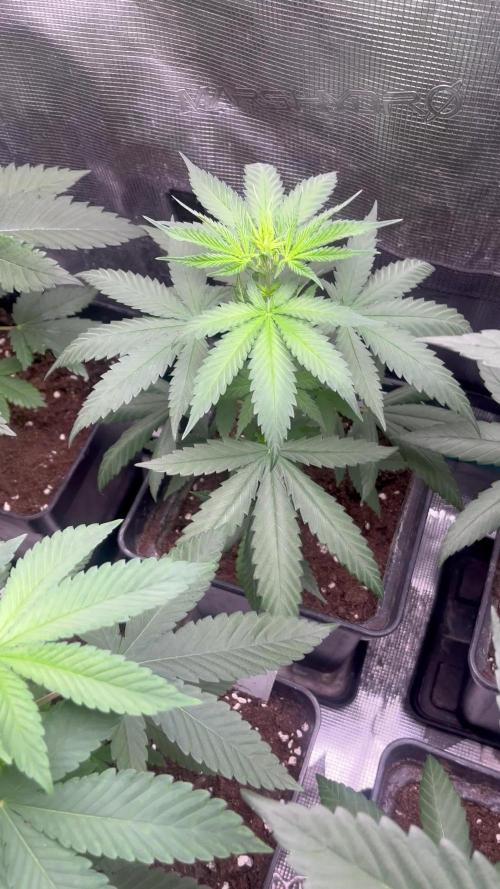
And it starts like this. an official collaboration starts with the friends of Zamnesia, from today I will only grow, grow and flower Zamnesia Seeds plants and I really like it. We are close to a flowering in the extreme heat and therefore we opted to start with 4 very fast F1s, they are not joking guys when they tell you that they are made to be more resistant, stable and fast they are not telling you something false. The girls are super fast, even those from other brands tried in the past are excellent and a sliver and this one from Zamnesia have all it takes to be the best autoflowering on the market. The Wurlz F1s were also born at the speed of light, 18 hours in water, 24 on land and we were already born, both of us. Oh yes, a lot of research is being done on autoflowering plants, you have all noticed monstrous improvements compared to Low Rider and subsequent derivatives. Whoever works best wins and from what I have been able to see so far Zamnesia is working very well. I know, there is a group of sceptics, friends I'm here on purpose, give me a couple of months and we'll see. Zamnesia is the best online shop in the situation, you can find everything from seeds, to mushroom kits, through vaporizers and a thousand other things https://www.zamnesia.io Wurlz F1 seeds specifically https://www.zamnesia.com/10669-zamnesia-seeds-wurlz-f1-automatic.html Site Description ZAMNESIA SEEDS - WURLZ F1 HYBRID AUTOMATIC: EFFECTS TO LEAVE YOUR HEAD IN A WHIRL! As the end product of combining Runtz with Watermelon Candy, Wurlz F1 hybrid Automatic showcases a reliable, uniform, and, above all, easy growing experience. The resulting buds offer mind-blowing flavors and soothing effects, making Wurlz F1 Automatic more than worthy of being on your radar. GROWING WURLZ F1 HYBRID AUTOMATIC As an autoflowering strain, it takes just 9–10 weeks for Wurlz F1 Automatic to move from germination to harvest. Fortunately, there's very little required other than a bit of maintenance along the way. This is partly due to the F1 genetics that make this strain robust and uniform, resulting in plants that reach a similar height and provide a similar (large) yield. Moreover, Wurlz F1 Automatic is highly resistant to disease, pests, and other ailments. Reaching heights of about 65–80cm, Wurlz F1 Automatic is not an overbearing plant and can fit into smaller spaces with zero fuss. Once ready to yield, growers have the potential to see a return in the region of 450–500g/m² indoors and 50–150g/plant outdoors. AROMAS, FLAVORS, AND EFFECTS OF WURLZ F1 HYBRID AUTOMATIC After Wurlz F1 Hybrid Automatic wows you with its easygoing growing experience, the best is yet to come: the smoke test. Teeming with terpenes, this cultivar offers a fruity and candy-like flavor tinged with just a little bit of pine for good measure. In terms of effects, Wurlz F1 Automatic is bolstered by 24% THC and a finely tuned array of cannabinoids, making for a soothing, physically relaxing, and, in larger amounts, couch-locking high. So settle in with some of your favorite friends, snacks, and movies; this is relaxation at its finest.
Processing
Likes
19
Share
Got ac hehe now We r talking !!!! So since some of my girls are not stretching as much as the others, i decided to upgrade them a few inches up so that they get more light ! As for the rest, they are looking amazing and they all seem happy !!! One of my SG Clones turn out to be an Alasken Purple, and i think it's great lol Glad my friend make this mistake wen gave me clones :) Height : SG number 6 - 93cm SG numbers 2 and 3 - 52cm SG numbers 4 and 5 - 80 cm SG number 7 - 80 cm Starting to test the aptus all in one on this girl and see if i can find any diferences Alaskan Purple lol - 57cm PG - 59cm HK - 43cm WM LA1- 68cm BB- 46cm So a friend as been teling me wonders of this Aptus all in one liquid base, it's suppose to b full Bio so i decided to givit a try, i know i should wait for a new grow and test it from scracth, but again , all i grow is for myself so its ok to play like this, and if i like the results on the Super Glue lucky number 7, i'l givit a try for my next grow. let's see how it goes :) Peace Out !!! D.
Likes
23
Share
This grow was pretty simple ! They went a total of 103 days from seed! Very trichomy dense buds with the smell of Berries vanilla and skunk ! This is a must try for you all Fastbuds has the greats!!!
Likes
5
Share
[ Introduction ] Welcome to my first ever grow journal! I have been growing medically for the past couple years, documenting some of my grows on my Facebook and Instagram (@OnlyTomatoes) pages, as well as several cannabis cultivation subreddits. I've found that I do a lot of things differently than other growers, so I'd like to share a full cycle publicly in case I have the answers to somebody's questions. [ Updates ] Day 4 - Lights have been lowered to 18 inches off canopy, dimmed to 25%. They've recovered from both their transplant and their topping, new growth looks almost perfect. I'm going to keep the accidental sunflowers for a few more days and see if there's any significant difference between plants. They all received a foliar spray of neem, kelp, and a bit of calmag before lights off yesterday. I expect to be able to remove the remaining damaged leaves by the end of this week. Day 7 - Lights increased to 30%, C02 increased to 800ppm, getting ready for week 2 of veg. Fed today, fairly low EC (<1.5) blend of Silica, Calcium, Kelp, Molasses, and Tribus Grow in a mixture of R/O and tap water. Very little runoff at 1gal per pot. Will most likely foliar again before lights off with a light fish hydrolysate mixture to help with any nitrogen issues. Any dead or dying leaves you see are from pre-transplant, I'm just waiting a few days longer for the existing rootballs' ph levels to swing back to a healthy range before removing all that unsightly growth. I'm really not sure when I'm going to remove the sunflowers growing in some of the pots, I've seen no negative effects yet. I could flip group 1 into flower if I wanted, the canopy is level and beautiful, however group 2 will take a while longer to fill a canopy. [ Grow Details ] Plant Count: 64 (Clones) Mother Age: 17 Months Strain: Gelat.OG (Phenotype 5) Breeder: Seedsman Hunter: OnlyTomatoes Veg Time: 3-5 Weeks Flower Time: 65 Days Training: Multiple Toppings Final Pot Size: 5 gal (Fabric) [ Room Details ] Room Size: 21'x9'x11' (190sqft, 2100cuft) Canopy Size: 10'x9' and 5'x9' (135sqft) Lighting: Grower's Choice ROI-E720 x6 (dimmed to 25% power during veg) Cooling: Cooper&Hunter 36k BTU Minisplit Dehumidification: Quest 225 Equipment Controllers: TrolMaster (Lighting, Cooling, and Dehumidification controls), AutoPilot (C02 Controls) Watering System: Manually controlled drip irrigation, x2 1gph drip emitters per pot [ Pre-Veg ] These poor clones have lived an abused life during 2021, sitting around in solo cups for over 2 months waiting for a new home. Normally I would never allow pre-veg plants to have such obvious deficiencies, but constant hand watering led to some poor nutrient decisions on my part. They've been in their final pots for a few days now and were topped on day 0 of veg. I plan on lowering the lights to 18"-24" within canopy around day 3, I'm just allowing some extra time for the roots to really dig in. I've found that a batch of dirt that was used had sunflower seeds in it, possibly winter food storage from an outside rodent, so I'm debating how long I will let these sunflower seedlings grow alongside my plants. They do make a good cover crop with amazing root systems, I just don't think that really applies in pots of this size where plants can choke each other out.
Likes
22
Share
@Vyzon1
Follow
So far there has been a learning curve.. I am learning both bloom and veg light should be on and I DEFINITELY learned about "stretching". I added more potting soil and straightened them gently so that they can be supported. I will monitor the girls through the week to see what effects changing the light to both bloom and veg have. Fingers crossed! Will update later in the week. Update 10.24.21 Corrected the stretching/bending issue and the girls seem to be growing pretty quickly now 😎😁
Likes
13
Share
Muchas gracias por dejarme participar BsF y grow diariaries y compartir este cultivo gorila glue 4. Fue un hecho en scroog en un metro veinte cuadrado usando dos masetas de 23 ltrs usanso microorganismos y productos orgánicos súper contento con esta sepa, fueron criadas con dos focos galoponeros en un armario con poco a lo q tengamos podemos hacer mucho lo importante es aprender un poco todos los días y disfrutar de nuestras cosechas un fuerte abrazo para todos @gorilaweed420
Processing
Likes
11
Share
What a fantastic week. Very impressed with the progress of the ladies. Still no nutes added to the Plagron soil mix, will probably start them on a light dosage of the Top Crop auto feed in the next few days if they look like they're calling for it. Wedding Cheesecake particularly vigorous. Amazingly, one of the Orange sherbert is popping pistils and all four smell surprisingly strongly of orange sweets at only 14 days old!! Can't wait for the next week.
Likes
17
Share
Likes
36
Share
Que dire mise à part que se strain est tous simplement magnifique ? Il porte bien son nom, il commence à être bien Frosty! Et la couleur violet commence à apparaître de plus en plus! Les bud sont beau et dégagent une belle odeur fruité, le plant a une sacré couverture résineuse, je pense qu’elle pourrais être parfaite pour faire des extraction! Cette semaine je lui ai donné un thé de compost oxygéné, on va voir comment elle va réagir. Recette du tco pour 20 litres. (Grammes : gr) 50gr biochar 250gr zéolite 3gr granulé Micro-Organisme IT45 10gr pollen d’abeilles 10gr levure de bière 3gr endomychorize 10gr consoude 20gr vers de farine 10gr cendre coque de ricin 12gr ortie microniser 15gr Kelp 10gr spiruline 10gr de cbd living soil 20ml de miel liquide 30ml de mélasse 20ml d’acide humiques et fluvic Mettre tous les ingrédients (sauf la mélasse ,l’acide h/f et le miel) dans un filtre 400micron, le placer dans un seau avec de l’eau (10litres). Rajoutez le miel et 10ml de mélasse Y mettre un micro bulleur alimenter sur une pompe à air et faire oxygéné le mélange pendant 24h. Rajout de 10ml de mélasse après 12h le début de la mise en route de la pompe. A la fin des 24h rajoutez le restant de mélasse et d’acide h/f, mettez y en plus 10litres d’eau au mélange. Reste plus qu’à arroser! Pour la Frosty j’y ai incorporé 7litre de mélange La veille j’ai préparé le pot à l’arrosage avec 500ml d’eau et 2gr de Bacillus IT35 Amyloliquefaciens X5 Bacillus Amyloliquefaciens : rhyzosphère, probiotiques. Aspersion et arrosage. Utilisable pour toutes cultures. La bactérie Bacillus Amyloliquefaciens se fixe dans la rhizosphère en se nourrissant des exsudats racinaires. En contrepartie, elle stimule la croissance racinaire en sécrétant des métabolites de croissance et solubilise le phosphore en sécrétant des phytases (enzymes). Effet probiotique consistant en l’utilisation de micro-organismes bénéfiques pour la nutrition et la santé des plantes. La spiruline, le plus riche et le plus complet des amendements organiques La Spiruline est une algue aquatique connue comme complément alimentaire, la Spiruline est aussi un amendement organique et écologique très complet. D'une grande qualité nutritive, elle apporte à vos plantes une quantité de nutriments, dont l'azote, phosphore, potassium, minéraux, acides aminés, vitamines, chlorophylle et protéine. Le charbon végétal actif est capable d’absorber jusqu’à cinq fois son poids propre en eau ainsi que les éléments nutritifs qui s’y trouvent. Il joue ainsi le rôle de catalyseur et d'amplificateur pour les fertilisants traditionnels, qu'ils soient d'origine organique ou minérale. Ce pourquoi il est idéal pour activer un sol et pour les thés de compost oxygénés. Le charbon végétal améliore la diffusion et la disponibilité des éléments nutritifs dans le sol et offre des conditions propices au développement des micro-organismes. Le Biochar peut être introduit dans une grande variété de sols. Il est particulièrement efficace dans les sols pauvres, difficiles et acides. Pour faire agir rapidement et efficacement sa capacité d’amendement, le charbon végétal est enrichi et biologiquement activé avec des micro-organismes. Le Biochar se comporte ainsi comme un structurateur et un activateur dans le but de valoriser les sols. Composition : • Charbon végétal actif 31%
• Matière organique 33%
• Matière sèche 75%
• C/N : 17
• PH : 7,2
• Azote (N) : 2,1 % dont 1,2 % azote organique
• Phosphore (P205) : 0,74%
• Potassium (K20) : 1,18%
• Calcium (Ca) : 6,8%
• Magnésium (MgO) : 0,65% Le pollen est l'ingrédient de base de la fabrication du miel par les abeilles. Riche en vitamines et minéraux, il est qualifié « d'aliment parfait », y compris pour les plantes ! Les zéolithes sont des roches cristallines, présentant des capacités d'adsorption particulièrement importantes vis à vis des polluants que l'on rencontre dans l'eau et dans certains liquides, ainsi que dans l'air et les gaz. Elles sont extrêmement poreuses comme les charbons activés et elles peuvent être chargées électriquement pour opérer comme des échangeurs d'ions. La zéolithe est un produit naturel qui respecte notre environnement. Utilisé dans le milieu industriel depuis de longues années déjà, ce minerai aux propriétés filtrantes particulières commence à se vulgariser dans le domaine de la piscine privée, de l'aquariophilie, des bassins d'agrément, de la récupération des eaux de pluie, ou encore de la culture des bonsaïs et autres plantations diverses par exemple... 4 points techniques majeurs : - Grâce à leur propriété hydrophile, les zéolithes peuvent adsorber l'eau jusqu'à 30% de leur poids total et sans aucune variation de volume : pas de gonflement en présence d'eau ni de craquement en cas de déshydratation comme certaines argiles. Les zéolithes sont d'ailleurs de puissants agents anti-mottant (anti-agglomérant). Cette propriété est très appréciée dans le cas des terrains de golf et autres aires de jeux. - Les zéolithes ne captent pas l'eau de façon irréversible, elles se comportent comme une réserve au voisinage des racines. Celles-ci peuvent capter l'eau en fonction de leur besoin. Les zéolithes permettent ainsi de réduire les besoins d'arrosage jusqu'à 35 %. - Une zéolithe se comporte comme une "Zone de Stockage" qui retient l'azote et les éléments minéraux nutritifs au voisinage des racines et les relâche lentement en fonction des besoins de la plante. Cela se traduit par une croissance harmonieuse mais rapide du végétal. - La capacité d'adsorption et l'énorme rapport surface/volume des zéolithes, vont permettre à la fois la rétention de la solution du sol et une bonne oxygénation au voisinage du système racinaire. Les zéolithes favorisent donc l'organisation biologique des sols en contribuant au développement de la micropopulation. L'apport en nutriments (N, P, K) est réduit de 20 à 25 %. Ces derniers, adsorbés par la zéolithe, sont beaucoup moins sensibles au lessivage et à l'évaporation. Composition minéralogique : * Chabasite 70 % * Phillipsite 2 % * Feldspath 5 % * Augite 3 % * Illite - Mica 2% Analyse atomique: * Sio2 52 % * AL2o3 17 % * CaO 5,7 % * K2O 6,1 % * MgO 2 %, * Na2O 0,6 % * Fe2O3 3,6 % Amendement calcaire, dolomie et gypse avec préparation microbienne à base de Bacillus Amyloliquefaciens IT45 et Saccharomyces cerevisiae LYCC6420 Formulation : micro granulés (1 – 1,6 mm) à base de rhizobactéries favorisant la croissance des plantes qui se multiplient et colonisent rapidement la zone des racines, et de levures Saccharomyces cerevisiae souche LYCC ayant un effet probiotique. Les PGPR produisent des enzymes qui solubilisent le phosphore à partir de complexes inorganiques et organiques dans le sol et stimulent la croissance des racines efficaces augmentant ainsi la zone d'interception des éléments nutritifs. Les levures LYCC permettent une occupation de la rhizosphère par une flore bénéfique. Composition :
• Matière sèche : 96,8%
• Matière organique : 91,5%
• N total : 6,6% dont N soluble dans l'eau 0,17%
• P total : 2%
• K total : 1,7% Micro-granulés : 
• Oxyde de calcium (CaO) total : 30%
• Oxyde de magnesium (MgO) total : 7%
• Anhydride sulfurique (SO3) : 13% La levure de bière est une matière vivante qui permet un meilleur fermentation pour les thés de compost oxygénés notamment conseillé pour accompagner les croissances ou apporter un gros coup de pousse pendant la floraisons.  La levure stimule la vie des sols également à l'arrosage direct en apportant tout aussi bien que dans le TCO sa population l'espèce micro-bactérienne positive pour votre sols ainsi que des oligo-éléments et diverse vitamines.   Composition : • 2,8% (N) total dont 1% (Norg), • 2,3% (P205) • 1,6% (K20) • 35% de MO • C/N : 8. PH : 8,4. Sous forme de poudre mouillable. Il contient des spores du champignon mycorhizien Rhizophagus Irregularis MUCL57891 avec des levures inactivées spécifiques. 2000 spores/gramme d’endomycorhize Rhizophagus Irregularis MUCL57891 et Saccharomyces Cerevisiae LYC6420 inactivée. Se connecte efficacement au système racinaire et forme un vaste réseau souterrain de filaments, qui agissent comme des extensions pour atteindre les nutriments et l’eau au-delà de la rhizosphère Composition : • Poudre contenant 2000 spores/g. d’endomycorhizes Rhizophagus irregularis  La Consoude (Symphytum Officinale) est une plante présentant de nombreuses propriétés. Particulièrement riche en Potassium (K) organique, la consoude est une alliée idéale pour les périodes de floraison. La consoude a tout pour plaire : riche en vitamine B12, elle agira également comme stimulateur racinaire, mais aussi comme biostimulant cellulaire, grâce aux alcaloïdes, aux allantoïnes et jusqu'à 30% de protéine ! 100% déjection de vers de ténébrions.
Très riche en microorganismes, le guano de vers de farine est une matière directement composté par les vers. En effet, c'est bien la digestion de matières végétales par des larves, insectes ou autres arthropodes qui valident le processus de compostage, que ce soit en zone de production de cultures d'insectes, pour le compost maison ou la dégradation de litière forestière. Les bactéries et autres champignons obtenus grâce au système digestif de nos vers, permettent la dégradation accélérée des éléments nutritifs dans vos supersoils, et les symbioses permettant l'assimilation des éléments nutritifs. Cette bio-activation intense mettra dans vos sols, à la disposition de vos plantes, un panel tellement varié de nutriments frais qu'il nous est aujourd'hui technologiquement impossible de pouvoir tous les nommer et de les compter.  Le guano de vers de farine fournit une grande polyvalence. Très équilibré, il s'utilise en entretien ou en apport ciblé seul ou en complément de d'autres amendements ou fertilisants organiques. Il agit comme un puissant activateur de sol et/ou de substrat. Cendre coque de ricin NPK 0,1-18,6-16,5. 0,1% (N-Azote), 18,6% (P205-Phosphore), 16,5% (K2O-Potasse), 11,7%(Ca0), 9,1 (Mg0) - Origine : Inde ACTION SOL • rend rapidement accessible au sol Phosphore, Potasse, Magnésium et Calcium. ACTION PLANTE • Apport aux stades agronomiques propices. • Produit riche en éléments fertilisants : combinaison NPK 35%. • Régularité de l’apport, milieu et fin de floraison. . Favorise la sénescence. Analyse chimique : • NPK 0,1-18,6-16,5 • N-Azote 0.1% • P205-Phosphore 18,6% • K2O-Potasse 16,5% • CaO-Calcium 11,7% • MgO-Magnésium 9,1% Ortie bio micronisée Stimule la vie du sol et la végétation. Composition : • 2,8% (N) total dont 1% (Norg), • 2,3% (P205) • 1,6% (K20) • 35% de MO • C/N : 8. PH : 8,4 KELP poudre
ascophyllum nodosum
- amendement sol Croissance et floraison - Meilleure germination - Meilleur développement racinaire Meilleure assimilation - Résistance aux stress osmotiques - Augmente la production de chlorophylle = plantes plus vertes = lumière mieux captée - Lutte contre le stress osmotique - Développement des Micro-Organismes dans le sol – Riche en vitamines, fer, iode, oligo-éléments, hormones de croissance auxines et cytokinines - Idéal en épandage et pour les thés de compost oxygénés. Important : notre Kelp est un goémon noir mais il n'est pas le varech bien moins fertile de la même famille qui est l'algue qui pullule et pollue la Bretagne, notre algue pousse uniquement à plus de 50 mètres de fond dans les grands courants froids au large de la Norvège.
Likes
8
Share
Everything going well some have shot ahead think was due to over watering others but other than that all look to be coming on fine more care and attention from now on 👍🏻✌️🏻
Likes
6
Share
Two 27 gallon RDWC system, was initially for two plants but after issues with germination and this seed sprouting exceptionally fast, I decided to commit to this one. Two 1000 watt LEDs, one Bloom/Veg switch, one full spectrum with brightness knob. Have third that is bloom/veg switch 600w to put in middle over reservoir when growing two. 8" net pots to allow more spaced out root system in such a big container with 4 air stones. 1110GPH air pump, with 4 air stones to each tote, 70GPH water pump. Initially top fed, until roots are developed enough.
Likes
16
Share
@osmrducks
Follow
Day 8: Woke up and checked on the ladies, they were bone dry. Hit em with 70 ml of AN Coco Grow diluted in my mix. Day 9: Got the new lights in today and hooked up. Girls are looking pretty good I think. Still letting em dry out a little. Gonna add a shot of Great White on next water. No nutes will be in this shot. Day 10: Still looking good. Had to stack some loose Coco around a couple as they had a good stretch going and were leaning pretty good. Also noticed a couple of brown spots on the leaves. I am led to believe after asking questions and researching, it is more than likely nute burn? No more nutes for these girls for a while. I also got a humidifier to raise humidity as it was pretty low. Day 11: These girls almost double in size every day! They would probably be a little bigger if I hadn't of tried to give em a drink of nutes earlier on! Lesson learned!! Not bad for 6 days out of the ground regardless though, I think. Got a humidifier in the tent and it stays around 50% now. Other than last night it got up to 73%. I need to get that fixed. Day 12: Nothing new to update other than they look healthy. Think I am gonna let them dry out a touch more before watering. Day 13: Gave the girls 1 cup of ph 6.0 water this morning. Thermostat battery went out and lucky my girl caught it in time. Temp got to 86° for a couple of hours. Opened the tent for an hour to get the temp back down. Humidity has been hovering around 50% for the most part. Minor fluctuations here and there. Girls are looking good for 8 days out of the earth though!! 💪 Day 14: Looking like they need another drink, dry down to around 1" deep. Gave em 2.25 cups with super diluted Coco Grow and a touch of Great White. 😳 They are doing great! 👍 Looking forward to see what week 3 has in store! Going to build a support to add my 2 CREE lights back in along with the Mars lights.
Likes
29
Share
@Papablob
Follow
05/11 Elle est vraiment toute petite, hein.. Mais elle à l'air d'être bonne.. 😁👍 Merci encore à Divine Seeds pour toutes ces superbes souches. Que l'ont peut trouver là : Divine Seeds : https://divineseeds.net/
Processing
Likes
74
Share
@Mr_Maes
Follow
We are officially in full bloom. The have been enjoying 6-7 hours of sun light per day for about 4 days now, then brought back in under the cobs. The girls are all exploding with growth and stacking what I expect to be huge buds.
Likes
6
Share