Likes
Comments
Share
Ran out of Smart protein end of the first week, so it's plain water from here on out ! C99 chugging along, you can tell that any sort of exposure to the smart protein has lasting effects and the effects are proportional to the amount of smart protein available... it's not a nutrient so no nute burn no lock out ! witness the next generation of plant science ! witness it !! 🚀
Likes
63
Share
@Ferenc
Follow
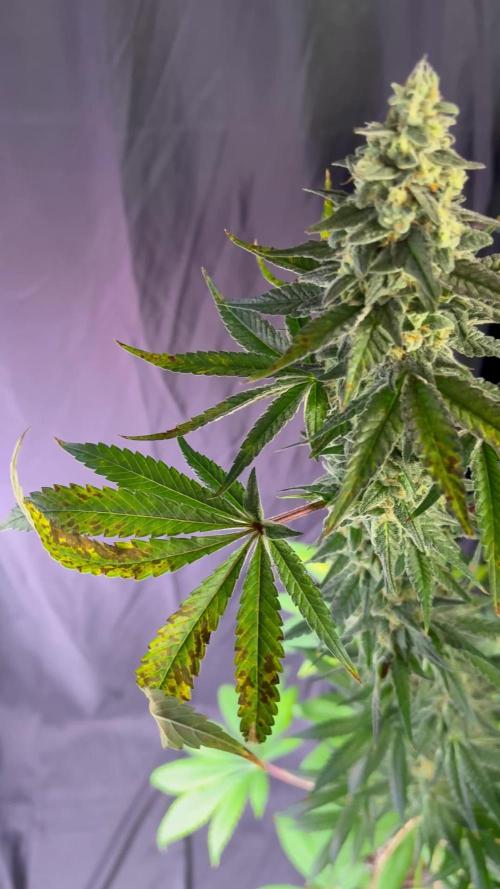
Day 80, 22nd of October 2020: 3rd week of flowering! Happiness she needs a lot of boost hard to keep up. She loves fertilization too much..... I mean before always craving for nitrogen now qould need more potassium and phosphorus hard to keep up. I also detect deficiency based on the leaves getting lighter and brown spots but I do feed her as much as I can really. This week i have relised the first nice trichomes started "sitting" on the leaves as well and the pistils coming out nicely pre flowers forming. Let's go.
Likes
4
Share
0.23v tuned to 7.83Hz Plants exposed to the Schumann resonance often show greater resistance to stress factors such as drought, diseases, and pests. It is possible that these natural electromagnetic waves strengthen plants' immune systems and increase their ability to resist disease. Pretty neat, in the afternoon when the tent hovers around 84F the plants are 🙏, can visually see in time around 10 minutes after I opened the tent the temp had dropped to 76 pressure was lost, she is still chilling but she doesn't quite have that perk anymore. *Salinity3.5% - 100ml H2O=100g The concentration of salt in a solution 3.5%= 3.5g in 100ml. Growing well. Not going to top or do any training, I'll let the plant do its own thing, she is constructing foundations now for what she senses ahead. Smart girl. ✨️ Let her, do her thing, let me do mine. The voltage that is needed for electrolysis to occur is called the decomposition potential. The word "lysis" means to separate or break, so in terms, electrolysis would mean "breakdown via electricity. Green hydrogen is hydrogen produced by the electrolysis of water, using renewable electricity. The production of green hydrogen causes significantly lower greenhouse gas emissions than the production of grey hydrogen, which is derived from fossil fuels without carbon capture. Electrolysis of pure water requires excess energy in the form of overpotential to overcome various activation barriers. Without the excess energy, electrolysis occurs slowly or not at all. This is in part due to the limited self-ionization of water. Pure water has an electrical conductivity of about one hundred thousandths that of seawater. Efficiency is increased through the addition of an electrolyte (such as a salt, acid or base). Photoelectrolysis of water, also known as photoelectrochemical water splitting, occurs in a photoelectrochemical cell when light is used as the energy source for the electrolysis of water, producing dihydrogen . Photoelectrolysis is sometimes known colloquially as the hydrogen holy grail for its potential to yield a viable alternative to petroleum as a source of energy. The PEC cell primarily consists of three components: the photoelectrode the electrolyte and a counter electrode. The semiconductor crucial to this process, absorbs sunlight, initiating electron excitation and subsequent water molecule splitting into hydrogen and oxygen. Water electrolysis requires a minimum potential difference of 1.23 volts, although at that voltage external heat is also required. Typically 1.5 volts is required. Biochar, a by-product of biomass pyrolysis, is typically characterized by high carbon content, aromaticity, porosity, cation exchange capacity, stability, and reactivity. The coupling of biochar oxidation reaction (BOR) with water electrolysis constitutes biochar-assisted water electrolysis (BAWE) for hydrogen production, which has been demonstrated to reduce the electricity consumption of conventional water electrolysis from 1.23v to 0.21v. Biochar particles added to the electrolyte form a two-phase solution, in which the biochar oxidation reaction (BOR) has a lower potential (0.21 V vs. RHE) than OER (1.23 V vs. RHE), reducing the energy consumption for hydrogen production via biochar-assisted water electrolysis (BAWE). BAWE produces H2 under 1 V while eliminating O2 formation: key word "eliminating". Air with a normal oxygen concentration of around 21% is not considered explosive on its own; however, if a flammable gas or vapor is present, increasing the oxygen percentage above 23.5% can significantly increase the risk of ignition and explosion due to the enriched oxygen environment. The addition of ion mediators (Fe3+/Fe2+) significantly increases BOR kinetics. Air: Nitrogen -- N2 -- 78.084% Carbon Dioxide -- CO2 -- 0.04% Hydrogen in homosphere H -- 0.00005% Hydrogen "GAS" H2 in homosphere - 0% "Nitrogen, oxygen, and argon are the three main components of Earth's atmosphere. Water concentration varies but averages around 0.25% of the atmosphere by mass. Carbon dioxide and all of the other elements and compounds are trace gases. Trace gases include the greenhouse gases carbon dioxide, methane, nitrous oxide, and ozone. Except for argon, other noble gases are trace elements (these include neon, helium, krypton, and xenon). Industrial pollutants include chlorine and its compounds, fluorine and its compounds, elemental mercury vapor, sulfur dioxide, and hydrogen sulfide. Other components of Earth's atmosphere include spores, pollen, volcanic ash, and salt from sea spray." Although the CRC table does not list water vapor (H2O), air can contain as much as 5% water vapor, more commonly ranging from 1-3%. The 1-5% range places water vapor as the third most common gas (which alters the other percentages accordingly). Water content varies according to air temperature. Dry air is denser than humid air. However, sometimes humid air contains actual water droplets, which can make it more dense than humid air that only contains water vapor. The homosphere(where you live) is the portion of the atmosphere with a fairly uniform composition due to atmospheric turbulence. In contrast, the heterosphere is the part of the atmosphere where chemical composition varies mainly according to altitude. The lower portion of the heterosphere contains oxygen and nitrogen, but these heavier elements do not occur higher up. The upper heterosphere consists almost entirely of hydrogen, cool. 78%nitrogen as N2, a far too stable bond to be used by organisms. 20%oxygen 0.04%co2 0.00005% hydrogen When lightning strikes, it tears apart the bond in airborne nitrogen molecules. Those free nitrogen atoms N2 nitrites then have the chance to combine with oxygen molecules to form a compound called nitrates N3. Once formed, the nitrates are carried down to the ground becoming usable by organisms. Will it react with the oxygen in the air spontaneously, the answer is no. The mixture is chemically stable indefinitely. A mixture with air near the release point can be ignited, but if this does not happen then when its concentration gets below 4% it will be unable to carry a flame. Taking a small detour into chemistry here, a key concept to understanding the health impact of nitrogen-based compounds is knowing the difference between nitrates and nitrites. What Are Nitrates and Nitrites? A nitrite (NO2) is a nitrogen atom bonded to only two nitrogen atoms. Very strong bond A nitrate (NO3) is a nitrogen atom bonded to three oxygen atoms. Weaker bond The optimal pH for nitrate (NO3-) depends on the process and the type of bacteria involved. Nitrification The optimal pH for nitrification is between 7.5 and 8.6 Nitrification is the process of oxidizing ammonia to nitrate and nitrite Nitrosomonas has an optimal pH between 7.0 and 8.0 Nitrobacter has an optimal pH between 7.5 and 8.0 Nitrification ceases at pH
Likes
48
Share
@Focus420
Follow
Zdravím všechny pěstitele marijánky🌍🌞 Minulý týden sklizen BCN critilal xxl - tato rostlina měla od začátku problémy pak se spravila a nakonec vypadá celkem solidně. Víc se dozvíte ve sklizni🌱🌱🙏 Nemůžu se dočkat dalšího růstu🌞🤗 Tento týden půjde pod kosu poslední automat (sleep) Zbydou tam 3 celoroční odrůdy, ty vypadají nejlíp... ty ještě potřebují 2 až 3 týdny Den 99. Hnojení Celoročky - ph 6,3 ec 2,5 Den 100.🌱 holky vypadají úžasně😍 Dnes proběhla defoliace (focus)(franco lemon cheese) Den 101. Sekera🤟 (sleep) zbyly 3 celoroční odrůdy 2× focus , 1× franco lemon cheese Proplach 8 - 10 dní Den 102. Kontrola trichomů - focus = 10 % jantarových vrchů 🌱🤗 Franco lemon cheese = mléčné trichomy Den 103. Kontrola - Teplota,vlhkost,co2 v pořádku🤜 Den 104. Kontrola trichomu 15 procent jantar ( focus )👏 Den 105.proplach Ph - 6,3 ec - 0,43
Processing
Likes
6
Share
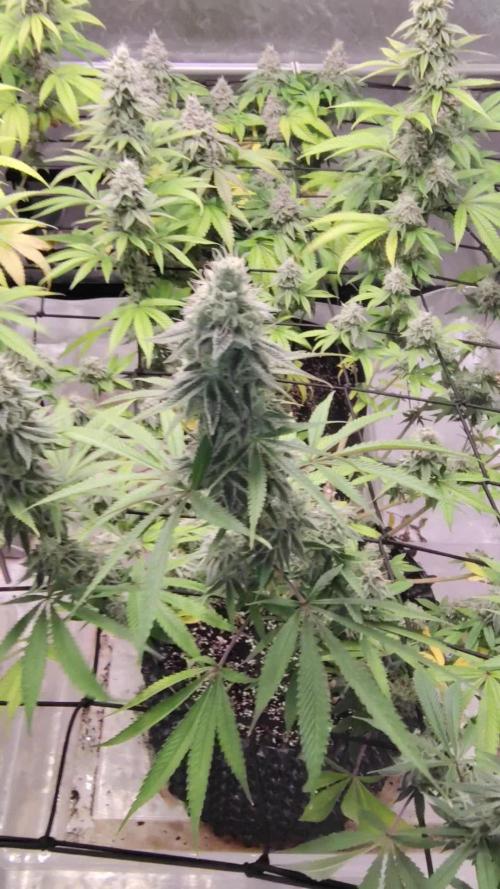
Chemdawg is just taking off beating everything I have right now didn’t know 7 gallons would make that much of a difference but it does it’s almost half a foot taller than my other plants..this is also my first half soil/half coco run so she’s been a little slow flowering but finally looks to have got it going! The smell is a combination of mild sour diesel and really potent OG Kush..possibly my favorite aroma.
Likes
13
Share
@Everest
Follow
This week I went back to measuring the ph and found out that the water I was using had a ph above 7.5 so I corrected the ph of the soil with a more acidic solution of ph 6 with algae mic.
Likes
17
Share
@Fabhz
Follow
easy strain, havent tried it yet, watch out for humidity, Great experience, my first grow. 100% recommended for beginners. Thanks for everything growdiaries.
Likes
16
Share
Finally the fattening of the nugs has started on my earliest plant, the purple punch. Great exhibition of purple colours, furtermore i harvested vast amounts of nettle for my homemade: Nettles, bonemeal, 300°c baked clay and charcoal mix. Will be used in my next round of 5 plants( organic round). Happy smoking bros and sistahs
Likes
114
Share
@Natrona
Follow
Lemon Cake & Lemon Drizzle Week 5 This week 5/5-5/11 Germination April 6. Vegetation Week 1 water only Week 2 water only Week 3 added recharge and TPS1 increased ppm to 570. Week 4 continues with recharge and TPS1. I added Fox Cal mag increasing ppm to 685 - 805. Week 5 TPS1 9ml/gal Recharge 5 ml/gal Fox Cal-mag 5 ml/gal This was an exciting week for my ladies. It started out with the usual feed and defoliation and training. With my upcoming vacation, I am going to be hardening off these ladies to relocate to their outside location. I checked the expected weather forecast for the week. Looks good to start hardening off. Partly cloudy with temps in the low to mid 80s just like in their tent. So that’s good. Night temperatures were in the 50-60s. This is much cooler than what they are used to as our house is at 73. Our summers are hot and humid with frequent thunderstorms. They need to get used to what mother nature will provide. I had planned to bring the plants back in the sunroom but since conditions were similar, I let them stay outside every night. And every night but 2 it rained. I did not water or feed nutrients this week. I am attempting the scrog technique on all plants. I am using a peony cage as the support structure. The cages are about 2 feet high. This may not be enough side or top support as she grows and may have to resort to tomato cages. Took pics May 6,9, & 11 Lemon girls both had mutations at germination. Lemon Drizzle split ot topped herself. This creates two main plant stalks. The primary and a smaller secondary stalk. Lemon drizzle has stretched above the scrog top opening up her structure. Today she has an erratic top canopy in multiple levels with multiple bud sites. Interesting her nodes have for this week started to develop off set from each other. Does that mean she is going into flower sooner than expected? Thanks for the visits, likes and comment, I appreciate all the plant love💚. Have fun & love what you grow 💚 Sending you good vibes of love, light, and healing 💫 💫Natrona 💫 BARNEYS FARM- LEMON DRIZZLE Lemon Drizzle Cannabis Seeds Type: Feminized Weed Strain Lemon Drizzle Strain by Barneys Farm Indulge yourself in the tantalizing aroma of our Lemon Drizzle strain, a sensually crafted cannabis strain that is sure to tantalize your senses and leave you in a state of blissful euphoria. Bred from a seductive blend of Super Lemon Haze and OG Kush, this sativa-dominant weed strain will transport you to another plane of existence. With a flowering time of 60-65 days, Lemon Drizzle's exquisite buds are bursting with a potent THC percentage of 20-25%, ensuring an unparalleled and satisfying high. The complex terpene profile of this alluring strain is sure to captivate your senses with notes of zesty lemon and a hint of earthy Kush undertones, providing a flavor explosion that you won't forget. This tempting beauty grows to a height of 1m - 1.2m indoors and 1.5m - 2m outdoors. You'll be impressed by the generous indoor yield of 550g/m2, while the outdoor yield of up to 1.5 - 2kg is beyond substantial. Experience the ultimate in relaxation with Lemon Drizzle's outdoor flowering time, which begins in early October, allowing you to bask in the sweet sunshine and savor the heady effects of this tantalizing strain. Succumb to the charms of our Lemon Drizzle strain and discover a world of unadulterated pleasure that will leave you in awe. Is Lemon Drizzle Indica or Sativa? The Lemon Drizzle strain by Barneys Farm is 85% Sativa 15% Indica. What is the best way to store my Lemon Drizzle strain seeds? To properly store Lemon Drizzle seeds, it is recommended to keep them cool and dark in an airtight container ideally in a refrigerator with proper labeling and dating, avoiding freezing. Lemon Drizzle Cannabis Seeds Strain Specifications Type: Feminised Genetics: Super Lemon Haze Strain x OG Kush Strain Photoperiod: Normal Sativa %: 85% Indica %: 15% Flowering Time (days): 60 - 65 Feminised Outdoor Harvest Month Week: 1st-2nd week - October Indoor Height (cm): 100-120cm Indoor Yield (g): up to 550-650 gr/m² Outdoor Height (cm): up to 150-200cm Outdoor Yield (g): up to 1500 gr/plant Taste: Sour, Lemon, Sweet, Citrus Fruits Aroma: Sweet, Sour, Citrus, Pine, Earthy Effect: Energizing, Uplifting, Focused, Motivated PREMIUN CULTIVARS LEMON CAKE Lemon Cake Seeds Lemon Cake strain seeds generate typical Sativa buds known for their heavy trichome covering against a bright green background. Let's look at this great strain and learn about its genetics, growing information, and how to obtain it. Cultivar Profile Terpenes Caryophyllene, Myrcene, Terpinolene Strain Type Sativa Difficulty Moderate Height 30 in – 78 in Yield (oz/ft2) 1 – 3 Flowering Time 9 – 10 weeks Harvest Month October Pack Size 3, 6, 12, 24 Seed Type Feminized Brand Premium Cultivars The History of Lemon Cake Strain Seeds Lemon Cake by the European-based firm Heavyweight Seeds is a strong Sativa-dominant hybrid of Lemon Skunk and Cheese. Lemon Cake seeds are easy to cultivate, especially outdoors, with a 9-10 week flowering cycle, squat shape, and large output. How to Germinate Lemon Cake Strain Seeds There are several ways to sprout your Lemon Cake strain seeds, but they are more complex, inexpensive, and efficient than the paper towel technique. Premium Cultivars suggests this method since it is simple to implement, involves commonly available tools, and ensures germination. Here’s a 9-step process for geminating Lemon Cake seeds: 1. Collect your essential tools: Lemon Cake seeds, dinner plates, distilled or bottled water, tweezers, and a working table. 2. Wet your paper towel sheets and gently squeeze the excess water. 3. Set one of the paper towels on the dinner plate and the other aside for later usage. 4. Pick your Lemon Cake strain seeds with tweezers and spread them on the towel sheet, allowing an inch between them. 5. Cover your cannabis seeds using the second paper towel. Check if the towel is moist, and if not, add water. 6. Lift the towel sheets and ensure no standing water is present. Return the paper towel and your Lemon Cake seeds carefully. 7. Place the setup in warm, dark areas, particularly a cupboard or drawer (20-120 hours). 8. Check to determine whether your Lemon Cake cannabis seeds are sprouting regularly, and if the paper towel remains moist, add water if it does not. 9. Once taproots have emerged from your Lemon Cake seeds, transplant them to your ideal growing medium. Why are Feminized Seeds Better than Regs? Feminized cannabis seeds yield only female plants (or around 99.9% female). Conversely, regular seeds generate a mix of male and female plants. Each seed strain has advantages and cons, with the grower’s specific needs ultimately determining the best. Gardeners mostly use regular cannabis seeds to create their strains, but feminized cannabis seeds are great for farmers looking for a cannabinoid-rich, bud-producing crop. Male cannabis plants generate just pollen sacs and no resinous blooms. This resin contains cannabinoids and terpenes, which are responsible for cannabis’ desirable properties. If male plants pollinate female plants, their blooms will cease releasing resin and begin producing seeds. In short, male cannabis plants do not aid in pursuing massive, powerful harvests. Nonetheless, male plants are critical to the survival of the species as well as the breeding and improvement of cannabis strains. So don’t dismiss them right away! Growing Lemon Cake Strain Seeds The Lemon Cake cannabis strain has grown in popularity due to its ease of cultivation and high yields. It’s a medium-sized plant with long branches that can use some assistance toward the end. It is rather ordinary in terms of temperature and disease resistance since it is not overly prone to unfavorable circumstances or pests. However, if you grow with hydroponics, you won’t have to bother with any of that. Should I Grow Lemon Cake Strain Seeds Indoors or Outdoors? Lemon Cake thrives in both indoor and outdoor environments. The height of this cannabis strain is one factor to consider: it can reach heights of 200cm, requiring either a large grow space or a yard to attain its full potential. Growing Lemon Cake Strain Indoors If you want to cultivate your Lemon Cake seeds (you can buy these finest seeds from Premium Cultivars) inside, you should invest in exhaust fans or carbon air filters due to the room’s strong odor. Also, if conditions are ideal, growers should expect a large yield after 9-10 weeks of flowering. Growing Lemon Cake Strain Seeds Outdoors Outdoor growers can harvest their Lemon Cake buds around the middle of October. How Much Do Lemon Cake Strain Seeds Yield? Lemon Cake can produce roughly 25 ounces per plant outdoors and 21-25 ounces per square meter when grown inside. Although you might be tempted to cut it down right away, waiting as long as possible before harvesting it and curing it correctly to enhance the quality is recommended. How to Get Better Yields from Your Lemon Cake Strain Seeds Harvest rewards are frequently a mirror of cultivation care, so be kind to your Lemon Cake plants, and they will be gentle with you. However, growers should regularly top and prune their Lemon Cake plants to improve airflow and light exposure, thus raising yields. The Best Grow Medium for Lemon Cake Strain Seeds Cultivators can grow Lemon Cake seeds in hydroponic or soil systems. However, experts propose using a precise hydroponic arrangement to achieve optimal production and control its occasionally unpredictable growth rates. The Best Climate for Lemon Cake Strain Seeds Lemon Cake strain enjoys warm, semi-humid areas and is inherently resilient, having excellent mold and disease resistance. Growing outside is only acceptable in warmer climates, as this cannabis strain needs sunlight. Problems to Look Out For When Growing Lemon Cake Strain Seeds When cultivating Lemon Cake cannabis seeds, the primary issue to watch out for is dehydration and overwatering when the crops are little and susceptible. If the leaves of your Lemon Cake plant turn yellow, this indicates that the plant isn’t receiving enough oxygen to the roots. How Difficult is it to Grow Lemon Cake Strain? One of Lemon Cake’s noteworthy characteristics is its simplicity of cultivation. Are Lemon Cake Strain Seeds Suitable for Beginners? Yes, these cannabis stain seeds are great for novice growers, and they will obtain outstanding results. The Best Grow Techniques for Lemon Cake Strain Topping Topping encourages the plant to grow horizontally rather than vertically, but when it does so is determined by soil condition, plant health, light, plant size and age, and growth goals. Topping cannabis reshapes the crop in a way that improves light dispersion significantly. Cutting one tall branch to make multiple new ones at the same height guarantees that lower (buds on lower branches) also receive more light. Another essential reason to top your cannabis crop is for better height management. Logically, the two new branches develop slower than the one branch. Topping a cannabis plant separates its development into several branches. Making the plant grow less in height while putting more energy into expanding broader. This is incredibly convenient for growers, especially for limited indoor plants. Trimming Trimming can be an excellent technique for cannabis producers who have been cultivating a plant for a long time to connect with it while boosting the quality and form of the buds. There are two methods for trimming cannabis plants: wet and dry. Wet trimming, as the name implies, happens when the cannabis plant is still wet. This means you harvest your plants and immediately begin the trimming procedure. Conversely, dry trimming will necessitate drying your crops out for a few days before you start trimming the bud. If you’re cultivating cannabis at home, you’ll almost certainly have to perform all this by hand. For devoted producers, machine trimmers are available, making the operation considerably less labor-intensive. However, due to their high cost, commercial farmers mainly utilize them. Trimming can be time-consuming for many growers, but it’s also thrilling since the growth process is almost complete, and your cannabis is almost ready to have. After you’ve completed trimming, there’s one more step left until you have a great bud: curing. Pruning Pruning is the practice of eliminating extraneous shoots, branches, and leaves from a plant to push it to redirect its limited energy into its present and established development. When left to its own devices, a cannabis plant will frequently grow too large to sustain itself properly with the quantity of energy it generates. If left untreated, this can lead to several minor bud sites as the plant strains to survive while creating bud during flowering. By eliminating unneeded and weak growth, you push the cannabis plant to focus on what remains, resulting in a stronger plant capable of producing a few huge buds rather than many little ones. This frequently leads to higher total yields. Equipment and nutrients Pots: 5gallon Air pots Soil Fox Farm Happy Frog Amended with worm castings, dolomite lime and mychorihiza Recharge ================================= Equipment: AC Infinity CLOUDLAB 844 – Advance Grow Tent 48”x48”x80” CONTROLLER 69 PRO – Grow Tent Controller CLOUDLINE LITE 6 - Inline Fan 6" IONBOARD S44 – LED Grow Light Board 400W CLOUDRAY S6 – Oscillating Circulation Clip Fan Carbon Filter 6”
Likes
26
Share
Hello fellow farmers. Nothing special this week just consistent growth. I tell y'all there were no problems at all with this strain from the beginning of veg and throughout flower cycle so far. The strain gorilla banana eats good and grows very steady with slightly moist soil that's Top dressed with Alfalfa meal and high phosphorus fruit bat guano. They like the steady supply of nutrients and the buds are getting much denser. I can't wait to enjoy these lovely plants. These ladies seem to be getting ready to be harvested in a week or two.
Likes
22
Share
* ***************** Week 2 of Growth From Seed, April 18 to 25, 2020 - Days 8 to 14 from germination ********************** * Getting rolling on week 2. The two girls are doing well. GSC2 was named as such due to being slower than the other pheno but she is now advancing faster with respect to her third set of leaves😃😃👍 This are the fist couple of weeks of veg.......not overly exciting. Each girl only has 4 to 6 leaves.......what the hell are you supposed to do😂😂😂😂😂😂 Focusing on environmental changes this week......not too radical though, they are still autos with only three weeks of veg time, roughly👍 Switch CalMag this week and going with GH as it has a 1% value for Nitrogen. Will be increasing the CalMag now as well. Will be getting ppm in the 500 range more this week. May start to introduce AN Sensyzime this week. Keep moving the lights up and down trying to dial in between 18” and 30” and see how they react. Seems to be about 24” right now they are happy. Playing with the VPD and finding that they are not as happy with the VPD up around 1.0 and rather happier around 1.4??? (lower humidity keeping same heat) Happier meaning tips up more and in general looking like they are getting bigger. Played with humidity this weekend as well between 52% and 75%. Again, they seem happiest around 58%..........going to try that for a couple of days and see how they grow for the next few days. I feel they are all a little slower at the high humidity when coming closer to 1.0 for VPD. Not backing away from this but rather trying to read the girls as I am used to🤪🤪🤪🤪 *****Daily Detail: Apr 18, Day 9 - VPD - 1.1 - 2L feed with Vitathrive and Velokelp and Dual Fuel @ 0.75ml/L, CaMg+ @ 0.75ml/L = 575ppm, 5.8pH. - playing with humidity up and down today. - ready for a plain water feed and a little larger quantity to soak all the medium. - not sure if tomorrow though.......might be a little wet yet in the medium. - GSC is doing well but GSC2 is the one that has really picked up the last two days😃😃😃 Apr 19, Day 9 - VPD - 1.3 - 2L watering today with CaMg and Sensyzime @ 1ml/L each. 240ppm with 5.9pH. - Had more runoff, that was the goal. Didn't bother to measure this though. - Just trying to bring the medium pH in line and reduce some of the ppm. - Things just aren't progressing as I think they should. Apr 20, Day 10 - VPD 1.5 - dry out day - lower humidity in tent to 55% Apr 21, Day 11 - VPD 1.5 - dry out day, again. Humidity kept low. - Added home made CO2 to the tent today. - GSC 3.0" tall, and GSC2 2.5" tall only. - GSC has wider leaves and nice star shape from above. - GSC2 has more elongated leaves and is covering more of the pot. Apr 22, Day 12 - VPD 1.4 - Dry out day yet again but now raising the humidity back to 65%. - tips back up today. Apr 23, Day 13 - VPD 1.4 - 0.5L - P & V & Vitathrive @ 1ml/L, DF & CalMag@ 0.5ml/L = 410ppm and 5.9pH - primarily calmag and something for roots. - GSC is getting wider indica looking leaves. She is still slower than 2 but looks very pretty in structure. - GSC2 has some narrow blades. All of her leaves are really up today….she is very happy. Apr 24, Day 14 - VPD 1.4 - 0.5L - Voodoo and Piranha and VeloKelp @ 2ml/L = 180ppm pH'd to 5.6 - tough week.......they battled over watering as a result of some over feeding last week.
Likes
27
Share
@Chubbs
Follow
420 Fastbuds Week 1 Blackberry Auto What up what up grow fam hope all is going good with everyone's grows. This week of veg has been extremely exciting as the growth has definitely been noticeable. I love these early weeks as the plants seem the grow super fast which is very cool to see through the updates. Drip system is working just the way I hoped and really smooth so far making the watering process a breeze. All in all Happy Growing
Likes
43
Share
@GrowerGaz
Follow
Will update soon once dry, smell tropical pineapple with kushy background
Likes
27
Share
Thanks for checking in Guys! Absolutely loved growing and admiring this Zkittlez plant for the past 4 months. She’s a beauty. Grows super well, and was happy to be topped and trained with LST and defoliated quite heavily. She loved a feed, and show no signs of nute lockout or any deficiencies. My only one downsize is that the nugs produced, especially the lowers aren’t super dense and you lose a lot of wet weight. Other than that an incredible plant to grow and super super tasty on the smoke 🙌🏼❤️
Processing
Likes
22
Share
@DankBudz
Follow
Well tying down is no longer an option, now the fight is to get them to stand up!! #shittyproblems No let up on white hairs yet!! It makes me sad and happy at the same time lol
Likes
4
Share
broke off 2 branches accidentally an had to remove some leaves because of not enough water. But they look fine to me. You guys got some advices to grow better? (besides of watering more xD)
Likes
10
Share
------------------------------------------------- Day 36 Water: N/A Humidifier: 50% (LOW-MIST) Dehumidifier: On Fan Speed: High Light on @ 19:00 (27.5° celsius @ 49% RH) Light off @ 13:00 (22.6° celsius @ 51% RH) ------------------------------------------------- Day 37 Water: N/A Humidifier: 50% (LOW-MIST) Dehumidifier: On Fan Speed: High Light on @ 19:00 (26.8° celsius @ 48% RH) Light off @ 13:00 (23.6° celsius @ 50% RH) ------------------------------------------------- Day 38 Water: 0.5 Gallon TT Water w/ 2ml/L Alaska Morbloom + 4ml/L Remo VeloKelp Humidifier: 45% (LOW-MIST) Dehumidifier: On Fan Speed: High Light on @ 19:00 (26.9° celsius @ 49% RH) Light off @ 13:00 (22.7° celsius @ 48% RH) ------------------------------------------------- Day 39 Water: N/A Humidifier: 45% (LOW-MIST) Dehumidifier: On Fan Speed: High Light on @ 19:00 (27.5° celsius @ 45% RH) Light off @ 13:00 (22.6° celsius @ 49% RH) ------------------------------------------------- Day 40 Water: N/A Humidifier: 45% (LOW-MIST) Dehumidifier: On Fan Speed: High Light on @ 19:00 (27.6° celsius @ 47% RH) Light off @ 13:00 (22.2° celsius @ 46% RH) ------------------------------------------------- Day 41 Water: N/A Humidifier: 45% (LOW-MIST) Dehumidifier: On Fan Speed: High Light on @ 19:00 (27.6° celsius @ 42% RH) Light off @ 13:00 (23° celsius @ 49% RH) ------------------------------------------------- Day 42 Water: N/A Humidifier: 45% (LOW-MIST) Dehumidifier: On Fan Speed: High Light on @ 19:00 (28.4° celsius @ 48% RH) Light off @ 13:00 (22.5° celsius @ 48% RH) -------------------------------------------------