


Likes
Comments
Share


Likes
10
Share


@TiRobotProds
Follow
Toujours en période de stretch diminution des dose de croissance a 0,5ml/L d'eau.

Likes
24
Share

@Ultraviolet
Follow
The cannabis strain Grape Guava can be a purple strain, depending on its specific phenotype and genetic makeup. While not all phenotypes of Grape Guava are purple, some variations, such as the Zatix Grape Guava, are noted for their striking purple appearance due to the genetic expression of anthocyanin pigments.
In a garden of green, Grape Guava gleams,
With its fruity aroma, enchanting dreams.
Clusters of grapes, guava's sweetness ignite,
A strain so divine, in purple and white.
Euphoria whispers, a lush fruity haze,
Grape Guava's embrace, a tranquil daze.
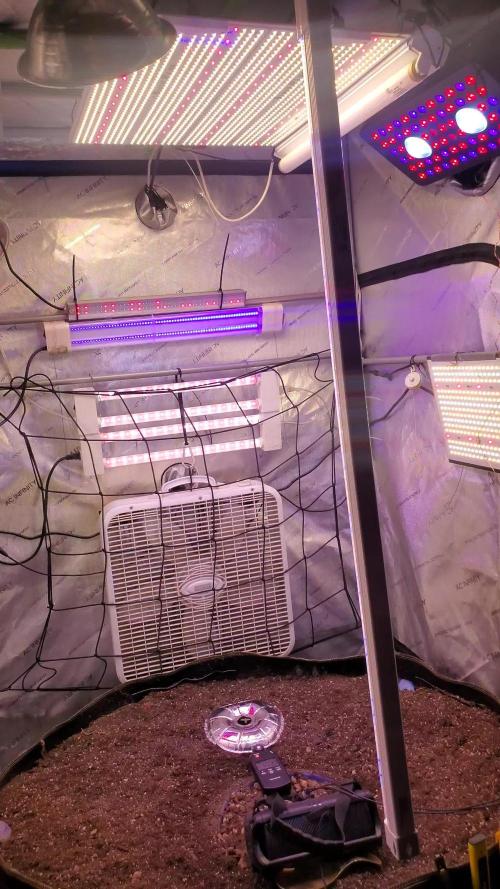
Off and away.@1400ppm. The increased CO2 allows plants to thrive at higher temperatures, which in turn necessitates higher humidity to maintain the ideal VPD for healthy growth and transpiration. 80F -5F = 75F LST with 70% RH = 0.72 kPa. Higher temperatures and humidity promote rapid growth, nutrient uptake, and photosynthesis while maintaining a lower stress level. Temperature influences the rate of enzymatic reactions involved in aerobic respiration. Enzymes, such as those involved in glycolysis, the Krebs cycle, and the electron transport chain, work most efficiently at an optimal temperature range. In low temperatures, enzymatic activity will slow down, thus reducing the rate of aerobic respiration. In high temperatures, enzymes can become denatured, thus impairing their function and stopping the process of aerobic respiration. Glucose is the primary fuel for aerobic respiration. The rate of aerobic respiration increases with the availability of glucose, as it is the starting point for glycolysis. If glucose levels are low, cells may rely on alternative energy sources such as fatty acids or amino acids , but these processes may yield less ATP or be less efficient. To determine this effect, carbon dioxide volume was measured (as carbon dioxide is an output of aerobic respiration)
A seed germinated via skotomorphogenesis (in the dark) will generally develop faster in its initial stages to reach light, though it will be etiolated (elongated and weak) and will switch to slower, more robust photomorphogenesis (light development) once it emerges into light. While skotomorphogenesis is a rapid, growth-oriented process for soil escape, it's a temporary phase; photomorphogenesis is a more sustainable development program that prepares the seedling for photosynthesis.
18/6 with the 6 being IR instead of darkness, keeping temps overnight a neat 77F-80F. PPFD overnight 1.8.
Think of my tent as a lung. What goes in must come out. When the rate of air going out exceeds the amount of air coming in, it creates a negative pressure. Tent concaves (bends in). If set up correctly, your RH will begin to drop slowly to the desired level you set, and the extraction turns off when it reaches 50% RH. The plant, as it performs cellular respiration, will always be releasing more water into the air, so the RH% of the tent overnight will always increase, so long as oxidative phosphorylation is occurring. As soon as the RH% creeps back up to 55%, the extraction turns back on, over and over, this creates a strong pressure differential which will work wonders on your grow. replicating high and low pressure fronts in nature, critical for oxygen diffusion, but more importantly, full control of your RH%.
Moisture will not transfer from a saturated atmosphere to another if that air is already at or above its saturation point, meaning the air can't hold any more water vapor. Once I understood that water is produced as a by product during cellular respiration, specifically at the very end of the electron transport chain (ETC) where electrons are finally transferred to molecular oxygen, the higher the RH of the air, the more resistance there is for more moisture to be added to that environment, and effects the ease with which it does so. But none of that water comes from the pot; it's pulled from the air. If you run high daytime RH, your medium/pot is 100% reliant on transpirational root pull to move water. ZERO evaporation happens across the atmosphere if the tent air has high RH%, the medium cannot release its water through evaporation. Once a canopy develops, light no longer slowly wicks and evaporates from the topsoil. The Soil-Plant-Atmosphere Continuum (SPAC) describes the continuous pathway and process of water movement, driven by a gradient in water potential, from the soil, through the plant's roots, stem, and leaves, and finally evaporating into the atmosphere through transpiration. There is evaporation, there is transpiration, then there is evapotranspiration; Evapotranspiration (ET) is the combined total of two processes: evaporation (water lost directly from soil and surface water into the atmosphere) and transpiration (water released from plants to the atmosphere through their leaves). Evapotranspiration represents the total amount of water that moves from the medium into the air. There is no such thing as a medium with too much water, only a medium that retains too much for too long.
The water must always flow efficiently from one atmosphere(Medium) to another(Air) in a timely manner. Moisture is a critical factor for bacterial growth and decay. Dictating how long it's allowed to sit in any one location for any given period is a key preferred control. To ensure a net reduction in a bacterial population, the rate of removal (ET) must exceed the rate of bacterial growth (decay rate), which is often modeled as a growth rate for the specific bacterium under the given conditions. By optimizing daytime VPD, we also optimize conditions for bacterial growth to explode exponentially above 77°F.. If water is allowed to sit in a medium without an escape within a timeframe, nothing good will happen. IF High RH is maintained overnight as well as during the day, placing 100% of water movement at the behest of daytime transpiration, roots can only pull where they can reach, and if soil is compressed above a certain point, moisture will become trapped in a medium with no way of moving day or night. This will begin the countdown for decay to take hold. When water stagnates in a medium, it loses oxygen, creating anaerobic conditions that foster the growth of harmful microorganisms like bacteria and fungi, which can produce toxins and disease vectors.
Thigmomorphogenesis, the process by which plants respond to mechanical stimuli like touch by altering their growth and development, resulting in significant morphological changes to improve survival against mechanical perturbations. This complex response involves sensing touch and initiating physiological and genetic responses, leading to changes in form and structure over days or weeks. The process is triggered by physical forces such as wind, rain, or touch. Plants adapt to these stimuli by changing their shape and structure, which may include slower growth, thickened stems, or altered leaf development. Plants possess sophisticated mechanisms to detect even subtle mechanical stimuli and initiate responses. A variety of molecules, including calcium ions, jasmonates, ethylene, and nitric oxide, are involved in signaling these mechanical inputs. Touch can induce the expression of genes that encode proteins for calcium sensing, cell wall modification, and defense mechanisms. A plant exposed to constant wind may become shorter and sturdier. A plant that is touched frequently might grow slower to conserve energy and develop thicker cell walls. These changes increase a plant's resilience and ability to survive in harsh environments.
Let's get Thiggy with it.
Likes
7
Share

@NoProbation4Weed
Follow
on day 21 of flower the 2 lady have got a new Haircut.
Also some composttea on day 22 of flower.
Light hits the plants with around 850 PPFD.
Both plants look very similar (same leaf shape and structure), but one is about 15% larger than her sister.
They both look healthy and vigorous.


Likes
10
Share


@Boomdrawfyah
Follow
Empezamos con Terranabis nos ha facilitado una tabla de cultivo donde mete a sus nuevos productos de este 2021 daran mucho que hablar !! Estar muy agradecido a Terranabis y Paradisw Seeds!

Likes
11
Share


@DimJesus
Follow
Saludos 🙌 completando la séptima semana y comienzo de floración 🙏
Cambié el fotoperiodo el día 2/04 y la planta dió una buena crecida desde entonces. Comenzó a oler un poco más también pero todavía sin señales de pistillos, ansioso para verlos.
Buenos humos 🍃

Likes
2
Share

@Dameon0803
Follow
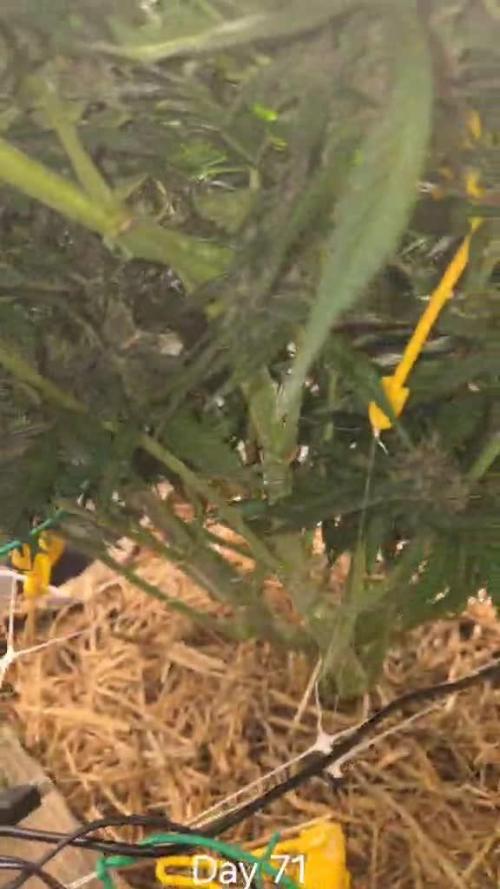
This plant way outgrew my expectations!!! She was trimmed back to nothing, and still could've used a better trimming.

Likes
5
Share


@VeeDro203
Follow
Well! We are looking great! I filmed one time and it paid off! Will be doing more branches next run. (LONDON POUND CAKE)
anyway got some good dark purple coming in strong!!
Likes
8
Share

@Growfather1
Follow
Hello everyone,
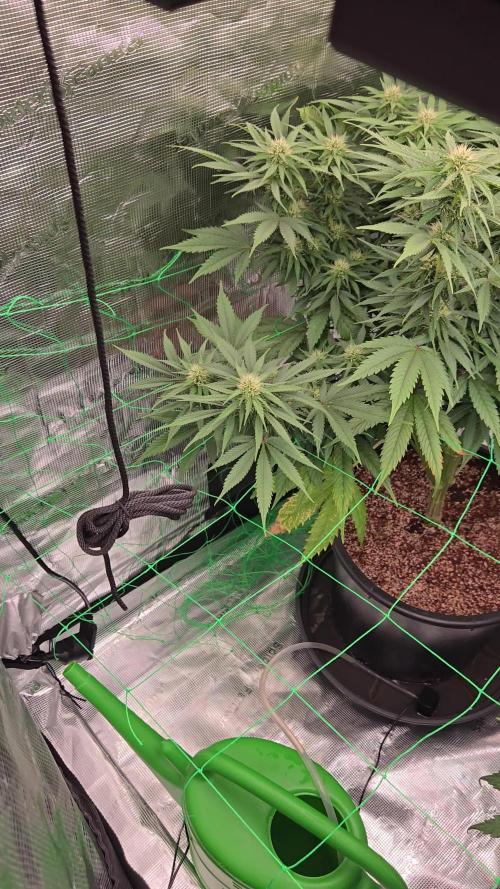
The plants are healthy and looking good.
This week i started to add pk 13/14 to the reservoir 12ml to 50 liter reversed osmose water and lowered canna coco a&b to 120ml per 50 liter.
The water runoff is 600 ppm so no salt buildup in the soil for now.
Thanks for stopping by and have a nice week.


Likes
10
Share


@cherokee
Follow
Всем привет 🖖
Плохой интернет, постоянно отсутствует свет, дневник вести и обновлять его стает тяжело. Продолжаем.
Бортовой журнал Purple Punch
Запись номер 5
В дневнике с сортом Mimosa Cake я писал о проблеме с обычными пластиковыми горшками.
2 куста Purple Punch ростут в горшках Hercules pot они выглядят намного лучше и больше чем куст который растёт в обычном пластиковом горшке 11 литров. Как и Mimosa Cake растение в обычном горшке имеет признаки перелива, горшок очень тяжёлый и не просыхает. Вчера я поливал только горшки Hercules, они пьют больше и растут быстрее. Меня не устраивают размеры растений, слишком низкие как для 5 недель, но все же света им мало, на этой неделе они получают 13 часов освещения. Я продолжаю тренировки LST и растягиваю куст по всему периметру горшка. Делаю дефолиацию удаляя большие листья, и старые поврежденые. Уже 5 неделя но растения не начинают цвест, надеюсь они подрастут ещё на сантиметров 30 и дадут мне большой фиолетовый урожай.


Likes
29
Share


@EXZELENS
Follow
1st of November, HARVEST, D91
So, after the 24 hours of darkness, she is now beautiful and ready. After chopping her, I hung her for some hours – I had some stuff to do – and after that I did wet trimming since I find it more convenient and I don´t like to trim dry buds. I guess the best way for me would be to leave it drying for some days, do the trimming, then leave it drying some more, but, I sincerely don´t have patience lol.
When I was in the last stock to trim (which was the main btw) the top bud looked strange to me so I opened it and it was starting to rot.. I got really sad but what can I do except for trying to save it, right? So I took all the rotten parts out of the top bud and tore it to pieces to watch it closely and keep it from getting any more mold.
D94
Today I weighed the half part of the top bud that was already dry and it remained without any mold: 3.6 grams.
D97
Everything is dry and now curing, the total weight is 68.6, 65 of the whole plant and 3.6 of what I saved from the rotten bud. I´m really happy with the results, the buds aren´t much dense but they look beautiful.
D111
Today is the 14th day of curing.
D120
Today I´ll be doing the smoke report, it´s been curing for 3 weeks and the smells is quite good already, I know it can be better but the taste is good already so I´ll be doing it today.
More info on growing in the previous weeks and a summary of growing and also the smoke report are on the top at the strain review. Thank you very much for reading my diary!


Likes
25
Share


@Kush_queen
Follow
Well this week I had to give the girls a fairly big trim they were beautifully bushy but they were struggling for space so I cut back the heavy shade leaves that were covering bud sites
I am also adding bloom to there feed from now but they are doing really well and the smell in the tent is devine.
💚🙏🌱🙏💚🙏🌱🙏💚


Processing
Likes
14
Share


@Datiko
Follow
I Topped 3 days ago, she got a little bit stress, she could be stressfull if i top earlyer, so i hadnot other way. I think she will give me 50-60 g dry buds... but i am scaryed with this. she is still not flowering. explain me why. almos every GSC auto starts flowering at 5 week


Likes
1
Share


@Skinnytalls420
Follow
#1-03/02/23 the first one to come down!!! Will update as I chop them down!!!

Likes
2
Share


@GreenLupinCWB
Follow
Terceira semana de flora, começando a feder ,tricomas surgindo e começando a engordar.


