


Likes
Comments
Share


@Steek88
Follow
Do I just keep doing what binding until the pistols all turn brown.

Likes
20
Share


@usere
Follow
defoliation all fan leaves that cover other top sites and improve airflow and light penetration one each other. I will remove more leaves during week 5. watering schedule is the same, one times i watered with molasses about 2ml/l.


Likes
9
Share


@midEastern
Follow
suddenly i spotted whats damaging my plants and causing the dots - it is butterfly worms....
Then again i got alot of natural preditors whom i trust to do a great job so i try not to over spray with neem to keep em arround.
making sure i kill every maggot i see

Likes
11
Share


@Lushbloomz
Follow
After a comeback, the train is in the station! Even though I broke the main stem, she was an easy grow. I just basically let her do her with great results. Buds are thick and dense. Time for the drying and curing.

Likes
38
Share


@Chucky324
Follow
Hello. This is the end of week 8 and the beginning of week 9 of flowering.
I've stopped closing up the tent at nights now. The plants are so far along in flowering they won't turn back to veg, even with the neighbor's lights on.
So I'm not in there twice a day now. So I was a little surprised to find spider mites. The grow was going so good I thought I missed the bugs this year.
But they showed up. I bought a Hypochlorous Acid Generator last year last year early so I was prepared.
I used it at full strength last year for spider mites and I got yellow leaves after a couple of weeks. I guess the leaves got a bit fried at full strength.
So this year I'm trying it at 1/2 strength with a drop of dish soap to help choke those dam spider mites.
It's a little pricey, but I'm hoping to get years of use out of it, to make up for the price.
Everything else is going good in here.
Started flushing yesterday with PH adjusted tap water. The tap water used to be at 6.5 ph for years, but the water counsel found out that 7.5 ph water is better for you.
So I have to adjust it. It's 1 drop of ph down per gallon and it makes it 5.7 ph. water.
It will be 2 weeks more of flushing and then harvest. With the Panty Punch male plant ...
I've seeded 1 branch of each plant and I've pollenated 4 clones too. They are - The White, Amnesia Lemon, Critical OG and Pink Kush.
I'll send you some free good regular seeds if you want to do a diary on them. I learn from your diaries so I can improve my breeding technics.
So if you would like some free seeds, privet message me and we can chat about them.
I send them in a Christmas card with an international stamp. It cost me about 3 dollars Canadian.
I don't mind. I get to learn from you.
Ok. Be Great.
Chuck.


Likes
16
Share


@CanadianFillmore
Follow
Welcome to my second grow of the Blue Dream strain. This girl was veg'd for 14 week in a small pot while my first grow of this strain is in the flowering room. She didn't gain much more in size, despite the extra veg time, probably due to lower levels of nutes and the smaller pot size. Still she's looking good after moving her to the big pot and giving her a trim.
Thanks for checking out my grows!

Likes
Comments
Share


@Dubl_Jointed
Follow
After 3 days they are already starting to pop! This is going to be a good run.

Likes
85
Share


@Organic_G
Follow
Meine Babys starten nun in die 4. Woche der Vegetation.
Einige Ladys haben bereits Vorblüte Stadium erreicht.
Sie werden alle 2-3 Tage gegossen, alle 7 Tage bekommen Sie die angegebenen Nährstoffe.
Bisher ein optimaler Run, keine Wachsstumsstörungen durch Stress, keine Defizite ersichtlich. Möglicherweise mein bester Run bisher.
Sie bekommen Bat Guano als Microbenquelle, Rohr Molasse als Futter Quelle für die Microben, Dann Hesi Vit, eine Enzym Konzentration ( max2. Tropen auf 5 L) & Seawead fertilazior, was das genau bringt weiß ich nicht genau aber es wirkt 😄🏽♂️
Likes
27
Share


@pifflestikkz
Follow
Day 100
Day 57 Flower
06/07/24 Saturday
Flushed with de-chlorinated tap water today pH 6.0.
Flushing using 10L of water with Flawless finish- I'll be using this every other flush. , getting 50% run off, I can't measure ppm, I have ordered the tool to start learning this way also. I haven't measured run off ppms before so will be interesting to see.
Smelling pungent, deep greens of colour coming through, hoping over the next 2 weeks she swells as she is not as dense as I was hoping 😅
Day 10day 58 Flower
07/07/24 Sunday
No feed /water today letting her dry off a little more.
Updated with a short 🤩💚
Day 102
Day 59 Flower
08/07/24 Monday
De-chlorinated tap Water 5L pH 6.0 + 3L Water +calmag 5ml to keep her from deficiency during 1st week of flush.
Updated a short video 😁
She's getting there.
Day 103
Day 60 Flower
09/07/24 Tuesday
No water, letting her dry off again ABIT, noticing a huge amount of trichome production, updated a short to see 😍.
Day 104
Day 61 Flower
10/07/24 Wednesday
Another 10L flush today , de-chlorinated tap water pH 6.0 with flawless finish. 10ml flawless finish to 10L water.
Updated pictures and video.
Day 105
Day 62 Flower
11/07/24 Thursday
Last day of the week, another big flush today! 10L de-chlorinated tap water pH 6.0 with 10ml Flawless finish 👌
Trichomes...😍
She maybe a 21 day flush we'll see how she goes next week with ripening.
Video updated.
Likes
5
Share


@ROY4L_GU4RD
Follow
7/29/24 week 8. Flipping is around the corner. I have to defoliate before the flip. I added recharge nutrient this week to help the ladies have a quick recovery. I'm only feeding recharge with a 3 gallon res fill. I usually fill up by at least 6 gallons. What are yalls experiences using recharge?

Likes
19
Share


@Tropicannibis_Todd
Follow
Alright Then
REMINDER I DO 2 UPDATES PER WEEK 👉WEEKLYROUNDUP👈👉MIDWEEKLY UPDATE👈
We just hit week 5 and all is well , in terms of its health 😃 ....... 👌
However I am some what disappointment at its internode branching , and still has yet to ever show its sex , 😡 I have a feeling she just might be a photoperiod 💩 which if that's the case , I may have to dump her 😭 but I will see and give her more time and see how it goes .....👍
rain water to be used entire growth
Lights being readjusted and chart updated .........👍
I GOT MULTIPLE DIARIES ON THE GO 😱 please check them out 😎

Likes
33
Share

@Cauli
Follow
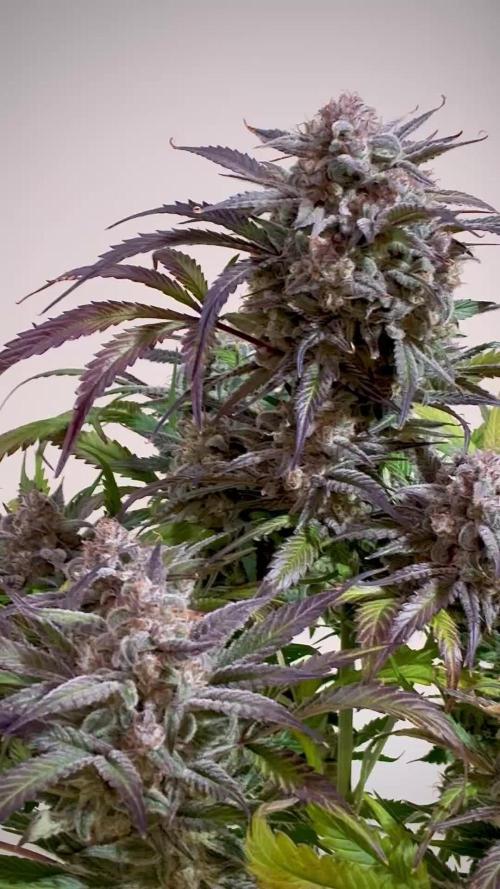
Week twelve for Strawberry Zkittlez.
This will be the last week for this lady – and we are super satisfied on how she performed in that 3l pot.
Resin production is absolutely high level, lollipoping helped her a lot to focus on her remaining buds and she is really beautiful.
Super nice one :)

Likes
44
Share


@Aedaone
Follow
The temperatures, humidity, height, and watering volume(if measured) in grow conditions are all averaged for the week. The pH is soil pH. Any watering done by me is well water which is 7.6 pH and 50° F. Any listed nutrients are ml/gallon of soil spread evenly across the top of the soil.
Day 1 we had a high temperature of 93°F with sunny clear skies. I watered 4-5 gallons each pot twice, from the well.
Day 2 we had a high temperature of 95°F with clear sunny skies. It was super hot today. I watered each pot 4-5 gallons twice.
Day 3 we had a high temperature of 95°F. It felt like 97°F. We had super clear sunny skies. The girls are loving the sunshine and slightly less humidity. I watered twice @4-5 gallons per pot.
Day 4 we had a high temperature of 90°F with super clear sunny skies. The temperature was more comfortable at 90° today because we had less humidity. I watered 4-5 gallons per pot from the well.
Day 5 we had a high temperature of 81°F with partly cloudy skies. The girls are still thirsty. I watered 4-5 gallons per pot once. These girls roots have tapped through these pots and into the soil. Unless it's just super hot watering once is enough.
Day 6 we had a high temperature of 83° with clear sunny skies. I watered 4-5 gallons once per pot.
Day 7 we had a high temperature of 79°F with clear sunny skies. I watered once 4-5 gallons of well water per pot. The girls are thirsty but the heat isn't sucking the water out of the pots. The girls are in full vegative phase 2 and continue to gain height.
This week was a great success. The girls really stretched and tipped out at 89". That's over 7 feet not counting the pot. The weather was very pleasant. We had a few hot days but mostly cool fall type weather. The defoliation and treatment of powdery mildew with Growers Ally fungicide ended that problem. These plants do have a high level of resistance but not immunity. I'll continue to treat once a week.
Most growers don't talk about their fungal pathogens or treatment of them. Outdoors, if your plants aren't immune (many fastbuds I've grown from seed have been) then this is an issue you'll deal with if you have cool humid nights. There are many treatments and preventatives and some are scarey. My grows are all organic and I carefully chose Growers Ally fungicide as I smoke these plants and don't want anything scarey in(systemic) or on them.
Thanks for stopping by and checking out my grow.
Likes
2
Share


@Firepharmer
Follow
Trichomes trichomes !! What a beautiful plant 🌱 to grow , not big bud producers but absolutely coated.u can definitely tell it’s got the GCS in her , Terps are getting stronger now that really forum cut Girl Scout cookies terps with some creamy peanut tons . The stretch is about over now
Likes
9
Share


@Roberts
Follow
Tangerine Band is doing well. She had to be hst again today. She also got a solution change. She should be ready for the final push to finish. Thank you Exotic Seeds, Spider Farmer, and Athena nutrition. 🤜🏻🤛🏻🌱🌱🌱
Thank you grow diaries community for the 👇likes👇, follows, comments, and subscriptions on my YouTube channel👇.
❄️🌱🍻 Happy Growing 🌱🌱🌱
https://youtube.com/channel/UCAhN7yRzWLpcaRHhMIQ7X4g.


Likes
3
Share


@coolesrat
Follow
This week things are swelling quick great ! The purple is showing up more but still only trace amounts. The black has no signs of changing colour however I already know my pheno ain’t the one ☝️ . But the purple shows promise!! Slow at cloning and a higher mortality rate then the black amnesia haze. This one almost every single clone I made all root amazingly ! Highly recommend for its yields and ease in the grow room. You can really feed it high . Still unknown why the purp has curling leaves but from others grows I see it’s fairly common . I’m guessing it prefers a slightly more alkaline PH . I’ve been using citric acid to ph correct and every time I sway a little low like 6.4-6.2-5.9 the plants leaves curl slightly more. Most mixes are in the 6.8-6.5 range however.
Likes
Comments
Share

@DeepRootsGrowTrees
Follow
JAW BREAKER / ROYAL QUEEN SEEDS
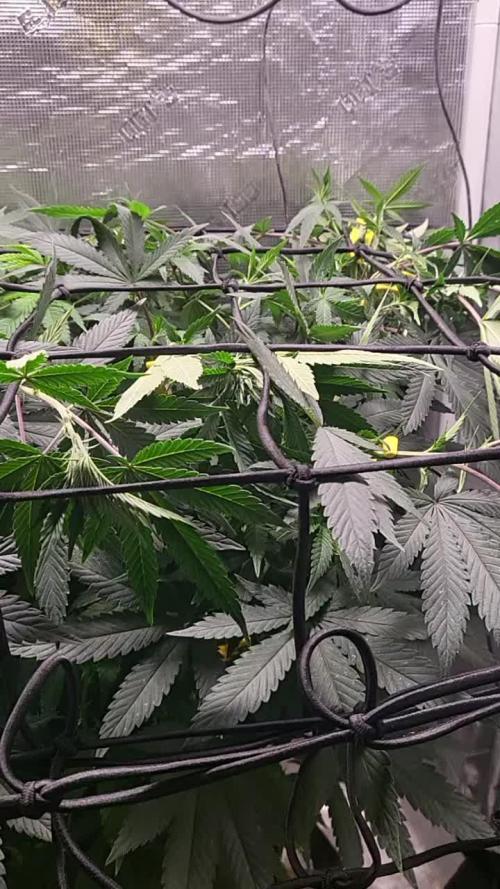
WEEK #19 VEG
This grow has been a challenge it's been fun to train a plant that responds well and keeps on growing and not skipping a beat while doing it. She's been moved to her own tent for the remainder of this grow and flipped to 12/12 in her new grow space. You can see the BUD CLIPS used to train her and she's been netted. Now we about to see what this lady does in flower!! Stay Growing my Friends!!
BUDTRAINER.COM code "Deeproots" 10% off your purchase!
Thank you 😊 for stopping by and taking a look it's much appreciated !!
JAW BREAKER / ROYAL QUEEN SEEDS
