


Likes
Comments
Share


@BudGardener420
Follow
Week 4
the right plant shows a deficiency... no idea what that is. the light from the lamp was too strong at first but it shouldn't be... I don't know - I'll keep an eye on it... I think the left plant looks good... growing splendidly - sativa genes are showing... the right plant is growing more bushy
👉Defoliation and exposing the shoots👈
I removed all the leaves that were or would soon be covered with scissors ✂️ - I started in the middle to give the plant more air flow

Likes
15
Share


@Geili_Seili_fireinfireout
Follow
Seit woche 6 wird sie immer fetter.
Denke das sie ca 9 wochen benötigt. Duftet von tag zu tag immer besser nach oldschool kush. Mit einer gewissen süsse am ende. Bin gespannt wie sie dann am ende wirklich schmeckt.
Alles in allem wird sie sicher des öfteren bei mir growen. Der cut kommt wie immer von ROOTS_FARMS. best stecklingsshop in austria and maybe europe
Likes
34
Share


@CHILLING_RACOONS
Follow
Dear Friends, 👨🌾 👩🌾
we are here to show you our journey with the MIMOSA X ORANGE PUNCH™️ by Barney’s Farm.
Germination started on the 10/11/2022, the root sprout on the 12/11/2022.
✅ VEGETATIVE week #5
📅this week goes from 12/12 to 18/12.📅
💡💡💡Viparspectra XS2000 is working at 50% power.
💉🔍Fertilization schedule:🔍💉
14/12 eposom salts 2g/l foliar and 1g/l irrigation
This new strain is hybrid produced from a cross between Mimosa Evo and Orange Punch.
It is a mostly indica strain, so, short flowering and big and dense buds! It is one of the most colourful editions to their Cali Collection.
This strain will surely be amazing, I can’t wait to smell the tangerine aroma and its sweet smoke.
We are glad to have the opportunity to try this strain from this experienced seed bank, we will do our best to grow this baby as well as possible. THANK YOU Barney’s Farm ❤️❤️❤️
***WE ARE BACK!!!
We are back after a little pause.
We take a break because we were too busy to post high quality diaries. In the last diaries we tried to post as good as possible and we have to publish about 6 or 8 diaries (in addition to these that we will publish shortly). We opened also an educational Instagram page, we growed a lot in a short amount of time BUT, Instagram suspended our account and we lost all our posts, I was so sad and disappointed... a lot of work lost in a night....***
🤓+DATA SHEET+🤓
MIMOSA X ORANGE PUNCH™️ Cannabis Seeds Strain Specifications
Type: Feminised photoperiodic
Genetics: Mimosa Evo x Orange Punch
Effect: Euphoric, Happy, Uplifted
Outdoor Yield (g): up to 1.5 kg per plant
Indoor Yield (g):up to 700 gr/m²
Flowering Time (days): 55 - 60
Indica %: 65% Sativa %: 35%
Taste: Citrusy Candy Orange
💸💸💸💸💸 Buy MIMOSA X ORANGE PUNCH™️: https://www.barneysfarm.com/mimosa-x-orange-punch-552
_______________________________________________________________________
🔧💡OUR SET UP💡🔧
✔️ 💲💲💲VIPARSPECTRA 🚀🚀🚀🌕🌕
ViparSpectra®️ XS2000 240W Infrared Full Spectrum LED Grow Light:
Excellent ratio between wattage and ppfd, excellent light penetraton, perfect light spectrum (it also has IR 🤩) and it has the best build quality on the market. Until now, built quality is really awesome. You can touch that quality. Materials are really strong, excellent driver and the best leds on the market. Heat dissipation is perfect, the lamp is never too hot and it has a passive dissipator so you will have zero noise. It also has IP65 certification. I like that this lamp is bigger than others, so the 240w of power are well distribuited on the space. Viparspectra has an awesome customer service, and shipping was creazy fast!
This awesome brand also offers 3 years warranty.
This lamp has no rivals.
A special thanks to Emily of Viparspectra ❤️❤️❤️❤️
HERE YOU CAN BUY THIS PROFESSIONAL LIGHT: https://www.viparspectra.com/products/xs-series-xs2000 or https://amzn.to/3dyUoJl
and here you can buy other awesome stuff: https://www.viparspectra.com
✔️ 💲💲💲MARSHYDRO 🚀🚀🚀🌕🌕
📦120X120 GROW TENT: an awesome box, easy and fast to assembly. Made by strong materials, solid zips and it is totally lightproof. The position of holes is optimal and the two lateral windows will make easier the work inside the box. There is also a double end, so you are 100% sure that dirt or liquids will not spill out. You can find it here: https://www.mars-hydro.com/grow-tent/buy-mars-hydro-grow-tent-48x48x80-1680d-4-x-4-size-keeps-all-light-in-top-quality-1680d-canvas-is-tear-proof-and-double-stitched-light-blocking-fast-installation-for-sale
💡TS 600 FULL SPECTRUM 100W LED GROW LIGHT : with this light you will achieve excellent buds, you will not need anything more. This lamp replace a 150w HPS lamp, but, with this Led Light you will smoke bigger, harder and tastier buds because Led have a complete spectrum and a powerful light penetration, so your plants will work as much as possible to make you happy. Psssssss it it extremely cheap and it is only 100w, your bills will never be too high, YOU HAVE NO EXCUSES!! Here if you want this little beast: https://www.mars-hydro.com/led-grow-light/mars-ts-series-led-grow-light/mars-tsw-600-led-full-spectrum-hydroponic-led-grow-light
Thank you Eleen of Marshydro❤️❤️❤️❤️
💣Quantum board - 480w - 4x120w Boards by Zhoangshan Koray Opto-Electronic Ltd.
Samsung LM301B 288 led/board 3000K 0dB noise
+24led/board led Osram 660nm
Efficiency 2.6 umol/J 220 lm/w
Driver: Meanwell HLG-480H-36B
💣Quantum board - 240w - 2x120w Boards by Shenzen Yuanhui Led Ltd.
Samsung LM301H 504 led 3500K 0dB noise
+24led/board led Osram 660nm
Efficiency 2.7 umol/J 220 lm/w
Driver: Meanwell HLG-240H-48B
-ESTRACTION FAN:
Blauberg 125 Turbo Pro Series
Maximum air flow: 430-560 m³ / h 50W 32-44 dBA
💊💉💊FEEDINGS:
We are growing in BioBizz Light Mix, it is perfect also for the first weeks.
TOP CROP:
-DEEPER UNDERGROUND: to stimulate roots system
-TOP VEG: for a excellent growth in the vegetative phase
-GREEN EXPLOSION: to promote creation of bud sites and to allow a faster growth
-MICRO VITA: bacterias for equilibrate the soil and to make the plant healty
-BIG ONE: to stimulate bud sites and to stimulate resin production
-TOP BLOOM: to achieve excellent big and hard buds
-TOP CANDY: to feed the buds with molasses for a tastier smoke and to gain weight
-TOP BUD: to enlarge buds and to gain weight
PLAGRON: PK 13-14 to have big and hard buds and to feed plants with lower effort
ADVANCED NUTRIENTS: Sensi Cal-Mag Extra-> for cal mag deficiency
GROTEK: CAL MAG for cal mag deficiency
HESI: PowerZyme to clean and balance the soil. It feeds the plant cleaning the soil.
GHE: - Final Part (ex Ripen) accelerate the final flowering phase, dissolves minerals in excess
- Flash Clean to flush the plant and to be sure that all excesses are out from plant and pot
These two products improve A LOT the smoke of our babies
-PURPINATOR to stimulate flavonoids and to have a better taste and smell.
____________________________________________________________________________________________
🙏❤️ THANK YOU FOR BEING HERE ❤️🙏
Please leave a comment with your opinions, it is very important to us to have a comparison.
If you like our job, tap the weed button and follow us. It will be really appreciated.🙏
We want to thank again everyone that help us in our project. You support us to support our dream. ❤️
SPREAD THE LOVE OF THIS PLANT ALL AROUND THE WORLD
🌿Thank you again🌿
❤️Sweet hugs❤️
👨🌾CHILLING_RACOONS👩🌾


Likes
16
Share

@tsf_homegrow
Follow
🇩🇪
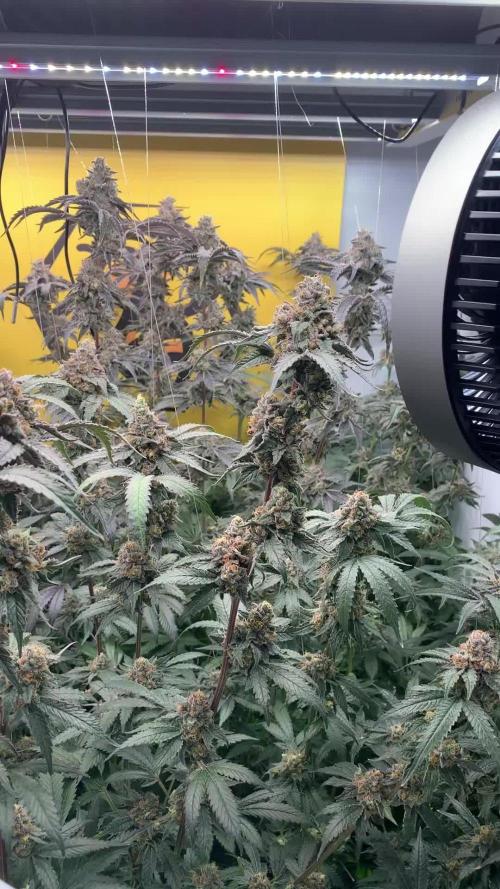
5.3. die trichome sehen langsam alle reif aus ein paar Tage geht’s noch so das ich Sonntag Abend auf jedenfall die Ober Hälfte ernten kann.
4.3. growdiaries scheint mehr Infos zu meinem grow zu haben. Ich bekam denn Hinweis das mein Tagebuch zur Papayton fertig ist.😅😂
Tank nochmal aufgefüllt. Wieder mit PK&Fade runter auf halbe Dosis. 1,6ml/l (Siehe Foto)
2.3. neue und vermutlich letzte Woche.🤩
🇬🇧
5.3. The trichomes are all starting to look ripe. They'll last a few more days so I can definitely harvest the top half on Sunday evening.
4.3. Growdiaries seems to have more information about my grow. I got a notification that my diary for Papayton is now finished. 😅😂
Refilled the tank. Reduced the PK & Fade dose back down to half. 1.6 ml/l (See photo)
2.3. New and probably last week. 🤩
Likes
14
Share


@MUSRIME_supreme
Follow
Всех тепло приветствую.
Начинаем свой репортаж, погнали!
17 добрых автоцветов от компании Errors Seeds.
Южный Урал, теплица.
Обо всем подробнее в следующих постах!🤟
Начинаем как всегда, с семян)
Они отправились в ватные диски на прорастание, далее переедут в торф-таблетки под лампу APOLLO 6.
Переезд в теплицу будет осуществляется в нашей готовности, в готовности самой собственно теплицы и САМОЕ важное, когда будет готова рассада🌱
Likes
3
Share


@danielsegovia
Follow
06.06.20Hace varios dias transplanté a todas a una maceta de 15 litros pero con sólo 9 litros de sustrato.
Hice una aplicación de estimulante de raíz para atenuar el estrés por transplante.
10.06.20 Regué con toda la línea Top crop, muestran un buen crecimiento

Likes
7
Share

@JuiceboxTerps
Follow
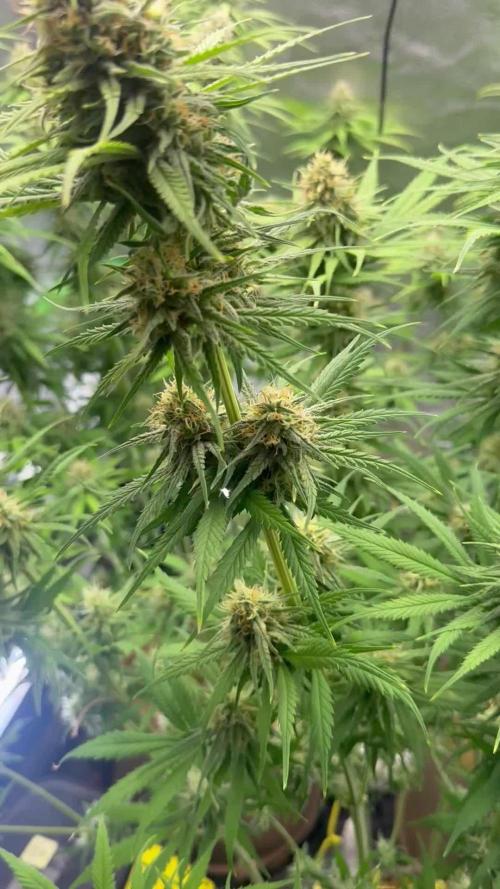
Growing great. Can see the plant really ripening now and started to orange up.
One feeding this week and just some top water and bottom watering with the wicking trays. Dropped rh to 50 during the day.
Switched up the schedule to a 11/13 and gave a quick defoliation.
Vpd- 1.3
Ppfd- 880

Likes
23
Share

@TrickzGrowz
Follow
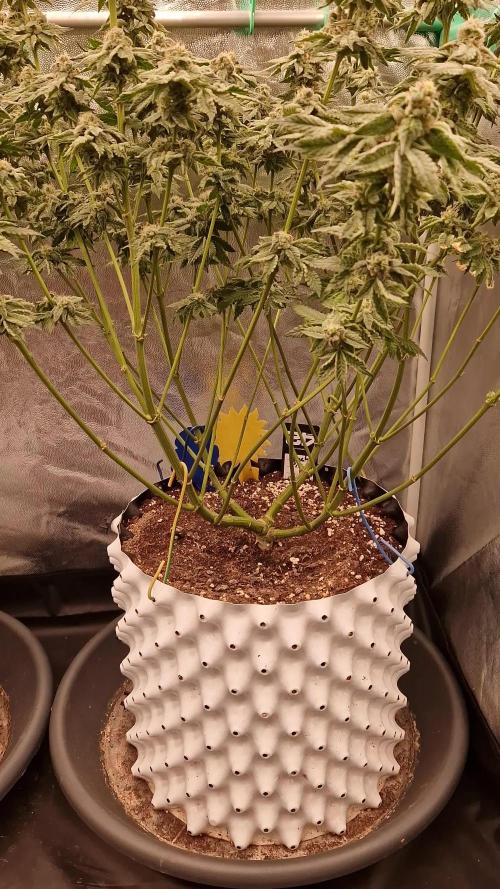
Von den Nanners keine Spur mehr. Hoffentlich haben diese 9 Bananensäcke keine Polle groß verteilt. Ich hoffe auch das keine weiteren mehr neu wachsen. Bin trotzdem bis jetzt sehr happy mit den Knospen.


Likes
19
Share


@Chubbs
Follow
420Fastbuds
TrainWreck Auto/Week 3
What up grow fam weekly update for these two. They both are progressing nicely the systems the one was showing seem to be fixed as where getting some regular growth now. I'll start to introduce nutes this week using General Hydroponics 3 part flora series. All in all Happy Growing


Likes
Comments
Share

@JibbyJack
Follow
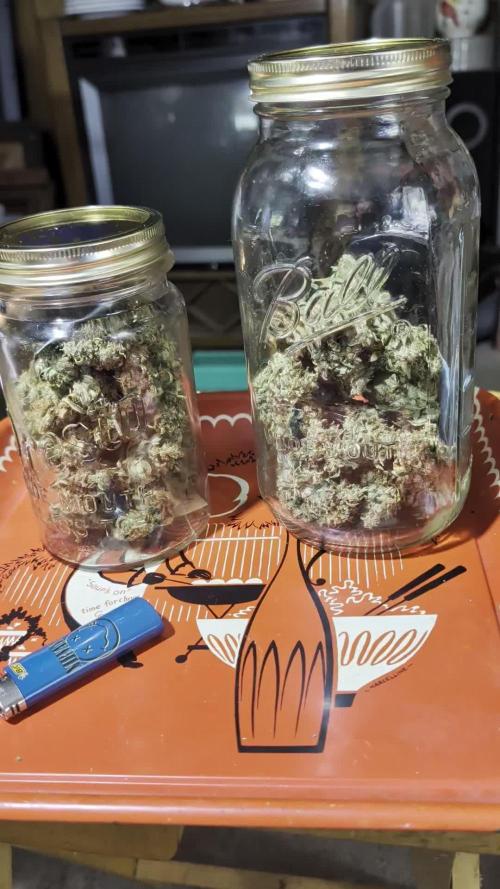
My first harvest was a little over 2 ounces. With learning curve and setbacks , progress is being achieved. The buds are Crystalized and Smell fregrant. I am anxious to cure .


Likes
1
Share

@rommyu
Follow
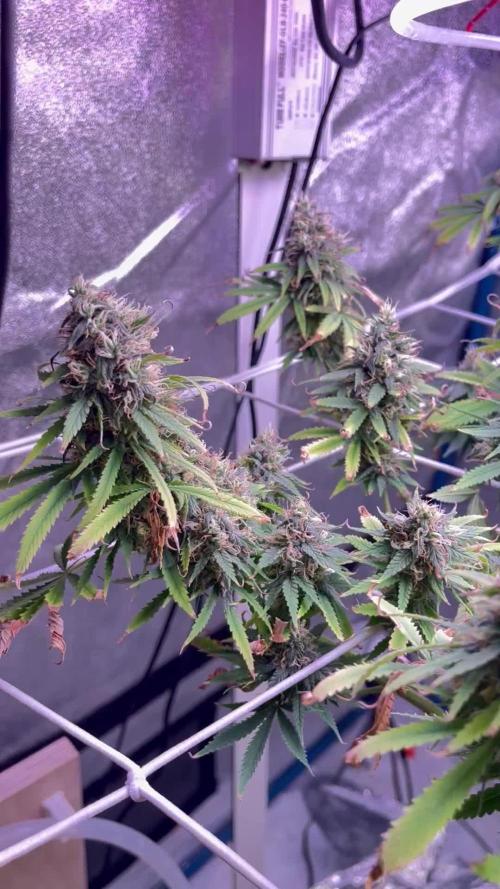
It has recovered from all that stress and thriving again last spurt of tiny pistils exploding telling me it is still alive

Likes
14
Share


@tiasmaaa
Follow
so the original clon is having a little issue with the yellow leaves, don't know if it's because it's approaching the end or maybe I started flushing too early I don't really know.
and jelly pie is always looking great, for the moment I keep giving them nutrients and I'll start flushing in a small week

Likes
22
Share


@DevelGrow
Follow
Hallo Freunde des grünen Daumens 👋🍀✌️ die Kleinen sind 14 Tage alt! Und legen einen schönen Start hin. Es Entwickeln sich die ersten Triebe und bin erstaunt wie schnell sie wachsen! Temperatur und Luftfeuchtigkeit liegen stabil in den Werten,im ganzen ein sehr entspanntes Gewächs die Version A ! Schauen wir Mal gespannt weiter wie Sie sich entwickeltn! Allen einen schönen Grow and keep Green 🍀👋


Likes
13
Share


@Sadhus
Follow
Alerte spider mites sur une des 4 en pots, j'ai traité tout le monde au savon potassium 😥😭


