




Likes
182
Share


@Sorsdetacachette
Follow
D92 - rien
D93 - rien
D94 - rien
D95 - rien
D96 - jour de récolte🤩
Beaucoup de travail aujourd’hui 💪
Plus de 13heures pour la manucure du gorille 🤪
Début du séchage pendant une dizaine de jours en essayant de maintenir l’humidité de la pièce à 50% , une température de 21 degrés, le tout dans le noir
Hâte de voir combien cette jolie plante va me donner ……..⚖️🔮
Likes
52
Share


@MissFlowerPower420
Follow
Transplanted into big girl pot now . Really pleased with her progress . Keep singing Tom petty last dance with Mary Jane.
Think she's likes it lol .
Happy growing n peace to my fellow herbalists 🕊️🕊️🕊️


Likes
33
Share


@MadeInGermany
Follow
Hey guys :-)
The ladies are developing really well 😊.
I'll decide spontaneously whether I'll do topping because I hardly have any space in the flower tent and I'll soon have to set it to 12 / 12 h due to time constraints :-( .
But this week they will definitely get the veggie phase.
Was poured 1 times with 1 l each (groundwater see description at the bottom)
Everything was made clean.
Fresh osmosis water is applied and the plants are sprayed and checked.
Stay healthy 💚🙏🏻
👇🏼👇🏼👇🏼👇🏼👇🏼👇🏼👇🏼👇🏼👇🏼👇🏼👇🏼👇🏼
You can buy this Nutrients at :
https://www.royalqueenseeds.com/47-growing
👇🏼👇🏼👇🏼👇🏼👇🏼👇🏼👇🏼👇🏼👇🏼👇🏼👇🏼👇🏼
You can buy this strain at :
https://www.royalqueenseeds.com/feminized-cannabis-seeds/576-watermelon.html
Water 💧 💧💧
Osmosis water mixed with normal water (24 hours stale that the chlorine evaporates) to 0.2 EC. Add Cal / Mag to 0.4 Ec Ph with Organic Ph - to 5.8 - 6.5
MadeInGermany
Likes
17
Share

@Flavors
Follow
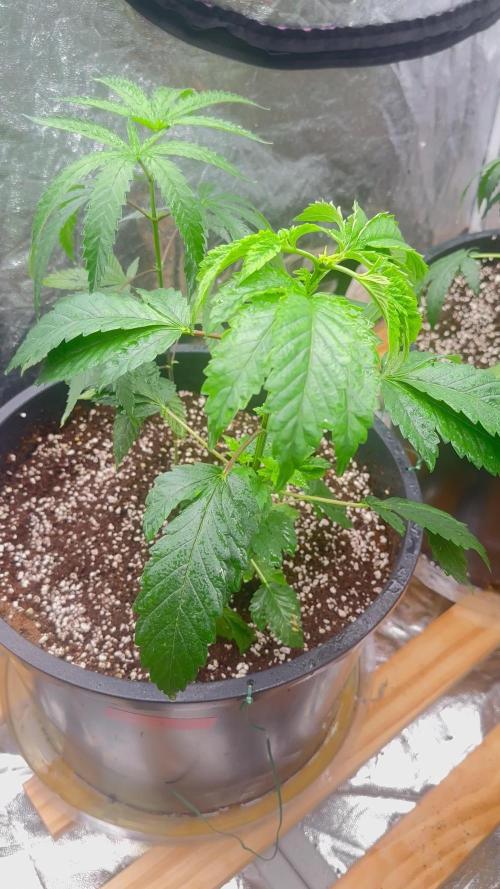
🌱 Week 6 Update 🌱
So I caught a little hiccup this week — turns out my timer was off by 2️⃣ hours! 😅 I’ve adjusted it back to the proper 18/6 light schedule 🌞🌚 so we’re back on track. The girls are definitely getting bigger and looking healthy! 💪💚
The autos are starting to flower already! 🌸✨ A bit earlier than expected, but hey… we’ll see what the future holds. 👀🤞
Happy growing, growmies! 🌿🔥
#GrowDiary #Week6 #CannabisGrow #AutosInBloom 🌱💡🌼

Likes
7
Share


@Mr_nugs_lover_David
Follow
The plant is looking amaizng, super healthy and strong, however I had to reduce the plant's height to avoid any type of issues, let's try to make this lady grow wide and become as bushy as possible, let's see how this lady performs guys!

Processing
Likes
5
Share


@denemeyanilma
Follow
4 weeks start
Healthy _ Strong
08.09.19 Day 24
20/4
12.09.19 Day 28
start flowering 18/6


Likes
19
Share


@Island
Follow
Week 4 of vegetative stage -
The routine still the same, plants dont need to be watered by me, because God do it to me, In summer, rain happend in all weeks, my soil humidity is always good and my babies grow much well.
Im liking so much this xperience until now.
They are very healthy, much more them when I grow indoor.
Wind make the LST for my girls.
See u next week, bye! 😁

Likes
28
Share


@Adkguerrilla44
Follow
The wicked genetics plants are by far the most potent ones i grew and the most dank smelling like the gary payton x boston kreme pie (gary payton x wedding cake x thin mint cookies) is so dang potent this shit is an indica monster, I can't take more than 3 hits or I'm catatonic 🤣🤣🤣🤣 the gary payton x sour headband is still drying but I tried a little bit and that one is
a sativa monster super nice heady high perfect for daytime smoke but both will rock your world if you take more than 2 or 3 hits I've never grown outdoor like this ever before I always grew local strains or clones but after harvesting these 2 plants I have decided that ill be growing nothing but wicked genetics for a long freakin time..the next line up im germinating are all special and will be my biggest challenge yet growing 8 different strains I have never grown and most of them being chem,sour or og kush crosses along with some more gary payton crosses (gp x king Louie og,gp x unicorn poop) highway og,evil og and kings og and triple threat and triple crown and lemon smoothie(lemon skunk x chemsicle) very excited I love growing fire strains I have never tried before these gp crosses impressed me beyond belief and I'm telling you guys go check out wicked genetics on his discord server or on IG or his website www.wickedgenetics.net, he gives tons of freebies if you buy from his discord and has regular and fem seeds if there's one person who's work needs to be admired it's Joshua's man hes doing some special work with og kush's,chemdawg,skunks,and sour strains it's insane how many fire strains I have from him and only really spent a couple hundered dollars where I was spending 0 with rqs and getting 10 northern lights autos seeds that I won't grow and the strains were never anything special not compared to wicked genetics the best bud I grew from royal queen seeds indoor isn't nearly as good tasting or as potent as the gary payton x boston kreem or gp x shb pie I grew outdoors I've never seen that
Likes
18
Share


@KushAllDayLong
Follow
Another amazing week, stretch is starting to slow down so the stacking begins and I'm pretty happy with how big the buds are considering the set up I'm currently running. Excited to see what happens next!
At the start of week 4, I opened my tent to see one of my girls (Watermelon Zkittelz) had fallen over and was on the floor laying against the tent wall. Soil was everywhere and when I picked her up I noticed a few broken branches 😫 what upsets me, I have no idea how long she was on her side broken like this. So I wasted no time, I didn't have any time to waste, and so I taped her up as fast as I could. Cleaned the tent and then tried figuring out how this happened. I'm thinking it was the platform I had her on, along with her being super top heavy maybe? I didn't think she would be so top heavy yet but I think it's the mixture of those two things. Anyway, at the end of the day, she's doing fairly well considering. The branches I taped have responded well so far. We shall see if it holds up! I had another branch off the same plant break in half and I taped her immediately and she seemed to recover fast. She's very resilient!
I just realized I was promoted to Aprentice from Newbie!! I hope breaking branches doesn't make me a newbie again 🤣 Cheers to that!! Thank you fam!
For the nutrients, this week I added the lovely Aloe Vera Juice I make from my Aloe Vera plant. I also added more of Organic Barley Grass powder I made from Organic Alka Green powder. I used this on one of plants during vegetative stage and she loved it so I've been adding this to my feeding schedule every other week and they girls are loving it so much! So many amazing nutrients are in these tabs. The only reason I decided to use them and expierment was because I was on a very tight budget, still am but anyway I looked in my cabinet for any organic nutrients I could potentially use with my cannabis plants. To my suprise it's worked out amazing!!

Likes
20
Share


@eldruida_lamota
Follow
Como estáis familia? Yo flipando y es que todo lo que provenga de cheese me encanta, farm cheese del banco genofarm, repleta de polen,parece los Pirineos en pleno enero cuando nieva.
Es una cepa increíble el problema que le veo es su olor penetrante, apesta enserio es muy fuerte su olor, seguimos alimentándola con advanced nutrients quitamos todos los adictivos menos overdrive y la base sigue dando caña y si no mirar su color.
Todo este proyecto e de agradecerlo a mars hydro que sin ellos no es posible este proyecto, enserio este led es bomba.
Ph controlado , humedad por debajo de 50% temperatura entorno a 27 algo alta pero no hay problema alguno.
Muchas gracias a todo el equipo de mars hydro de nuevo, agrobeta que aunque no participen los productos en el diario si van hacerlo en un futuro, y gracias a vosotros que sin grow diaries y sin todos vosotros usuarios , tampoco es posible, así que gracias, muy buenos humos 💨💨💨.


Likes
33
Share


@Ferenc
Follow
Light schedule 20 hours on 4 hours off and the same with ventilation. Humidity approx 50 percent, water intake raised up 125 ml per plant per day. Fertilization continues on Monday, Wednesday, and Friday with Biobizz family and Tuesday, Thursday, Saturday bat guano and Epsom salt. This week will change the old lamp and replace with Viparspectra 600W.
Day 46: I am still waiting for the new lamp. I haven't updated 2 days. They are georgeus flowering nicely. Buds are getting thicker and the purple strains are getting pure Balckberry Kush and LSD-25.
Day 47: I palced today the new Viperspectra 600W lamp. I have also changed the light schedule for 18/6.
Processing
Likes
4
Share


@Barcelona_Farmers710
Follow
Mientras yo me divertía en la spannabis las niñas se ponian cada vez mas resinosas farmers!! Solo basta ver la shining haze para darse cuenta que el mammoth p es brutal!!👌🏻
Likes
77
Share


@Basementganja
Follow
Day 70 - It takes 5 days for the soil to dry out, with a 2.5 gallon dosage of the above listed nutrients.
She has been selectively de-leafed, since the last major defoliation.
The goal from now to harvest, is to maximize the light penetration, and airflow throughout the canopy, while sacrificing as few leaves as possible!
Likes
5
Share

@Chubbs
Follow
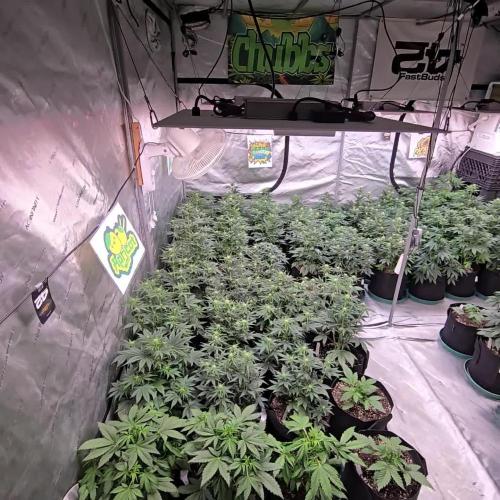
Weekly update:
Crazy how time flies when your having fun. Seems like yesterday I did last week's update. I did some defoliating and lollipoping on them this week and switched from grow nutes to bloom. Wild how fast the preflower sites grow as it looks like they're everywhere. I'm still feeding 16oz per day, some are drinking more then others but overall Happy Growing.
Likes
12
Share

@SugarandTerps
Follow
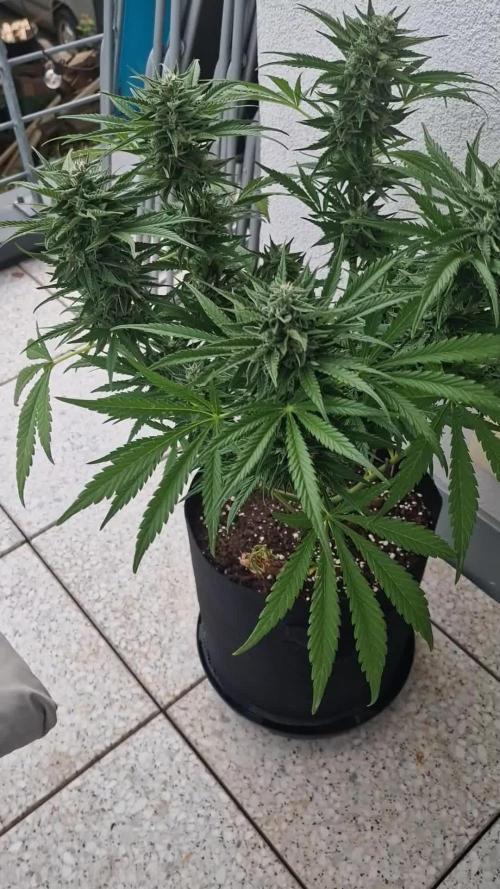
Bloom W5 Mendo Frost ❄️❄️
2.7
Heute gab 3L Nährlösung Ph-Wert auf 6,6, Plagron Silic Rock, Power Roots, Royal Sugar, Power Buds, Green Sensation und Alfa Boost All-in-One.
Temperaturen haben heute 27°C
4.7
Der Himmel ist heute öfters bewölkt und könnte abends noch mal regnen. Die Blätter sehen gut aus und die Düngerverbrennung ist nicht weiter fortgeschritten.
5.7
3L Nährlösung Ph-Wert auf 6,6, Plagron Silic Rock, Power Roots, Royal Sugar, Power Buds, Green Sensation und Alfa Boost All-in-One
Likes
25
Share


@m0use
Follow
This was a fun week, the plants got their first feeding from the TripTonic line of nutrients. I did a light feeding and then had to readjust as the EC was a bit low considering the size of the plants. The runoff was a bit high and this maybe because of all the left over from the pro mix slow release, thought it would have been used up by now. They will get the same water as the rest of the plants on the deck for the remainder of the week. I don't know if the PH will get out of wack because of this, but given that it is mainly peat and it tends to be acidic I think I'm in the clear. The little video was fun to splice together too.
Got a little package in the mail from a fellow grower. @GottaGrowSometime has shared some of their Fast Buds winnings and sent me some green crack cbd 1:1 and cbd 20:1, they also threw in seed of the cherry coke and a few extras. This is going to help me test out their CBD lineup and see if its worth growing out. Big shoutout to them for being a great community member. In return I will be sending them some of my backcrossed Dinamed CBD Kush Autoflower seeds I made, the testing is going well so best to see what it can do in other growers hands.
Likes
26
Share


@Bakeryguy420
Follow
Sorry guys havent updated in awile
Gg4 harvested
Tangiematic harvested
Ogesus #1,2 harvested
Gluebeerry just main cola harvested
White rrussian harvested
Sweet creme harvested
In.the run.left is rhino rryder, royal haze, amnesia gold , amensia haze , forgotten cookies and gluebeery and the new girls
Update on 3rd grow going Start a new diary for them today . My cat knocked down the seedlings 3 times zero stunt life which is shocking crazy crackhead ..
Quality is amazing for them all yield wasnt aa, much as I wanted believe emerald harvest is as garbage as foxfarm.

Glueberry Auto · Expert Seeds
Gorrila Glue #4 Auto (Expert Gorilla Auto) · Expert Seeds

Tangie Auto · Fast Buds
Sweet Cream Auto · Expert Seeds

Amnesia Haze Auto · Vision Seeds

Amnesia Gold · Pyramid Seeds
OGesus Auto · Expert Seeds

Royal Haze Automatic · Royal Queen Seeds

Caramella Auto · Custom Breeder & Strain
Rhino Ryder Auto · Fast Buds

Fugue State · Mephisto Genetics