


Likes
Comments
Share


Processing
Likes
Comments
Share


@MOTB666
Follow
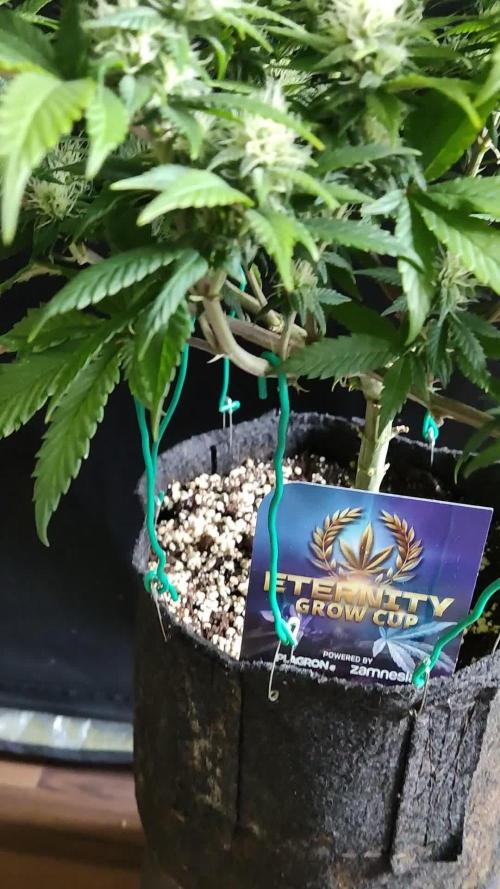
Getting really bushy about 18 inches tall going in this week might be the last week of veg if they keep growing how they are. These girls are getting wide as hell. Will move one of them over to avoid over crowding in the middle next change out of nutrients. They're appetite is getting big

Likes
35
Share


@CannabisRomania
Follow
She is very frosty and smells like candies. Nice color and the trichomes are passing from clear to milky.

Processing
Likes
52
Share


Likes
5
Share


@Therapy420
Follow
Frosting and thickening up nicely, no sign of milky trichs yet.
Hopefully done in about 2 weeks.



Likes
33
Share


@MrFink
Follow
The girls have basically exploded this week! They were drinking a ton and have responded really well to the steady increase in nutrients. With the room being basically self sustaining, it’s been a lot less work. Yesterday was the second round of defoliation and because this is my first time getting this far, I decided to be pretty moderate. There’s a few plants I took quite a bit off as an experiment and they seem to be doing great! The guy at my local hyrdo store recommended GH Floralicious Plus for flavor and smell, so I decided to try it out and this is some pretty potent stuff. After their first feeding of the Floralicious they are smelling delicious! The one plant furthest into flower is starting to show some fade in the lower leaves, she will certainly be done before the rest. She has a very sweet and sour aroma, especially if she gets rustled around a little bit. I’m stoked for the rest of flower and seeing their progress. Also I haven’t seen a fungus gnat in weeks so those yellow sticky traps are a must.

Likes
7
Share


@Dunk_Junk
Follow
Wow she's grown 34cm this week!!!!
Monster!!!!!!!!!!
I wish I knew what she was!!!
If I had to guess a breeder I'd say this seed came from FastBuds as it was their type of container....
But what exact strain? I have no idea whatsoever. 😭
Likes
13
Share


@DeepRootsGrowTrees
Follow
SHERBERT QUEEN AUTO / RQS
WEEK #9 OVERALL
WEEK #4 FLOWER
This has been another good week for this lady she's doing buds are getting dense and getting a little aroma to them. Stay Growing!!
Thank you for asking by and taking a look it's much appreciated!!
Thank you v ROYAL QUEEN SEEDS!!
SHERBERT QUEEN AUTO / RQS

Likes
3
Share


@StonedSteve
Follow
Zdar všichni startuju 5. týden květu, momentálně jsme ve fázi kynutí, zálivku jedu pořád 7L, zařadil jsem do ní ten CarboLoad a Overdrive, paličky se začali formovat a houstnout, na lístkách se začali objevovat nedostatky Vápníku, tak jsem zvedl CalMag na 4 ml a snad cajk.
Apollo se obsypal cukříkem a začal hezky voňet, ale bude to prcek má 58 cm, tak hlavně to pořádně dokrmit ať jsou palice velký a tvrdý.
Fotky a video jsou z 26.08.
Za týden čau✋

Likes
88
Share


@Lady_NugWitch
Follow
Getting ready to chop her down!!!! Yay! No issues other than she would not stop growing!! Lol 😂

Likes
23
Share


@555ABKY555
Follow
hello guys this week I applied lollipopping to the two girls who are getting really huge the skunk responded to the pruning in a masterful way while the honey cream tends to keep its tip firm the ak420s are growing a lot while the sc girls. they reported very strong sun stress freak shows grow slow and so far the only plants I get along with are frisian ducks.


Likes
22
Share


@Brujha77
Follow
Start Woche 4 Blüte.
Entwickeln sich gut. So langsam sind die ersten Trichome sichtbar und sie fangen an leicht zu riechen.
Die beiden bekommen morgen noch ihren Composttee, sonst passiert grade nicht viel.
Hin und wieder werden ein paar Blätter entfernt. 🍀


Likes
14
Share


@Robeeriegenetics
Follow
Best yeilds of the 3 and most frost this run highest resistance
Tropical smell tangerine flavor hint of pine and gas
Likes
8
Share


Processing
Likes
61
Share


@Homegrown79
Follow
Dam! Where do I start?
Firstly I started to get yellow leaves.
Secondly I also seem to have stunted the growth.
The yellow leaves were due to lack of oxygen.
I am using coco soil and I did not realise that the soil can hold up to six times more water than normal soil so that caused a few issues.
I also managed to cut the roots when I transferred the plants to new pots.
This has also delayed the growth.
I think I have managed to get it in time and everything seems to be going OK but I feel the next 2 weeks will be the big tell.
I expected the babies to be fuller and taller but hey! I make the mistakes so you don't have to lol.
I've no real questions to ask because I think I solved the issue with the help of a fellow grower and a bit of research.

Likes
153
Share


@Ju_Bps
Follow
Hello my friends 👨🌾👨🌾,
All was fine this week,
#2 and #3, got just one time water, this start week, they looking stop drinking, so I've harvest the plants today,
Except the #1, not yet ready.
I'll harvest #1 next week,
#1 got 3x 2.5l water + flash cleaner PH@6
I'll publish all the harvest next week,
I can just say you buds have beautiful colors.
Thanks to Mars Hydro for the TS1000 and Royal Queen Seeds for seeds ❤️❤️
https://www.mars-hydro.com/ts-1000-led-grow-light
https://www.royalqueenseeds.com/autoflowering-cannabis-seeds/537-mimosa-automatic.html
Have a good week end,
See you next week 💨
Likes
17
Share


@PatriciaGant
Follow
what a journey, such a beautiful result i should retire now how can it become any better. thx everyone watching by. have a nice day and an even better grow
Processing
Likes
6
Share


@Jabberwolky
Follow
The Ladies are going great so far this week the buds are comming in really nice. the smell is wonderfull
Kind soil as a base media and roots organic on the top.
only di water
Its really nice not having to worry about the ppms and ph of water and this n that ...
so far this grow is just want i need
nite time temp dropped below 58 a clp times on me .. i hope it done hurt the outcome to much

Likes
23
Share


@TheCannaProphet
Follow
~ FASTBUDS TRAINWRECK AUTOFLOWER~
~FastBuds Trainwreck Auto~
Quick Service!-High Route!
-Hit you like a freight train.
-A potent high that will leave you feeling good all day long.
-Super yields. This strain grows up to 120cm and yields 550gr/m2 in just 63 days!
-Perfectly balanced. Especially bred to develop the best of Indica and Sativa traits.
-Suited for everyone. Top-quality buds without much maintenance or extra attention.
-The good old days. An upgraded fast flowering version of the classic, bred to perfection.
__________________________________________________________________________________________________________________________________________________________________________________________________________________________________________________________________________________________________________________________________________________________________________________________________________________________________________________
STRAIN DESCRIPTION:
-A fast flowering hybrid variety suited for all types of growers, it’s an easy-to-grow strain that takes 9 weeks from seed to harvest, growing up to 120cm and yielding 550gr/m2 without needing much maintenance or extra effort. Expect hard-hitting nugs that will catch everyone’s attention due to the sweet pine-sol terpenes that stink out the whole room as soon as you light up the joint; This variety will be among your favorites once you experience the exceptional effects that may not seem too potent at first but slowly creeps up on you and get you high as a kite for hours.
-Bud description: Trainwreck Auto’s buds grow quite thick, with plenty bright yellowish-orange hairs that wrap around the medium-sized calyxes, complementing the light-green nugs beautifully. Expect extremely dense buds that grow stacked and end up looking like one giant nug in each branch. You’ll be amazed by the trichome production, the sugar-dipped nugs with some colorful leaves coming out of them will leave your fingers full of resin and, as soon as you start grinding them, overwhelm you with a pungent lemony pine-sol with a touch of sourness and a spicy background.
-Smoke report: After a couple of hits, you will experience a really cozy and stimulating head high that will get you in a comfortable state of mind and feeling good with everything and everyone; The long-lasting uplifting effect promotes a very calm and centered state of mind with a relaxed edge at first. The motivating effect will gradually transform into a more Indica-like high that deeply relaxes your muscles and relieves pain without leaving you too sedated, an ideal choice for those who want to stay alert during the morning and need to relax when the workday ends.
-Plant appearance: Growing on the taller side, this autoflower can reach up to 120cm while growing quite compact and bushy, you’ll see lots of dark-green fan leaves coming out of everywhere and a couple of side branches that can grow as tall as the main cola. Thanks to its Sativa heritage, this variety yields as much as it grows; Expect yields ranging from 350-500gr/m2, making it an ideal choice for all types of growers who are looking for a low-maintenance and fast flowering version of the classic.
*The above Strain Information/Description courtesy of FastBuds
____________________________________________________________________________________________________________________________________________________________________________________________________________________________________________________________________________________________________________________________________________________________________________________________________________________________________________________
MY SETUP:
Planted into Jiffy Peat Pellet that was hydrated with de-chlorinated water with SuperThrive added then ph'd to 6.0 @ 80℉ where it took 3 days for her to break ground.
Grown 100% organic in 4g fabric pot by Gronest filled with Mother Earth 70/30 Coco/Perlite medium amended with (my 'Secret Recipe): 2tbs/g of Down To Earth 4-4-4 / 2 cups/g of Earthworm Castings / 1tbs/g of Dr. Earth Flower Girl 3-9-4, 1tbs/g of Dr. Earth Bat Guano, 3/4 cup of Down To Earth Azomite and 1 tsp/g Down To Earth Fish Bone Meal.
24hr light cycle during Germination, 19/5 light cycle for the remainder of the run under UnitFarm's UF-4000 and UFS3000 LED's which I have to say just blew me away with the results they gave!!!
If you're on a budget and want a light that is about as low profile and cool running as they get you really need to check out UnitFarms lights. Believe me... I run a pair of HLG 650R's and a HLG 225 in my 4x8 so I'm no stranger to 'high end' lights but lemme tell ya, these two UnitFarm lights absolutely blowup my 4x4 and don't overheat the tent!
She received straight water ph'd @ 6.2-6.8 when needed and weekly Compost Tea's for the entire grow which is one of the beauty's of growing 100% organic, you establish a microbial colony in your medium, then feed the microbes every 3-4 weeks keeping them fat and happy... They, in turn, through their life processes take care of feeding the plant. Pretty freaking cool if I may say so, and there's no simpler way to grow IMHO 😎: 1:
This Trainwreck's structure was perfect and didn't require me to top her, only requiring minimal LST and tucking shade leaves that were blocking light penetration. She grew fairly tall to 31" with wide node spacing allowing for excellent light penetration making her a growers dream, low maintenance, extremely tolerant of temperatures and disease/pests ) and a healthy yield of some epic super dense GASSY buds glistening with trichomes... What more could you ask for? 😍💖
All in all, this strain has made it's way onto my 'list' and you'll be seeing it run again by me for sure as she's a hard one to stay away from! I highly recommend this one... Go grab some and put a huge smile on your face too! 😁: 1:💚