


Likes
Comments
Share


@BudBoutique
Follow
Welcome to Bud Boutique Grow Diary - really appreciate all your love and support :)
Dont forget to check out my other current grows!
🗓️ This Week:
- Day 38: stacking up pretty much - fading out moving on - lack of K and maybe calmag
- Day 35: praying up
Thank you for still staying with me 💚
___________________________________________
--- 🌱 Strain (Sponsor) ---
🏷️ Blue Cinderella 99 FF by MSNL
https://www.marijuana-seeds.nl/blue-cinderella-99-fast-flowering
--- 🥗 Nutrients and Feeding (sponsored by APTUS: APTUS Ambassador) ---
🍸 APTUS: full nutrient schedule extreme
-- Regulator, N-Boost, P-Boost, CaMg-Boost, K-Boost, Allin1 Liquid, Startbooster, Topbooster, Enzym+ every feeding
-- Fulvic-Blast, NutriSpray as Foliar each once a week
🔗 https://aptus-holland.com/
--- ♻️ Grow Control (Sponsor) ---
TROLMASTER: TENT-X + LM14 Light Adapter to dim/sunrise/sunset lights + Temp & rH Sensor all remote on App
🔗 https://www.trolmaster.eu/
--- 🚿 PetraGrow (Sponsor) ---
CannaFogger Foliar Spray
🔗 https://www.petratools.com/product/petragrow-cannafogger-atomizer-new-mini-fogger
--- 🏭 Grow Setup ---
💡LUMATEK Zeus Pro 600
* 🏠🌿 Indoor: Homebox 120x120x200cm (4x4)
* 📐🌀 PrimaKlima exhausting Fan 1180m3/h (running on 60-80%)
* 🌀 Can Light Filter 800m3/h & 1x Fanbox 1x Dyson fan for Air circulation
🔗 https://lumatek-lighting.com/zeus-600w-pro-29/
🔗 https://primaklima.com/de/shop/ventilatoren-de/ec-ventilatoren/pk160ec-tc/
🔗 https://canfilters.com/products/filters/
All Likes and comments are highly appreciated!!!
👨🌾 don't forget to check out my Instagram for daily educational content: budboutiquee
- Bud Boutique


Likes
75
Share


@Theia
Follow
This week has been stressful for me. I discovered 3 types of bug invaders.. I had some fungus gnats some spider mites and also some thrips... Bastards!
I have deployed predators to deal with the canopy in the form of Amblyseius cucumeris and Amblyseius swirskii. I also deployed a platoon of lacewing larvae. For the fungus gnats I used nematodes watered into the root system. I now need to keep an eye for any further signs. I lost a lot of leaf to the pests I hope I did not take to much but anything I chopped was eaten and dead already. She needed a trim anyway and I did discover a load of bud sites that were covered up.
I plan to strip the flower room out after this grow and do a deep clean and reseal everything.
This will also be the last grow using biobizz range as I do. I was told before that I don't need to use all their product line and I feel I know what I like and need now.
Thanks for looking apart from the bug issues I'm very happy with her. She's huge and is all bud...😍
Take care😷😷
Happy growing🌿🌱🌿
Likes
3
Share
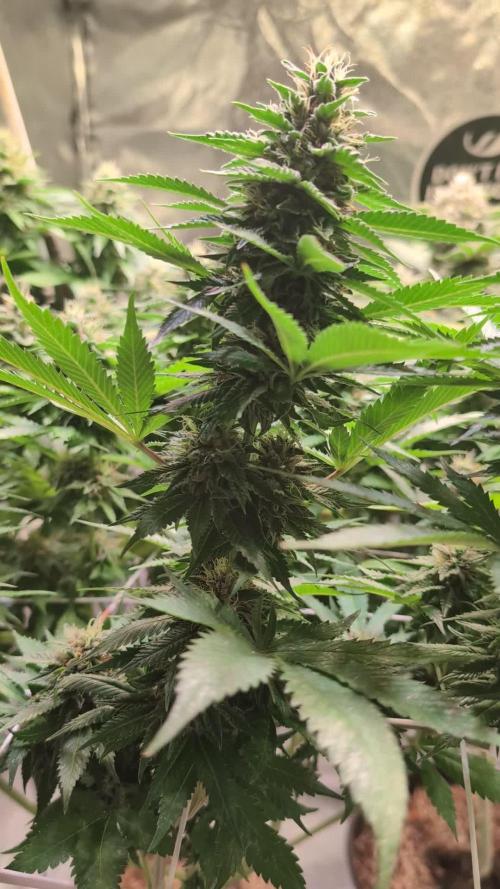

@GoodTimesOrganics
Follow
Hi liebe Community! 💚
Allmählich beginnt die letzte Blütephase unserer ersten Eigenkreation und der Geruch entwickelt sich aktuell sehr stark.
Bis jetzt zeichnet sich ein süßess, zitroniges Aroma ab mit einem Hauch von Karamell.
Leider gab es einen Thripsbefall, welcher jetzt gerade erst wieder am abklingen ist.
Likes
1
Share
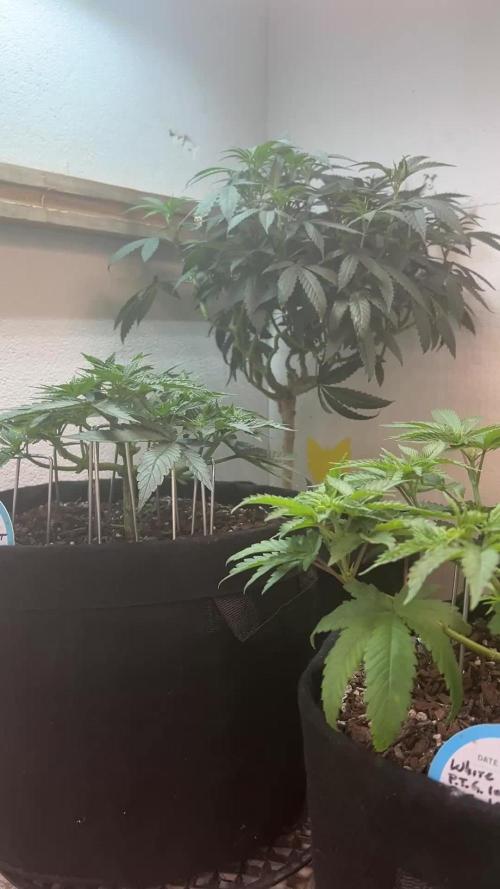

@Cmftrblynmb
Follow
Five plants were showing deficiencies last weekend, but had just watered so I waited until Wednesday to feed 2 tsp/gal Grow Big.

Likes
5
Share


@TheGreenDisciple
Follow
Week 10...The plants are looking good! Took out the microscope to look at the trichomes...Starting to get milky but still another week or two before the harvest! Started flushing the plant this week!

Likes
13
Share


@talanga
Follow
Incredible strong smell of melon, citrus , wood, earthy, it's wonderful!😁 She has no problems at all, the buds look thicker this week. Trichomes are milky white and translucent with some trichomes starting to have honey like head appearance. Not ready yet I will give her more time.💪👍

Likes
59
Share


@DaGrowQueen
Follow
This strain has easily become one of my top 10 favorites over the past year, to smoke and grow.

Likes
2
Share


@NocturnalGardner44
Follow
Flipping now, light training trying to maximize horizontal space

Likes
179
Share


@Tropicannibis_Todd
Follow
💩Holy Crap We Are Back At It And Loving It💩
Growmies we are at DAY 49 and she's just killing💀it👌
👉We are in full flowering mode and she's doing great 👈 Everything is looking good even the Tiny Cup 🥤
So Shit , I gave them just a tad to much nutes at the start of feeding 👈 But I have since fixed it
So I'm still doing some low stress training 🙃 and some defolation 😳
Lights being readjusted and chart updated .........👍rain water to be used entire growth👈
👉I used NutriNPK for nutrients for my grows and welcome anyone to give them a try .👈
👉 www.nutrinpk.com 👈
NutriNPK Cal MAG 14-0-14
NutriNPK Grow 28-14-14
NutriNPK Bloom 8-20-30
NutriNPK Bloom Booster 0-52-34
I GOT MULTIPLE DIARIES ON THE GO 😱 please check them out 😎
👉THANKS FOR TAKING THE TIME TO GO OVER MY DIARIES 👈

Likes
44
Share


@biggreens420
Follow
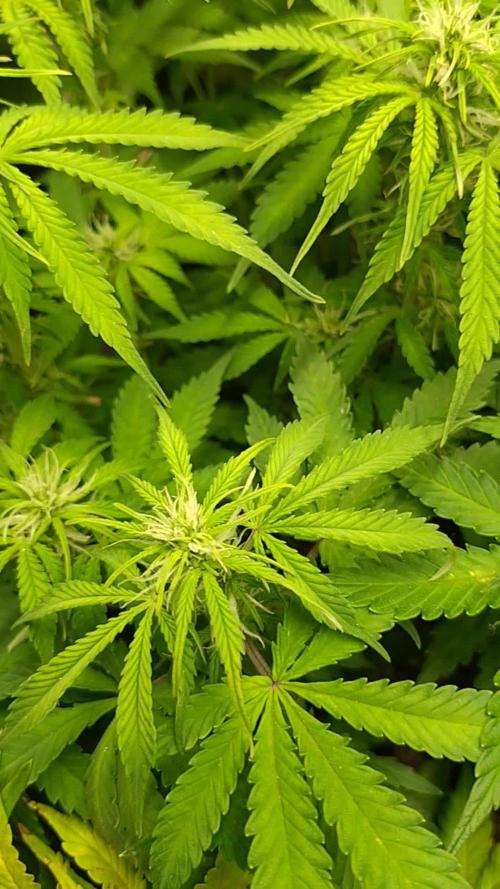
gorilla is fading out well still putting weight on and getting super frosty stinking like mad . been removing the most yellow leaves as they fade and shes just been on water going to mix 1g of bactrex into 1l of water to finish her of then just water again looking within next few week for sure not much else to say thanks for reading happy growing guys




Likes
Comments
Share

@GasGrassOrAss
Follow
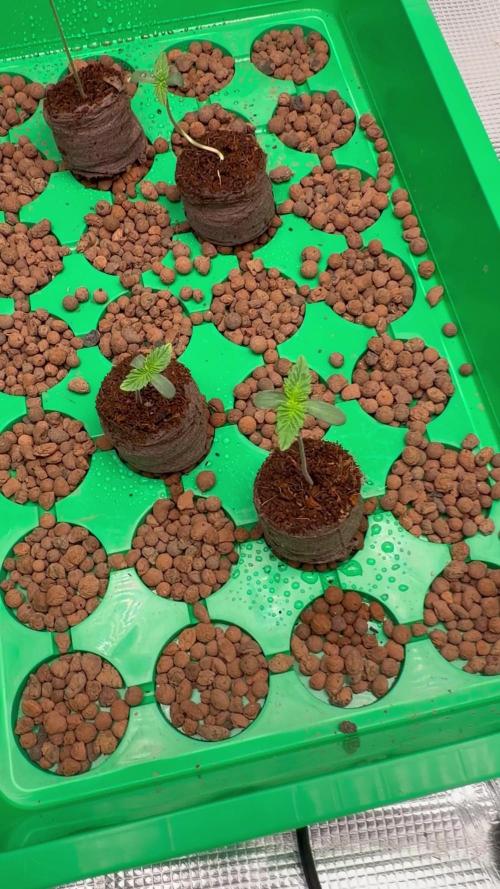
Opening the ventilation, monitoring the humidity inside the some, opening the dome every day for 15-20 minutes. Coming along nicely, some are twisted, but will be alright.
Likes
18
Share


@EaRtH
Follow
24.10. - Today I've switched the LST technique. I've drilled a few holes to the pots and tied down my plants. One of them is significantly stronger and bigger. I'm wondering if it's because of genetics or if I did something wrong that slowed down the others.
26.10. - Plants started to show first signs of pre flowering stage. I've decided to completely untie the smallest plant as I don't think there will be much yield at all. Other two are growing pretty fine, branches are getting longer and thicker. I will slowly decrease the amount of Bio Grow and start to add a bit of Bio Bloom to the mix.
30.10. - All plants are showing nice improvements. Branches gained on height and got thicker. I can already see some bud sites developing, so I've decided to completely replace Bio Grow with Bloom.
24.10. - 30.10.2023
Likes
35
Share


@farahweed
Follow
I used overdrive fertilizer again this week.
My God, girls get more beautiful like this.
The last weeks make me very happy.😍🌷💐💥⚘️👽👽🎍
From now on, I will be very careful because the more I improve the conditions, the better results I get
Especially the temperature difference between night and day.
humidity
Box ambient temperature
👊👊💧♠️


Likes
7
Share


@Mr_nugs_lover_David
Follow
Beautiful looking seedling, very healthy and developing at a fair pace, let's see what awaits us in this diary!! She's developing super fast each day just like her sisters in this run, let's see how she keeps developing! I only use pure water and watch them grow thanks to the amazing living soil blend that I'm working with called FLO Living soil blend, very recomended to all the organic gardeners out there!! I have Transplanted this big girl after just 17 days since she was planted, she is very well developed and so ai took the decision to transplant her and all her sisters in this run, let's see how she performs! 💚❤️💛👨🌾🔝

Likes
62
Share


@masterofsmeagol
Follow
6/28 I had to water deeply despite watering thoroughly yesterday. This heat wave is supposed to pass today. We have had temps in the 90's. Ihate it but the girls seem to love it. RH is super high and controlling pm is a pain in the balls. When my connection is better I'll add my vid and photos. Still need a follow up preventative spray. BT is really awesome but super narrow and I've found random stink bugs, earwigs, crickets and grasshoppers as well as easily identifiable leaf damage. I'm thinking Spinosid. Save my PM stuff for PM. Tried checking my PH with a soil meter. The bags are basically just roots. The only two plants it read came to 6.5 which is strange because I usually run around 7.3. I'll certainly take it. If it's correct that is. RH 64 TEMP 84
6/29 Didn't water this morning due to a torrential downpour last night. Nothing broken after first glance. The thunder and wind woke me last night. This storm was horrific yet my plants still seem unaffected. Need to rearrange the cage. It will be a pain to have to move that ice cream cake. Maybe I could find a way to modify the cage outwards. I also need to move the plant in the tote in the back. Luckily I got back and watered before plants dried out. Noticed a FEW dead or yellow leaves on the middle interior of some plants. I upped dosage of growbig last feed and fed a little earlier. I'll go back to my normal feeding schedule and see what happens. Thing is the plants are getting huge so I would think increased nutes would help. Couldn't he lockout. Too much water. Maybe nutes in the soil are leaving? I'll figure it out. I temporarily pulled the stalk on the ice cream cake back and tied it to the posts to get it off the fence.
6/30. 90s again today. I deeply watered and noticed a couple more yellow leaves (bottom middlish). Only thing that was changed was feeding. I may go back to original schedule. Funeral today so I'll have to check things out later. UPDATE: Went back maybe sux hours after watering to find the grow bags dry. I reached my hand in the side and it's pretty much all roots. These high temperatures and wind are drying my plants out. No droop but the soil WAS dry. I watered again and plan to check again tonight. When temps go down I'll probably do a preventative Spinosid spray.
7/1 Watered and fed two gallons. Grow big at 1 1/2 tbsp. Still some yellow leaves on the interior. I'm talking like maybe five. Accidentally destroyed lace wing eggs. I knew it was something to keep an eye out for but I mistakenly thought it was BAD. Oh well it was just two eggs. I'm sure there are more. Tried measuring PH with soil meter but the only two plants that registered were 6.5 and 6.6. I believe the PH to be a bit higher. The bags are so full of roots it's hard to get a measurement. I know my soil and water WAS on point before my gauge broke. However I leave the 7.3 as that was about what the big ones tested at last time measured.
7/2 These are some resilient strains. Currently 54 degrees at 9am. It had been 80 or 90 in the last few days. Perfect rain today. A light shower all day. Obviously didn't water. Found a few yellow leaves but the plants look so good. The also seem to be stretching but it's far to early for the preflower stretch. I'll keep an eye out. Things are looking pretty good. Still need to move that plant in the back.
7/3 Watered today. Looks like it might rain but top soil was a little dry. Also noticed this site measures teaspoons not tablespoons which is how I measure. I'll need to adjust that. There's tell tale damage from a variety of pests (leaf hoppers, pillars, grasshoppers ECT.) So I think I'm going to do a spray within the next couple days. Im leaning towards Spinosid but Dr. Zymes supposably helps the PM as well. I'll do more research and update.
7/4 54 degrees and raining. Haven't checked the girls out yet today.


Likes
411
Share


@Rock_n_Roll_Randy
Follow
This grow with the TSW2000, FC4800 and 8x8 Grow Tent has come to an end🤘🤘. I'm so happy with the results mars hydro has done👍. Best lights you can get in my opinion and TONS of other people agree with me on this too👍. I always say mars hydro gets em frosty and their lights DID get em nice and frosty and the buds are so tasty and smell awesome🤘. Not a huge haul per plant but I'm still very happy with it because the quality is amazing. I will never want to use anything but MARS HYDRO. Extremely satisfied with the entire grow with mars. The weed quality is very good and controlling the heat was simple because they don't get that hot. The lights were very easy to setup and so was the tent. I STONGLY recommend any products from Mars Hydro. You will not be disappointed 👍
Thanks for following my grow and good luck to all my friends and remember to have fun with your grows🤘🤘 rock n roll a joint everyone🤘🥁🎸
FOR EVERYTHING MARS HYDRO VISIT:
www.mars-hydro.com
PROMO CODE: rocknroll
VISIT THE ALIEXPRESS STORE:
@marshydro_aliexpress2
Instagram: @marshydropenny
https://youtube.com/channel/UChU5ZWwNi-DvnO3oWVU3ceA
Thanks for taking the time to read and check out my shit🤜🤛
GET THE MAX FROM MARS👍: Welcome one of the newest members of the Mars Hydro family🤜🤛🤘. The Mars Hydro FC 4800 480W LED Grow Light can accommodate up to a 4' x 4' area for flowering. It has OVER 2000 LED chips consisting of the best selling Samsung LM301B diodes which has a Luminous Efficacy of: 220 lm/W
0.2 W, 3 V mid power,
Osram 660nm Diodes, Infrared light and UV LIGHT👍. It boasts the incredible efficiency of 2.8 µmol/J, maximum 2.5gram yield per watt with 30% higher Average PPFD. This High-intensity spectrum is beneficial for plants at all stages - from veg to bloom, and creates Big dense Buds👍. achieve 50% higher yields & quality compared with the old lights! Only consumes 480W for 4x4ft personal grows, and 3x3ft for commerical grow. It comes with a dimmer and daisy chain function with a maximum of up to 15 lights, the master light controls the rest👍. Wide 6-bar design offers even & wide canopy coverage and can maximizes your grow space. slim 180° FOLDABLE DESIGN... YES I SAID FOLDABLE🤘🤣 , making it compact and easy to install, it's IP65 WATERPROOF and will give you no worries while growing in a humid environment and makes it a flexible high performance commercial grow light for enormous SUPER FROSTY yields.😛😛😛. MARS GETS EM FROSTY BOYS👍
AWESOME HEAT DISSIPATION: The Low energy consumption FC4800 growing light has 6 passive-cooled bars and an aluminum heat-sink a removable driver you can upgrade later or have it outside your tent. with zero noise you can save up to 50% in your electricity bill compared to HID's or HPS lights!
It also has a removable driver so you can upgrade it in the future or have it outside your grow space for better heat control in your growroom👍
UPGRADED FULL SPECTRUM: Yield Max Spectrum with enhanced red (Top-Bin Samsung 3000k-5000knm, Osram 660nm Deep Red), speed up blooming & fruiting, perfectly suited for full-cycle growing. The FC4800 LED grow lamp was born for Big Buds, perfect for commercial, grow tent, grow room, hydroponics, and all soil grows.👍
THE BEST SAMSUNG DIODES: THE FC4800 has Top Bin genuine Samsung Osram Diodes, combined with remarkable 2.8 µmol/J Efficacy, 30% higher Average PPFD, 50% less energy consumption, to maximize your yields. They give you a TRUSTED 3 years warranty 100% Satisfactory guaranteed!!!
The MARS HYDRO 8x8 Grow Tent interior is made of a unique diamond design mylar which is highly reflective. (Other companies mylar and reflective rate is as low as 50%, and it won't provide efficient light. They use thick 1680D oxford canvas, and being double stitched, it is tear proof and perfect for locking in the light. Their grow tent keeps 100% of the light inside the tent and helps your plants absorb more light. EXTRA-THICK material means No light leaks or rips at all.👍
Strong Stable metal corner adapters and poles are the trustful supporters of the tent. It's very sturdy, neither rusting or paint flaking off. quick and easy tool-free setup. They use heavy-duty metal zippers, with double layer black lining, by far the best on the market which creates a light-proof seal.
The Easy observation windows are made by double layers of cloth. Observe the growing conditions of your plants without opening the tent and avoid disturbing your plants. The observation windows also serves to dissipate heat and ventilate the air.
The tent includes 2 removable waterproof floor trays to hold soil and water. The removable tray can be taken out to wash easily.
They guarantee the grow tents are easy to install even if you've never done something like this before. Clear Instructions and no tools needed! They also offer 30-day unconditional refunds for quality problems. Just contact their friendly 24 hours customer service 👍
Likes
24
Share


@Jays_Not_Here_Man
Follow
The Apple Betty babies are doing great 😊 I’m very pleased with the results so far, I just wished I would have known they would have such a large stretch, they D almost doubled in size in 14 days.
At day 8 I stopped tucking the branches and allowed them to grow up. In hindsight, I probably should have kept going for another couple of days. They continued to stretch rapidly all the way up to date 12 or so, much more than my other strain that I have going as well.
At day 10 I cleaned up some of the small bud sites and leaves that were below the 1st trellis. These sites do not get enough light to make anything good, and take away energy from the main tops as they grow and compete. A quick snip here and there will really help the end result.
At day 13 I decided to add a second trellis net to provide support to the tops that came up so fast. They seem to have stopped their main stretch faze, and are looking happy and healthy now. I’ve continued my water, water, feed schedule and have not seen any cause for concern. The girls are taking a little over a gallon of water every 72 hours at this point.
Humidity is being controlled automatically with my in-line fan and humidifier. RH is set to 57% and temps hover between 77-80 degrees with lights on, and about 70-72 with light off thanks to my furnace being back on for the cooler temps.
The 2x4 5 gallon girl is doing great as well. 😊During the stretch, she flourished just as the girls in my big tent did as well. She is going to have some great bud, the branch structure is nicely developed with tight node spacing and large tops.
I’ve been plucking off all the lower growth, and tucking leaves as they block bud sites. I will be doing a defoliation next week. Happy Gardening 🇨🇦👊❤️
