





Likes
16
Share

@Shawneyboy85
Follow
This week the smell have really developed and the pistols are long gone but she’s plumping up! This one is only 63 days old and shows a lot of ruderalis in the fans but I’m happy how the bud structure is forming and would recommend anyone else that grows this to top it and scrog it for sire cuz she’s going to stretch a lot she’s 38 inches tall.


Likes
27
Share


@adam_pawloski87
Follow
First off I just want to say for some reason it’s not letting me change the right temperatures on my diaries ! Each time when I put it in they stay at 50. My day air stays 75 degrees an , night degrees is 70 !
Today is day 58 for all these ladies! This week has been really great ! Girls really progressed a lot , especially for one the Forbiddin Runtz, looks like is gonna finish up in a week or 2 ! Other then that they are coming along well! Keep those eyes peeled for next week! Cheers😶🌫️💨💨💨💨
Likes
20
Share

@MistaOC
Follow
31.01. F29
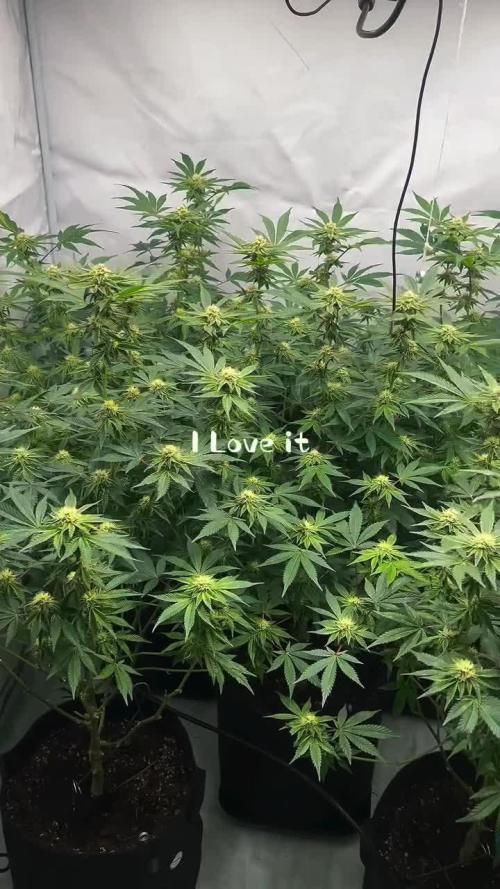
Overall, everything is still running according to plan, although powdery mildew is starting to become more noticeable again. Control measures remain consistent and ongoing. Compared to the previous Super Buff Cherry run, the situation is much better under control, mainly because countermeasures are being applied earlier and more actively this time. The goal is to get the mildew issue fully resolved in the coming weeks.
Aside from that, the Blueberry Skunks are performing exceptionally well. The automatic irrigation system clearly contributes to stable, low-stress growth, and the Biotabs nutrient system continues to impress. The difference compared to earlier runs is very noticeable, especially considering how little manual input is required.
All in all, this is a solid run, and despite the mildew challenge, it already creates a lot of anticipation for the harvest.
Likes
39
Share


@420DeepGrow
Follow
Gracias al equipo de Terpyz, XpertNutrients, Marshydro y Pro-Mix, sin ellos esto no seria posible.
*💐🍁Kosher Kush X MDC TEST:
Test de una nueva cepa proveniente de dos grandes genéticas, Kosher Kush x Mandarine Cookies, una de ellas está en sustrato Pro-Mix Hp Mycorrhizae.
💡FC6500: Eficiencia líder en el mercado: la lámpara de cultivo LED FC-E6500, que ostenta un estatus líder en el mercado, es una solución rentable con un PPE de 2,8 µmol/J y un rendimiento máximo de 2,5 g/vatio. Ofrece un PPF alto de 2026 umol/S y es adecuada para una cobertura de vegetación de 1,50 m x 1,50 m y una cobertura de flores de 1,20 m x 1,20 m.
Iluminación versátil y uniforme.
https://marshydro.eu/products/mars-hydro-fc-e-6500-730w-commercial-led-grow-light/?gad_source=1&gclid=Cj0KCQjw1qO0BhDwARIsANfnkv9IIrYSbmJqz8PqpJOIyWwJfp5bc3SGJgUV68USLQ4tjmXDYwoBuAsaAue3EALw_wcB
🚥 MarsHydro ADLITE UV/IR/RED:
Para lograr un crecimiento óptimo de las plantas y maximizar los rendimientos es un arte simple que depende en gran medida de las condiciones ambientales adecuadas. Reconociendo las limitaciones de la iluminación natural y las soluciones de iluminación tradicionales para satisfacer estas necesidades únicas, lanzamos ADLITE. Estas luces especiales UV, IR y roja están diseñadas para llenar áreas del espectro, proporcionando las altas longitudes de onda que las plantas necesitan para un crecimiento y desarrollo óptimos.
Consigue aqui tu Adlite:
https://marshydro.eu/collections/adlite-supplemental-lights/
🏠 : Marshydro 1.50 x 1.50 x 1.80, carpa 100% estanca con ventanas laterales para llegar a todos los lugares durante el grow
https://marshydro.eu/products/diy-150x150x200cm-grow-tent-kit
🌬️💨 Marshydro 6inch + filtro carbon para evitar olores indeseables.
https://marshydro.eu/products/ifresh-smart-6inch-filter-kits/
🍣🍦🌴 Xpert Nutrients es una empresa especializada en la producción y comercialización de fertilizantes líquidos y tierras, que garantizan excelentes cosechas y un crecimiento activo para sus plantas durante todas las fases de cultivo.
Consigue aqui tus Nutrientes:
https://xpertnutrients.com/es/shop/
📆 Semana 4:
Muy buena semana, toda la carpa se ha llenado de lindos erizos que comienzan a alargarse desmesuradamente.
La cantidad de resina aumenta dia tras dia, estan comiendo como locas.
Con los Adlite de Marshydro y el FC-6500 se pueden apreciar futuros buenos cogollos, las plantas se desarrollan salvajemente 💪🏻🔥.
El olor de la carpa es bastante intenso ☠️.
Potencia del foco: 100%.

Likes
64
Share


@nonick123
Follow
Día 78 (06/01) CBD Auto 20:1 #1 - El amarilleo continua... esperando que haga efecto el SILICIUM FLASH 💥
OG Kush Auto - Empieza la ventana de cosecha: Reviso los tricomas y solo hay algunos nublados (el resto trasparentes), pero creo que acabará en una semana más como máximo!
Día 79 (07/01) CBD Auto 20:1 #1 - Parece que el amarilleo se frena un poco. ¿Será suficiente y formará unas buenas porras?
OG Kush Auto - Riego 750 ml. Está consumiendo mucha agua en este tramo final! 😍
Día 80 (08/01) CBD Auto 20:1 #1 - Está recuperando el verdor! El SILICIUM FLASH está haciendo efecto!
OG Kush Auto - La planta no para de beber y las ramas se doblan por el peso de los cogollos! 😍💥
Día 81 (09/01) CBD Auto 20:1 #1 - Los cogollos empiezan a coger mayor densidad. Según mis cálculos, le faltan 17 - 24 días
OG Kush Auto - La senescencia sigue avanzando pero los tricomas aun no están listos (50% nublados). Espero cosechar en el día 84 aproximadamente
Día 82 (10/01) Busy day
Día 83 (11/01) CBD Auto 20:1 #1 - El SILICIUM FLASH ha hecho efecto y empieza a retomarse el verdor en las hojas! Que maravilla!
OG Kush Auto - Los tricomas están mayoritariamente nublados y algo ámbar. Mañana la cosecha! 😁
Día 84 (12/01) CBD Auto 20:1 #1 - Los cogollos empiezan a apilarse y a engordar 😁
OG Kush Auto - Día de cosecha! 😍💥💨😁
FastBuds 15% DISCOUNT code "NONICK" 2fast4buds.com @fast_buds_official_ @fastbuds.official
💦 BioTabs 15% DISCOUNT code "GDBT420" biotabs.nl/en/shop/ @biotabs_official
🌱Substrate PRO-MIX HP BACILLUS + MYCORRHIZAE @promixmitch @promixgrowers_unfiltered
💡2 x Mars Hydro FC1500 EVO Led Grow Light (2024 NEW FC 1500-EVO Samsung LM301H 150W LED) - https://marshydro.eu/products/fc1500-evo-led-grow-lights/ - https://www.amazon.de/dp/B0CSSGN5D8?ref=myi_title_dp
Processing
Likes
8
Share


Likes
42
Share


@DogDoctorOfficial
Follow
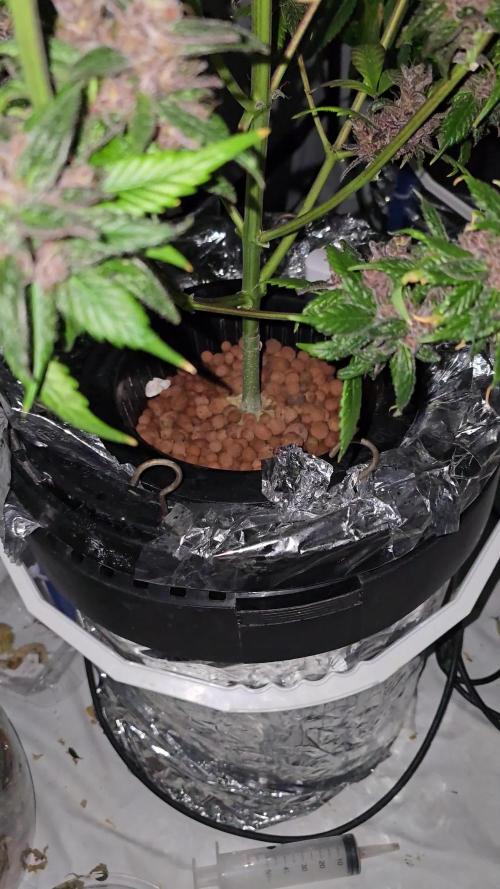
Week 4 day 22 F and I decided it was time for a stronger defoliation, like this i will assure a good airflow tru all canopy and like this i save my self time after defoliating and i took also all of the lower baby buds, this way they can focos all they're energy in making good bud 😆🤩
Week 4 day 22 F And they are all growing as they should, all of the plants recovered good from the early stresses (remember i almost kill them all by letting them dry for 5 days wile trimming and taking care pf my previous run 🤦 ) and are promising hi quality medicine 🤞💚😅
Week 4 day 26F And they recovered from the mass defoliation like nothing happened 😆 they are looking strong as never and on a promising road, lets see were will they take me 😅💚
I will raise this values along this week but for now i’m still like this :
PPFD - 750 Umol/m2
DLI - 32.2 mol/m2d
VPD - 1.30 kPa
Girls:
SAD f1 @seewtseeds
Badazz Cookies OJ @seedsman
Alaskan Purple @seedsman
Peyote Gorilla @seedsman
Super Glue @anesiaseeds
White Mango @personalfriendstrain
Light Lumatek Zeus 465W compact pro at 110%
All i grow is medecine for myself, nothing to sell, dont even ask !!!!
Stay safe and do it with love for the love ❤️ 🙏
💚Growers Love to you all 💚




Likes
14
Share


@CanadianFillmore
Follow
Week 8 begins. Mango Merengue has struggled, buds are small and frost is minimal. I continue to be impressed by this light even though this plant has struggled.
Likes
Comments
Share


@Alien420
Follow
Ha sido una buena planta ya que los cogollos muy grandes se me pudren en ocasiones y este tipo de flores estiradas y separadas unas de otras ayuda a una optima aireación. El rosin sale muy bien con olor a gelato.


Likes
4
Share


@xmackobox
Follow
Vale pues arrancamos el seguimiento de estas semillas de Ukhta Genetics estoy muy hypeado y ya impaciente xd
Vamos a tener como gama de fertilizantes a Atami, todo el mundo conoce y sabe lo que esta marca ofrece a las plantas :D
Semillas empezadas a germinar el día 18/06/2024 y van a ser 12 macetas de 1 litro y haremos trasplante entre la 2ª y 3ª semana de crecimiento a la maceta definitiva de 7 litros.
Usare como sustrato el Janeco Light Mix de Atami por supuesto.
**22/06/2024 Subo nuevas fotos y vemos a las plantas con 4 días desde que se empezaron a germinar.
**28/06/2024 Fotos añadidas de como va la germinación 10 dias despues de empezar y además vemos la nueva cepa, Watermelon ZUM ZUM de Ukhta Genetics.

Likes
7
Share


@PB888
Follow
All plants very healthy and growing well. I have included some pictures of HST and tucking. I keep it under the screen as much as possible . If I can not easily tuck it under I carefully use Kyle Kushman's technique for partially braking the inside cambium layer with out the damage to the outside. Carefully then twist slightly and the branch will lay down. By this ninth week, all the plants except the GTH x P reached the height of the wire, and at that time I started tucking the new growth back under and kept it there for the most part of the Veg stage. I also fertilized with for the second time with Soils Solution Top Veg


Likes
2
Share


@eldruida_lamota
Follow
Que pasa familia, vamos con la cuarta semana de vida de estas Gorilla Cookies Fast Flowering, de FastBuds.
Agradezco a Agrobeta todos los kits obtenidos de ellos 🙏.
Vamos al lío, el ph se controla en 6.2 , la temperatura la tenemos entre 22/24 grados y la humedad ronda el 50%. El Tetra 9 fue añadido de manera foliar, cambiamos el fotoperiodo a 12-12 desde que actualizó esta semana.
Estás próximas semanas veremos cómo avanzan.
Agrobeta:
https://www.agrobeta.com/agrobetatiendaonline/36-abonos-canamo
Hasta aquí todo, Buenos humos 💨💨💨
Likes
27
Share


@Bristolguyty
Follow
06/01(85) - I've decided to flower for a little longer, i have cut back all the large fan leaves for this final stretch. some of the side buds are getting heavy and almost as big as the main colas.
07/01(86) - I am just dyeing to harvest her but will hold off a little longer, included a video to get a scale. I've been massively impressed by this strain so far. leaves are still a dark green
08/01(87) - This morning at 8am she has been banished to darkness, will check on in 24 hours but expecting to go 48 hours. gave last plain feed yesterday and pot is still heavy so no more water. hoping to harvest on day 89/90 (sorry for mass picture dump)
09/01(88) - Completed 24hr of darkness and checked buds for mold. water has now been used up and pot is light. Noticed the smell is easier to distinguish. going to leave for another day as I am waiting for some sieves/gloves/trimmers before I harvest.
10/01(89) - Checked this morning at 8am and the COCO was bone dry. I have now cut her down at 4pm and weight was 401g but that with stems and leaves straight from cutting (might weigh tomorrow once trimmed). I have began the trimming but have to do it in parts due to time restraints. Quick One (81 days) is now back inside the tent but is still too big. will see if its worth keeping in the next week
How do others check wet weight??
I will be completing a harvest page in a few days once I have fully trimmed and dried to get final yield before curing.

Likes
62
Share


@Santica_Garden
Follow
3 out of the 4 Cheese plants have been put up to dry, I have uploaded a video for you guys with all the information, any questions just ask 👍🏾🌱💚
Likes
18
Share

@DogDoctorOfficial
Follow
Seedsman Seeds Germination Report - Run 01: The White OG Journey
Kickoff to Germination: The Start of Something Great!
Welcome to the beginning of this adventure with The White OG feminized seeds from Seedsman Seeds. Excitement is in the air as we’re searching for strong, resilient plants, and this journey has all the best tools and tips. Starting with five seeds, we’re aiming for a solid beginning and maximum potential. Let’s explore every step in detail to make this grow as robust as it can be!
Germination Process: Tools of the Trade
TheCannaKan: The Ultimate Germination Gadget
I’m thrilled to share my love for TheCannaKan, a little germination wonder! This tool is essential for any grower who wants to start their seeds with precision and care. I noticed rapid results in just 24 hours, with the seeds showing signs of life. At about 32 hours, I transferred them to the Root Riots, which brings us to the next exciting stage.
Why I Love TheCannaKan:
• Quick Results: Seeds sprouted rapidly, minimizing wait time.
• Consistency: Keeps moisture levels optimal for uniform germination.
• User-Friendly: Simple yet effective for both new and experienced growers.
Root Riots and Their Role in Root Development
After sprouting, I placed the seedlings into Root Riot cubes under a dome. Root Riots are fantastic for stabilizing young plants, providing an airy and nutrient-friendly environment that promotes robust root growth from the start.
Benefits of Root Riots:
• Root Aeration: Soft yet structured, these cubes support root expansion.
• Moisture Retention: Holds just the right amount of water for growing seedlings.
• Enhanced Root Health: The cubes are ideal for preventing damping-off and ensuring healthy, white roots.
Nutrients to Kickstart Growth: Aptus Holland Regulator and Startbooster
To give the seedlings a perfect start, I added Aptus Holland’s Regulator and Startbooster (1ml/L each). This mix promotes early root and stem strength, giving seedlings the ability to absorb light and nutrients more efficiently.
• Aptus Regulator: Enhances plant resilience, aids in nutrient absorption, and promotes early vitality.
• Aptus Startbooster: Adds a balanced mix of growth hormones and nutrients that are ideal for the early stages, encouraging healthy roots and faster seedling growth.
Light and Environment: Future of Grow FOG LED with TrolMaster Tent X Controller
I’m using a Future of Grow (FOG) LED at 600W, but keeping it dimmed down to around 200 PPFD. This setting is controlled by the TrolMaster Tent X Controller to give the plants the perfect start without overwhelming them with intense light. Controlled lighting helps seedlings to develop without stress, encouraging healthy growth and internode spacing.
Shoutouts:
• Future of Grow LED: High-quality, efficient LED light that adapts well to seedling and veg stages.
• TrolMaster Tent X Controller: Reliable and intuitive control over light, humidity, and more. Perfect for a hands-off, efficient environment setup.
Observations: One Seedling Takes the Lead
At the end of this germination stage, it looks like one seedling has emerged as the strongest, while the others may need a few more days. Patience and observation are key; some seeds naturally take a bit more time to sprout. I’ll keep monitoring these with hope, allowing each seedling its own rhythm.
Grower’s Notes and Tips
• Consistency Matters: Germination is all about steady conditions—consistent moisture, gentle nutrients, and stable lighting make all the difference.
• Document Everything: Keeping a log of each step (like this one!) helps track growth patterns and provides valuable insights for future grows.
• Stay Positive and Patient: Not every seed will sprout at the same rate. Trust the process and remember each plant is unique.
Community Shoutouts
Thank you to everyone who makes this process smoother and inspiring—TrolMaster, Aptus Holland, Future of Grow, and Seedsman Seeds for amazing genetics and tools, as well as the growers’ community who share insights, tips, and encouragement along the way.
Next Steps
Now that we’re through germination, we’ll move into the early growth phase. I’ll keep documenting the lighting adjustments, nutrient changes, and growth patterns of each plant, especially that eager seedling leading the way!
Growers Love, and here’s to a strong start for the future of this grow! 🌱
DISCOUNT CODE - SeedsmanSeeds - DOGDOCTOR 10% off
As always thank you all for stopping by, for the love and for it all , this journey of mine wold just not be the same without you guys, the love and support is very much appreciated and i fell honored and so joyful with you all in my life 🙏
With true love comes happiness 💚🙏 Always believe in your self and always do things expecting nothing and with an open heart , be a giver and the universe will give back to you in ways you could not even imagine so 💚
Friendly reminder all you see here is pure research and for educational purposes only
💚Growers Love To you All and remember to keep that smile big and alive 💚
Likes
15
Share


@chupacabra80
Follow
привет ребята,вот срезал мой куст, вроде не плохо вышло?! посмотрим сколько будет весить когда высохнут )))) амнезия мой любимый сорт,как только высохнут отпишусь какой будет результат )))
30,06,2021
вот и результат почти 90 грамм,на весах 40 грамм но это моя доля урожая ,я выращиваю в месте с другом так что моя половина 40 грамм сухих шишек и мы еще и покурили пока шишки подсохли, так что приблизительно у меня получилось 85-90 грамм сухих шишек,шишки выросли толстыми но они не плотные,потому и такой результат, посмотрите мой апельсин у него хорошие плотные шишки , он начал цвести в 60 дней , растение без проблем,кто не любит ждать этот сорт не для него )))
09,07,2021 мой урожай пересох, +35,3 с было очень жарко и я не мог контролировать температуру (( я ожидал результат лучше но не вышло, надеюсь дальше все нормализуется
Likes
17
Share


@AmokNewb
Follow
Day 78: Was gone a almost week but everything survived. About time for me to harvest the small plant Clara. And the. I will be able to get River away from the light a bit more and do some super cropping. I still have some water in my reservoir but probably won’t change it until it empty. I have not checked PH but I will do that later today.
Day 78 Update: I chopped down Clara and hung her in the drying tent. She had some amber trichomes and I really needed the room. Total weight with stems cut as short as I could I got 780g or 27.514 ounces wet. Now if it is true you get a 3rd of the dry weight and I remove 7 ounces from the Total for stems alone. That is still 20/3 = 6.66oz. This is my guesstimate. I will do a harvest week after I cut River down.
Day 79: Well a little lonely without Clara but I think River is liking hit just fine. Moved her to the center of the tent and removed the trellis netting. I pushed her stems as far as I could but she still needs some super cropping and tie down to get her a bit further from the light source. Cleaned and refilled the reservoir last night with new Advanced nutrients and it PH’d itself to 6.1. Not sure how long river has but I believe this is at least her 4th if not 5th week flower.
Day 80: I have not had to do a lot the last day or so so this is just a general daily update. River is getting way more light to her lower flower sites now and I am hoping they bulk up now. They look pretty scraggly right now but I had the entire plant bunched up to make room before. Reservoir PH’d at 6.23 this morning so I dropped it down to 6 for now and added H2O2. I wish I m we how much longer River had to flower but my guess is 3 weeks minimum.
Day 81: nothing new to report today on autopilot until harvest.
Day 82: Still not much to report as I am still hands off in the grow tent. I don’t even need to really check my reservoir much other than to see if it is almost empty. 🤷♂️🏻🤪 I did however, get to try out Clara for the first time. I clipped a bus from one of the lower branches that felt the driest. It smokes really smoothly even without the cure.
Day 83: So fat today I trimmed and started the cure for clara’s flowers today. I am curing in a 1/4lb grove bag. She yielded 92g for a little over 3 ounces. And 1.5 ounces of fluff and sugar leaves.
Day 84: Still adding new pistils daily and the lower buds are gaining weight and are about the size of golf balls to popcorn, but they are starting to take off. Main buds are short but very dense to the touch. Filled the reservoir with fresh nutrients last night and we should be in auto pilot for the next week is so.
Day 85: Today is the last Day of week 11 and I believe the end of week 4 flower for River? Could be 5 not sure. Still not a lot to report as I am still just letting everything ride on autopilot. I hope it goes better than Tesla’s self driving cars. Finally got a pic of one of Rivers lower buds that are starting to take off. I am thinking if they are still going by the time the tops are done I am going to try a partial harvest. However that means I can’t do a proper flush. What’s more important a proper flush that has a lot of debate around it as to its usefulness or a good yield of properly ripened flower?
Day 86: Still on autopilot every is looking Milhouse.
Day 87: autopilot just added some H2O2 to the reservoir. Took a lower golf ball size flower to dry and test.

Likes
35
Share

@gr3g4l
Follow
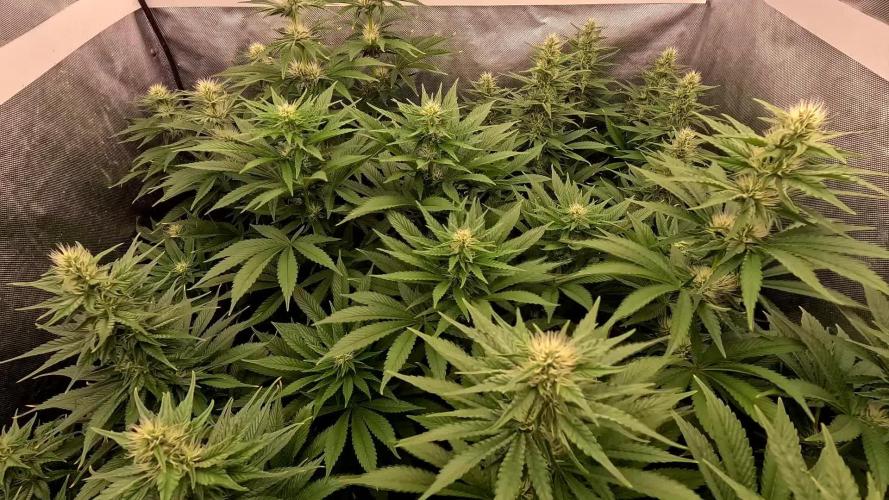
This week things seem to be getting interesting; changes are noticeable.
So far, the bud fattening has been progressing slowly, steadily, and I understand that it will become more noticeable as the days go by.
The pistils are still in good condition and growing new ones, as has the number of trichomes.
The smell has also intensified, although I still can't quite describe it.
By the end of the week, some oxidation is starting to appear on a few pistils, but it's not much.
It's been a week of changes, with dry leaves and old leaves starting to appear on the lower parts of the plant.
Esta semana parece que el tema empieza a ponerse interesante, se notan cambios.
Hasta ahora el engorde de los cogollos fue progresando lentamente, sin prisa pero si pausa y entiendo que a medida que pasen los dias se irá notando más.
Los pistilos siguen en buen estado y creciendo de nuevos al igual que aumentó la cantidad de tricomas .
El olor también fue en aumentó aunque sigo sin poder describirlo.
A finales de semana ya se empieza a ver algo de oxidación en algunos pistilos , poca cosa.
Una semana de cambios en los que se empiezan a ver hojas secas, viejas hojas de las partes bajas.
