The Grow Awards 2026 🏆 









Likes
Comments
Share
@RICK_and_GROWTY
Follow
Hello friends and welcome to my first report and my very first grow! 🍁
Please follow me so you don’t miss any of my other grows.
Thanks buddy! 🙏🏼
And also don’t miss my introducing to see more information about me and my entire collected knowledge! (https://growdiaries.com/diaries/209900-the-best-grow-journal-by-rick-and-growty)
________________________________________
My weeks always start on a Sunday. So today I define 19.05.2024 as the first day of the 3rd week.
Because I got the plants as cuttings and they already had a certain size, I can’t determine an exact age at the beginning, unlike when growing them from seeds.
________________________________________
19.05.2024
Today is the first day of the 3rd week so I decided to plant the girls in their final 18l pots and gave them 2l water with 0.25g/l of BioEnhancer and also a pinch of Great White Premium Mycorrhizae - [to get] “Killer Roots for Killer Plants” 🦈
I will give them 2 days to recover before adding the BioGrow growth fertilizer with a concentration of 3g/l pot volume.

Likes
17
Share
@Mr_Pgrow
Follow
Another week down and we are getting close.
Fade is well on.
Slowed down on water uptake
Keeping a close eye on the trichomes.
So all going well, she be for the chop next week, fingers crossed🤞

Likes
22
Share
@GermGrowFox
Follow
Ein weiterer grow geht zu Ende und ich bin sehr zufrieden :) Updates gibt es sobald es trocken ist und fermentiert werden kann.
Processing
Likes
9
Share
@howrad
Follow
Cutdown GDP this week. 5gl bucket yielded 2.25 dry ounces. 3gl bucket yielded 3 dry ounces.


Processing
Likes
34
Share
@DudeGrowsWeed
Follow
Sour Diesel Haze it taking over! She's huge!!! Bud sites have started to fatten up a little. I think she's done stretching (at least I hope so, I have my light cranked up as high as I can go in my tent). Looking forward to watching her fatten up during flower! 😃
Likes
35
Share
@StonedandSteady
Follow
GrowersChoiceSeeds #DivineSeeds #AlienBloodGenetix #SmokinPlantaz #TNBNaturals #Foop 8th W/ Flower 2nd/3rd W/ Veg
Yo!!! Thanks Again for All the Love and Support my fellow Growmies and Growmets!!! These Magnificent and Magical Ladies are Growing into thier 9th Week in our 48×24×60 ViparSpectra Official Club 🌿 ®️ Grow Tent and under our #Osree QB1000w and #GrowStarStore Kokokala QB1000w and our Tomatoes×3, Sunflowers×5 and The 4 Brand New and Fresh Starts are Wonderful with a Huge Hint of Fantastical Fire is my #SalamiLegF3 by Broski #thehumancannabiniod #DankFlowGenetics #EastCoastSeedBank #FireAlienRomulan by Broski #AlienBloodGenetix my #PabloEscobar and #Opium by Team #DivineSeeds #DivineSeedsBreedingCompany Growing under our #Growatt 600w with #FoopOrangicBioSciences and #TNBNaturals The Enhancer Co2 Despersal canister and ph'd them w/ Declorinated watering w/ TNB ph Up and Down! Totally Top Quality Topz all Around! Thanks Again #GallowGlas420 #HarleyGrower #GrowersChoiceSeeds #thehumancannabiniod #AlienBloodGenetix #SmokinPlantaz #TNBNATURALS #FoopOrangicBioSciences #as420.ca #divineseeds #divineseedssquad #divineseedsbreedingcompany #BioFlux #ThrivingDesign Family's and Teams!!! Your Genetics are Merry Magnificent, Mega Marvelous and Mighty Medical! Love um!!! I really Can't stress enough how Thankful and Grateful I am of All of you and what you've Shared with Us! Means the World!!! It's definitely a Pleasure being able to Grow with these Phenomenal Grow Lights! Please Enjoy! BudBrothers4-Life! Cheers Famz!!! Much Props and Much Topz!💯🔥 #Osree #GrowStarStore #Growatt
#Affiliate #WeGrowBetter #TNBNaturals #TNBTeam #FoopOrangics #GrowYourOwn #Bliss
https://instagram.com/growerschoiceofficial?igshid=1pgx0qx86038u
https://www.instagram.com/alienblood_genetix_official/
https://instagram.com/as420.ca?igshid=1t8j7pcf3aw2p
https://instagram.com/tnbnaturals?igshid=1brotdb4385sz
https://instagram.com/divine.seeds?igshid=osxe2v7en33v
https://instagram.com/fooporganicbiosciences?igshid=5bg74agl6e6s
https://instagram.com/growstarstore?igshid=yz71hq8q4eeg
https://instagram.com/youngufireblaze?igshid=atzh9ue6hy1d
https://instagram.com/thehumancannabinoid?igshid=17k159pumklkq
https://instagram.com/gallowglas420?igshid=qzzp2y5llzuj
https://instagram.com/harleygrower?igshid=ndy7zh8y0k5g
https://instagram.com/beardedbudbrothers?igshid=dpow775jzr5j
https://instagram.com/thrivingdesign?igshid=vqhwa4k8ts9g
https://instagram.com/everflux?igshid=1533qou84mpvi
SmokinPlantaz YouTube channel Link: https://youtube.com/channel/UCDKJthWoS6-miAhq_lLb_-w
LEDTonic YouTube channel Link: https://youtube.com/c/LEDTonic
LEDTonic Lights Hints Link: https://youtu.be/XT6e_ZwLVK0

Likes
9
Share
@Rock_n_Roll_Randy
Follow
THERE IS 4 PHOTOPERIODS LEFT IN THE 5X5 TENT. I WILL BE MOVING ALL OF THE PHOTOPERIODS INTO THE 8X8 TENT ONCE ALL THE AUTOFLOWERS ARE DONE, THEN I WILL SWITH THE LIGHTS TO 12/12
FOR EVERYTHING MARS HYDRO VISIT:
www.mars-hydro.com
www.marshydroled.ca
PROMO CODE: rocknroll
VISIT THE ALIEXPRESS STORE:
@marshydro_aliexpress
Instagram: @marshydropenny
Thanks for taking the time to read and check out my diary🤜🤛
TS3000 FEATURES:
WIDEBAND SUNLIGHT FULL SPECTRUM LED GROW, Infinite close to natural sun light, suit for all plants whole stages indoor growing, rapid plant response from seed to flower, achieve maximum quality and quantity, much better than traditional HPS grow systems.
HIGH REFLECTIVE & NOISE FREE-Fanless LIGHT BOARDS design will make your growing life easy and quiet, quickly heat dispersing material aluminum reducing light lost to aisles and walls, increase the light intensity up to 20%, allowing your plants receive more energy and without burning your plants for maximum headroom.
HIGH EFFICIENCY ENERGY SAVING PLANT LIGHT, high-power NEW LED grow, Compares to traditional 3000 watt HPS lamp and other brand led grow light while only 450 watts true output with 1016 LEDs, more scientifically and energy-efficient! Perfect for 5' x 5' veg stage, 4' x 4' bloom stage, higher intensity in a MARS HYDRO grow tent, reflective area, or by crossing over using multiple TS3000.
BOOM YIELD LARGE GROW LIGHT, NEWEST SMD LED technology provide highest PAR/LUMEN output(1095.6umol/), makes you get 30% higher yield compare OLD led lights, can get max yield at 2.5g/watt, less pay but get more yield, bring a amazing grow trip to any home grower as it beams huge amounts of light energy to plants below.
COMMERCIAL LED GROW LIGHT, Updated easy dimming & daisy chain function, main light controlled, especially come with two waterproof and dimmable Mean Well Drivers, auto sensing power supply works on both 120VAC and 240VAC and 277VAC, suit for Large Rooms and Commercial Setups.
Low Energy-Consuming LED Grow Light: Consuming 300w and also mounted with 1016 chips, TS3000 has the ability to replace a 450w HPS light while reducing 40% power intake.
High Efficiency LED Grow Light: With overall light output PPF 343umol/S as well as amazing PPE 2.3 umol/j, it's 50% even more photon efficient and can assure a 30% more return than the old HPS/MH lights.
Patent Highly-Reflective Hood Shape: The reflector design on TS3000 is patented, which can effectively gather the light dispersed in all directions to enhance its light intensity as well as assist plants in absorbing more light.
Full Spectrum Plants Favorite Spectra: By the unique mix of spectra that makes most light in the 400-700nm waveband, incredibly conducive to plant photosynthesis. Adequate IR(730-740nm) is additionally consisted of in the range to generate larger buds.
Dimming And Daisy Chain Feature Available: Upon an independent dimming button on the external driver, backing 0-100% settings adaptation and up to 30 LEDs daisy-chained in a group, it supplies different light levels for various plant stages meanwhile saving energy.
Safety Certifications And Service Warranty: CE, ETL, RoHS, UKCA security certifications accepted, 50,000 hours durability, 5-year service warranty, and local after-sales repair
5x5 GROW TENT:
LOCK ALL LIGHT INSIDE MARS HYDRO Indoor Grow Tent interior is made of diamond mylar which is highly reflective. (Other brand's mylar and reflective rate is as low as 50%, won't provide efficient light. )MARS HYDRO 1680D canvas, being double stitched, it is tear proof and has perfect light locking. Mars Hydro's grow tent keeps 100% lighting beams inside and helps your plant absorb more lights. EXTRA-THICK --No light leaks or rips at all
DURABILITY GROW TENT Stable metal corner adapters and poles are the trustful supporters of the tent, standing sturdy, neither rusting nor paint-falling, quick easy tool-free installation. Mars Hydro's heavy-duty metal zippers, with double layer black lining, are the best on the market which create a light-proof seal
EASY OBSERVATION FOR YOUR PLANTS. Special observation windows are made by double layers of cloth. Observe the growing conditions of your plants without opening the tent and avoid disturbing plants. The observation window also serves to dissipate heat and ventilate air
AUTOMATIC 6 INCH EXHAUST FAN KIT W/ CONTROLLER:
Mars Hydro 6'' Inline Fan uses a mixed-flow design to maintain peak performance in a high static pressure environment.
GROW TENT FAN: MARS HYDRO inline fans are designed to ventilate hydroponic grow rooms, transfer heating/cooling, cool AV closets, and exhaust odors.
EFFECTIVE VENTILATION: Variable speed controller for easy fan speed adjustment. Optimal ventilation for your planting.
LOW NOISE LEVEL: Durable plastic fan housing and blades for extremely low noise(32dB-A); create a truly quiet growth environment.
EASY INSTALLATION: Removable duct ends with locking tabs for quick removal and easy maintenance and a cord length of 4.9 feet for hassle-free setup. This grows tent fan with a controller for easy fan speed adjustment.
BASIC PARAMETERS: Ventilation exhaust fan size: 6” | Dimensions: 315mm*225mm*210mm. | Weight: 2.7. | Airflow: 402CFM | Noise: 32dB-A | Bearings: Dual Ball.
Likes
6
Share
@NoProbation4Weed
Follow
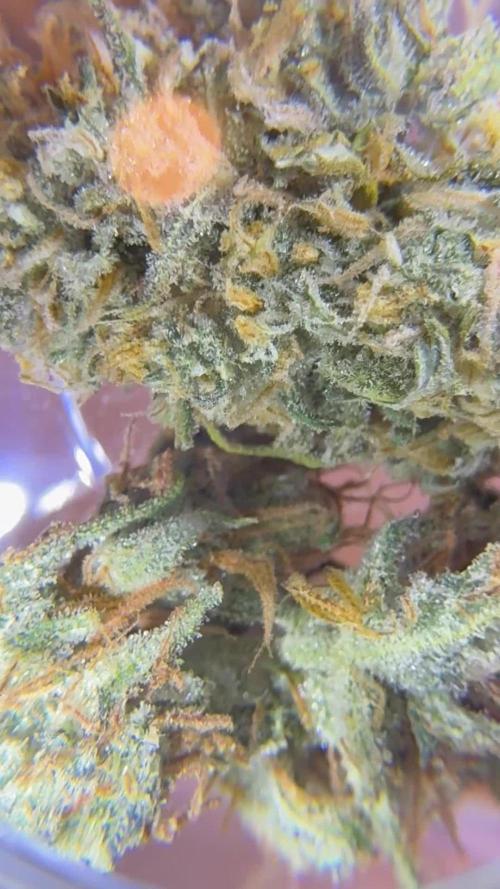
Great Terps on this plant.
looks like a good washer as it is covered in trichomes up to the big leaves.
Definetly has a Grape/Lime Soda Taste to it.

Likes
11
Share
@StartGrowingShxt
Follow
Week 10!
September 9
-Blue cheese is looking great depending on what the pistils and trichomes look like at the end of the week I will be cutting ~Day 70
-Bubble Kush is progressing nicely and is visually bulking up smells like pine sol and lemons very nostalgic reminds me of college.
-Will be watering Bubble Kush in two days as I watered over the weekend and I have a tendency to overwater this particular lady also watered the Blue Cheese lady but she will probably not be getting anymore water for the week…maybe idk great way to start the week tho peace

Likes
14
Share
@SweetKush
Follow
Day 74. The harvest is near. I will start with a 14 day flush this coming week. The Trikoms sparkle like diamonds on the buds and it smells absolutely magical. The harvest won't be that great but the quality of this weed will be absolutely outstanding, I'm sure 😁✌️.
Day 77. The gorilla is approaching the end, The Tricoma are cloudy and are becoming more and more milky to show a shade of amber and orange-colored spouts spread across the buds. I aim to start flushing her at the end of this week, and then give her a 10-14 day flush.
Likes
105
Share
@Tropicannibis_Todd
Follow
💩Holy Crap I Was Able To Get Them In The Ground💩
So super happy to be trying this one out , can't wait😝 .....The hope here is to do better then last summers outdoor grow ..👍
It's been a full week and she's doing great , very nice Growth, shes enjoying the sunny days 👌
No problems 😊 so far so good 👍
👉NutriNPK NUTRIENTS USED FOR FEEDING 👈rain water to be used entire growth👈
👉www.nutrinpk.com right now get 10% off using SPRING2022 as the coupon code👈

Likes
16
Share
@Willy_Balls
Follow
27.11
Bud swell a little bit delayed because of the lower temperatures overall this time of year.
It is around 21-22 degrees inside the tent in comparison to 26 in the summer.
I hope they will be done by Christmas. I ve had a little problem at my spot and have to clear everything out for a few days. Bummer.
Plants are on vegetative irrigation schedule. 6, 150 ml shots followed by 3 replenishment shots. About 10-15 % runoff.


Likes
4
Share
@blaze_fpv
Follow
I came back to the fridge after 6 days and stretch was running massively.
They grew like 20cm in 6 days
I changed my climate to:
27° C 60% rlf in order to adapt to early flower
Day and Night same
45% light about 580ppfd
Still running the water in a circle.
Adjusted the scrog a bit in order to fill the space more
They eat like 1100ppm CO2 an hour 😎
__________________
Update: last 2 videos show day 8 of flower ,🤙🏼
Decided to give them a heavy defoliation due to it being a closed loop system and them emitting tons of humidity.
So far so nice 🏼

Likes
5
Share
@69XINEYESEEKAYX69
Follow
A lot of growth this week waiting for the next new growth before I FIM the ladies, they are taking off!


Likes
61
Share
@Natrona
Follow
8/31 I harvested Auto Opium today. This is 7-10 days early. I intended to grow her inside the tent, but when she stretched quickly i had to take her outside. This did not give her time to harden off before going fully into flower. Then my area went into extreme heat over 110 for extended weeks. High heat and humidity. She couldn't handle this. Then Hurricane Debby whipped her back and bent her main stem in several places. Repaired with chopsticks and electrical tape. Her limbs were thin and spindly, I tried to support with garden hoops but many stems just bent regardless. One bent and cut off its water & nutrients and died. All in all Auto Opium did not transition well from tent to outside.
If I had understood her structure before her grow was underway, I would have done some topping or mainlining. I'm watching several growers demonstrate training techniques that I will try. You know you you are. Many thanks to you.
We had some cooler nights in the last week or so which allowed leaf color changes from lime green💚 to purples💜 and some reds. I see some lavender in her buds. Trichomes are mostly milky white, so a bit early. Harvest shows, many long, hollow stems which couldn't support her own weight. To be eco-friendly, you could use these for beverage straws 😅.
Thank you for sharing this journey with me. I appreciate your comments and advice 🙏🌱💚 . I'm learning as I'm growing, and growing as im meeting many friends here. Thank you @DivineSeeds for generously sharing your exciting seeds with me and the opportunity to participate in your contests.
My friends as always sending you good vibes, plant love and healing
💫Natrona 💫
Likes
57
Share
@KnightRider
Follow
Hey Cannafam,
Well in life sometimes you have to perservere to get something you really want, this was my 3rd attempt at growing this gal, with the previous 2 runs being wrecked by the UK weather. This has been a stressful grow as i thought this one was going to end in tears also, but I Made It and im super happy 😁💜💜💜
She came down a few days ago after more bad weather, a thunderstorm yesterday and its currrently raining as i write this, although i wanted her to run a little longer, it wasnt worth the risk and she should still give a nice heavy stone and is mature enough.
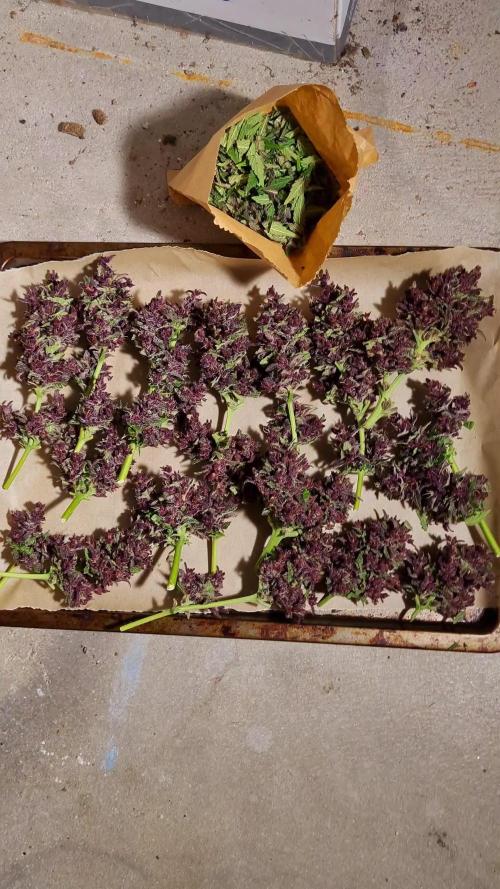
She was quite a task to harvest and ive gone for a wet trim, a high leaf to calyx ratio on the buds and it took just under two hours! Wet weight is 111 grams although i expect this to reduce to around a third in the drying process and i've been left with a nice large bag of trim which will be sampled in the bong shortly 😊
Those beautiful dark purples are now on the drying rack indoors under the carbon filter on maximum to contain the smell of roudy gorgeous berries and its been a few days before i could open the tent,without it taking over the house! Ive got a dehmidifier running which has been set to keep RH at 58% and shes got about another week until dry.
Once complete she'll be jarred with the 62% boveda humidy packs and burped daily on a four week cure.
Il update once dry and cured a bit with more pics and a smoke report.
Until then thank you to anyone following and your support,likes and comments 💜💜💜
Stay safe and remember the Sun always shines in Space 😊✌️
********** Update **********
Hey Friends,
So my purple lady is now dry and has been curing for a little while, i pulled 32grams off her so just over an Oz which im really pleased with considering the issues with pests early on in the grow and the bad weather in late flower. I've also got quite a decent size jar of trim which will be slowly bonged and mixed with various hash 😁
.
This strain is one of my favorites and im so glad i tried again with her outside. I feel like this strain is a bit of hidden gem in the FastBuds catalogue but i would recommend growing her too anyone as she is definitely a purple jewel 😊
Thank you to all that liked or commented, I hope you've enjoyed this diary and love to all 💜💜💜
Likes
5
Share
@ibbzy
Follow
- just water feedings from now and might start defoliating in week 8 to prepare for harvest


Likes
10
Share
@Rangaku
Follow
Settling in after transplanting loooking lush green and healthy maybe another two weeks of veg
