


Likes
Comments
Share


@Heady_McDank
Follow
The ladies will tell u all, as u can see on the pictures these girls will become majestic



Likes
2
Share

@LastinG
Follow
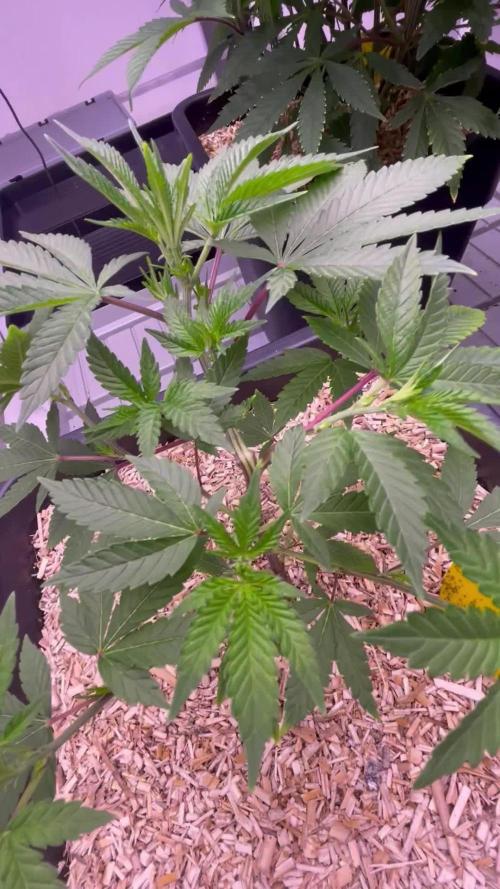
After the first update of the “Testrun of the new Setup!” grow, things have started to settle in nicely. The plants have recovered from the early establishment phase and are now putting their energy into building structure, stacking branches, and filling out the canopy. The differences between the genetics are already becoming very obvious.
The two larger plants are clearly taking control of the room:
* Rainbow Melon (top left in the overview)
* Nectar (bottom center)
Both are showing vigorous vegetative growth with strong lateral branching and healthy leaf development. The canopies are becoming increasingly dense, and the internodal spacing remains tight, which is exactly what I was hoping to see in this setup.
Meanwhile, Something Good (top right) is developing at a slower pace. While noticeably smaller than the others, it remains healthy and continues to push new growth. Sometimes the slower starters end up becoming the most interesting plants later in flower, so I’m curious to see how this one evolves.
Rainbow Melon
Rainbow Melon is currently showing the most balanced structure in the tent. The plant has developed a wide, bushy profile with multiple strong tops emerging across the canopy.
The leaves are broad and healthy with a rich green color, indicating that the living soil is doing its job. Branch development is strong, and the plant is responding well to the environment without showing signs of stress.
At this stage, the goal is simply to keep opening the canopy and allowing light to reach the interior growth sites. If she keeps this pace, she should become a serious producer once flowering begins.
Nectar
Nectar is proving to be the powerhouse of the run so far.
The plant has exploded with vegetative growth and is building a very dense canopy. The top-down view really shows how aggressively she is filling her space. New growth is vibrant and vigorous, and the branching structure suggests she will respond extremely well to further training.
Defoliation and canopy management will likely become more important over the next couple of weeks to maintain airflow and prevent overcrowding.
For now, though, she’s looking exactly like the kind of plant that can dominate a room if given enough space.
Something Good
The smallest plant of the group is still finding its footing.
Compared to Rainbow Melon and Nectar, Something Good is developing at a much slower pace, but the growth remains healthy and symmetrical. The leaf color looks good, the stem structure is strengthening, and fresh shoots continue to emerge.
Rather than chasing size, the focus here is simply maintaining healthy growth and allowing the root system to establish itself. There is still plenty of time for this plant to surprise me later in the cycle.


Likes
9
Share


@qoodwater
Follow
Ready to harvest! Last days of flushing!! Look great!!! Smell intense and fruity! I hope there’s good medicine!! Thanks sweet seeds


Likes
4
Share


@Canaryweed_tf
Follow
Aquí tenemos la tercera semana de está nueva variedad del banco de Kannabiaseeds, la Gorilla King Auto, que me está sorprendiendo mucho. está creciendo muy bien, tiene un muy buen color en fin... esperemos que sigan así

Likes
5
Share

@Oldwied
Follow
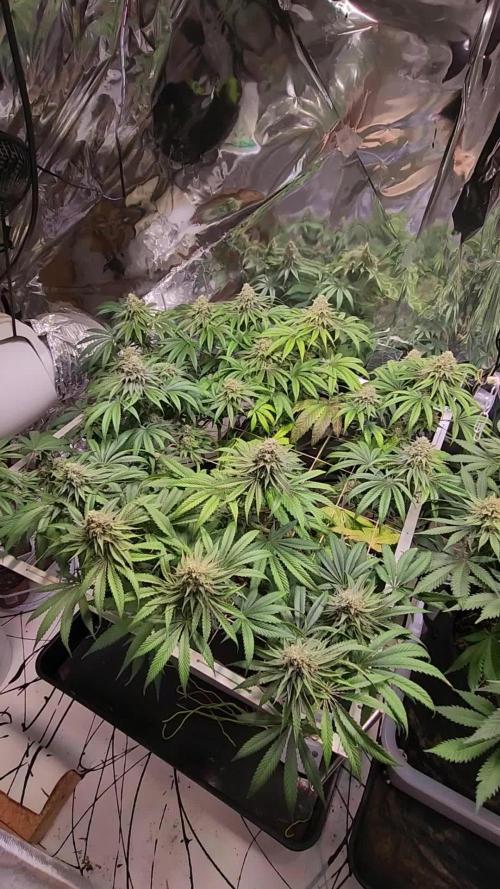
The smell is so strong that I have to change my ACF.
Cherry high shows her autumn colours. I'm just curious to see if the thin branches will hold the flowers, because they look very solid and keep growing.
The problems in the veggi are gone, great genetic.
Light Power: 100%
Day 95
Flower day 48
Photoshooting
Likes
12
Share


@chronicon
Follow
i removed a bit of half dead leaves from plant 1 at the start of the week and i have been flushing both plants since thursday, they both will go into extended darkness this coming wednesday


Likes
9
Share


@DD_420
Follow
Final weeks are here! The up coming week will be her last feeding with nutes. Florakleen will come next followed by ph’d water and possibly a day or two of blackout befor harvesting.





Likes
2
Share


@Vet4weed
Follow
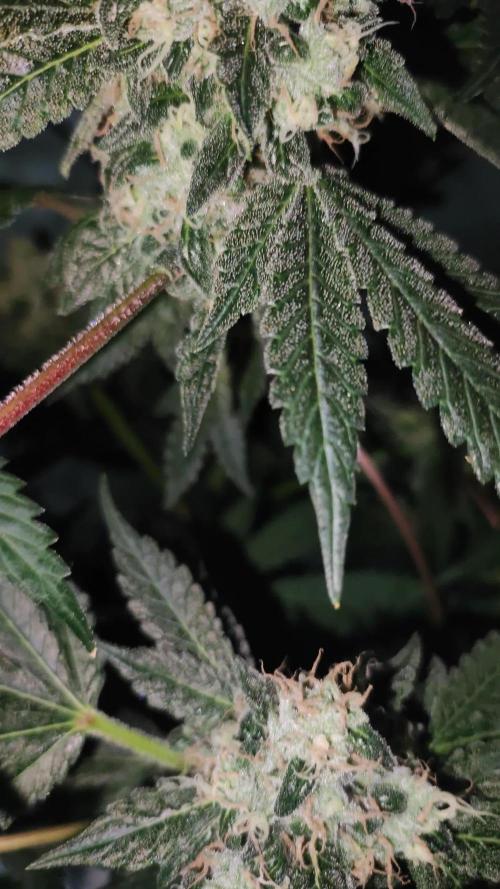
The harvest window was calculated to start next week. However, I've been monitoring the trichomes under a microscope and the majority of top buds had a nice mix of amber triches, I had to begin harvesting a week early.
This week I began harvesting the topmost buds only in order to allow the lower ones to continue to develop and mature. We certainly had a few hearty colas, with a number of well defined buds throughout all three plants. Next week we will harvest the remaining as initially estimated.

Likes
25
Share


@Dabking
Follow
8.73 oz from 2 plants. Very dense and potent nugs. Love it so far. Now for curing

Likes
7
Share


@hooolian
Follow
24/02: Colas again have become real heavy in places and have had to strap them together to prevent the stalks from falling and snapping. Over all blooming well have been on maximum dose of nutrients now for a few weeks. lots of orange hairs. water now for a week and then to harvest. the topping in this grow really paid off.

Likes
8
Share


@RockoCalenberg
Follow
Rocko’s Runtz Rumble – Tag 77 🌱👊💚
Blütewoche 4 – Blütetag 28
Blütenentwicklung 🌸
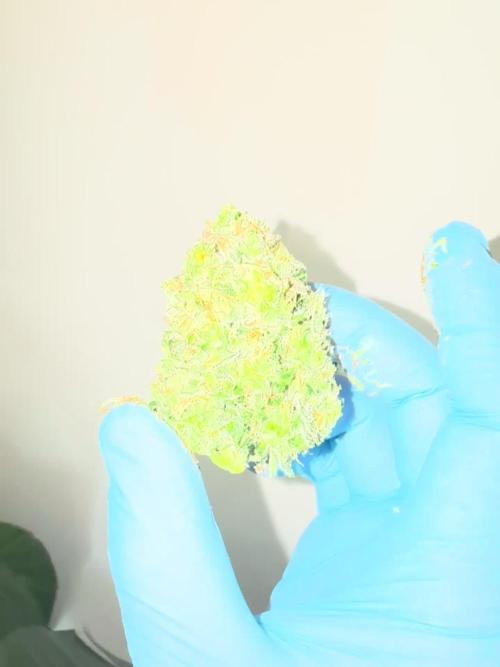
Die vierte Blütewoche ist geschafft und ich bin mit der Entwicklung weiterhin sehr zufrieden. Die Blüten legen ordentlich zu und die Unterschiede zwischen den drei Sorten werden immer deutlicher.
Pink Banana Runtz entwickelt sich langsam zum kleinen Schwergewicht. Ihre Blüten sind deutlich dicker und kompakter als bei den beiden anderen. Durch die kurzen Internodien sitzen die Blütenansätze schön dicht beieinander.
Melonade Runtz zeigt dagegen eine eher offene, längliche und teilweise etwas strubbelige Blütenstruktur. Sie bleibt außerdem meine empfindlichste Kandidatin. Einige Blattspitzen sind beschädigt und vereinzelt zeigen sich kleinere Nekrosen.
Blue Zushi überrascht mich mit einer Blütenstruktur, die Melonade ziemlich ähnlich sieht. Auch hier entwickeln sich längliche, teilweise turmartige Blütenansätze, allerdings etwas kompakter. Dazu kommt eine bereits sehr schöne Harzbildung.
Bei allen drei Pflanzen konnte ich diese Woche auffällig aufgerichtete Blätter beobachten. Besonders Blue Zushi zeigte richtig schöne Praying Leaves. Das sehe ich natürlich gerne! 😎
Die endgültigen Pflanzenhöhen liegen bei 115 cm für Melonade, 105 cm für Pinky und 131 cm für Blue Zushi. Letztere steht allerdings im kleineren Topf und damit etwas tiefer als die beiden anderen.
Klima und Technik 🌡️
Die Entfeuchtung läuft inzwischen über den HYDRONE 5. Mein Ziel ist ein VPD zwischen 1,4 und 1,6 kPa. Ganz so konstant bekomme ich das noch nicht hin, aber auch mit Werten über 1,1 kPa bin ich schon zufrieden.
Die Klimaregelung funktioniert grundsätzlich gut, auch wenn es noch einige Schwankungen gibt.
Die zusätzlichen Under-Canopy-Bars laufen ebenfalls weiter. Ob die mittlere Blütenzone davon wirklich profitiert, wird sich in den kommenden Wochen zeigen.
Bewässerung und Nährstoffe 💧
Inzwischen sind auch die Dripper installiert und ich bin wirklich zufrieden damit! Die Pflanzen bekommen jetzt regelmäßig ihre Grundversorgung mit Leitungswasser und etwas Mono-Magnesium. Das funktioniert erstaunlich gut und ist eine echte Erleichterung.
Vor allem läuft die Bewässerung jetzt viel gleichmäßiger. Beim Gießen von Hand trifft man ja doch nicht jeden Tag exakt die gleiche Menge oder den gleichen Zeitpunkt. Die Pflanzen scheinen die regelmäßige Versorgung jedenfalls zu mögen. 😎
Die zusätzliche Düngung läuft über Handgießungen. Dafür lasse ich bei Bedarf einfach ein Bewässerungsintervall aus und gebe stattdessen eine kleine Portion Nährlösung.
Die eigentliche Nährstoffversorgung übernehmen nach wie vor die BioTabs und die vorgedüngte Erde. Viel zusätzlich düngen muss ich also gar nicht.
Green Bull gibt’s einfach als kleine Unterstützung, damit die Pflanzen mit Stress durch Licht und Klima besser klarkommen und die vorhandenen Nährstoffe möglichst gut verwerten. Natürlich alles schön sparsam dosiert.
Pinky und Blue Zushi haben außerdem schon etwas PK-Blütedünger zur Unterstützung der Blütenentwicklung bekommen. Bei Melonade bin ich wegen ihrer empfindlicheren Reaktion weiterhin etwas vorsichtiger.
Schädlingsbekämpfung 🐛
Die Thripse beschäftigen mich leider weiterhin. Deshalb habe ich erneut Amblyseius swirskii und Florfliegenlarven ausgebracht.
Die kleinen Helfer sollen den Schädlingsdruck weiter reduzieren. Ich hoffe, dass ich die Sache damit biologisch unter Kontrolle halten kann.
Fazit 🌱
Insgesamt bin ich mit der vierten Blütewoche sehr zufrieden. Jede Sorte zeigt inzwischen deutlich ihren eigenen Charakter.
Pinky setzt auf dicke, kompakte Blüten, Melonade bleibt etwas wilder und empfindlicher, während Blue Zushi mit kräftigem Wachstum und schöner Harzbildung überzeugt.
Besonders spannend finde ich die überraschend ähnliche Blütenstruktur von Melonade und Blue Zushi. Mal sehen, wie unterschiedlich die beiden am Ende tatsächlich werden.
Alle drei können jetzt entspannt in die nächste Blütewoche cruisen. Ich lehn mich zurück und genieße die Show. 😎👊
Am Ende zählt nur, welche Runtz am härtesten rumblet! 🌱💚


Likes
Comments
Share


@Mallorcannaweed
Follow
Cultivo fullcrop
Thc nutrients
Indica 13 Seeds
Instagram// mallorcannaweed0ficial
Cultivo a doce horas desde su germinación
250w led uno de 150w led marca bioled y otros dos de 50w cada uno marca waterfull
Macetas de 7L
Substrato light mix de biobizz
Todos fertilizantes de la gama thc nutrients
Tanda de Sinatra Orange cream y Orange ice cream
Armario de 80x80
Likes
6
Share


@AnkleNibblersOrganics
Follow
Things are picking up slowly had some terrible weather over the last few weeks could really do with some sun again lol. We live and learn hopefully we pull thro this one.
