


Likes
Comments
Share


@jojopfoh
Follow
The stretch is finally over and now she is starting to stack. The bud formation is beautiful and there are so many bud sites. The colas are ging to be huge

Likes
2
Share

@AsNoriu
Follow
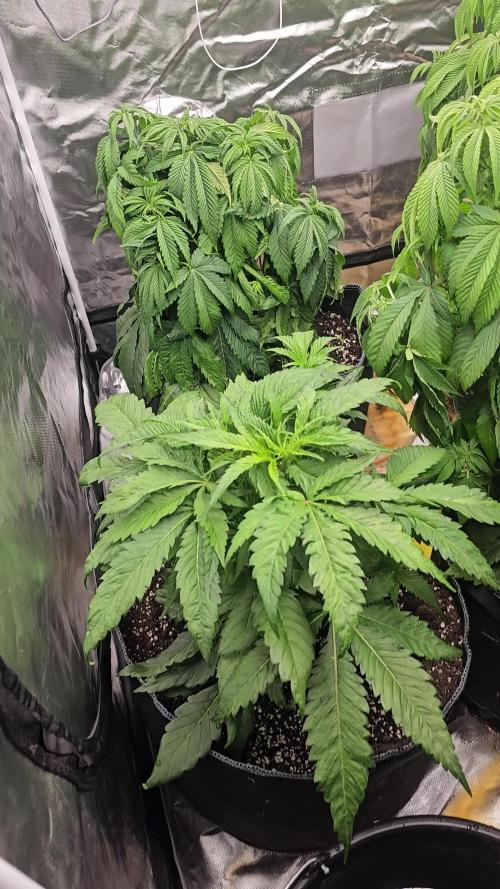
Day 54 since seed touched soil. Huge disaster !!!!! ussually i water them every 4-5 days, but i got stucked in my summer time house on the lake and was with the girls after 7 days !!! some took heavy damage, some leaves were dry as paper and brittle, at this point i was heavily thinking to chop all and stop that nonsense, worst grow in my life with so many troubles ... Girl is second tallest in the video.
Happy Growing !!!





Likes
3
Share


@Kynareth
Follow
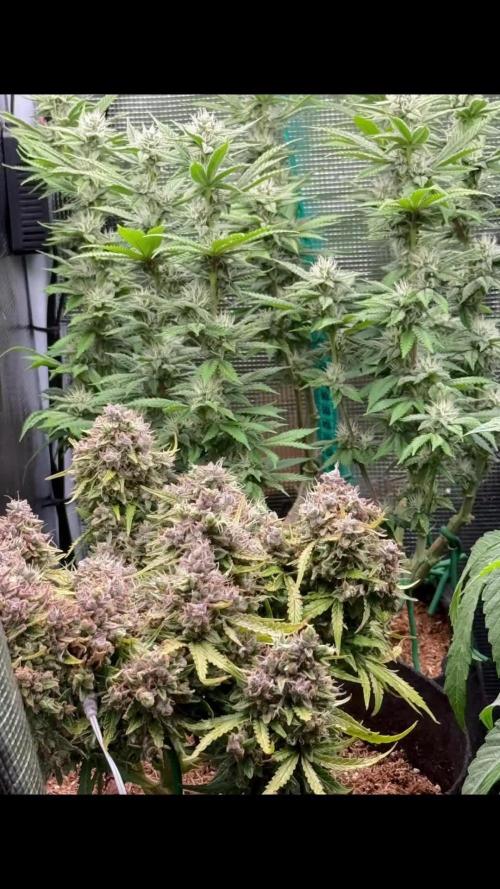
le he prestado bastante poca atencion a este cultivo y aun asi ni tan mal en calidad o cantidad

Likes
6
Share


@AcidBurn_40
Follow
30.09.24 BT#10
Guten Abend liebe Growmie's ✌️😃
Es läuft soweit alles wie es soll , die Ice Cream Cake hat ein kleines Stickstoff Defizit heute erst mal den Drain gemessen lag noch imm Bereich des erträglichen 6,0 Ph. Wollte ausschließen das zu ein niedrigen Ph wert oder ein zu hoher die Stickstoff Aufnahme gehemmt wurde aber alles im Lot.
Deswegen bekommt Sie beim nächsten Gießen ihre Gewünschte Position Futter ohne Bedenken eine Nährstoffsperre zu festigen.
So macht Sie sich gut klar sie ist gerade nicht in der Lage Ihr Blattwerk weiter auszubauen geschweige Blüten vernünftig zu bilden.
Wird sich erholen dann ist sie wieder voll dabei bis dahin weiter so.
Vielen Dank an alle die vorbeigeschaut haben bleibt cool and stay High.
Mögen all eure Ladys Gesund und prächtig wachsen und euch mit schmackhaften Stuff versorgen 🔥🍀
■■■■■■■■■■■■■■■■■■■■■■■■■
30.09.24 BT#10
Good evening dear Growmie's ✌️😃
So far everything is going as it should, the Ice Cream Cake has a small nitrogen deficit today first measured the drain was still in the range of the tolerable 6.0 Ph. Wanted to rule out that too low a Ph value or too high the nitrogen uptake was inhibited but everything was fine.
That's why the next time she is watered she will get her desired position of food without having to worry about consolidating a nutrient barrier.
In this way, it makes itself clear that it is not in a position to develop its foliage any further, let alone form flowers properly.
It will recover and then it will be back in full swing until then.
Many thanks to everyone who has stopped by, stay cool and stay high.
May all your ladies grow healthy and splendid and provide you with tasty stuff 🔥🍀

Likes
6
Share


@GoldenWeedGrower
Follow
Legend
Timestamp: 📅
EC - pH: ⚗️
Temp - Hum: 🌡️
Water: 🌊
Food: 🍗
pH Correction: 💧
Actions: 💼
Thoughts: 🧠
Events: 🚀
Media: 🎬
D: DAY, G: GERMINATION, V: VEGETATIVE, B: BLOOMING, R: RIPENING, D: DRYING, C: CURING
______________
📅 D29/V25 - 14/05/24
⚗️ EC: 1.0 pH: 5.2
🌡️ T: 20°C H: 50%
🌊
🍗
💧
💼
🧠
🚀 Back Home
🎬
______________
📅 D30/V26 - 15/05/24
⚗️ EC: 1.0 pH: 5.0
🌡️ T: 20°C H: 50%
🌊
🍗
💧
💼
🧠
🚀
🎬 1 TL video
______________
📅 D31/V27 - 16/05/24
⚗️ EC: 1.2 pH: 5.0
🌡️ T: 20°C H: 60%
🌊
🍗
💧
💼
🧠
🚀
🎬 1 TL video very short + 1 TL video of LST
______________
📅 D32/V28 - 17/05/24
⚗️ EC: 1.2 pH: 5.0
🌡️ T: 20°C H: 60%
🌊
🍗
💧
💼
🧠
🚀
🎬 1 TL video
______________
📅 D33/V29 - 18/05/24
⚗️ EC: 1.2 pH: 5.0
🌡️ T: 20°C H: 60%
🌊
🍗
💧
💼
🧠
🚀
🎬 1 TL video
______________
📅 D34/V30 - 19/05/24
⚗️ EC: 1.0 pH: 5.0
🌡️ T: 20°C H: 60%
🌊
🍗
💧
💼 Big work to prepare her new home
🧠
🚀
🎬
______________
📅 D35/V31 - 20/05/24
⚗️ EC: 1.0 pH: 6.0
🌡️ T: 20°C H: 70%
🌊 16 L
🍗 CalMag - Grow A-B, B-52, Bud Candy, Rhino Skin, Hydroguard
💧
💼
🧠
🚀 The new home for Rey in now ready
🎬

Likes
29
Share


@BioGrowKing
Follow
Meine Woche ist finde ich gut verlaufen sie findet sich langsam zurecht in dem größeren Topf. Ich hatte zwischendurch das Gefühl dass sie nicht richtig an wurzeln dürfen dass sie nicht richtig trinkt aber scheinbar funktioniert es doch alles ich habe auch hier wieder die neue Lampe mit bei und ich denke deswegen hängen die Blätter ein wenig weil es jetzt eine Umstellung ist und diese Lampe sehr viel mehr power hat als die vorherige heute habe ich auch wieder Enhancer benutzt die untersten Blätter werden langsam schon gelb weiß jemand was ihr fehlt.


Likes
Comments
Share


@Lushgaia
Follow
Plain water as usual, did top some of them with bat guano only the ones I think need it the rest looks ok

Likes
16
Share


@ChewiesGrow420
Follow
Day 36 preflower stage, should see buds forming within the next several days or so. WE ARE AT WAR!!!! Applied a pouch of nematodes to every pot to kill the fungus gnat at its larval stage. Which has been gnawing on my roots! Increased the sticky traps to trap the flying
f*<|{£rs. Will reapply more nematodes in 10 days to kill the next generation. Then hopefully that’ll be all! Don’t overwater folks. Fungus gnats suck! Hopefully last hiccup of the grow. Cheers everyone. Good luck on your grows.
Day 41 and I’d say we’re officially in flower. Seein those hairs real good now. We’re still experiencing a rather annoying fungus gnat infestation which has really stunted these ladies. This is entirely my own doing by more than likely overwatering them, creating the problem. Sighs… lower stems grew considerably, which has me optimistic as to the potential yield. I won’t know till stretch is over to gauge my yield. Hopefully Fastbuds amazing genetics can help me fix my f up. 🤞
Day 45 and were on our second round of treatment with nematode packs. I have moved the grow lights up substantially as to hopefully help with the discoloration of my leaves. I believe it to be light stress from the lightening around the edges and some brown tips. Some of them are curled upwards so thst could also be nutrient burn. I have asked a question about it to hopefully get the help of someone more experienced than iam. Good luck growing my friends🍻
Day 48 I ripped open my nematodes packs and mixed in the first couple inches. The top few inches of soil are now aerated better. Hopefully things will improve. Seem to look better since I moved the light up. Stretch ladies… stretch watering at 6.0 to hopefully lower the ph of my girls. I could do the viniger method? Or sulfur. Comment and let me know how you lower the ph of your soil?

Likes
97
Share

@AsNoriu
Follow
Day 106. Trim jaiiiiiilllllllll !!!!
First done, think it could reach my record 240. Insane quality. 4 rows of solid buds hanging ....
Next one ....
Both finally finished and honestly, that's my plants to be proud of !!!
Day 114. All is done, no doubts its my best grow.
Happy Growing !!!

Likes
16
Share


@MrWolfe
Follow
Start of week 5, the smaller plants are taking forever to uptake the water I think that's really caused some stunting 🙁 anyways just gonna let them dry off and refill, see what happens. All of the big girls are looking nice and being fed daily.
Clones have started showing some beautiful roots and I can't wait to run a full batch of clones in here.
Yeah so it's 9/21 last night I checked all of the clones and 100% have fat white roots popping out the bottom of the Root riot cube so I guess it worked, I filled some one gal pots today and got them all transplanted.
9/24 all clones are looking good, LSD is thriving in the flower room, smells amazing and sticky as can be, seems like stretching is over.


Likes
14
Share

@MrWeeedWorld
Follow
Farbe, Frost und Charakter.
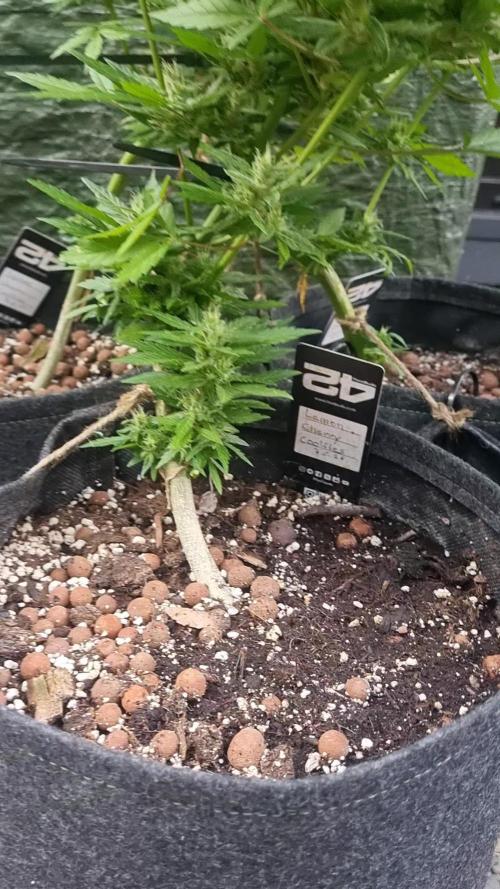
Mit jeder neuen Woche entwickelt diese Lemon Cherry Cookies ihren ganz eigenen Charakter. Während der Fokus in den vergangenen Wochen auf Wachstum und Struktur lag, dreht sich inzwischen alles um Qualität. Die Blüten werden dichter, schwerer und beginnen genau die Eigenschaften zu zeigen, auf die ich die ganze Zeit hingearbeitet habe.
Besonders beeindruckend ist die Farbentwicklung. Zwischen den dicken Trichomschichten erscheinen immer mehr violette Akzente, die den Buds einen ganz besonderen Look verleihen. Zusammen mit den bereits nachdunkelnden Blütenstempeln entsteht ein wunderschönes Farbspiel, das sich wahrscheinlich in den kommenden Tagen noch weiter intensivieren wird.
Auch die Harzproduktion hat noch einmal einen ordentlichen Sprung gemacht. Die Sugar Leaves glitzern inzwischen nahezu vollständig im Harz und die Buds fühlen sich optisch schon richtig klebrig an. Genau diese Entwicklung macht die letzten Wochen einer Autoflower immer so spannend.
Das Training zahlt sich weiterhin aus. Trotz der kompakten Bauweise bekommen die einzelnen Blütenstände ausreichend Licht und Luft, wodurch sich nahezu jede Cola gleichmäßig entwickeln kann. Statt langer, luftiger Triebe entstehen dichte und harzige Blüten über die gesamte Pflanze verteilt.
Die größeren Fächerblätter beginnen langsam heller zu werden – ein typisches Zeichen dafür, dass die Lemon Cherry Cookies ihre gespeicherten Nährstoffe jetzt vollständig in die Blütenbildung investiert. Insgesamt wirkt sie dabei weiterhin gesund, stabil und voller Energie.
Langsam nähert sich die Reise ihrem Höhepunkt. Die Colas legen weiter an Gewicht zu, die Harzschicht wird Woche für Woche dicker und die violetten Farbtöne verleihen der Pflanze inzwischen einen unverwechselbaren Charakter. Jetzt beginnt genau die Phase, auf die man als Grower monatelang hinarbeitet.
--------------------------------------------------------------------------------------------------------------------------------------------------------------------
Color, frost and personality.
Every week this Lemon Cherry Cookies Auto reveals a little more of her unique personality. While the previous weeks were all about structure and flower development, the focus has now shifted completely toward quality. The buds are becoming denser, heavier and are finally showing the characteristics I've been waiting for.
The color development is especially impressive. Deep purple shades are becoming more visible throughout the upper flowers, creating a beautiful contrast against the bright green foliage. Combined with the darkening pistils, the buds are starting to develop a truly eye-catching appearance that will likely become even more intense over the coming days.
Resin production has taken another noticeable step forward. The sugar leaves are now heavily coated in sparkling trichomes, giving the flowers that sticky, frosty appearance every grower loves to see. Each day the plant looks a little more covered in crystal.
The training continues to pay off beautifully. Despite the naturally compact structure, light and airflow reach nearly every flowering site, allowing the side colas to mature evenly and produce dense, resin-rich flowers across the entire canopy.
The larger fan leaves are slowly beginning to fade as the plant redirects its remaining stored nutrients toward flower production. It's a classic sign that she is entering the final stage while still maintaining excellent overall health and vigor.
The finish line is getting closer now. Every passing day adds more density, more resin and even richer purple coloration. Watching this Lemon Cherry Cookies reach her full potential has become one of the highlights of this outdoor season, and I'm excited to see what these final weeks will bring.
Likes
40
Share


@GYOweed
Follow
Clockwise bottom right gluesniffer, strawberrysorbet,
Seems to have worked. One hindsight and gg4 self topped kind of.
Today i foliar hit half the double plants SS and hindsight with my krebs cycle booster (no pgrs, mostly special organic acids and best type of K...) at final of over 2000ppm...we'll see if we get no Change, burn, or stretch with growth...


Likes
120
Share


@Themythicalchristine
Follow
We had a nice jump in height this week; still drinking loads of water every day.
One of the plants has this wierd mutated limb that I have been watching progress, kinda interesting.
Just chugging along, second week of flower, everything looks to be on schedule so far.
🔮

Likes
2
Share


@HappyOne
Follow
The lavender cream is best plant in that room easily!
Barneys farm blue cheese is very good as well
Royal queen critical is nice
But Lavanda Cream is surely better!

Likes
17
Share


@RakonGrow
Follow
**** HAARVEST ZOE ****
Nice Strain ,
My little Zoe really made all the mistakes you could possibly make. No matter when I give light or want water or fertilizer. It grows and grows and grows, the main thing is that there is light. It was one of my free seeds from Zamnesia. So far all seeds have germinated. I store my seeds in a dark, airtight container at 6°C. Tastes kind of sweet after curing.
Greenhouse Feeding is a really easy fertilizer to use. I used the BioEnhancer again and again. My little Zoe thanked me. The BioGrow was used as topdressing and is doing its job. The BioBloom also does its job at the right time.
And that's really great and easy if you don't have an autoflower. Of course there is a corresponding product. But I was happy to get anything here at all. Legalization has wiped out the market. But for next time I have an appropriate soluble fertilizer for fast-flowering plants. It doesn't work for 8 weeks :))
I use a Sanlight Evo 3-60 1.5 with Bluetooth dimmer. There's nothing to complain about there. Set daily cycle via app. Helpful if the weather or environment is so bad that you have to regulate the light intensity.
33g after 5 days dry . 24.5 °C to 22°C with 50%-60% .
curing in a vaccum box at 18°C .
It looks like I'm drying too long. // It tastes a bit crunchy.
Day 79:
trim , slow vacuum box to cure 22°C and 61%rH .
Day 76:
videostuff: been drying for 4 days (res 640x480) ( optical zoom x200 - x250 )
Day 72:
DLI usage total this Plant : 2236.6 DLI in 70 Days .
wet trimmed, cut off, hung upside down. see you after 14 days
Day 71:
preparing for harvest . 24h long night session .
DLI : 0
Day 70:
- Sanlight DaylightCycle
- + ON 200PPFD (00:00) - 800PPFD (03:30) - 800PPFD (16:30) - 200PPFD (18:00) OFF
video and photo tryouts with the digimicro mobil x300 optical zoom , mostly freehand
Day 69:
- Sanlight DaylightCycle
- + ON 200PPFD (00:00) - 1000PPFD (03:30) - 1000PPFD (14:30) - 200PPFD (18:00) OFF
incredibly hot and rain. lost some terpene :)) Well, summer is coming,
Day 68:
- Sanlight DaylightCycle
- + ON 200PPFD (00:00) - 600PPFD (00:30) - 800PPFD (03:30) - 800PPFD (14:30) - 600PPFD (17:30) - 200PPFD (18:00) OFF
- Added 1L bottle of water
It's hot, hot, hot, Zoe would like more water.
changed daylight cycle so it match the weather problems. tent is open until my real night comes.
103 flowers (including popcorn) counted, due to an accident about 15 flowers are missing.
Day 67:
- Sanlight DaylightCycle
- + ON 200PPFD (00:00) - 600PPFD (00:30) - 900PPFD (03:30) - 900PPFD (14:30) - 600PPFD (17:30) - 200PPFD (18:00) OFF
- watering bottle water 1.75L
weather to hot , changed daylight start time and daylight cycle so it match the weather problems.
I'm lucky, buds are still growing :)))
Day 66 (we are on the road with maximum sanlight )
- analyse some trichome .
- make some Zoom Pics and Video stuff .
- Sanlight DaylightCycle :
- + ON 200PPFD (00:00) - 1000PPFD (00:30) - 1000PPFD (13:30) - 800PPFD (17:30) - 200PPFD (18:00) OFF
- DLI will stress alot ...
Anyway, it's too hot in my room... I open the tent and now everything is fine with the temperatures and I increase the Sanlight to 100% for the first time. May Zoe love it or leave it :)) We'll see what happens
Day 65 :
Sanlight DaylightCycle : ON 200PPFD (00:00) - 800PPFD (00:30) - 850PPFD (13:30) - 800PPFD (17:30) - 200PPFD (18:00) OFF
It will soon be ready for harvest.

Processing
Likes
Comments
Share


@YEGGrow
Follow
Lots of good growth this week. Continuing to tie branches down as she grows. Doing 1 last tie down session tonight, and starting a gradual switch from 18/6 to 12/12 accompanied by a gradual lowering of the blue spectrum over the next next week.
Likes
81
Share


@MOSS_FIGURE
Follow
On week 3....I noticed that the 3rd week the soil dries out quickly, so this week controls water the plants only 2 times with nutrients but add water
volume increase to 1.5 L. , Switch the light to 18hours per day.
{Activities)
(Day 15) First day I don't water the plants.
(Day 16) And second day I still don't water the plants because the soil is wet.
(Day 17) Today use the nutrients, There're (Cal-mag 0.5ml. , Fish-mix 2ml. , Bio-heaven and Acti-vera each 3ml. per 2L. water. I think should add more fan for my grow tent so today I'm buying new one.
(Day 18) Mixed Fish-Mix & Acti-Vera each 1ml./L. for foliar fertilizers
(Day 19) Today switch the light to 75% and Lamp To Plant Distance 24-26inches .
(Day 20) The soil has dries up.
Use a Root-juice 4ml/2L. 🚿
(Day 21) The last day...
(Hope you like and enjoy my diary)
Thank you so much for checking out my grows. Feel free to leave a comment, push the like or give the follow.
