


Likes
Comments
Share


@Lushbloomz
Follow
After a comeback, the train is in the station! Even though I broke the main stem, she was an easy grow. I just basically let her do her with great results. Buds are thick and dense. Time for the drying and curing.

Likes
11
Share


@Grizzly
Follow
The smell when wet trimming the fans off is of sweet berrys, a little bit citrus and musky dank smell is the only way I can describe it.
The drying is coming to an end, at the end of day 13 I broke a bud off that weighed a gram and had a smoke test, the flavours are there and it smooth smoke surprisingly but I think a cure will really bring the terps out.


Likes
14
Share


@Dieselnutz
Follow
Week 9 of flower. I turned the light down to 80% started seeing some fox tailing on the main colas. Cut a cpl samples last week, one pheno is watermelon w straight gas, getting less fruit more gas on pheno number 2. Lowered ppm to 500, trichomes are mostly milky maybe 20% clear. Will take another look at week 10 but she’s gettin close. I can now smell her upstairs may have to exhaust outside if I run her again she’s LOUD!
Likes
2
Share


@L8bloomr1008
Follow
Flipping this week. Top dressed with Gaia green, castings, and build a flower. Lookin more healthy and greening up.
Yupp

Likes
68
Share


@greenAF
Follow
Start of week 7, nothing really new, they are bouncing back well after dealing with issues I set in motion early on, by over watering, over feeding, and too much light early on. Seem to be getting better, due to advice from my resident experts! You know who you are. 😁
I'll have a bigger better update in a few days when they get there first full meal.
Well wrap up off week all seems fine, #1 is really getting frosty now 😁🌱🌱🌱.
#2 just hitting her flowering groove, this next week she should fill out her dress.💃💃💃
Mid week had to up calmag looking ok, big one getting chunky...

Processing
Likes
33
Share


@Eyeduno
Follow
I’ve topped these plants quiet abit the super silver haze seems to accept the way I do things more than the g13


Likes
18
Share


@valiotoro
Follow
The buds shine like a shooting star mad sticky too⭐️
First thing that hits me with the smell straight up like canned pineapples in syrup🤤🍍
Likes
18
Share


@DogDoctorOfficial
Follow
💫 Week 13 | Flower Week 9 – Heavy, Colorful, and Close to the Finish Line 🌿
The BlueBerry queens are reaching their final act — and what a sight they are. Both phenos are standing (well, trying to stand) under the weight of dense, resinous colas that have turned the tent into a living kaleidoscope of colors. Reds, oranges, yellows, and light greens paint the canopy in true BlueBerry style — a visual symphony of maturity, power, and grace.
🌸 Phenotype Highlights
Pheno #1 – A soft, vibrant green tone, frosty and full of balanced structure.
Pheno #2 – The colorful rebel. Reds and purples showing up beautifully on the leaves and buds, glistening with trichomes. Unfortunately, she gave us a little reminder of nature’s unpredictability — a touch of bud rot on her main top.
We acted fast, cut it clean, and saved the rest. She’s drying beautifully now, and the rest of her canopy is thriving. 🌈
⚙️ Gear in Action
Lighting –
ThinkGrow Model One + ICL 3300 working together in perfect harmony. They’ve been driving these girls from seed to bloom, bathing them in full-spectrum beauty from top to bottom.
Airflow & Extraction – Two 6-inch fans, one from AeroFan and the other from Spider Farmer, keep the air moving. Each one runs with a carbon filter — clean, quiet, efficient.
Environmental Control – Everything under the eye of the TrolMaster ecosystem, including the camera that lets us see and record every sparkle in real time.
🌿 Environment & Growth
The summer heat continues to challenge the room, and with it, a bit of foxtailing has appeared — likely from heat stress or humidity. But this is part of the story. The girls are homegrown, full of heart, full of life, and we embrace their uniqueness.
🔮 What to Expect
The finish line is near. Trichomes are maturing, colors are deepening, and aromas are thickening. We’re watching them closely to decide when that perfect harvest window opens — probably within a week or two.
Next, we’ll focus on "flushing", watching the fade, and preparing the final harvest and drying phase.
💙 Gratitude
To everyone following this journey — the lovers, the haters, the curious, the growers, the dreamers, and of course our sponsors — thank you. Every comment, every view, every message keeps the energy flowing.
This run has been a reminder that perfection is found in patience and care — and sometimes, even in the challenges.
🎥 Everything is documented in 4K on YouTube — come check it out and see these BlueBerry legends shine in full color.
#BlueBerry #Week13 #FlowerWeek9 #GrowDiaries #AptusHolland #Plagron #FutureOfGrow #ThinkGrow #SpiderFarmer #AeroFan #TrolMaster #HomeGrow #GrowWithLove
📲 Don’t forget to Subscribe and follow me on Instagram and YouTube @DogDoctorOfficial for exclusive content, real-time updates, and behind-the-scenes magic. You won’t want to miss it.
• GrowDiaries Journal: https://growdiaries.com/grower/dogdoctorofficial
• Instagram: https://www.instagram.com/dogdoctorofficial/
• YouTube: https://www.youtube.com/@dogdoctorofficial
⸻
Explore the Gear that Powers My Grow
If you’re curious about the tech I’m using, check out these links:
• Genetics, gear, nutrients, and more – Zamnesia: https://www.zamnesia.com/
• Environmental control & automation – TrolMaster: https://www.trolmaster.eu/
• Advanced LED lighting – Future of Grow: https://www.futureofgrow.com/
• Root and growth nutrition – Aptus Holland: https://aptus-holland.com/
• Nutrient systems & boosters – Plagron: https://plagron.com/en/
• Soil & substrate excellence – PRO-MIX BX: https://www.pthorticulture.com/en-us/products/pro-mix-bx-mycorrhizae
• Curing and storage – Grove Bags: https://grovebags.com/
⸻
We’ve got much more coming as we move through the grow cycles. Trust me, you won’t want to miss the next steps, let’s push the boundaries of indoor horticulture together!
As always, this is shared for educational purposes, aiming to spread understanding and appreciation for this plant. Let’s celebrate it responsibly and continue to learn and grow together.
With true love comes happiness. Always believe in yourself, and always do things expecting nothing and with an open heart. Be a giver, and the universe will give back in ways you could never imagine.
💚 Growers love to all 💚

Likes
6
Share


@ChewiestEndZa
Follow
Defoliated some of the bigger fan leaves, I know it may be risky technique but since she has grown into the tent, space is tight and in order to maximise flower sites, I decided to remove some foliage to get better coverage.
Flowering is taking off and have decided to increase the dosage of the nutrients to see if she can handle the feeding, she has grown quickly in the last couple of days and want to see if I can push her to the maximum.
Healthy and happy plants, no more issues with spidermites (Thank goodness!), no more needing to treat a flowering plant (if I had to, I would drench the plant in a mixture of H202, liquid dishwashing detergent and water to ensure that buds are not covered with nasty chemicals).
Clones have been taken and in this pic, can be seen that it has rooted, clones were taken off during defoliation session during 2nd week of flower.

Likes
1
Share
@DogDoctorOfficial
Follow
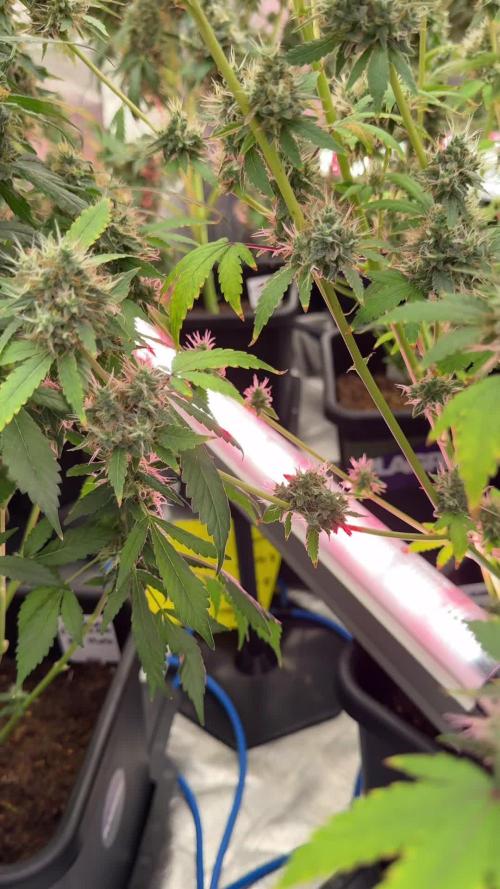
💜 Purple CousKush Auto by Zamnesia | Pheno B | Week 13
✨ The Beautiful Sister Steps Into the Macro Spotlight 🔬❄️💜
Welcome back to another chapter of the 8×8 Adventure! 🌱💚
And before we get into this beautiful girl...
I owe you all a small apology.
😂💜📸
Last week, when I was going through the stacked photographs, I realized that I had mixed up some of the photo stacks between Purple CousKush Pheno A and Pheno B.
This run, I originally labeled the stacks simply with the cultivar name rather than separating them properly by phenotype.
And well...
You can probably imagine what happened.
😂
Two sisters.
Same cultivar.
Same room.
Same photographer.
A ridiculous number of photographs.
And suddenly...
the stacks started having a little family reunion of their own.
😂📸💜
So, first of all:
Sorry for the confusion!
But there's actually a very easy solution.
👉 If you want to see the other stacked photographs, please jump over to the **Purple CousKush Pheno A report**.
All the additional stacks are already there.
I deliberately didn't upload the same photographs again here because I didn't want to completely overload GrowDiaries with duplicated images.
They're already available.
They're just mixed between the two phenotype reports from this run.
😂💜🔬
From this point forward, though, I've learned my lesson.
The next stacks are already being labeled individually:
**Pheno A.**
**Pheno B.**
No more mysterious CousKush family photo archives.
😂📸
And with that confession out of the way...
let's talk about this girl.
Because honestly?
She's looking AMAZING.
💜🌸❄️
────────────────────────
💜 THE SISTER STEPS INTO THE SPOTLIGHT
Purple CousKush Pheno B is having a beautiful week.
And much like her sister...
she is really showing us what this cultivar can do.
But if I'm completely honest?
I might even like this girl a little more.
😂💜
There is something about her flower formation that really catches my eye.
The way the buds are developing.
The density.
The structure.
The frost.
The overall appearance.
Everything is coming together beautifully.
And when you look at the photographs...
you can see exactly why I wanted to give her her own proper spotlight.
She's not simply sitting there flowering.
She's building some beautiful flowers.
🌸❄️💜
────────────────────────
🔬 THE MACRO WORLD CONTINUES
And after spending so much time looking at her sister's macro photographs...
I couldn't wait to get closer to this girl too.
Because once you enter that macro world...
there is no going back.
😂🔬
From normal distance, she's beautiful.
From close range...
she becomes something else.
The trichomes.
The resin.
The flower structure.
The individual little details.
All those tiny things that disappear when you're looking at the plant from across the room suddenly become the main event.
And that's what I love about these photographs.
You stop looking at the plant as a whole.
You start looking at the flower itself.
And then...
WOW.
💜❄️🔬
────────────────────────
❄️ FROST EVERYWHERE
This girl is seriously frosty.
There is no other way to say it.
😂❄️
The flowers are absolutely covered.
And the closer we get...
the more obvious it becomes.
The frost isn't just something you notice in the full-plant photographs.
It's everywhere.
Across the flowers.
Around the sugar leaves.
Packed into the little structures.
Catching the light.
And creating that beautiful crystalline appearance that makes you want to keep taking photographs.
📸❄️💜
This is exactly why I love macro photography.
You think you've already seen the flower.
Then you zoom in.
And suddenly...
you realize you haven't seen half of it.
────────────────────────
🌸 AMAZING BUD FORMATION
This is probably the thing I want to emphasize most this week.
The bud formation.
WOW.
💜🌸
She's building some seriously beautiful flowers.
The structures are becoming more defined.
The individual flowers are becoming more substantial.
And there's a beautiful density developing throughout the plant.
It's the kind of structure where you can look at one flower...
then another...
then another...
and every time you find another detail.
That's what makes photographing her so enjoyable.
There's always another angle.
Another flower.
Another structure.
Another little pocket of frost.
Another reason to say:
"Okay... one more photograph."
😂📸
And then somehow that becomes twenty more.
────────────────────────
😂 THE CAMERA HAS A PROBLEM
I think the camera might actually be the biggest problem in this room.
😂📸
Because every time I think:
"Okay, enough photographs."
I move the camera slightly.
And then:
"Oh..."
Another flower.
Another angle.
Another macro.
Another stack.
And suddenly I'm still there an hour later.
😂
But honestly?
I don't mind.
This is the fun part.
The plants are doing the growing.
I'm doing the observing.
And the camera is helping me preserve all these little details.
It's a pretty good arrangement.
────────────────────────
💜 PHENO A AND PHENO B — SAME FAMILY, DIFFERENT BEAUTY
This is another reason I love documenting the two sisters separately.
They're the same cultivar.
But they're not identical.
And that's exactly what we want to see.
Same room.
Same general environment.
Same lighting ecosystem.
Same overall nutritional approach.
Same grower.
Same 12/12 schedule.
And yet...
different expressions.
Different structures.
Different flower arrangements.
Different personalities.
And that's where phenotype exploration becomes really interesting.
We're not trying to decide which one is "correct."
We're watching what each individual plant chooses to express.
And Purple CousKush Pheno B is giving us a beautiful expression.
💜🌸❄️
────────────────────────
📸 ABOUT THOSE MIXED-UP STACKS...
One more time, because I don't want anyone wondering what happened.
😂
The previous stacking photographs were labeled simply as:
**Purple CousKush Auto**
rather than:
**Purple CousKush Auto — Pheno A**
or:
**Purple CousKush Auto — Pheno B**
And because both girls were being photographed and stacked around the same time...
some of those files ended up mixed between the two reports.
My mistake.
💜🙏
But rather than upload the same images twice and flood the platform with duplicates, I've kept them where they are.
So if you want to explore the additional macro stacks...
go check the **Pheno A report**.
You'll find them there.
And from now on...
I've learned.
😂
Every stack gets its phenotype label.
No more CousKush stack roulette.
😂📸💜
────────────────────────
🌿 SAME ROOM. SAME PHOTONS. DIFFERENT STORY.
And once again, the 8×8 Adventure is doing exactly what we wanted it to do.
Twelve plants.
One room.
One general environment.
And completely different expressions.
Purple CousKush Pheno B is receiving the same general lighting environment as her sister.
The same artificial sun.
The same room conditions.
The same overall approach.
And yet...
look at her.
She's creating her own version of the story.
That's what makes this project so fascinating.
The environment gives the plants the opportunity.
The genetics decide how they express that opportunity.
And this girl?
She's expressing herself beautifully.
💜☀️🌸
────────────────────────
💡 THE ARTIFICIAL SUN KEEPS SHINING
The upgraded Future of Grow Black Series lighting ecosystem remains part of the room.
The two additional Black Series 600W fixtures continue giving us more lighting capability and flexibility across the canopy.
We aren't simply throwing maximum power at the plants.
The fixtures were adjusted to approximately 59% from the plug after the initial intensity proved higher than what we wanted.
That gives us approximately:
☀️ ~1,500 PPFD across the upper canopy
with intensity naturally varying depending on plant height and position.
And Purple CousKush Pheno B is clearly making good use of the photons she's receiving.
Flowers.
Density.
Frost.
Structure.
Beautiful development.
That's the fun part.
Same photons.
Different interpretation.
💡☀️💜
────────────────────────
⚗️ THE ROOM KEEPS MOVING
The room continues progressing into the later stages of the run.
The plants are established.
The flowers are developed.
The major structural work is behind us.
And now...
we watch.
We observe.
We maintain.
We document.
We make adjustments when they're actually needed.
And otherwise?
We let the plants do their thing.
Purple CousKush Pheno B doesn't need me constantly interfering with her.
She's doing beautifully.
So I'm happy to let her continue.
🌱💜
────────────────────────
✂️ THE GROWER'S JOB IS GETTING QUIETER
This is one of those stages where the grower becomes almost more of an observer than a worker.
Earlier in the adventure, there was plenty to do.
Structure.
Training.
Tucking.
Adjustments.
Canopy management.
Decisions.
Now?
Much quieter.
😂
The plants have done the work.
The flowers are there.
The structures are established.
And now the plants are showing us the result.
That's a beautiful stage to reach.
Because instead of constantly asking:
"What should I do?"
you start asking:
"What is she showing me?"
And Purple CousKush Pheno B is showing us some beautiful flowers.
────────────────────────
🔬 GETTING CLOSER
This girl really rewards getting closer.
From across the room:
Beautiful.
From the plant level:
Very beautiful.
From the flower level:
Oh...
😂💜
And from macro:
"ARE YOU SERIOUS?"
😂❄️🔬
That's my favourite kind of plant photography.
The kind where the plant keeps revealing another layer.
You think you've seen her.
Then you zoom in.
And she gives you something else.
More frost.
More structure.
More detail.
More reasons to keep looking.
────────────────────────
🌸 THE FLOWERS ARE THE STORY NOW
At this stage, I don't really need to invent a story for her.
The flowers are writing it themselves.
They're developing.
They're becoming denser.
They're becoming more detailed.
They're carrying more visual character.
And the trichomes are making sure the camera has plenty to work with.
😂📸❄️
This is where I really enjoy stepping back and allowing the plant to do the talking.
No need to force anything.
No need to make unnecessary changes.
Just watch.
And appreciate.
────────────────────────
💜 I THINK THIS GIRL IS EVEN MORE BEAUTIFUL
And here's the dangerous part.
😂
I looked at Pheno A.
I thought:
"Wow."
Then I started looking at Pheno B.
And now I'm thinking:
"Wait..."
😂💜
This girl might actually be even more beautiful.
The flower formation really catches my eye.
There's something about the way her buds are developing that I absolutely love.
The structure.
The density.
The frost.
The overall balance.
Everything together just works.
And that's why I love having the two reports.
Because I don't want to put them together and lose those little differences.
I want to see them separately.
I want to appreciate each phenotype for what she is.
And Pheno B?
She's giving us plenty to appreciate.
💜🌸❄️
────────────────────────
📸 THIS TIME, SHE GOT HER CAMERA TIME
And after last week's missed opportunity...
I'm glad we made up for it.
😂📸
She deserved the camera.
She deserved the close-ups.
She deserved the flowers being examined properly.
And most importantly...
she deserved her own spotlight.
Because this isn't just about taking photographs for the sake of filling a diary.
These photographs are part of the documentation.
They're timestamps.
They're visual evidence of how the plant is developing.
And when you look back later...
you can actually see the journey.
That's what makes all these photographs worthwhile.
────────────────────────
🌿 THE 8×8 ADVENTURE — WHY WE KEEP SEPARATING THEM
For anyone joining this diary now...
the 8×8 Adventure is about watching individual genetic expressions within the same general environment.
We're not trying to make every plant identical.
We're doing the opposite.
We're giving them the same general stage...
and watching how differently they perform.
That's why each phenotype gets her own diary.
Because even sisters deserve their own stories.
😂💜
Purple CousKush Pheno A has her story.
Purple CousKush Pheno B has hers.
And right now...
both stories are looking damn good.
────────────────────────
🔍 WHAT AM I WATCHING NOW?
Honestly?
The details.
😂
I'm watching the flowers.
I'm watching the density.
I'm watching the frost.
I'm watching the overall development.
And I'm enjoying the fact that this girl is still giving me things to discover.
I'm not trying to force an ending.
I'm not trying to put a precise timeline on her.
I'm simply watching.
And right now...
what I'm seeing is beautiful.
💜🌸❄️
────────────────────────
✨ FINAL THOUGHTS — THIS GIRL DESERVES HER SPOTLIGHT
Week 13.
Purple CousKush Auto.
Pheno B.
And after last week's little photography mix-up...
I'm very happy we gave this girl her proper moment.
😂💜📸
First of all:
Sorry again for the mixed-up stacking photographs.
The additional stacks are already available in the **Pheno A report**, and we didn't want to upload the same images twice and overload GrowDiaries with duplicates.
So if you want to see the rest of those macro stacks...
go visit her sister's report.
They're there.
From this point forward, though...
the stacks are being properly labeled by phenotype.
Lesson learned.
😂📸
And now...
back to this beautiful girl.
Because honestly?
She's amazing.
The bud formation is beautiful.
The flowers are becoming dense.
The frost is ridiculous.
The trichome coverage is exactly the kind of thing that makes me love the macro world.
And when you look closely...
WOW.
💜❄️🔬
I genuinely think she's looking even more beautiful than her sister right now.
And that's the beauty of this adventure.
Two sisters.
Same cultivar.
Same room.
Same environment.
And yet...
two different expressions.
Both beautiful.
Both fascinating.
Both worth documenting.
And this week...
the spotlight belongs to Pheno B.
So let's let her shine.
Let's appreciate those flowers.
Let's appreciate the frost.
Let's appreciate the density.
Let's appreciate the macro world.
And let's see where this beautiful girl takes us next.
💜🌸❄️🔬✨
────────────────────────
🙏 THANK YOU
Another week.
Another chapter.
And another reminder of why I absolutely love this 8×8 Adventure.
A huge thank you to GrowDiaries for giving us the space to document these individual phenotype journeys and share them with the community. 💚🌱
Thank you to Zamnesia for the Purple CousKush genetics and for giving us the opportunity to discover these two beautiful expressions. 💜🌸
Thank you to Plagron for supporting the nutritional side of the adventure. 🌱
A huge thank you to Future of Grow for the Black Series lighting and especially for supplying the additional fixtures that have expanded the lighting capability of the room. 💡🙏
Thank you to LumiFlora for helping illuminate the deeper areas of the canopy.
Thank you to TrolMaster for helping keep the environment stable behind the scenes.
And of course...
thank you to everyone following the 8×8 Adventure.
Every comment.
Every question.
Every observation.
Every person who takes the time to follow these girls week after week.
It genuinely means a lot.
And Purple CousKush Pheno B?
You've officially had your proper spotlight.
😂💜👑
The photographs are here.
The flowers are beautiful.
The macro world is ridiculous.
And I'm very happy we stopped long enough to appreciate you properly.
So let's keep watching.
Let's keep documenting.
Let's keep getting closer.
Let's let the plants tell us when they're ready.
And let's enjoy these final chapters for what they are.
The big work is behind us.
Now the flowers are doing the talking.
And this girl?
She's speaking pretty damn beautifully.
💜🌸❄️🔬
Growers Love, my friends, and happy growing! 🌱💚💜✨
See you next week in the 8×8 jungle...
where the sisters keep getting closer,
the flowers keep getting denser,
the macro lens keeps getting closer,
the photographer keeps learning to label his damn stacks properly...
😂📸
and Purple CousKush Pheno B?
She's standing there looking absolutely beautiful.
So let's give her the spotlight.
Let her shine.
And let's keep watching this beautiful story unfold. 💜👑🌸❄️
Likes
49
Share


@masterofsmeagol
Follow
6/1 I'm anxious to get my plants in their final homes. Another 90 degree day today and then it will be cooling off with some showers. I plan to take advantage and utilize that to make the transition. I have some small burns on a couple plants bit considering the weather we've had its nothing. Temperature swings 50 degrees. I hope these girls do OK outside. I was tired and stoned last night and I accidently topped a plant I had already FIMed. Oh well. Transplants soon. Supports screwed in after the heat. Plants have been handling this weather like a champ. Big thick healthy stalks.
UPDATE PUT THE PLANTS IN AROUND 730. Cutting down on light hours I'm poverty close to where we are. It was 95 today. Plants have suprisingly little burning. My fan was taken so they go without that tonight too. In the next few days it's going to cool down and that's when I'll transplant. Only thing left before transplant is sanitizing trellis and supports. Easy peezy. Especially if it's supposed to be in the 50s. And people dent climate change lol. I'm hoping that all this adversity makes my flower a higher quality. I'm glad to have the quantity to pick the best phenos for the BIG POTS. Im trying to stay excited but it's just so dumb hot. Oh well. If the plants can do it so can I. I'm planning to give them some kelp me kelp you next watering and may start some light organic nutes.
6/2 Phone doesn't like uploading my videos. Broke record high temp yesterday 95 and tomorrow we will break the record low 50. Plants withstood the heat well and are doing great. Transplant soon. They were a little light but I held off on the water. Plan on it tomorrow. May transplant tomorrow. I have several videos that haven't uploaded. I thought they did but I was wrong. Oh well.
UPDATE: Forgot to water. Some were light and others could've held off. Did the half a powerade bottle ahain. A litt ke less on the heavier ones. However I'm looking to transplant into final homes tonight and into this weekend. I sanitized a fifty and a forty so my bags and two pots are sanitized. Cage is sanitized and ready and pallets are sanktized and in place. The 40 and 60 fit PERFECT in the small space left from the pallets. Plus the plants always lean the opposite direction so things should go smooth. Only thingvleft is sanitizing stakes, bamboo, plastic garden stakes and all the other plastic training stuff. I'll just soak it while I transplant. Gotta mix the soil first too though.
UPDATE. Heat went higher than expected and hit 90. I figured I'd go back around three and screw in suppirt stakes and begin getting everything ready for transplant (i.e. supports, mix soil, sanitize trellis) before I transplanted tomorrow MORNING was what I had planned. Unfortunately we got a huge thunderstorm with a shot ton of rain and it's gonna continue throughout the night. I think this is God's way of telling me to take a break. I can get up early and get those support stakes screwed in. Then when I get back from the wife's doctor's I can do the transplants. I'm trying to break the labor up into manageable chunks. Looking at my other diaries I can see that my plantscare fine in their three gallon homes. It'd a little disheartening seeing such big clones that I started so much earlier on the other diaries. However I always was fighting SOMETHING (usually more than one thing) and last year was a shit show. At least this year I stay away from anyone else's cannabis any clones and I'm extremely cautious. I've seen my cousin out perform me multiple times with healthy plants like this I'm excited to see how it goes. I really needed the break anyway but tomorrow morning the stakes will be in. Hopefully they'll be outside.
6/3 Broke the record for low days after breaking record for highs. I saw it 94 yesterday and the day before. On the way to my grow at 6am it was 44 degrees and it's not warming up much. Fifties at best. Rainy. I left the door closed. The big door on the otherside got opened as the other end of the garage neededcto he used. If the rain let's up I'm going to set up the grade stakes so I can transplant in the morning and throughout the day. I think I'm going to light dep a couple of them and leave them in the 3's. We'll see.
UPDATE: At 12:30 the temp today was 44. Yesterday it was 94. I can't believe this. Plants are doing great though and are in the garage under lights for the day. The BIG door was open part of the day. Didn't take any pictures (or even enter the grow area) as I sanitized the last 40 gallon pot and a bunch of grade stakes. I drilled the grade stakes to the pallets in the front. The first row is done. Just need to sanitize the plastic trellis itself and finish attaching the other grade stakes. I don't need the fill trellis up by transplant. I just need the bags to not knock over and have SOME support. I'll be back over there either to tonight to put more supports in or tomorrow when I actually plan to start transplanting. I'm getting excited. After dealing witb the stiff that I sanitized I didn't dare go fuck with my plants so I looked through the window. I'll finish sanitizing the net tomorrow. These plants look great. I'm wondering if doing the two diagonal I poles with zipties actually works. It would save me some kone for sure. I'll definitely update in the morning.
6/4 It's warmed up to a balmy 44 degrees. My plantsxare in the garage still. Weather sucks this whole week but after this heavy rain it should be perfect weather to transplant these girls. A little to chilly but it will warm up and I need to get this shit done. I'm trying to do to much at once. I need to just out dirt in bags and get them outside. I'm glad I waited until after this craziness. Breaking temp records for high one day then breaking it for low the next can't be good for the plants. I'll update what gets done today. I may mix soil or I might wait until tomorrow. It will let up some then. Plants still look fabulous 👌
6/5 50 degrees still raining like hell. Rain until Friday. Plants are inside under the onecworking light. Lots of indirect light through the massive windows though. I'm planning on mixing soil today and tomorrow and getting bags and pots half filled. Just trying to break the labor up into manageable pieces. It's probably a good thing I didn't put them in their huge containers before all this rain.
UPDATE: MIXED SOIL 1/3 of each (FOX FARM OCEAN FOREST, HAPPY FROG, AND ROOTS ORGANIC 707). I prepared I believe 11 containers for transplant. I need to sanitize two more containers and I'm good. I got a lot done. Might go back over. Set up extra cams too. I'm excited. Talked to my commercial buddy amd he motivated me. No reason my plants can't handle this shit. I've just had massive personal shit going on. Friday is the next GOOD day but these girls might go out earlier. I'm checking the forecast. I'll sanitize the other containers in the morning and fill them.
6/5 Today is usually my watering day but shit still seems heavy so I'm going to hold off. Despite that i need to transplant. I think they're wet enough. I could do it today. Plants are looking good and weather takes a better turn Friday. It's not raining hard though. It's just sprinkle right now. I may transplant some today depending on how things go. I'll keep the diary updated.
UPDATE: I went back over with the intent to just mix soil and let it acclimate. I decided to try to transplant one. I grabbed a 10th planet and started to go. I had done a bunch of manual labor already so i wasn't thinking. Of course the fucker was dry and didn't wanna come out ofcthe pot and the root ball pretty much decintigrated in my hand so I'm not sure how that will go. Tried again with the Blueberry Cheese Cake. I thought the roots just might not have been rootbound abdcthat could've been the case. After having another rough transplant I recognized I was tired, all the hard stuff is done and it's gonna keep raining until Friday. I wanted to transplant three and put them outside but with the wind and rain and the difficult transplant I let them sit under the light in the garage in indirect light. I had the doors open for a while. Should be open now but i don't want to have to go back over and shut it. Plus I'm not to keen on getting water on my light. Let's hope for a better day tomorrow. This was the only thing I had going good. Phrple punches are still behind. I've decided I'm oing to light dep ttwo of the plants in the 3 gallon pots. The two shittiest or smallest plants (probably purple punch will be light deped.
WENT BACK OVER AT FIVE AND IT APPEARS EVERYTHING IS ALRIGHT. WILL HAVE CHECK IN MORNING. Vid won't upload. Tried multiple times. I'll try again tomm.
6/6 Waiting for a doctor's appointment when I should be transplanting buy whatever. Everything is looking really good. Despite me disint9grating the rootball in my hands the two transplants look great! When I get back I'm planning to get some more work done. It's still lightly raining off and on but the door is up. I'm lettingvthe soil mix acclimate a little bit too. Hard labor is mostly done. Now the intricate part. Wish me luck. Not sure if it will be today bit I'm hoping.
WENT BACK OVER CAUSE IT WASNT RAINING BUT AS SOON AS I WAS CLOSE IT STARTED POURING SO THE PLANTS ARE UNDER THE ONE WORKING 150HPS AND THE AMBIENT LIGHTING FROM THE WINDOWS. TOMORROW IS TRANSPLANT DAY. I WONT HAVE A VEHICKE SO IT WILL BE TRICKY BUT IM GONNA MAKE IT HAPPEN. Opened doors at 530. Video still didn't upload
6/7 Still raining. It's off and on and a nice rain though. It's 53 degrees at noon. I transplanted two 10th planet's into 20 gallon pots. I transplanted these two a little differently. I put the bags in there final spot I side my cage andctransplanted in the misting rain. The first one came out and seemed to be heavier on the bottom and broke off. I tend to "throw" them in the hole before they collapse. With my anxiety I suck at transplanting. Plus these plants haven't filled the 3 gallon pots with roots yet but i want hem in their final homes and its time to go outside. I transplanted the other two plants indoors and let them have days in the garage with the door open and the light on then protection from the elements at night. I've been doing this for awhile. They would all be outside if the weather wasn't so shitty. This rain is supposed to stop. I'm curious as to what will be the fate of the two plantsci transplanted and left outside. I'm praying and hoping for the best. I also put my back tarp up so I have a wind break between rhe buildings. I stopped working because I didn't want to fuck anything up. Anxiety disorders suck. TOOK A BUNCH OF VIDS BUT THEY WONT UPLOAD. GOES FROM 9% TO 65% BUT ALWA7S TURNS RED "FILE FAILED TO LOAD". I'LL KEEP THE DIARY UPDATED. ESPECIALLY IF I GO BACK OVER. WAS ABLE TO LOAD A COUPLE VIDEOS. I GUESS ITS NOT AS BAD AS I THOUGHT. AT LEAST I HOPE. WENT BACK OVER AT 3 AND CHECKED THINGS OUT. THE TWO REXENT TRANSPLANTS I LEFT OUTSIDE SEEMED TO BE IMPROVING. DESPITE THE FACT I DUMPED A SHIT TON OF SOIL ALL OVER ONE OF THEM. IT SNAPPED A LITTLE BRANCH CLOSEST TO THE SURFACE. ITS STUFF I'LL REMOVE ANYWAY BUT STILL. IM REALLY CROSSING MY FINGWRS AND PRAYING THESE GIROS WILL MAKE IT. With everything i have going on tjis is my respite.IM GOING TO TRY TO SEE WHAT I CAN ACCOmplish TOMORROW. SOME OF THE PURPLE PUNCHES ARENT READY FOR TRANSPLANTING THOUGH. I ALSO ADDED TEO TARPS TO THE CAGECTO COVER THE WIND TOWER BETWEEN THE TWO BUILDINGS. THIS IS GOING TO BE A GOOD YEAR! Shut the door at seven. For some reason the two 10th planet's I transplanted (that fell all over the plant and I thought mightve broke it) look awesome lol. Despite the ridiculous pouring rain. It's going to let up soon and we are do fir some good weather. I'm trying to get everything (that isn't getting light depoed) into the cage. Four transplanted. Ten (I mean 8 more) to go.


Likes
34
Share


@Basementganja
Follow
Stretched vigorously once she started to transition to flower. Developed potency early in flower!
She was LST'd weekly, starting week 2. She was also gently lolipopped a few times, to maintain growth towards 5-6 nodes only.
Likes
53
Share


@Chucky324
Follow
Hello. This is the end of week 7 and the beginning of week 8 of flowering.
Things are going good in here this week. I'm starting to see some yellowing of some of the older leaves as the plants are pulling back nutrients to keep the buds going. It's the last week of food for the girls. I'll be starting flushing next week. I've got a few branches of seeds going so I won't flush too hard the first week.
It smells wonderful in here. Smells like sweet hard chalky lemon/citrus candy with some skunky undertones. Delicious.
I volunteer at the local observatory and when I drove up the hill this week I thought what are those trees with the silvery leaves. So no one was behind me so I slowed to see what trees they were. All the maple trees had bad white powdery mildew on their leaves. It's been a long cold wet spring this year but it's supposed to get hot this weekend, enough to stop the WPM? or all the maples will lose their leaves early. I don't see any on my zucchini plant yet. It's usually the first to get it.
OK. Have fun. Chuck.
Likes
39
Share


@BudsBanditUK
Follow
No problems this week. Buds are now getting fatter, there is no purple colours at all. The smell is getting stronger and she is still taking full feeds. A very stocky plant.
Likes
26
Share


@PatriciaGant
Follow
Dane, We all should help one another.
Human beings are like that.
We should live by each other’s happiness - not by each other’s misery.
We don’t want to hate and despise one another, share the Joint.
And mother earth is rich and can provide for everyone.
We can Grow enough Happiness, In this paradise, there is room for everyone.
We only exist to bring joy into the world and The way of life can be free and beautiful,
but we have lost the way.
Grow High and Give the world A smile.
At the end we own nothing more then all our memories, lets make them amazing for everyone,
nothing to loose only everything to win.
A last kiss goodby, a second one, softer and long as a sign, that you are woth it.
That Everyone worth who loved and give.
Enought Hippie Talk, now have a nice day and an even better grow, thx for watching by.
((From Seed 🌱
week report:
(49 refill bucket 4L


Likes
14
Share


@VT__Homegrown_Fun
Follow
Really starting to flower everywhere. Was hoping for some more height before flowering started, but now I just need to make sure the baby girl packs on as much flower as possible! Got a new camera so the pictures should be better as well! Let me know what you think…. About the height of the plant and the new camera!!!
I think I’m going to get some really nice bud off this plant, but we will see!!! Thanks FastBuds!
Likes
6
Share


@GoldenWeedGrower
Follow
Legend
Timestamp: 📅
EC - pH: ⚗️
Temp - Hum: 🌡️
Water: 🌊
Food: 🍗
pH Correction: 💧
Actions: 💼
Thoughts: 🧠
Events: 🚀
Media: 🎬
D: DAY, G: GERMINATION, V: VEGETATIVE, B: BLOOMING, R: RIPENING, D: DRYING, C: CURING
______________
📅 D08/V04 - 23/04/24
⚗️ EC: 0.8 pH: 6
🌡️ T: 24 °C H: 55%
🌊 6L
🍗 Calmag - Grow A-B - B52
💧
💼
🧠
🚀
🎬
______________
📅 D09/V05 - 24/04/24
⚗️ EC: 1.0 pH: 6.2
🌡️ T: 22 °C H: 65%
🌊
🍗
💧
💼
🧠
🚀
🎬
______________
📅 D10/V06 - 25/04/24
⚗️ EC: 1.1 pH: 6.3
🌡️ T: 21 °C H: 60%
🌊
🍗
💧
💼
🧠
🚀
🎬
______________
📅 D11/V07 - 26/04/24
⚗️ EC: 0.8 pH: 6.1
🌡️ T: 21 °C H: 55%
🌊 3L
🍗
💧
💼
🧠
🚀
🎬 1 TL video
______________
📅 D12/V08 - 27/04/24
⚗️ EC: 0.7 pH: 6.0
🌡️ T: 21 °C H: 50%
🌊
🍗
💧
💼
🧠
🚀
🎬 1 TL video
______________
📅 D13/V09 - 28/04/24
⚗️ EC: 0.7 pH: 6.0
🌡️ T: 21 °C H: 50%
🌊
🍗
💧
💼
🧠
🚀
🎬 1 TL video
______________
📅 D14/V10 - 29/04/24
⚗️ EC: 0.7 pH: 6.0
🌡️ T: 21 °C H: 50%
🌊
🍗
💧
💼
🧠
🚀
🎬 1 TL video

Likes
3
Share

@Canna96
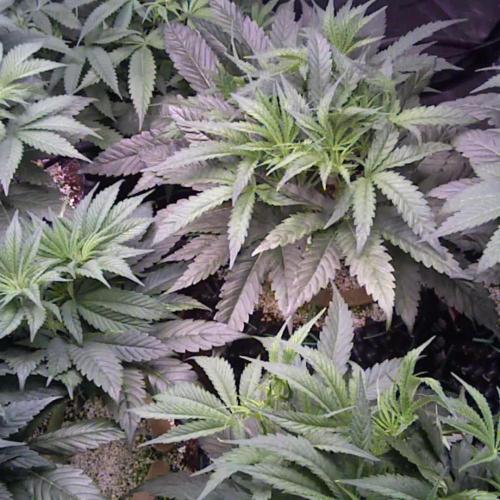
Follow
Hey now, hope everyone had a great weekend. The ladies are doing excellent, I flipped to flower today. The plants with 8 mains are the Grimm Glue, and the Royal Runtz, the THC Bomb, and Northern Lights will have 4 chonky mains on them. I also added a 315 Watt CMH to the mix, it will provide some extra warmth, and burn off some extra humidity in flower more than the LED's. I did some defoliation this morning before flipping the lights, and I will do another round of defoliation in about two weeks and then that will be it. The ladies are trained and fairly flat right now, so not a whole lot to do but see how much these pigs stretch in the next couple weeks. Thanks for stopping by, stay safe, and Blaze On!


