


Processing
Likes
11
Share


@Element
Follow
Started LST in the 3 younger plants but I messed up on the Sweet Cheese, I wasn’t expecting such a weak main branch and it completely broke when I was trying to bend it 😣


Likes
15
Share


@crystal_garden_0
Follow
Great week. Plants going fast now. Buds starting, strong smell. Plants have a great structure. So far so good. Looking forward to try the different flavors. Great genetics and light , thanks everyone

Likes
7
Share


@HardNuggGrow
Follow
Just started my flush. My first time using a flushing agent . ran 2 gallons of water Through with 1 tsp of sledge hammer in each. manufacturer recommends 2 teaspoons I’ll move up Depending on how it acts to this dose. Runoff was at 568 ppm and 5.8 ph. I don’t know if I should have kept running water through Or if this stuff eats up the PPM’s Without overwatering I don’t know we’ll see. Open to advice . Overall she is doing well

Likes
6
Share


Likes
41
Share


@dkchgrows420
Follow
05:18:21
She started her diet of water only, I will just give her water till the start of week 8, she’s on week 7 day 2 right now. Each day she’s been just beefing up all over the place! I never checked the tri’s today I will save that for week 8. I am noticing some colour coming out of the fans but that could be some light bleaching. I am leaving her to just do her thing till I see amber! Then a 12 day flush and harvest.
05:19:21
Getting fatter everyday!!! So close now!!!
05:21:21
All I have to say is 😳 Wow I am glad I cloned her!! I can’t wait to see how she does out doors!!! I have to say if you are looking for a plant that legit finishes in 7 weeks this damn this is a fine strain for that...... again...... WOW

Likes
46
Share


@Ju_Bps
Follow
Hello my friendly growers,
This end of week, smeel the end of the plant,
Trychromes of today look plant ready to harvest so I ll harvest tomorrow.
See you in few day for the result of harvest.
Thanks to follow and like me,
Nice community 😍🤩
Have a good week


Likes
17
Share


@Luckydope69
Follow
Nun geht immer mehr mit den Buds doch leider wirkt auch der Mangel immer noch stark auf sie ein. Ich versuche weiterhin die Versorgung mit Komposttee zu gewährleisten.
Likes
8
Share


@Inceptionist
Follow
Buds are developing. A bit slower than I anticipated but they are developing. I guess it won't yield very much but that's because of the really bad outdoor conditions she started with. Still very excited to see her progression, I hope she keeps that dark green color.
As you can see, the drip irrigation system arrived, which is good. Unfortunately that means that there will be no more Pet's&Pot pictures until harvest :( wish me luck!


Likes
9
Share


@Ronin716
Follow
I’m really just updating with photo dumps at this point lol but this white widow is proving to be f*cking massive and these buds are looking like they’re going to STACK!!! I defoliate here and there lightly and open the canopy to get some light further down. She fills a 2x2 out completely! My next run will consist of a few of these for sure!! Should be a great harvest!!

Likes
5
Share


@HoddZ
Follow
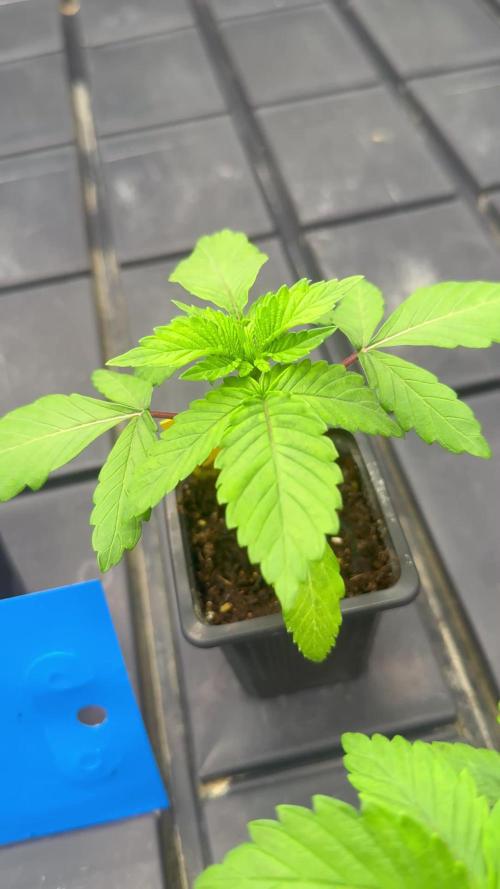
Not much happening this week. Unfortunately i may have overfed PK as thought the bottle said 7ml per L but instead was 0.7ml. Noticed tips of leaves the next day browning so checked the feed chart again and pretty much shit myself. Flushed all 3 plants for about 5 mins and now they seem ok hopefully.


Likes
14
Share


@CrazyRussian
Follow
This week was amazing! I gave green sensation for the first time, and the results are as good as I expected. The buds are incredible, the smell is amazing, everyone looks healthy so far! :) I hope everything will be alright, see you guys next week!

Processing
Likes
13
Share


@Xelxz
Follow
ºDay 65 (11Jan) - 6th video;
ºDay 67 (13Jan) - 18th watering (3rd vegNute);
ºDay 67 (13Jan) - 7th video;
ºDay 68 (14Jan) - Took LST;
ºDay 69 (15Jan) - 19th watering (1st flush);
ºDay 70(16Jan) - End of week 10;
Likes
6
Share


@HomeGrowHeaven
Follow
The plant has recovered well from the last capping and defoliation🏻♀️
A few leaves have yellowed a little, but that's not so bad🏻♂️
It will get a compost tea🍵 in a few days when it is sent into flower and then everything will be fine again😊💪🏻🏻
The compost tea is brewed and was given to the Watermelon Runtz at day 49 of Veg🍉🏃♂️

Likes
4
Share


@Kountryboi90
Follow
Day 8 and she's growing fine! I slightly over watered her yesterday so she's got some bouncing back to do!
Processing
Likes
8
Share


@eldruida_lamota
Follow
Esa familia, estoy de nuevo por aquí, os traigo la última semana de crecimiento de estas candy caramelo de Zambezaseeds.
Estoy bastante contento las 3 son simétricas están creciendo en un tanque de 7 litros en los cuales aportamos el primer riego con nutrientes para solventar alguna carencia leve, sobre todo de nitrógeno pero nada como echarles de comer.
El ph está controlado, la temperatura no aumenta de 26 grados y la humedad la mantenemos por encima de 50%.
Cómo apreciáis, todo va sobre ruedas, veremos que tal se comportan de ahora en adelante, saludos fumetillas y buenos humos.

Likes
97
Share


@Kitties_and_Colas
Follow
~_~_~_~_~_~_~_~_~_~_~_~_~_~_~_~_~_~_~_~_~_~_~_~_~_~_~_~_~_~_~_~_~_~_~_~_~_~_~_~_~_~_~_~_~_~_~_~_~_~_~_~_~_~_~_~_~_~_~_~_~_~_~_~_~_~_~_~_~_~_~_~_~_~_~_~_~_~_~_~_~_~_~_
❤️💡🌱😽💨
Everyone was up-potted 2 days ago and showing a little new growth since then. They're all very healthy looking, one has some slight yellowing which should disappear soon with our change but all plants are extremely small for their size.. we've been letting these dry out completely between watering so I'm convinced there's a genetic component to this. We've had a few other strains start extra slow for us in the past and one in particular that started slow and then took off like wildfire around week 5 so I'm not too concerned ..they're each using 3gal square (plastic) pots willed with fresh Promix-HP..they're getting a little bit of Big Bloom with smaller amounts of Grow Big with every other watering now and this has corrected the odd hue we noticed around wk3.. The Mars SP-3000 is about 2.5 away, it sounds far but despite the distance, node spacing is always really tight in that tent all through veg
We're hoping for some explosive growth this week now that everyone is officially settled, we're still on the fence as to how we'll train these but odds are we'll do our typical 4 way LST after topping and keep under their skirts bare..
..there no telling how long we'll veg these as size is always our determining factor but when the time comes, we plan to flower in this tent as well.. not too much else to report, its been an effortless week.. thanks as always for dropping by and happy harvests everyone!!
👊😺
~_~_~_~_~_~_~_~_~_~_~_~_~_~_~_~_~_~_~_~_~_~_~_~_~_~_~_~_~_~_~_~_~_~_~_~_~_~_~_~_~_~_~_~_~_~_~_~_~_~_~_~_~_~_~_~_~_~_~_~_~_~_~_~_~_~_~_~_~_~_~_~_~_~_~_~_~_~_~_~
8/17
We've gotten some fast growth in the last few days.. we figured they were just late to the party.. we topped all plants at the 3rd node yesterday and we'll eventually pull each plant 4 ways..apparently the "weird hue" is genetic, they all have a unique purple undertones..neat strain for sure.. we dropped the SP-3000 a few inches and they're praying to it almost around the clock..we're debating on building a 4x2 PVC scrog table for these girls if we find the time.. thanks for dropping by Growmies! Much love!❤️
⚡Mars Hydro/SP-3000⚡ Specifications ⚙️:
Diodes: Samsung LM301B / Osram 660nm (960 total!)
Driver: Meanwell 300watt 🔌 (300W±5% @AC120V-277V)
PPF: 824umol/S ☢️
PPE: 2.8 µmol/j 〰️〰️
Lifespan: 50k+ hrs ⌛
Weight: 10.1 lbs (4.6kg)
Veg Coverage: 3 x 5 ft 🌱
Flowering Coverage: 2 x 4 ft 🌼
-The SP-3000 uses an aluminum heatsink (no fan) and the driver can be placed outside the tent 🌡️⬇️
-IP65 waterproof ratings, tolerant to high humidity grow environments 💦 ..
-Up to 15 can be daisy-chained together and all controlled from a single light! 💡~💡~💡~💡~💡
~_~_~_~_~_~_~_~_~_~_~_~_~_~_~_~_~_~_~_~_~_~_~_~_~_~_~_~_~_~_~_~_~_~_~_~_~_~_~_~_~_~_~_~_~_~_~_~_~_~_~_~_~_~_~_~_~_~_~_~_~_~_~_~_~_~_~_~_~_~_~_~_~_~_~_~_~_~_~_~_~_~_~_

Likes
64
Share


@MadeInGermany
Follow
Hi everyone 🤗.
Not much has happened this week. It becomes bushy and bushy 😅.
I even considered giving her another 2-3 weeks of growth, but again to give a bigger pot 😊.
I'll decide spontaneously the days.
I wish you all a nice start into the week, let it grow 🌱 and stay healthy 🙏🏻👍
You can buy this Strain at :
https://www.barneysfarm.com
Strain :
Blue gelato 41 clone from mother (Barney's Farm)
☝️
Genetics:
Blueberry x Thin Mint Girl Scout Cookies x Sunset Sherbert
👍
Vega lamp:
2 x
Todogrow LED HLG Quantum Board 100 W ( 200 W )
💡
Flower lamp:
2x Todogrow LED CXB3590 205 W = ( 410 W )
💡 ☝️
Soil : Canna Terra Professional +
☝️
Fertilizer:
Canna Terra Vega , Canna Terra Flores , Rizotonic, Cannazym, CANNA Boost, Pk 13/14, Canna Cal / Mag, Canna Ph - Grow, Canna Ph-Bloom
☝️🌱
Water:
Osmosis water mixed with normal water (24 hours stale that the chlorine evaporates) to 0.2 EG. Add Cal / Mag to 0.4 Ec Ph with Ph - to 6.0 - 6.3
💦 💧
