


Likes
Comments
Share


Likes
10
Share


@HappyHarvest
Follow
Check out this beautiful plant and the trichome production this week. Stunning! I cleaned up the bottom one more time. I will be top dressing this next week and it will be the last before harvest.
Likes
7
Share

@GERGrowDesigns
Follow
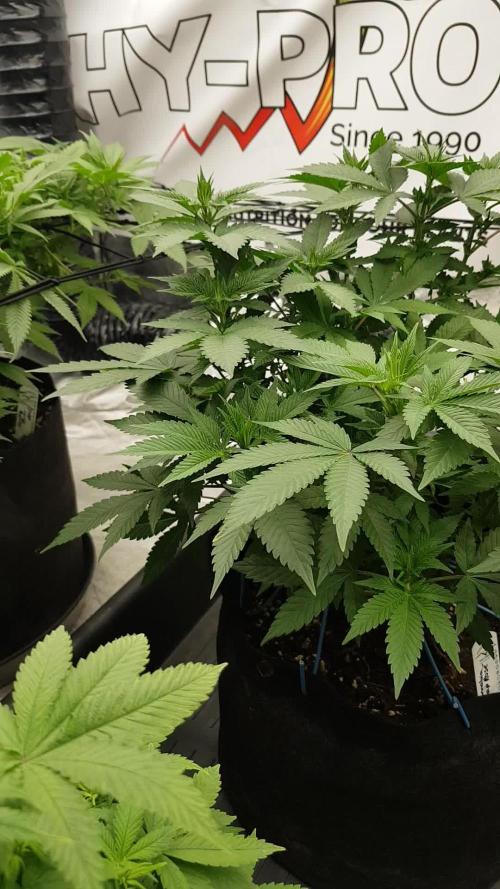
Welcome to Flower Week 1 of Kannabia Zoap Rosé
I'm excited to share my grow journey with you from my
Kannabia Seeds Project . It's going to be an incredible ride, full of learning, growing, and connecting with fellow growers from all around the world!
Check out Kannabia Seeds with my link [https://www.kannabia.com/de?ref=61966] and grab the germination device or the strains I used . Trust me – it’s worth it for sure !
Get another 20% Discount at all products using the code [GGD] at the checkout.
For this Project , I’ve chosen the Feminized Photo Strain Zoap Rosé :
Here’s what I’m working with:
• 🌱 Tent: 120x60x80
• 🧑🌾 Breeder Company: Kannabia Seeds
• 💧 Humidity Range: 60
• ⏳ Flowering Time: 56-63 Days
• Strain Info: 22%THC
• 🌡️ Temperature: 26
• 🍵 Pot Size: 20
• Nutrient Brand: Hy-Pro
• ⚡ Lights : 600W x 2
A huge thank you to Kannabia Seeds for allowing me to try my Best with this amazing collection from Photo Strains they managed to Sponsore . Big thanks for supporting the grower community worldwide! Your genetics and passion speak for themselves!
Let’s grow together – and don’t forget to stop by again to see the latest updates!
Happy growing!
Stay lifted and stay curious!
Peace & Buds!

Likes
55
Share


@Ultraviolet
Follow
What's in the soil? What's not in the soil would be an easier question to answer. 16-18 DLI @ the minute. +++ as she grows.
Probably not recommended, but to get to where it needs to be, I need to start now.
Vegetative @1400ppm 0.8–1.2 kPa 80–86°F (26.7–30°C) 65–75%, LST Day 10, Fim'd Day 11
CEC (Cation Exchange Capacity):
This is a measure of a soil's ability to hold and exchange positively charged nutrients, like calcium, magnesium, and potassium. Soils with high CEC (more clay and organic matter) have more negative charges that attract and hold these essential nutrients, preventing them from leaching away.
Biochar is highly efficient at increasing cation exchange capacity (CEC) compared to many other amendments. Biochar's high CEC potential stems from its negatively charged functional groups, and studies show it can increase CEC by over 90%. Amendments like compost also increase CEC but are often more prone to rapid biodegradation, which can make biochar's effect more long-lasting. biochar acts as a long-lasting Cation Exchange Capacity (CEC) enhancer because its porous, carbon-rich structure provides sites for nutrients to bind to, effectively improving nutrient retention in soil without relying on the short-term benefits of fresh organic matter like compost or manure. Biochar's stability means these benefits last much longer than those from traditional organic amendments, making it a sustainable way to improve soil fertility, water retention, and structure over time. Needs to be charged first, similar to Coco, or it will immobilize cations, but at a much higher ratio.
a high cation exchange capacity (CEC) results in a high buffer protection, meaning the soil can better resist changes in pH and nutrient availability. This is because a high CEC soil has more negatively charged sites to hold onto essential positively charged nutrients, like calcium and magnesium, and to buffer against acid ions, such as hydrogen.
EC (Electrical Conductivity):
This measures the amount of soluble salts in the soil. High EC levels indicate a high concentration of dissolved salts and can be a sign of potential salinity issues that can harm plants.
The stored cations associated with a medium's cation exchange capacity (CEC) do not directly contribute to a real-time electrical conductivity (EC) reading. A real-time EC measurement reflects only the concentration of free, dissolved salt ions in the water solution within the medium.
98% of a plants nutrients comes directly from the water solution.
2% come directly from soil particles.
CEC is a mediums storage capacity for cations. These stored cations do not contribute to a mediums EC directly.
Electrical Conductivity (EC) does not measure salt ions adsorbed (stored) onto a Cation Exchange Capacity (CEC) site, as EC measures the conductivity of ions in solution within a soil or water sample, not those held on soil particles.
A medium releases stored cations to water by ion exchange, where a new, more desirable ion from the water solution temporarily displaces the stored cation from the medium's surface, a process also seen in plants absorbing nutrients via mass flow. For example, in water softeners, sodium ions are released from resin beads to bond with the medium's surface, displacing calcium and magnesium ions which then enter the water. This same principle applies when plants take up nutrients from the soil solution: the cations are released from the soil particles into the water in response to a concentration equilibrium, and then moved to the root surface via mass flow.
An example of ion exchange within the context of Cation Exchange Capacity (CEC) is a soil particle with a negative charge attracting and holding positively charged nutrient ions, like potassium (K+) or calcium (Ca2+), and then exchanging them for other positive ions present in the soil solution. For instance, a negatively charged clay particle in soil can hold a K+ ion and later release it to a plant's roots when a different cation, such as calcium (Ca2+), is abundant and replaces the potassium. This process of holding and swapping positively charged ions is fundamental to soil fertility, as it provides plants with essential nutrients.
Negative charges on soil particles: Soil particles, particularly clay and organic matter, have negatively charged surfaces due to their chemical structure.
Attraction of cations: These negative charges attract and hold positively charged ions, or cations, such as:
Potassium (K+)
Calcium (Ca2+)
Magnesium (Mg2+)
Sodium (Na+)
Ammonium (NH4+)
Plant roots excrete hydrogen ions (H+) through the action of proton pumps embedded in the root cell membranes, which use ATP (energy) to actively transport H+ ions from inside the root cell into the surrounding soil. This process lowers the pH of the soil, which helps to make certain mineral nutrients, such as iron, more available for uptake by the plant.
Mechanism of H+ Excretion
Proton Pumps: Root cells contain specialized proteins called proton pumps (H+-ATPases) in their cell membranes.
Active Transport: These proton pumps use energy from ATP to actively move H+ ions from the cytoplasm of the root cell into the soil, against their concentration gradient.
Role in pH Regulation: This active excretion of H+ is a major way plants regulate their internal cytoplasmic pH.
Nutrient Availability: The resulting decrease in soil pH makes certain essential mineral nutrients, like iron, more soluble and available for the root cells to absorb.
Ion Exchange: The H+ ions also displace positively charged mineral cations from the soil particles, making them available for uptake.
Iron Uptake: In response to iron deficiency stress, plants enhance H+ excretion and reductant release to lower the pH and convert Fe3+ to the more available form Fe2+. The altered pH can influence the activity and composition of beneficial microbes in the soil. The H+ gradient created by the proton pumps can also be used for other vital cell functions, such as ATP synthesis and the transport of other solutes. The hydrogen ions (H+) excreted during photosynthesis come from the splitting of water molecules. This splitting, called photolysis, occurs in Photosystem II to replace the electrons used in the light-dependent reactions. The released hydrogen ions are then pumped into the thylakoid lumen, creating a proton gradient that drives ATP synthesis.
Plants release hydrogen ions (H+) from their roots into the soil, a process that occurs in conjunction with nutrient uptake and photosynthesis. These H+ ions compete with mineral cations for the negatively charged sites on soil particles, a phenomenon known as cation exchange. By displacing beneficial mineral cations, the excreted H+ ions make these nutrients available for the plant to absorb, which can also lower the soil pH and indirectly affect its Cation Exchange Capacity (CEC) by altering the pool of exchangeable cations in the soil solution.
Plants use proton (H+) exudation, driven by the H+-ATPase enzyme, to release H+ ions into the soil, creating a more acidic rhizosphere, which enhances nutrient availability and influences nutrient cycling processes. This acidification mobilizes insoluble nutrients like iron (Fe) by breaking them down, while also facilitating the activity of beneficial microbes involved in the nutrient cycle. Therefore, H+ exudation is a critical plant strategy for nutrient acquisition and management, allowing plants to improve their access to essential elements from the soil.
A lack of water splitting during photosynthesis can affect iron uptake because the resulting energy imbalance disrupts the plant's ability to produce ATP and NADPH, which are crucial for overall photosynthetic energy conversion and can trigger a deficiency in iron homeostasis pathways. While photosynthesis uses hydrogen ions produced from water splitting for the Calvin cycle, not to create a hydrogen gas deficiency, the overall process is sensitive to nutrient availability, and iron is essential for chloroplast function.
In photosynthesis, water is split to provide electrons to replace those lost in Photosystem II, which is triggered by light absorption. These electrons then travel along a transport chain to generate ATP (energy currency) and NADPH (reducing power). Carbon Fixation: The generated ATP and NADPH are then used to convert carbon dioxide into carbohydrates in the Calvin cycle. Impaired water splitting (via water in or out) breaks the chain reaction of photosynthesis. This leads to an imbalance in ATP and NADPH levels, which disrupts the Calvin cycle and overall energy production in the plant. Plants require a sufficient supply of essential mineral elements like iron for photosynthesis. Iron is vital for chlorophyll formation and plays a crucial role in electron transport within the chloroplasts. The complex relationship between nutrient status and photosynthesis is evident when iron deficiency can be reverted by depleting other micronutrients like manganese. This highlights how nutrient homeostasis influences photosynthetic function. A lack of adequate energy and reducing power from photosynthesis, which is directly linked to water splitting, can trigger complex adaptive responses in the plant's iron uptake and distribution systems.
Plants possess receptors called transceptors that can directly detect specific nutrient concentrations in the soil or within the plant's tissues. These receptors trigger signaling pathways, sometimes involving calcium influx or changes in protein complex activity, that then influence nutrient uptake by the roots. Plants use this information to make long-term adjustments, such as Increasing root biomass to explore more soil for nutrients. Modifying metabolic pathways to make better use of available resources. Adjusting the rate of nutrient transport into the roots. That's why I keep a high EC. Abundance resonates Abundance.
Likes
36
Share


@Coopmc
Follow
Gave smaller Tropicana and the Lemon Pie to friend to finish for me let her get the benefit from growing
Keept the ones I’m trying to get seeds he Strawberry is a beast!!
Strawberry Bannana is Insane!!

Likes
9
Share


@Gruenerfinger85
Follow
Ab jetzt werde ich meine 3 hübsche WW spülen, ich hoffe das die letzten 2 Wochen Blüte noch ausreichen das die Buds noch an Größe gewinnen, die Trichom Bildung ist reichlich vorhanden, und der Duft lässt ein schon ungeduldig werden. Das ist mein erster grow mit White Widow automatic, und mein erster grow überhaupt mit automatics.
Ich konnte einiges an Erfahrung bei diesem grow sammeln. Ich habe Fehler gemacht die ich beim nächsten mal zu verhindern weiß.
Ich werde euch auf dem laufenden halten bis dann wünsche euch dicke Knospen.👍🏻

Likes
2
Share


@Ninjabuds
Follow
Those three Bubble OG plants are something else. They're stretching up so much, it's like they're on steroids or something. Seriously, in the past week they've shot up a ton. I can't believe how much they've grown.
Well, it's Christmas again. This year feels a little different, though. Maybe it's the snow blanketing everything, or the way the tree lights up the whole living room. Either way, it's cozy and warm, even when it's freezing outside. I'm really looking forward to seeing what Santa brings. I hope I get that new video game I've been wanting. But most of all, I can't wait to spend time with my family. We always have so much fun
This past week was a good one for the plants. They started the first week of their stretch, and they've already grown a decent amount. I can really see them filling out. It's cool to watch them grow so fast. I can't wait to see how big they get by the end
I always get a little worried at this stage, like they're not gonna get as big as I want them to. But then I remember how they always end up surprising me. By the end, they're always perfect.

Likes
16
Share


@Boomdrawfyah
Follow
98 dias de vida, vamos aumentando la cantidad de terravigor y terrateina, y el
producto estrella de terranabis el
Terpesyn que hace que los cogollos brillen de la resina que sacan. Estan floreciendo muy fuerte se esperan grandes resultados, aunque esta semana se predicen tormentas vamos a aguantar con todo lo que venga
Likes
10
Share

@Rangaku
Follow
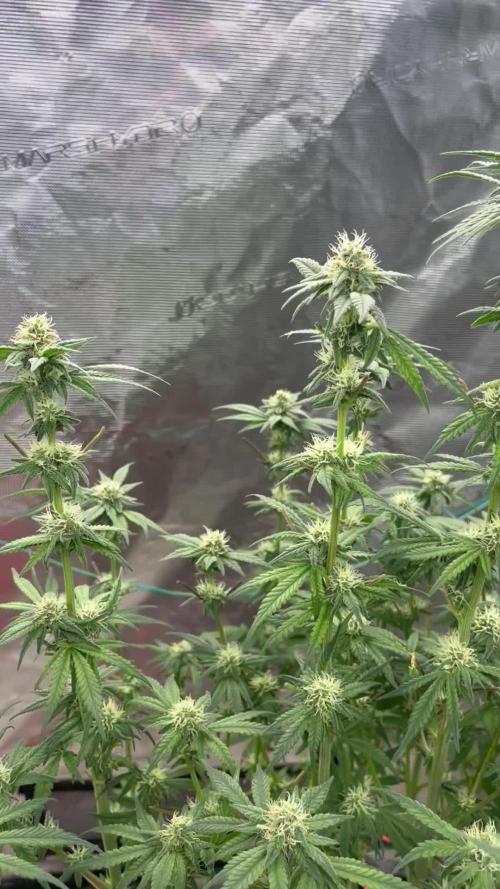
Apple fritter got sticky this week , buds are putting on nice weight. She’s a real set and forget type strain this , keep up the defol , feed her up and the class of the strain does the rest . Getting to the interesting part now she really looks like she’s about to shine
Likes
12
Share


@Tazard
Follow
WOW 🤩 she got HUGE. The longest meter on earth! Seriously she looks amazing. I’ve seen some harvests from her her on GD and I’m super excited to have somehow gotten her over 5 feet tall! Stay tuned this is going to be special!


Likes
15
Share


@WEEDMANconnect
Follow
So week 15 and she’s been chopped she’s is massive and she smells great the colour oof her is mesmerising I can’t wait to smoke her 🔥🔥🔥💨💨let these hang for 5 days then started removing buds from stalk and gave her a little trim I’ll leave her on nets for a few more days before putting her in jars it’s taken hours to get through these two plants some parts Easyer to trim than others buts it worth the hard work in the end the colours are amazing and the smell is ridiculous so sweet leaves my mouth watering the buds are very dense aswell very happy with her 🍒🍒🔥🔥🔥💨💨💨💨🍒🍇🍇





Likes
5
Share


@killerjoint
Follow
15th day into flowering- Trim some Fan leaves /anything cover canopy.
18TH DAY FLOWER- LOLI POPPING.
JUST WATER EVERY 3 DAYS PH 6.5


Likes
3
Share


@Albinius
Follow
Gorilla Cookies Auto (x3)
╭────────────────────────────────────╮
🗓️ MONDAY 08/09/25 - 💧 WATERING - DAY 47
╰────────────────────────────────────╯
→ All stats in range, watering till runoff- runoff 7.5PH - Probably salt build up
🌡️Temp (Day/Night): 27°C / 25°C
💦 Humidity (RH): 60%
🔁 VPD (Vapor Pressure Deficit):1.3
⚡ Soil EC mS/cm: 1.6
💧 Soil Water Content (WC): 28%
💡 Light: 90% @ 25cm from canopy
🔆 PPFD (μmol/m²/s): 900
🌬️ CO₂ (ppm): 450
╭────────────────────────────────────╮
🗓️ TUESDAY 09/09/25 - DAY 48
╰────────────────────────────────────╯
→ All stats in range, no action taken
🌡️Temp (Day/Night): 27°C / 25°C
💦 Humidity (RH): 60%
🔁 VPD (Vapor Pressure Deficit):1.3
⚡ Soil EC mS/cm: 1.6
💧 Soil Water Content (WC): 19%
💡 Light: 90% @ 25cm from canopy
🔆 PPFD (μmol/m²/s): 900
🌬️ CO₂ (ppm): 450
╭────────────────────────────────────╮
🗓️ WEDNESDAY 10/09/25 - 💧 WATERING - DAY 49
╰────────────────────────────────────╯
→ All stats in range, watering with lighter feed and 6.2PH till runoff- runoff 7.2PH
🌡️Temp (Day/Night): 27°C / 25°C
💦 Humidity (RH): 60%
🔁 VPD (Vapor Pressure Deficit):1.3
⚡ Soil EC mS/cm: 1.6
💧 Soil Water Content (WC): 26%
💡 Light: 90% @ 25cm from canopy
🔆 PPFD (μmol/m²/s): 900
🌬️ CO₂ (ppm): 450
╭────────────────────────────────────╮
🗓️ THURSDAY 11/09/25 - 💧 WATERING - DAY 50
╰────────────────────────────────────╯
→ All stats in range, watering with plain water PH 6.0 till runoff- runoff xPH
🌡️Temp (Day/Night): 28°C / 25°C
💦 Humidity (RH): 62%
🔁 VPD (Vapor Pressure Deficit):1.45
⚡ Soil EC mS/cm: 1.2
💧 Soil Water Content (WC): 18%
💡 Light: 90% @ 25cm from canopy
🔆 PPFD (μmol/m²/s): 900
🌬️ CO₂ (ppm): 450
╭────────────────────────────────────╮
🗓️ FRIDAY 12/09/25 - 💧 WATERING - DAY 51
╰────────────────────────────────────╯
→ All stats in range, watering today
🌡️Temp (Day/Night): 28°C / 25°C
💦 Humidity (RH): 62%
🔁 VPD (Vapor Pressure Deficit):1.45
⚡ Soil EC mS/cm: 1.2
💧 Soil Water Content (WC): 18%
💡 Light: 90% @ 25cm from canopy
🔆 PPFD (μmol/m²/s): 900
🌬️ CO₂ (ppm): 450
╭────────────────────────────────────╮
🗓️ SATURDAY 13/09/25 - DAY 52
╰────────────────────────────────────╯
→ All stats in range, no actions
🌡️Temp (Day/Night): 28°C / 25°C
💦 Humidity (RH): 62%
🔁 VPD (Vapor Pressure Deficit):1.45
⚡ Soil EC mS/cm: 1.2
💧 Soil Water Content (WC): 18%
💡 Light: 90% @ 25cm from canopy
🔆 PPFD (μmol/m²/s): 900
🌬️ CO₂ (ppm): 450
╭────────────────────────────────────╮
🗓️ SUNDAY 14/09/25 - 💧 WATERING - DAY 53
╰────────────────────────────────────╯
→ All stats in range, watering today
🌡️Temp (Day/Night): 28°C / 25°C
💦 Humidity (RH): 62%
🔁 VPD (Vapor Pressure Deficit):1.45
⚡ Soil EC mS/cm: 1.2
💧 Soil Water Content (WC): 18%
💡 Light: 90% @ 25cm from canopy
🔆 PPFD (μmol/m²/s): 900
🌬️ CO₂ (ppm): 450
╭────────────────────────────────────╮
🌿 OVERVIEW
╰────────────────────────────────────╯
The Gorilla Cookies Auto trio had a stable week with regular watering on Monday, Wednesday, Thursday, Friday, and Sunday. 🌱 Monday’s runoff showed high 7.5 pH, addressed with lighter feed (6.2 pH, runoff 7.2 pH) and plain water (6.0 pH). All stats stayed optimal: temps 27–28°C (day)/25°C (night), humidity 60–62%, VPD 1.3–1.45. Soil EC dropped from 1.6 to 1.2 mS/cm after flushing; soil water content ranged 18–28%. Lights at 90% @ 25cm gave 900 μmol/m²/s PPFD, with CO₂ at 450 ppm.
Lessons:
pH Control: High runoff pH (7.5) suggests salt buildup; lighter feed and plain water helped. Monitor runoff. 💧
Stable Conditions: Consistent environment supported growth. 🌡️
EC Management: Flushing lowered EC—watch for nutrient balance. ⚡
Takeaway:
A solid week with stable conditions and proactive pH management. Monitor runoff pH and EC to sustain progress. 🚀
Likes
5
Share


@Ibgrowing
Follow
I upped the nutes to 4ml/l but started seeing purple discolouring on the lower fan leaves so I think I'll use less bio grow. It is quite weird because my other plant doesn't have this problem.
I wasn't able to inspect the trichomes as good so I'll also do it tomorrow.
The smell of this lady is a bit less strong than the purple lemonade but still very pleasant.


Likes
19
Share


@4Haut
Follow
Hi@all,
this is the last week in the vegetative phase. Starting tomorrow it will be switched to 12/12.
Looks quite good to my taste, except for too much light and too little fertilizer. Both light and fertilizing are somewhat under control for now (hopefully)
I continue to enjoy trying to adjust all the values of the plant/nutritions and environment correctly and finding out what works well and what doesn’t.
Grow Hard. Go Pro. 🌱😎👌


