


Likes
Comments
Share


@DogDoctorOfficial
Follow
Hey Grow Diaries fam,
We’ve reached Week 12, which marks Week 8 of flowering, and our PCRs are entering the final stretch! This is a crucial time in our grow, and we've made some significant changes to our routine to ensure the best possible finish for our beloved plants.
Overview
Our PCRs are looking absolutely stunning, with buds swelling to their full potential and trichomes sparkling like diamonds. This week, we’ve shifted our focus to flushing and preparing the soil for future use.
Environment and Conditions
Tent: 3x3, kept clean and efficient for optimal growing conditions.
Lighting: ViparSpectra P2000, still providing the perfect spectrum as we approach harvest.
Watering: TDS at 130, pH 6.8, and water temperature at 21°C, a significant shift from our previous nutrient-rich regimen.
Nutrient Regimen
This week, we’ve stopped all nutrient feedings and switched to using Aptus Holland Enzym+ exclusively. Here’s why:
Aptus Holland Enzym+: This enzyme product is designed to break down dead root material and organic matter, converting it into usable nutrients for the plant. This process helps in:
Clearing Residual Nutrients: Ensuring that the plants use up any remaining nutrients in the soil.
Improving Soil Health: Enhancing the soil's microbial life, which is crucial for future grows.
Promoting Clean Finish: Helping to ensure a smoother, cleaner taste in the final product by reducing excess nutrients and salts in the buds.
The shift to Enzym+ at this stage is about preparing the plants for harvest and also ensuring that the soil can be reused effectively.
Growth and Development
The PCRs are in their final flowering phase, and they look incredible. With the nutrients now being flushed out, we’re focusing on maximizing the quality of the final buds. The leaves are starting to fade, signaling that the plants are using up their stored nutrients, which is exactly what we want to see at this stage.
Soil Reuse
One of the key advantages of using Aptus Holland products, especially Enzym+, is the ability to reuse the soil. Here’s how we do it:
Soil Conditioning: The enzymes break down organic matter, improving soil structure and fertility.
Microbial Boost: Enhances microbial activity, which is essential for nutrient cycling and soil health.
Cost-Effective: Reusing soil reduces costs and minimizes waste, making our grow more sustainable.
By reusing the soil, we ensure that our next grow starts with a rich, healthy medium, full of beneficial microbes and ready to support another batch of robust plants.
Reflections
This week has been all about transitioning our plants from heavy feeding to a clean finish. The Aptus Holland Enzym+ is doing its job beautifully, and the PCRs are responding well. The reduced TDS and adjusted pH are ensuring that we’re flushing out any residual nutrients, setting us up for a top-notch harvest.
Shout Outs
A huge shout out to:
Aptus Holland: Your products make every stage of this grow a success. Enzym+ is a game-changer!
Art Genetix: The PCRs continue to impress with their vigor and quality.
Grow Diaries Community: Your support and advice are invaluable. Here’s to another fantastic week of growing!
Stay positive, keep those good vibes flowing, and let’s get ready for a bountiful harvest.
Genetics - P.C.R. @Art_Genetix_Team https://artgenetix.world/
Nutricion @aptusholland https://aptus-holland.com/
LED Power @Lumatek and @viparspectra
As always thank you all for stopping by , for the love and for it all, i fell blessed to have you all with me for one more love journey Thank you Thank you Thank you , you guys are great and have been amazing , thank you for everything !
#aptus #aptusplanttech #aptusgang #aptusfamily #aptustrueplantscience #inbalancewithnature #trueplantscience #dogdoctorofficial #growerslove
With true love comes happiness , Always believe in your self and always do things expecting nothing and with an open heart , be a giver and the universe will give back to you in ways you could not even imagine so !
Friendly reminder all you see here is pure research and for educational purposes only
Growers Love To you All
Discount Codes :
@thecannakan DOGDOCTOR 15% off
@theneutralizer PORKIT5-DOG 15% off
@kannabiaglobal DOGDOCTOR 30% off
@seedsmangenetics DOGDOCTOR 10%off
@terpyz.mutant.genetics DOCTOR 15% off
Have a fantastic week!


Likes
11
Share


@adam_pawloski87
Follow
What another great week it’s been!! The babies are looking super healthy! We will be letting them veg out hardcore through this next week or 2 an will give them that flip into flower , but let’s take one week at a time y’all! Keep them eyes peeled for next weeks update ! I hope you all enjoy and have an amazing productive day as well as a great safe weekend! Peace love an positive vibes to y’all Cheers 😶🌫️💨💨💨💨💨🤙🏻

Likes
21
Share


@NSABND
Follow
Start of Week 9 🙌
I plan to use fertilizer for bud growth from day 64 to day 70+... depending on when the harvest time occurs 😉😄👍
Started working with fertilizer today, every 2 days a mixture of 10ml per liter as long as the buds have not properly developed trichomes 😵 I hope this works 😵😲😱
Day 68 with fertilizer again

Likes
13
Share


@Truta
Follow
A planta fastberry apresta uma anomalia na metade da planta, com folhas atrofiadas e brotos nascendo viradas para baixo, não sei o que possa estar acontecendo, se alguém tiver uma dica provável. Obrigado

Likes
20
Share


@DreamIT
Follow
-Sponsored by:
🎆ANESIA SEEDS🎆-💡VIPARSPECTRA💡-💐GREEN BUZZ LIQUIDS💐-🛠️WEDRYER🛠️
🏁18/6 hello growerz, with today I start the resumption of diaries on GD. I have 13 new genetics in germination and as many diaries. I start by putting the seeds in water for 24 hours, after a day I will put the two seeds in two different jiffies, one with humic acid from greenhouseseeds and the other with just plain water. Get comfortable and follow the updates 😉👋🦄
19/6 The seeds were divided and placed in two different jiffies, one with humic acid and one with water only.
21/6 after another 24 hours in the dark the jiffies were moved under the lamp. let's start the dances!
23/6 nothing to report
24/6 still nothing to report
25/6 still no news
30/6 it was a really long wait, but the second one was finally born, just when I had lost hope. yeeeeee
__________________________________________
Personal advertising (contains affiliate links)
__________________________________________
🦄 The varieties of Anesia seeds all have an extremely high content of THC and cannabinoids. They were bred specifically for the effect and therefore find wide applications for medical purposes as well.
✅https://bit.ly/Anesiaseeds_
__________________________________________
Did you know that Green Buzz Liquids fertilizers are 100% vegan? A complete line of products ready to give the best to each of your plants! Visit the site and see my journals to see how they work 🦄
🤯 And with the code "dreami t" you will immediately receive a 15% discount on your purchases
✅https: //bit.ly/GreenBuzzLiquidsPro
__________________________________________
👀 Are you looking for a good lamp to start with? 👀
🌞Viparspectra has something more than the others, take a look at their site.
⏩ Use "GDVIP" for an extra discount on amazon or "DREAMIT3" for an extra 5 %% discount
👀 Search for it on Amazon
✅Amazon USA: https://amzn.to/30xSTVq
✅Amazon Canada: https://amzn.to/38udUVe
✅Viparspectra UE: bit.ly/ViparspectraUE
✅Viparspectra USA: bit.ly/ViparspectraUS
______________________________________________
🌈 Tired of blowing on your weed hoping it dries quickly? Check out the Wedryer website! You will find a well-made accessory that will help your weed dry in just 8-10 days without the annoying risk of finding mold or other annoyances! (no affiliate links)
✅https: //bit.ly/Wedryer_
______________________________________________
📷🥇Follow the best photos on Instagram 🥇📷
https://www.instagram.com/dreamit420/
Backup
https://www.instagram.com/dreamit4200/
🔻🔻Leave a comment with your opinion if you pass by here🔻🔻
🤟🦄💚 Thank you and good growth 💚🦄🤟

Likes
8
Share


@HandsomeTerpz
Follow
The Mimosa is just delicious! It smells wild, and the plant stems are extremely sticky. The trichomes are growing amazingly well, and they grow on the leaves extremely. I hope the buds will turn out big and strong. So far, I'm really impressed.

Likes
12
Share


@Socal6pak
Follow
Received TWO 5packs of rhino Ryder as freebies. Gonna grow these outdoors and see how they do. Gonna take advantage of socal sunshine. Only 4 out 5 sprouted. It’s old beans I think. So that’s a good pop rate. I think.
Likes
22
Share


@herbalistssword
Follow
Been a good week, buds are ripening well. i have actually harvested the Candy Kush 2 this morning, will add another week for tha that harvest in a bit.
Candy Kush 1 looks like she is ready, I think I will harvest her this tomorrow.
Forgot to take a picture of the bubble kush, just the trichomes :) I think it needs another couple weeks, so does the fastberry. I am going to stop feeding this week and just water them. Sugar Mama will still get the regular feed.


Likes
13
Share


@GrowerGaz
Follow
Straight forward enough week, just one feed of iguana juice and one KNF juice FAA WCA WCAP soil soak feed. Girls are coming on so fast. Trying the light a little higher after some playing with a light lux meter. Also surprised at how little hest it gives off , probably a quarter of HPS when I tested that with my laser thermometer.


Likes
18
Share


@Ageddd
Follow
Flush Week !! More yellowing and colder tempereatures...
Feeding is 1 irrigation plain water, and the next with 2-3 ml Top Candy, giving the plant the Carbohydrates it needs, but no more nutrients this week. Eating way less water than before.
Aprox 1 week until harvest, and the end of the next week probably is going to be sunny.
So not much more to say fellas, sooo as usual, Take care and Good VIbes !!!

Likes
97
Share


@420DeepGrow
Follow
Gracias al equipo de Anesia Seeds y al de MarshHydro, sin ellos no sería posible esta hazaña.
💐 🍁 Purple Boost Highness es una variedad híbrida sativa dominante (70% Sativa / 30% Indica) resultante del cruce de Dankberry y Star Pebbles, dos variedades extremadamente potentes y versátiles. En un proceso de selección de varias etapas, seleccionamos plantas que tienen un valor de THCV particularmente alto y al mismo tiempo un alto contenido de THC. Terminamos desarrollando una cepa que tenía todos los rasgos que queríamos: un nivel de THCV particularmente alto combinado con un sólido nivel de THC y una abundante producción de sabrosos cogollos.
Purple Boost Highness alcanza un nivel medio de THCV extremadamente alto del 5-12% y un nivel medio de THC del 28%. Esto la convierte en una cepa potente y especial que ofrece a los usuarios medicinales y recreativos muchos beneficios y un subidón excitante y versátil. El subidón tiene un componente calmante a la vez que energizante de principio a fin y lleno de claridad cerebral, motivación y concentración.
El subidón comienza en la cabeza con una elevada sensación de felicidad que te envuelve por completo, transportándote a un estado de pura serenidad mental y ligereza trae. Te libera de pensamientos negativos y deja que tu mente vuele cada vez más alto. Te llenarás de dicha y desarrollarás una creatividad desenfrenada. Tu cuerpo está relajado y ligero. A medida que aumenta el subidón te vuelves extremadamente sociable y hablador hasta que los efectos cerebrales se vuelven demasiado fuertes y te pierdes en tu propia mente. Purple Boost Highness es un gran expansor sensorial: los colores, los sonidos y la música adquieren una profundidad y versatilidad totalmente nuevas.
Los cogollos tienen un intenso aroma dulce y afrutado a bayas y uvas con un toque de limón. Los cogollos son extremadamente densos, grandes y cubiertos de una gruesa capa de tricomas cristalinos de color blanco dorado.
🌻 🚀 Consigue aquí tus semillas:
https://anesiaseeds.com/es/product/purple-boost-highness/
💡 Mars Hydro TS 3000, como la lámpara de cultivo LED más grande de la serie TS, ofrece suficiente cobertura para un área de 4 × 4 pies con un precio asequible y rendimientos de calidad; a cambio, se puede aplicar tanto al cultivo doméstico como al cultivo comercial.
Potencia - 450w
Cobertura Vegetal – 5×5 pies
Cobertura de flores - 4 × 4 pies
La opción abrumadora para la mayoría de los productores que la aplican en tiendas de campaña.
Consigue aqui tu lámpara:
https://marshydro.eu/products/mars-hydro-ts-3000-led-grow-light/
📆 Semana 9:
Finalizando la etapa de maduracion,esto va que vuela 😍, la resina esta cada vez mas presente ❄️ , los cogollos empiezan a madurar
Esta semana seguirá el TS-3000 de MarshHydro al 100% y 30cm de distancia.
Se estan desarrollando mejor que nunca, con una floracion mucho mas rapida, noto una gran mejoria gracias al Marshydro TS-3000.
Continuo con defoliaciones
Agua hasta el final
Likes
5
Share

@PEAKYPLANTERS
Follow
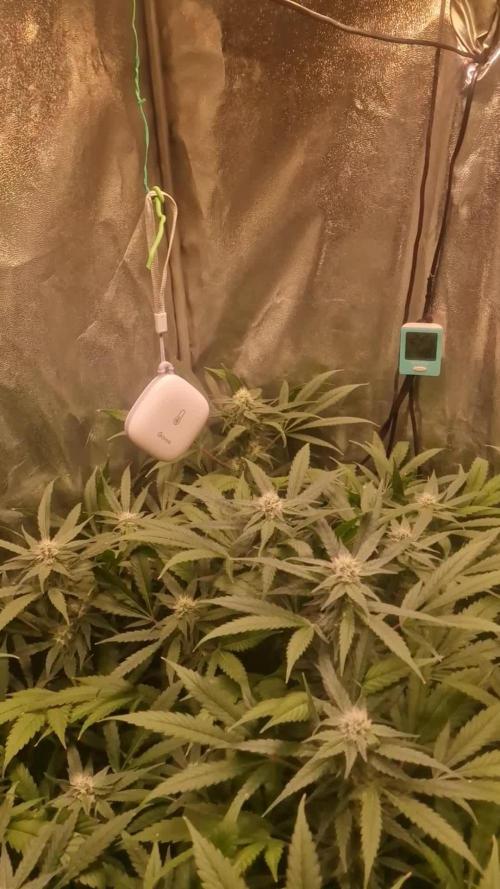
💣 Booom 💥
It literally exploded with shoots and its structure is phenomenal
Likes
4
Share


@shadowizard
Follow
It has been about a year since my last diary had to take some time off. My wife had cancer. We had to take care of that now I'm back. Maybe I can get a diary or 2 .
Likes
17
Share


@Lazuli
Follow
Week 4 flower
The frost is everywhere and smells amazing. No defoliation no stress shes beautifull
Likes
11
Share


@Eddjack
Follow
Che pianta ha avuto qualche carenza in passato ma si è ripresa subito . Ha un bellissimo mega fiore centrale. Continua così bella mia , cresci bene !
Likes
32
Share


@Proto420
Follow
These babies are as happy as can be, for real. I feel like since my first grow was ten plants all at once, that everything seems easier because of that. Cuz these girls look phenomenal.


Likes
Comments
Share


@Rizzokicksbuds123
Follow
New home bigger pots finish of this training and flip them
Likes
10
Share


@GrowLowAuto
Follow
Started out with a cheap grow light bulb while waiting on my grow light to arrive. She stretched a bit and had some trouble holding herself upright. Mounded the stem to give support and placed a fan blowing up the tent wall. Added 3 tsp of Fox Farm Happy Frog fertilizer to the pot and did some Real Growers Recharge on 5/4/22. Watering with 6ph dechlorinated tap water when dry. Seems to be every other day currently.
Likes
15
Share


@Pottstradomus
Follow
One of the two phenos is a week ahead of the other.
The buds are developing and frosting up real nice.
Im having a little issue with yellowing fan leaves on the upper half of the plants... after some research it seems like some growers have the same issue with this strain so idk... any thoughts?
I dusted off a old camera I hadn't used in a long time, working on taking better quality pictures.
Thanks for following