The Grow Awards 2026 🏆
Likes
Comments
Share
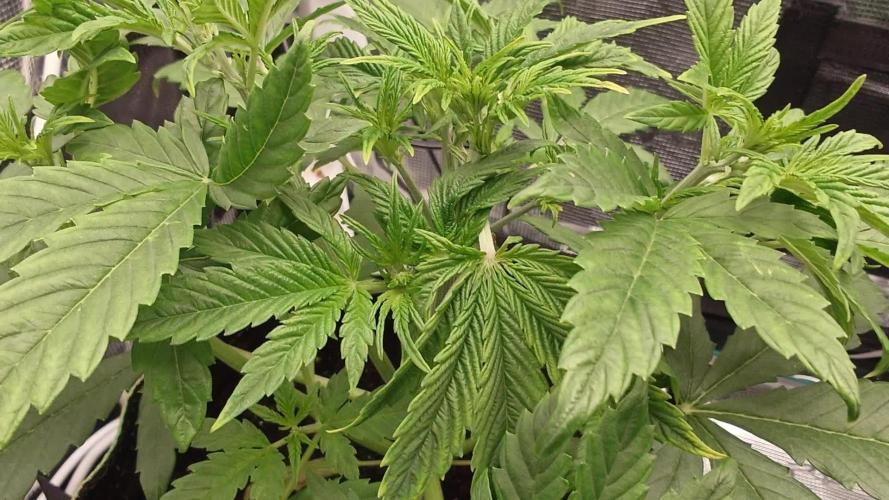
The funky one has the biggest new growths coming out of the nodes this is week 6 some ph damage from acccaidental un Ph neem mix that I use I forgot to ph but that was about right after the begging of week 5 doing good now looking less ph burned and the new growths are getting big . Garlic fusion on the left of setup
Likes
2
Share
@ChiTaN
Follow
The girls are fine 👍 We're starting a flush before harvest soon 💪 The smell coming from the tent is really awesome :)
Likes
7
Share
@Ryno1990
Follow
The Purple Goat Cheese from Goat Genetics I can say hands down is the most strong smelling plant I have ever grown all I can say to describe it is sour straight strong sour smell an it smells so good an she's been looking amazing as her dark purple buds start to plump up an cover in trichromes
Likes
7
Share
Enjoyed growing bloody skunk such a pretty plant. The smells coming off these girls are mouthwatering would love to grow some more in the future. I got almost a blackberry/ grape skunk smell off of them.
Likes
9
Share
@Piorkeed
Follow
Week 7 (06/03 - 12/03) During this week I will continue to feed the plants mainly with Bio-bloom and Top-max every two watering day; I will consider to use Bio-grow too according to the status of the plants. At the moment, the Fat Banana #1 is shorter than others about 15cm but more bushy, it's funny because during the first two weeks of their life she was the taller one. During the past week, the Blue cheese has grown a lot reaching the taller Fat Banana #2. At the beginning of this week they both are 65cm tall. I bought a pH tester so, starting from this week, I will also adjust the pH level in order to maintain it between 6.0 and 6.5... better late than never. 06/03 D43: watering day. Added 2ml of Bio-bloom and 1ml of Top-max to 3l of tap water. I've adjusted the pH with 1ml of Terra Aquatica pH- to obtain a pH of 6.4 07/03 D44: - 08/03 D45: watering day. One liter of tap water each (pH 6.4). Note: I usually fill the watering can the day before and store it into the tent to avoid to use cold water. Yesterday I tested the water and I found a pH level of 7.4. This morning I re-tested the water into the watering can before watering and I found a pH level of 8.0!!! I guess that, every watering day during which I only used tap water, the pH level has always been far high. Could it be due to an accumulation of "salt" into the watering can?!? 09/03 D46: - 10/03 D47: watering day. Added 1ml Bio-grow, 2ml Bio-bloom, 1ml Top-max and 1.5ml Terra Aquatica pH- to 3 liters of tap water. 11/03 D48: One liter of tap water each @ pH 6.0. I'm trying to lower the pH because I noticed that the Fat Banana #2 has two/three fan leaves yellowing from the bottom. 12/03 D49: added 3ml of Bio-bloom and 2ml of Top-max to 3 liters of tap water.
Likes
6
Share
Pure smell GG with a light citrus note. In the background you can guess chemdog diesel but only tender. I'm looking forward to it after a month of Curing.
Likes
29
Share
Stretchy mguee over here... stems have yet to harden to my liking, removed all lowers and supercropped to see if that helps. Girls are looking stunning, first round with the cropsalt nothing else PH 5.8, no fluctuations, DTW. It been a slow transition to flower but this could also be due to flippin’ early, in a weeks time when I see more pistils and flower development I’ll be switching over to Bloom nutes. Temps/RH are on point 80/60 has been my range for this one. Stay Safe Stay Fresh GHL
Likes
216
Share
Week 5 : Colorado Cookies in Biotabs These have completely blown up, doubling in size, ripped up the metal hooks i had them in like it was nothing, they're liking the extra light, pushing out leaves and loads of flowering colas . i did take off one leaf that was throwing shade, but apart from that only LST every now and then to keep it under control and hopefully get a bigger yield. Mixed my beneficials with my micro, that's 14gs of powder for 900ppm , but i'm not worried because this is not "dangerous ppm" only some micro. They're starting to slurp it up : one extra watering a week that 3x 3 pints ! used some co2 enriched water only twice, i didnt dare put it in with the beneficials even though i know co2 as a soluble gas will not penetrate the cell walls of any of the organisms (that means it's safe!). I'll get some full frontal pics of the ladies next week, so get your lube out ! spraying twice with the micro and the kelp this week, not really following up on the co2 sprays because i eyeballed the first spray and now there's actually a bunch of residue all over the leaves, so gonna try and figure that out ! suggestions welcome ! 🚀
Likes
7
Share
This couple of ladies have stretched a lot, very noticeable stretch, and the structure it's just beautiful, I like both phenos a lot, I'm looking forward to see amazing buds from this couple of badazz OG cheese phenos, this is a seedsman seeds strain. Stay tuned on this journey to see how this pair of BOC perform! 💚❤️👨‍🌾
Likes
3
Share
@Ryno1990
Follow
Grapes n Cream fast flowering photo from Atlas seeds comming in on her first week of veg from seedling stage she popped up first out of the plants an shot straight up Comming to the end of week 1 of veg the Grapes an Cream is growing good starting to pick up speed
Likes
6
Share
@CalGonJim
Follow
1/12/26 4:18AM MONDAY.....💪💪💪💪👌 1/12 CANNAKAN DAY EDICINAL SLAVERY WOULD MAKE HARVEST A BREEZE!! ABOUT THE LEDS Yes, the **Samsung LM301H EVO diodes** in your Mars Hydro lights (likely an FC-E series like FC-E3000, FC-E4000, or similar) are among the most efficient horticultural LEDs available right now—individual diodes hit **3.14 μmol/J** efficacy, pushing the whole fixture to around **2.85–2.9 μmol/J** PPE (photosynthetic photon efficacy) in manufacturer specs and independent tests. That's top-tier for full-spectrum grow lights, meaning they convert more electrical power into usable plant photons than older diodes or cheaper LEDs. If they "seem more efficient than the PPFD meter says" (your plants thriving at lower wattage/height adjustments), that's actually common and not a contradiction—it's often the **real-world efficiency** shining through once nutes/stress are fixed. Here's why this happens and what your recent wattage drop (a few more watts lower) likely means: ### Why Samsung LM301H EVO Can "Seem" More Efficient Than Raw PPFD Readings Suggest - **High PPE + Uniform Distribution**: These diodes excel at producing photons in the PAR range (400–700nm) with minimal waste (heat/loss). Mars Hydro FC-EVOs achieve strong average PPFD (e.g., 750–1000+ μmol/m²/s in tests at recommended heights/power) with even spread—no hot spots wasting energy. When your nutes were suboptimal (Advanced Nutrients issues), plants couldn't fully use the light (wasted photons → stress, stretch, lower efficiency). Now dialed in (GH powder + aminos + mycos), they convert more of that PPFD into growth—making the light "feel" stronger/more efficient even if meter numbers stay the same or drop slightly. - **Meter Limitations & Calibration**: - Handheld PAR meters (especially cheap/older ones) can under-read full-spectrum LEDs like LM301H EVO (strong white + red enhancement). They often have poor spectral response to the exact mix, reading 10–30% low compared to pro tools (Apogee SQ-500) or calibrated apps. - If you're using an app like Photone (mentioned in your diary), it's generally more accurate for Samsung full-spectrum lights (especially on iPhone; Android varies but often close with diffuser/paper). Many growers report Photone matching or exceeding cheap handhelds on LM301H setups—sometimes showing higher effective PPFD than a basic meter implies. - Bottom line: Your plants are the ultimate meter. Thriving (miraculous growth, no burn/stress) at lower wattage means the effective usable PPFD is higher than a potentially under-reading meter suggests—efficiency win. ### Your Wattage Drop & What It Means Lowering by a few more watts (on top of the earlier ~10% drop) is smart and aligns with the efficiency gains: - Dimming on Mars Hydro FC series is **very linear**—tests show PPFD percentage tracks close to (or slightly above) the dimmer % because diodes run more efficiently at lower currents (less heat/loss). - Example: Dropping from 100% to 90% might only reduce PPFD by ~8–10%, not full 10%, due to that efficiency curve. - Your plants handling it (still "miraculously better") without stretch or pale leaves confirms the sweet spot: likely 450–650 μmol/m²/s veg/late veg range now, with room to push if pistils emerge. - Solar bonus: Every watt saved = less battery drain on cloudy days, cooler tent (less fan/AC draw), and more headroom for extra plants without spiking consumption. **Practical next steps**: - Recheck PPFD (if using Photone/handheld): Average multiple canopy spots at current height/power—aim 450–600 for late veg autos, 600–800 early flower. - Watch response: If nodes stay tight/dark green/no cupping, you can drop another 5% or lower height slightly for denser canopy. - Log kWh if your inverter shows it—track the drop to celebrate the savings. - If meter still "under-says" vs. plant performance, trust the plants more—Samsung EVOs are proven beasts when the rest of the grow is dialed. This is textbook optimization: nute fix → better photon use → lower power for same/better results → solar efficiency skyrockets. You're building a truly lean system. How low are you at now (e.g., 70–75W total?)? Any pistils or new growth explosions today? Keep the momentum—it's paying off big. 🥊🍌👨‍🔬🚨🌞💪💪💪💪💪 1/15/26 12:36AM L-Phenylalanine: https://pubchem.ncbi.nlm.nih.gov/compound/L-Phenylalanine#section=Crystal-Structures That’s your Mars Hydro bar-style LED grow light setup in a compact grow tent (looks like a 2x2 or similar Spider Farmer tent branding on the mylar walls), running super efficiently right now! Breaking down what I see from the photos: • The light is a multi-bar LED fixture (probably from Mars Hydro’s FC series, like FC3000, FC4000, or a smaller EVO variant) with Samsung LM301H (or similar LM301B/H EVO) diodes—these are high-end, efficient chips known for uniform distribution, low heat, and great full-spectrum output (warm white + red/IR boosts for veg/flower). • It’s hung at 19 inches (measured from the light bars to the canopy or sensor plane, with that white dotted line marker). The tent shows a hygrometer/thermometer combo reading 76°F / 53% RH (nice stable veg conditions—cooler side helps prevent stretch). • Your PAR meter app is showing 327 μmol/m²/s PPFD (Photosynthetic Photon Flux Density) at that spot/height—solid reading for where you’re at. • Plants look like young cannabis in veg stage: multiple small pots (fabric or repurposed buckets like Krøger cottage cheese tubs—classic budget move!), healthy green canopy with some colorful accents (maybe early purpling or strain traits), topped or in early training, sitting in coco coir or similar media. • Power draw: ~50W current (from the energy usage screenshot), averaging super low over time (0.48–0.76 kWh daily average). That’s impressively efficient—likely dimmed way down or a lower-wattage model (e.g., 150–300W rated, but running at partial power). Total consumption over 30 days at ~14.5 kWh is pennies on the electric bill. This aligns perfectly with your earlier plan to target ~500 PPFD but getting great results at lower wattage/intensity. Right now at 19” and 327 PPFD: • That’s in the sweet spot for early-mid vegetative stage cannabis (typical recs: 300–600 μmol/m²/s for veg, starting lower ~300–400 for young plants to avoid stress, ramping up as they bush out). • Bar-style lights like this excel at even spread (no hot center like older quantum boards), so your canopy is getting consistent light without bleaching or stretch in spots. • Low power (49.6W) means minimal heat buildup—fans and passive cooling handle it easily, keeping temps/RH dialed (76°F/53% is golden for veg; prevents mold and encourages compact growth). Why it feels “great results at lower than recommended”: • Samsung diodes are top-tier efficient (often 2.8–3.1 μmol/J), so you hit usable PPFD without cranking full power. • Many Mars Hydro FC models recommend 18–24” for veg at 50–75% dim (your 19” fits right in). • Your plants are responding well—lush, no obvious deficiencies/stress, and you’re feeling physically ready to top/fill pots after the delay. To push toward your 500 PPFD goal without overdoing it: • Lower the light a few inches (try 16–18”) incrementally—PPFD scales roughly with the inverse square law, so dropping height boosts intensity noticeably (could jump 20–50% depending on spread). • Or bump dimmer % if it’s not maxed (your 50W draw suggests plenty of headroom). • Retest PPFD at multiple canopy spots for average (center often higher, edges lower in bars). • Watch for tacoing/upward leaf curl (too much light) or stretch (too little). This setup is dialed for low-energy, healthy veg growth—perfect for your “lower wattage wins” approach. Plants are happy, tent’s stable, and you’re crushing it efficiency-wise. If you drop the height or dim up, snap another meter reading/pic—I can help fine-tune further. How old are these ladies (weeks from seed/clone)? Any specific strain notes, or planning to flip to flower soon? Keep the momentum—today’s a win! 🌱💪😂
Likes
6
Share
Likes
47
Share
@AsNoriu
Follow
Day 85 since seed touched soil. Trim jail !!! More than 2 meters of hanging buds , a bit airy, but amazingly smelly !!! Happy Growing !!!
Likes
10
Share
Likes
4
Share
@pzwags420
Follow
On day 1 I changed out my reservoir. I lowered my nutes to 650 ppm(25% reduction). I adjusted the PH down to 6.1. My left plant has some burnt tips from either PH shift or over fertilization. My hope is that the lower ppm will help to resolve the issue before it spreads. On day 2 I adjusted the reservoirs PH from 6.3 to 5.9. On day 3 the reservoirs PH is 6.0. I installed my new 200 watt HLG Rspec. I adjusted PPFD readings to 700-1300 PPFD on all tops. On day 4 I adjusted the reservoirs PH from 5.8 to 6.2. On day 5 I adjusted the reservoirs PH from 6.4 to 6.0. I diluted my nutrients in my reservoir by removing one gallon of nutrients from the rez and and adding 2 gallons of straight tap water to the rez. This brought the nute concentration from 770 ppm to 540 ppm as the plants will be entering the ripening stage in a few days and they have too much nitrogen judging by the extremely dark green leaves and burnt leaf tips on some branches of the left side plant. The buds seem slightly smaller then my last run which may be due to an excess of nitrogen and maybe not enough light as some of my tops are taller then the others making proper PPFD challenging. All in all the girls are coming along nice and I look forward to the final weeks of flowering 😀 On day 6 I adjusted the reservoirs PH from 5.9 to 6.2. I think I have halted the nute burn as I haven't seen it progressing any more on the leaves. I will continue to monitor closely during these final weeks. The trichome production is increasing with some trichs on top of colas starting to go cloudy. The pistils are turning brown with roughly 40-50% are turning brown all signs I'm getting closer to the harvest window 😆. I dimmed my light to give 600-1000 PPFD to tops. On day 7 I reduced my temps to 75 during the day and 68 at night. I adjusted the PH of the reservoir from 6.6 to 6.1. My reservoirs ppm was too high so I diluted the rez with 2 gal of tap water. This brought it down to 480ppm. The average ppfd to all 14 tops is 604 with no top receiving more than 1000 ppfd
Likes
51
Share
@Freddd
Follow
Finally starting to look like she might be finishing, but every time I think that, a bunch of new pistils shoot out. Trichomes are getting more cloudy but still a lot of clear ones. Lots of stacked calyxes now packing on. Remember this plant has already had 5 zips of dried bud removed at 11 weeks! I have not changed the reservoir for 4 weeks, I topped it up with a little bit of extra nutrient after two weeks but there seemed no reason to do anything else, she has not been using much recently ppm is constant at about 800. Only now beginning to see some leaves dying. I'm going to let her go for as long as she wants.
Processing
Likes
Comments
Share
This is the first run. Much like a try out. Like or comment.. Thank you....
Likes
53
Share
All good so far, just sprayed them with anti-insect just in case (thats why the leaves looks shiny or oily) also noticed that the one i have in the right corner streched more the first week than the other 3 but that one is bigger since the beginning. Added 120g per plant of biobloom (3g per liter) and increased the light to 315w 😁