The Grow Awards 2026 🏆 




Likes
Comments
Share
@YSLBeezn
Follow
Sehen alle gut aus 👍🏻
Fristed guava bekommt gelbe blätter aber davon lasse ich mich erstmal nicht verunsichern.
Die Blüten wachsen ja gut👍🏻👍🏻


Likes
Comments
Share
@DrGreenbutterThumb
Follow
Outside of issues that were due to my learning curb definitely happy with the results. The plant that is actually dolato has such a wonderful scent. If it was certain that I would 5 of 5 dolato plants instead of 2 out of 5 with a Gelato I would do it again

Likes
25
Share
@Kakui
Follow
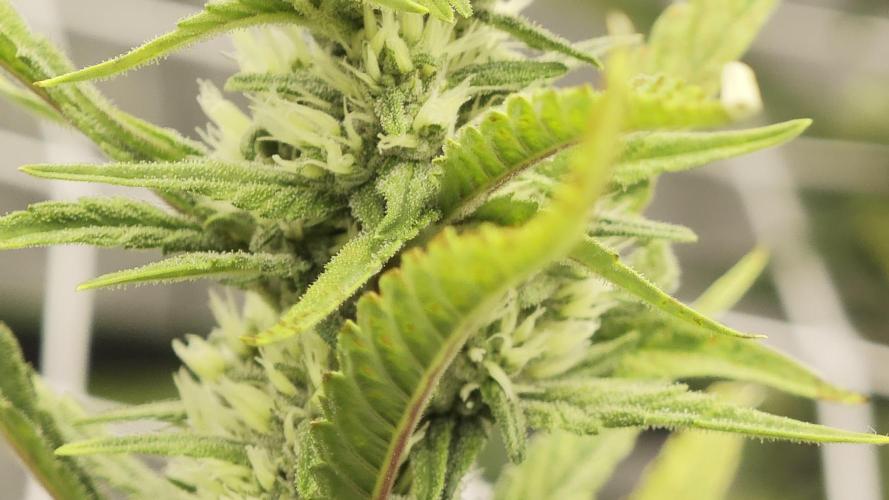
Flower18, riego con 6.2 pH y EC 2.2, pequeña defoliación.
Flower22, riego con 6.5 pH y 3.0 EC. Hoy las plantas me han sorprendido, están creciendo mucho sus flores, se están viendo muy llenas. Me preocupa que por el espacio muy justo, puedan generar hongos, tendré que colocar tutores para separar un poco las ramas y mejorar la ventilación poniendo 1 o 2 ventiladores extra, quizás darle más potencia al extractor también. A parte de eso van súper bien 😁



Likes
9
Share
@pzwags420
Follow
On day 1 the rez is at 6.2. The highest cola is 8.5" from the light.
On day 2 the rez is at 6.2. The highest cola is 7.75" from the light.
On day 3 the rez is at 6.1. The highest cola is 7.5" from the light.
On day 4 the rez is at 6.3. The highest cola is 7.125" from the light.
On day 5 the plants are smelling and doing well.
On day 6 I changed out the rez and PH to 6.1. The highest cola is 7" from grow light stretch is deff slowing down and should be over shortly. My avg PPFD at canopy is around 800.
On day 7 the rez ph is 6.0. The highest cola is still 7" away from light 😅 close but not too close in my small space.

Likes
3
Share
@Concretejungle
Follow
Great starter plant for a first timer was easy all round she stayed short but stocky rock hard dence nugs


Likes
17
Share
@daRealOG
Follow
The plants keep on thriving with three rounds of defoliation, the growth is noticeable daily.
As they entered preflowering i gave them the first round of delta 9 from cannabiogen, the plants responded great as usual. I highly recommend this product.
700PPFD
50DLI
Likes
18
Share
@blendmedmedman
Follow
the start was kind of slow about 5 days for the seed to pop, I was kind of worried but soon after she came up. she grew short like most indicas do, she started to frost up in her 3rd week of flowering, her frost continued to coat her buds while they where getting fatter and denser. she started to smell real nice around the 4th week so if smell is a factor u will want to get a carbon filter. she is sticky and dank, real strong smell. she is not a big producer but you could increase yields by putting a net on her as well as a bigger pot, 5 gals. and let her go. I did not top her as I was unsure how this strain would re act. she grows pretty bushy around the 5th week in and you may want to defoliate in the first 2 weeks in flower. she was not much of a drinker, about every other day. the germination was good as I only popped 1 out of 3 so I have 2 more to work with later. I probably will grow this strain again as she was easy and with little effort I got a ounce of some dank dens buds. I do kick myself for not running 1 more of the seeds but I am happy with the weed I have. I have more weed today than I did the other day. big thanks @fastbuds for letting me do some testing. the fades of purple light green and yellows made my day.


Likes
77
Share
@BipolarHellas
Follow
Hello everyone, 🇬🇷
this is my diary for the GHSC Contest...package received on 21st April...I will be growing Banana Crumble in this diary...It's a cross between Banana Punch and OG Kush, from Green House Seeds...
I wish everyone Good Luck!!!!!Let's Do It.
WEEK 1:"COME OUT AND PLAY"
☠️Day 0...seeds are placed in a bowl with wet paper towels,on a heat mat...
...after 48 hours... they need more time...
☠️Day 000..after 56 hours 3 were ready to be planted,the other two seeds need more time...I planted them in coco coir.My earth is called "Coco Humus", it's a Greek product and it consists of coir, perlite and organic matter...I covered them with baggies for extra humidity...They are now under a 50 W Led light...Fingers crossed...
☠️Day 1...24/04/20...the babies have popped their first tiny leaves...their cotyledons are different than usual,they are a bit longer...the are under a 50W Led inside a cupboard..I have removed the baggies...they are still fragile and small
☠️Day 4...the babies are growing very slowly but they are OK
☠️Day 6...so they are growing very slowly...they have just popped their second pair of true leaves but they are still tiny...Our journey has begun...
See u all next week...

Processing
Likes
57
Share
@MadeInGermany
Follow
Hey all 🤗.
This week they both continued to develop very well.
The Small is sooooo good 😃.
I Love Pheno 1 .
Flowering day 35
Today the tent was cleaned, the humidifier refilled and both plants sprayed with Canna Cure :-).
Flowering day 36
Both were poured today with 1.2 L per pot 🙂.
Both were also checked for their health and pests 👍.
Everything looks great 🙏🏻.
Flowering day 37
Again the tent was cleaned and fresh osmosis water was filled into canisters.
Flowering day 38
Today 1.5 l per pot was poured so that some drainage comes out again. therefor two days are not poured 😋.
Flowering day 39
The tent was cleaned, the humidifier was filled, both plants were checked for vitality and the entire electronics were checked for functionality.
Flowering day 40
Today both were sprayed again with Canna Cure and checked.
Flowering day 41
We have reached the last day of this week and again 1.2 L were poured per pot and the tent was cleaned 👍.
I hope you have a lot of fun with the new update, and let it grow 🍀🙏🏻
You can buy this Strain at :
https://sweetseeds.es/de/red-mandarine-f1-fast-version/
Type:
Red Mandarine F1 Fast Version
☝️🏼
Genetics:
Red Poison Auto®️ (SWS39)
X
Tangie (California Orange x Hybrid Skunk)
👍
Vega lamp:
2 x Todogrow Led
Quantum Board 100 W
💡
Bloom Lamp :
2 x Todogrow Led
Cxb 3590 COB 3500 K 205W
💡💡☝️🏼
Soil :
Canna Coco Professional +
☝️🏼
Fertilizer:
Green House Powder Feeding
☝️🏼🌱
Water:
Osmosis water mixed with normal water (24 hours stale that the chlorine evaporates) to 0.2 EC. Add Cal / Mag to 0.4 Ec Ph with Organic Ph - to 5.5 - 5.8 .
Likes
4
Share
@nachito1399
Follow
The plant is growing strong and healthy eventhoug it stayed short, the stem is getting thicker and thicker every day. I sprayed delta 9 two times. The first application i did it the day it showed pre flower signs. The second one 7 days later.

Likes
21
Share
@deFharo
Follow
🖐️👨🌾 Bienvenidos amantes de la Marihuana, comienzo una nueva temporada de cultivos, primavera/verano 24, con esta cepa que me va a llevar de viaje por el viejo reino de Siam a la búsqueda de la marihuana que pude fumar allí y antaño, tal vez en este camino cargado de recuerdos, me encuentre con otras flores... con más recuerdos.
Después de unas semanas de descanso de la temporada anterior, comienzo este nuevo viaje con ganas y la esperanza de conseguir la mejor cosecha hasta el momento.
Preparé concienzudamente el sustrato donde puse las semillas de las 9 cepas que voy a cultivar esta temporada, mi intención era emular la germinación espontanea que se produce en el bosque o campo, pensé en reproducir este escenario, mezclé un sustrato "cocinado" durante meses con nutrientes y minerales, añadí fibra de coco inoculada con Microorganismos de Montaña y mi Bio Coco EM que contiene minerales, hormonas, enzimas, etc. puse la semilla en superficie de ese sustrato y lo tapé con materia orgánica seca proveniente de Mulch rescatado de mi anterior temporada de cultivos, a continuación humedecí todo con agua caliente y miel, lo tapé y lo puse al calor de una manta eléctrica, a los 3 días asomó esta semilla de Thai Fantasy, dos días después otra semilla de Colombia Gold también salía del sustrato, pero 8 días después ninguna de las otras 7 semillas germinó, a la vista de una lupa, todas la semillas estaban podridas y con ácaros similares a los que se ven en el compost, el fracaso ha sido total, la ley de la selva a imperado y solo han sobrevivido las más fuertes, estas dos semillas tendrán las mejores macetas, se las han ganado. Ahora he vuelto a poner las semillas a germinar, pero esta vez sobre servilletas húmedas y calor, y prepararé un sustrato menos caliente para el momento del trasplante... adelante!
Espero lo mejor de esta cepa con dominancia sativa, las cepas de Kannabia siempre sorprenden, y mi bodega está a falta de sativas asiáticas, así que a jugar!!
================================
Info de la cepa Thai Fantasy de Kannabia seeds: https://www.kannabia.com/es/semillas-marihuana-feminizadas/thai-fantasy
"Nuestros paladares occidentales se abren a nuevas dimensiones cuando nos adentramos en los universos exóticos de Tailandia o Camboya." Kannabia Seeds
- Genética: Thai x Black Domina
- Sativa 80%, Índica 20%
- Tiempo de Floración - 58-65 días
- Rendimiento en interior: 500 g/m²
- THC: 18,6 %
- Sabores: Dulce y terroso
================================

Likes
28
Share
@GanjaGecko
Follow
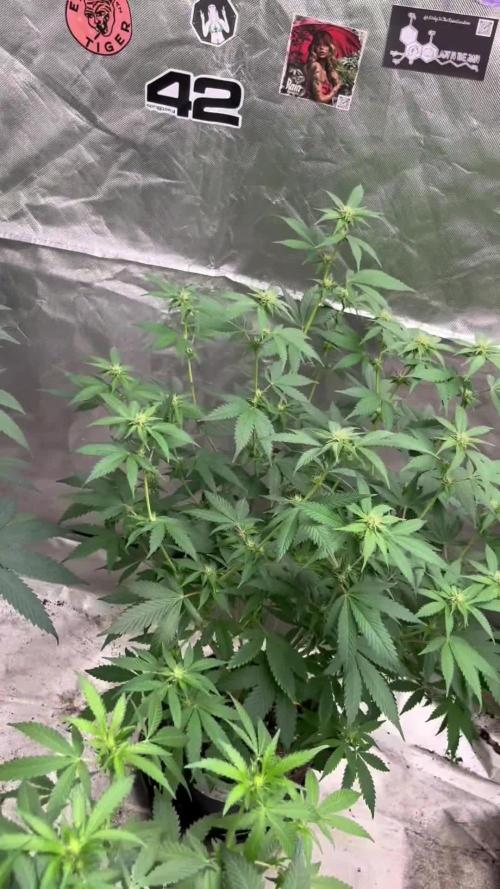
In der Woche hat es wieder scheiße geregnet. Ich musste zwar nur einmal gießen, allerdings mussten nach der Woche ⅓ vom Mainbud und zwei Teile der sidebuds weg, weil sich dort schimmel bemerkbar gemacht hat. Kann man sicht viel machen wenn die Ladys der Witterung komplett ausgesetzt sind.
Ich hatte die Woche nur einmal gegossen. Zusätze waren 1g/L BioEnhancer von GreenHouseFeeding, 1ml/L PowerBuds, 0.3ml/L GreenSensation von Plagron und 0.8ml/L BioBloom von BioBizz. Das ganze auf einen ph-Wert von 6.8 gebracht. Jede Lady bekam unterschiedlich viel. Je nach Gewicht des jeweiligen Topfes.
Ich hoffe das sich das Wetter langsam an den Sommer anpasst und die restliche Zeit ohne schimmel verläuft und mit mehr Sonne als Regen🍀💚

Likes
86
Share
@Ageddd
Follow
-------------------------
| BLUEBERRY HARVEST |
-------------------------
After two sunny days it is harvest time !!
- Finally, 16 days of flush -
At first thought, the trimming would be easier compared to my previous plants, but when removing more leaves, more buds appearing too hahaha so it took like 4 hours or more..It is not the most accuurate trimming but i had not much time that day, i removed all the leaves and branches after weighting it all..
Like i said on the last post, im harvesting having in mind my bud preferences (the later the better), weather, humidity and sunlight, so the first of the cloudy/rainy days she was chopped in the moring, attending the principle of thc regeneration at night..
Got to say that, i wasnt expecting such production (8 days until it was well dried), this plant started as the season saver because the Cheese started to flower in march, revegged etc.. and i have been rewarded with this BB, a true genetic portent !! If i could, i would keep her as mother forever ^^
The quality is awesome, she looks more like a WW talking about that coat of thc..
Flavour without proper cure, is deep earthy at first, transitioning to a fruity, sweet one, it is a pleasure to smoke, delicious sweet aftertaste..
Maybe, this is the last year with this awesome climate, because im planning to leave Spain..
Thank you for follow and check !!! I hope you liked the diary :)
Song of the week : Radiohead - Codex
Good Vibes GrowDiaries !!
----------------------------------------------------------------------------------------------------------------------------------------------
000000000000
Likes
3
Share
@BruWeed
Follow
Se secó bastante rápido. En 5 dias. Y metí todo en un frasco grande para que empiecen a curarse. Todo perfecto.

Likes
38
Share
@ScouseCityLX
Follow
Week 3 of flower, can see already some nice bud production. Terpenes are building up and making the room stink, has a dark berry chocolatety gassy og smell to it, just how I remember choc mint. The bud structure isn't exactly what I was hoping for but cant complain! Was a free seed sent to me after months of searching for the strain at a time before the v2 was a thing. Buds will be going through the trim bag at harvest so will probs give them more a uniform look to them.

Likes
41
Share
@MadeInGermany
Follow
Flowering day 52
since time change
to 12 / 12 h
Hey guys :-)
All ladies look very healthy and delicious :-)
We're slowly getting closer to the end.
This week it was poured 3 times with 1.2 l each (sewing materials see table above)
At the next watering there is a very light rinse with Clean Fruits so that the last nutrients can be slowly used up.
The trichomes are now checked every day.
I'm looking for my microscope with an app so I can take pictures of it 👍.
I wish you a lot of fun with the update and stay healthy 💚🙏🏻
👇🏼👇🏼👇🏼👇🏼👇🏼👇🏼👇🏼👇🏼👇🏼👇🏼👇🏼👇🏼
You can buy this Nutrients at :
https://greenbuzzliquids.com/en/shop/
With the discount code: Made_in_Germany you get a discount of 15% on all products from an order value of 100 euros.
👇🏼👇🏼👇🏼👇🏼👇🏼👇🏼👇🏼👇🏼👇🏼👇🏼👇🏼👇🏼
You can buy this strain at :
https://www.exoticseed.eu/
Water 💧 💧💧
Osmosis water mixed with normal water (24 hours stale that the chlorine evaporates) to 0.2 EC. Add Cal / Mag to 0.4 Ec Ph with Organic Ph - to 5.8 - 6.5
MadeInGermany
