


Likes
Comments
Share


@Krautbauern
Follow
The calmag deficiency has improved significantly and the plants are now putting all their energy into the flowers.
In the meantime, no new eggs are forming, which makes us very happy :)

Likes
14
Share


@CrazyRussian
Follow
This week I gave blooming nutrients for the second time. This is the last time I gave root stimulant, and enzymes to the plants. I bought a new dehumidifier, the capacity of it is 12litres/day. It works unexpectedly good, so the humidity for now is around 40% all day. You can see, that the plants started to bloom. I've cut all the unnecessary leaves from the plants, and cleaned out the growing area.

Likes
4
Share

@Organic710
Follow
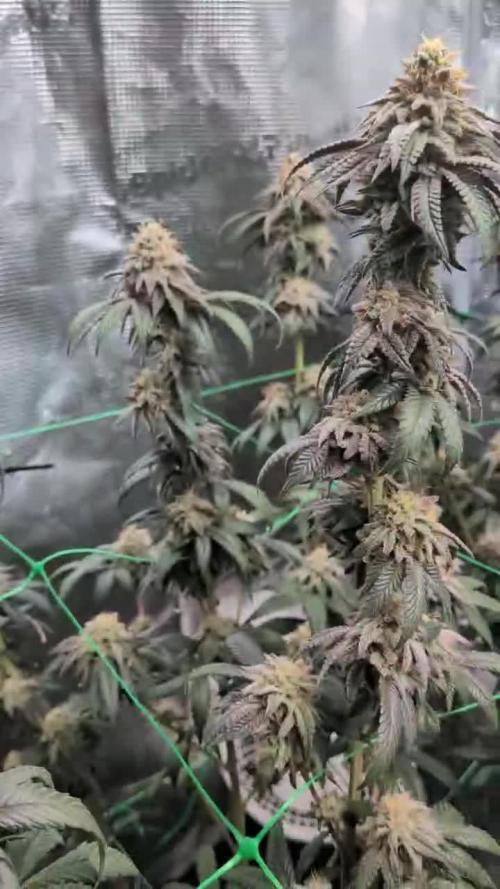
All is going well here in this tent with the plants really putting on some weight and a change in the smell its so much more gassy now over the fruity Strawberry smell mixed with grapes. Either way im not too fussed they really do look good for day 42 of flower. They claim 9-10weeks flower so we will see 😂 Also added another scrog layer like I did in the 3x3 tent. The buds are already leaning some so this will help in the next 3-4weeks 😅 I also ordered another Mammoth light but this one is 720w of their incredible Nova sun series. It is overkill for this 4x2 tent but I'll be using it on a lower power and with out the canopy lights until I can get my bigger tent setup. Its time to get rid of the Spiderfarmer g4500. They are fairly decent lights but only really deliver high ppfd to a smaller area than their ppfd maps say. Just waiting for these girls to be done then I can move into a bigger tent👌

Likes
13
Share


@AutoCrazy
Follow
This girl is coming along fairly well. She is starting to put in a little weight now. I have been battling powdery mildew on this lady! She does not seem very resistant to it unfortunately. I will have to up my treatment regime a little bit I’m thinking. I may also take one other plant out of my greenhouse if I can squeeze it out to make a little more room.
😎🍿

Likes
13
Share


@NanoLeaf
Follow
Follow my grow to see full grow cycle. Happy with what I learned during this run. Only going to get better and better!


Likes
12
Share


@2Stones1Bird
Follow
Checkout my Instagram @smallbudz to see the Small budget grow setup for indoor use, low watt, low heat, low noise, step by step.
17/11/2019 - Pot feels light and the is bottom dry to the touch time to water, gave her 1,5l of water PH 6.2 with 0.5ml Grow, 1ml, Bloom and 0.5ml Max Biobizz reduced the dosage from last time, watered util some runoff appeared.
18/11/2019 - Mixed another batch of Alg-a-Mic 2ml per liter to spray on lights off PH 6.2

Likes
15
Share


@RBK2023
Follow
Big defoliation to end week 2 nicely 👌
Plants have continued to stretch hopefully not too much more!
All phenos are growing impressively
big shout out to @fast_buds
Likes
Comments
Share

@Space_kydebt
Follow
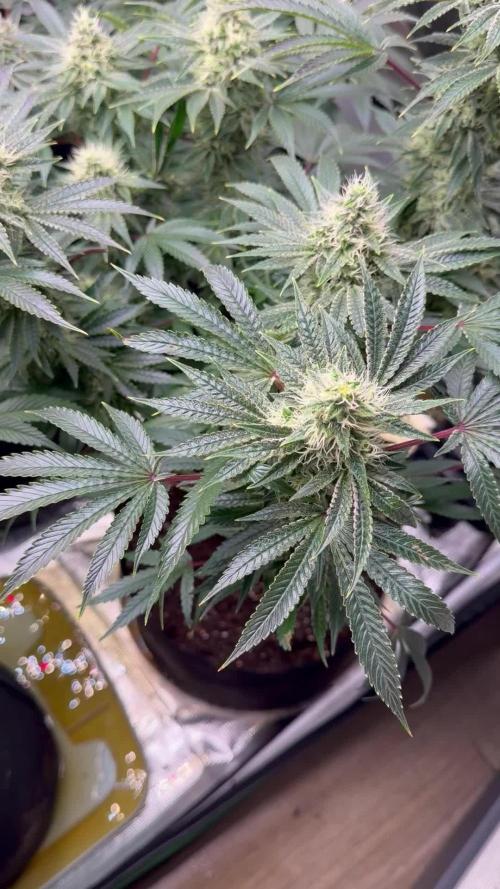
Yea one of the hairiest plants I grew and man it has a sweet smell like cake , I’m feed all these plant 1500 ppm and emerald harvest but I just got a hold of my sesi bloom I love it but yeah I’m read for this to end cause I got some dope shit coming up next and another tent coming with another Amazon special just to try out I love this but yeah I will be buying more of this seed to stock up you can purchase this a brotanicalgardens hyphy genetics power by ethos so yeah good seed I swear. Warning these plant do grow as there budding so do grow to long in veg with out proper head space. But yeah they are beautiful 😻. Shot out to hyphy genetics.. but yeah they eat heavy also I actual didn’t give them enough during veg .. so yeah heavy feed sativa growth in veg and flower 🌹. This is like week seven in flower and they keep shooting pistols lol I love it .. but yeah light green so far .. other than that talk to you guys later this is a definitely a good one to grow for intermediate because you do have to watch feeding cause at first they don’t want much and then they because water vampires lol so yeah feed as much as you want this a great one for hydro or Rockwell cubes this plant does well in soil also so growth in veg they like it a little warmer in flower than usual.
Likes
5
Share

@AestheticGenetix
Follow
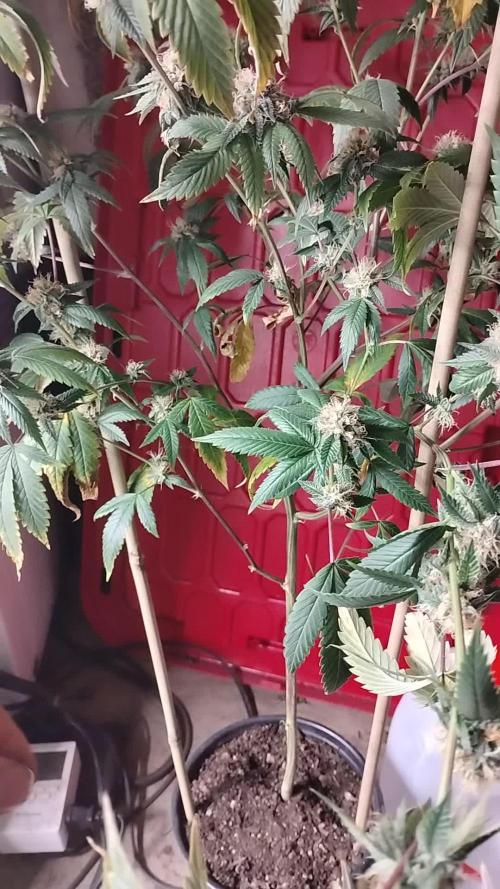
Has bulked up quite visibly since last week. I imagine she'll be bulking for the next couple weeks and then slow down before the chop.
Let me go on a rant for a minute.
So we all know that ogkush is a grandparent to a lot of modern strains. More specifically, the gelato line up from sherbinskis. But the similarities between this verified 20 year old genetic and the newer hype gelato strains is uncanny. Every time I look at this OG Kush, I just see the gelato I ran all last year. It's almost like they took og Kush and Improved a few things about it and came out with Gelato. I'm kind of tripping about it. I grew the Acai gelato out like 4 times. It was the main plant I grew last year. So I know her fairly well. Maybe more than any other strain. The way the buds form and the structure, the weak floppy stems. Even the smells right now are reminiscent.
Rant over. Lol
Come check out the other socials y'all!


Likes
2
Share

@Guerrilla_grower777
Follow
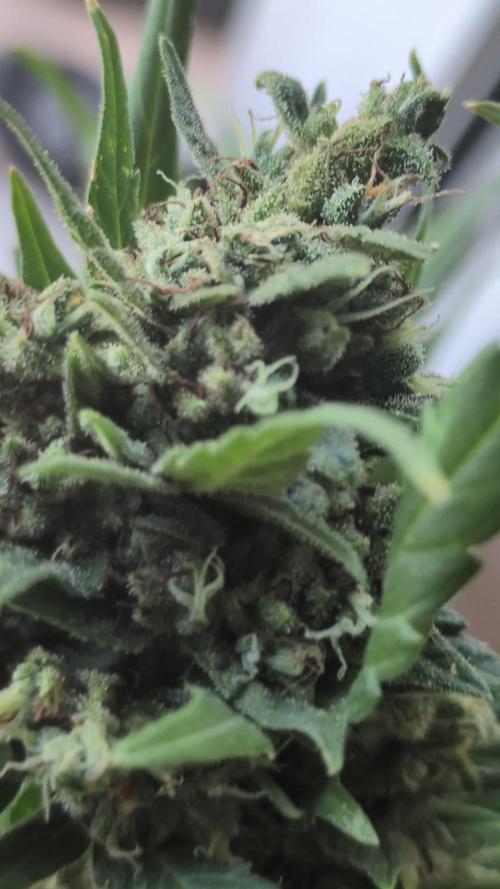
Strange hot week in the very end of Summer
I had to write something here to post this😄😄

Likes
13
Share


@cookingwithninja
Follow
S2 beans are looking good. Will probably chop this weekend (so week 9 day 1-2) testers are good. Still feeding pk just slightly less so adding ph down again. I have stopped using ph down in flower as the soluble pk brings water down to 6.7 and beautiful. Nugs are pretty huge. Feels well above 30%.
Likes
3
Share


@Unculti_responsable
Follow
Esta semana fue muy productiva hicimos poda apical y de bajos ,trasplantamos a una maceta de 3 litros, se recupero muy bien y sigue creciendo hermosa , esta semana la vamos a dejar descansar y darle cariño para que siga creciendo sana , las semanas siguientes ya la vamos a ir entrenando con cropping y amarres vamos a ir viendo!!!

Likes
16
Share


@danwho
Follow
2-24, Day 59 harvest
Plants were all cut down together. Hung to allow tent conversion to drying setup and reloaded into the tent. Some nicer images were taken with the R100 cannon camera, and also a mix of images from my iPhone and my buddy's Note7. Current drying environment: 62F, 62% humidity.
2-26, Day 2 drying
The tent is very stable around 60% humidity and 60F. I have the tent set up for negative pressure to pull a slight vacuum, ensuring the air will turnover inside the tent, with one oscillating fan helping to distribute the humidifier mist. I have an external air purifier running with active carbon filters to manage the smell.
Likes
26
Share


@pifflestikkz
Follow
Day 17
17/07/24 Wednesday
De-chlorinated tap water pH 6 with calmag 5ml -5L.
Very humid week, noticed a green turning colour on top of soils where the humidity has been far to high.
I have installed door netting and recently left open all day and night now so they can condition over night in colder temps.
All are doing well, one overdose slightly behind and looking ABIT swifted. But she'll come around 💪💚
Day 19
19/07/24 Friday
Lite Feed today, 250ml each pot small run off.
Seeing excellent start to these babies. Let's get it 👌💚
Day 21
21/07/24 Sunday
De-chlorinated tap water pH 6 with calmag 5ml to 5L.
Watering in 1L each day from now.
Updated video
Likes
14
Share


@Dunk_Junk
Follow
Wow she's doing great this week. Grew another 20cm. Totally out of headroom now.
She's going to yield a lot in a few weeks 😎

Likes
253
Share


@Hologram
Follow
Sticky beast is waiting for some good sunrays so she can break out of my garden!!😎👏👏👏
Garden is smelling real sweet too, thanks to her 😵👌
I love her structure, i have topped her, but LST was not that necessary.. only defoliation, a lil bit..
i love that bc i hate LST, (im not that good in it..😳)
She turned out great, she grew open and wide.. just by herself. 😇👍(maybe also becouse i let her dance in the wind 😎 and move her around a lot)
Lots of bad weather this week(cold and wet, she is in greenhouse a lot).. but luckily her buds are still healthy👌
And dont forget:
FOR ALL MY GROWBRETHREN/SISTREN IS A DISCOUNT CODE: ZAMMIGD2023
happy growing for all ✊
Likes
8
Share


@Mr_nugs_lover_David
Follow
Very good journey to me, she has responded very well to the lst training, providing me beautiful colas, enough for me to have nice clean organic nuggets to smoke. I would definitely would run this Ak420 by seedstockers again, the sweetest phenotype was the number #2 which you can take a look at here in my page!

Likes
38
Share


@MadeInGermany
Follow
Hey guys .
A wonderful week goes by with a super growth :-).
After I topped it for the first time last week, it recovered very quickly and showed great growth.
I don't think I will use topping again on the lady because I should slowly blossom with a few other women :-)
think it will be ready in the next 7-14 days for Flowering 👍.
This week it was poured 3 times with 1 l each time
(for nutrients, see table above).
The tent was cleaned and the health of all women was checked :-).
After the photos she was sprayed again with neem oil so that the last little tripse disappeared.
Even if you can't see any more trips I will spray it one last time next week to make sure :-).
I wish you all a happy new year 2022 ☺️.
Stay healthy 🙏🏻
👇🏼👇🏼👇🏼👇🏼👇🏼👇🏼👇🏼👇🏼👇🏼👇🏼👇🏼👇🏼
You can buy this Nutrients at :
https://greenbuzzliquids.com/en/shop/
With the discount code: Made_in_Germany you get a discount of 15% on all products from an order value of 100 euros.
👇🏼👇🏼👇🏼👇🏼👇🏼👇🏼👇🏼👇🏼👇🏼👇🏼👇🏼👇🏼
You can buy this strain at :
https://www.exoticseed.eu/de/hanfsamen/hippie-therapy-cbd
Water 💧 💧💧
Osmosis water mixed with normal water (24 hours stale that the chlorine evaporates) to 0.2 EC. Add Cal / Mag to 0.4 Ec Ph with Organic Ph - to 5.8 - 6.4
MadeInGermany

Likes
61
Share

@squalino
Follow
📖 Chroniques de l'Oasis : La Marque Blanche
🐪 Chapitre 7 : La Rosée d'Étoiles du Rif
Date : 8 Avril 2026
Âge : J+49
Taille : 66 cm (+4 cm depuis le 2 Avril)
Le périple continue. Je marche d'un pas lent et régulier, car je sais que l'Oasis ne livre pas ses secrets en un jour. Il reste encore bien des lunes avant d'atteindre le cœur du sanctuaire — au moins un mois de marche sous ce soleil du sanctuaire.
Mais aujourd'hui, le paysage change.
La Sultane, du haut de ses 66 cm, commence à capturer la lumière d'une manière nouvelle. Ce n'est plus seulement du vert que je vois ; sous l'éclat de la lampe, on dirait qu'une fine poudre d'étoiles commence à se déposer sur ses épaules de velours. Cette poussières d'Étoiles scintillent, transformant chaque calice en un réceptacle de délice. Elle s'habille de cette rosée céleste, préparant sa parure pour la suite du voyage.
🏜️ Le Souffle de la Vallée
Température :
24,5°C jour / 21°C nuit (Le climat reste clément et stable).
Humidité :
50% (Idéal pour laisser cette poudre d'étoiles sécher et s'incruster).
Lumière :
Intensité 75%, à 57 cm de la couronne (Le soleil se fait plus pressant, plus intime).
L'Élixir de vie (Nutrition)
Le chemin demande de la force, et la Sultane puise dans ses réserves :
le 06/04
Il y a 2 jours :
1 Litre d'eau (pH 6,3) avec 4 ml de PK 5-8. L'élixir de densité pour forger ses fleurs.
le 08/04
Aujourd'hui :
3 ml d'Orgatrex. J'ai vu ses feuilles du bas jaunir, signe qu'elle sacrifie sa base pour nourrir son sommet. Cet apport d'azote est une main tendue pour l'aider à garder sa vigueur sur la longue route qui nous reste.
le 14/04
apport de l'élixir de vie
4ml pk 5-8 1 litres d'eau ph 6,3
📜 Anecdote du Rif : Les "Nuits de Cristal"
Dans les montagnes du Rif, les cultivateurs les plus expérimentés ne regardent jamais leurs plantes en plein jour pour juger de la résine. Ils attendent la nuit, munis d'une simple lampe à huile ou à la lueur de la lune.
On appelle cela chercher le "Givre du Rif". Ils disent que si la plante "mange la lumière" le jour, elle "recrache des étoiles" la nuit. Si, à la lueur d'une flamme, la plante scintille comme si elle était couverte de diamants pilés, alors ils savent que la recolte sera d'une pureté exceptionnelle.
Note du Nomade :
"Le chemin est encore long, les horizons se succèdent. Mais sous cette pluie d'étoiles, la marche devient plus légère. La Sultane n'a pas encore tout dit, et je serai là pour voir chaque grain de lumière se poser sur elle."

Likes
12
Share


@sensistar9
Follow
Overall grow cycle was easy,strain reacts very good to topping and will work great in a scrog,smell tastes and effects are on point,more sativa to it.
