The Grow Awards 2026 🏆
Likes
22
Share
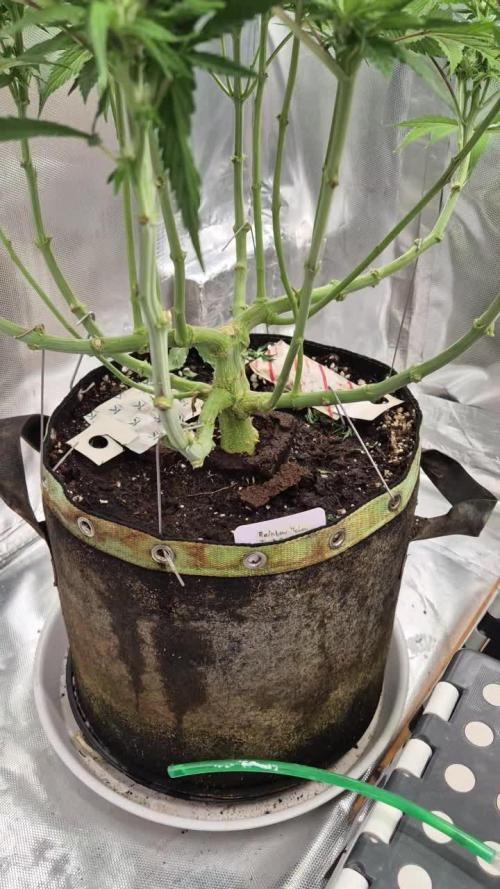
12/25/2023-Germination Day 1 Merry X-mas 2023 I decided to start a run of SolFIre Gardens Hoodz Candyz S1. I am going to do a cup filled with RO water a touch of Hydrogen peroxide and let it sit for 24-48 hours until I see tap root then I am going to put it into a rapid rooter.. Tap root Down and put it about 1/4 of the say down the Rapid rooter. I made some modifications to my basket on this run.. I have taken a few Pods that I use for my cloning machine and decided that I am going to try and use them as sure plants, so that I can take my water right up to the bottom of the basket this time and see if these can make my planting more consistent.   12/26/2023-Germination Day 2 Tap root achieved Planting Commencing 12/27/2023-Germination Day 3 Misted the dome lightly misted the rapid rooter and added a little water to the bottom of the pan to encourage root growth to the pan. 12/28/2023-Germination Day 4 Ground Hogs day 12/29/2023- Germination Day 5 She is up, she has broken surface, I misted the root riot, and around the bottom of the tray to try and entice root growth down rapidly. 12/31/2023- Germination Day 6 Ground Hogs Day 1/1/2024-Germination Day 7 HAPPY NEW YEARS!!.. I did it I planned it out so my planting day would fall on New Years and it worked.. Yay!!! 1/2/2024- Germination Day 8 Since the roots are not to the water yet, I am pouring one cup of water lightly on the hydroton around the lady to try and encourage root growth down to the water.. 1/3/2024- Germination Day 9 Ground Hogs day, will continue until roots hit the water. 1/4/2024- Germination Day 10 Ground Hogs day, will continue until roots hit the water. I will just continue to top feed until roots are in the water.. Shouldn't be more than a few more days. 1/5/2024- Germination Day 11 Ground Hogs day, will continue until roots hit the water. I am going to change the water Sunday and kick off Week 1, I will just continue to top feed until roots are in the water.. Shouldn't be more than a few more days. 1/6/2024- Germination Day 12 Ground Hogs day, will continue until roots hit the water. I will just continue to top feed until roots are in the water.. Shouldn't be more than a few more days. 1/6/2024- Germination Day 13 Ground Hogs day, will continue until roots hit the water. 1/7/2024- Germination Day 14 Ground Hogs day, will continue until roots hit the water.
Likes
14
Share
@Tazard
Follow
She is bursting with terpenes! I pressed a 6.6g puck and I got a 1.74g return at 220F (26%) my mold is made to hold about 15g so I suspect I lost some recovery to the filter bag. Just learning on the press but I’m getting wonderful results and returns around 25%.
Likes
3
Share
@Rumyn88
Follow
Hey all, its our 2nd week after casing drop. Facing some issues with Night temp, sometimes it could fall to +12C, thinking about how to improve it. Also concerned about slow growth because of that. Using just 1/3 of Plagron recommended dose. Modified a bit my tank, made some technical window. Also set up automatic irrigation, because wool started to dry up during the day Upd Sunday 10.12.2023, Decided to put Babys finally to Seramis. Washing ceramics is some kind of hell: -First, I decided to sift all the dust through a sieve, stood in a half-bent position with bags of Seramis for 30m (my back didnt like it), but there was a lot of dust. -then I decided to check the Ph and rinse thoroughly. Although the package says 5.5-5.7 Ph, after the first flush with a balanced solution at 5.5 Ph, there was 6.5 in the drainage. - I was concerned by the very muddy brick colour water, then got tired of mixing 5.5 in a bucket for flushing and decided to rinse it with tap water from shower and then balance it back to 5.5 Ph . As a result, I poured from the hose for another 30 minutes until the water became more or less transparent. -I also tested FloraFlex discs, they drip great and, although round, fit perfectly into my square grow bags. -Meanwhile, the Milwaukee Ph meter broke down, even the readings of the calibration buffer were changing from 4-6 Ph within one minute. In the end, I spent another 30min and half a bottle of buffer on this too. It’s good that i had yellow Chinese Ph meter, which even after 3 years of rest in the box showed accurate buffer readings. -Finally, the Ph of the drainage was 5.5-5.7 and it was transparent, so I began to move it into the growbox. I sprinkled it as much as I could, it was impossible to dig deeper. The plants do not yet reach the matrix disk, so for now they will grow with the usual felt. -The cap of the tank is very thin and cannot withstand the weight of 2 grow bags, I’ll have to come up with something else, maybe I’ll put some kind of drainage grid. Watering will be from a tank with a mixed solution of 5.8 Ph and 1.1 EC.
Likes
9
Share
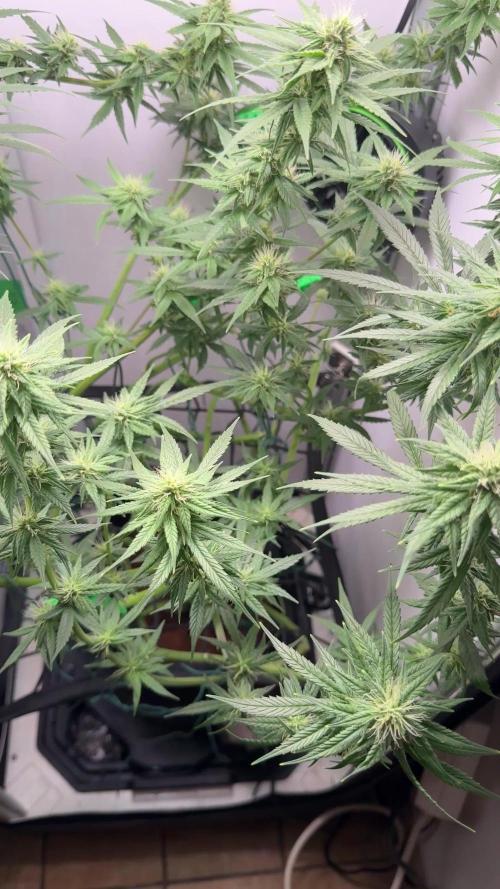
This plants have developed beautiful branches that will develop awesome fat nuggets for sure! Really nice strain to grow, would be awesome to apply lst some time on this strain, I have applied a selective defoliation on them, let's see how this ladies keep developing, I start to count the days of flower on April 10th!
Likes
4
Share
@leo2023
Follow
Just a few more days to chop🔪✂️
Likes
5
Share
@Ibgrowing
Follow
I have watered her twice this week, once with 3l of rain water and once with 3,5l of rain water. I will probably up the volume a bit more next week. I upped the nutrition a bit despite the burned tips. I will not be home for the next 2 weeks so I will rely on other people to take care of my girls, the pics might be not up to standard.
Likes
45
Share
@Robbaus
Follow
Settimana molto molto difficile. Causa temperatura elevata mi si è formata parecchia muffa sulla parte della radici esposta all'aria, l'acqua all'interno dei sistemi dovrebbe stare sui 22 gradi e sono arrivato a 26. Aumentando la potenza del vaporizzatore che emana aria fresca e tenendo aperto il box riesco a stare nei parametri ma a luglio sarà dura per le temperature e per l'umidità un pelo troppo alta. Mi manca ancora un mesetto e mezzo, spero di arrivare a fine raccolto senza problemi. Proverò anche ad utilizzare il tricodema per la pulizia delle radici, spero mi aiuti. Ad ogni modo negli ultimi due giorni registro un notevole miglioramento dell'apparato radicale. Per il resto in realtà va alla grande, le piante non sembrano aver avuto problemi relativi a ciò e stanno finendo di allungarsi dopo il cambio d'ore. Sono veramente soddisfatto della situazione. EC forse un po' bassa ma avendo appena rifatto la soluzione nutritiva temporeggio qualche giorno prima di andare ad aggiungere altri fertilizzanti.
Likes
5
Share
@db003
Follow
time for a watering update of my top shelf elite genetics autoflower testers of black valium autos and ancient haze autos in this watering I gave them emerald harvest nutrients I used the nutes at half strength of the recommended dose the water was ph. to 5.8 I made 3 gallons and split it between all the plants I did not use all of it just enough to get some run off I took the excess run off out with a turkey baster Cali Pro A and B at 2.5ml per gallon emerald goddess at 3ml per gallon honey chome at 2ml per gallon root wizard at 7.5 per gallon I also gave some Cheshire grin liquid worm castings to only 2 of the 4 autos they got 90ml to the base of the plant these plants are in day #25 from sprout
Likes
3
Share
Super hst fatto alla settimana settimana
Likes
46
Share
@Dreadnug
Follow
Two phenotypes - one purple and one white/green. The purple was very difficult to train and resulted in a couple inadvertent breaks - luckily it was repairable. The other trained very well, very flexible and worked very good for SCROG. Both produced heavily and are beautiful. The purple tends to be much more fluffy, with very long pistil hairs - the longest of any grow I have done. The white was super dense, very crystally and sticky. It will be very interesting to see how they smoke. Also, the purple tended to do very well with some nute mistakes I made as well as fluctuating pH in my water feeding. The white did not do as well in this regard but was able to get to harvest fine. Wet bud weight is prior to trimming. The buds off of these plants were HUGE!!!! Plant #1: (Purple): Wet weight - 76.58oz prior to trim; 15 colas; Terps: White - 60%, Clear - 20%, Amber - 20% Plant #2: (White): Wet weight - 71.65oz prior to trim; 16 colas; Terps: White - 70%, Clear - 30%, After 3 days of drying, took them down to trim for my jars. After a few hours filled mostly quart jars 3/4 full but also tried an Infinity jar and a gallon mason jar to minimize the number of smaller jars. Dry weights into jars: Plant #1: 14.79 oz Plant #2: 11.76oz I did pull them after a day to dry rack them for 12 hours due to a little bit higher moisture content then I would have liked ( 70%rH). Re-jarred on 6/1/23 and now holding steady at around 60% rH. Cure Check In (Week 2): 6/10 - 6/12/23: rH ~ 63 - 66%. Daily air exposure & fanning. Very smelly. Looking good - another couple weeks and will be ready.
Likes
9
Share
A planta segue forte, saudável e explosiva. Na última semana, a evolução dela a cada 24h foi algo impressionante. Segurei um pouco na nutrição para prevenir um overfert. Fiz uma leve defoliação e também tirei alguns brotos menos promissores. Seguimos aí para mais uma semana. Colaborem com meu cultivo e me ajudem com dicas! ⛓️💪🏽
Likes
34
Share
Hello everyone, my friends! this week we will do more with the rinsing of the roots, waiting for these magical nuggets to swell even more 😉🍭
Processing
Likes
19
Share
Seems I told a lie last week, I'm late one day and I've done videos again cos again 🤥 Its been a good week for bud production regardless of a hiccup this week which shows as cal/mag and nitrogen deficiencies throughout each plant🤒 My ph pen malfunctioned and I ended up feeding them all 4.5 and didn't notice till the leaves told me 🍂 The ph pen has been replaced, amendments made to buffer the root zone and fingers are crossed 💉🤞 Super stinky grow this, going to replace my carbon filter before starting a new one because I caught wiffs of them when I entered my home today. If the flavours match the smells in this tent I'm in for a treat come smoke time.👃⛽🍋🍇 Its that magic time in the tent now where each girls really showing their own characteristics, both the purple punches and the zkittlez are different phenos to their siblings so I'm excited to see what they finish up like🏁 So far mostly good 👍 Thanks for reading 📖 One Love💚 Fire Farmer🔥👨‍🌾
Likes
91
Share
Hi everyone, friends! And well back to the Peaky Californian enchanted valley Apical peaks continue to inflate extremely invading the network too! The shoots are increasingly purple ;) how beautiful!
Likes
13
Share
@XanHalen
Follow
Apr 20: They hanging out at 65% rh and 65F.. Going for 7-10 day dry… No wet trim, cut plants in half and hung… Very happy with density and resin production… Can’t wait to jar and test in 2-3 weeks… I feel comfortable with this strain, I think it’s time to move on… Really wanna run some Mephisto seeds….
Likes
3
Share
@Rinna
Follow
Unfortunately, the Blue am and dynamighty (also due to their long flowering periods) didn't make it. Told my roommate to cut the plants when I saw that video and those pics but it was far to late already..
Likes
25
Share
ANTHOCYANIN production is primarily controlled by the Cryptochrome (CR1) Photoreceptor ( !! UV and Blue Spectrums are primary drivers in the production of the pigment that replaces chlorophyll, isn't that awesome! 1. Diverse photoreceptors in plants Many civilizations, including the sun god of ancient Egypt, thought that the blessings of sunlight were the source of life. In fact, the survival of all life, including humans, is supported by the photosynthesis of plants that capture solar energy. Plants that perform photosynthesis have no means of transportation except for some algae. Therefore, it is necessary to monitor various changes in the external environment and respond appropriately to the place to survive. Among various environmental information, light is especially important information for plants that perform photosynthesis. In the process of evolution, plants acquired phytochrome, which mainly receives light in the red light region, and multiple blue light receptors, including his hytropin and phototropin, in order to sense the light environment. .. In addition to these, an ultraviolet light receptor named UVR8 was recently discovered. The latest image of the molecular structure and function of these various plant photoreceptors (Fig. 1), focusing on phytochrome and phototropin. Figure 1 Ultraviolet-visible absorption spectra of phytochrome, cryptochrome, phototropin, and UVR8. The dashed line represents each bioactive absorption spectrum. 2. Phytochrome; red-far red photoreversible molecular switch What is phytochrome? Phytochrome is a photochromic photoreceptor, and has two absorption types, a red light absorption type Pr (absorption maximum wavelength of about 665 nm) and a far-red light absorption type Pfr (730 nm). Reversible light conversion between the two by red light and far-red light, respectively(Fig. 1A, solid line and broken line). In general, Pfr is the active form that causes a physiological response. With some exceptions, phytochrome can be said to function as a photoreversible molecular switch. The background of the discovery is as follows. There are some types of plants that require light for germination (light seed germination). From that study, it was found that germination was induced by red light, the effect was inhibited by subsequent far-red light irradiation, and this could be repeated, and the existence of photoreceptors that reversibly photoconvert was predicted. In 1959, its existence was confirmed by the absorption spectrum measurement of the yellow sprout tissue, and it was named phytochrome. Why does the plant have a sensor to distinguish between such red light and far-red light? There is no big difference between the red and far-red light regions in the open-field spectrum of sunlight, but the proportion of red light is greatly reduced due to the absorption of chloroplasts in the shade of plants. Similar changes in light quality occur in the evening sunlight. Plants perceive this difference in light quality as the ratio of Pr and Pfr, recognize the light environment, and respond to it. Subsequent studies have revealed that it is responsible for various photomorphogenic reactions such as photoperiodic flowering induction, shade repellent, and deyellowing (greening). Furthermore, with the introduction of the model plant Arabidopsis thaliana (At) and the development of molecular biological analysis methods, research has progressed dramatically, and his five types of phytochromes (phyA-E) are present in Arabidopsis thaliana. all right. With the progress of the genome project, Fi’s tochrome-like photoreceptors were found in cyanobacteria, a photosynthetic prokaryotes other than plants. Furthermore, in non-photosynthetic bacteria, a homologue molecule called bacteriophytochrome photoreceptor (BphP) was found in Pseudomonas aeruginosa (Pa) and radiation-resistant bacteria (Deinococcus radiodurans, Dr). Domain structure of phytochrome molecule Phytochrome molecule can be roughly divided into N-terminal side and C-terminal side region. PAS (Per / Arndt / Sim: blue), GAF (cGMP phosphodiesterase / adenylyl cyclase / FhlA: green), PHY (phyto-chrome: purple) 3 in the N-terminal region of plant phytochrome (Fig. 2A) There are two domains and an N-terminal extension region (NTE: dark blue), and phytochromobilin (PΦB), which is one of the ring-opening tetrapyrroles, is thioether-bonded to the system stored in GAF as a chromophore. ing. PAS is a domain involved in the interaction between signal transduction-related proteins, and PHY is a phytochrome-specific domain. There are two PASs and her histidine kinase-related (HKR) domain (red) in the C-terminal region, but the histidine essential for kinase activity is not conserved. 3. Phototropin; photosynthetic efficiency optimized blue light receptor What is phototropin? Charles Darwin, who is famous for his theory of evolution, wrote in his book “The power of move-ment in plants” published in 1882 that plants bend toward blue light. Approximately 100 years later, the protein nph1 (nonphoto-tropic hypocotyl 1) encoded by one of the causative genes of Arabidopsis mutants causing phototropic abnormalities was identified as a blue photoreceptor. Later, another isotype npl1 was found and renamed phototropin 1 (phot1) and 2 (phot2), respectively. In addition to phototropism, phototropin is damaged by chloroplast photolocalization (chloroplasts move through the epidermal cells of the leaves and gather on the cell surface under appropriate light intensity for photosynthesis. As a photoreceptor for reactions such as escaping to the side of cells under dangerous strong light) and stomata (reactions that open stomata to optimize the uptake of carbon dioxide, which is the rate-determining process of photosynthetic reactions). It became clear that it worked. In this way, phototropin can be said to be a blue light receptor responsible for optimizing photosynthetic efficiency. Domain structure and LOV photoreaction of phototropin molecule Phototropin molecule has two photoreceptive domains (LOV1 and LOV2) called LOV (Light-Oxygen-Voltage sensing) on the N-terminal side, and serine / on the C-terminal side. It is a protein kinase that forms threonine kinase (STK) (Fig. 4Aa) and whose activity is regulated by light. LOV is one molecule as a chromophore, he binds FMN (flavin mononucleotide) non-covalently. The LOV forms an α/βfold, and the FMN is located on a β-sheet consisting of five antiparallel β-strands (Fig. 4B). The FMN in the ground state LOV shows the absorption spectrum of a typical oxidized flavin protein with a triplet oscillation structure and an absorption maximum wavelength of 450 nm, and is called D450 (Fig. 1C and Fig. 4E). After being excited to the singlet excited state by blue light, the FMN shifts to the triplet excited state (L660t *) due to intersystem crossing, and then the C4 (Fig. 4C) of the isoaroxazine ring of the FMN is conserved in the vicinity. It forms a transient accretionary prism with the tain (red part in Fig. 4B Eα) (S390I). When this cysteine is replaced with alanine (C / A substitution), the addition reaction does not occur. The effect of adduct formation propagates to the protein moiety, causing kinase activation (S390II). After that, the formed cysteine-flavin adduct spontaneously dissociates and returns to the original D450 (Fig. 4E, dark regression reaction). Phototropin kinase activity control mechanism by LOV2 Why does phototropin have two LOVs? Atphot1 was found as a protein that is rapidly autophosphorylated when irradiated with blue light. The effect of the above C / A substitution on this self-phosphorylation reaction and phototropism was investigated, and LOV2 is the main photomolecular switch in both self-phosphorylation and phototropism. It turns out that it functions as. After that, from experiments using artificial substrates, STK has a constitutive activity, LOV2 functions as an inhibitory domain of this activity, and the inhibition is eliminated by photoreaction, while LOV1 is kinase light. It was shown to modify the photosensitivity of the activation reaction. In addition to this, LOV1 was found to act as a dimerization site from the crystal structure and his SAXS. What kind of molecular mechanism does LOV2 use to photoregulate kinase activity? The following two modules play important roles in this intramolecular signal transduction. Figure 4 (A) Domain structure of LOV photoreceptors. a: Phototropin b: Neochrome c: FKF1 family protein d: Aureochrome (B) Crystal structure of auto barley phot1 LOV2. (C) Structure of FMN isoaroxazine ring. (D) Schematic diagram of the functional domain and module of Arabidopsis thaliana phot1. L, A’α, and Jα represent linker, A’α helix, and Jα helix, respectively. (E) LOV photoreaction. (F) Molecular structure model (mesh) of the LOV2-STK sample (black line) containing A’α of phot2 obtained based on SAXS under dark (top) and under bright (bottom). The yellow, red, and green space-filled models represent the crystal structures of LOV2-Jα, protein kinase A N-lobe, and C-robe, respectively, and black represents FMN. See the text for details. 1) Jα. LOV2 C of oat phot1-to α immediately after the terminus Rix (Jα) is present (Fig. 4D), which interacts with the β-sheet (Fig. 4B) that forms the FMN-bound scaffold of LOV2 in the dark, but unfolds and dissociates from the β-sheet with photoreaction. It was shown by NMR that it does. According to the crystal structure of LOV2-Jα, this Jα is located on the back surface of the β sheet and mainly has a hydrophobic interaction. The formation of S390II causes twisting of the isoaroxazine ring and protonation of N5 (Fig. 4C). As a result, the glutamine side chain present on his Iβ strand (Fig. 4B) in the β-sheet rotates to form a hydrogen bond with this protonated N5. Jα interacts with this his Iβ strand, and these changes are thought to cause the unfold-ing of Jα and dissociation from the β-sheet described above. Experiments such as amino acid substitution of Iβ strands revealed that kinases exhibit constitutive activity when this interaction is eliminated, and that Jα plays an important role in photoactivation of kinases. 2) A’α / Aβ gap. Recently, several results have been reported showing the involvement of amino acids near the A’α helix (Fig. 4D) located upstream of the N-terminal of LOV2 in kinase photoactivation. Therefore, he investigated the role of this A’α and its neighboring amino acids in kinase photoactivation, photoreaction, and Jα structural change for Atphot1. The LOV2-STK polypeptide (Fig. 4D, underlined in black) was used as a photocontrollable kinase for kinase activity analysis. As a result, it was found that the photoactivation of the kinase was abolished when amino acid substitution was introduced into the A’α / Aβ gap between A’α and Aβ of the LOV2 core. Interestingly, he had no effect on the structural changes in Jα examined on the peptide map due to the photoreaction of LOV2 or trypsin degradation. Therefore, the A’α / Aβ gap is considered to play an important role in intramolecular signal transduction after Jα. Structural changes detected by SAXS Structural changes of Jα have been detected by various biophysical methods other than NMR, but structural information on samples including up to STK is reported only by his results to his SAXS. Not. The SAXS measurement of the Atphot2 LOV2-STK polypeptide showed that the radius of inertia increased from 32.4 Å to 34.8 Å, and the molecular model (Fig. 4F) obtained by the ab initio modeling software GASBOR is that of LOV2 and STK. It was shown that the N lobes and C lobes lined up in tandem, and the relative position of LOV2 with respect to STK shifted by about 13 Å under light irradiation. The difference in the molecular model between the two is considered to reflect the structural changes that occur in the Jα and A’α / Aβ gaps mentioned above. Two phototropins with different photosensitivity In the phototropic reaction of Arabidopsis Arabidopsis, Arabidopsis responds to a very wide range of light intensities from 10–4 to 102 μmol photon / sec / m2. At that time, phot1 functions as an optical sensor in a wide range from low light to strong light, while phot2 reacts with light stronger than 1 μmol photon / sec / m2. What is the origin of these differences? As is well known, animal photoreceptors have a high photosensitivity due to the abundance of rhodopsin and the presence of biochemical amplification mechanisms. The exact abundance of phot1 and phot2 in vivo is unknown, but interesting results have been obtained in terms of amplification. The light intensity dependence of the photoactivation of the LOV2-STK polypeptide used in the above kinase analysis was investigated. It was found that phot1 was about 10 times more photosensitive than phot2. On the other hand, when the photochemical reactions of both were examined, it was found that the rate of the dark return reaction of phot1 was about 10 times slower than that of phot2. This result indicates that the longer the lifetime of S390II, which is in the kinase-activated state, the higher the photosensitivity of kinase activation. This correlation was further confirmed by extending the lifespan of her S390II with amino acid substitutions. This alone cannot explain the widespread differences in photosensitivity between phot1 and phot2, but it may explain some of them. Furthermore, it is necessary to investigate in detail protein modifications such as phosphorylation and the effects of phot interacting factors on photosensitivity. Other LOV photoreceptors Among fern plants and green algae, phytochrome ɾphotosensory module (PSM) on the N-terminal side and chimera photoreceptor with full-length phototropin on the C-terminal side, neochrome (Fig. There are types with 4Ab). It has been reported that some neochromes play a role in chloroplast photolocalization as a red light receiver. It is considered that fern plants have such a chimera photoreceptor in order to survive in a habitat such as undergrowth in a jungle where only red light reaches. In addition to this, plants have only one LOV domain, and three proteins involved in the degradation of photomorphogenesis-related proteins, FKF1 (Flavin-binding, Kelch repeat, F-box 1, ZTL (ZEITLUPE)), LKP2 ( There are LOV Kelch Protein2) (Fig. 4Ac) and aureochrome (Fig. 4Ad), which has a bZip domain on the N-terminal side of LOV and functions as a gene transcription factor. 4. Cryptochrome and UVR8 Cryptochrome is one of the blue photoreceptors and forms a superfamily with the DNA photoreceptor photolyase. It has FAD (flavin adenine dinucle-otide) as a chromophore and tetrahydrofolic acid, which is a condensing pigment. The ground state of FAD is considered to be the oxidized type, and the radical type (broken line in Fig. 1B) generated by blue light irradiation is considered to be the signaling state. The radical type also absorbs in the green to orange light region, and may widen the wavelength region of the plant morphogenesis reaction spectrum. Cryptochrome uses blue light to control physiological functions similar to phytochrome. It was identified as a photoreceptor from one of the causative genes of UVR8 Arabidopsis thaliana, and the chromophore is absorbed in the UVB region by a Trp triad consisting of three tryptophans (Fig. 1D). It is involved in the biosynthesis of flavonoids and anthocyanins that function as UV scavengers in plants. Conclusion It is thought that plants have acquired various photoreceptors necessary for their survival during a long evolutionary process. The photoreceptors that cover the existing far-red light to UVB mentioned here are considered to be some of them. More and more diverse photoreceptor genes are conserved in cyanobacteria and marine plankton. By examining these, it is thought that the understanding of plant photoreceptors will be further deepened.
Likes
19
Share
Spiders has taken over the pot of plant C but i guess they will keep the insects away, so they welcome. Pictures from day 42. I do not think they will be ready in one month but we will see. How long do you think they have left? Im actually going on holiday in July so its a bit of a dilemma for me whether to harvest before or after and hope for rain in the 2 weeks i will be gone. Any ideas would be helpful!
Likes
5
Share
Spumoni (Alien Labs Dosidos x Sunset Sherbert), increíble planta como producto final. Una de las mejores de este grow. Terpenos que no se pueden describir. Un placer para cualquier sibaritas que busca algo especial y exótico!
Likes
31
Share
Hey Leute, heute ein kleines Update vom Blütetag 32. Ich würd mal sagen die Woche is nicht ganz so rund gelaufen, war aber auch nur ne Frage der Zeit bis die ersten Fehler passieren und sich erste Probleme zeigen. Insgesamt bin ich zufrieden, der Stretch is vorbei und die Pflanzen trinken mittlerweile deutlich weniger. Leider hatte ich Temperatur und Feuchtigkeitsprobleme und die Fußbodenheizung mögen die Mädels glaub auch nicht wirklich. Die Papaya Frosting macht sich immer noch prächtig, ist Frosty as fuck und riecht echt richtig nice. Bei den andern drei geht alles bisschen langsamer und sie sind glaub nicht ganz so happy, aber richtig übel haben sie mir auch noch nichts genommen. Die Blue Cheese hat braune spitzen die sich nach oben rollen, mein verdacht kalte Zugluft und zu warme Wurzeln von der Fussbodenheizung (steht direkt vor der zuluft). Irgendwie haben auch alle Lila spitzen und die Pink Chai bekommt grade ganz Lila Blätter, hatte mal ein gekipptes Fenster vergessen und es war während der Lichtphase nur 19 grad. Andere Idee wäre Kaliummangel durch zuviel Kalzium, aber eher unwahrscheinlich weil die eingerollten Blätter angefangen haben als ich das Fenster vergessen hatte. Die Woche werd ich bisschen Greenhouse Booster geben und mal CalMag wieder runterfahren, so ganz hab ich kein vertrauen das die Erde durchhält bis zum Schluss. Schönes Wochenende wünsch ich euch! 🖖