


Likes
Comments
Share


@dwotTV
Follow
Harvested the more mature plant, it had lost it's top to the wind, harvested a few days ago and has had a couple spots with a little rot removed. Seems stable enough and mature. Going to let the remaining one run out a bit as it seems a bit slower.


Processing
Likes
5
Share


@NewbieLearner
Follow
Plants took a few days to get stripped down. Missed the second week of flowering and stretching but oh well there is always next time. Very excited to see this canopy full of uniform buds its going to be a sight to behold haha.


Likes
2
Share


@eldruida_lamota
Follow
Que pasa familia, vamos con la décima semana de floración de estas Gorilla Melón feminizadas de fastbuds.
Vamos al lío, de las 3 plantas, me quede con 2 por espacio, siempre pongo alguna semilla de más por si no abriese alguna por no perder ese hueco del indoor.
También se trasplantaron a su maceta definitiva, en este caso de 7 litros que además provocó un shock que también solucione.
El ph se controla en 6.2 , la temperatura la tenemos entre 20/24 grados y la humedad ronda el 50%.
Las flores están bien prietas y sacan unos aromas afrutados y dulces increible, palazo de variedad, como se han puesto.
Hasta aquí todo, Buenos humos 💨💨💨


Likes
30
Share


@Ganjagrandaddy
Follow
Hi Growmies. Another week done at day 24 flowering. They seem to have finished their stretch period and all have the 1st flush of dress flowering pistils at their growing tips. I am now feeding at a flowering strength feed with additional shogun additives too. I am very pleased with their progress and final foundation foe the flowering stage. The height is a very reasonable 18 inches to the canopy top which has levelled out very well so far. I did have to do a little bending and twisting as they settled into the shapes but it has been very easy to work with them so far .
Bruce Banner#3 has really put put some growth among the branches and will really need to be defoliated to make sure that the air can get around this big lady and avoid any risks of "dead air" or warm pockets. She has a great frame to build her buds onto and some nice thick stems to support the possible chunks. The node spacing is a medium to long but hopefully they will join up where they can over the next 7-8 weeks.
Candy Rain. Her quad training has been productive and I didn't need to really do too much beside hold the two higher branches back a little. she should be a nice open branched , baseball batted cola beast at her final week..
Jealousy #1 and #2 have really been busy with their flower sets and have so much growth going off beneath those huge leafed frames. The leaf sizes are brilliant for harvesting all the available light during veg and i will be sad to defoliate them both at day 21 F. They are so productive that a good lollipopping mat also be called for with the lower growth not really getting enough light to be worth the energy sharing. I can see how these ladies would be huge in an outdoor grow bit also in a bigger indoor space too.
I am sonimoress2d with the health and vigour of all of these ladies but seeing how well the #2 Jealousy has caught up and surpassed her sisters has been a shocker. she has some very big fan leaves and nice chunky stems to hold them expected colas too. Fingers crossed for another good week. Be safe and healthy growmies.

Processing
Likes
2
Share


@Vet4weed
Follow
Week 5 (Feb 1 - Feb7)
Added about 2-3 teaspoons of Wildroot Organic Concentrate Mycorrhizal Fungi to the roots and soil during transplant over the weekend, and within 48 hours all three plants not only sprung back to life, they grew at least 3x in size. The droopy leaves all stood straight out like they were injected with Viagra! Grace was grown in a cup with the same water-only organic soil that all three are in. The other two started out with an "organic" soil from a big box garden center. Grace's leaves were a rich, darker green than the other two. But the big box soil did a lot better on starting the seedlings. I lost 2 other seeds in an attempt to start them in the water-only organic soil. Biggest problem was with the density of the soil, which lifted with watering and took longer to percolate.

Likes
5
Share


@AestheticGenetix
Follow
Plants doing really well. This one isnt drinking as aggressively as the other 1 gallon plants. She's getting the same amount of water but is becoming more water logged than her counterparts previously.
She's turning dark dark in the leaves. Almost black.
Likes
3
Share


@TyRun
Follow
Intermediate Results
Overview
This grow was intense! Setting up the grow consumed so much of my time and focus that I started slacking at work, and it took me a month to get back on track. But hey, what’s the point of a job if it gets in the way of growing? 😉 In the end, everything worked out, and I gained invaluable experience.
This was my first grow using coco coir. At first, I didn’t get it, but then it just clicked! Now I’m hooked: "I’m here to stay." Coco is more controlled than soil, flushes easily, and you can introduce beneficial microbes, which thrive in it. My main takeaway from this grow? If you buy coco, don’t forget CalMag!
Next time, I’ll definitely install HEPA filters at the intake. The amount of dust was insane, and the grow box pulls air like a vacuum cleaner. Watching the timelapse, you can see the box sucking in every bit of dust. I vacuumed the intake filters weekly. The plant was incredibly sticky, but that also meant it caught a lot of lint and fibers between trichomes, especially visible under a microscope. Smoking microplastics? No, thank you!
---
On CO2
CO2 only works if everything else is dialed in. If the plant experiences stress from deficiencies or overfeeding, you can forget about it. Since CO2 supplementation requires turning off the exhaust fan, it’s hard to manage temperature and humidity. The plant releases so much moisture that RH jumps to 80% within minutes. It’s doable, but definitely a challenge.
---
On Magnetic Fields
No clue what’s happening here yet, but it’s fascinating! I’ll test again with a control sample.
---
Nutrients
Dreams do come true—I’ve tested almost everything Advanced Nutrients offers. It wasn’t all smooth sailing; their feeding charts need adjustments for your conditions, and you usually need to feed less than recommended. Overall, I’d say the nutrients performed 100%, and I see no reason to switch. I’ll stick with them for future grows.
---
Strain
This strain is reliable, though not the most productive. It flowered exactly as advertised and delivered a frosty finish. It tolerated all my mistakes like a champ—especially mold. Despite an abandoned SCROG plan turning the plant into a bouquet, there wasn’t a single mold spot, even in the densely packed lower buds that got almost no light. Zero mold issues!
---
Aroma
As advertised: pine, wood, and citrus. At first, I thought it smelled like grapefruit, but now I’m leaning toward bergamot. Bergamot with a classic weed aroma—a recognizable twist on the usual scent. During the grow, the smell was strong, but the carbon filter handled it perfectly.
---
Flavor
It’s too early to say, but the flavor is definitely there! Embarrassingly, all my past harvests tasted the same—like nothing. Just smoke. This one has a distinct sour taste. I’m excited to see how it develops after curing.
---
Effect
Too early for a full review, but I love what I’ve tried so far. The high lasts about three hours, with euphoria and relaxation. It’s the perfect evening strain. I’ve smoked a lot over the years, but I’ve never experienced true euphoria—until now. Guess I’ve been stuck with garbage and ditch weed before. 😅 It’s not a strain for productivity or chores, but it’s perfect for chilling, watching something, or chatting. No anxiety, just great vibes. It feels like having a beer after a long day: you relax, and life feels good again.
---
Roots
The roots were healthy—maybe too healthy! While the AirPot (20L) prevented root circling, it didn’t eliminate it entirely. There were dead zones at the bottom where roots circled around the perimeter. A dense root mat formed at the bottom (so dense you couldn’t poke a finger through it), which likely contributed to salt buildup. Breaking through that mat required more water, and I suspect this caused EC to spike 1.5x the next day if there was no runoff. Next time, I’ll mix some pumice with the substrate at the bottom, about 3–4 cm deep.
---
Timelapse
I only got the timelapse running after the switch to flowering, so it’s not from the beginning. Still, it’s an incredibly useful tool for understanding growth rates. I’ll definitely use it for future grows. Comparing yesterday to today is one thing, but rewinding a week to see how things were is game-changing. I recommend it! You can even use an old phone with a timelapse app if your camera doesn’t support it by default.
---
What’s Next
I’ve grown fat buds before, but I’ve always neglected curing. This time, I’m doing it by the book with full control. Drying in the grow box with RH controlled at 50–60% (averaging 55%) for a slow, even dry. Temps are kept between 20–23°C, with frequent venting to keep it below 21°C for terpene preservation. After 7–10 days, when small stems snap with a characteristic sound, I’ll trim and jar them with humidity sensors. For the first two weeks, I’ll burp the jars twice daily, then reduce to once daily for the next two weeks. After that, I’ll monitor the RH sensors and adjust as needed. I’ll share the details after curing is complete.
After drying, I’ll weigh the buds, take photos, and share another post in a month or two after curing to report on the flavor and aroma.
For now, I’m taking a breather, fine-tuning my setup, and preparing for my next grow: Wizard Trees - Zangria S1.

Likes
12
Share


@Tazard
Follow
These are clones that I managed to take from my summer garden that became a disaster due to a heat wave that we had breaking 100 year records. I expect everything to be 48” in height at maturity.

Likes
12
Share


@Chubbs
Follow
Weekly update. Sorry it was a late update this week I was out of town (Bizcon2024). Wow have they grown, I'd say doubling in size. I've upped the watering to 1000ml daily, this week I'll do a major defoliation and lollipoping. All in all Happy Growing
Likes
20
Share


@STAYINGONMYMAINCBATORUNTWO
Follow
I’ll be most definitely harvesting these next week! I will continue with water from now until they are ripe and ready! They are absolutely smelling of some nuttiness and dank fuel ⛽️ like stardawg smells too! The buds are starting to swell too so thinking next 7 days I’ll be ready!
Next upload will be harvest hope you like buddies! I’ll be hang drying this time! As I’ll have space and a tent to do it in as before I didn’t and used the brown bag method! But I can maintain between 14c - 18c with a humidity of 42 percent! So I’ll hang dry this time!
Any suggestions?? Let me know! I’ll be putting 2 fans on them for air circulation and a air vent only sucking out as it will draw air in on its own and keep the humidity lower in the tent while drying!
Likes
41
Share


@negrowsoil
Follow
Second week of flower has started
They really grew after a heavy feeding
Had to move my lights way up . LEDs tooo bright ..leaves were slightly curling

Likes
4
Share


@GarciasGarden
Follow
End of week 2 beginning of week 3 the plants were doing well but now we’re seeing some nutrient lockout “we think” there is what looks like nitrogen toxicity with the curled tips and the discoloration of the leaves meaning mag deficiency /calcium .. today I flushed with 5.8-6.0 ph RO water then fed a little feed that at 940 ppm and 6.0 ph really hoping things turn around as of now not seeing any hermies thank god ! The lights were turned up to 70% power and the plants are just about done with their stretch ! The baby buds are looking ok now super bad problems yet . I’m doing this grow all automated so I’m only available to be hands on abojt 2 times a week which is something I’m not used too. Hopefully in the next week we start seeing the plants bouncing back to life ! If you guys could help out and lmk what you think is wrong with the plants when it comes to the discoloration and curled tips please let me know! Temp is 73 during the day 67-68 at night and humidity is between 43-48%

Likes
4
Share

@DrewbieDoobieNoobie
Follow
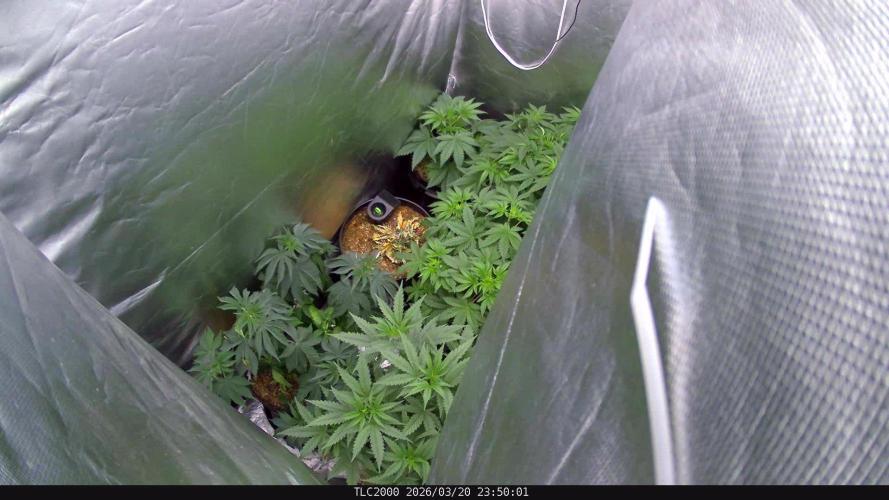
Week 1 of flower and we are trying to fill the canopy as best we can. added a little PK boost with some liquid Cool bloom I have laying around.
gave them a lower trim for airflow and let's see if they stretch anymore. see the time-lapse. they are drinking a lot mor often now so I will water every 2-3 days depending on the weight of the buckets. they were super light today when i feed them. 1 NSB is the darker of the 5 the other 4 are my feminized seeds for the BBFC's and they are starting to smell whoof!
Likes
1
Share

@JVKdopegrow
Follow
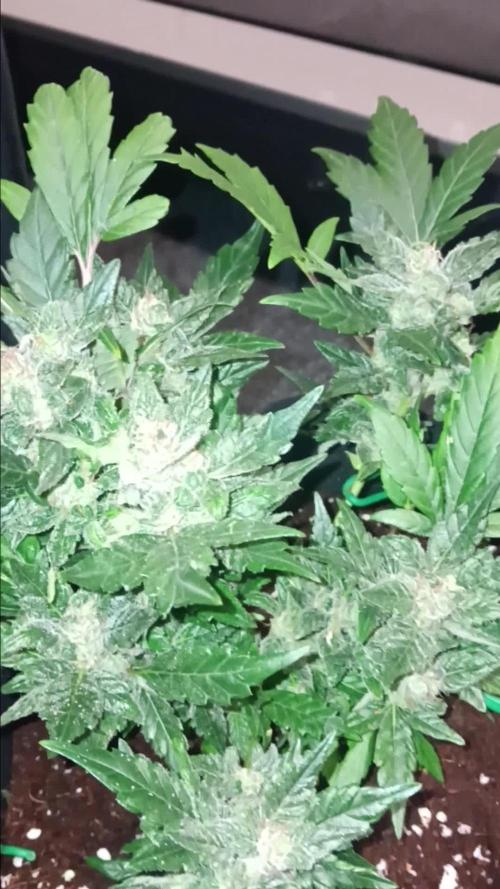
Little change week over week. She is small, so some lower level defoilation was needed to better expose the lower bud sites. Lower temps and a brief aphids bout may have stunted growth. She does smell great.
Processing
Likes
13
Share


@kevgrow
Follow
Hey Growers, end of week 12 from seed
Not much has changed this week, its been a slow bud growth. I feel it still needs to grow thicker, 2-3 weeks before flushing
Smell is a bit stronger, hoping a sour flavor.
It been difficult trying to maintain a steady humidity level due to weather outside. I will consider buying a stronger humidifier for my next grow.
Trichomes are cloudy, no amber yet
Some of the leaves have yellow-orange tips, this happened after I changed ph meters, my old one broke so I had to purchased a different ph meter at my local hydroponics store.
Will keep you guys posted, see you next week


Likes
27
Share


@w33dhawk
Follow
Hallo liebe growmies, ich hoffe euch geht es allen gut! die Woche war wieder eine erfolgreiche Woche 😁 ich muss sagen ich bin erstaunt wie gut die runde bis jetzt läuft und wie schön sich meine Ladys entwickelt haben, bis jetzt habe ich noch keine Mängel vernehmen können und die Damen sind meines Erachtens nach auf dem besten Weg zur sicheren ernte aber nun zur Woche
Am 08.03.23 also einen Tag bevor diese Woche begann habe ich den compost Tee angesetzt dafür habe ich 2,5L Wasser was ich ja eh in der Tonne ab stehen lasse entnommen und habe es in einen leeren behälter von destilliertem Wasser getan, dem ganzen habe ich 2x luftstein hinzu gefügt mit Belüftung's Pumpe (Eheim 200) eine kleine mini heizung für 8 L Aquarien (regelbar) auf 20 Grad eingestellt. Dem ganzen habe ich dann 15g/L wasser compost Tee (37,5g bei 2,5L Wasser) hinzu gefügt bactrex drauf 1g/L wasser (2,5g bei 2,5L Wasser) und 5ml/L orgatrex ( 12,5ml bei 2,5/L wasser) gab es auch noch hinzu das ganze habe ich dann 24 h belüftet und bei ca 20 Grad Wassertemperatur gebraut (Bactrex gab es jetzt 1x bei dieser gabe hinzu,bei dem nächsten compost Tee fällt bactrex dann weg) hab jeder Pflanze von dieser Lösung jeweils 0,5L an die Pflanzen basis gegossen vorher habe ich die Ladys aber natürlich Gewässer mit 2,5L Wasser und Dann Die Lösung oben drauf. Danach saß ich Dann knapp 4 Std vor dem Zelt und hab ausgeschnitten unten rum (alle Blätter und Triebe unter dem netzt entfernt) danach hab ich noch ca 1 Std damit verbracht Triebe von oben heraus zu entfernen die zu dicht an anderen standen ( war echt nicht einfach da nicht zu viel weg zu schnippeln) aber ich glaube ich bin auf nem guten Weg. Den Rest der Woche habe ich nur noch gehofft das sich die Pflanzen gut erholen von dem was ich ihnen angetan habe, und hab die Fächer Blätter so gut wie es geht täglich runter gedrückt unters netzt damit genug Licht eindringen kann in den Baldachin, aber irgendwie hat die Damen das harte ausrasieren nicht wirklich gestört da wie auf den Bildern zu sehen ist, ist der stretch immer noch in gange ist, aber schon deutlich weniger geworden zum Ende dieser Woche.
Am Sonntag dem 12.03.23 gab es nur Wasser zum trinken hab jetzt 3,5L Wasser gegossen und somit den Topf komplett mit Wasser gefüllt es kamen dabei ungefähr 20 ml Wasser unten raus, was halb so wild ist, aber immer hin Weiss ich jetzt die gieß menge um den Topf gleichmäßig zu füllen.
Ich wünsche euch allen eine schöne erfolgreiche Woche! Cu ihr growmies!