Likes
Comments
Share
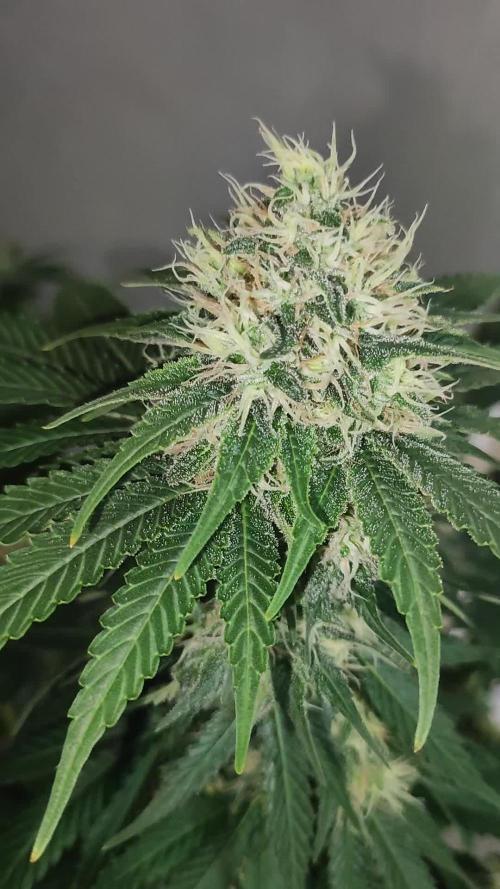
Week 7 of flower,room a bit cold but they are close to havest.
Likes
12
Share
@OGbros
Follow
the plants are fine. for 2 weeks I have increased the fertilizers and they are responding well. the strawberry is about two weeks ahead of the tropicanna. the smell is intense and very sweet👽
Likes
48
Share
@Focus420
Follow
Zdravím všechny pěstitele marijánky🌍🌞 Minulý týden sklizen BCN critilal xxl - tato rostlina měla od začátku problémy pak se spravila a nakonec vypadá celkem solidně. Víc se dozvíte ve sklizni🌱🌱🙏 Nemůžu se dočkat dalšího růstu🌞🤗 Tento týden půjde pod kosu poslední automat (sleep) Zbydou tam 3 celoroční odrůdy, ty vypadají nejlíp... ty ještě potřebují 2 až 3 týdny Den 99. Hnojení Celoročky - ph 6,3 ec 2,5 Den 100.🌱 holky vypadají úžasně😍 Dnes proběhla defoliace (focus)(franco lemon cheese) Den 101. Sekera🤟 (sleep) zbyly 3 celoroční odrůdy 2× focus , 1× franco lemon cheese Proplach 8 - 10 dní Den 102. Kontrola trichomů - focus = 10 % jantarových vrchů 🌱🤗 Franco lemon cheese = mléčné trichomy Den 103. Kontrola - Teplota,vlhkost,co2 v pořádku🤜 Den 104. Kontrola trichomu 15 procent jantar ( focus )👏 Den 105.proplach Ph - 6,3 ec - 0,43
Likes
23
Share
Likes
11
Share
The ladies have loved the fish sh!t so far, I am currently feeding about every 48-72 hours and they seem to be doing great They are getting thick but I really hope to get some FAT colas at the end of harvest, damn they are starting to smell so good!
Likes
9
Share
Grape soda, tropical punch, and gasoline. These rock hard flowers were some of the prettiest to watch grow I've ever seen.
Likes
7
Share
@Chubbs
Follow
420Fastbuds-FBA2501 I'm excited as it's tester time. Germination week is complete. I planted 3 seeds and had all 3 sprout within 48hrs of being in the soil. I do soak them for 48hrs in a glass of water before planting. I can't wait to see what the weeks to come will have in store. Happy Growing
Likes
13
Share
@Roberts
Follow
Blue Dream Auto is doing good, she has been doing some stretching. She is still in her early stages of flowering. Everything is looking good. Thank you Spliff Seeds, Medic Grow, and Athena nutrition. 🤜🏻🤛🏻🌱🌱🌱 Thank you grow diaries community for the 👇likes👇, follows, comments, and subscriptions on my YouTube channel👇. ❄️🌱🍻 Happy Growing 🌱🌱🌱 https://youtube.com/channel/UCAhN7yRzWLpcaRHhMIQ7X4g.
Likes
9
Share
@RBG
Follow
Week 10 Flower week 4 Flower-day 1 05/11/2025 Nutrients change Floramax veg1 Floramax Organabud Floramax flowering enhancer Floramax Rezin Cyco platinum series silica Green planet bud booster Complete grow cal mag ( sensi unfortunately got refunded so got this instead today ) Sleeps with the fishez ( hocI ) Ladies are looking good overall, let the fun goodness begin i guess 😂 7/11/25 Blockage within systems finally fixed after 4 flushes. Not exactly sure what it was but whatever ive done has fixed it for now 🤷‍♂️😂 take it as a win for now i guess 11/11/25 Unfortunately I hate scrogg so took it off but once I had spread her out again with lst, I noticed that shes struggling with lower growth. I saw this with my autoflowers. I'm not too sure if its from too many budspots,colas or if it's just from being overpacked. So her pisitils showed up on the 25th, some people count from that date as flower and some count as soon as you flip, I've decided to go of the 25th as first pisitils so its only 3 n a half weeks currently. I decided to take a few branches and a few of the lower budspots to try and help her even herself on where shes taking her sugars and growth. No Defoilation, just 10 or so budspots n only 3 branches. I DONT NOT RECOMMEND doing any of this, I'm only reattempting this because it worked on autos I had going. I do think I've made the right choice Grape og is meant to be a pretty hearty and forgiving strain, so she should bounce back pretty quickly Oh well. I'll definitely be rerunning her again later in future but trying a different method
Likes
7
Share
@hooolian
Follow
12/11/2021 - held in a glass of filtered water for 24 hours and then used the paper towel method for 48 hours. Seeds planted today in 6 litre pots to germinate before being moved to 15 litre pots on week 3 of veg. high humidity this week - 70% - and 100ml of filtered water every other day. 16/11/21 - all 9 have broken the soil and are stretching slightly to the light 20/11/21 root juice
Likes
9
Share
Niente da dire, 0 stress questa settimana non ho fatto niente, la prossima settimana aggiungeremo acqua se necessario. Si iniziano a vedere i fiorellini,
Likes
Comments
Share
Hola a todos!!!. Les comento como le fue esta semana a la auto black opium. La he regado en 2 ocasiones, en una solo con agua y en la otra regue con top auto 1.5ml x l y la última de top veg 2ml x litro de agua. En ambas ocasiones regue con 400ml . Ya comenzó a mostrar los pestillos, asique la próxima semana intuyo que será de floracion. El ph de dichos riego anduvo en los 6.4 , las ppm no las he medido..creo que no me olvido de anotar nada más. Hasta la próxima semana, y buenos humos!!!.
Likes
4
Share
Somehow I miscalculated the days and started week 6 prematurely. I will just continue here thru to week 7 Day 32 From Seed NYD#2 Started LST. Pot was light, watered at 6.3 including Fish Sh!t. NYD#3 The pony tail backfired. The main is mangled. Despite small nodes, I started LST and watered at 6.3 including Fish Sh!t. Day 33 From Seed Did some research and found out the ponytail should only be used during the light cycle and removed for the dark period. I left it on, which caused the ugly. Lesson learned! Day34 Adjusted and added LST. Watered #2 at 6.5. #3 was still heavy, no water needed. Day 37 Watered, adjusted LST Day 39 From Seed Watered, adjusted LST. Found a bug that isn't a fungus gnats (NYD#3). Inspected both plants for more. Did a neem oil top drench and added Vicks Vapor Rub to the pot rims (bug deterrent). So raised light roughly 4 inches. Day 41 Light watering, adjusted LST ties, top drenched with Neem Oil. Added a few ounces of peroxide to the humidifier. They'll both need a top dress soon.
Likes
137
Share
@MrJones
Follow
mrjones - Slurricane #7 S1 🌱Slurricane #7 S1 @inhousegenetics_official 👨‍🌾🏽GD Grower: MrJones 🔹🔹🔹🔹🔹🔹GOALS🔹🔹🔹🔹🔹🔹 🌞Environment - 75/80℉ and 60% Humidity Good Old Mother Nature 💧 Feeding - The Green Sunshine Company - Earth Dust All-Natural Plant Nutrients ⚗️Soil - 35% ProMix MP / 25% Ocean Forest / 20% Tupur Royal Gold / 10% lobster Compost / 10% Additional Perlite 🍃Training / So this girl was 60 Inches and spread her out under a 5x5 Trellis 🕷️ IPM - Will be using Green Cleaner" 1 OZ per Gallon, and CannControl from Mammoth alternating between products each month 🔹🔹🔹🔹🔹🔹🔹🔹🔹🔹🔹🔹🔹🔹🔹 📜 Rambling - rain, Rain, Rain, then guess what? More rain, but the ladies seem to love it, they are just turning into GIANTS! 🔹🔹🔹🔹🔹🔹🔹🔹🔹🔹🔹🔹🔹🔹🔹 ▶️ Sunday - 07.11.21 / The girls are loving life - just keeping the pots wet in between the rain! ▶️ Monday - 07.12.21 / These girls are just rolling along quite nicely! ▶️ Tuesday - 07.13.21 / The girls are loving life - just keeping the pots wet in between the rain! ▶️ Wednesday - 07.14.21/ The girls are loving life - just keeping the pots wet in between the rain! ▶️ Thursday - 07.15.21 / The girls are loving life - just keeping the pots wet in between the rain! ▶️ Friday - 07.16.21 / The girls are loving life - just keeping the pots wet in between the rain! ▶️ Saturday - 07.17.21 / As the week closes out you can just see the crazy growth that is going on! 🔹🔹🔹🔹🔹🔹🔹🔹🔹🔹🔹🔹🔹🔹🔹 Earth Dust - DESCRIPTION 🔹Earth Dust is our all-natural plant nutrient designed for indoor and outdoor flowering plant growers. You can grow easily by “just adding water” to your soil for the entire growth cycle. It creates a “living soil” so your plants thrive from seedling all the way through flower and harvest. Earth Dust represents an organic dry amendment method of gardening, it’s made of a natural powder of ingredients. 🔹Because you only need to water your soil with Earth Dust, you can concentrate on caring for your plants and getting a healthy crop “on autopilot”. Now you can grow without spending hours of your life mixing chemical nutrients, and you can do it naturally. What’s more, is you will enjoy the cleanest, most aromatic, and flavorful harvest you’ve ever experienced when a plant grows in a rich, organic web of living soil. Product Highlights 🔹All-Natural Ingredients – Mostly plant-based – Safe around children and pets. 🔹Packaged in kraft paper bags that are recyclable and compostable. 🔹Easy to Use – Just mix the powder into the soil 3 separate times – then water only. 🔹Packed full of rich microbe food & contains billions of beneficial fungi and bacteria! Creates a resilient, living soil that defends against pests and diseases. 🔹Rich in trace minerals and nutrients for full plant expression. Sourced from rock dust, sea-farmed kelp, and land-grown crops. 🔹Soil Conditioners help balance pH and make nutrients more available in the soil. Achieved with ingredients like bat guano, worm castings, limestone, molasses, and humic acid. 🔹The correct balance of N-P-K nutrients for each stage of growth: 🔹Earth Dust Base (3-1-2) contains key nutrients for sustained vegetative growth. High nitrogen (N), Low Phosphorous (P), and Medium Potassium (K). 🔹Earth Dust Boost (2-3-6) contains accelerated-release nutrients for powerful flowering growth. Low nitrogen (N), Medium Phosphorous (P), and High Potassium (K). 🔹Re-use soil harvest after harvest by simply adding more Earth Dust Base to begin again. Create your own living soil that gets better every time it’s used. 🔹Go organic, save time, and get predictable, healthy harvests. 🔹🔹🔹🔹🔹🔹🔹🔹🔹🔹🔹🔹🔹🔹🔹 Compost Tea for Vegetative Stage Water 4 Gallons 3 Cups Composr (Your Favorite Worm) 4 TBL Molasses 4 TBL Seaweed Extract 4 TBL Fish Fertilizer Use air Stone o the tea for 24/3 hours 70/75F, use at full strength for establishing plants and a half strength for younger plants
Processing
Likes
2
Share
@Ld966
Follow
Past 2 weeks shes developed dense boulder shaped nugs that run all through out the plant. Today was first day of flush so 5 days ish I'll be harvesting this beauty. Perfect timing for the greenhouse seed company competition that I've surprisingly been giving the opportunity. Happy growing.
Likes
52
Share
Lacewings seemed to have mostly killed themselves by flying into hot light fixtures. I may have left the UV on which was smart of me :) Done very little to combat if anything but make a sea of carcasses, on the bright side its good nutrition for the soil. Made a concoction of ethanol 70%, equal parts water, and cayenne pepper with a couple of squirts of dish soap. Took around an hour of good scrubbing the entire canopy. Worked a lot more effectively and way cheaper. Scorched earth right now, but it seems to have wiped them out almost entirely very pleased. Attempted a "Fudge I Missed" for the topping. So just time to wait and see how it goes. Question? If I attached a plant to two separate pots but it was connected by rootzone, one has a pH of 7.5 ish the other has 4.5. Would the Intelligence of the plant able to dictate each pot separately to uptake the nutrients best suited to pH or would it still try to draw nitrogen from a pot with a pH where nitrogen struggles to uptake? Food for stoner thought experiments! Another was on my mind. What happens when a plant gets too much light? Well, it burns and curls up leaves. That's the heat radiation, let's remove excess heat, now what? I've always read it's just bad, or not good, but when I look for an explanation on a deeper level it's just bad and you shouldn't do it. So I did. How much can a cannabis plant absorb, 40 moles in a day, ok I'll give it 60 moles. 80 nothing bad ever happened. The answer, finally. Oh great........more questions........ Reactive oxygen species (ROS) are molecules capable of independent existence, containing at least one oxygen atom and one or more unpaired electrons. "Sunlight is the essential source of energy for most photosynthetic organisms, yet sunlight in excess of the organism’s photosynthetic capacity can generate reactive oxygen species (ROS) that lead to cellular damage. To avoid damage, plants respond to high light (HL) by activating photophysical pathways that safely convert excess energy to heat, which is known as nonphotochemical quenching (NPQ) (Rochaix, 2014). While NPQ allows for healthy growth, it also limits the overall photosynthetic efficiency under many conditions. If NPQ were optimized for biomass, yields would improve dramatically, potentially by up to 30% (Kromdijk et al., 2016; Zhu et al., 2010). However, critical information to guide optimization is still lacking, including the molecular origin of NPQ and the mechanism of regulation." What I found most interesting was research pointing out that pH is linked to this defense mechanism. The organism can better facilitate "quenching" when oversaturated with light in a low pH. Now I Know during photosynthesis plants naturally produce exudates (chemicals that are secreted through their roots). Do they have the ability to alter pH themselves using these excretions? Or is that done by the beneficial bacteria? If I can prevent reactive oxygen species from causing damage by "too much light". The extra water needed to keep this level of burn cooled though, I must learn to crawl before I can run. Reactive oxygen species (ROS) are key signaling molecules that enable cells to rapidly respond to different stimuli. In plants, ROS plays a crucial role in abiotic and biotic stress sensing, integration of different environmental signals, and activation of stress-response networks, thus contributing to the establishment of defense mechanisms and plant resilience. Recent advances in the study of ROS signaling in plants include the identification of ROS receptors and key regulatory hubs that connect ROS signaling with other important stress-response signal transduction pathways and hormones, as well as new roles for ROS in organelle-to-organelle and cell-to-cell signaling. Our understanding of how ROS are regulated in cells by balancing production, scavenging, and transport has also increased. In this Review, we discuss these promising developments and how they might be used to increase plant resilience to environmental stress. Temperature stress is one of the major abiotic stresses that adversely affect agricultural productivity worldwide. Temperatures beyond a plant's physiological optimum can trigger significant physiological and biochemical perturbations, reducing plant growth and tolerance to stress. Improving a plant's tolerance to these temperature fluctuations requires a deep understanding of its responses to environmental change. To adapt to temperature fluctuations, plants tailor their acclimatory signal transduction events, specifically, cellular redox state, that are governed by plant hormones, reactive oxygen species (ROS) regulatory systems, and other molecular components. The role of ROS in plants as important signaling molecules during stress acclimation has recently been established. Here, hormone-triggered ROS produced by NADPH oxidases, feedback regulation, and integrated signaling events during temperature stress activate stress-response pathways and induce acclimation or defense mechanisms. At the other extreme, excess ROS accumulation, following temperature-induced oxidative stress, can have negative consequences on plant growth and stress acclimation. The excessive ROS is regulated by the ROS scavenging system, which subsequently promotes plant tolerance. All these signaling events, including crosstalk between hormones and ROS, modify the plant's transcriptomic, metabolomic, and biochemical states and promote plant acclimation, tolerance, and survival. Here, we provide a comprehensive review of the ROS, hormones, and their joint role in shaping a plant's responses to high and low temperatures, and we conclude by outlining hormone/ROS-regulated plant-responsive strategies for developing stress-tolerant crops to combat temperature changes. Onward upward for now. Next! Adenosine triphosphate (ATP) is an energy-carrying molecule known as "the energy currency of life" or "the fuel of life," because it's the universal energy source for all living cells.1 Every living organism consists of cells that rely on ATP for their energy needs. ATP is made by converting the food we eat into energy. It's an essential building block for all life forms. Without ATP, cells wouldn't have the fuel or power to perform functions necessary to stay alive, and they would eventually die. All forms of life rely on ATP to do the things they must do to survive.2 ATP is made of a nitrogen base (adenine) and a sugar molecule (ribose), which create adenosine, plus three phosphate molecules. If adenosine only has one phosphate molecule, it’s called adenosine monophosphate (AMP). If it has two phosphates, it’s called adenosine diphosphate (ADP). Although adenosine is a fundamental part of ATP, when it comes to providing energy to a cell and fueling cellular processes, the phosphate molecules are what really matter. The most energy-loaded composition for adenosine is ATP, which has three phosphates.3 ATP was first discovered in the 1920s. In 1929, Karl Lohmann—a German chemist studying muscle contractions—isolated what we now call adenosine triphosphate in a laboratory. At the time, Lohmann called ATP by a different name. It wasn't until a decade later, in 1939, that Nobel Prize–-winner Fritz Lipmann established that ATP is the universal carrier of energy in all living cells and coined the term "energy-rich phosphate bonds."45 Lipmann focused on phosphate bonds as the key to ATP being the universal energy source for all living cells, because adenosine triphosphate releases energy when one of its three phosphate bonds breaks off to form ADP. ATP is a high-energy molecule with three phosphate bonds; ADP is low-energy with only two phosphate bonds. The Twos and Threes of ATP and ADP Adenosine triphosphate (ATP) becomes adenosine diphosphate (ADP) when one of its three phosphate molecules breaks free and releases energy (“tri” means “three,” while “di” means “two”). Conversely, ADP becomes ATP when a phosphate molecule is added. As part of an ongoing energy cycle, ADP is constantly recycled back into ATP.3 Much like a rechargeable battery with a fluctuating state of charge, ATP represents a fully charged battery, and ADP represents a "low-power mode." Every time a fully charged ATP molecule loses a phosphate bond, it becomes ADP; energy is released via the process of ATP becoming ADP. On the flip side, when a phosphate bond is added, ADP becomes ATP. When ADP becomes ATP, what was previously a low-charged energy adenosine molecule (ADP) becomes fully charged ATP. This energy-creation and energy-depletion cycle happens time and time again, much like your smartphone battery can be recharged countless times during its lifespan. The human body uses molecules held in the fats, proteins, and carbohydrates we eat or drink as sources of energy to make ATP. This happens through a process called hydrolysis . After food is digested, it's synthesized into glucose, which is a form of sugar. Glucose is the main source of fuel that our cells' mitochondria use to convert caloric energy from food into ATP, which is an energy form that can be used by cells. ATP is made via a process called cellular respiration that occurs in the mitochondria of a cell. Mitochondria are tiny subunits within a cell that specialize in extracting energy from the foods we eat and converting it into ATP. Mitochondria can convert glucose into ATP via two different types of cellular respiration: Aerobic (with oxygen) Anaerobic (without oxygen) Aerobic cellular respiration transforms glucose into ATP in a three-step process, as follows: Step 1: Glycolysis Step 2: The Krebs cycle (also called the citric acid cycle) Step 3: Electron transport chain During glycolysis, glucose (i.e., sugar) from food sources is broken down into pyruvate molecules. This is followed by the Krebs cycle, which is an aerobic process that uses oxygen to finish breaking down sugar and harnesses energy into electron carriers that fuel the synthesis of ATP. Lastly, the electron transport chain (ETC) pumps positively charged protons that drive ATP production throughout the mitochondria’s inner membrane.2 ATP can also be produced without oxygen (i.e., anaerobic), which is something plants, algae, and some bacteria do by converting the energy held in sunlight into energy that can be used by a cell via photosynthesis. Anaerobic exercise means that your body is working out "without oxygen." Anaerobic glycolysis occurs in human cells when there isn't enough oxygen available during an anaerobic workout. If no oxygen is present during cellular respiration, pyruvate can't enter the Krebs cycle and is oxidized into lactic acid. In the absence of oxygen, lactic acid fermentation makes ATP anaerobically. The burning sensation you feel in your muscles when you're huffing and puffing during anaerobic high-intensity interval training (HIIT) that maxes out your aerobic capacity or during a strenuous weight-lifting workout is lactic acid, which is used to make ATP via anaerobic glycolysis. During aerobic exercise, mitochondria have enough oxygen to make ATP aerobically. However, when you're out of breath and your cells don’t have enough oxygen to perform cellular respiration aerobically, the process can still happen anaerobically, but it creates a temporary burning sensation in your skeletal muscles. Why ATP Is So Important? ATP is essential for life and makes it possible for us to do the things we do. Without ATP, cells wouldn't be able to use the energy held in food to fuel cellular processes, and an organism couldn't stay alive. As a real-world example, when a car runs out of gas and is parked on the side of the road, the only thing that will make the car drivable again is putting some gasoline back in the tank. For all living cells, ATP is like the gas in a car's fuel tank. Without ATP, cells wouldn't have a source of usable energy, and the organism would die. Eating a well-balanced diet and staying hydrated should give your body all the resources it needs to produce plenty of ATP. Although some athletes may slightly improve their performance by taking supplements or ergonomic aids designed to increase ATP production, it's debatable that oral adenosine triphosphate supplementation actually increases energy. An average cell in the human body uses about 10 million ATP molecules per second and can recycle all of its ATP in less than a minute. Over 24 hours, the human body turns over its weight in ATP. You can last weeks without food. You can last days without water. You can last minutes without oxygen. You can last 16 seconds at most without ATP. Food amounts to one-third of ATP production within the human body.
Likes
33
Share
@Darksoul
Follow
In the end of the flora. Maybe two more weeks (one week for rippen another week for flush) My first time hydro with scrog gone very well! Thanks a lot Jah =)